指数化投资

Search documents
期指:驱动偏真空,震荡依旧
Guo Tai Jun An Qi Huo· 2025-12-16 01:35
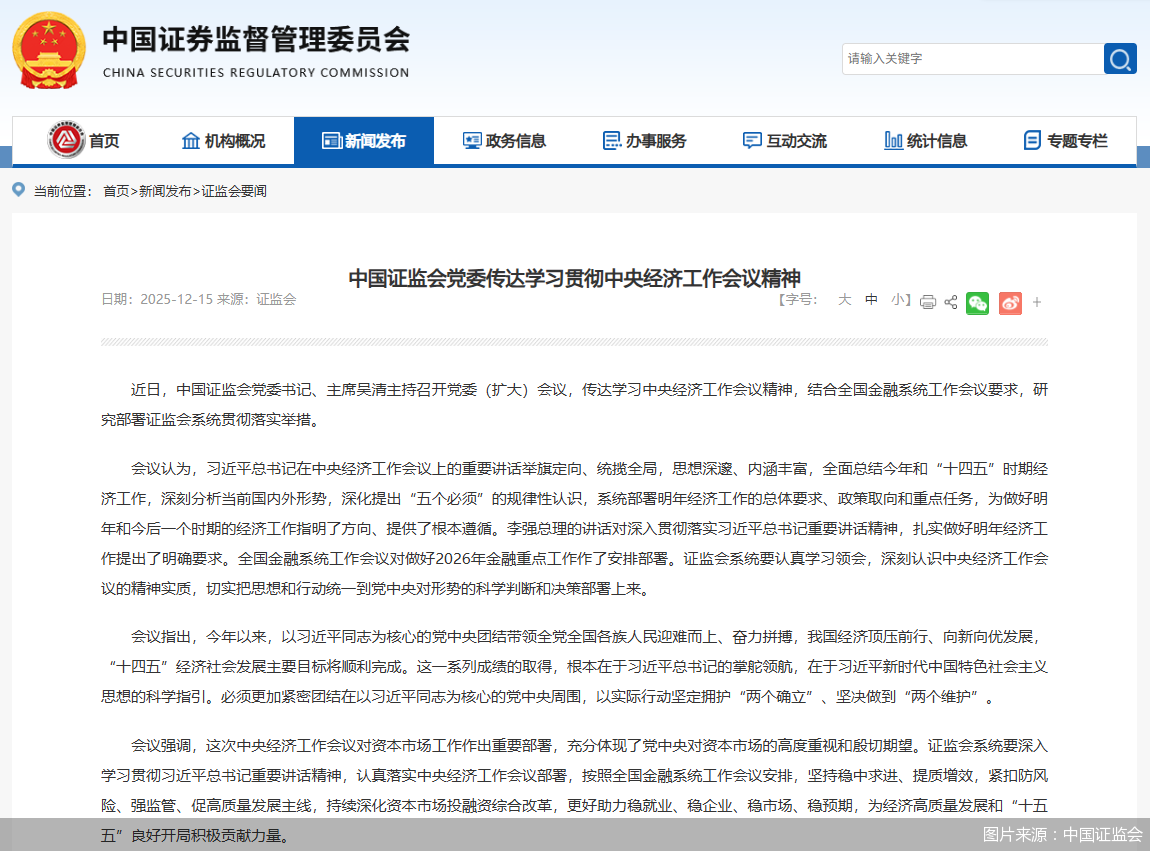
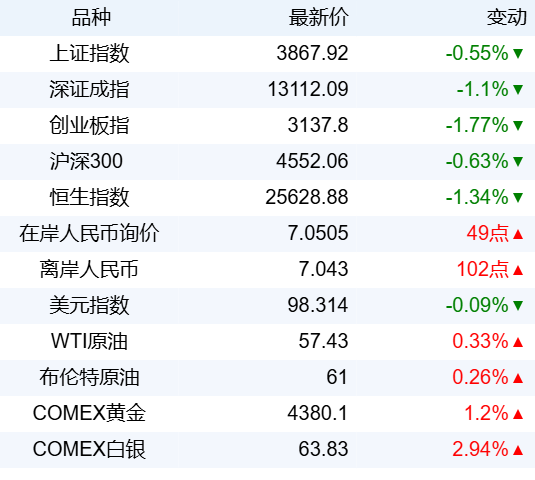
Report Summary 1. Report Industry Investment Rating - Not provided in the given content 2. Core View of the Report - The driving factors for stock index futures are relatively empty, and the market will continue to fluctuate [1] 3. Summary by Relevant Catalogs 【期指期现数据跟踪】 - On December 15, all the current-month contracts of the four major stock index futures declined. IF fell 0.64%, IH fell 0.08%, IC fell 0.88%, and IM fell 0.82% [1] - On the trading day, the total trading volume of stock index futures decreased, indicating a cooling of investors' trading enthusiasm. Specifically, the total trading volume of IF decreased by 3,944 lots, IH increased by 5,638 lots, IC decreased by 20,021 lots, and IM decreased by 25,231 lots. In terms of positions, the total positions of IF decreased by 8,509 lots, IH decreased by 693 lots, IC decreased by 9,710 lots; and IM decreased by 11,978 lots [1][2] - The report also provides detailed data on closing prices, price changes, basis, trading volume, and positions for various contracts of IF, IH, IC, and IM [1] 【趋势强度】 - The trend strength of IF and IH is 1, and the trend strength of IC and IM is 1. The trend strength ranges from -2 to 2, indicating the degree of bullish or bearish sentiment [6] 【重要驱动】 - China's economic data for November was released. The added value of industrial enterprises above the designated size increased by 4.8% year-on-year and 0.44% month-on-month. The service industry production index increased by 4.2% year-on-year. The total retail sales of consumer goods increased by 1.3% year-on-year but decreased by 0.42% month-on-month. From January to November, fixed asset investment (excluding rural households) decreased by 2.6% year-on-year; excluding real estate development investment, it increased by 0.8%. Real estate development investment decreased by 15.9%, and the sales area of new commercial housing decreased by 7.8%. In November, fixed asset investment (excluding rural households) decreased by 1.03% month-on-month, and the national urban survey unemployment rate was 5.1%, unchanged from the previous month [7] - In November, 8 out of 70 large and medium-sized cities saw month-on-month increases in new commercial housing prices, up from 6 in October. Xiangyang and Hefei led the increase with 0.3%. Beijing, Shanghai, Guangzhou, and Shenzhen saw changes of -0.5%, +0.1%, -0.5%, and -0.9% respectively. The sales prices of new commercial housing in first-tier cities decreased by 0.4% month-on-month, with the decline expanding by 0.1 percentage points. The sales prices of new commercial housing in second- and third-tier cities decreased by 0.3% and 0.4% respectively, with the decline narrowing by 0.1 percentage points. The sales prices of second-hand housing in first-tier cities decreased by 1.1% month-on-month, with the decline expanding by 0.2 percentage points. The sales prices of second-hand housing in second-tier cities decreased by 0.6% month-on-month, the same as the previous month [8] - The Party Committee of the China Securities Regulatory Commission conveyed and implemented the spirit of the Central Economic Work Conference. It emphasized formulating a "15th Five-Year Plan" system for the capital market, cultivating high-quality listed companies, promoting long-term assessment of long-term funds, developing equity public funds, and strengthening risk monitoring and control. It also plans to deepen the reform of the Growth Enterprise Market, implement the "1+6" reform measures for the Science and Technology Innovation Board, and promote the high-quality development of the private equity fund industry [8] A-share Market Performance - The three major A-share indexes declined with shrinking trading volume. The computing power hardware industry chain generally fell, while the big consumption and insurance industries strengthened. The Shanghai Composite Index closed down 0.55% at 3,867.92 points, the Shenzhen Component Index fell 1.1%, the ChiNext Index fell 1.77%, the Beijing Stock Exchange 50 fell 1.09%, the Science and Technology Innovation 50 fell 2.22%, the Wind All A fell 0.63%, the Wind A500 fell 0.59%, and the CSI A500 fell 0.73%. The full-day trading volume of A-shares was 1.79 trillion yuan, compared with 2.12 trillion yuan the previous day. The CPO concept, shipbuilding, lidar, film and television theater, and computing power hardware concepts declined. Dairy stocks rose significantly, liquor stocks rebounded, insurance stocks strengthened, and the retail concept was active [9]
盘前资讯|首批双创人工智能ETF陆续上市交易
Sou Hu Cai Jing· 2025-12-16 01:26
Group 1 - Huatai-PineBridge Fund announced the launch of the Sci-Tech Innovation and Entrepreneurship Artificial Intelligence ETF, set to be listed on December 19 [1] - Four products from the first batch of dual innovation AI ETFs have released their listing announcements, with Yongying Fund and Invesco Great Wall Fund launching their products on December 11 and December 12, respectively [1] - The China Securities Regulatory Commission (CSRC) emphasized the need to promote long-term funding mechanisms and the development of equity public funds during a recent meeting [1] Group 2 - The National Bureau of Statistics reported that the industrial added value for November increased by 4.8% year-on-year and 0.44% month-on-month [1] - The service industry production index grew by 4.2% year-on-year [1] - The total retail sales of consumer goods reached 43.898 billion yuan, reflecting a year-on-year growth of 1.3% [1]
新华财经早报:12月16日
Xin Hua Cai Jing· 2025-12-16 00:08
Group 1: Regulatory Developments - The China Securities Regulatory Commission (CSRC) is promoting the implementation of a long-term assessment mechanism for medium and long-term funds, aiming to enhance the stability of the market and encourage high-quality public equity funds and index investment development [1] - The Ministry of Commerce and five other departments have issued an action plan to promote the high-quality development of service outsourcing, targeting the cultivation of internationally competitive leading enterprises by 2030 [1] - The Ministry of Industry and Information Technology has granted approval for the first batch of L3-level conditional autonomous driving vehicles, marking a significant step towards commercial application in designated areas [1] Group 2: Economic Indicators - In November, the industrial added value above designated size increased by 4.8% year-on-year, while the service production index rose by 4.2%, and retail sales of consumer goods grew by 1.3% [1] - Fixed asset investment decreased by 2.6% year-on-year from January to November, with manufacturing investment growing by 1.9% and real estate development investment declining by 15.9% [1] - The urban surveyed unemployment rate remained stable at 5.1% in November, with housing prices in 70 cities showing a decline both month-on-month and year-on-year [1] Group 3: Corporate Announcements - Muxi Co., Ltd. is set to be listed on the Shanghai Stock Exchange's Sci-Tech Innovation Board on December 17, 2025, although it has not yet achieved profitability [6] - Longi Green Energy has announced plans to invest 4.297 billion yuan in a Thai park by 2026 [6] - TCL Technology's subsidiary plans to acquire a 10.77% stake in Shenzhen Huaxing Semiconductor for 6.045 billion yuan [6] Group 4: Market Movements - The Shanghai Composite Index closed at 3867.92, down 0.55%, while the Shenzhen Component Index fell by 1.1% to 13112.09 [5] - The Hang Seng Index decreased by 1.34% to 25628.88, reflecting a broader trend of declines across major indices [5] - The onshore RMB was quoted at 7.048, appreciating by 74 points, while the offshore RMB rose by 103 points to 7.0433 [5]


12月16日热门路演速递丨前瞻2026:新质生产力、港股与商业航天如何布局?
Wind万得· 2025-12-15 22:38
Group 1 - The article discusses the macroeconomic outlook for 2026 and its impact on index investment strategies, highlighting the valuation advantages of the ChiNext 50 ETF as a representative of new productive forces [3] - It emphasizes the "golden+" strategy to enhance asset portfolio resilience in the current interest rate environment, while also identifying structural opportunities in Hong Kong and overseas markets [3] - The article outlines the concept of "reparative growth" in the macroeconomic context for 2026 and how market strategies will influence asset allocation [6] Group 2 - The article provides insights into the opportunities and risks in key sectors of the Hong Kong stock market for 2025, aiming to assist investors in optimizing their decision-making frameworks [8] - It highlights the expected developments in the commercial aerospace sector by 2026, driven by policy, performance, and technological breakthroughs, particularly in reusable rocket technology [10] - The article discusses the non-bank financial sector's outlook for 2026, indicating a potential new upward cycle in the securities industry and the long-term growth opportunities in the insurance sector [13]

新华财经晚报:我国首批L3级自动驾驶车型产品获得准入许可
Xin Hua Cai Jing· 2025-12-15 15:52
Domestic News - The China Securities Regulatory Commission (CSRC) is promoting the implementation of a long-term assessment mechanism for medium and long-term funds, aiming to develop equity public funds and promote high-quality development of index investment [1] - The Ministry of Industry and Information Technology has granted approval for the first batch of L3-level conditional autonomous driving vehicles, marking a significant step towards commercial application in designated areas of Beijing and Chongqing [1] Economic Data - In November, the total retail sales of consumer goods reached 43,898 billion yuan, showing a year-on-year increase of 1.3% but a month-on-month decrease of 0.42% [2] - From January to November, fixed asset investment (excluding rural households) totaled 444,035 billion yuan, down 2.6% year-on-year, while excluding real estate development investment, it grew by 0.8% [2] - The total import and export value in November was 38,987 billion yuan, with a year-on-year increase of 4.1%, accelerating by 4.0 percentage points compared to the previous month [2] Real Estate Market - In November, the sales prices of commercial residential properties in 70 large and medium-sized cities showed a month-on-month decline, with first-tier cities experiencing a 0.4% decrease in new residential prices and a 1.1% decrease in second-hand residential prices [2] - Year-on-year, new residential prices in first-tier cities fell by 1.2%, while second-hand residential prices dropped by 5.8%, with both declines widening compared to the previous month [2] Employment Data - The average urban survey unemployment rate from January to November was 5.2%, with November's rate at 5.1%, unchanged from the previous month [3] - The unemployment rate for local registered labor was 5.3%, while for migrant labor it was 4.7%, with agricultural migrant labor at 4.4% [3] Industry Standards - The China Gold Association has released a group standard for the "Gold Exchange for Old" business, marking a move towards a more standardized, professional, and transparent development phase [3] - The Shanghai Arbitration Commission is set to introduce new arbitration rules for securities and futures, with the official unveiling scheduled for December 26, 2024 [3]
今日财经要闻TOP10|2025年12月15日
Xin Lang Cai Jing· 2025-12-15 11:56
Group 1: Autonomous Driving - China's first batch of L3 conditional autonomous driving vehicles has received approval for road testing in designated areas of Beijing and Chongqing, marking a significant step towards commercialization [1] - The two approved models include an electric sedan capable of 50 km/h in congested traffic and another capable of 80 km/h on highways and urban expressways, both limited to specific routes [1] Group 2: Financial Sector Reforms - The China Securities Regulatory Commission (CSRC) has initiated reforms to enhance the inclusivity and attractiveness of the capital market, focusing on the implementation of the "1+6" reform measures for the Sci-Tech Innovation Board [3][10] - The CSRC aims to promote high-quality development in the private equity fund sector and expedite the pilot program for commercial real estate REITs [10] - A new round of corporate governance initiatives will be launched to encourage quality companies to increase dividend payouts and share buybacks [11] Group 3: Company Financials - Cambrian Technology plans to use approximately 2.78 billion yuan from its capital reserve to offset accumulated losses, with the aim of bringing its negative retained earnings to zero by the end of 2024 [8] - TCL Technology intends to acquire a 10.7656% stake in Shenzhen Huaxing Semiconductor for 6.045 billion yuan, increasing its ownership from 84.21% to 94.98%, to enhance its competitiveness in the semiconductor display industry [12] Group 4: Currency and Real Estate Market - The onshore and offshore RMB against the USD reached a 14-month high, with the onshore rate peaking at 7.0500 and the offshore rate at 7.046, indicating a favorable external environment for the RMB [13] - In November 2025, the sales prices of commercial residential properties in 70 major cities in China showed a month-on-month decline, with first-tier cities experiencing a 0.4% decrease in new residential prices [14]



指数化投资周报20251215:TMT板块涨幅领先,三只有色板块ETF申报-20251215
Shenwan Hongyuan Securities· 2025-12-15 09:28
1. Report Industry Investment Rating - No industry investment rating information is provided in the report. 2. Core Viewpoints of the Report - In the recent week, the TMT sector led the gains, and there were filings for three non - ferrous ETFs. The overall performance of ETFs in different markets and sectors varied, with some showing gains and others experiencing setbacks. The funds flowing into and out of different index - based ETFs also presented distinct trends [1][2]. 3. Summary According to the Table of Contents 3.1 Index Product Establishment, Fund - raising, and Filing - **Product Establishment and Listing**: In the recent week, 4 ETF products such as Dongcai CSI Hong Kong Stock Connect Technology ETF and Boshi CSI Bank ETF were listed, and 11 products including Baoying CSI A500 Index Enhancement A were established. Multiple CSI Science and Technology Innovation and Entrepreneurship Artificial Intelligence ETFs from Huatai - Ber瑞 and E Fund were recently established and listed [1][4][5]. - **Product Issuance Information**: In the coming week, 18 index products will end their fund - raising, including Changxin Shanghai Stock Exchange Science and Technology Innovation Comprehensive Index Enhancement A. Nine index products will start fund - raising, such as GF China Securities Industrial Software Theme ETF [1][6]. - **Product Filing Information**: A total of 34 index products were filed in the recent week. With the upward trend of non - ferrous metals in the past few months, the attention on non - ferrous ETF products has further increased. Penghua, Boshi, and Invesco Great Wall filed for non - ferrous related ETFs [1][8]. 3.2 ETF Market Review - **Overall Market Performance**: In the recent week (2025/12/8 - 2025/12/12), the major broad - based A - share ETFs showed mixed performance. The Growth Enterprise Market 50ETF and Science and Technology Innovation 50ETF had relatively high gains of 2.92% and 1.86% respectively. The major broad - based Hong Kong and US ETFs slightly pulled back, with the Hang Seng ETF and Nasdaq ETF falling 1.00% and 1.92% respectively. Among commodity ETFs, the non - ferrous ETF rose 1.33%, while the energy and chemical ETF had a significant decline of - 3.31% [2][11]. - **Sector - Specific Performance**: The technology sector had the highest gains among major industries in the recent week. The communication ETF had the highest increase of 6.85%. In the broad - based category, the Growth Enterprise Market 50ETF rose 2.92%, and in the cyclical category, the coal ETF had a relatively high decline of - 3.88% [2][13]. 3.3 ETF Fund Flows - **Overall Scale**: As of December 12, 2025, there were 1304 ETFs in the entire market, with a latest total scale of 5662.825 billion yuan, an increase of 16.933 billion yuan compared to the previous week. The A - share and cross - border ETFs ranked first and second in terms of scale, with 3642.161 billion yuan and 935.749 billion yuan respectively [21]. - **Fund Inflows and Outflows**: Among non - monetary ETFs in the recent week, the ETFs targeting the CSI A500 had the largest net inflow of funds, reaching 9.694 billion yuan, while the ETFs targeting the Growth Enterprise Market Index had the largest net outflow of funds, amounting to 3.148 billion yuan [24].
指数化投资周报:TMT板块涨幅领先,三只有色板块ETF申报-20251215
Shenwan Hongyuan Securities· 2025-12-15 08:29
1. Report Industry Investment Rating - Not provided in the report 2. Core Viewpoints of the Report - The TMT sector led the gains on December 15, 2025, and three ETFs in the non - ferrous sector were filed for application. The performance and fund flow of ETFs showed significant differences across different markets and sectors [1] 3. Summary According to the Table of Contents 3.1 Index Product Establishment, Fund - raising, and Application - **Product Establishment and Listing**: In the past week, 4 ETF products such as Dongcai CSI Hong Kong Stock Connect Technology ETF and Bosera CSI Bank ETF were listed, and 11 products including Baoying CSI A500 Index Enhancement A were established. Many CSI Science and Technology Innovation and Entrepreneurship Artificial Intelligence ETFs were recently established and listed [1][5] - **Product Issuance Information**: In the coming week, 18 index products will end their fund - raising, including Changxin Shanghai Stock Exchange Science and Technology Innovation Board Comprehensive Index Enhancement A. Nine index products will start fund - raising, such as GF Guozheng Industrial Software Theme ETF [1][7] - **Product Application Information**: A total of 34 index products were applied for in the past week. With the rising trend of non - ferrous metals in the past few months, the attention of non - ferrous ETF products has further increased. Three non - ferrous sector ETFs were applied for, including Penghua and Bosera's application for the CSI Industrial Non - ferrous Metals Theme ETF and Invesco Great Wall's application for the CSI Non - ferrous Metals Mining Theme ETF [1][9] 3.2 ETF Market Review - **Overall Market Performance**: In the past week (December 8 - 12, 2025), the main broad - based ETFs in the A - share market showed mixed performance. The Growth Enterprise Market 50ETF and the Science and Technology Innovation 50ETF had relatively high increases of 2.92% and 1.86% respectively. The main broad - based ETFs in the Hong Kong and US stock markets slightly corrected, with the Hang Seng ETF and the Nasdaq ETF falling 1.00% and 1.92% respectively. Among commodity ETFs, the non - ferrous ETF rose 1.33%, while the energy and chemical ETF fell 3.31% [2][11] - **Industry - based Performance**: The major industry ETFs also showed mixed performance. The technology category had the highest increase this week, with the communication ETF having the highest increase of 6.85%. Among the broad - based categories, the Growth Enterprise Market 50ETF rose 2.92%, and among the cyclical categories, the coal ETF had a relatively high decline of 3.88% [2][13] - **Cross - border ETF Performance**: In the past week, the main broad - based indices of cross - border markets showed mixed performance, with the Topix Index having the highest increase of 1.82%. Among global market - corresponding ETFs, the Huatai - Peregrine CSI KRX Korea - China Semiconductor ETF rose 1.59%, and the Huaan Germany 30 (DAX) ETF rose 1.13% [16] - **Non - currency ETF Performance**: Among non - currency ETFs, the Huaxia Growth Enterprise Market Artificial Intelligence ETF led the gains with a return of 7.40% in the past week, while the Huifutong Nasdaq 100ETF was relatively lagging with a return of - 4.67% [19] 3.3 ETF Fund Flow - **Overall ETF Scale**: As of December 12, 2025, there were 1,304 ETFs in the entire market, with a total scale of 5,662.825 billion yuan, an increase of 16.933 billion yuan from the previous week. The A - share and cross - border ETFs ranked top two in terms of scale, with values of 3,642.161 billion yuan and 935.749 billion yuan respectively. The scale of A - share ETFs increased by 100.95 billion yuan in the past week [21] - **Net Inflow and Outflow of Non - currency ETF Funds**: Among non - currency ETFs, the ETFs with the CSI A500 as the underlying had the largest net inflow of funds, with an inflow of 9.694 billion yuan. The ETFs tracking the Growth Enterprise Market Index had the largest net outflow, with a total outflow of 3.148 billion yuan [24] - **High - inflow and High - liquidity ETFs**: In the past week, the Southern CSI A500ETF and the Harvest CSI AAA Science and Technology Innovation Corporate Bond ETF had relatively high fund inflows of 3.771 billion yuan and 2.648 billion yuan respectively. The Haifutong CSI Short - term Financing ETF led in liquidity, with an average daily trading volume of 317.89 billion yuan in the past week, and the Huaxia Shanghai Stock Exchange Benchmark Market - making Treasury Bond ETF also had relatively high liquidity, with an average daily trading volume of 103.05 billion yuan [28]
证监会:讲好“股市叙事”,提升资本市场制度包容性吸引力
Bei Ke Cai Jing· 2025-12-15 08:04
Core Viewpoint - The China Securities Regulatory Commission (CSRC) has outlined five key measures to enhance market stability and promote high-quality companies following the Central Economic Work Conference [1][2]. Group 1: Market Stability and Company Quality - The CSRC emphasizes the importance of strengthening the market's inherent stability and fostering a group of high-quality listed companies [1]. - A new round of corporate governance initiatives will be launched to encourage quality companies to increase dividend payouts and share buybacks [1]. - The implementation of a long-term assessment mechanism for medium and long-term funds will be promoted, alongside the development of equity public funds and high-quality index investment [1]. Group 2: Risk Monitoring and Policy Guidance - The CSRC will enhance cross-market, cross-industry, and cross-border risk monitoring and control, while reinforcing counter-cyclical adjustments and establishing a long-term market stabilization mechanism [1]. - There will be a focus on policy interpretation and expectation management, ensuring timely responses to market concerns and reinforcing the reputation management responsibilities of industry institutions and listed companies [1]. Group 3: Reform and Development - The CSRC is committed to reforming the capital market to improve its inclusiveness and attractiveness, including the implementation of deepened reforms for the ChiNext board and accelerating the rollout of the "1+6" reform measures for the Sci-Tech Innovation Board [1]. - The development of the private equity fund industry will be promoted, with plans to launch pilot projects for commercial real estate REITs and research new key futures products [1]. Group 4: Regulatory Enhancement - The CSRC will enhance regulatory enforcement effectiveness, leveraging technology to combat financial fraud, insider trading, market manipulation, and misappropriation of private fund assets [2]. - New regulations for listed companies will be introduced, and efforts will be made to revise laws and regulations in key areas such as securities companies and investment funds [2].
中国证监会:继续重拳惩治挪用侵占私募基金财产等证券期货违法违规行为
Bei Jing Shang Bao· 2025-12-15 05:19
Core Viewpoint - The China Securities Regulatory Commission (CSRC) is focusing on enhancing market stability, promoting high-quality development of public funds, and improving regulatory effectiveness following the recent Central Economic Work Conference [1] Group 1: Market Stability - The CSRC aims to fully implement a long-term assessment mechanism for medium and long-term funds to enhance the inherent stability of the market [1] - There is a strong emphasis on the development of equity public funds and promoting high-quality development of index-based investments [1] Group 2: Reform and Attractiveness - The meeting highlighted the need to promote high-quality development in the private equity fund sector [1] - The CSRC plans to expedite the pilot program for commercial real estate REITs and explore the introduction of new key futures products [1] Group 3: Regulatory Effectiveness - The CSRC is committed to strengthening regulatory enforcement through technology and will continue to combat financial fraud, insider trading, market manipulation, and misappropriation of private equity fund assets [1] - There is a push to introduce new regulations for listed companies and actively cooperate in revising laws and regulations in key areas such as securities companies and investment funds [1]