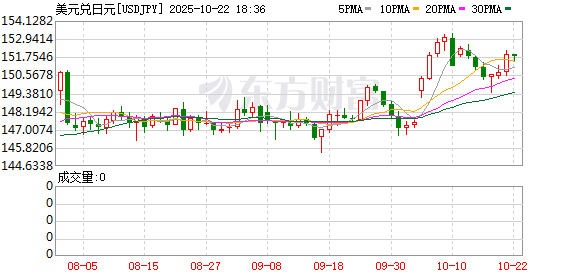
日元贬值

Search documents
日元贬值触发加息警报 日本央行何去何从
Jin Tou Wang· 2025-10-30 02:29
Group 1 - The market anticipates that the Bank of Japan will maintain interest rates at 0.5% while reiterating its commitment to gradually increase borrowing costs to curb further depreciation of the yen and rising inflation [1][2] - There is a divergence within the Bank of Japan's review committee, with hawkish members advocating for immediate rate hikes, while dovish members, led by Governor Ueda, prefer to wait for more data on the economic impact of U.S. tariffs [1] - The new Prime Minister, Suga, has led to a significant reduction in expectations for a rate hike in October, with most analysts predicting that rates will remain unchanged after the meeting [1][2] Group 2 - A survey indicates that most economists expect a rate hike in either October or December, with a target of reaching 0.75% by the end of March [2] - Ueda has emphasized the need to be cautious about tariffs disrupting the wage-price cycle, while also indicating an upward revision of growth forecasts for the current fiscal year [2] - The dollar/yen exchange rate is currently in a phase of directional determination, with key resistance at 153.20, and potential risks if the Bank of Japan issues overly dovish statements [3]
日本新政府经济“闯关”挑战重重
Jing Ji Ri Bao· 2025-10-29 22:04
Economic Challenges - The newly elected Prime Minister of Japan, Sanae Takaichi, faces a complex economic situation with rising prices and pressure on citizens' living standards [1][5] - The core Consumer Price Index (CPI) in Japan has risen for 48 consecutive months, with a growth rate above 3% for seven months from January to July this year [2] Policy Measures - Takaichi's government plans to address rising prices by canceling temporary gasoline taxes, providing subsidies for electricity and gas during winter, and raising the income tax threshold [2] - Critics argue that these measures may contradict the goal of controlling inflation, as the main drivers of price increases are high food prices [2] Economic Strategy - The new government intends to establish a "Japan Growth Strategy Council" to implement active fiscal policies aimed at increasing national income and improving consumer confidence [3] - Takaichi advocates for significant investments in strategic sectors like AI and semiconductors, but concerns arise regarding the sustainability of such fiscal expansion [3] Defense Spending and International Relations - Takaichi's administration is under pressure to increase defense spending, potentially raising the GDP ratio from 2% to 3.5%, which could add significant financial strain [4] - The government plans to showcase cooperation with the U.S. through purchases of agricultural products and LNG, but unresolved investment commitments could further challenge Japan's fiscal situation [4] Currency and Inflation Outlook - There are concerns that the combination of yen depreciation and rising prices may become a norm, impacting economic stability [5] - The government's approach to monetary policy may influence the Bank of Japan's decisions, with potential implications for inflation and market stability [5]
日本央行与亚开行两大“前掌门人”齐发声:日元疲软正损害日本经济
Zhong Guo Jing Ji Wang· 2025-10-27 06:43
Core Viewpoint - Japan's inflation rate remains persistently high, exceeding policy targets, while the central bank maintains a cautious stance on interest rate hikes, raising questions about the effectiveness of its monetary policy [1][2] Group 1: Monetary Policy Insights - The former Governor of the Bank of Japan, Shirakawa Masaaki, attributes the current monetary policy stance to two main factors: the core inflation rate being below 2% and uncertainties arising from U.S. tariff policies [1] - Shirakawa expresses skepticism about the explanation of Japan's economy and inflation, noting that inflation has been above 2% for the past three years, suggesting that the core inflation rate should not still be below this threshold [1] - Concerns about potential negative reactions in financial markets contribute to the Bank of Japan's cautious approach to monetary policy, as the long-standing zero interest rate policy may have led to accumulated risks in the financial system [1] Group 2: Currency and Economic Competitiveness - Shirakawa highlights that the depreciation of the yen has led to inflation, which in turn weakens actual potential income, contributing to ongoing weak consumer spending [1] - The former President of the Asian Development Bank, Nakao Takehiko, argues that the Bank of Japan should accelerate the normalization of its monetary policy to strengthen the yen and halt its depreciation [1] - Nakao believes that a stronger yen would be more beneficial for Japan's economy, countering the notion that a weaker yen enhances competitiveness and helps escape deflation [1][2] Group 3: Economic Recovery Strategies - Nakao identifies the excessive weakness of the yen as a key issue harming the economy, suggesting that a more effective approach would involve returning service, product, wage levels, real estate, and GDP to reasonable pricing [2] - The focus should be on raising price levels to stimulate economic revitalization rather than relying on the attractiveness of a "cheap" yen to draw tourists [2]
日本百货店业绩连续四年创新高
Sou Hu Cai Jing· 2025-10-27 05:11
Core Insights - The Japanese department store industry is projected to achieve sales of 5.7722 trillion yen (approximately 268.4 billion RMB) in 2024, marking a year-on-year growth of 6.8% and a recovery to pre-pandemic levels [2] - The increase in sales is driven by factors such as the depreciation of the yen, high demand for luxury goods, and a rise in inbound tourist spending, with total duty-free sales reaching a record 648.7 billion yen (approximately 30.2 billion RMB), up 85.9% year-on-year [2] - While major urban department stores are performing well, smaller regional stores continue to face operational challenges, particularly in areas with fewer inbound tourists [2] Group 1: Industry Performance - The top three companies in the department store sector maintain a combined market share of 53.14%, reflecting a 0.80 percentage point increase from the previous year, indicating a trend towards market concentration among leading firms [2] - Mitsukoshi Isetan Holdings is expected to report total sales of 1.21 trillion yen (approximately 56.3 billion RMB) for the fiscal year ending March 2025, representing a 6.4% increase, with a market share of 20.96% [3] - Takashimaya's total revenue for the fiscal year ending February 2025 is projected at 1.0327 trillion yen (approximately 48 billion RMB), showing an 8.5% year-on-year growth and an increase in market share to 17.89% [5] Group 2: Company Highlights - Isetan Shinjuku's sales reached 421.2 billion yen (approximately 19.6 billion RMB), a 12.1% increase, achieving a historical high [5] - J. Front Retailing, operating brands like Daimaru and Matsuzakaya, anticipates total sales of 824.7 billion yen (approximately 38.3 billion RMB) for the fiscal year ending February 2025, with a 10.2% growth and a market share increase to 14.29% [7] - The growth for J. Front Retailing is attributed to a significant rise in sales from inbound tourists, with sales doubling compared to 2019 [7]


日本5500亿美元对美投资会“打水漂”吗
Di Yi Cai Jing· 2025-10-26 11:30
Core Viewpoint - The $550 billion investment from Japan to the U.S. is perceived as potentially wasted, leading to a depreciation of the yen, pressure on Japan's finances, and increased burdens on the populace [1][9]. Investment Agreement Details - Investment Timeline: Japan will invest $550 billion in the U.S. from October 2023 to January 19, 2029 [1]. - Investment Sectors: The focus will be on key industries such as semiconductors, pharmaceuticals, critical minerals, energy, and artificial intelligence [1]. - Management Structure: An investment committee led by the U.S. Secretary of Commerce will oversee the investments, with the U.S. President having final decision-making authority [2]. - Japanese Role: Japan will only participate in a consultative capacity, providing advice and legal review without actual decision-making power [3]. - Profit Distribution: Initially, profits will be split equally, but after Japan recoups its investment, the U.S. will receive 90% of the profits while Japan will only get 10% [5]. - Constraints and Countermeasures: Japan must deposit funds into a designated account within 45 days of project approval, with the option to refuse funding for specific projects, although this could lead to increased tariffs on Japanese goods [5]. Economic Implications - Currency Impact: The large investment in U.S. dollars may pressure the yen to depreciate further, potentially leading to rising import prices and inflation [5][6]. - Historical Context: The 1985 Plaza Accord, which led to a significant appreciation of the yen, serves as a cautionary tale for Japan, highlighting the importance of maintaining a stable currency [5]. - Current Economic Challenges: Japan's economy is not as export-driven as in the past, making a weak yen less beneficial and potentially harmful due to rising import costs [5][6]. - Fiscal Pressure: The interest on the funds required for the investment could exceed the returns from Japan's holdings of U.S. Treasury bonds, increasing fiscal strain [8][9]. Political Reactions - Domestic Response: Japanese public opinion views the investment agreement as an "unequal treaty," with concerns about future government burdens [4][9]. - Leadership Stance: Newly elected Prime Minister Kishi Suga has indicated a willingness to renegotiate if the agreement does not align with Japan's interests [11].
日本核心CPI连续49个月同比上升
Xin Hua Wang· 2025-10-24 07:45
Core Insights - Japan's core Consumer Price Index (CPI) excluding fresh food rose by 2.9% year-on-year in September, marking the 49th consecutive month of increase [1] - The primary driver of the price increase was the accelerated rise in energy prices, with electricity and gas prices turning from declines of 7% and 5% respectively in the previous month to increases of 3.2% and 2.2% [1] - The price increases for food and durable consumer goods have moderated compared to last year, but the price of ordinary japonica rice surged by 48.6%, while chocolate and coffee bean prices rose by 50.9% and 64.1% respectively [1] - Hotel accommodation fees increased by 5.8% year-on-year, influenced by rising demand for inbound tourism [1] - Experts believe that the new government's potential implementation of more accommodative fiscal and monetary policies may lead to a depreciation of the yen, further exacerbating inflationary pressures in Japan [1]
【环球财经】日本核心CPI连续49个月同比上升
Xin Hua Cai Jing· 2025-10-24 06:15
Core Insights - Japan's core Consumer Price Index (CPI) excluding fresh food rose by 2.9% year-on-year in September, reaching 111.4, marking the 49th consecutive month of increase and a resurgence in price growth since May [1] Group 1: Price Trends - The increase in consumer prices is primarily driven by a surge in energy prices, with electricity and gas prices turning from a year-on-year decline of 7% and 5% in the previous month to increases of 3.2% and 2.2% respectively [1] - While the price increases for food and durable consumer goods have moderated compared to last year, the price of ordinary japonica rice surged by 48.6%, and chocolate and coffee bean prices rose by 50.9% and 64.1% respectively [1] - Hotel accommodation fees increased by 5.8% year-on-year, influenced by the growing demand for inbound tourism [1] Group 2: Economic Policy Implications - Media and experts suggest that the new Japanese government's intention to adopt more aggressive fiscal and monetary policies may lead to further depreciation of the yen, potentially exacerbating inflation in Japan [1]
【环球财经】日元大幅贬值或加剧日本政策困境
Xin Hua She· 2025-10-22 13:47
Group 1 - The election of Sanna Takashi as Japan's first female Prime Minister has led to increased expectations for loose fiscal and monetary policies, resulting in a significant depreciation of the yen against major currencies [1][2] - Following Takashi's election, investors have adjusted their strategies, leading to a surge in stock purchases and a sell-off of the yen, with the Nikkei index approaching the 50,000 mark [1][2] - Concerns have arisen regarding potential interference in the Bank of Japan's decisions, with fears that Takashi may prevent interest rate hikes and delay the normalization of monetary policy [1][2] Group 2 - Japan's core Consumer Price Index (CPI) has been rising for 48 consecutive months, with a notable increase of over 3% for seven months this year, making inflation a top priority for the government [2][3] - Takashi's proposed policies to address rising prices include reducing gasoline and diesel taxes, as well as providing support to struggling small and medium-sized enterprises, which some experts view as contradictory [2][3] - Economists warn that fiscal expansion measures, such as tax cuts, could further exacerbate inflation, while the depreciation of the yen is expected to reduce purchasing power for the general public [3]
日元汇率明显下跌,加剧日本政策困境
Sou Hu Cai Jing· 2025-10-22 11:58
Core Viewpoint - The expectation of Japan's implementation of expansive fiscal and monetary policies has significantly increased, leading to a notable depreciation of the yen against major currencies like the US dollar and the euro [2] Currency Exchange Impact - As of the 21st, the exchange rate of the US dollar to the yen has risen to the 151 range, compared to the 147 range observed on October 3 [2] Economic Concerns - Japanese scholars express concerns that the substantial depreciation of the yen will reduce the purchasing power of the Japanese public [2] - There are fears that rising prices may become a long-term issue, as the depreciation of the yen and increasing import prices will further strain the financial situation of the public [2] - This situation poses greater challenges for the Japanese government and central bank in balancing their policies [2]

日元汇率明显下跌 加剧日本政策困境
Yang Shi Xin Wen· 2025-10-22 10:35
Core Insights - There is a significant increase in expectations for Japan to implement loose fiscal and monetary policies, leading to a notable depreciation of the yen against major currencies like the US dollar and the euro [2] - As of the 21st, the exchange rate of the US dollar to the yen has risen to the 151 range, compared to the 147 range on October 3 [2] - Japanese scholars express concerns that the sharp depreciation of the yen will reduce the purchasing power of the Japanese public, potentially leading to prolonged inflation [2] Economic Impact - The depreciation of the yen and rising import prices are expected to further strain the financial situation of the Japanese populace, posing greater challenges for the government's and central bank's policy balance [2]