
科技自立自强

Search documents
“十四五”期间重大科技成果加速涌现 大国科技跑出“新成绩”
Yang Shi Wang· 2025-10-17 03:39
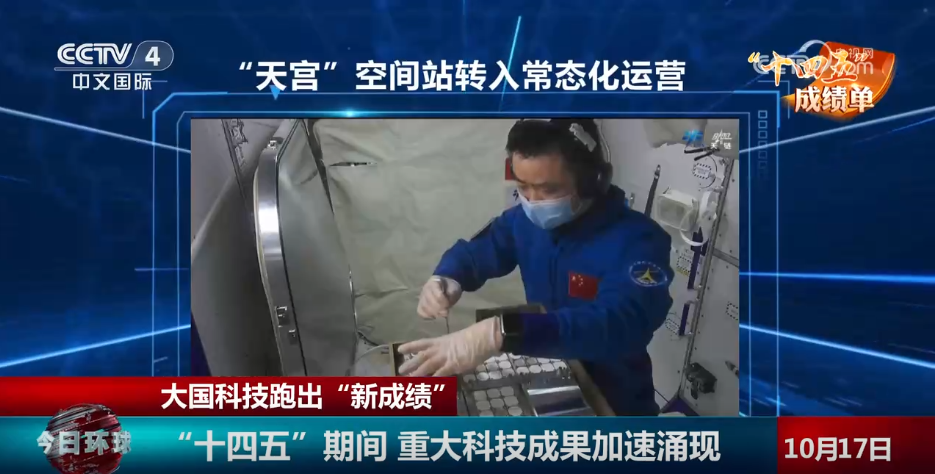
Core Insights - The "14th Five-Year Plan" marks a significant year for China's technological and industrial innovation, emphasizing the integration of new productive forces and the acceleration of major scientific achievements [1][3] - The plan highlights the importance of innovation as a core element in China's modernization and positions technological self-reliance as a strategic support for national development [1][3] Group 1: Achievements in Technology - Major technological achievements during the "14th Five-Year Plan" include the operational normalization of the "Tiangong" space station, the successful lunar sample return by "Chang'e 6," and the large-scale application of 5G technology [3] - The "China Sky Eye" neutrino experiment facility has commenced operations, and the construction of the new generation nuclear fusion device BEST is fully underway, with expectations to light the first lamp through nuclear fusion by 2030 [3] Group 2: Investment and R&D Growth - In 2024, total R&D investment is projected to exceed 3.6 trillion yuan, representing a 48% increase compared to 2020, with R&D intensity surpassing the average level of EU countries [5] - The total number of R&D personnel in China ranks first globally, indicating a robust workforce dedicated to innovation [5] Group 3: Impact on Society and Youth Involvement - Over the past five years, technology has significantly transformed daily life, with more than half of the world's new energy vehicles operating in China and 60% of global artificial intelligence patents originating from the country [7] - Funding for basic research is expected to grow by over 70% compared to 2020, fostering breakthroughs in quantum technology, life sciences, and space science [7] - The proportion of young scientists under 45 leading national key R&D projects exceeds 40%, with 80% of National Natural Science Foundation projects undertaken by this age group, highlighting the emergence of young talent as a key driver of technological resilience [7] Group 4: Technology Transfer and Economic Impact - The level of technology transfer has reached new heights, with the national technology contract transaction volume maintaining double-digit growth for several years, projected to reach 6.8 trillion yuan in 2024 [10] - The transition of scientific achievements from laboratories to production lines is becoming more efficient, contributing to national strategies and enhancing public welfare [10]

科技行情能否持续?国产AI产业链正成为市场焦点...
Xin Lang Ji Jin· 2025-10-17 01:52
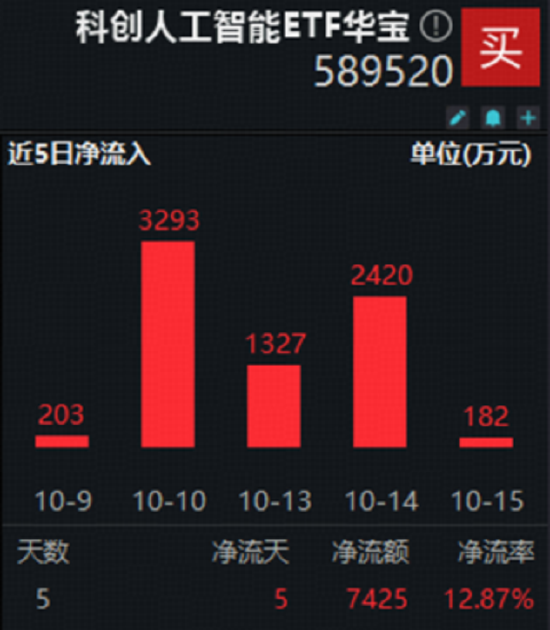
Group 1 - The core viewpoint of the articles suggests that the technology sector in the A-share market is expected to continue as a main investment theme, driven by the importance of self-reliance in technology and the ongoing trend of domestic substitution [1][2] - Recent performance of Chip Origin Technology (芯原股份) shows significant growth, with Q3 2025 projected revenue reaching 1.284 billion yuan, a 119.74% increase quarter-on-quarter and a 78.77% increase year-on-year, primarily due to a surge in one-stop chip customization services [1] - The AI industry is experiencing accelerated internal consolidation, exemplified by the strategic cooperation agreement between SenseTime and Cambricon, indicating a shift towards collaborative development in China's AI sector [1] Group 2 - The domestic AI chip industry is witnessing rapid advancement, with China leading globally by releasing 1,509 large models, accounting for the highest number worldwide, and dominating the top ten open-source models on the Hugging Face leaderboard [2] - The Science and Technology Innovation Artificial Intelligence ETF (科创人工智能ETF, 589520) has attracted significant capital inflow, totaling 74.25 million yuan over the past five days, reflecting investor confidence in the sector's future [2][4] - The ETF's top ten holdings account for over 70% of its weight, with the semiconductor sector representing more than half, indicating a high concentration and aggressive investment strategy [4] Group 3 - The current phase of the technology stock market is characterized as an explosive growth stage, with expectations not fully priced in, particularly regarding advanced technology areas mentioned in the "14th Five-Year Plan" [5] - The integration of edge and cloud computing is becoming a core trend in AI development, presenting historic opportunities for the domestic AI industry across various segments [6] - The Science and Technology Innovation Artificial Intelligence ETF and its connected funds provide convenient tools for investors to engage in this rapidly evolving sector [6]

【“十四五”成绩单】大国科技跑出新成绩
Yang Shi Wang· 2025-10-16 15:23
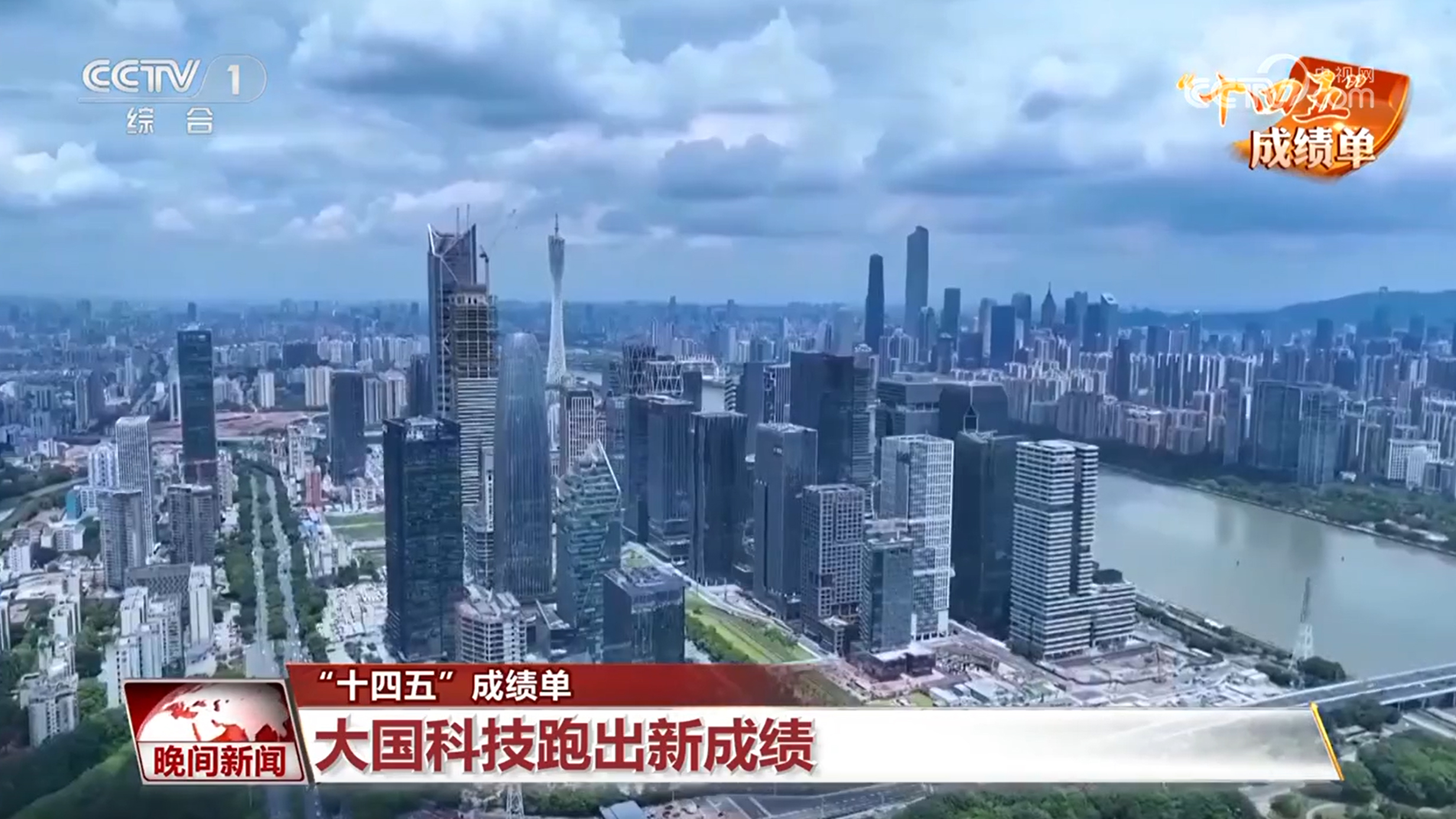
Core Insights - The "14th Five-Year Plan" has led to significant advancements in China's technological and industrial innovation, with a focus on self-reliance and strategic support for national development [3][10] - Major technological achievements include the operationalization of the "Tiangong" space station, the successful lunar sample return by "Chang'e 6," and the large-scale application of 5G technology [3][10] Investment and R&D - In 2024, total R&D investment is expected to exceed 3.6 trillion yuan, representing a 48% increase from 2020, with R&D intensity surpassing the average level of EU countries [5] - The number of R&D personnel in China ranks first globally, indicating a strong workforce dedicated to innovation [5] Breakthroughs in Fundamental Research - Funding for basic research is projected to grow by over 70% compared to 2020, with significant achievements in quantum technology, life sciences, and space science [6] - The proportion of young scientists (under 45) leading key national R&D projects exceeds 40%, showcasing a shift towards younger talent in the scientific community [8] Technology Transfer and Economic Impact - The total value of technology contracts has maintained double-digit growth for several years, expected to reach 6.8 trillion yuan in 2024, facilitating the transition of scientific achievements from laboratories to production lines [8] - The advancements in technology have notably improved daily life, with over half of the world's new energy vehicles operating in China and the country holding 60% of global AI patents [5][6]
北京证监局:鼓励支持更多优质科技企业赴北交所上市
Sou Hu Cai Jing· 2025-10-16 03:49
Core Viewpoint - The China Securities Regulatory Commission (CSRC) is enhancing the listing system to support technology-driven companies, emphasizing the importance of listing as a means for these enterprises to gain financial backing [1] Group 1: Policy and Regulatory Framework - The Beijing Regulatory Bureau is committed to optimizing work mechanisms and improving the quality of guidance and supervision for companies seeking to list [1] - Continuous reforms in the listing system aim to increase inclusivity and adaptability, particularly for high-quality, unprofitable companies [1] Group 2: Support for Technology Enterprises - The regulatory body encourages more quality technology companies to list on the Beijing Stock Exchange, leveraging Beijing's advantages as a primary market [1] - There is a focus on guiding enterprises to effectively utilize the Beijing Stock Exchange as a platform for innovative small and medium-sized enterprises [1]
北京证监局答证券时报问:更大力度支持符合条件的优质未盈利企业上市
Zheng Quan Shi Bao Wang· 2025-10-16 03:36
Core Viewpoint - The China Securities Regulatory Commission (CSRC) is enhancing the listing system to support technology-driven enterprises, emphasizing the importance of listing as a pathway for these companies to access capital [1] Group 1: Regulatory Developments - The CSRC has been continuously deepening reforms in the listing system to increase its inclusiveness and adaptability [1] - The Beijing Securities Regulatory Bureau aims to optimize work mechanisms and improve the quality and efficiency of guidance and supervision [1] Group 2: Support for Technology Enterprises - There is a strong emphasis on supporting high-quality, unprofitable enterprises to go public, particularly on the Beijing Stock Exchange [1] - The regulatory body encourages more quality technology companies to list on the Beijing Stock Exchange, leveraging Beijing's advantages as a primary market [1]
事关北京加快构建科技金融体制,实施方案发布,共20条
Bei Jing Ri Bao Ke Hu Duan· 2025-10-16 03:32
Core Viewpoint - Beijing's implementation plan aims to accelerate the construction of a technology finance system to support high-level technological self-reliance and strength from 2025 to 2027, aligning with national policies and local innovation goals [1][2]. Overall Goals - The plan targets the establishment of a comprehensive technology finance service system, enhancing financial services for national laboratories and leading technology enterprises, with a goal to exceed 10 trillion yuan in newly established funds by 2027 [3]. - By the end of 2027, the balance of technology loans and loans to technology enterprises is expected to surpass 5.5 trillion yuan and 2.5 trillion yuan respectively, with annual growth rates exceeding national and municipal averages [3]. Venture Capital Support - The plan emphasizes securing various national-level funds to be established in Beijing, enhancing financial support for major technological breakthroughs and original innovations [4]. - It aims to deepen pilot projects for financial asset investment companies, targeting a total cooperative fund scale of no less than 50 billion yuan by 2027 [5]. Monetary and Credit Support - The plan intends to leverage structural monetary policy tools to support technology innovation financing, aiming to mobilize no less than 100 billion yuan annually for related loans [7]. - It proposes optimizing evaluation models for technology enterprises to improve credit access and enhance the precision of financial services [7]. Capital Market Support - The initiative seeks to support high-quality technology enterprises in listing, utilizing capital market reforms to facilitate their growth and financing [10]. - It plans to establish a "Zhongguancun Technology Board" for issuing technology innovation bonds, enhancing the registration and issuance process [10]. Technology Insurance Role - The plan encourages the development of insurance products that cover the entire cycle of technological innovation, aiming to provide comprehensive risk protection for technology enterprises [12]. Fiscal Policy Guidance - It emphasizes the use of fiscal funds to amplify and guide technology finance, supporting financing guarantees for technology enterprises [13]. Open Innovation Ecosystem - The plan aims to enhance the convenience of cross-border fund usage and promote international cooperation in technology finance, encouraging foreign investment in local technology enterprises [14][15]. Organizational Implementation - The plan outlines a coordinated mechanism for implementing technology finance initiatives, establishing a comprehensive evaluation system for financial institutions' contributions to technological innovation [16][17].
沪指收复3900点,短期扰动不改中期向好格局,操作上兼顾防御与进攻
British Securities· 2025-10-16 02:03
Core Insights - The report indicates that the A-share market is experiencing a recovery, with the Shanghai Composite Index successfully reclaiming the 3900-point mark, reflecting a positive medium-term outlook despite short-term volatility [2][8][10] - The overall market volume has significantly decreased, with a total trading volume of approximately 2 trillion yuan, indicating cautious sentiment among new investors [2][8][10] Market Overview - On Wednesday, the three major indices opened high but experienced a pullback before rising again in the afternoon, with the Shanghai Composite Index increasing by 1.22% [4][5] - The sectors that performed well included aviation, automotive, chemical pharmaceuticals, and electric grid equipment, while shipping ports and small metals saw declines [4][5] Sector Analysis - The pharmaceutical sector, particularly chemical pharmaceuticals and CROs, is expected to have configuration value due to its previous underperformance and the aging population driving demand [6] - The robotics industry has shown strong growth, with significant increases in stock prices since January 7, 2025, driven by robust internal growth and supportive government policies [7] Future Market Outlook - The report maintains that the A-share market's upward trend may continue into the fourth quarter, although the momentum may weaken and volatility may increase [2][8] - Investors are advised to balance short-term defensive strategies with medium-term positioning, focusing on dividend assets like banks and public utilities, while also targeting growth sectors such as AI, semiconductors, and robotics [9][10]
拿没拿洋奖,都不是定义中国发展水平的指标
Bei Jing Ri Bao Ke Hu Duan· 2025-10-16 01:44
Core Viewpoint - The discussion surrounding the Nobel Prize winners' nationalities has sparked debates about national scientific strength, particularly focusing on China's position in global scientific innovation [1][3]. Group 1: Nobel Prize Overview - The Nobel Prize, established by Alfred Nobel's will, aims to honor individuals or organizations that have made outstanding contributions to humanity, becoming one of the most prestigious awards globally [4]. - Controversies surrounding the Nobel Prize include debates over selection criteria, the time lag between achievements and awards, and the emphasis on individual contributions rather than collaborative efforts in modern scientific breakthroughs [4]. Group 2: Critique of Specific Nobel Prizes - The Nobel Literature and Peace Prizes are often criticized for being closely tied to Western values and geopolitical interests, which undermines their universality and credibility [6]. - The Nobel Economics Prize has faced scrutiny for failing to address significant global economic issues, reflecting a disconnect between its evaluation standards and the realities of contemporary economic challenges [6]. Group 3: China's Scientific Development - Over the past 70 years, China has undergone the largest modernization process in human history, achieving significant breakthroughs in various fields, which have contributed to its independent industrial and research systems [7]. - China's focus on application-oriented research has provided substantial momentum for modernization, laying a solid foundation for advancing basic research and embracing new industrial revolutions [7][9]. Group 4: Attitude Towards Innovation - The high costs associated with technological innovation necessitate patience, as foundational research requires time to yield results, and recent investments in this area are expected to bear fruit in the future [9]. - The narrative that compares Nobel Prize counts to assess China's innovation capability is seen as a simplistic approach that fails to recognize the complexities of scientific development [10]. Group 5: Perspective on Nobel Prizes - A balanced perspective towards the Nobel Prize is advocated, emphasizing that the goal of China's scientific development is not solely to win awards but to address developmental challenges and contribute to global progress [11]. - The focus should be on fostering a culture of respect for science and innovation, maintaining strategic patience, and not being swayed by external pressures or temporary metrics [10][11].

新“新三样”何以乘风破浪
Xin Hua Ri Bao· 2025-10-15 20:49
Core Insights - The International Federation of Robotics reports that by 2024, the stock of operational industrial robots in China will exceed 2 million units, ranking first globally [1] - The emergence of new "new three items"—robots, artificial intelligence, and innovative drugs—signals a shift in China's industrial leadership from scale to strength, driven by technological innovation [1][2] - The rise of new "new three items" is supported by a solid industrial foundation and continuous policy guidance, with China possessing the most complete industrial system and a large-scale market [2] Group 1 - The new "new three items" are seen as key drivers of China's economic transformation, emphasizing high-value, knowledge-intensive industries [2] - The strategic significance of the new "new three items" lies in their potential to optimize economic structure and enhance total factor productivity [2] - Jiangsu province is actively promoting the development of the new "new three items," with initiatives like establishing Nanjing as a "robot city" and leading in innovative drug approvals [2] Group 2 - Challenges remain in achieving technological self-reliance, particularly in high-end chips, core algorithms, and original drugs, indicating ongoing "bottleneck" risks [3] - The development of new "new three items" must focus on quality improvement and original breakthroughs, rather than just scale expansion [3] - Continuous efforts are needed to overcome core technology challenges and enhance global collaboration to support the future of China's economy [3]
中国制造 正在换“芯”
Zhong Guo Xin Wen Wang· 2025-10-15 19:56
构建新发展格局最本质的特征是实现高水平的自立自强。确保国内大循环畅通、塑造我国在国际大循环 中的新优势,关键也在于加快科技自立自强。随着科技创新和产业创新深度融合,我国科技成果层出不 穷,创新应用加速落地,新质生产力加快形成,创新的"势能"持续向经济的"动能"转化,新发展格局的 科技支撑不断强化。其中,人工智能作为引领新一轮科技革命和产业变革的战略性技术,其重要性和作 用不断凸显。 人工智能赋能制造强国建设大有可为。当前,我国人工智能自主生态建设大幅提速,大模型百舸争流、 异军突起,核心产业快速发展,企业AI使用率大幅提高,工业机器人密度显著提升,具身智能加速走 向应用。随着我国加快科技自立自强,努力补齐短板、锻造长板,推动科技成果加速向现实生产力转 化,越来越多的"高技术含量"产品被全球消费者所青睐,中国制造"向新图强",正在不断开辟新赛道、 塑造新优势。中国已成为人工智能相关产业增量最快的市场之一,越来越多过去在科幻电影中看到的场 景变为现实。 作者:陈曦,国家发展改革委宏观经济研究院副研究员 ("三里河"工作室) (文章来源:中国新闻网) 人工智能重新定义"中国制造"边界。通过"人工智能+"赋能千行百业 ...