
数字经济

Search documents
12月PMI超预期回暖,产需两端明显回升
Hua Xia Shi Bao· 2025-12-31 16:39
Core Viewpoint - The manufacturing PMI has returned to the expansion zone for the first time since April, indicating a recovery in economic sentiment, driven by stable growth policies and resilient exports [2][4]. Group 1: Manufacturing Sector - The manufacturing PMI for December is reported at 50.1%, marking a significant increase and indicating expansion [2]. - The production index stands at 51.7%, up 1.7 percentage points from the previous month, reflecting accelerated production activities and improved market confidence [4]. - The new orders index has risen to 50.8%, indicating a recovery in market demand, particularly in sectors like food processing and textiles [5]. - Large enterprises' PMI has also returned to the expansion zone at 50.8%, up 1.5 percentage points from last month [5]. Group 2: Non-Manufacturing Sector - The non-manufacturing PMI is reported at 50.2%, showing improvement in the service sector, although the service PMI remains slightly below the expansion threshold at 49.7% [8]. - The construction sector has shown notable recovery, with the construction PMI rising to 52.8%, marking a return to expansion after five months [8]. - The business activity expectation index for the service sector is at 56.4%, indicating increased confidence among service enterprises regarding future market developments [8]. Group 3: Economic Policies and Outlook - The government is expected to implement more proactive macroeconomic policies, with a focus on balancing fiscal expansion and sustainable growth [3]. - The production and business activity expectation index has risen to 55.5%, reflecting enhanced confidence among manufacturing enterprises [7]. - The overall economic environment is supported by favorable external trade conditions and a strong global AI investment trend, contributing positively to exports [6].


2026年格隆汇“下注中国”十大核心资产名单,重磅揭晓!
格隆汇APP· 2025-12-31 16:18
Core Insights - The article presents the "Top 10 Core Assets for 2026" as voted by millions of members from over 70 countries, highlighting the collective wisdom of global investors in navigating market uncertainties [2][5]. Summary by Categories Core Assets - The selected core assets include: - **Zhongji Xuchuang (中际旭创)**: Market cap of 6,778 million RMB, focusing on AI and advanced manufacturing [3] - **Tencent (腾讯)**: Market cap of 49,160 million RMB, centered on AI applications [3] - **Alibaba (阿里巴巴)**: Market cap of 24,500 million RMB, involved in AI and cloud computing [3] - **Gold ETF (黄金ETF)**: Market cap of 1 million RMB, categorized under precious metals [3] - **Luoyang Molybdenum (洛阳钼业)**: Market cap of 4,279 million RMB, with no specific industry listed [3] - **China Ping An (中国平安)**: Market cap of 12,400 million RMB, in the financial sector [3] - **Dongfang Caifu (东方财富)**: Market cap of 3,663 million RMB, with no specific industry listed [3] - **Wanhua Chemical (万华化学)**: Market cap of 2,400 million RMB, in the chemical industry [3] - **WuXi AppTec (药明合联)**: Market cap of 1,515 million RMB, in the pharmaceutical sector [3] - **Trip.com Group (携程集团)**: Market cap of 3,250 million RMB, in consumer discretionary [3] Market Context - The investment landscape in China for 2025 is characterized by uncertainties, including fluctuating recovery expectations, geopolitical tensions, and evolving trends in real estate and AI [4]. - The article emphasizes the importance of collective intelligence in investment decisions, asserting that the aggregated insights from millions can effectively guide investors through market complexities [5][7]. Performance Metrics - From 2019 to 2025, the "Top 10 Core Assets Index" achieved a cumulative growth of 318.67%, significantly outperforming the CSI 300 Index (+56.2%) and the Hang Seng Index (-0.82%) [11]. - In 2025, the equal-weighted return of the top assets reached 35.1%, again surpassing the performance of major indices [11]. Selection Criteria - The selected companies must meet four key principles: 1. Represent Chinese enterprises with a domestic market focus 2. Align with future economic directions and create long-term value 3. Possess competitive advantages or potential in emerging sectors 4. Have a projected market cap growth of 20% or more in 2026 [10] Individual Company Insights - **Zhongji Xuchuang**: Expected to benefit from a surge in AI-related demand, with a projected market cap growth of 25%-30% [12]. - **Tencent**: Anticipated to see a 25%-30% increase in adjusted net profit, driven by its strong domestic user base and advertising revenue [13]. - **Alibaba**: Forecasted to achieve a 25%-28% stock price increase, supported by its dual focus on AI and consumer markets [14]. - **Gold ETF**: Positioned as a key hedging tool, with a projected 28%-32% growth in fund inflows [15]. - **Luoyang Molybdenum**: Expected to maintain its leading position in the battery materials sector, with a projected net profit of 320-350 million RMB [16]. - **China Ping An**: Anticipated to grow its market cap by 20%-25%, benefiting from the domestic financial market's recovery [17]. - **Dongfang Caifu**: Projected to see a 22%-28% increase in market cap, driven by the growth in wealth management services [18]. - **Wanhua Chemical**: Expected to achieve a net profit of 155-162 million RMB, supported by domestic demand [19]. - **WuXi AppTec**: Positioned as a leader in the ADC field, with significant growth driven by domestic innovation [20]. - **Trip.com Group**: Forecasted to grow revenue by over 25%, capitalizing on the recovery of domestic travel [21]. Conclusion - The selected core assets reflect a strategic alignment with China's economic growth and key sectors, including AI, renewable energy, finance, and healthcare, emphasizing their potential for long-term value creation [22].






【丝路话语】“指尖”连山海 “甘味”香飘远
Xin Lang Cai Jing· 2025-12-31 14:50
Core Viewpoint - The launch of the "Guanwei" live streaming competition and the establishment of the "Guanwei" e-commerce live streaming base in Hangzhou signify a new era of agricultural brand upgrading and regional collaboration, leveraging digital economy to reshape rural revitalization pathways [1][2]. Group 1: Agricultural Brand and Digital Economy - The "Guanwei" brand represents the unique agricultural products of Gansu, which have historically been undervalued due to geographical barriers, but live streaming has created a new value evaluation system for these products [1][2]. - Live streaming allows consumers to connect with the details of agricultural products, including production environments and the stories of producers, enhancing trust and willingness to pay [1][2]. Group 2: Cultural Integration and Collaboration - The competition promotes a new type of agricultural "harvest" by integrating cultural memory, ecological wisdom, and craftsmanship into the agricultural sector, moving beyond mere material production [2]. - The collaboration between Hangzhou and Gansu represents a shift from traditional support models to a new paradigm of resource complementarity and mutual value activation through digital economy [2][3]. Group 3: Long-term Sustainability and Challenges - The success of the initiative is not solely measured by immediate sales but by the ability to confirm the modern value of traditional agricultural practices and ensure sustainable development [3]. - Challenges such as homogenized competition and over-reliance on personal branding in live streaming could threaten the long-term development of the "Guanwei" brand, emphasizing the need for a focus on quality and ecological maintenance [2][3].
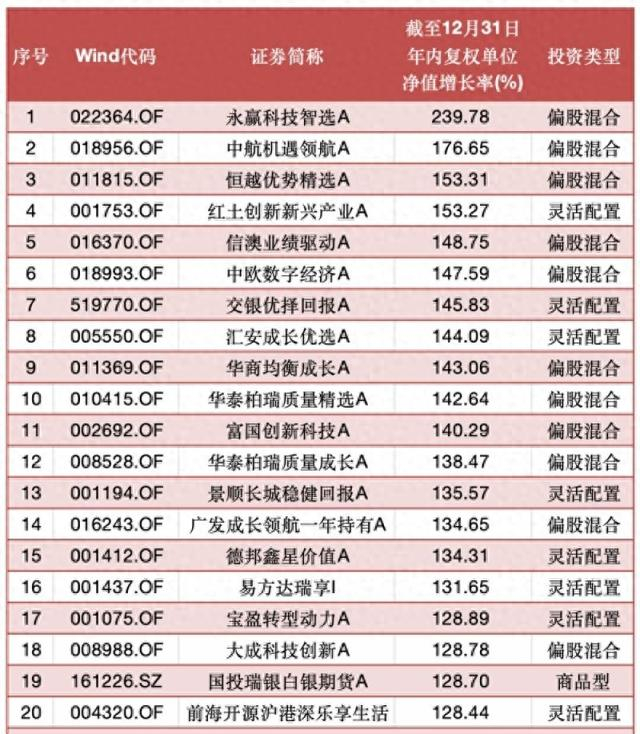
2025基金业绩TOP20揭晓:名字带“科技”的基金,今年赢麻了
Hua Xia Shi Bao· 2025-12-31 13:59
Core Insights - The article highlights the strong performance of public funds in 2025, particularly those focused on technology and digital economy sectors, with many achieving returns exceeding 125% [2][5] - The leading fund, Yongying Technology Smart Selection A, achieved a remarkable return of 239.78%, significantly outpacing its competitors [2][3] Fund Performance - The top-performing funds are predominantly equity funds with a clear focus on technology themes, particularly artificial intelligence and digital economy [2][3] - The second and third positions are held by China Aviation Opportunity Navigation A and Hengyue Advantage Selection A, with returns of 176.65% and 153.31% respectively [2][3] Investment Strategies - Leading funds have concentrated their portfolios in sectors such as AI computing power, semiconductors, and digital economy, reflecting a strategic alignment with market trends [3][4] - Yongying Technology Smart Selection A's top holdings include major players in the communication and electronics sectors, indicating a focused investment strategy [3][4] Market Trends - The article notes a significant structural characteristic of the A-share market in 2025, termed the "technology bull," which has driven the performance of these funds [2][5] - Factors contributing to this trend include a surge in demand for AI infrastructure, a recovery in the semiconductor industry, and supportive domestic policies for digital economy development [5][6] Performance Sustainability - Despite high returns, there are concerns regarding the sustainability of such performance, as the market may not replicate these results in the future [7][8] - Analysts emphasize the need for fund managers to reassess the long-term value of their holdings in light of high valuation levels in certain tech sectors [8]


看新质生产力的“催化剂”如何打造全球数字经济新高地
Xin Jing Bao· 2025-12-31 13:35
北京"十五五"规划建议指明了方向:要建设全球数字经济标杆城市,重点发展新质生产力,全面推 开"人工智能+"行动。而金融被赋予了更重要的使命——不仅要服务实体经济,还要成为科技创新的"助 推器"。金融正用数字技术重塑自己,更好地服务国家战略,支持实体经济迈向高质量未来。 ...
操作:不等了!调仓,大调仓!减仓2个方向,抄底3个基金
Ge Long Hui· 2025-12-31 13:31
Group 1 - The market is experiencing consolidation, with a focus on gradually increasing positions in rare metals, quality mixed funds, and semiconductors [1] - The supply side of rare metals is becoming rigid due to policy restrictions from key resource countries and domestic export controls, providing long-term price support [1] - Demand for rare metals is expanding, driven by stable growth in sectors like new energy vehicles and emerging industries such as AI and low-altitude economy [2] Group 2 - The semiconductor sector is showing a trend of steady upward movement, with significant room for growth as it benefits from policy support and long-term industry demand [2] - The semiconductor industry is characterized by both certainty and elasticity, with new demands from AI and digital economy driving the entire supply chain's prosperity [2] - The investment in semiconductor ETFs reflects confidence in the sector's growth potential amid ongoing U.S.-China technology competition [2] Group 3 - The focus on value investment in mixed funds includes sectors like chips, construction materials, and basic chemicals, with a positive outlook for future performance [3] - The fund manager emphasizes investing in high-quality companies with competitive advantages, aiming for balanced portfolio performance [3] - The mixed fund has shown a year-to-date increase of 27.33% and a total return of 107.79% since inception, indicating strong growth potential [3]

强化平台治理 筑牢网络安全法治根基
Xin Lang Cai Jing· 2025-12-31 12:42
Core Viewpoint - The development of the digital economy relies on innovations in key technologies like artificial intelligence and a reliable cybersecurity framework. The upcoming amendments to China's cybersecurity law aim to address the evolving challenges in cybersecurity governance and will take effect on January 1, 2026 [1][2]. Group 1: Key Features of the Amendments - The legal responsibility system has been made more scientific and reasonable, introducing various administrative penalties such as warnings, fines, business suspensions, and license revocations, with increased maximum fines to ensure compliance from network platform operators [2][3]. - The connection between different legal systems has been improved, emphasizing that network operators must comply with the Civil Code, Data Security Law, and Personal Information Protection Law when handling personal information [2][3]. - The technical response mechanisms have been enhanced, particularly addressing cybersecurity issues in the artificial intelligence sector, providing comprehensive institutional support for its healthy development [2][3]. Group 2: Legal Responsibility Changes - The amendments require platforms to not only stop the transmission of illegal information but also to report it to relevant authorities, creating a complete response loop that reflects a preventive governance philosophy [3][4]. - In terms of personal information protection, the amendments incorporate the Civil Code and other laws into the legal basis for cybersecurity obligations, guiding platforms towards systematic compliance [3][4]. - The revised penalties for severe violations can reach between 2 million to 10 million yuan, and responsible personnel may also face administrative penalties, ensuring accountability at the management level [3][4]. Group 3: Recommendations for Platform Enterprises - Network platform enterprises must promptly adjust and review their cybersecurity protection systems and technical measures to avoid severe legal liabilities in the event of major cybersecurity incidents [4]. - There is a need to transition from establishing a cybersecurity compliance system to continuously improving it, covering the entire lifecycle of network systems [4]. - Large platforms should establish dedicated security management organizations led by senior management, conduct comprehensive risk assessments, and develop actionable emergency response plans [4]. Group 4: Regulatory Coordination - Regulatory bodies need to enhance their coordination roles, forming a cross-departmental collaborative mechanism for law enforcement and judicial actions [5]. - The governance of cybersecurity is a systemic social governance project involving multiple departments, necessitating information sharing and joint enforcement mechanisms [5]. - This regulatory adjustment is crucial for aligning penalties with the degree of negligence in fulfilling cybersecurity obligations by platform enterprises [5]. Group 5: Future Cybersecurity Landscape - The cybersecurity protection efforts in China will unfold in a more complex international and domestic environment, guided by a comprehensive national security perspective [6]. - The amendments to the cybersecurity law are seen as foundational measures to address urgent governance needs and prepare for future risks [6]. - Cybersecurity governance is a dynamic and evolving process that requires continuous optimization and adherence to legal principles [6].
尼泊尔央行开放IT企业对外投资来推动数字经济接轨全球
Shang Wu Bu Wang Zhan· 2025-12-31 12:21
Core Viewpoint - The approval by Nepal's central bank for local IT companies to invest overseas and establish branches is a significant structural policy shift aimed at connecting Nepal's digital economy with global markets [1] Investment Policy Highlights - Export-oriented enterprises can invest up to $1 million, while non-export-oriented enterprises can invest up to $20,000, with investment limits subject to dynamic adjustments based on actual performance [1] - The process has been simplified by removing the requirement for prior approval from the central bank for profit repatriation, allowing banks to directly handle related transactions after foreign investment project approval, thereby enhancing transaction efficiency [1] Strategic Significance - This reform is expected to help companies directly connect with international clients and integrate into global supply chains [1] - It aims to promote foreign exchange inflow through formal channels and sends a clear message to young entrepreneurs about the importance of "starting locally and going global" [1] - The initiative is a key measure for Nepal to diversify its economy and reduce reliance on remittances, with anticipated profound impacts on high-value digital industries [1]
AI浪潮下,平台企业扛起创新大旗
Xin Jing Bao· 2025-12-31 12:17
Core Insights - The report highlights the significant role of platform enterprises in driving technological innovation and high-quality development in the digital economy era, particularly under the influence of AI [1][2][3] Group 1: Platform Economy and Technological Innovation - From 2015 to 2023, nearly all of the top ten companies by market capitalization globally are platform or technology innovation enterprises, indicating the importance of platform economy in the current market [1] - The report emphasizes that breakthroughs in digital technology are key catalysts for organizational transformation, pushing companies from "vertical management" to "open interconnection," with platform enterprises being the core carriers of this transformation [1] - ByteDance is cited as an example of a platform enterprise that has successfully developed innovative products like Douyin and Toutiao through its proprietary recommendation algorithms, reshaping consumer shopping habits and creating a new paradigm of "third-generation e-commerce" driven by algorithms and data [1][3] Group 2: R&D Investment and Global Comparison - The "Seven Sisters" of American technology have become central to discussions on U.S. tech, with a cumulative R&D investment of 21,999 billion RMB from 2020 to 2022, reflecting a compound annual growth rate of 31.7% [2] - In China, the top ten platform enterprises have invested over 500 billion RMB in R&D from 2020 to 2022, with an annual growth rate of 15% and over 50,000 authorized patents [2] Group 3: Integration of Soft and Hard Technology - Platform enterprises are uniquely positioned to activate hard technology research and development through soft technology, creating a sustainable cycle where market returns feed back into R&D, enhancing market competitiveness [3][4] - ByteDance exemplifies the integration of soft and hard technology, fostering a conducive environment for innovation while increasing investment in core technologies like AI algorithms and foundational tech development [4] Group 4: Employment and Economic Impact - The platform economy is reshaping employment patterns by leveraging AI and big data, creating new job opportunities and enabling a "democratization of business" and "micro-entrepreneurship" [5][6] - New business models driven by platforms, such as short videos and live streaming, are projected to create direct employment for 49.21 million people and indirect employment for 15.34 million by 2024 [6] - Initiatives like the "Rural Talent Program" by ByteDance aim to address structural employment issues by utilizing AI technology to support digital learning in rural areas, with 51,000 trainees expected by the end of 2024 [6]
“齐鲁农超”入选山东省数字经济产业创新中心
Qi Lu Wan Bao· 2025-12-31 12:02
Group 1 - The Shandong Qilu Agricultural Super Technology Co., Ltd. has been recognized as a "Digital Economy Industry Innovation Center" for its achievements in agricultural digitalization, marking it as a benchmark for the province's digital transformation in agriculture [1][2] - The company operates the "Qilu Agricultural Super" platform, which is a comprehensive digital platform for agriculture, integrating government services, e-commerce, promotion, digital technology, cultural creativity, and supply chain transactions [2][3] - The platform has garnered significant attention from the Shandong provincial government, being included in multiple official documents aimed at accelerating digital economy development and rural revitalization [2][3] Group 2 - The "Qilu Agricultural Super" platform employs a "government-media-enterprise co-construction" model, enhancing collaboration and creating a dual-driven production and sales system [3] - The platform has successfully aggregated over 5,600 quality agricultural enterprises and products from 16 cities in Shandong, establishing a strong foundation for promoting Shandong agricultural products nationally and internationally [3] - The recognition as a digital economy innovation center will further propel the company's exploration in smart agriculture, digital supply chains, and platform operations [3]