绿色转型

Search documents
回望“十四五” | “加减乘除”中的发展密码——从“四则运算”解析“十四五”中国经济
Zhong Guo Zheng Quan Bao· 2025-10-14 03:23
Economic Growth and Achievements - During the "14th Five-Year Plan" period, China's economy has achieved significant milestones, with a total economic output approaching 140 trillion yuan and an average annual growth rate of 5.5%, contributing over 30% to global economic growth [1][5][4] - The total increase in China's economy over five years is expected to exceed 35 trillion yuan, equivalent to recreating the economic output of the Yangtze River Delta region [4][5] Investment and R&D - In 2024, the total R&D expenditure is projected to increase by nearly 50% compared to the end of the "13th Five-Year Plan," with high-tech manufacturing value added expected to grow by 42% [1][15] - The number of enterprises benefiting from R&D expense deductions reached 615,000, with a total deduction amounting to 3.32 trillion yuan in 2024, reflecting a 25.5% increase from 2021 [11] Tax Reduction and Business Environment - The cumulative tax and fee reductions during the "14th Five-Year Plan" period are expected to reach 10.5 trillion yuan, with over 70% of the benefits going to the private sector [10][12] - The market access negative list has been reduced from 123 items in 2020 to 106 items in 2025, facilitating foreign investment in the manufacturing sector [12] Infrastructure Development - The recently opened Guizhou Huajiang Gorge Bridge significantly reduces travel time between two banks from over two hours to about two minutes, showcasing China's engineering capabilities [3] - The establishment of the Hubei Ezhou Huahu International Airport has opened 45 international cargo routes, contributing to a 6.1 percentage point increase in Hubei's foreign trade growth [19] Innovation and Green Development - The proportion of the "new economy" continues to rise, with innovation driving the development of new productive forces and modern industrial systems [6][15] - During the "14th Five-Year Plan," energy consumption per unit of GDP has decreased by 11.6%, and renewable energy generation capacity has increased to around 60% [17] Market Dynamics and Reforms - Structural reforms have been implemented to reduce burdens and barriers, enhancing market vitality and competitiveness [9][12] - The active inter-provincial trade ratio reached 40.4% in early 2025, indicating improved market integration [19]
越秀资本(000987)9M25业绩预告点评:新能源高增、投资回暖助推三季度利润新高 股权重估增厚业绩
Xin Lang Cai Jing· 2025-10-14 02:29
Core Insights - Yuexiu Capital's performance forecast for the first three quarters of 2025 is better than expected, with a projected net profit attributable to shareholders of 2.92 to 3.09 billion yuan, representing a year-on-year increase of 70% to 80% [1] - The company's non-recurring net profit is expected to be between 1.41 to 1.58 billion yuan, reflecting a year-on-year growth of 18% to 32% [1] - The strong performance is driven by the steady development of the new energy business and high investment returns due to a prosperous capital market [1] Financial Performance - In Q3 2025, the company is expected to achieve a net profit attributable to shareholders of 1.36 to 1.54 billion yuan, marking a year-on-year increase of 94% to 118% [1] - The company has changed its accounting method for equity investments, which is expected to contribute a one-time gain of 2.02 and 0.30 billion yuan, adding approximately 1.18 billion yuan to Q3 2025 net profit [2] - However, the company anticipates asset impairment and credit impairment provisions of 1.4 to 1.6 billion yuan, which will reduce the net profit for the first nine months of 2025 by 720 to 820 million yuan [2] New Energy Business - The new energy business continues to grow, with total electricity generation of 7.81 billion kWh in the first half of 2025, resulting in electricity revenue of 2.42 billion yuan, a year-on-year increase of 123% [3] - Yuexiu New Energy, a subsidiary, achieved revenue of 2.20 billion yuan and a net profit of 520 million yuan in the first half of 2025, reflecting year-on-year increases of 122% and 134%, respectively [3] - The company plans to focus on solar, wind, and energy storage sectors to diversify its new energy product offerings and enhance operational efficiency [3] Investment Outlook - The company is expected to maintain a high growth trajectory for the full year, with projected net profits of 3.41 billion yuan, 3.67 billion yuan, and 4.01 billion yuan for 2025 to 2027, representing year-on-year growth of 49%, 8%, and 9% respectively [3] - Current closing prices correspond to dynamic price-to-book ratios of 1.23x, 1.15x, and 1.07x, and dynamic price-to-earnings ratios of 12.0x, 11.2x, and 10.2x for 2025 to 2027 [3]

中经评论:人为干扰威胁全球贸易增长根基
Jing Ji Ri Bao· 2025-10-14 00:34
10月初,世界贸易组织(WTO)与国际货币基金组织(IMF)等国际机构接连发声,指出全球贸易体系 正承受着单边主义和贸易政策不确定性的冲击。当前,一些国家短期的人为政策干扰,正在深刻威胁着 中长期全球贸易的增长根基和全球经济稳定。 10月7日,WTO发布全球贸易展望报告称,受全球经济复苏乏力和美国关税政策等因素影响,将 2026年全球货物贸易增长预期大幅下调至0.5%,这较8月份1.8%的预测值明显降低。报告还预计,2025 年全球服务出口增速将从2024年的6.8%降至4.6%,2026年进一步降至4.4%,"单边关税措施和贸易政策 不确定性带来强劲逆风"。8日,IMF总裁格奥尔基耶娃对外表示,关税政策全部影响"尚未显现","全 球经济韧性尚未受到全面考验,而且有令人担忧的迹象表明真正的考验可能即将到来"。 面对严峻挑战,维护以规则为基础的多边贸易体制是应对危机的根本出路。10月6日至7日,世界贸 易组织在瑞士日内瓦召开总理事会2025年度第四次会议。中方主动设置议题,提出加强透明度、集体重 申对多边体制的承诺以及推动WTO取得务实成果等建议。欧盟、巴西、澳大利亚、瑞士、巴基斯坦等 多方也发言呼吁维护世贸组 ...
【造纸】山东四部门联合发文,加速造纸产业点“木”成金,跨界融合
Xin Lang Cai Jing· 2025-10-14 00:27
对造纸产业来说,科技创新不仅在于破解高污染、高能耗等问题,也是跳出"老圈子",长出"新叶子"的 关键。 《指引》明确,围绕制浆、生物质精炼、造纸、纸制品上下游全产业链环节强化科技创新为驱动,提高 自主研发能力。以造纸为例,加强纤维分级和低能耗打浆、纸浆流送与纸页成型、提高上网浓度、干法 造纸等关键技术攻关;应用中高浓打浆、靴式压榨、膜转移施胶、非接触干燥、湿部化学品混合添加、 改善抄纸系统阴离子干扰等先进技术。 同时,以先进制造为重点,强化数智转型,提高产业协同能力。这个过程中,山东将引导企业加快智能 工厂建设,打造无人值守计量、资产管理、数字化碳管理等应用场景,实现制浆造纸生产流程的实时数 据采集、质量检测控制等,建设以"产业大脑"为代表的"产业大数据+行业大模型"产业链服务平台,推 动产供销精准匹配、高效协同。 (来源:华印纸箱彩盒) 从"一棵树"里能看到什么?过去,木头进去,白花花的纸张出来,这就到头了;今后,"一棵树"将发生 七十二般变化:储能碳材料、软组织修复材料、功能性膳食纤维、低聚糖…… 造纸是山东省传统优势产业,全国1/6、亚洲1/12、全球1/24的纸和纸板都由山东制造。当前,除了纸产 品多 ...
“甬”动绿色未来 奏响生态交响
中国能源报· 2025-10-14 00:07
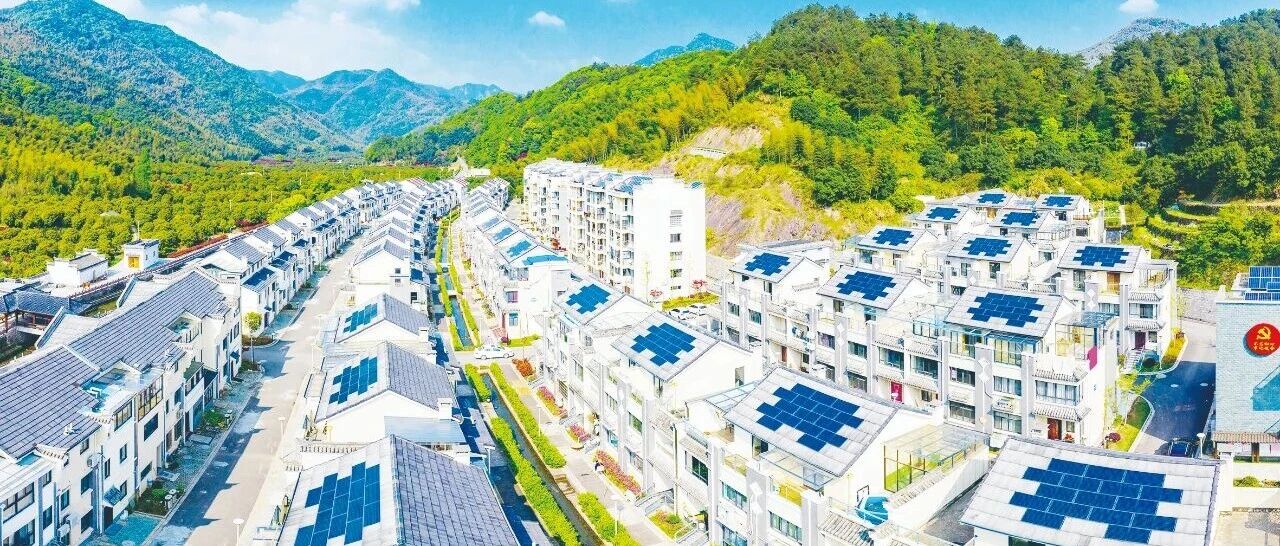
Core Viewpoint - Ningbo is showcasing its ecological civilization practices through various green transformation projects, including renewable energy initiatives and smart energy solutions, which are contributing to sustainable development and economic growth [1][3][26]. Renewable Energy Development - In 2024, Ningbo's renewable energy generation is projected to reach 131.38 million kilowatt-hours, accounting for 11.32% of the total electricity consumption [3]. - As of mid-2023, Ningbo's installed renewable energy capacity reached 12.24 million kilowatts, ranking first in Zhejiang Province, with wind power at 1.54 million kilowatts and solar power at 10.28 million kilowatts, making it the "first city" for distributed solar power in China [3][4]. Smart Energy Solutions - The Fuming Smart Charging Station in Ningbo integrates charging, battery swapping, solar power, and energy storage, featuring a 114 kW solar roof and an 880 kWh energy storage system [5][7]. - The station's operational performance includes a 32% reduction in peak load, a 50% utilization of off-peak electricity, and an annual contribution of 20,000 kWh for peak shaving [7]. Hydropower and Energy Storage - The Ninghai Pumped Storage Power Station, which began operations in May 2023, has a total installed capacity of 1.4 million kilowatts and is designed to support the stability of the East China Power Grid [11][12]. - The project is expected to generate over 30 billion yuan in GDP annually during its construction phase and increase local tax revenue by 0.6 billion yuan [11][12]. Offshore Wind and Solar Projects - The Xiangshan offshore wind farm has a total installed capacity of 25.4 million kilowatts, with an annual generation of 700 million kilowatt-hours for the first phase and 1.6 billion kilowatt-hours for the second phase [15][17]. - The largest coastal tidal flat solar project in China, located in Xiangshan, has an installed capacity of 300,000 kilowatts and an annual generation of 340 million kilowatt-hours [17][18]. Rural Transformation and Economic Benefits - Li'ao Village has become a model for rural transformation through solar power, with a total installed capacity of 600 kW and an annual generation of approximately 600,000 kWh, providing significant economic benefits to local residents [21][22]. - The village's solar initiative has led to a reduction in electricity costs for residents and has been expanded to other villages in the region, promoting a sustainable rural economy [21][23].

“大国重器”到“绿智转型”,装备制造升级
Zhong Guo Chan Ye Jing Ji Xin Xi Wang· 2025-10-13 23:35
Core Viewpoint - The advancements in China's oil and gas equipment manufacturing, particularly in automation and green technology, are significantly enhancing operational efficiency and positioning the country as a leader in the industry [1][2][3]. Group 1: Equipment Manufacturing Innovations - The introduction of a 12,000-meter deep automated drilling rig marks China's first exploration well exceeding 10,000 meters, showcasing advanced technology in drilling operations [1]. - China National Petroleum Corporation (CNPC) has integrated its manufacturing sectors, forming a specialized equipment manufacturing cluster that includes drilling equipment, oil-specific pipes, and power equipment [1]. - The automated drilling rigs have improved efficiency and safety in drilling operations, making China one of the few countries capable of independently developing such technology [2]. Group 2: Market Performance and Growth - In 2024, CNPC's equipment manufacturing business is projected to achieve a new contract signing ratio of 61.6% in both domestic and international markets, nearly doubling from 2020 [2]. - The company is transitioning from being a major steel pipe manufacturer to a strong player in the global market, filling several domestic gaps in steel pipe products [2]. Group 3: Green Technology and Sustainability - The implementation of a "photovoltaic power supply + 24-hour energy storage" model has replaced diesel generators in remote oil extraction, promoting green and efficient production [2]. - Hydrogen energy stations are being piloted to support clean alternatives in drilling and fracturing operations, contributing to the industry's green transformation [2]. - A 5,000-kilowatt electric thermal oil furnace, powered by green electricity, has been successfully operated for over 7,000 hours in the Tuhai oil field [2]. Group 4: Digital Transformation and Efficiency - The construction of a 700 billion parameter Kunlun model has significantly enhanced the efficiency of seismic data analysis, geological condition recognition, and cementing quality evaluation [3]. - Daqing Oilfield has achieved a 97.2% digital coverage rate for single wells and an 89.1% coverage rate for stations, transforming management from manual problem identification to real-time issue detection [3]. - The integration of intelligent measurement systems has replaced manual oil measurement, greatly improving operational efficiency [3].

影响市场重大事件:生态环境部表态,加强聚变等新技术跟踪研究;威刚表态,存储产业行情“好到让人头痛”,韩国厂商合约价或将涨20%-30%
Mei Ri Jing Ji Xin Wen· 2025-10-13 22:43
Group 1 - The Ministry of Ecology and Environment emphasizes the need to strengthen tracking research on new technologies such as fusion [1] - The storage industry is experiencing a significant price increase, with contract prices from South Korean manufacturers expected to rise by 20%-30% [2] - Major cloud service providers are projected to increase capital expenditures to over $420 billion in 2025, driven by AI server demand and GPU procurement [3] Group 2 - UBS indicates that if the MSCI China Index drops to 74, it will attract strong buying interest from investors [4] - CITIC Securities continues to recommend the energy storage sector, highlighting the positive fundamentals of the lithium battery industry [5] - Shanghai has officially launched a high-end medical device cluster, aiming to significantly increase the number of approved medical devices by 2027 [6] Group 3 - China Unicom has officially opened a nationwide reservation channel for eSIM services, with over 60,000 reservations already made [7] - Shanghai has achieved 37 overseas licensing transactions for innovative drugs in the first eight months of this year, amounting to $18.8 billion [8] - The Shanghai Environment and Energy Exchange has launched the "CSI Shanghai Environment Exchange Green Transition Index" to guide capital towards green transformation [9] Group 4 - Future Intelligence has completed a Series A financing round led by Ant Group, marking its third investment round this year [10]
人为干扰威胁全球贸易增长根基
Jing Ji Ri Bao· 2025-10-13 22:07
Group 1 - The global trade system is under significant pressure from unilateralism and trade policy uncertainty, threatening long-term growth and economic stability [1][2] - The WTO has drastically lowered its global goods trade growth forecast for 2026 to 0.5%, down from 1.8% predicted in August, indicating potential stagnation in global trade [1][2] - The IMF warns that the full impact of tariff policies has yet to be felt, suggesting that the global economy's resilience is about to be tested [1][2] Group 2 - Unilateral tariff barriers set by the U.S. are directly damaging the global trade order, with potential long-term consequences for economic growth and trade rules [2] - Developing countries may face severe repercussions from U.S. tariff policies, risking marginalization in global value chains due to high transportation costs and tariffs [2] - Structural changes in the global trade system are underway, with warnings that further tariff increases could lead to decreased global output and rising inflation [2] Group 3 - The maintenance of a rules-based multilateral trade system is essential for addressing the current crisis, with various countries advocating for WTO reform and commitment to its principles [3] - Many countries are opting for enhanced international cooperation to counteract uncertainty, with businesses adjusting supply chain strategies to focus on regional markets [3] - Emerging areas such as digital trade and green transformation present new opportunities for sustainable global trade development, with China playing a stabilizing role [3]
“加减乘除”中的发展密码
Zhong Guo Zheng Quan Bao· 2025-10-13 20:55
Economic Growth and Contributions - China's economy is projected to exceed 35 trillion yuan in growth over five years, equivalent to recreating the Yangtze River Delta and surpassing the economic output of the world's third-largest economy [2] - The average annual growth rate is 5.5%, contributing approximately 30% to global economic growth [2] - By 2024, China's total grain production is expected to surpass 1.4 trillion jin, an increase of 74 billion jin compared to 2020, indicating a robust agricultural sector [2] Structural Reforms and Tax Policies - A cumulative reduction in taxes and fees is expected to reach 10.5 trillion yuan during the "14th Five-Year Plan" period, with over 36.7% of these reductions benefiting technology innovation and advanced manufacturing [2][3] - The number of enterprises benefiting from R&D expense deductions reached 615,000, with a total deduction amounting to 3.32 trillion yuan in 2024, reflecting a 25.5% increase from 2021 [3] Innovation and R&D Investment - R&D expenditure in large manufacturing enterprises accounted for over 1.6% of their operating income, with total R&D investment expected to grow nearly 50% by 2024 compared to the end of the "13th Five-Year Plan" [5] - The added value of high-tech manufacturing is projected to increase by 42% by 2024 compared to the end of the "13th Five-Year Plan" [5] Domestic Demand and Market Dynamics - Domestic demand contributed an average of 86.4% to economic growth over the past four years, with final consumption contributing 56.2%, an increase of 8.6 percentage points from the "13th Five-Year Plan" period [6] - The market for AI smart glasses saw a sevenfold increase in sales during the "618" shopping festival, showcasing the explosive potential of emerging product categories [6] Infrastructure and Connectivity - The Hubei Ezhou Huahu International Airport has opened 45 international cargo routes, contributing to a 6.1 percentage point increase in Hubei's foreign trade growth since 2025 [7] - The reduction of regulatory barriers has led to a significant increase in market efficiency, with over 4,000 regulations hindering fair competition and a unified market being eliminated [7][8] Green Development and Sustainability - During the "14th Five-Year Plan" period, energy consumption per unit of GDP decreased by 11.6%, and renewable energy generation capacity increased to approximately 60% [6] - The focus on green transformation is expected to empower traditional industries and contribute to global sustainability efforts [6]
“加减乘除”中的发展密码——从“四则运算”解析“十四五”中国经济
Shang Hai Zheng Quan Bao· 2025-10-13 18:20
Economic Growth and Achievements - China's economy is projected to reach approximately 140 trillion yuan, with an average annual growth rate of 5.5%, contributing over 30% to global economic growth [2][4][7] - The economic increment over five years is expected to exceed 35 trillion yuan, equivalent to recreating the economic output of the Yangtze River Delta region [3][7] - By 2024, the total grain production is anticipated to surpass 1.4 trillion jin, marking an increase of 740 billion jin since 2020 [5] Policy and Structural Reforms - The implementation of structural tax reductions and improved business environments has led to a cumulative tax reduction of approximately 10.5 trillion yuan during the "14th Five-Year Plan" period [9][11] - The number of companies benefiting from R&D tax deductions reached 615,000, with a total deduction amounting to 3.32 trillion yuan in 2024, reflecting a 25.5% increase [10] Innovation and Technological Advancements - R&D expenditure as a percentage of revenue for large industrial enterprises exceeded 1.6%, with a nearly 50% increase in total R&D investment by 2024 compared to the end of the "13th Five-Year Plan" [14] - High-tech manufacturing value added is expected to grow by 42% by 2024 compared to the end of the "13th Five-Year Plan" [14] Market Dynamics and Internal Demand - Domestic demand contributed an average of 86.4% to economic growth over the past four years, with final consumption accounting for 56.2%, an increase of 8.6 percentage points from the "13th Five-Year Plan" [14] - The emergence of new products and business models has shown significant market potential, as evidenced by a sevenfold increase in sales of AI smart glasses during the "618" shopping festival [14] Infrastructure and Connectivity - The establishment of the Hubei Ezhou Huahu International Airport has opened 45 international cargo routes, contributing to a 6.1 percentage point increase in Hubei's foreign trade growth since 2025 [16] - The reduction of regulatory barriers has led to a 40.4% share of inter-provincial trade sales in total sales revenue, indicating improved market integration [16] Green Development and Sustainability - During the "14th Five-Year Plan," energy consumption per unit of GDP decreased by 11.6%, and renewable energy generation capacity reached approximately 60% [15] - The focus on green transformation is expected to enhance long-term economic sustainability and contribute to global green initiatives [15]