
消费金融

Search documents
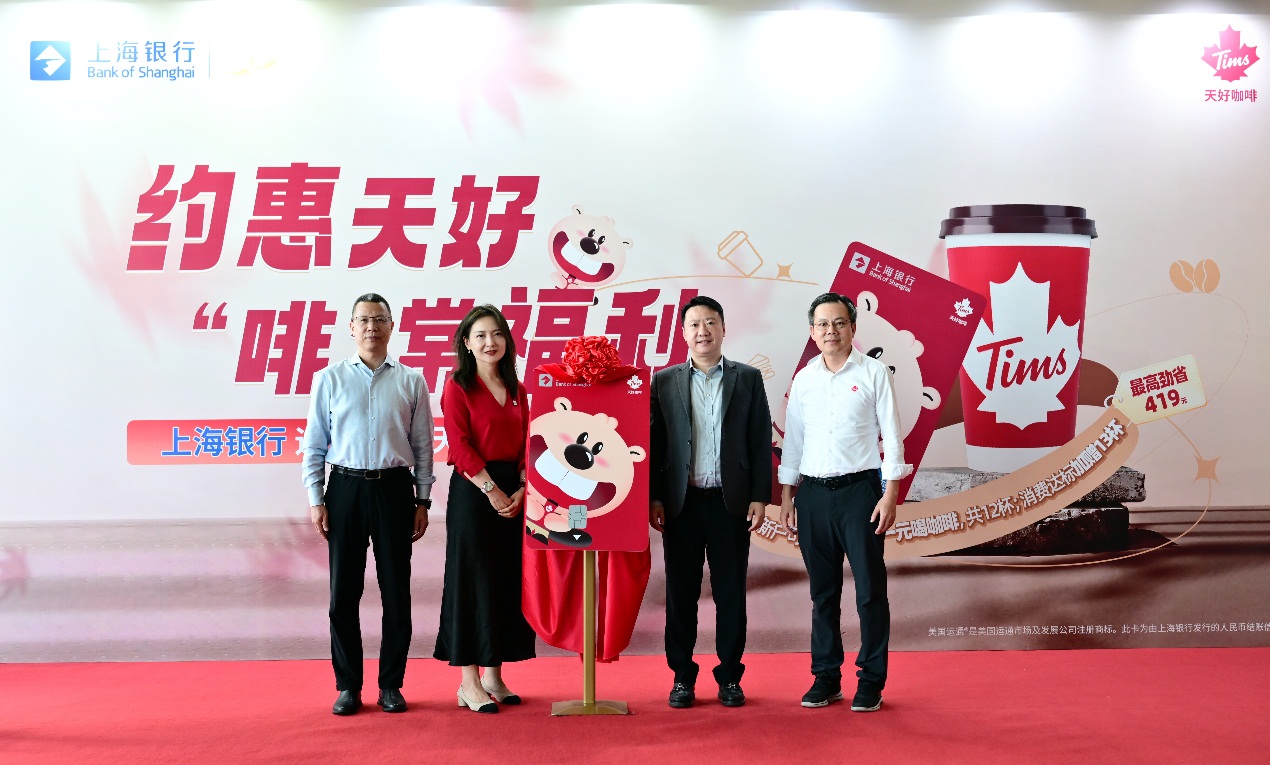
“啡”常福利!上海银行运通Tims联名卡解锁咖啡生活新场景
Zhong Guo Jing Ji Wang· 2025-08-28 02:32
Core Insights - Shanghai Bank collaborates with Tims Coffee, American Express, and Lianlian Digital to launch a co-branded credit card that integrates coffee consumption with financial services, enhancing customer experience in the coffee culture of Shanghai [2][4]. Group 1: Financial Services and Coffee Integration - The co-branded card is designed to meet the coffee consumption needs of urban professionals, offering up to 25 cups of discounted coffee throughout the year, promoting a healthy coffee and light meal lifestyle [4]. - Shanghai Bank focuses on local market development, targeting young consumers, middle-class spenders, and the elderly, with over ten million credit card customers, leading among regional commercial banks in China [4]. Group 2: Tims Coffee's Market Strategy - Tims Coffee combines fresh, high-quality local food and beverages with a differentiated strategy of "coffee + warm food," aiming for sustainable growth through affordable pricing and a welcoming atmosphere [4][6]. - The collaboration with American Express and Lianlian Digital provides robust support for the co-branded card, having established connections with over 40 banks and payment platforms, facilitating merchant acceptance [4][6]. Group 3: Exclusive Card Benefits - The co-branded card offers multiple exclusive benefits, including a coffee and light meal package upon first use, weekly discounts for the first three months, and monthly buy-one-get-one coffee offers for the subsequent months [4][6]. - Future plans include integrating Tims' services with mobile banking for convenient ordering, enhancing the overall consumer experience in coffee consumption [6].


悦达国际:保理主业韧性凸显,业务“伪降实增”,坏账率和成本业界翘楚,拟战略转型打造医疗业务
Ge Long Hui· 2025-08-26 19:50
Core Viewpoint - Yueda International Holdings (0629.HK) demonstrates strong resilience in traditional factoring business while showcasing significant characteristics of high-quality development, achieving notable revenue growth and effective risk control [2][3]. Financial Performance - Total revenue for the company reached 32.256 million, a year-on-year decrease of 15.8%, while net profit was 15.353 million, down 16.3% [3]. - Traditional factoring business generated revenue of 25.578 million, accounting for 79.3% of total revenue, with a year-on-year growth of 16% [2][3]. - Excluding structural adjustment factors, the actual core business's pre-tax profit increased by 9.2% year-on-year [3]. Operational Efficiency - The company achieved a revenue per employee of 2.68 million, 2.1 times the industry average, managed 667 million in traditional factoring assets with a lean team of 12 [3]. - Administrative expense ratio reduced to 8.8%, lower than peers by 3-5 percentage points, indicating effective cost control through digital processes [3]. - Funding cost was locked at 4.0%, slightly up by 0.2 percentage points year-on-year, still below the market average by 50 basis points [3]. Strategic Adjustments - The company actively reduced high-risk business scale and optimized customer structure, resulting in a 2.6% year-on-year increase in financing receivables to 667 million [4]. - The proportion of engineering construction clients increased significantly to 75.3%, while interest income grew by 16% year-on-year [4]. Risk Management - The bad debt ratio for traditional factoring business stood at 0.22%, significantly lower than the industry average of 3.5%-4.8% [5]. - The company focuses on high-quality clients, with a collateral coverage ratio of 120.4% for financing receivables [5]. - AI risk control penetration in telecommunications factoring business reached 100%, utilizing a dual monitoring system for real-time credit risk assessment [5]. Future Outlook - Yueda International is pursuing a strategic acquisition of 52% of Chengdu Nuoyide Medical Laboratory for 52 million, aligning with the company's low-risk cross-industry collaboration strategy [6]. - The acquisition aims to enter the billion-level medical technology sector, leveraging the company's low asset-liability ratio of 42% [6].
提振消费银行责无旁贷
Zheng Quan Ri Bao· 2025-08-24 14:41
Core Viewpoint - The recent press conference by the State Council Information Office introduced personal consumption loan interest subsidy policies and service industry operating entity loan interest subsidy policies, aiming to boost consumption and improve living standards through financial support [1][2]. Group 1: Policy Implementation - The banks are required to quickly develop implementation details and operational guidelines in accordance with the "Personal Consumption Loan Interest Subsidy Policy Implementation Plan" [1]. - Banks should adhere to principles of marketization, rule of law, and convenience, streamlining processes to enhance customer experience while ensuring that subsidy funds are used effectively [1]. Group 2: Product Innovation - Banks are encouraged to increase personal consumption loan issuance, focusing on key areas such as housing, education, and healthcare, by offering tailored products like "Home Loans" and "Renovation Loans" [1]. - There is an emphasis on aligning with new trends in green, smart, and digital consumption, including low-interest installment plans in collaboration with new energy vehicle manufacturers and instant online credit products [1][2]. Group 3: Service Optimization - Banks should simplify application processes and explore paperless services, such as remote account opening and online credit card activation [2]. - The integration of credit card, installment payment, and consumer loan functions into a "one-stop" service is recommended, along with the use of AI for 24/7 customer support [2]. Group 4: Scene Development - Banks are urged to collaborate with government and enterprises to create diverse consumption scenarios, such as providing installment support for automotive purchases and tailored funding solutions for service industries [2]. - Partnerships with popular tourist attractions to offer exclusive discounts for different customer segments are suggested to stimulate cultural and tourism consumption [2].
消费金融公司优服务促消费
Jing Ji Ri Bao· 2025-08-20 23:09
Group 1 - The Ministry of Finance, the People's Bank of China, and the Financial Regulatory Administration have issued the "Implementation Plan for Fiscal Subsidies for Personal Consumption Loans," which includes several consumer finance companies as loan processing institutions [1] - The inclusion of five additional personal consumption loan institutions indicates regulatory recognition of the role of consumer finance companies in personal consumption loans and reflects the growing importance of new citizens as a consumer group [1] - Consumer finance companies are responding positively to the plan, with institutions like Zhaolian Consumer Finance and Industrial Bank Consumer Finance committing to actively implement the fiscal subsidy policy to stimulate market vitality [2] Group 2 - Consumer finance companies are becoming a vital force in driving consumption, with their asset scale and loan balance projected to reach 1.384859 trillion yuan and 1.345603 trillion yuan respectively by the end of 2024 [3] - The industry is encouraged to adapt to new trends in consumer credit, optimize products and services, and reduce the cost of personal consumption loans while enhancing application processes [3] - There is a focus on leveraging big data analysis for precise marketing to identify consumer potential and match consumer needs effectively [3]
复苏的征途系列四:消费贷款贴息政策的五问五答
Changjiang Securities· 2025-08-17 12:44
Investment Rating - The report maintains a "Positive" investment rating for the banking industry [11] Core Insights - The current round of growth stabilization policies encourages consumption and expands domestic demand, with the government implementing fiscal subsidies for eligible personal consumption loans and service industry loans [2][6] - The introduction of consumption loan subsidies is expected to stimulate consumer demand, particularly in sectors like automotive and home renovation, thereby enhancing market expectations and risk appetite [2][8] - The fiscal leverage and encouragement of consumption policies are becoming increasingly clear, although the short-term effectiveness remains difficult to assess [2][8] Summary by Sections Background of Consumption Loan Subsidy Policy - The macroeconomic context shows a push for consumption and domestic demand expansion, with the State Council issuing a plan to provide fiscal subsidies for qualifying personal consumption loans [6] - Since the real estate downturn in 2022, retail loan demand has been weak, with personal loan growth slowing to 3.4% by the end of 2024 [6][7] Scale of Impact from Consumption Loan Subsidy Policy - By the end of 2024, the total personal consumption loan scale is projected to reach 12.3 trillion yuan, accounting for about 5% of total loans [7] - The annualized subsidy rate is set at 1.0%, meaning that for every 1 trillion yuan of new qualifying loans, the subsidy amounts to 100 billion yuan [7] Effects on Macroeconomic Expectations and Capital Markets - The policy is expected to reduce interest expenses for consumers, thereby encouraging spending [8] - The fiscal stimulus reflects confidence in economic growth, potentially boosting market expectations and risk appetite [8] Impact on Different Types of Banks - The overall credit growth in the banking sector is slowing, particularly in retail loans, which affects retail banks' asset expansion [9] - The subsidy policy is likely to benefit state-owned banks and related consumer finance institutions, especially those with a high proportion of consumer loans [9] Investment Outlook for Bank Stocks - Despite a recent recovery in market risk appetite, bank stocks may not show outstanding relative returns, but their core advantages remain in terms of allocation value and absolute returns [10] - The report highlights a positive outlook for banks like China Merchants Bank, which has strong retail customer resources and is expected to benefit from the policy [10]



央行最新报告:把握好政策实施的力度和节奏,推动物价保持在合理水平
Xin Lang Cai Jing· 2025-08-15 12:08
Group 1 - The People's Bank of China (PBOC) released the "2025 Q2 China Monetary Policy Implementation Report," summarizing the effectiveness of monetary policy in the first half of the year and analyzing current domestic and international situations [2] - The report emphasizes the need for a stable economic growth supported by new growth drivers, continuous expansion of total demand, and more proactive macro policies [4] - The PBOC aims to maintain ample liquidity and ensure that the growth of social financing and money supply aligns with economic growth and price level expectations [4][5] Group 2 - The report outlines the direction for optimizing credit structure, focusing on supporting major national strategies, key areas, and weak links, particularly in technology innovation and consumption [6] - The PBOC highlighted that the total social financing stock and broad money (M2) balance have surpassed 430 trillion yuan and 330 trillion yuan, respectively, indicating a need for continuous optimization of credit structure [6] - The report indicates that financial support for technology innovation will be enhanced, with a focus on small and medium-sized technology enterprises [7] Group 3 - The report identifies a significant growth opportunity in service consumption, which accounted for approximately 46.1% of per capita consumption expenditure in 2024, indicating room for improvement [9] - The financial sector is encouraged to support the enhancement of high-quality service consumption supply to create effective demand and stimulate consumption growth [9] - Recent macro policies, including direct subsidies for child-rearing and interest subsidies for personal consumption loans, reflect a shift towards improving people's livelihoods and promoting consumption [9] Group 4 - The report addresses the importance of stabilizing supply chains and industries, particularly in key sectors like the automotive industry, which has over 1.5 million related enterprises and accounts for nearly 15% of total retail sales [11] - The PBOC has actively promoted the establishment of supply chain financing platforms to meet the financing needs of enterprises, which has shown positive effects in alleviating cash flow pressures [11][12] - Future policies aimed at addressing excessive competition are expected to positively impact the quality and efficiency of industrial chains and promote more rational business practices [13]
江苏球迷专属!宁波银行宁苏锡三城联动打造“苏超能量站”
Jiang Nan Shi Bao· 2025-08-15 02:21
Core Viewpoint - Ningbo Bank is leveraging financial innovation to activate the consumption market in Jiangsu, creating a comprehensive service network that integrates work, life, and flow circles to enhance consumer experiences and drive regional economic growth [3][5][12]. Group 1: Financial Innovation and Consumer Engagement - Ningbo Bank has implemented various consumer engagement activities, such as the "Our Home Ground" event for soccer fans, which combines financial services with sports and entertainment to enhance customer loyalty and participation [4][5]. - The bank's strategy includes a three-dimensional approach of "scene ecology + digital platform + inclusive finance," which has established it as a key player in Jiangsu's new consumption market since its establishment in 2008 [3][5]. Group 2: Consumption Ecosystem Development - The bank has created a consumption ecosystem that includes over 6000 high-frequency consumption scenarios across its branches in Nanjing, Suzhou, and Wuxi, focusing on local consumer needs and preferences [9][10]. - In Nanjing, the bank's deposit balance has exceeded 150 billion yuan, with total assets reaching 220 billion yuan, while in Suzhou, the deposit scale has reached 151.4 billion yuan, and total assets have surpassed 250 billion yuan [9][10]. Group 3: Digital Empowerment and Service Integration - The "Beautiful Life" platform serves as the core of Ningbo Bank's consumption ecosystem, integrating consumer discounts, merchant traffic, and financial services into a single local life service platform [15]. - The platform has introduced various promotional activities, such as "Thursday Half Price" and "Brand Chain List," which have successfully attracted significant consumer attention and engagement [15]. Group 4: Inclusive Finance and Community Impact - Ningbo Bank's approach to inclusive finance emphasizes expanding service coverage to unlock the consumption potential of low-income groups, thereby contributing to economic growth [16][17]. - The bank aims to play multiple roles, including being a financial advisor, a digital manager for businesses, and a value partner for customers, thereby fostering a symbiotic relationship between finance and the real economy [17].


“漫画”美景中享受文旅优惠
Jin Rong Shi Bao· 2025-08-14 02:16
Core Viewpoint - Lishui, a city in Zhejiang, is gaining popularity as a tourist destination, particularly the Yunhe Rice Terraces, which have been recognized for their natural beauty and cultural significance [1][2]. Group 1: Tourist Attraction - Yunhe Rice Terraces have a history of over 1,000 years, developed during the Tang Dynasty and flourishing in the Yuan and Ming Dynasties [2]. - The terraces are characterized by "three thousand" (1,000 years of history, 1,000 meters elevation drop, and 1,000 layers of terraces) and "three ten thousand" (10,000 acres of azaleas, 10,000 acres of sea of clouds, and 10,000 acres of bamboo forests) [2]. - In February 2024, Yunhe Rice Terraces were designated as a national 5A-level tourist attraction, increasing its visibility and attracting more visitors [2]. Group 2: Infrastructure and Development - Since 2018, local investments have been made to enhance the tourist experience, including the construction of a visitor center, cableway, and a world rice terrace museum [2]. - Continuous improvements in tourism-related infrastructure and cultural exploration have elevated the scenic area’s appeal and service quality [2]. Group 3: Financial Support and Consumer Engagement - Agricultural Bank of China’s Lishui branch has provided nearly 350 million yuan in loans to support the integration of agriculture, culture, and tourism in the region [3]. - In March, financial regulators encouraged banks to increase credit support for the cultural tourism sector, aligning with the goal of boosting consumer spending [3]. - The bank launched a promotional campaign offering discounts for credit card holders at the Yunhe Rice Terraces, enhancing visitor experience and encouraging spending [4].

广深首家市内免税店即将开业 免税概念股或将“起飞”
Shen Zhen Shang Bao· 2025-08-13 16:57
Group 1 - The A-share duty-free store concept has shown strong performance, with notable stock increases for companies such as Wushang Group (up 7.19%) and Huayang Lianzhong (up 2.46%) [1] - The duty-free industry is benefiting from multiple favorable policies, including the implementation of personal consumption loan interest subsidies by the central government [1] - The Ministry of Finance announced that this is the first time the central government has provided interest subsidies for personal consumption loans, aimed at reducing consumer credit costs and stimulating consumption [1] Group 2 - The first city duty-free store in Shenzhen is set to open at the end of August, featuring a 3,000 square meter area and a business model that combines duty-free and taxable goods [2] - The Guangzhou city duty-free store will also open soon, showcasing a mix of international brands and local specialties, which is expected to drive growth in the duty-free sector [2] - The opening of these city duty-free stores is anticipated to create new growth points for the duty-free industry and enhance the prosperity of urban commercial districts [2]



中国人民银行:截至6月末 服务消费重点领域经营主体贷款余额2.8万亿元
Sou Hu Cai Jing· 2025-08-13 10:57
Core Viewpoint - The People's Bank of China (PBOC) is actively encouraging financial institutions to increase credit supply in the consumption sector, with significant measures taken to boost consumer loans and support service industries [1] Group 1: Credit Supply and Financial Measures - As of the end of June, the loan balance for key service consumption sectors reached 2.8 trillion yuan [1] - The PBOC has established a 500 billion yuan re-lending program specifically for service consumption and elderly care, aimed at enhancing credit supply in these areas [1] - The total household consumption loan balance, excluding personal housing loans, stood at 21.2 trillion yuan as of June [1] Group 2: Policy Coordination and Future Directions - The introduction of personal consumption loan interest subsidy policies and service industry loan interest subsidy policies reflects a coordinated approach between fiscal and financial policies [1] - The PBOC plans to further increase credit allocation to the service consumption sector and enhance information sharing with fiscal departments to facilitate financing for small and medium-sized enterprises in the service industry [1] - Future efforts will focus on optimizing consumer financial products and services, simplifying approval processes, and innovating products based on customer needs and risk characteristics to ensure sustainable consumer financial services [1]