粉丝经济

Search documents
腾讯音乐20250812
2025-08-12 15:05
Tencent Music Q2 2025 Earnings Call Summary Company Overview - **Company**: Tencent Music Entertainment Group - **Date**: Q2 2025 Earnings Call Key Financial Highlights - Total revenue reached **84 billion RMB**, a **18%** year-over-year increase [2][12] - Online music revenue grew **26%** to **69 billion RMB** [2][12] - Music subscription revenue increased **17%** to **44 billion RMB** [12] - Monthly ARPPU (Average Revenue Per Paying User) rose to **11.7 RMB**, up from **10.7 RMB** [12] - Net profit increased **38%** to **25 billion RMB**; net profit attributable to shareholders grew **43%** to **24 billion RMB** [12] - Non-U.S. business net profit reached a record high of **26 billion RMB**, up **33%** [2][12] Core Business Insights - **Content Partnerships**: Collaborations with The Black Label and H Music to enhance K-pop content supply; expanded partnership with Chinese artist Wang Feng [2][4] - **User Engagement**: Strong performance in advertising driven by innovative ad formats and events like the 6.18 shopping festival [2][15] - **SYP Membership Enhancements**: Introduction of Wiper Hi-Fi audio quality and exclusive artist content to improve user experience [2][7][8] Growth Strategies - **Content Creation**: Focus on co-creation and original content, including collaborations with SM Entertainment for new releases [4][10] - **Live Events**: Hosting over **300 live performances** for nearly **100 Tencent musicians** to boost engagement and visibility [4][10][6] - **AI Utilization**: Projects like "Hearing Guizhou" to enhance user experience and promote social value through technology [11] Advertising and Revenue Streams - **Advertising Growth**: Continued strong growth in advertising revenue, supported by innovative ad formats and sponsorships [15][12] - **Merchandise Sales**: Strong performance in artist-related merchandise, including successful sales of physical albums and concert merchandise [18][19] User Interaction and Community Building - **Bubble Feature**: Launched to enhance interaction between fans and K-pop artists, receiving positive feedback [9][20] - **Fan Engagement**: Initiatives to connect artists with fans through live events and exclusive content [6][9] Future Outlook - **Revenue Projections**: Anticipation of higher-than-expected revenue for the full year 2025, driven by operational efficiency and strategic focus [4][16] - **Market Expansion**: Plans to increase presence in Southeast Asia and enhance international copyright advantages [25][26] - **Sustainable Growth**: Confidence in maintaining a rising trend in profit margins through diversified revenue streams and enhanced user engagement [21][16] Challenges and Opportunities - **Regulatory Environment**: Awaiting regulatory approval for collaborations, such as with Ximalaya, which could enhance long audio content offerings [22] - **Operational Costs**: Expected increase in operational expenses, but with a focus on ensuring that growth in expenses does not outpace revenue growth [28] Conclusion Tencent Music is positioned for continued growth through strategic partnerships, enhanced user experiences, and a focus on content creation and live events. The company remains optimistic about its revenue outlook and operational efficiency while navigating regulatory challenges and market expansion opportunities.
海底捞,把饭圈玩明白了
36氪· 2025-08-12 13:46
Core Viewpoint - The article discusses how Haidilao has successfully positioned itself as a popular post-concert gathering spot for fans, leveraging the "fan economy" to boost its business and customer engagement [4][66][68]. Group 1: Haidilao's Strategy - Haidilao has expanded its business model to include post-concert gatherings, where fans often go to enjoy hot pot after attending concerts [6][7][50]. - The brand has effectively utilized transportation services, such as buses, to transport concert-goers to its restaurants, creating a seamless experience for fans [15][20][59]. - The restaurant chain has tailored its offerings to cater to fans, including themed decorations and special services that resonate with concert-goers [31][36][41]. Group 2: Impact on Business - During peak concert seasons, Haidilao has seen significant increases in customer traffic, with reports of up to 400 fans dining at a single location after a concert [48][70]. - The late-night dining trend has been revitalized, with fan attendance boosting the restaurant's evening customer flow by 50% to 100% [78]. - The brand's ability to attract fans has led to a notable increase in revenue, with some locations reporting a 20% year-on-year growth during concert events [72]. Group 3: Customer Experience - Fans have expressed that the experience of dining at Haidilao post-concert is more about the communal joy and excitement rather than the food itself [84]. - The atmosphere created by Haidilao, including fan interactions and themed events, has made it a preferred choice for post-concert gatherings [44][68]. - The brand's understanding of fan culture and preferences has allowed it to create a unique dining experience that resonates with concert attendees [32][36][66].



国泰海通|轻工:鉴往者知来者,溯乐高寻布鲁可发展之路
国泰海通证券研究· 2025-08-08 09:24
Core Viewpoint - LEGO, founded in 1932, has become one of the largest toy manufacturers globally, effectively navigating economic cycles due to its resonance across various aspects such as market, users, ecosystem, and operations, providing valuable insights for the development of similar companies like Blokus [1][3]. Summary by Sections Company Overview - LEGO's revenue for 2024 is projected at 74.3 billion Danish Kroner, approximately 83.8 billion RMB, reflecting a year-on-year increase of 13%. The net profit is expected to be 13.8 billion Danish Kroner, around 15.6 billion RMB, with a year-on-year growth of 5% [2]. Development Stages - The development of LEGO can be categorized into several phases: 1. **Foundation Stage (1932-1957)**: Establishment of plastic bricks and initial overseas achievements. 2. **Global Expansion (1958-1978)**: Patent for brick coupling solved, leading to accelerated globalization, though later hindered by the oil crisis. 3. **Rapid Growth (1979-1994)**: Sales surged, product matrix expanded, and embraced technological changes, particularly in North America. 4. **Adjustment Phase (1995-2004)**: Faced issues of over-expansion and cash flow loss, with IP collaborations (e.g., Star Wars) playing a crucial role. 5. **Fast Development (2005-Present)**: Focused on core business, supply chain reforms, IP collaborations, and expanding adult and female customer segments [2][3]. Key Success Factors - LEGO's ability to navigate economic cycles is attributed to: 1. **Product Innovation**: Continuous innovation in the brick segment, with a global market growth rate of 11% from 2019 to 2023, and a total of over 840 product offerings expected in 2024 [3]. 2. **User Base Expansion**: Increasing sales of 18+ sets to 15% in 2024 and development of products targeting female consumers [3]. 3. **Ecosystem Development**: Initiation of IP collaborations in 1999 with the Star Wars series, leading to synergistic growth across video games, movies, and theme parks [3]. 4. **Geographical and Channel Expansion**: As of 2024, LEGO operates 5 factories, 4 regional distribution centers, and 1,069 stores globally [3]. 5. **Fan Economy Operations**: Platforms like LEGO Ideas and BrickLink facilitate fan engagement and commercialization [3]. Challenges Faced - LEGO has encountered several challenges: 1. **Patent Expiration**: Loss of market share due to patent expirations, leading to a renewed focus on product development and patent applications [3]. 2. **Aggressive Expansion**: The aggressive expansion in the late 90s necessitated a shift towards a more focused strategy, emphasizing synergy between new and core businesses [3]. 3. **Outsourced Production Issues**: Quality issues with outsourced production led to a return to in-house manufacturing, ensuring superior mold precision [3].

商场借扩建改造提升空间价值,轻资产输出注重精准定位和业态创新
Sou Hu Cai Jing· 2025-08-07 12:44
Core Insights - The report highlights the ongoing transformation in the commercial real estate sector, with companies adapting through expansion, upgrades, and innovative operations to meet diverse consumer demands [2][7]. Group 1: Business Expansion and Partnerships - China Resources Vientiane Life and Fujian Sanxin Group signed a cooperation agreement to upgrade the Putian Jinding Plaza, set to reopen in 2026 as the first Vientiane Hui commercial entity in Fujian [4]. - Poly Travel and Knowledge City Group signed a contract for the Xiangxue Time project, marking Poly Travel's ninth commercial project in Guangzhou, focusing on a POD concept shopping center [4]. - The strategy of "core cities + potential areas" is expected to strengthen China Resources Vientiane Life's influence in both high-end and mass consumer markets [4]. Group 2: New Project Launches - Greenland Group's Tianjin Tuanbo Greenland Colorful World commercial street officially began trial operations on July 2, covering approximately 16,000 square meters [5]. - Major projects from leading companies like China Resources and China Merchants are also entering the market, including Zhengdong China Resources Vientiane City and Nanjing Xuanwu China Merchants Garden City [5]. Group 3: Retail Trends and Consumer Engagement - Zhengdong Vientiane City is adopting a light luxury trend with brands like LANCÔME and PRADA, while also incorporating over 30 high-end outdoor brands to align with the growing sports trend [6]. - JD.com has been rapidly opening new stores, with the Beijing Double Qian store attracting over 100,000 visitors and achieving sales exceeding 10 million within two hours of opening [6]. Group 4: Upgrades and Renovations - Shanghai Hang Lung Plaza's expansion is set to add approximately 3,080 square meters of retail space, increasing its leasing area by 13% [7][8]. - Aeon announced an eight-year lease agreement with Tianhe City Group, continuing operations in Guangzhou with a reduced area [8]. - The Guangzhou Tianhe Link Square is undergoing renovations, with expected sales and foot traffic increases of 31% and 37% respectively in 2024 [10]. Group 5: Community and Non-standard Commercial Developments - The DT-X project in Beijing aims to enhance community commercial ecosystems, offering a mix of high-quality supermarkets, cafes, and light dining options [12]. - The collaboration between Guangzhou Nansha Development Group and Longfor Group aims to create a non-standard commercial project, 17 Town, focusing on experiential retail [12].
“中老年”商场,想要留住年轻人
Zhong Guo Qing Nian Bao· 2025-08-06 08:28
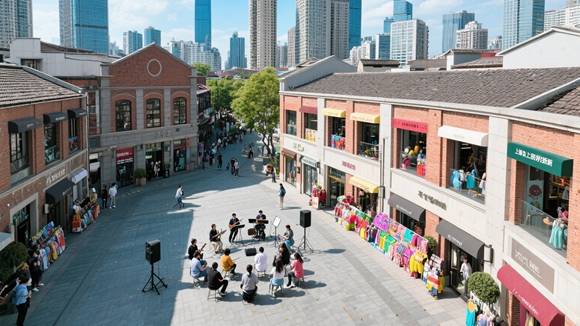
Core Insights - The article discusses the transformation of old shopping malls in China, focusing on their strategies to attract younger consumers through innovative experiences and services [1][6][15] Group 1: Transformation Strategies - Old shopping malls are reinventing themselves by incorporating entertainment and social activities, such as singing competitions and matchmaking events, to engage younger audiences [1][3] - The Asia Joy City in Zhengzhou has added seating and performance spaces to encourage longer customer stays, with a reported increase in purchasing power by 3% for every additional 5 minutes spent [3][8] - The Beijing Friendship Store has transformed its outdoor space into a pet-friendly area with a lawn, attracting young professionals looking for open spaces to relax [6][11] Group 2: Consumer Engagement - Shopping centers are increasingly focusing on creating unique experiences rather than just selling products, with an emphasis on emotional engagement and community building [10][15] - The Asia Joy City has implemented various promotional activities, including cash prizes for singing competitions and free meals for successful matchmaking, to draw in crowds [3][4] - The Friendship Store has introduced diverse offerings, such as a second-hand luxury goods store and a craft beer bar, to cater to the evolving preferences of consumers [6][7] Group 3: Market Trends - A survey by the China Chain Store & Franchise Association indicated that over half of the top 100 shopping centers in China experienced an increase in online sales last year, reflecting a shift in consumer behavior [1][10] - The trend of "consumption segmentation" is emerging, where shopping centers are focusing on niche markets and personalized experiences to differentiate themselves from competitors [15][16] - The rise of e-commerce has led to a decline in traditional retail, prompting shopping malls to adapt by enhancing their service offerings and creating a more inviting atmosphere [10][15]
单日接待近6万人次,798成为暑期国际艺术目的地
Di Yi Cai Jing· 2025-08-05 05:55
Core Insights - The "Palm Universe" exhibition at UCCA has transformed the space into an immersive art experience, attracting a diverse audience, particularly families with children [1][3][4] - The 798·751 Art District has seen a significant increase in visitor numbers, with over 12.5 million visitors last year, surpassing many 5A scenic spots in China [2][7] - The integration of art, technology, and commercial activities has revitalized the 798·751 area, making it a cultural consumption hotspot during the summer [2][10] Group 1: Exhibition Highlights - Pipilotti Rist's "Palm Universe" exhibition features large, suspended fabrics that create an interactive environment for visitors, allowing them to engage with the artwork [3][4] - The exhibition aims to foster a sense of trust and collaboration among participants, transcending traditional viewing experiences [4][6] - The 798cube is hosting the UK art group "Universe of All Things" for their first exhibition in China, showcasing dynamic digital art that captivates audiences, especially children [5][6] Group 2: Visitor Demographics and Engagement - The 798·751 Art District has become a popular destination for young people and families, with various interactive and immersive experiences available [7][8] - The area has transformed into a vibrant cultural hub, featuring a mix of art exhibitions, outdoor movies, and themed markets, appealing to a wide range of visitors [7][10] - Children are a key demographic, with many exhibitions and activities designed specifically for them, driving family-oriented cultural consumption [8][9] Group 3: Economic Impact and Cultural Significance - The 798·751 Art District has over 500 cultural and creative institutions, hosting more than 1,000 art exhibitions annually, contributing to its status as a leading art platform in China [8][11] - The area is increasingly recognized as a vital connection point for contemporary art, culture, and the lifestyle of urban youth, blending art with everyday experiences [10][11] - The ongoing transformation of the district emphasizes its role as a friendly international art destination, enhancing its appeal to both local and international visitors [11]
问答腾讯音乐和网易云音乐最近变了什么
2025-08-05 03:20
Summary of Key Points from the Conference Call Industry and Company Overview - The conference call discusses the performance and strategies of **Tencent Music** and **NetEase Cloud Music** in the online music industry, highlighting their financial results and market dynamics [1][2]. Core Insights and Arguments - **Tencent Music's Q1 Performance**: Tencent Music reported a strong Q1 with an increase in ARPU (Average Revenue Per User) from 8.3 RMB to 11.4 RMB, and a rise in paid users to 123 million, indicating a stable growth trend [1][5]. - **NetEase Cloud Music's Growth**: NetEase Cloud Music benefited from an increase in paid subscriptions, leading to improved overall revenue and profit margins [2]. - **User Migration Costs**: The migration cost for music platform users is higher than that for long video platforms due to established playlists and preferences, which enhances user retention [1][4]. - **Long Tail Effect of Music Copyrights**: Music copyrights exhibit a long tail effect, where classic songs continue to attract users over time, contrasting with the short content cycle of long videos [4]. - **Strategic Partnerships**: Tencent Music has strengthened collaborations with leading Korean entertainment companies and acquired the fan interaction platform Bubble, enhancing its influence in Korean pop culture [7][8]. - **Market Potential**: The domestic content-paying population is estimated to be between 150 million to 170 million, with Tencent Music targeting this demographic through differentiated VIP and SVIP services [9][10]. Additional Important Insights - **SVIP User Growth Target**: Tencent Music aims to increase the proportion of SVIP users from 15% to 30% and total paid users from 120 million to 150 million over the next three years [3][14]. - **AI Integration**: The integration of AI tools like Yuanbao is expected to enhance user experience and engagement, providing new pathways for user interaction and content discovery [6]. - **International Market Focus**: Tencent Music is focusing on the Korean market, leveraging the easing of restrictions to host more concerts and expand its international presence [12]. - **Content Acquisition**: The acquisition of Ximalaya is aimed at enriching Tencent Music's content ecosystem rather than directly increasing paid user numbers [13]. - **Competitive Positioning**: Tencent Music holds a significant advantage in copyright resources with approximately 90 million songs, compared to NetEase's 60 million, enhancing its competitive edge [19]. - **Pricing Strategy**: Tencent Music's pricing strategy is less sensitive to user price resistance due to its strong content library, allowing for potential price increases without significant user loss [20][21]. Future Outlook - **Growth Projections**: Tencent Music is projected to maintain stable growth with a profit increase of 15% to 17% CAGR over the next three years, supported by its robust copyright resources and user base [22].


赵露思直播同款被卖断货,网友前往同款面馆打卡
Xin Lang Cai Jing· 2025-08-04 19:18
Core Insights - Zhao Lusi's casual live stream on August 3 significantly impacted the consumer market, leading to a surge in sales for various products without any deliberate promotion [1] - The event highlighted the power of fan economy and public opinion dynamics, showcasing how a simple daily sharing can drive massive consumer engagement [1] Group 1: Live Stream Impact - Zhao Lusi's outfit and accessories became instant hits, with items like her hat selling out and her favorite noodle shop experiencing a dramatic increase in sales from an average of 50 orders to over 3000 [5] - The live stream was characterized by a lack of traditional sales tactics, as Zhao Lusi did not engage in any promotional activities, yet viewers spontaneously began searching for her style [5][6] - The event led to the depletion of stock for over ten products, with some stores halting orders due to overwhelming demand, demonstrating her genuine influence [5] Group 2: Emotional and Social Dynamics - The live stream occurred amidst Zhao Lusi's contract disputes and health concerns, prompting fans to support her through purchases, effectively turning consumer behavior into emotional backing [6] - There were mixed reactions from the public, with some praising her independent influence while others questioned the authenticity of her live stream given her recent health issues [8] - The success of the live stream was attributed to its authenticity, as it lacked commercial overtones, making it more relatable and stimulating consumer desire [8] Group 3: Market Implications - The event illustrated a shift in fan economy, where personal lives of celebrities become integral to their marketability, raising questions about the ethics of emotional marketing [8] - Zhao Lusi's ability to generate significant market activity without traditional advertising methods suggests a new trend in influencer marketing, focusing on authenticity over scripted promotions [8]

商场追星记:圈明星的粉,做自己的生意
3 6 Ke· 2025-08-01 04:24
Core Insights - The article highlights the growing trend of fan-driven offline events as a significant aspect of the "fan economy," which is becoming a new strategy for malls to attract foot traffic and boost sales [1][4][19] - Malls are increasingly leveraging the influence of celebrities to create engaging experiences for fans, thereby enhancing their own brand value and customer loyalty [21][22] Fan Economy and Offline Events - Fans are seeking more than just concert experiences; they are engaging in various offline activities such as signing events, meet-and-greets, and fan-organized support events [1][4] - In July alone, over 30 celebrity-related offline events were recorded, indicating the integration of fan economy into commercial strategies [4][5] Consumer Behavior and Spending - The article notes that concert ticket sales can generate significant additional spending, with a ratio of 1:4.8 for ticket price to overall spending in the area [8] - Malls are seeing a direct correlation between fan events and increased sales, particularly in the food and beverage sector, as evidenced by a two-digit growth in sales during specific events [11][19] Marketing Strategies - Malls are adopting low-barrier strategies for fan events to maximize attendance and engagement, often collaborating with local fan clubs and celebrity representatives to enhance promotional efforts [11][14] - The success of these events relies on understanding fan preferences and providing meaningful experiences, which can lead to increased brand loyalty and repeat visits [19][22] Challenges and Future Directions - Despite the initial success of fan-driven events, malls face the challenge of sustaining customer interest and converting temporary foot traffic into long-term patronage [17][19] - The article suggests that integrating celebrity activities with the mall's brand identity is crucial for creating lasting value and transforming the "star effect" into a sustainable business model [22]
国盛证券:玩法+IP构成集换式卡牌核心要素 新型消费空间广阔
Zhi Tong Cai Jing· 2025-08-01 03:28
Core Insights - The trading card game (TCG) market is experiencing rapid global growth, with China's market expected to reach 26.3 billion yuan in 2024, significantly outpacing global growth rates [1][3] - The global TCG market is projected to grow from 14.95 billion USD in 2024 to 57.08 billion USD by 2033, with a year-on-year growth of 15.9% [2] Industry Overview - China's TCG market is currently the largest globally, with a market size of 26.3 billion yuan in 2024, reflecting a year-on-year increase of 110.4% [3] - The market is expected to reach 44.6 billion yuan by 2029, driven by rising disposable income and a growing consumer base of over 503 million people interested in IP-related products [3] Key Drivers - The TCG market's growth is fueled by both demand and supply dynamics, with increasing consumer willingness to spend on emotional value associated with IPs and a burgeoning domestic IP ecosystem [3] - The TCG industry chain in China is maturing, with active secondary market transactions stimulating further expansion in the primary market [3] Core Elements of TCG - TCGs are characterized by low prices, high premiums, and high repurchase rates, with unique gameplay mechanics enhancing consumer engagement [4] - Successful IPs in the TCG space often possess cultural significance, emotional value, and strong fan engagement, which are critical for market success [4] Investment Opportunities - Companies with rich IP reserves and significant channel advantages are recommended for investment, including: - Card Game: A leading player in the entertainment sector with a strong market share and a diverse IP matrix [5] - Yaoji Technology: Engaged in trading platforms and card production, with potential for growth in card distribution [5] - Aofei Entertainment: Known for its popular IPs, which can drive the success of card products [5] - Huali Technology: Benefiting from the TCG industry chain through sales of related equipment and IP cards [5]