贸易多元化

Search documents
南非正经受美国加征关税考验
Jing Ji Ri Bao· 2025-08-12 22:12
美国加征关税措施还将给南非经济及社会发展带来更为广泛的不利影响,包括造成大量失业、拉低经济 增长率、削弱南非货币兰特并造成汇率波动、降低南非产品在全球贸易中的竞争力、影响南非供应链安 全等。兰特被削弱后将造成南非居民可支配收入减少,进而抑制消费支出。南非对美国出口货运公司的 业务将大受影响,甚至会逐步停止服务,这一后果不仅会造成相关就业岗位丧失,也会打击南非的贸易 竞争力和供应链韧性,将加大南非经济的不确定性。标准普尔全球南非采购经理人指数显示,南非当前 的商业信心仍低于长期平均水平。南非从事对美出口业务的中小企业受到的冲击尤其巨大,这些企业将 面对出口美国订单大幅减少的局面。 南非经济专家指出,尽管美国对南非施以关税重压,但南非仍重视维护与美国的经贸关系,认为与美国 保持贸易关系对南非多个行业的长期发展有重要意义。南非官方近期多次以不同方式表示,南非将继续 与美国进行贸易及投资谈判。南非决定不对美国关税措施采取报复措施,称无意与美国"脱钩"。南非总 统拉马福萨近日表示,南非将在南美双边贸易投资谈判中继续尽一切努力维护南非国家利益。此前,南 非政府在美国对南非实施关税措施最后期限之前,已向美方提交了旨在加强双 ...
全球瞭望丨肯尼亚媒体:美国关税政策挤压非洲发展空间
Xin Hua She· 2025-08-09 08:17
Core Viewpoint - The article discusses the impact of the U.S. government's imposition of punitive tariffs, highlighting the potential negative effects on global trade, economic growth, and geopolitical stability, particularly for African economies [1]. Group 1: Economic Impact - The U.S. tariff barriers are expected to increase the cost of imported goods, leading to a restructuring of global supply chains [1]. - The punitive tariffs may disrupt trade channels in key sectors such as commodities, electronics, and textiles [1]. - African economies, which heavily rely on export trade, foreign investment, and multilateral trade systems, will face increased economic vulnerability due to these tariffs [1]. Group 2: Specific Case of Kenya - Kenya is projected to experience significant adverse effects from the U.S. tariffs, with an estimated loss of 600,000 jobs and over 13 billion Kenyan shillings in fiscal revenue [1]. - The end of the grace period for tariffs on Kenyan goods entering the U.S. poses a severe challenge for the country [1]. Group 3: Regional Trade Dynamics - Despite the ongoing progress of the African Continental Free Trade Agreement, intra-African trade accounts for only 18% of total African trade, which is insufficient to mitigate the impacts of global trade disruptions [2]. - The article emphasizes the need for African nations to diversify their trade strategies, reduce dependency on the U.S. market, and strengthen regional trade under the African Continental Free Trade Area framework [2].
忍无可忍!莫迪终于翻脸了,不仅供出美国,还主动宣布访华
Sou Hu Cai Jing· 2025-08-08 13:22
Group 1 - The U.S. plans to significantly increase import tariffs on Indian products due to India's substantial purchases of Russian oil, which has raised concerns about India's economic security [1][3] - The Indian textile industry, a crucial export sector, faces severe challenges as U.S. tariffs increase costs, leading to reduced orders from American importers and potential job losses for many workers [3] - The Indian pharmaceutical sector, a major global supplier of generic drugs, is also adversely affected as the tariffs diminish price competitiveness in the U.S. market, prompting U.S. healthcare providers to seek alternative sources [3] Group 2 - In response to U.S. pressure, the Indian government is encouraging citizens to buy local products to mitigate the economic impact of global uncertainties, emphasizing India's potential to become the world's third-largest economy [4] - India has criticized the U.S. for its double standards regarding the purchase of Russian oil, highlighting that other countries engaging in similar trade have not faced similar tariff sanctions [4] - Brazil aims to double its trade with India from the current $12 billion, seeking to diversify its trade partnerships and enhance cooperation in sectors like aviation, which could benefit both economies [6] Group 3 - Recent developments indicate a warming trend in China-India relations, with both countries recognizing the importance of their markets and striving for stable trade despite existing tensions [8] - High-level interactions between Indian and Chinese officials, including participation in the Shanghai Cooperation Organization meetings, reflect India's commitment to strengthening ties with China [8] - The evolving dynamics between India, the U.S., and Brazil, along with adjustments in India-China relations, are likely to influence the political and economic landscape in South Asia and beyond [8]


中信证券;7月出口增速继续超预期,下半年出口增速有望录得2.5%左右的正增长
Di Yi Cai Jing· 2025-08-08 00:55
Core Viewpoint - CITIC Securities believes that the export growth in July continued to exceed expectations, with rapid growth in exports to ASEAN and Africa effectively offsetting the decline in demand from the United States [1] Export Analysis - In terms of export product structure, the semiconductor industry chain, automotive industry chain, and raw materials industry significantly contributed to export growth in July [1] - The contribution of labor-intensive products to overall exports has turned negative [1] Import Analysis - In July, the import growth rate rebounded, with a notable increase in the decline of imports from the United States, while the import quantity growth of most bulk commodities increased compared to previous values [1] Outlook - Looking ahead to the second half of the year, although direct exports to the U.S. and re-export trade will be affected by tariff disturbances, accelerated capacity transfer, technological product innovation, and diversified trade layouts are expected to mitigate some downward pressure on export growth [1] - The export growth rate is anticipated to achieve a positive growth of around 2.5% in the second half of the year [1]

墨西哥和加拿大商讨应对美国关税压力
Yang Shi Xin Wen· 2025-08-06 08:52
Group 1 - The core focus of the meetings between Mexican President Claudia Sheinbaum and Canadian officials is to address U.S. tariff policies and enhance bilateral cooperation in various sectors [1] - Canadian Foreign Minister Anita Anand and Finance Minister Chrystia Freeland discussed with Mexican officials the need for collaboration on economic growth, security, and trade diversification [1] - A consensus was reached to develop a work plan between Canada and Mexico, focusing on resilient supply chains, port-to-port trade routes, artificial intelligence, digital economy, and energy security [1] Group 2 - The U.S. has increased tariffs on Canadian goods from 25% to 35% due to perceived lack of cooperation from Canada regarding the control of fentanyl and other illegal drug flows [2] - Canadian Prime Minister Mark Carney expressed disappointment over the impact of U.S. tariffs on Canadian industries such as lumber, steel, aluminum, and automotive, indicating government action to protect jobs and diversify export markets [2] - The U.S. and Mexico agreed to maintain current tariff rates for the next 90 days while negotiating a new trade agreement, with specific tariffs still in place for certain products [2]
拉美观察丨美关税大棒砸向巴西 50%税率撕裂美巴贸易互补性
Sou Hu Cai Jing· 2025-07-29 08:52
Group 1: Tariff Impact on Brazilian Industries - The U.S. has raised tariffs on Brazilian goods from 10% to 50%, affecting major exports such as orange juice, coffee, and aircraft manufacturing [1][4] - The Brazilian National Confederation of Industry estimates that this tariff increase will lead to a GDP decline of 0.37% in the U.S. and 0.16% in Brazil, with exports dropping by 52 billion Brazilian Reais and 100,000 job losses [4] - The most impacted sectors include aircraft, shipbuilding, and transportation equipment (22.3% export decline), tractors and agricultural machinery (11.31% decline), and poultry (11.3% decline) [4] Group 2: Specific Industry Concerns - The Brazilian Orange Juice Exporters Association warns that the new tariffs could lead to an "unsustainable state" for the industry, potentially causing harvest interruptions and factory chaos [5] - The Brazilian Coffee Exporters Association highlights that the new tariff will significantly increase the end price for American consumers, affecting over 300,000 coffee farming families in Brazil and 2.2 million coffee workers in the U.S. [6][8] - The Brazilian Aircraft Manufacturing Company estimates that each exported aircraft to the U.S. will incur an additional cost of approximately $9 million due to the tariffs, with potential total losses reaching 2 billion Reais [9] Group 3: Furniture and Other Industries - The Brazilian Furniture Industry Association reports that the U.S. market accounts for 30% of Brazil's finished furniture and mattress exports, with nearly 40% of related materials exported to the U.S. [10] - The furniture sector is experiencing order reductions, shipment pauses, and contract cancellations due to the impending tariff increase [10] Group 4: Broader Economic Implications - The tariff conflict is expected to exacerbate Brazil's economic challenges, including inflation and public debt, especially as the central bank has raised interest rates to 15% [17] - The ongoing trade dispute has led to public protests in Brazil, with citizens demanding respect for national sovereignty [17] Group 5: Diplomatic and Trade Relations - Brazil's government is actively seeking to mitigate the impact of the tariffs and has proposed credit support for affected businesses while exploring new export markets [18] - Analysts suggest that the tariff conflict reflects deeper political tensions, with the U.S. using tariffs as a tool to exert pressure on Brazil's domestic politics [19][20]
美关税大棒砸向巴西 50%税率撕裂美巴贸易互补性
Yang Shi Xin Wen Ke Hu Duan· 2025-07-29 07:33
Group 1: Trade Impact - The U.S. has raised tariffs on Brazilian imports from 10% to 50%, affecting a wide range of products including orange juice, coffee, and aircraft manufacturing [1][2] - Brazil's average tariff on U.S. goods is currently 2.7%, with a projected trade deficit of $43 billion in goods and $165 billion in services with the U.S. from 2024 to 2025 [1] - The Brazilian National Industry Confederation estimates that the new tariffs will lead to a 0.37% decrease in U.S. GDP and a 0.16% decrease in Brazilian GDP, with a potential loss of 52 billion Brazilian Reais in exports and 100,000 jobs in Brazil [2] Group 2: Sector-Specific Effects - The Brazilian orange juice export sector warns that the new tariffs could lead to an "unsustainable state," potentially causing harvest interruptions and factory chaos [3] - The Brazilian coffee export sector, which relies heavily on the U.S. market (16% of total exports), will face significant price increases, impacting over 300,000 coffee farming families and 2.2 million coffee workers in the U.S. [4] - The Brazilian aircraft manufacturing sector estimates that each exported plane to the U.S. will incur an additional cost of approximately $9 million due to the tariffs, with potential total losses reaching 2 billion Reais [5] Group 3: Furniture and Other Industries - The Brazilian furniture industry, which exports 30% of its products to the U.S., is experiencing order reductions and potential job losses for over 1.1 million workers due to the tariff increase [6][7] - The furniture sector has seen tariffs rise from an average of 3.5% to 50%, leading to significant disruptions in operations [7] Group 4: Political and Economic Reactions - Brazilian President Lula has condemned the U.S. tariffs as unacceptable interference in Brazil's sovereignty and has indicated plans for retaliatory measures [8] - The Brazilian government is actively seeking to negotiate with U.S. businesses to mitigate the negative impacts of the tariffs [11] - Analysts suggest that the tariff conflict reflects deeper political tensions, with the U.S. using trade measures as leverage against Brazil's domestic politics [12][13]

中美对话前夜,中国正在推进脱钩,猛烈冲击特朗普铁杆选民和重要金主
Sou Hu Cai Jing· 2025-07-29 04:09
Group 1 - In June, China's imports of crude oil and liquefied natural gas from the U.S. dropped to zero, indicating a significant strategic shift in energy sourcing [1][3][7] - The U.S. imposed high tariffs on oil (94%) and natural gas (99%), making imports economically unfeasible for China [7][9] - China's energy imports from the U.S. had already seen drastic declines in the first quarter of the year, with crude oil imports plummeting by 54%, 76%, and 70% in consecutive months [3][5] Group 2 - The shift in energy sourcing reflects a broader trend of supply chain diversification, with China successfully finding alternative suppliers in Brazil, the Middle East, and Russia [11][25] - The reduction in U.S. energy exports to China is expected to have significant economic repercussions for U.S. states reliant on these exports, particularly Texas and Louisiana [5][18] - China's strategic adjustments in energy procurement are part of a larger trend of reducing reliance on U.S. goods, as evidenced by a significant increase in imports from Brazil, which rose from 46% to 74% of China's soybean imports [20][22] Group 3 - The ongoing trade tensions have led to a reconfiguration of global supply chains, with countries increasingly seeking to diversify their trade partnerships away from the U.S. [28][30] - China's reduction of U.S. Treasury holdings by $57.3 billion to $759 billion marks a significant shift in financial strategy, indicating a move towards de-dollarization [22][24] - The international landscape is evolving towards a multi-polar and regionalized economy, diminishing the U.S.'s role as a primary trade partner [33][35]

关税战欧盟败阵加速脱美布局 黄金料维持震荡
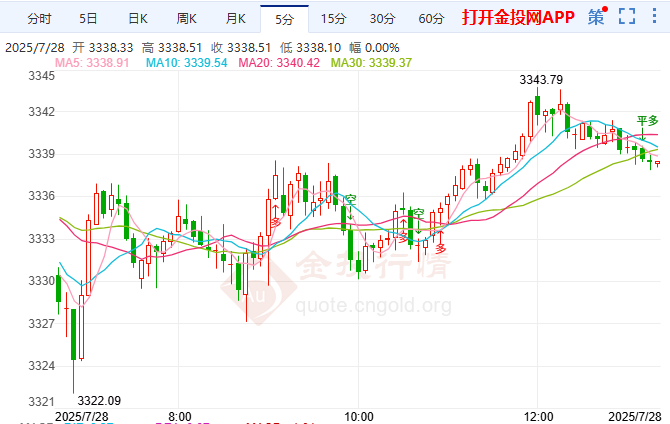
Jin Tou Wang· 2025-07-28 06:16
Group 1: International Gold Market - As of July 28, international gold is trading around $3,343.79 per ounce, with a slight increase of 0.03% from the previous session, reaching a high of $3,343.79 and a low of $3,322.09 [1] - The short-term outlook for international gold appears to be fluctuating within a range [1] Group 2: EU-US Trade Relations - In 2025, Trump is expected to return to the White House, reinstating his "America First" trade policy, which introduces significant uncertainty into global trade dynamics [3] - The EU has accelerated negotiations in response to Trump's threat of imposing up to 30% "reciprocal" tariffs, ultimately agreeing to a 15% baseline tariff, which falls short of the EU's initial goal of "zero-for-zero" tariffs [3] - The outcome of the negotiations indicates that the EU was unable to gain the upper hand in trade discussions with the US, leading to disappointment among European leaders [3][4] Group 3: EU Trade Strategy Reevaluation - The agreement has prompted the EU to reassess its trade strategy, with calls from the German Foreign Trade Association for Europe to reduce dependence on the US and diversify its trade partnerships [4] - There is potential for EU leaders to push for internal market integration and enhance technological innovation, as well as expand trade with emerging markets in Asia and Africa [4] - Despite the lack of comprehensive confrontation, EU member states are exploring "counter-coercion measures" against US advantages in service trade, although implementation faces challenges due to a lack of consensus [4]