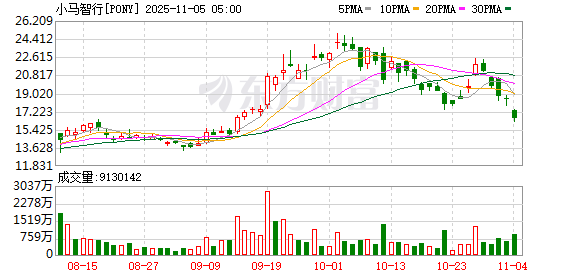
L4级自动驾驶

Search documents
小马智行第七代Robotaxi开启广深接单 年底实现盈亏平衡
2 1 Shi Ji Jing Ji Bao Dao· 2025-11-05 09:40
Core Insights - The company, Xiaoma Zhixing, has launched its seventh-generation Robotaxi models, the Extreme Fox Alpha T5 and Aion Tyrannosaurus, in Guangzhou and Shenzhen, marking a significant milestone in the deployment of L4 autonomous driving technology [2][5] - The company aims to expand its Robotaxi fleet to 1,000 vehicles by the end of 2025, with an estimated daily order volume of 20 per vehicle, which is expected to achieve overall breakeven at this scale [2][4] Deployment and Operations - The seventh-generation Robotaxi has transitioned from production to operational deployment in just six months, showcasing the company's strong capabilities in technology implementation and large-scale deployment [2] - The company currently operates over 720 Robotaxis and has accumulated over 55 million kilometers of autonomous driving test mileage, with more than 10 million kilometers of fully autonomous driving [5] Technological Advancements - The new Robotaxi features significant upgrades in human-vehicle interaction, including pre-setting air conditioning via an app, voice activation for starting trips, and a one-button remote assistance feature for emergencies [3][4] - The vehicle is equipped with a comprehensive sensor suite, including 9 LiDARs, 14 cameras, and 4 millimeter-wave radars, enabling 360-degree detection and coverage of objects up to 650 meters away [4] Financial Strategy and Market Expansion - The company plans to utilize approximately 50% of the funds raised from its upcoming IPO for market entry strategies and large-scale commercialization of L4 autonomous driving technology [5] - The IPO is expected to raise up to 7.7 billion HKD, with 40% allocated for the development of L4 autonomous driving technology and solutions, and 10% for operational funding and general corporate purposes [5]

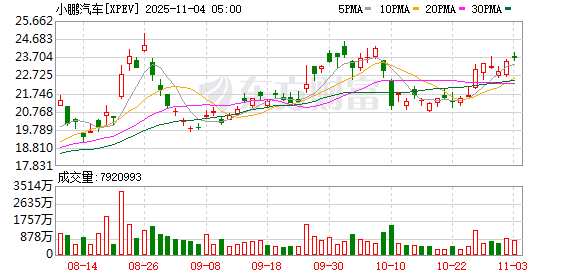
小鹏汽车明年将推出全新智驾版本Robo
Zheng Quan Shi Bao Wang· 2025-11-05 08:08
Core Insights - In 2026, the company plans to launch a new autonomous driving version called Robo, which will feature L4 level driving capabilities [1] - The company's vehicle lineup will consist of three versions: Max with L2 level driving capabilities, Ultra with L4 software capabilities but L2 hardware and regulatory compliance, and Robo, which is designed for Robotaxi applications [1] Summary by Categories - **Product Development** - The Robo model will have 3000 Tops effective computing power, dual hardware system redundancy, and two autonomous driving modes [1] - **Market Positioning** - The vehicle versions are strategically categorized to cater to different levels of autonomous driving technology, indicating a phased approach to market entry [1]
黄仁勋宣告Robotaxi拐点已至,联手Uber组建10万辆L4生态联盟
3 6 Ke· 2025-11-05 01:02
Core Insights - The emergence of Robotaxi technology marks a significant turning point in the automotive industry, with NVIDIA's CEO Jensen Huang announcing the upcoming transition at the GTC conference [1][3] - NVIDIA has introduced the NVIDIA DRIVE AGX Hyperion 10 platform, which aims to facilitate the development of autonomous vehicles across various sectors, including commercial and passenger vehicles [3][7] Group 1: Hyperion 10 Platform - The Hyperion 10 platform boasts over 2000 TOPS of computing power, nearly eight times that of its predecessor, and is designed to integrate diverse sensor inputs while optimizing for advanced AI workloads [4][9] - It features a modular architecture that allows manufacturers to customize configurations, reducing development time and costs, and supports over-the-air (OTA) updates for seamless integration into autonomous fleets [7][9] - The platform is part of NVIDIA's long-term strategy to enhance its presence in the L4 autonomous driving sector, building on its previous iterations of the DRIVE platform [9][10] Group 2: Collaboration with Uber - NVIDIA and Uber have announced a partnership to scale up the deployment of approximately 100,000 Robotaxis starting in 2027, aiming to create a global L4 autonomous mobility network [10][12] - The collaboration will leverage NVIDIA's DRIVE technology and aims for a market size of $750 billion by 2030, indicating significant growth potential in the autonomous vehicle sector [10][12] - Uber's existing partnerships in the Robotaxi space will be extended through this collaboration, enhancing data processing capabilities for autonomous vehicle development [12][14] Group 3: Partnerships with Automakers - NVIDIA is collaborating with several automakers, including Stellantis, Lucid, and Mercedes-Benz, to develop L4 autonomous vehicles using the Hyperion 10 platform [12][14] - Stellantis plans to provide at least 5,000 Robotaxi pilot models to Uber starting in 2026, while Lucid is integrating L4 capabilities into its upcoming models [14][15] - Mercedes-Benz is working on a global rollout of L4 autonomous vehicles based on its own operating system and NVIDIA's platform, with plans for deployment by 2025 [14][15] Group 4: Strategic Shift in Automotive Business - NVIDIA is shifting its focus towards L4 autonomous driving, which aligns with its strengths and long-term vision for the automotive sector [15][19] - The company has a history of early investment in autonomous driving technology, having introduced its first platform in 2015, which has since evolved significantly [15][18] - Despite a strong market presence in high-performance autonomous driving chips, NVIDIA's automotive revenue has been relatively small, indicating room for growth as it aims for $5 billion in vertical revenue this year [18][19]


小鹏上周重启Robotaxi项目,内部转岗进行时
2 1 Shi Ji Jing Ji Bao Dao· 2025-11-04 12:40
小鹏科技日在即,小鹏在L4上的布局也将揭开面纱。 《21汽车·一见Auto》独家获悉,为了正式迎接明年L4级别车型的量产,公司内部在上周(即10月底)正式重启Robotaxi项目,并且开启 了内部转岗。"小鹏内部非常重视这个项目,花重金从业内知名L4级别公司挖来大佬负责这个项目。"一位接近小鹏汽车Robotaxi项目的 知情人士称。 不是再造新Robotaxi,而要轻量化操作 至于后续小鹏汽车Robotaxi的商业运营模式,何小鹏在二季度财报会上也透露了,"初步测试阶段,小鹏汽车会自己运营Robotaxi,如果 出现测试不通过等情况,小鹏汽车再去寻求合作方,一起探讨如何实现Robotaxi商业化。" 李斌、李想不自研Robotaxi,何小鹏图什么? 小鹏并不想把这个项目做重,更倾向于"轻量化操作",注重投入产出比。 另一位小鹏汽车知情人士称,之前小鹏内部的思路是造一台全新的Robotaxi,如今是基于在研的车型试运营,再正式商业运营。"项目总 共用了两台不同的SUV车型,分别支持试运营和商业化,早期初步测试阶段将采用高端车型。" "就Robotaxi项目而言,公司的投入更多是在软件算法等相关人才上,毕竟硬件复 ...

鸿蒙智行10月交付新车6.82万台,累计交付超100万台
Ju Chao Zi Xun· 2025-11-02 05:38
Core Insights - Harmony Intelligent Mobility Alliance (HIMA) achieved a record monthly delivery of 68,216 vehicles in October, surpassing 1 million cumulative deliveries, marking the fastest record for a new force brand [2] - The average transaction price for vehicles in October was 390,000 yuan, contributing to the high-quality development of the Chinese automotive industry [2] Company Overview - HIMA was officially established by Huawei on November 9, 2023, as an upgrade to its smart car business, integrating over 30 years of ICT technology with automotive manufacturing capabilities [2] - The product matrix includes five series: Wanjie, Zhijie, Xiangjie, Zunjie, and Shangjie, covering price ranges from 150,000 to 1 million yuan [2] Product Highlights - Wanjie M9: Flagship SUV with Huawei Ascend 910B chip (400 TOPS computing power), leading the luxury car segment in China for 11 consecutive months [3] - Zhijie S7: First model with Harmony Smart Cockpit 4.0, equipped with 192-line LiDAR and valet parking AVP feature [3] - Xiangjie S9: Best-selling luxury pure electric sedan for 7 months in the 400,000 yuan and above category [3] - Zunjie S800: Premium model featuring distributed satellite communication on the Tuling Longxing platform [3] - Shangjie H5: First model co-developed with SAIC, targeting young consumers [3] Future Plans - HIMA aims to achieve annual sales of 1 million vehicles by 2025, with 5 new models and 5 annual facelift models already launched [3] - Plans to introduce 13 L4 autonomous driving models by 2026, with a goal for large-scale commercial use of L4 autonomous driving in urban areas by 2027 [3]

自动驾驶双雄港股IPO前夜爆“数据罗生门”:文远知行指控小马智行路演材料失实
Sou Hu Cai Jing· 2025-11-02 01:50
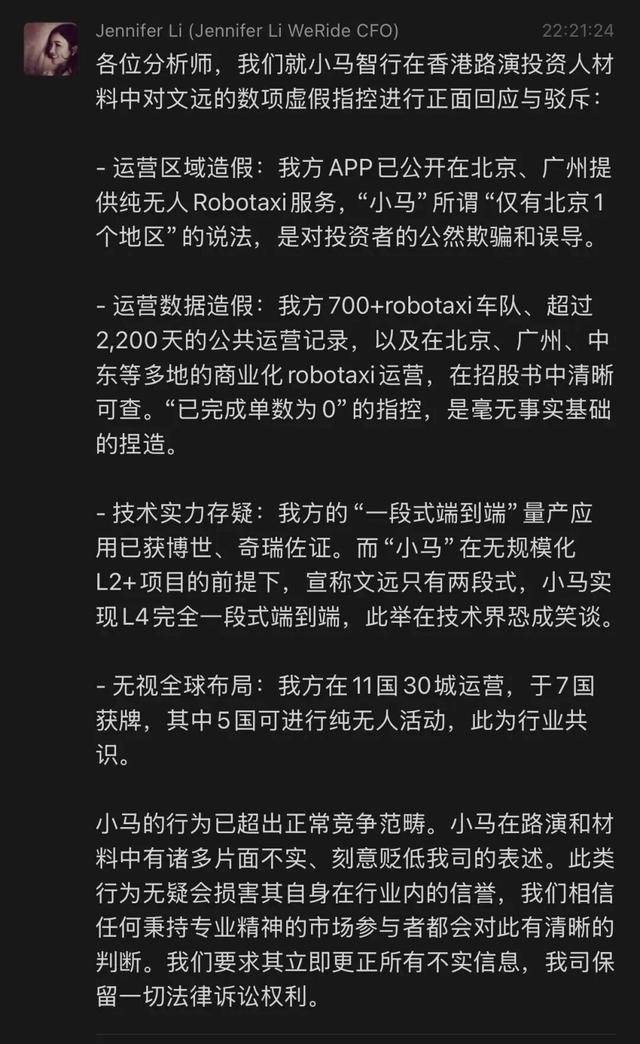
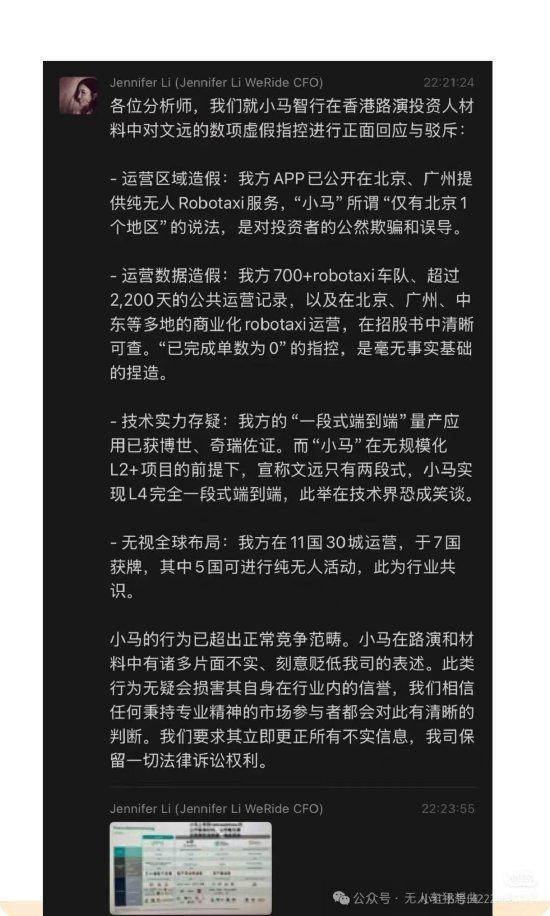
在全球自动驾驶领域备受瞩目的两家头部企业——文远知行与小马智行,即将于同日登陆港交所挂牌上 市之际,一场突如其来的"数据真实性"争议在IPO前夜爆发,为二者的资本之路平添变数。 10月30日晚间,文远知行(WeRide)首席财务官(CFO)李璇在多个分析师社群中发布长篇信息,直 指其直接竞争对手小马智行(Pony.ai)在面向香港投资者的路演材料中,存在针对文远知行的多项"不 实数据"和"刻意贬低"的表述。李璇称,小马智行的行为"已超出正常竞争范畴",并要求其立即更正所 有不实信息,同时表示"保留一切法律诉讼权利"。 Jennifer Li (Jennifer Li WeRide CFO) 22:21:24 各位分析师,我们就小马智行在香港路演投资人材 料中对文远的数项虚假指控进行正面回应与驳斥: - 运营区域造假:我方 APP已公开在北京、广州提 供纯无人 Robotaxi 服务,"小马"所谓"仅有北京 1 个地区"的说法,是对投资者的公然欺骗和误导。 - 运营数据造假:我方700+robotaxi车队、超过 2,200天的公共运营记录,以及在北京、广州、中 东等多地的商业化 robotaxi 运营,在招股 ...

小马智行公然造假贬低文远知行?L4智驾企业迎来“生死对决”
Guan Cha Zhe Wang· 2025-10-31 09:28
Core Viewpoint - The intense competition between Pony.ai and WeRide has escalated due to misleading data presented by Pony.ai in its roadshow materials, which has prompted a strong backlash from WeRide and even affected Baidu [1][4][6]. Group 1: Company Background and Competition - Pony.ai and WeRide, both key players in the L4 autonomous driving sector, have a shared history as former colleagues at Baidu, now turned rivals in the capital market [3][15]. - The two companies are set to go public on the Hong Kong Stock Exchange on November 6, 2023, following their recent IPO filings [1][3]. - The competition is not merely about market share but also involves a significant valuation gap of $4.8 billion, which is critical for their future funding and survival [9][15]. Group 2: Misleading Data and Backlash - Pony.ai's roadshow materials inaccurately portrayed WeRide's operational status, claiming it operates in only one city and has zero completed orders, which WeRide vehemently disputes [4][10]. - WeRide's CFO publicly criticized Pony.ai for these misleading claims, asserting that they exceed normal competitive behavior [4][15]. - Baidu was also affected by Pony.ai's presentation, as it excluded Baidu's key operational city, Wuhan, leading to a public statement from Baidu's investor relations team asserting legal action [6][15]. Group 3: Financial Performance and Market Position - As of October 28, 2023, Pony.ai's market capitalization was $8.4 billion, while WeRide's was $3.6 billion, indicating a significant valuation advantage for Pony.ai [7][9]. - In the first half of 2025, Pony.ai reported revenues of 254 million RMB, compared to WeRide's 200 million RMB, with adjusted net losses of 534 million RMB and 890 million RMB respectively [9][10]. - Both companies are currently operating at substantial losses, with a combined loss exceeding 1.4 billion RMB in the first half of 2025, highlighting the urgency for both to achieve profitability [10][11][16]. Group 4: Market Dynamics and Future Outlook - The competition is intensifying as both companies seek to secure funding through their IPOs, with Pony.ai aiming to raise 7.2 billion HKD and WeRide 2.9 billion HKD [9][16]. - The current market sentiment is shifting towards a more critical evaluation of cost models and profitability expectations, moving away from purely technological narratives [16]. - The outcome of this rivalry will significantly influence which company can sustain operations long enough to reach profitability, making the upcoming IPOs crucial for their survival [16].

打起来了!文远知行CFO炮轰小马智行港股路演书造假
Xin Lang Cai Jing· 2025-10-31 06:44
Core Viewpoint - The CFO of WeRide, Li Xuan, has publicly refuted claims made by Pony.ai regarding WeRide's operational data, asserting that Pony.ai's statements are misleading and factually incorrect [1][3]. Company Responses - Li Xuan emphasized that WeRide operates Robotaxi services in both Beijing and Guangzhou, countering Pony.ai's claim that WeRide only operates in Beijing [3]. - WeRide has a fleet of over 700 Robotaxis and has accumulated more than 2,200 days of public operation records, with commercial operations in multiple regions including Beijing, Guangzhou, and the Middle East [3]. - Li Xuan challenged Pony.ai's technical claims, stating that WeRide's "one-step end-to-end" production application has been validated by Bosch and Chery, while Pony.ai's claims about WeRide's technology are unfounded [3]. Market Positioning - Both WeRide and Pony.ai are preparing for their listings in Hong Kong, with WeRide planning to issue approximately 102,428,200 shares and Pony.ai planning to issue up to 102,146,500 shares [4]. - The two companies have adopted different strategic approaches: Pony.ai focuses on major Chinese cities while WeRide emphasizes international expansion, particularly in Europe and the Middle East [5]. Fleet Composition - WeRide operates a fleet of over 1,500 vehicles, primarily focusing on the Robotaxi market, with more than 700 autonomous taxis, including over 100 in the Middle East [6]. - Pony.ai has a dual fleet strategy that includes both passenger and commercial vehicles, with over 680 autonomous taxis and around 170 autonomous trucks, catering to urban mobility and logistics [6].
【快讯】每日快讯(2025年10月30日)
乘联分会· 2025-10-30 08:38
Domestic News - The Ministry of Commerce and four other departments have issued a notice to rectify "involution-style" competition, aiming to establish a fair and innovative business environment [7] - The Ministry of Transport is accelerating the large-scale innovative application of artificial intelligence in the transportation sector, with a systematic implementation plan in place [8] - The first national-level automotive chip standard verification platform has been launched in Shenzhen, enhancing the quality verification capabilities for automotive-grade chips [9] - Beijing Hyundai plans to launch 20 new products over the next 4-5 years, focusing on the iteration of new energy vehicles [10] - Smart has introduced a cross-year purchase tax subsidy plan, offering up to 15,000 yuan in subsidies for eligible vehicle purchases [11][12] - BYD has unveiled its first K-Car model, Racco, specifically designed for the Japanese market, with pre-sales expected to start in summer 2026 [13] - FAW has established an energy technology company in Changchun, focusing on the exploration of AI and energy innovation models [14] - Xinwangda Power has launched a polymer all-solid-state battery with an energy density of 400Wh/kg, marking a significant milestone in lithium battery technology [15] International News - Boston is proposing a regulation requiring human operators in autonomous vehicles, aiming to assess the impact of autonomous driving technology on existing ride-hailing drivers [16] - Honda has unveiled the Super-ONE electric small car prototype, designed to provide a unique driving experience, with plans for mass production in 2026 [17] - NVIDIA has partnered with Uber to expand the global L4 autonomous driving network, aiming to scale up to 100,000 vehicles by 2027 [18] - Toyota's 2023 electric vehicles in the U.S. will support Apple Maps for EV routing, enhancing the convenience of electric travel [19] Commercial Vehicles - Volvo's electric trucks have accumulated over 250 million kilometers since their launch in 2019, maintaining a leading position in the industry [20] - The first batch of heavy trucks developed by Xinjiang Kunlun Automotive has successfully rolled off the production line, addressing compliance challenges for exports to Russia [21] - Jiangling's new Baotian model was globally launched in Saudi Arabia, showcasing the brand's strategic expansion [22] - BYD's pure electric small truck T35 made its global debut at the Tokyo Motor Show, with plans for a 2026 launch in Japan and a starting price of 800,000 yen [23]


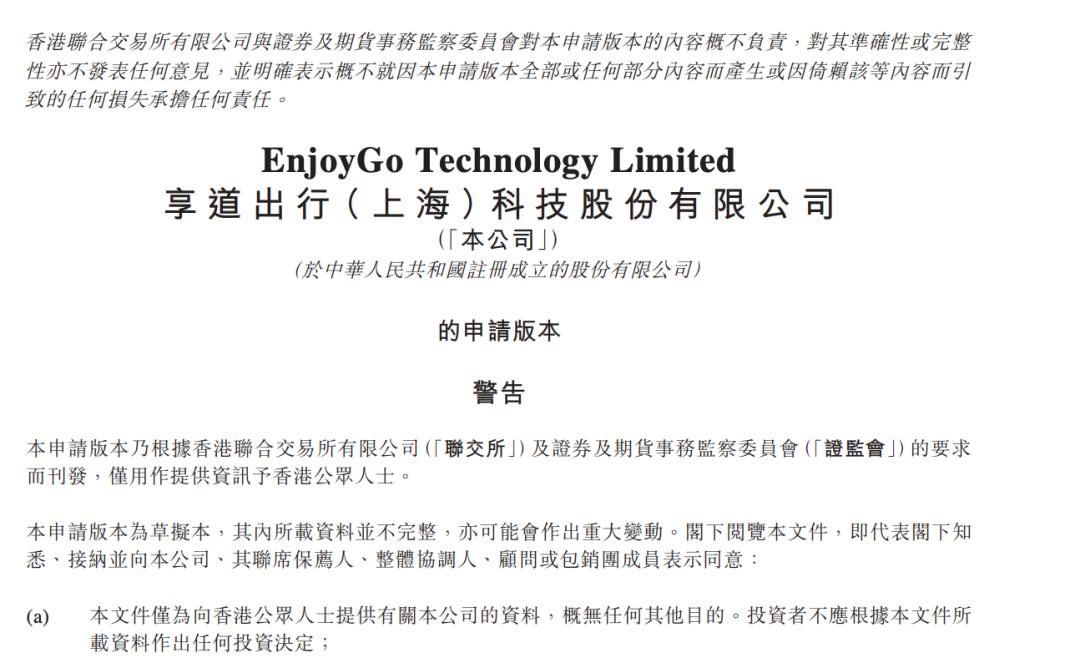
上海Robotaxi冲刺香港IPO:上汽阿里Momenta都是股东
3 6 Ke· 2025-10-29 23:50
Core Insights - The article discusses the rapid expansion of the Robotaxi ecosystem, highlighting the IPO ambitions of Xiangdao Mobility, a subsidiary of SAIC, which positions itself as the first L4 Robotaxi operating platform backed by an automotive company in China [2][21]. Financial Performance - Xiangdao Mobility reported revenues of approximately 4.729 billion RMB, 5.718 billion RMB, 6.395 billion RMB, and 3.013 billion RMB for the fiscal years 2022, 2023, 2024, and the first half of 2025, respectively [3]. - The compound annual growth rate (CAGR) from 2022 to 2024 is projected at 16.3%, with gross profits of approximately 49.487 million RMB, 376 million RMB, 448 million RMB, and 341 million RMB, leading to an increase in gross margin from 1.0% in 2022 to 11.3% in the first half of 2025 [5][8]. Operational Insights - Despite significant revenue growth, Xiangdao Mobility remains in a loss-making state, although losses have narrowed by nearly 80% in the first half of 2025 compared to 2022, and operating cash flow has turned positive [6][8]. - As of June this year, Xiangdao Mobility has over 1.06 million registered drivers and approximately 20,000 self-owned vehicles, covering 95 cities in China [13]. Market Position - In 2024, Xiangdao Mobility's revenue from ride-hailing services is expected to contribute 49.91 billion RMB, accounting for 78.0% of total revenue, indicating a strong reliance on traditional ride-hailing operations [16]. - The company is positioned as a significant player in the Robotaxi market, leveraging partnerships with key industry players like Momenta and Alibaba to enhance its technological capabilities and operational efficiency [16][19]. Industry Trends - The article notes a shift in the Robotaxi narrative from testing to actual operations, driven by technological advancements and supportive policies in major cities like Beijing and Shanghai [17]. - The financing landscape for tech companies looking to go public in Hong Kong has improved, with relaxed requirements for unprofitable companies, facilitating the entry of various Robotaxi players into the market [19][21].