
数字化转型

Search documents
2025年中国连锁药店行业市场研究报告
硕远咨询· 2025-12-16 09:05
Investment Rating - The report does not explicitly state an investment rating for the industry Core Insights - The Chinese chain pharmacy industry is experiencing rapid growth, with the market size expected to exceed 1 trillion yuan by the end of 2024, indicating significant market potential [18] - The industry has maintained an average annual growth rate of over 10% in the past five years, driven by increased medical insurance coverage and rising consumer health awareness [20] - The market is becoming increasingly concentrated, with leading companies like Guoda Pharmacy, Yifeng Pharmacy, and Laobaixing Pharmacy dominating the market [39] Industry Overview - The chain pharmacy industry is defined as a collection of retail stores organized under a unified management system, sharing brand image, procurement channels, and service processes [4] - The industry has evolved from traditional single-store pharmacies to a more standardized and professional model, with significant growth in major cities [8] - The industry is categorized into three main types: direct chain pharmacies, franchise chain pharmacies, and mixed chain pharmacies [5] Market Size and Growth Trends - As of 2024, the number of chain pharmacy stores in China has surpassed 120,000, covering most provinces and major cities [18] - The industry is characterized by a "leading enterprises leading, regional strong players supporting" market structure, with significant market share held by top companies [18][39] - The growth of the industry is supported by government policies promoting healthcare consumption and capital market interest [10] Supply and Demand Analysis - Major chain pharmacy enterprises are concentrated in first-tier cities and economically developed second-tier cities, with a notable presence in eastern coastal regions [21] - The supply chain and logistics systems are crucial for improving operational efficiency and ensuring drug safety [24] - The variety of drugs offered includes prescription drugs, over-the-counter drugs, traditional Chinese medicine, and health products, catering to diverse consumer needs [26] Consumer Behavior and Preferences - The primary consumer groups include elderly patients with chronic diseases, young health management consumers, and families with regular medication needs [28] - Modern consumers prioritize drug quality, price transparency, and overall service experience, leading to a shift towards personalized health management services [31] - The integration of online and offline purchasing channels is becoming the mainstream trend in the pharmaceutical retail industry [34] Competitive Landscape - Leading companies like Guoda Pharmacy, Yifeng Pharmacy, and Laobaixing Pharmacy dominate the market, leveraging their financial strength and efficient supply chain management [37] - The market is highly concentrated, with the top ten chain pharmacies holding over half of the market share [39] - Regional competition varies, with intense competition in economically developed areas and significant growth potential in less developed regions [42] Policy and Regulatory Environment - The government has implemented strict regulations to ensure drug quality and safety, including licensing requirements and procurement standards [48] - Recent reforms in medical insurance policies have significantly impacted the operations of chain pharmacies, prompting them to optimize procurement and inventory management [50] - Regulatory measures are aimed at promoting standardized and compliant operations within the industry [51] Technological Development and Digital Transformation - The application of information technology, such as drug management information systems and customer relationship management (CRM) systems, is enhancing operational efficiency [58][59] - The integration of mobile payment and electronic prescriptions is transforming the purchasing process, improving customer experience [61] - The trend towards online and offline integration is driving the development of a comprehensive sales and service system [62]


远光软件(002063) - 002063远光软件投资者关系管理信息20251216
2025-12-16 09:04
Group 1: Company Performance - The company follows a diversified product and market strategy, enhancing core technological and product capabilities while expanding market outreach [1] - As of Q3 2025, the company reported a revenue of CNY 1.57 billion, a year-on-year increase of 1.99%, and a net profit attributable to shareholders of CNY 123 million, up 11.89% year-on-year [1] Group 2: Medical Sector Progress - The company has successfully implemented smart financial projects in several hospitals, including the Shenzhen Second People's Hospital and Fudan University Huashan Hospital, with various management modules now operational [2] Group 3: Market Value Management - The company is open to various market value management strategies, including share buybacks, dividends, and mergers, depending on financial arrangements and stock performance [3] Group 4: Collaboration with Major Shareholder - The company collaborates with State Grid Digital Technology Co., which supports the DAP product's validation and market promotion, and participates in the energy internet subsidiary [4] - Future cooperation will focus on leveraging product, business, and platform advantages to foster a collaborative industrial ecosystem [5]

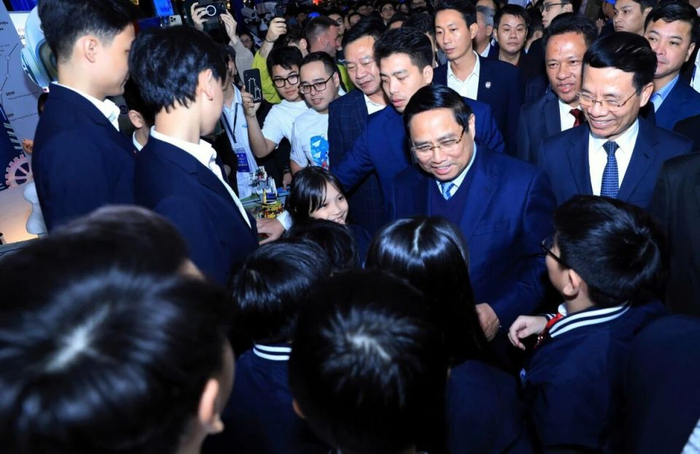
越南总理发出“全民创新”总动员:争夺半导体、AI高地,我们邻国在下一盘大棋!
Xin Lang Cai Jing· 2025-12-16 07:34
Core Message - The Vietnamese government emphasizes the importance of innovation as a driving force for national development, urging collective efforts from individuals, businesses, and society to foster a culture of innovation [1][3]. Group 1: Innovation and Economic Growth - Prime Minister Phạm Minh Chính highlighted that innovation has played a crucial role in Vietnam's development, particularly in agriculture and industry, helping the country escape poverty and become a major rice exporter [3][4]. - Vietnam's economy has maintained positive growth, outpacing global averages, largely due to continuous innovation that activates traditional growth engines and explores new growth drivers [3][4]. Group 2: Government Initiatives and Policies - The government is committed to integrating technology, innovation, and digital transformation as pathways to a high-income, rapidly developing, and sustainable future [4][6]. - Specific policies include improving the legal framework for venture capital, recognizing "angel investors," providing tax incentives, and encouraging the commercialization of research outcomes [6][7]. Group 3: Challenges and Strategic Focus - The Prime Minister acknowledged challenges in Vietnam's innovation ecosystem, such as the need for stronger collaboration between local and foreign enterprises and the acceleration of research commercialization [7][8]. - Key questions were raised regarding Vietnam's position in the global semiconductor value chain and the importance of developing a national big data center and AI products [7][8]. Group 4: Vision for the Future - Five fundamental shifts were proposed for the future: focusing on national development issues, mastering core technologies, building a complete ecosystem, expanding to regional and global markets, and transitioning to a development-oriented service mindset [8][9]. - The Prime Minister called for a collective innovation effort from individuals and businesses to achieve profound transformation in the country [8][9]. Group 5: Techfest Vietnam 2025 - The 2025 Techfest Vietnam has evolved into a social movement, aiming to connect communities and share values, with a theme of "全民创新创业——新增长动力" (全民创新创业 - New Growth Driver) [11][12]. - The event is expected to attract over 60,000 participants, including the general public, tech companies, investors, and industry leaders, and will feature various activities such as tech experience zones and forums [12].

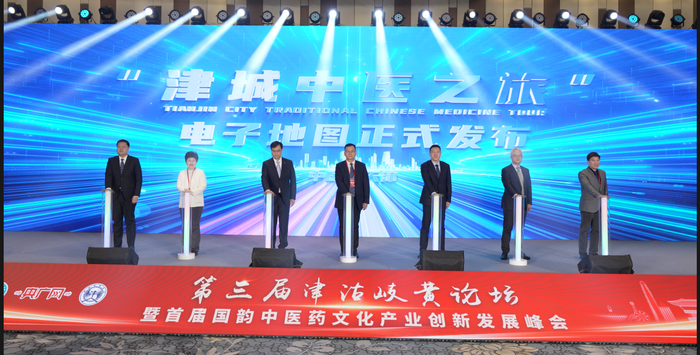
第三届津沽岐黄论坛暨首届国韵中医药文化产业创新发展峰会开幕 津药达仁堂多角度展示品牌风采
Zhong Guo Jin Rong Xin Xi Wang· 2025-12-16 07:26
Group 1 - The third Tianjin Qihuang Forum and the first Guoyun Traditional Chinese Medicine Cultural Industry Innovation Development Summit opened on November 15, focusing on the theme of "inheritance, innovation, integration, and development" [1] - The event gathered over 200 participants, including academicians, masters of traditional Chinese medicine, scholars, industry experts, and representatives from the traditional Chinese medicine industry chain, promoting deep integration of traditional Chinese medicine and cultural industries [1][3] - The summit featured a three-dimensional model of "academic discussion + industry docking + cultural experience," aiming to inject new momentum into Tianjin's goal of becoming a leading domestic and internationally renowned city for traditional Chinese medicine [1] Group 2 - This year's forum uniquely combined the "Guoyun Traditional Chinese Medicine Cultural Industry Innovation Development Summit," focusing on innovation in the traditional Chinese medicine health industry and upgrading the industry chain, enhancing cross-industry integration and international dissemination [3] - A showcase of ten products, including medicinal food bread and special stamps, was held, with three products highlighted for promotion, attracting significant attention from attendees [3][5] - The forum included discussions on international pathways for promoting traditional Chinese culture, with a presentation by the Deputy Director of the Brand and Market Center of Tianjin Pharmaceutical Daren Tang Group, focusing on the brand's renewal and internationalization efforts [5][6] Group 3 - In a sub-forum on upgrading the traditional Chinese medicine industry chain, the Chief Information Officer of Tianjin Pharmaceutical Daren Tang Group presented on the company's digital transformation and AI strategies, showcasing the results of their AI practices and data innovation since the transformation [8][9]

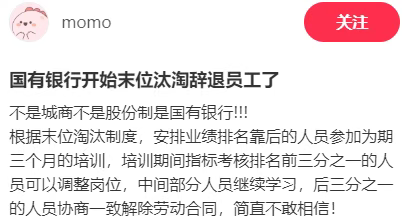
“铁饭碗”银行也开始末位淘汰了?普通人有机会,但没退路......
Xin Lang Cai Jing· 2025-12-16 06:24
Group 1 - The banking industry, traditionally seen as stable, is now facing significant pressure with employees being driven by performance metrics, leading to increased stress levels [1][16][19] - A tiered "bottom elimination system" has been implemented in some banks, where employees ranked in the bottom three for two consecutive months face demotions and salary reductions [2][3][18] - The volume of counter transactions has drastically decreased, with estimates indicating that cash and counter business now account for only about 10% of banking operations [4][17] Group 2 - The operational costs for bank branches are rising, with annual expenses ranging from 2 million to 5 million yuan, and management fees constituting 54.7% of total operating expenses for listed banks in 2024 [5][18][21] - The shift towards digitalization and automation is reducing the need for traditional teller roles, as many tasks can now be performed by machines and online services [10][22][23] - Employees are being encouraged to adapt to new roles that require more complex skills, such as wealth management and customer service, as the nature of their work evolves [11][24][25]
尼各银行大城市网点面临难以关闭局面
Shang Wu Bu Wang Zhan· 2025-12-16 06:23
Core Insights - The Nepali banking sector is facing challenges due to the rapid growth of digital banking and electronic payments, leading to a decline in foot traffic at physical branches [1] - The central bank of Nepal has allowed banks to merge nearby branches to reduce costs and improve profitability, indicating a shift towards digital transformation and streamlining of physical presence [1] Industry Overview - There are a total of 5,104 commercial bank branches, 1,134 development bank branches, and 291 financial company branches across Nepal [1] - Major urban areas such as Kathmandu, Lalitpur, Pokhara, Bharatpur, Biratnagar, and Birgunj account for 1,690 of these branches, highlighting a concentration of banking services in metropolitan regions [1] Challenges Faced - High rental, labor, and management costs are becoming burdensome for banks as customer traffic declines in physical locations [1] - The industry is experiencing a "want to close but difficult to close" dilemma, emphasizing the need for strategic adjustments [1]
“俄版谷歌”,正帮中国商人大赚
Di Yi Cai Jing Zi Xun· 2025-12-16 05:27
Group 1 - The rise of trade between China and Central Asian countries has created opportunities for Russian companies, particularly Yandex, to assist Chinese businesses in penetrating these markets [2][9] - Yandex, often referred to as the "Russian Google," is leveraging its strong position in the Central Asian Russian-speaking market to attract more Chinese clients [2][8] - The demand for Chinese products and services in Central Asia is increasing, with many Chinese companies exploring opportunities in countries like Kazakhstan and Uzbekistan [5][6] Group 2 - Kazakhstan serves as a strategic hub for Chinese companies under the Belt and Road Initiative, with a noticeable increase in Chinese advertisements and businesses in cities like Almaty [3][5] - The retail e-commerce market in Kazakhstan is experiencing significant growth, with a projected transaction volume of 1.45 trillion tenge in the first half of 2024, reflecting a 61% year-on-year increase [10] - Yandex Ads is actively targeting Chinese advertisers, with a reported 76% increase in the number of ads and a 192% increase in advertising spending in Kazakhstan by 2025 [10][11] Group 3 - The transition of traditional energy economies in Russia and Central Asia towards digital and renewable technologies presents new opportunities for Chinese companies, especially in the automotive sector [12][14] - Chinese automotive brands are gaining traction in Russia, with a 48% year-on-year increase in total vehicle sales expected in 2024, highlighting the growing acceptance of Chinese vehicles among Russian consumers [15] - Yandex is collaborating with Chinese automotive manufacturers to integrate its software into vehicles, enhancing their appeal in the Russian and Central Asian markets [15]
阿尔及利亚推进银行业云转型体系建设
Shang Wu Bu Wang Zhan· 2025-12-16 03:18
(原标题:阿尔及利亚推进银行业云转型体系建设) El Watan 网站12月9日报道,阿尔及利亚正通过推动本国银行系统采用云计算、网络安全、人工智 能和开放银行等关键技术,加快银行业数字化转型进程,在构建新一代金融基础设施方面取得重要进 展。Intervalle Technologies 与 Infosys Finacle 近日联合举办 "Algeria Banking Connect 2025"会议,聚焦在 云平台上重塑银行业务模式,围绕核心银行系统现代化、关键基础设施加固以及以客户体验为中心的全 渠道布局等议题展开讨论。 u2003u2003 印度驻阿大使介绍了印方在数字化领域的实践经验,强调印度已成为全球数字转型的重要参考案 例。Intervalle Technologies 高级总监阐述了阿银行业的技术转型方向,强调本地数据中心、网络安全与 个人数据保护机构、高性能电信网络以及5G商用,为银行全面拥抱云计算和人工智能提供了必要条 件。 阿围绕"主权云环境"加快完善监管与技术框架,在本国数据中心、网络安全标准及数据本地化要求逐步 到位的背景下,银行业向云架构迁移的相关项目正在稳步推进。这一进程涵盖公有云 ...
从两大报告解析:2026即时零售平台融合的8大趋势
3 6 Ke· 2025-12-16 03:11
Core Insights - Instant retail has emerged as a new growth driver in China's retail sector, with a projected market size of 7.81 trillion yuan in 2024, growing by 20.15% year-on-year, and expected to reach 9.71 trillion yuan in 2025, surpassing the growth rates of both online retail and total social retail sales [6][10][12] Group 1: Market Dynamics - Instant retail is transitioning from a focus on rapid scale to a deeper ecosystem engagement, supported by favorable policies such as the "15-minute convenience living circle" initiative [5][6] - The industry is expected to surpass a trillion yuan by 2025 and reach 2 trillion yuan by 2030, driven by both market demand and policy support [6][10] Group 2: Platform Evolution - Major platforms are elevating instant retail to a core strategic position, with Meituan upgrading its "Flash Purchase" to an independent brand and Alibaba rebranding "Ele.me" to "Taobao Flash Purchase" [10][11] - JD.com has integrated its "JD Hourly Delivery" and "JD Home" into "JD Seconds Delivery," indicating a competitive shift among major players [10][11] Group 3: Consumer Trends - The primary consumer demographic is shifting towards younger age groups, with 55% of consumers aged 31-45 by 2024, and over two-thirds of Meituan Flash Purchase users being born in the 1990s [12][13] - Instant retail is evolving from merely fulfilling urgent needs to creating diverse consumption scenarios, including home, travel, and remote care [15][17] Group 4: Value Proposition - Instant retail is transforming into a key enabler of the digital economy, enhancing operational efficiency for large supermarkets and supporting the digital transformation of small businesses [14][30] - The sector is creating millions of jobs, with the number of delivery personnel growing from 3.96 million in 2017 to 11.21 million in 2022, reflecting a compound annual growth rate of 23.1% [14] Group 5: Quality and Health Focus - Instant retail platforms are enhancing brand collaborations to improve service and product quality, with Meituan collaborating with over 5,600 retailers and Taobao Flash Purchase increasing its brand partnerships significantly [20][21] - Health-conscious products are gaining traction, with 80% of consumers willing to pay a premium for health-oriented items, indicating a shift in consumer preferences [21] Group 6: Ecosystem Integration - Instant retail is increasingly integrating with various external ecosystems, such as travel and content, to enhance consumer experiences and create additional value [23][30] - The "Flash Purchase Theater" model by Taobao Flash Purchase exemplifies this integration, allowing consumers to purchase products featured in content directly [24][28] Group 7: Sustainability and Technology - The industry is addressing sustainability through green packaging and energy-efficient delivery methods, aligning with carbon neutrality goals [30] - Technological advancements, including AI and big data, are driving operational efficiencies and enabling traditional retailers to integrate online and offline channels [31][32]


海合会国家中间体产能增势强劲
Zhong Guo Hua Gong Bao· 2025-12-16 03:09
Core Insights - The Gulf Cooperation Council (GCC) countries' petrochemical industry is focusing on digital transformation, sustainable development, and enhancing downstream value through high-value product development [2] - The production capacity of petrochemical intermediates in the GCC is expected to expand significantly, with high-value chemicals projected to grow from a low base in selected niche areas [2] - Basic chemicals and agricultural chemicals remain the core output of the GCC, with the top ten products, including ethylene, urea, and ammonia, accounting for approximately 65% of the region's total capacity [2] Industry Trends - The GCC petrochemical companies are gradually extending downstream and shifting towards high-value products due to ongoing overcapacity issues with products like ethylene [2] - Currently, high-value and specialty chemicals account for less than 2% of the total capacity in the region, contributing only 8% to the industry's total revenue [2] - The GCC's strategy emphasizes economic resilience and scalability, leveraging low-cost raw materials to maintain a leading position in basic chemicals while expanding intermediate production to unlock downstream value [3] Market Dynamics - The GCC petrochemical sector is actively seeking growth through innovation, diversification, and strengthened trade cooperation in a complex global environment [3] - China and India are currently the main export destinations for GCC petrochemical products, accounting for 28% and 23% of exports, respectively, while Africa and Latin America are expected to become growth engines for non-Asian exports in the next five years [3]