
人工智能(AI)

Search documents
摩根资产管理金玥珏——加码中国股市 波动中看好风险资产
Zheng Quan Shi Bao· 2025-11-16 18:24
Core Viewpoint - The macro environment is favorable for risk assets in the upcoming 6 to 18 months, supported by three main factors: healthy consumer balance sheets, expectations of gradual monetary easing by the Federal Reserve, and ongoing fiscal stimulus [1][2] Group 1: Macro Environment - The global consumer and household balance sheets, particularly in the U.S., are generally healthy, providing a stable foundation for the economy [2] - The Federal Reserve's monetary policy path is becoming clearer, with expectations of potential interest rate cuts in the near future, which is beneficial for risk assets [2] - Fiscal stimulus effects from relevant legislation are expected to continue into next year, providing further economic support [2] Group 2: Corporate Earnings Outlook - The company maintains an optimistic view on corporate earnings, particularly driven by the AI wave, which is expected to stabilize cash flows and promote earnings growth [2] - Valuation should be analyzed in conjunction with corporate earnings prospects, rather than in isolation [2] Group 3: Asset Allocation Strategy - The asset allocation strategy includes a slightly positive outlook on equities, with a focus on diversification and balance to capture opportunities from themes like AI, re-inflation, and domestic demand [1][3] - In the U.S. equity market, the team prefers large-cap stocks with stable cash flows and high asset quality, particularly in the communications and technology sectors reflecting AI themes [3] - Outside the U.S., Japan and emerging markets, especially Chinese A-shares and Hong Kong stocks, are highlighted as interesting markets due to fiscal stimulus and improved corporate governance [3][4] Group 4: Focus on China - The multi-asset team has been focusing on the Chinese stock market (A-shares + Hong Kong stocks) since the beginning of the year, viewing it as a reasonable valuation alternative to the U.S. market [4][5] - The long-term outlook for the Chinese stock market is positive, with an investment horizon of 6 to 18 months, rather than a short-term trading opportunity [5] Group 5: Risk Management - The current market valuation is relatively high, leading to increased market volatility, making risk control and volatility management equally important as pursuing returns [5] - Despite high valuations, the low corporate leverage and default rates, along with manageable refinancing pressures, provide a solid foundation for the market [5] - The investment strategy emphasizes diversification across regions and themes to smooth investment returns [5]
CDS复兴?“AI发债潮”重燃了市场的“次贷回忆”
Hua Er Jie Jian Wen· 2025-11-16 07:14
Group 1 - The core viewpoint of the articles highlights a significant increase in credit default swap (CDS) trading related to individual tech companies, reminiscent of pre-financial crisis conditions, as firms prepare to borrow substantial amounts for AI investments [1][2][4] - Oracle's CDS trading volume surged to approximately $4.2 billion in the six weeks ending November 7, compared to less than $200 million in the same period last year, indicating a doubling in the cost of related credit derivatives since September [1][4] - Major tech companies are entering the bond market with large issuances, including Meta Platforms' $30 billion bond issuance in late October, the largest corporate bond issuance in the U.S. this year, and Oracle's $18 billion bond issuance in September [1][3] Group 2 - Banks have become the largest buyers of single-name CDS, significantly increasing their exposure to tech companies, while stock investors are also seeking relatively inexpensive hedging tools against stock price declines [4][7] - The cost of purchasing protection against Oracle's default over the next five years is approximately 1.03 percentage points, equating to about $103,000 annually for every $10 million in bond principal [4] - Analysts suggest that the recent growth in single-name CDS trading may be temporary, driven by data center construction, and that current trading activity remains small compared to the anticipated influx of AI-related debt [7][8]


华兰股份:2000万元增资科迈生物,以AI创新药研发培育第二增长曲线
Zheng Quan Shi Bao Wang· 2025-11-16 05:16
Core Viewpoint - Hualan Co., Ltd. announces an investment in Kemaibiotechnology to enter the AI-driven innovative drug development sector, aiming to cultivate new growth opportunities [1][2] Investment Details - Hualan plans to invest RMB 20 million through its wholly-owned subsidiary, Lingqing Smart Pharmaceutical Technology Co., Ltd., acquiring a 9.53% stake in Kemaibiotechnology and gaining a board seat along with preferential acquisition rights [1][2] Company Background - Kemaibiotechnology, incubated by leading AI drug development firm Jingtai Technology, focuses on antibody design using generative AI models and has a strong data foundation from internal wet lab experiments [2][4] Industry Context - The pharmaceutical industry faces challenges with traditional drug development timelines and costs, prompting a shift towards AI as a core strategic element to enhance efficiency and reduce costs [2][3] - Major global pharmaceutical companies are increasingly integrating AI into their operations, with significant investments from tech giants like NVIDIA and Google [3] Market Potential - The global innovative drug market is projected to reach USD 1.08 trillion by 2024, with the antibody drug market exceeding USD 200 billion, highlighting substantial growth potential in AI-driven antibody design [4] Leadership and Expertise - Kemaibiotechnology's CEO, Dr. Wang Tianyuan, has extensive experience in AI and biopharmaceuticals, positioning the company to become a leader in AI-driven antibody drug discovery [4] Strategic Positioning - Hualan's investment is seen as a strategic move to leverage its established client base of over a thousand pharmaceutical companies across 40 countries, facilitating market access for Kemaibiotechnology [5][6] - The company aims to enhance its capabilities in AI innovative drug development by attracting top industry experts and fostering collaboration across its business units [6]
用人工假装 AI 的 AI 笔记,现在 10 亿美金估值了
投资实习所· 2025-11-16 04:35
Core Insights - The article discusses the contrasting fates of two AI-related companies, Builder AI and Fireflies, highlighting the importance of genuine AI integration over manual processes in achieving success [1]. Group 1: Company Performance - Builder AI raised over $400 million with a valuation of $1.5 billion but ultimately went bankrupt due to reliance on manual labor instead of true AI technology [1]. - Fireflies, an AI note-taking product, has successfully transitioned to a genuine AI solution, achieving a valuation of $1 billion and growing its user base to 20 million across over 500,000 institutions globally [1][2]. - Fireflies experienced an 8-fold increase in users over the past 1.5 years and has maintained over 100% annual revenue growth for the last four years, achieving profitability since 2023 [1]. Group 2: Product Development Journey - Initially, Fireflies operated without any AI, relying solely on manual note-taking by its founders during meetings, charging $100 per month for this service [3][2]. - The founders conducted over 100 meetings manually to generate enough revenue to cover their expenses, which allowed them to develop a fully automated AI product by 2017 [3][6]. - The early manual approach helped the founders identify real user needs, which informed the development of their AI capabilities [7][6]. Group 3: Market Validation Strategies - The article emphasizes the value of validating product ideas through direct engagement with the market, as demonstrated by Fireflies' initial manual operations [6][8]. - Similar strategies were employed by HeyGen, which initially offered AI-generated video services while presenting them as traditional services, allowing them to capture early customers through cost and efficiency advantages [8].

美国政府关门36天!谁在阻碍特朗普政府?会爆发更大的危机吗?
Sou Hu Cai Jing· 2025-11-16 03:52
Core Points - The U.S. government shutdown has reached a record duration, surpassing the previous record of 35 days set in 2018, with the latest funding bill failing for the 14th time [1][6] - The shutdown is primarily due to a stalemate between the two parties over healthcare subsidies, with one side wanting to extend subsidies and the other aiming to cut spending and reduce staff [6][8] - Approximately 750,000 federal employees are on unpaid leave, and many Americans are struggling financially due to the lack of income, leading to increased reliance on food assistance [10] Economic Impact - The Congressional Budget Office estimates that the economic loss from the shutdown is about $7 billion for every four weeks, potentially reaching $14 billion if it lasts eight weeks [10] - The shutdown has led to increased liquidity pressure in the financial markets, with the Treasury General Account (TGA) balance rising significantly while normal government spending is halted [12] - Interbank borrowing costs have risen, with the Secured Overnight Financing Rate (SOFR) reaching 4.22%, indicating tight cash conditions in the banking sector [13] Market Reactions - The ongoing liquidity issues are affecting the stock market, which has been supported by a few leading AI companies [16] - The Federal Reserve's decision to halt balance sheet reduction in December is a response to the liquidity pressures caused by the shutdown [15] - The potential for a rapid release of funds into the market once the government reopens could create a rebound opportunity for the market [18]

韩国芯片,左右为难
半导体行业观察· 2025-11-16 03:34
公众号记得加星标⭐️,第一时间看推送不会错过。 来 源 : 内容来自hani 。 半导体行业并未如所有人预期般陷入寒冬。该行业非但没有寒意,反而热度堪比盛夏。摩根士丹利 —— 这家投行此前对芯片制造商的悲观预测曾引发韩国股市波动 —— 已悄然改变了其观点。 摩根士丹利去年在题为《存储器——寒冬逼近》和《寒冬逼近》的报告中,曾预测半导体行业将迎来 降温。 但近期,该投行发布了一份名为《内存超级周期 ——AI 浪潮水涨船高》的报告。报告收回了此前关 于 DRAM 价格将持续下跌至 2025 年底的预测,并预计价格可能上涨至 2027 年。 这份 "认错声明" 来得稍显迟缓。DRAM(DDR4 8GB)的平均固定价格早在 2025 年 4 月就已开始 反弹,此后每月稳步上涨,从 2025 年 3 月的 1.35 美元飙升至 10 月初的 6.30 美元,涨幅超过三 倍。 半导体价格预测的变数在于人工智能(AI)。作为所有电子设备的核心组件,芯片是现代经济不可或 缺的一部分。 为 进 行 价 格 预 测 , 半 导 体 专 家 通 常 会 参 考 供 应 管 理 协 会 ( ISM ) 追 踪 的 制 造 业 采 购 ...


美股点金丨估值扰动再袭美股,英伟达最新财报能否成为转折点?
Di Yi Cai Jing Zi Xun· 2025-11-16 02:24
Core Viewpoint - The U.S. federal government has ended its longest shutdown, but the interruption in data collection may lead to permanent biases in key economic indicators, particularly October's employment and inflation data, causing caution among Federal Reserve officials as they prepare for the December policy meeting [1][3]. Economic Data and Indicators - Federal agencies are urgently processing backlogged economic data following the government shutdown [1]. - The NFIB's November Small Business Optimism Index is at 98.2, slightly below the expected 98.5 [3]. - The October Consumer Price Index (CPI) is expected to be released between early to mid-December, with predictions of a 0.2% month-over-month increase and a year-over-year increase of 3.0%, down 0.1 percentage points from the previous month [3]. - Haver Analytics forecasts that initial jobless claims will decrease from 228,800 to 227,500 for the week ending November 8 [3]. Federal Reserve's Stance - Multiple Federal Reserve officials have expressed that the fight against inflation is far from over, leading to a significant drop in the probability of a rate cut in December from 66% to 41% [4][5]. - San Francisco Fed President Mary Daly stated that it is too early to determine the appropriateness of a December rate cut due to persistent inflation [5]. Market Dynamics - The U.S. stock market experienced a reversal after a previous surge, with AI-related stocks leading the decline in the tech sector [1][6]. - The "Magnificent-7" tech stocks saw four of their shares decline, with Palantir Technologies underperforming despite exceeding earnings expectations [6]. - The short interest in North American semiconductor stocks has reached its highest level of 0.285% this year, indicating a shift towards bearish sentiment among institutional investors [6]. Sector Performance - The market has shown signs of rotation, with energy, materials, and healthcare sectors leading the gains, while consumer discretionary stocks have lagged [6][7]. - The S&P 500 index is approaching a potential support level at the 50-day moving average, indicating a possible foundation for a market rebound [7][8]. - The upcoming earnings report from Nvidia is anticipated to be a significant catalyst for market sentiment, with potential implications for AI-related trading [8].

太突然,沃尔玛CEO将卸任!有人问他是否会竞选总统,他如此回答
Mei Ri Jing Ji Xin Wen· 2025-11-16 00:06
Core Insights - Walmart's CEO Doug McMillon will step down at the end of January 2024, surprising the market amid challenges such as tariff impacts, weak consumer demand, and AI disruption in retail [1][3] - John Furner, currently CEO of Walmart U.S., will take over as the fifth CEO since founder Sam Walton, with McMillon remaining as a consultant until January 2027 [3] Company Performance - Under McMillon's leadership, Walmart's total shareholder return surged over 400%, with a market capitalization increase of $576 billion and annual revenue surpassing $680 billion [3][4] - The leadership change occurs while the company is performing at a high operational level, presenting both opportunities and challenges for the successor [3] Leadership Transition - Walmart's Chairman Greg Penner stated that Furner is the right choice to lead the company into a new growth and transformation phase [3] - Analysts express concern over the leadership change after over a decade of stability, but some view Furner as a reasonable choice due to his long tenure with Walmart [3][4] Strategic Direction - The transition marks the end of Walmart's phase of building a comprehensive digital foundation and signals a shift towards AI-driven transformation, which could span the next decade [3]

太突然,沃尔玛CEO将卸任!有人问他是否会竞选总统,他如此回答→
Mei Ri Jing Ji Xin Wen· 2025-11-15 16:06
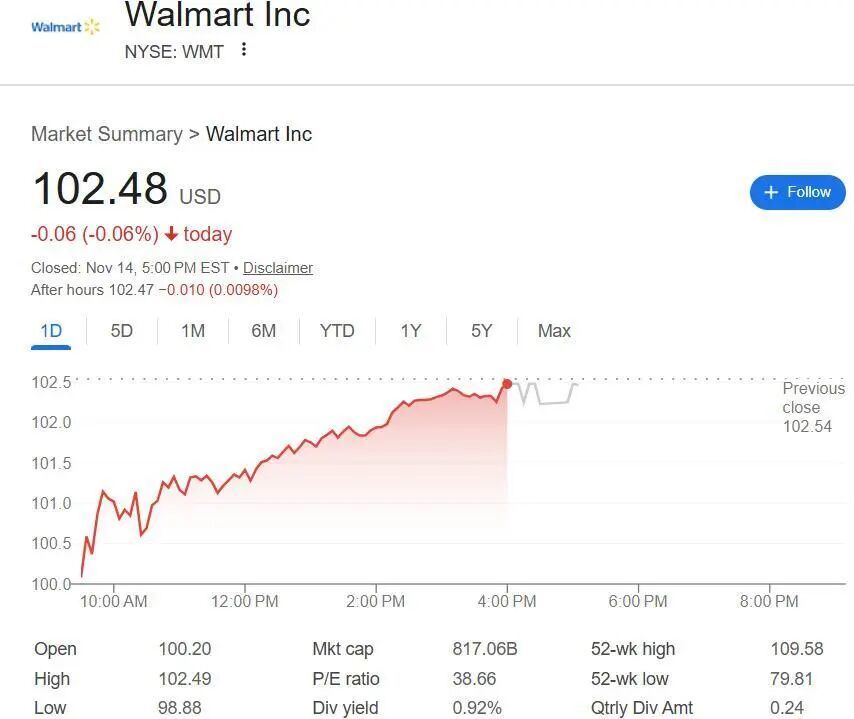
Core Viewpoint - Walmart's CEO Doug McMillon will step down at the end of January 2024, surprising the market amid various challenges such as tariff impacts, weak consumer demand, and AI disruptions in retail [1][3]. Group 1: Leadership Change - Doug McMillon has led Walmart for over ten years and will be succeeded by John Furner, the current CEO of Walmart U.S., effective February 1, 2024 [3]. - McMillon will remain as a company advisor until January 2027 [3]. - This leadership transition occurs while Walmart is experiencing strong performance, with a total shareholder return exceeding 400% and a market capitalization increase of $576 billion during McMillon's tenure [3]. Group 2: Market Reaction - Following the announcement, Walmart's stock opened lower, initially dropping about 3.6% before closing down 0.06%, marking a two-day decline [1][3]. - Analysts express concern over the leadership change, as investors have been accustomed to stable leadership for over a decade [5]. Group 3: Future Outlook - Analysts believe that John Furner is a suitable choice to lead Walmart into a new phase of growth and transformation [5]. - The transition signifies the end of Walmart's focus on building a comprehensive digital foundation and the beginning of an era centered on AI transformation, which could span the next decade [5]. - McMillon has been credited with transforming Walmart into a digital powerhouse, integrating e-commerce, advertising, and membership services while improving employee wages and benefits [5].
餐饮业感受到寒意!由于囊中羞涩,越来越多美国人不再去餐厅
Hua Er Jie Jian Wen· 2025-11-15 11:42
Core Insights - The article highlights a significant shift in consumer behavior in the U.S. due to budget constraints, leading to reduced dining out and increased home cooking and convenience store food purchases [1][2] Group 1: Consumer Behavior Changes - Middle and low-income consumers are significantly cutting back on dining out, opting for more economical home cooking and convenience store options [1][2] - There is a notable migration from fast food and fast-casual restaurants to grocery stores and convenience stores, indicating a growing challenge for traditional dining establishments [3][5] Group 2: Industry Response - The restaurant industry is responding to declining customer traffic by implementing discount promotions to maintain market share, which may further erode profit margins [2] - Many restaurant brands are accelerating the adoption of AI technology to reduce costs and improve efficiency in operations [4] Group 3: AI Integration in the Restaurant Sector - AI is becoming a focal point in the restaurant industry, with experts suggesting a "human-machine hybrid model" where human employees leverage AI to enhance efficiency and focus on customer experience [4][7] - Specific applications of AI include optimizing operational decisions, improving employee training, and enhancing the drive-thru experience through voice AI technology [7] Group 4: Beneficiaries of the Shift - Discount grocery stores like Aldi and Trader Joe's are gaining market share as consumers prefer purchasing ingredients to cook at home [5] - Fresh supermarkets offering ready-to-eat meals, such as Whole Foods' hot food bar, are also benefiting from this consumer shift [5] - Convenience stores are emerging as a significant alternative, especially for breakfast options, replacing traditional fast food [5]