消费升级

Search documents
白电“三巨头”PK:美的狂奔,海尔稳健,格力再垫底
Hu Xiu· 2025-09-02 05:08
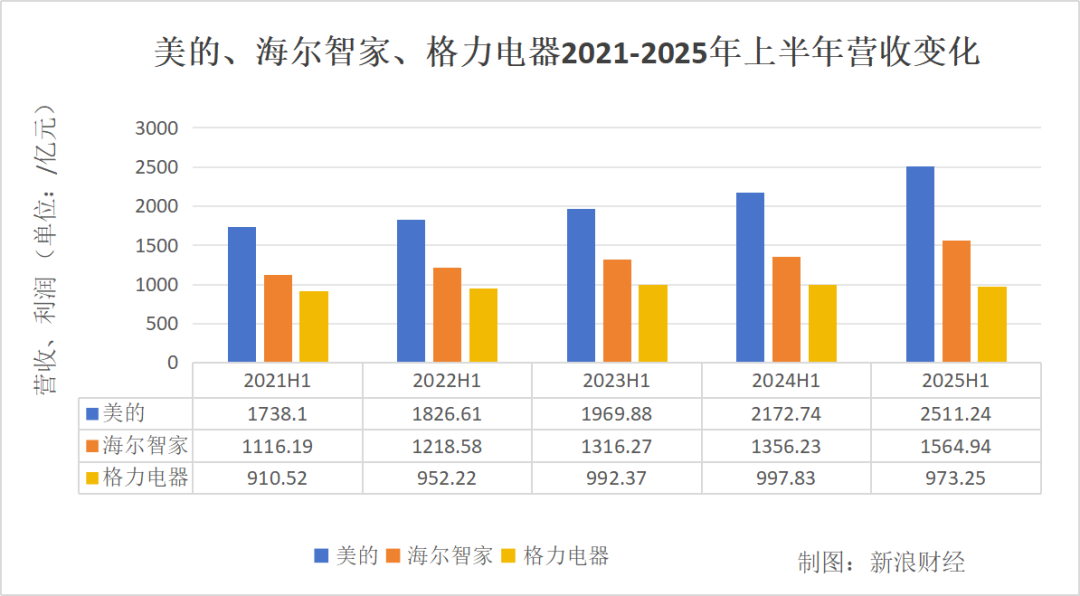
Core Viewpoint - The three major white goods companies, Midea Group, Haier Smart Home, and Gree Electric Appliances, have reported their semi-annual results for 2025, showcasing varied performance in revenue and net profit growth, with Midea leading significantly in both metrics [1][2][3]. Revenue and Profit Performance - Midea Group reported revenue of 251.12 billion yuan, a year-on-year increase of 15.58%, and a net profit of 26.01 billion yuan, up 25.04% [1][8]. - Haier Smart Home achieved revenue of 156.49 billion yuan, growing 10.22%, with a net profit of 12.03 billion yuan, reflecting a 15.59% increase [1][10]. - Gree Electric Appliances experienced a revenue decline to 97.32 billion yuan, down 2.46%, while net profit grew slightly to 14.43 billion yuan, up 1.95% [1][14]. Market Trends and Dynamics - The domestic home appliance market (excluding 3C products) reached a retail value of 453.7 billion yuan, growing 9.2% year-on-year, with significant growth in air conditioning and washing machine sectors [5][6]. - The air conditioning market saw retail sales of 38.45 million units, a 15.6% increase, while the retail scale reached 126.3 billion yuan, up 12.4% [5][6]. Company-Specific Insights - Midea Group's revenue and profit growth rates have not slowed despite its size, maintaining a consistent upward trend for four consecutive years [10][12]. - Haier Smart Home has shown stable growth without any year-on-year declines since 2021, with net profit growth consistently above 12% [12][10]. - Gree Electric Appliances has shown a noticeable decline in revenue growth since 2021, with a significant drop in its core air conditioning business, which traditionally contributes over 70% of its revenue [16][21][23]. Competitive Landscape - The competitive environment has intensified, with Midea and Haier gaining market share in the air conditioning sector, while Gree has seen a decline [22][24]. - Midea has implemented operational restructuring to enhance efficiency, while Gree is diversifying its product offerings beyond air conditioning [25][26]. - Haier is actively expanding its business through investments and acquisitions, indicating a strategic focus on growth through diversification [27][28]. Industry Challenges - The home appliance industry is facing challenges such as price competition and market saturation, leading to a need for companies to adapt their strategies to maintain market share [29].




中信建投:两轮车新兴市场需求稳健增长 推荐春风动力等
Xin Lang Cai Jing· 2025-09-02 03:45
Core Viewpoint - The power sports industry is in a growth phase driven by consumption upgrades and increased demand for leisure and entertainment, particularly benefiting all-terrain vehicles and large-displacement motorcycles [1] Industry Summary - The all-terrain vehicle and large-displacement motorcycle segments are experiencing increased penetration in the market due to rising consumer demand [1] - Chinese motorcycle companies have significantly improved product capabilities, showcasing clear cost-performance advantages that position them well to capture overseas market share [1] - Continuous optimization of product structure is leading to sustained increases in market share and profit margins for these companies [1] Company Recommendations - Chosen as a recommended stock is Chunfeng Power (603129.SH), which is expanding from high-end recreational products into the mass transportation sector, particularly in the all-terrain vehicle export market [1] - Another recommended company is Taotao Vehicle (301375.SZ), recognized for its strong brand in golf carts and emerging presence in humanoid robotics [1] - Attention is also drawn to Longxin General (603766.SH) and other Chinese motorcycle export companies as potential investment opportunities [1]



中信建投:两轮车新兴市场需求稳健增长 推荐春风动力(603129.SH)等
智通财经网· 2025-09-02 03:33
Core Insights - The power sports industry is experiencing rapid growth driven by consumer upgrades and increasing demand for leisure and entertainment, particularly in all-terrain vehicles and mid-to-large displacement motorcycles [1] - Chinese motorcycle companies have improved product capabilities and cost-performance advantages, positioning themselves to capture overseas market share while continuously optimizing product structure and increasing market share and profit margins [1] Two-Wheelers - Emerging markets are showing steady growth, with Japanese and Indian companies achieving sustained sales and revenue growth in both domestic and export markets, while European and American brands face pressure [2] - The demand in Europe and North America is marginally improving, but competition is intensifying, leading to a divergence in pricing, unit profits, and profit margins among brands [2] Four-Wheelers - Demand in Europe and North America is declining due to inflation, with leading brands facing pressure from high inventory levels and increased competition, resulting in decreased profit margins [3] - Secondary brands like Kawasaki are benefiting from capacity release and new product launches, achieving volume and revenue growth [3] Chinese Companies - Chinese companies are actively expanding into overseas markets, with Spring Wind, Longxin, and Taotao achieving record revenue and profit in Q2 2025, while also exploring new growth areas such as AI, robotics, and semiconductors [4] - The revenue and profit of Spring Wind, Longxin, and Taotao have reached historical highs for a single quarter [4] Outlook - Japanese companies forecast continued growth in motorcycle sales in 2025, with expectations of growth in emerging markets for brands like Honda, Suzuki, and Kawasaki [5] - The competitive landscape is expected to intensify globally, with Chinese companies likely to capture more market share, while leading four-wheeler brands may see a decline in market share due to weak demand and high inventory [5]
白电三巨头PK:美的狂奔 海尔稳健 格力再垫底
Xin Lang Ke Ji· 2025-09-02 01:00
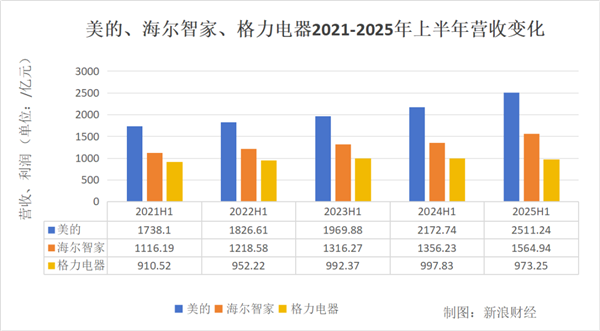
Core Insights - The article discusses the performance of major home appliance companies in China, specifically Midea Group, Haier Smart Home, and Gree Electric, as they release their half-year reports for 2025 [2][3][4]. Group 1: Financial Performance - Midea Group reported a revenue of 251.12 billion yuan, a year-on-year increase of 15.58%, and a net profit of 26.01 billion yuan, up 25.04% [2][7]. - Haier Smart Home achieved a revenue of 156.49 billion yuan, with a growth of 10.22%, and a net profit of 12.03 billion yuan, increasing by 15.59% [2][10]. - Gree Electric's revenue was 97.32 billion yuan, showing a decline of 2.46%, while its net profit was 14.43 billion yuan, up by 1.95% [2][13]. Group 2: Market Trends - The domestic home appliance market (excluding 3C products) reached a retail value of 453.7 billion yuan, growing by 9.2% year-on-year [6]. - The air conditioning sector saw a retail volume of 38.45 million units, a growth of 15.6%, with a retail scale of 126.3 billion yuan, up 12.4% [6][21]. - The washing machine market's retail value was 47.6 billion yuan, increasing by 11.5%, while the refrigerator market reached 67.28 billion yuan, growing by 3.5% [6]. Group 3: Competitive Landscape - Midea Group is positioned to "compete against two" with its revenue nearly matching the combined revenue of Haier and Gree [7][8]. - Gree Electric has shown a noticeable decline in growth, with its revenue growth turning negative for the first time since 2021 [12][15]. - The competitive dynamics are shifting, with companies like Xiaomi gaining market share, prompting major players to adjust their strategies [22][23]. Group 4: Business Adjustments - Midea Group has made operational adjustments to enhance efficiency and streamline its business [22]. - Gree Electric is focusing on diversifying its product lines beyond air conditioning to improve its market presence [22]. - Haier Smart Home is actively expanding through investments and acquisitions to broaden its business scope [22].
白电「三巨头」PK:美的狂奔,海尔稳健,格力再垫底丨BUG
Xin Lang Ke Ji· 2025-09-02 00:55
Core Viewpoint - The performance of major home appliance companies in the first half of 2025 shows significant differences, with Midea Group leading in both revenue and profit growth, while Gree Electric experienced a decline in revenue [2][3][4]. Revenue and Profit Performance - Midea Group reported revenue of 251.12 billion yuan, a year-on-year increase of 15.58%, and a net profit of 26.01 billion yuan, up 25.04% [2][6]. - Haier Smart Home achieved revenue of 156.49 billion yuan, growing 10.22%, with a net profit of 12.03 billion yuan, increasing by 15.59% [2][9]. - Gree Electric's revenue was 97.32 billion yuan, down 2.46%, with a net profit of 14.43 billion yuan, up 1.95% [2][11]. Market Trends - The domestic home appliance market (excluding 3C products) reached a retail value of 453.7 billion yuan, growing by 9.2% year-on-year in the first half of 2025 [6]. - The air conditioning sector saw retail sales of 38.45 million units, a 15.6% increase, with a retail scale of 126.3 billion yuan, up 12.4% [6][14]. Business Dynamics - Midea Group's smart home business generated revenue of 167.2 billion yuan, growing 13.31% [15]. - Gree Electric's consumer electronics segment reported revenue of 76.28 billion yuan, down 5.09% [16]. - The air conditioning market is experiencing price competition, with a significant shift towards lower-priced models, impacting mid-to-high-end demand [17]. Strategic Adjustments - Midea Group has made operational adjustments to enhance efficiency and streamline its business model [18]. - Gree Electric is focusing on diversifying its product offerings beyond air conditioning to strengthen its market position [18]. - Haier Smart Home is actively expanding through investments and acquisitions to broaden its business scope [18]. Competitive Landscape - The competitive environment in the home appliance industry is intensifying, with new entrants and existing players adjusting strategies to capture market share [19].

白电“三巨头”PK:美的狂奔,海尔稳健,格力再垫底丨BUG
Xin Lang Cai Jing· 2025-09-02 00:53
Core Insights - The article discusses the performance of major home appliance companies in China, specifically Midea Group, Haier Smart Home, and Gree Electric, based on their half-year reports for 2025, highlighting their revenue and profit growth rates [2][5][7]. Group 1: Company Performance - Midea Group leads in both revenue and profit growth, achieving a revenue of 251.12 billion yuan, a year-on-year increase of 15.58%, and a net profit of 26.01 billion yuan, up 25.04% [5][7]. - Haier Smart Home reported a revenue of 156.49 billion yuan, a 10.22% increase, and a net profit of 12.03 billion yuan, growing by 15.59% [7][9]. - Gree Electric experienced a revenue decline of 2.46%, totaling 97.32 billion yuan, while its net profit grew by 1.95% to 14.43 billion yuan [9][11]. Group 2: Market Trends - The domestic home appliance market (excluding 3C products) saw a retail sales increase of 9.2% in the first half of 2025, reaching 453.7 billion yuan [5]. - The air conditioning sector experienced a retail volume growth of 15.6%, with sales reaching 38.45 million units, and a retail scale of 126.3 billion yuan, up 12.4% [5][15]. - The washing machine market grew by 11.5%, while the refrigerator market saw a 3.5% increase in retail sales [5]. Group 3: Competitive Landscape - Midea Group is positioned to "compete against two" with its revenue nearly matching the combined total of Haier and Gree [5][7]. - Gree Electric's core air conditioning business, which traditionally contributed over 70% of its revenue, is facing challenges with a 5.09% decline in the consumer electronics segment [12][14]. - The competitive landscape is intensifying, with companies like Xiaomi gaining market share, prompting major players to adjust their strategies [16][17].

地方经济增长动力从何而来?
Shang Hai Zheng Quan Bao· 2025-09-01 18:54
Core Viewpoint - The article emphasizes the need for local governments in China to scientifically analyze the economic development environment and growth conditions during the "14th Five-Year Plan" period, focusing on new industrial growth points, expanding consumption, and improving enterprise efficiency to ensure sustainable economic growth [1][2][3]. Group 1: Economic Growth and Development Goals - The current economic environment in China is transitioning to a new phase of stable growth, necessitating a careful setting of growth targets during the "14th Five-Year Plan" [2][3]. - The shift from investment-driven growth to innovation-driven and endogenous growth requires local governments to adopt a more nuanced approach to economic goal setting [2][4]. - The contribution of consumption to GDP has increased from 50% at the end of the "11th Five-Year Plan" to 57% at the end of the "14th Five-Year Plan," highlighting the importance of domestic demand [3][4]. Group 2: Industrial Structure and Trends - The service sector has become the core driver of economic growth, with its contribution to GDP rising to 56.7% by the end of 2024, while the industrial sector's contribution has decreased [7][10]. - The article suggests that local governments should focus on the service industry, especially in lower-tier cities, to enhance employment and living standards [8][10]. - The industrial structure is undergoing significant changes, with traditional industries declining and high-end manufacturing rising, necessitating targeted policies to support these transitions [9][10]. Group 3: Consumption and Demand - The article stresses the importance of consumer purchasing power and market demand as fundamental drivers of economic growth, advocating for a focus on consumption to create a new supply-demand cycle [13][14]. - Service consumption is highlighted as having a more direct impact on local economies compared to goods consumption, which often benefits external regions [15][16]. - The growth of service consumption is projected to continue, with a 6.2% increase in national service retail sales in 2024, outpacing goods retail sales [15][16]. Group 4: Innovation and Enterprise Development - The vitality and development level of enterprises are crucial for the quality and efficiency of local economic operations, with a call for systematic policies to enhance enterprise efficiency and innovation potential [18][19]. - The article advocates for a dual focus on both traditional and emerging enterprises to foster innovation and improve overall economic performance [20][21]. - Local governments are encouraged to create a supportive environment for enterprises, emphasizing the importance of technological and model innovation to drive economic growth [19][21].
拥抱C端 推低度产品 半年报后白酒亮出破局大招
Bei Jing Shang Bao· 2025-09-01 14:20
Core Insights - The Chinese liquor industry is undergoing a deep adjustment phase, with significant differentiation among companies, where leading brands are experiencing steady growth while many others face declining revenues and profits [1][4][7] Industry Overview - The overall performance of the liquor industry in the first half of 2025 shows a decline in the number of regulated enterprises, down to 887, a decrease of over 100 year-on-year [7] - The industry's production volume reached 1.9159 million kiloliters, a year-on-year decrease of 5.8%, while sales revenue slightly increased by 0.19% to 330.42 billion yuan, and profits fell by 10.93% to 87.687 billion yuan [7] Market Trends - The liquor market is experiencing a polarization in sales, with low-end and light bottle liquor performing relatively well, while mid to high-end products struggle due to changing consumer preferences and economic conditions [4][5][8] - The average inventory turnover days for the industry is 900 days, an increase of 10% year-on-year, with 60% of companies experiencing price inversion in their products [4] Consumer Behavior - Consumers are increasingly favoring lower-priced liquor options, particularly in the 100-300 yuan price range, which aligns with daily consumption needs, while high-end liquor sales are declining due to reduced demand for gifts and business consumption [5][8] - The shift in consumer habits is prompting companies to embrace direct-to-consumer strategies, with many launching low-alcohol products to attract younger consumers [9][10] Strategic Responses - Companies are responding to the changing market dynamics by launching low-alcohol products, which cater to health-conscious consumers and aim to break traditional consumption barriers [10] - Major brands like Wuliangye and Moutai are actively developing low-alcohol offerings to capture market share among younger demographics [9][10]
迪卡侬的十字路口:中产看不上,穷鬼穿不起
虎嗅APP· 2025-09-01 13:53
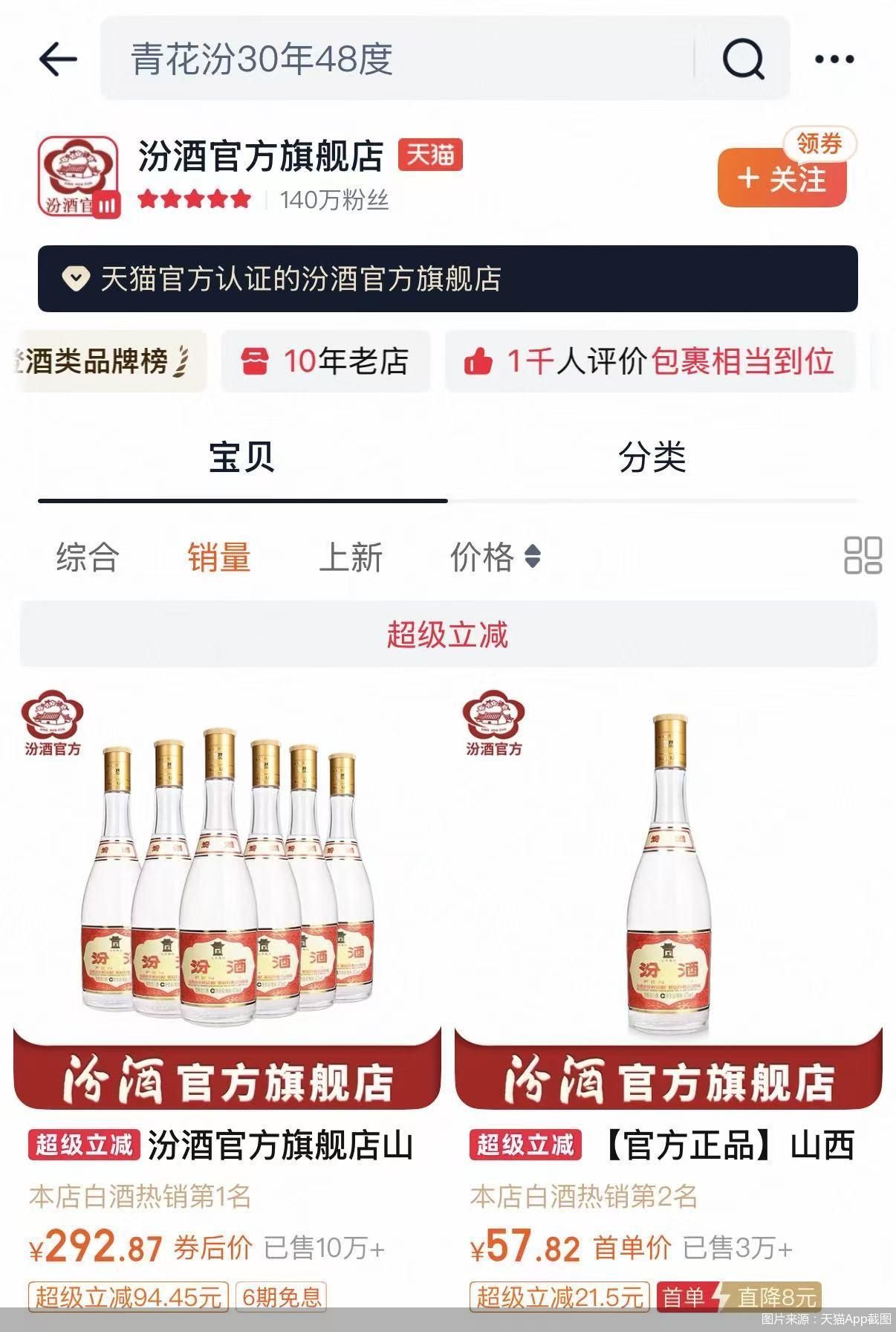
Core Viewpoint - Decathlon, once known as an affordable sports paradise, has transformed into a brand that many consumers now find unaffordable and unappealing due to significant price increases without corresponding improvements in product quality or desirability [3][12][26]. Group 1: Price Increases and Consumer Sentiment - Between 2022 and 2024, the average selling price of Decathlon products rose from 128.81 yuan to 196.32 yuan, marking a 52% increase [6]. - Specific product price changes include a 20L backpack increasing from 49.9 yuan to 89.9 yuan, a white cotton T-shirt from 19.9 yuan to 39.9 yuan, and a fleece jacket from 249 yuan to 499 yuan [7][10]. - Consumers express feelings of betrayal as they now have to reconsider purchases that were once straightforward, indicating a shift from a "buy without thinking" mentality to a more cautious approach [11][12]. Group 2: Market Position and Brand Perception - Decathlon's strategy to raise prices in an attempt to reposition itself as a higher-end brand has not resonated well with consumers, leading to a loss of its original customer base [12][26]. - The brand's attempt to cater to both price-sensitive consumers and higher-end markets has resulted in a fragmented identity, with products ranging from low-cost items to high-end bicycles priced at 69,999 yuan [28][30]. - The company's revenue for 2024 was reported at 16.2 billion euros, but profits fell by 15.5%, indicating that price increases did not translate into brand premium [25][26]. Group 3: Competitive Landscape and Consumer Choices - The outdoor sports market is seeing a rise in competition, with many brands increasing their prices, yet some are still able to attract consumers willing to pay a premium [14][15]. - The emergence of alternative brands offering similar products at lower prices is contributing to Decathlon's challenges, as consumers are increasingly opting for these alternatives [20][26]. - The trend of consumers gravitating towards mid to high-end products suggests a shift in market dynamics, where Decathlon's traditional value proposition is being undermined [15][16]. Group 4: Brand Strategy and Future Directions - Decathlon's recent rebranding efforts, including the introduction of a new logo and the establishment of specialized brands, aim to redefine its market presence [23][25]. - Despite these efforts, the brand struggles to connect emotionally with consumers, lacking the storytelling and cultural resonance that competitors like Lululemon and Arc'teryx have successfully cultivated [33][34]. - The recent popularity of a free promotional item, the "urea bag," highlights a potential return to Decathlon's roots of practicality and value, contrasting sharply with its recent pricing strategy [42][44].
国泰海通 · 晨报0902|纺织服装:25H1运营挑战重重,个股表现仍具亮点
国泰海通证券研究· 2025-09-01 13:18
【纺织服装 】 25H1运营挑战重重,个股表现仍具亮点 行业复盘: 1)需求层面:①内需:7月中国纺服零售增长放缓、线上加速。7月中国服装鞋帽针织品类零售额同比+1.8%,环比6月(+1.9%)放缓。1-7月 中国穿类实物商品网上零售额同比+1.7%,环比1-6月(+1.4%)提速。②美国服装零售:6-7月美国服装零售持续提速。7月美国服装及服装配饰店零售额 同比+5.0%,环比6月(+4.7%)加速;自6月起,美国纺服零售增长已连续2个月环比加速。2)出口层面:①中国出口:7月纺织品出口增速环比6月改善, 成 衣 出 口 走 弱 。 7 月 我 国 纺 织 品 服 装 出 口 额 同 比 -0.30% ( 6 月 为 -0.29% ) , 其 中 纺 织 品 / 成 衣 出 口 额 分 别 同 比 +0.52%/-0.61% ( 6 月 为-1.60%/+1.10%)。②越南出口:7月越南纺织品及鞋履出口环比提速。7月越南纺织品/鞋履出口金额同比分别+16.74%/+4.50%,均较6月提速(6月 纺织品/鞋履出口同比分别+16.03%/-3.34%)。 品牌服饰25年中报总结 :1)业绩回顾:25H1港股 ...