
银发经济

Search documents
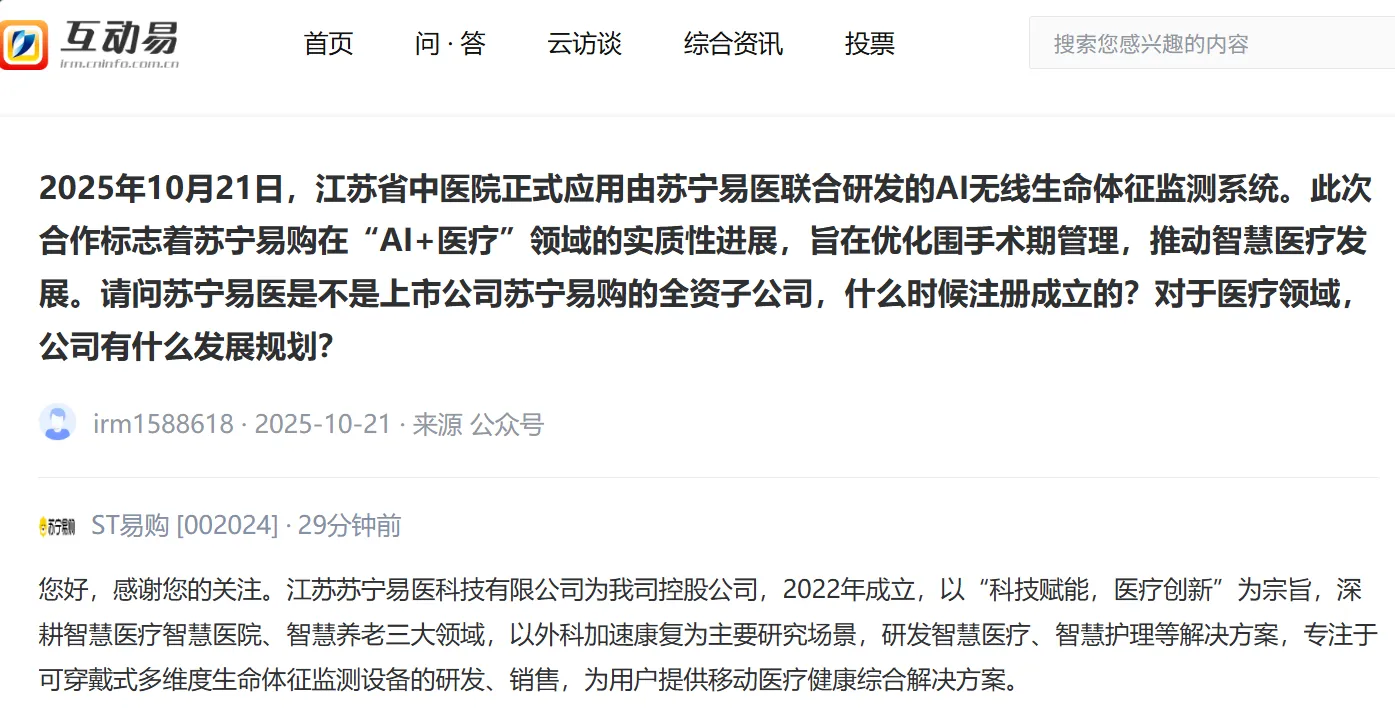
ST易购:苏宁易医2022年成立,深耕智慧医疗智慧医院、智慧养老领域
Cai Jing Wang· 2025-10-27 10:07
Core Insights - ST Yigou (also known as Suning Yigou) is focusing on the development of smart healthcare and elderly care solutions through its subsidiary, Suning Yiyi, which was established in 2022 [1][3] - The company is expanding its business into the silver economy with the launch of the "Suning Private Home" brand, targeting the needs of elderly consumers [3][4] Company Overview - ST Yigou was founded in 1990 and has over 30 years of experience in the retail sector, particularly in home appliances and 3C products [2] - The company was listed on the Shenzhen Stock Exchange in July 2004 and is headquartered in Nanjing [2] Financial Performance - In the first half of 2025, ST Yigou reported revenue of 25.895 billion yuan, a year-on-year increase of 0.44% [2] - The company achieved a net profit attributable to shareholders of 49 million yuan, a significant year-on-year increase of 230.03% [2] - However, the net profit after deducting non-recurring gains and losses was negative 865 million yuan, with a year-on-year loss increase of 63.24% [2] Subsidiary and Shareholding Structure - Suning Yiyi was established in November 2022 with a registered capital of 10 million yuan, and ST Yigou holds a 1% stake in it, translating to an indirect holding of 69.3% through Jiangsu Biying Technology Co., Ltd. [3] - Jiangsu Biying Technology Co., Ltd. owns 99% of Suning Yiyi, while ST Yigou holds 70% of Jiangsu Biying [3] Product and Service Innovations - The "Suning Private Home" brand focuses on home safety and health needs for the elderly, integrating various high-frequency scenarios such as bathroom safety and sleep health [3][4] - The company is adopting an innovative one-stop "design-installation" model, with plans to expand its service network to include various store formats and leverage national subsidies for elderly care renovations [4]


常州多措并举构建老年友好型社会,银发浪潮涌动发展新动能
Yang Zi Wan Bao Wang· 2025-10-27 09:55
Group 1 - The core viewpoint of the articles highlights the increasing aging population in Changzhou, with the elderly population expected to reach 1.2947 million by the end of 2024, accounting for 24.04% of the total resident population, indicating a deepening aging trend [1][2] - Changzhou is implementing policies to enhance elderly care, including raising the basic pension for urban and rural residents to 490 yuan per month and distributing approximately 110 million yuan in respect funds to benefit many elderly individuals [1][2] - The city has established a comprehensive elderly care service network, with over 22,000 beds available in 109 elderly care institutions, and 95% of these are operated by social forces, alongside community-based services covering over 150,000 elderly individuals [1][2] Group 2 - The health service system for the elderly is being optimized, with 122 elderly-friendly medical institutions established and a "zero waiting" policy for seniors over 80 years old, benefiting 312,000 individuals [2] - Changzhou is fostering the silver economy by developing new industries such as rehabilitation aids and smart elderly care, with 7 products selected for national promotion [2] - The city has also focused on cultural and educational activities for the elderly, achieving a 32% participation rate in community education programs and providing over one million training sessions through "smart elderly assistance" initiatives [2][3]
瞭望 | 提高质量向未来
Sou Hu Cai Jing· 2025-10-27 09:26
Core Insights - The development of the silver economy is crucial for addressing the needs of the aging population and is a key component of China's strategy to cope with demographic changes [1][2][12] Policy and Market Dynamics - Continuous policy support from various government sectors has led to increased social capital interest and investment in the silver economy, enhancing market vitality [2][9] - The number of elderly care-related enterprises in China is projected to reach approximately 160,000 by the end of 2024, marking a 24.36% increase from 2023 [2] Focus Areas for Elderly Welfare - Prioritizing care for elderly individuals with disabilities is essential, alongside promoting health initiatives and integrating medical and elderly care services [2][3] - The seven key areas of focus for elderly welfare include meal assistance, home care, community services, health care, elderly care, cultural and sports activities, and rural elderly care [3] Technological Integration - The integration of artificial intelligence, IoT, and big data is expected to reshape elderly care services, although there is still a gap in technology tailored for the elderly [7][9] - Smart wearable devices and home systems can provide health monitoring and remote care, representing potential growth points in the silver economy [7] Financial and Policy Support - Financial institutions are encouraged to provide long-term credit support for sectors with growth potential, such as dementia care and smart elderly services [10][11] - The establishment of a unified statistical system for the silver economy is necessary for effective industry analysis and policy evaluation [13] Challenges and Opportunities - The silver economy faces challenges such as the need for supply-side innovation, sustainable social capital investment, and a shortage of skilled talent [12][13] - Expanding elderly consumption is seen as a way to transform demographic pressures into economic growth, necessitating income improvements for the elderly [12]
首部老年营养食品国标征求意见,千亿市场面临哪些机遇和挑战?
Bei Ke Cai Jing· 2025-10-27 07:53
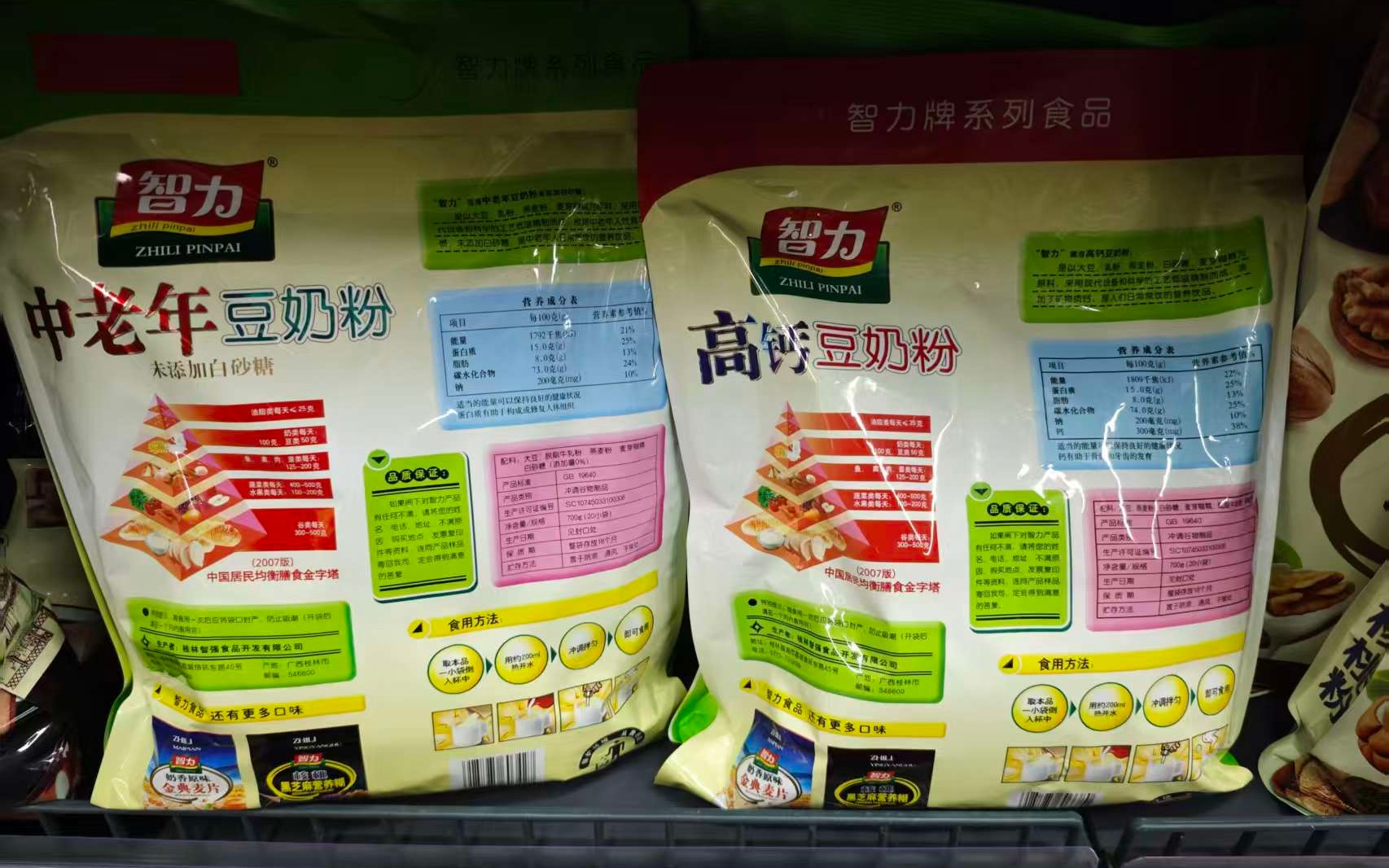
Core Points - The National Food Safety Standard for Elderly Nutritional Supplements is the first of its kind in China, specifically targeting individuals aged 60 and above [1][2] - The draft includes regulations such as banning hydrogenated oils, mandatory addition of 10 essential nutrients for the elderly, and warning labels stating that the products cannot replace normal diets [1][3] - The introduction of this standard is expected to improve the currently chaotic elderly food market in China, which is projected to grow from 87.6 billion yuan in 2023 to over 143.9 billion yuan by 2028 [1][4] Industry Overview - As of the end of 2023, the population aged 60 and above in China reached approximately 296.97 million, accounting for 21.1% of the total population [4] - The elderly nutritional market is characterized by a variety of products, including nutritional supplements, functional foods, and special medical purpose formula foods, with stable demand for products like middle-aged and elderly milk powder [4][12] - The market currently lacks a unified standard, leading to labeling chaos where some products marketed for the elderly do not meet their specific nutritional needs [5][6] Regulatory Insights - The draft standard defines "elderly nutritional supplements" as special dietary foods made from dairy or soy products, with specific nutrient requirements based on the physiological characteristics and nutritional needs of the elderly [2][3] - The daily recommended intake for these supplements is capped at 50 grams, with a minimum protein content of 20% of the total product weight [2][3] - The standard aims to address issues of inconsistent nutrient ratios and improve product quality by enforcing strict ingredient and labeling requirements [3][8] Market Dynamics - The elderly nutrition market is experiencing a compound annual growth rate of 9.64%, with significant growth potential due to the increasing elderly population and their specific nutritional needs [4][10] - Major players in the market include brands like Yili, Nestlé, and Abbott, which are focusing on developing products tailored to the health needs of the elderly [12][14] - The introduction of the national standard is expected to streamline the approval process for elderly nutritional products, making it easier for legitimate companies to enter the market [9][10] Challenges and Opportunities - The market faces challenges such as a lack of specialized standards, inconsistent raw material quality, and arbitrary nutritional formulations [6][10] - There is a growing demand for high-protein, low-GI, and easy-to-swallow products to address the nutritional deficiencies and swallowing difficulties faced by the elderly [15] - The industry is shifting towards high-value products and raw materials, driven by changing consumer demands for healthier options [15]
50岁+人群贡献过半销售额,零售药店靠银发族“续命”?
3 6 Ke· 2025-10-27 04:10
Core Insights - The retail pharmacy industry is experiencing a significant transformation, moving away from rapid expansion to a focus on consolidation and adaptation to market pressures [1][2][4] - The aging population is creating new opportunities for retail pharmacies, with a notable increase in demand from the 50+ demographic, which now accounts for approximately 50% of sales [1][8][10] Part 01: Industry Trends - The high-growth era of retail pharmacies is coming to an end, with many companies reporting a reduction in store numbers [2][4] - In the first half of 2025, four out of six listed retail pharmacy companies reduced their store count, with notable closures at 老百姓大药房 and 一心堂 [2][3] - The overall number of retail pharmacies in China decreased by approximately 3,000 in Q1 2025, following a decline of 3,395 in Q4 2024 [3][4] Part 02: New Growth Drivers - The increasing elderly population is driving demand for both medical and health management services, particularly for chronic disease management [9][10] - Retail pharmacies must transition from being solely drug sellers to comprehensive health service providers to meet the evolving needs of the silver-haired demographic [10][24] Part 03: Strategic Pathways - Retail pharmacies are focusing on non-drug health products and services to cater to the health needs of the elderly [11][12] - Companies like 老百姓大药房 are seeing growth in non-drug sales, with a reported increase of over 9% in related revenues [12][25] - Successful expansion into non-drug categories requires precise product selection and innovative marketing strategies [15][26] Health Management Services - Retail pharmacies are developing differentiated services to build closer relationships with the elderly community [16][20] - Innovations include home health management services and community health stations that provide essential health services [21][23] - 老百姓大药房 has implemented programs like the "30-day blood pressure stabilization plan" to assist elderly patients in managing their health [23][24]


前三季度营利双增,东阿阿胶多维驱动健康生态布局
中国基金报· 2025-10-27 01:58
Core Viewpoint - The company demonstrated a healthy development trend in the first three quarters of 2025, with steady growth in core businesses and optimized R&D investment and expense control [12]. Financial Performance - In the first three quarters, the company achieved an operating income of 4.766 billion yuan, a year-on-year increase of 10.10% [1] - The net profit attributable to shareholders reached 1.274 billion yuan, up 10.58% year-on-year [1] - The net cash flow from operating activities was 1.31 billion yuan, with a basic earnings per share of 1.9781 yuan, reflecting a 10.35% increase [1] - The gross profit margin improved by 3.33 percentage points to 73.69%, driven by stable growth in core product lines and a focus on high-margin categories [1] Cost Management - The company maintained reasonable control over sales and management expenses, with R&D expenses increasing by 62.29% to 145 million yuan, emphasizing the importance of technological innovation and long-term competitiveness [1][2]. Product Performance - The core product matrix continued to perform well, with significant growth in the sales of Ejiao blocks, compound Ejiao syrup, and Taohua Ji Ejiao cake, further consolidating market share [4][5] - Ejiao blocks maintained a leading position in the OTC market, while compound Ejiao syrup gained recognition as a popular product in both hospital and retail channels [5] - The Taohua Ji Ejiao cake successfully attracted female consumers through product innovation and marketing strategies [5] Market Expansion - The company is actively targeting the silver economy and men's health sectors, with plans to innovate product forms and expand into the middle-aged and elderly markets [7] - The men's health product line includes unique formulations aimed at addressing common health issues, positioning the company for future growth [7] Brand Value - The company was recognized for its brand value, ranking 11th on the 2025 Health China Brand Value List with a brand value of 19.43 billion yuan [8] - It also received accolades for its innovative marketing strategies and was listed among the top 100 most valuable Chinese brands [8] Sustainable Development - The company is committed to sustainable practices, including agricultural development and ecological protection, which earned it the title of "Most Socially Responsible Listed Company" at the 2025 Phoenix Star Awards [9] Strategic Partnerships - The partnership with China Resources Group enhances the company's strategic transformation and ecological construction, facilitating investment in traditional Chinese medicine and international market exploration [11] - The establishment of a 1 billion yuan pharmaceutical industry investment fund aims to support innovative projects in the health sector [11] Future Outlook - The company is well-positioned for future growth with its strategic focus on the silver economy and men's health, alongside the support from its strategic partner, which will enhance its competitive edge in the traditional Chinese medicine market [12]


推动建设生育友好型社会;上海生物医药产业规模将破万亿元
2 1 Shi Ji Jing Ji Bao Dao· 2025-10-26 23:39
Policy Developments - The National Health Commission emphasizes the construction of a fertility-friendly society, promoting supportive policies for childbirth, elderly care, and the gradual delay of retirement age to optimize population structure [1] Drug Approval - East China Pharmaceutical's subsidiary received approval for the drug Mevanertinib, a new treatment for advanced or metastatic non-small cell lung cancer, with a direct R&D investment of approximately 306 million yuan [2] - Hengrui Medicine's subsidiary received approval for a fixed-dose combination of three oral diabetes medications, marking the first of its kind in China [3] Financial Reports - Shuanglu Pharmaceutical reported a 143.28% year-on-year increase in net profit for Q3, driven by gains from financial assets [4] - Huitai Medical announced a 18.02% increase in net profit for the first three quarters, with Q3 revenue up 24.77% [5] Capital Market - WuXi AppTec plans to sell 100% equity of two subsidiaries for 2.8 billion yuan to focus on its CRDMO business model, enhancing its global capabilities [7] Industry Events - The Ministry of Industry and Information Technology conducted a survey on the traditional Chinese medicine industry, aiming to promote modernization and quality improvement [8] - Shanghai's biopharmaceutical industry is projected to exceed 1 trillion yuan, marking it as the fifth trillion-level industry in the city [9] - The Jiangxi Pharmaceutical Development Conference resulted in the signing of 16 key pharmaceutical projects across various sectors [10] Public Sentiment - Beilu Pharmaceutical announced that a major shareholder plans to reduce its stake by up to 1.78% to improve asset liquidity [11]






开发养老社区布局旅居养老,险企深度抢滩养老服务产业
Bei Jing Shang Bao· 2025-10-26 13:33
Core Viewpoint - The insurance industry is increasingly investing in the elderly care sector, particularly in the development of retirement communities, as a response to the growing aging population and the demand for high-quality elderly services [1][3]. Group 1: Industry Trends - On October 24, CITIC Prudential Life Insurance launched the "Future Home" retirement community project, marking its 25th anniversary [3]. - The "Future Home" community will be located near Chaoyang Park in Beijing and will feature integrated medical services, including a secondary hospital and partnerships with top-tier hospitals [3]. - Other insurance companies, such as Taikang Life and China Pacific Insurance, have also opened retirement communities this year, indicating a rapid expansion in the sector [3][4]. Group 2: Market Opportunities - The aging population in China is projected to reach 310 million by the end of 2024, with expectations to exceed 500 million by mid-century, highlighting the urgency of addressing elderly care as a national issue [5]. - The insurance sector's long-term funding advantage aligns well with the long-term nature of the elderly care industry, making it a suitable investment area [4][5]. Group 3: Business Models - Insurance companies are adopting a "insurance product + retirement community" model, where purchasing insurance products grants access to retirement community services, thus linking insurance sales with elderly care [4][6]. - There are three investment models for retirement communities: heavy asset investment (self-built communities), light asset investment (partnering with third-party communities), and a combination of both [6]. Group 4: Challenges and Considerations - Despite the potential for stable long-term returns, the industry faces challenges such as low short-term returns and long profit cycles, necessitating a focus on operational efficiency and service innovation [6]. - The need for sustainable development in the "land grab" phase of retirement community investment emphasizes the importance of balancing construction and operational management [6].

多维驱动健康生态布局 东阿阿胶前三季度营收净利润双稳增
Zheng Quan Ri Bao Wang· 2025-10-25 00:45
Core Insights - Dong'e Ejiao reported a revenue of 4.766 billion yuan for the first three quarters of 2025, marking a year-on-year increase of 10.1%, with a net profit of 1.274 billion yuan, up 10.58% [1] - The company's gross profit margin increased by 3.33 percentage points to 73.69% during the reporting period, attributed to stable growth in core product lines and a focus on high-margin categories [1] Product Performance - The core product matrix, including Ejiao blocks and compound Ejiao syrup, continued to support the company's growth, with both product lines showing steady growth and increased market share [2] - Ejiao blocks maintained a leading position in the OTC market, with ongoing strategies to attract diverse consumer groups through high-end and youth-oriented marketing [2] - The introduction of low-sugar certified products under the "Peach Blossom Princess Ejiao Cake" brand has effectively increased repurchase rates among female consumers [2] Market Expansion Strategies - The company is actively targeting the silver economy and men's health sectors, with Ejiao blocks being recognized for their blood-nourishing properties among the elderly [2] - The "Royal Weichang 1619" brand focuses on men's health, addressing issues like kidney deficiency and fatigue, with products designed to penetrate the male vitality supplement market [3] Strategic Collaborations and Investments - Dong'e Ejiao has partnered with China Resources to establish a 1 billion yuan pharmaceutical investment fund, focusing on traditional Chinese medicine and synthetic biology [3] - The company has opened a flagship health store in Hong Kong, enhancing its global presence and facilitating entry into Southeast Asian and Belt and Road markets [4] Support from Parent Company - The integration of resources from the China Resources Group has significantly improved Dong'e Ejiao's production efficiency and product quality, establishing a competitive advantage in the market [5]
接续推进中国式现代化——中共中央举行新闻发布会解读党的二十届四中全会精神
Ren Min Ri Bao· 2025-10-24 22:06
Core Points - The Fourth Plenary Session of the 20th Central Committee of the Communist Party of China was held from October 20 to 23, focusing on the completion of the "14th Five-Year Plan" and the preparation for the "15th Five-Year Plan" [1][2] - The session approved the "Suggestions for Formulating the 15th Five-Year Plan for National Economic and Social Development," which is seen as a significant guiding document for the next five years [2][3] Group 1: Key Outcomes of the Meeting - The "Suggestions" document consists of 15 parts and 61 articles, divided into three main sections: general principles, strategic tasks, and tasks for strengthening centralized leadership [2][3] - The document emphasizes the importance of high-quality development, technological self-reliance, and social progress as key goals for the "15th Five-Year Plan" [3][4] Group 2: Economic and Social Development Goals - The main goals for the "15th Five-Year Plan" include significant achievements in high-quality development, substantial improvements in technological self-reliance, and enhanced social civilization [3][4] - The plan aims to strengthen the national security framework and improve the quality of life for citizens, laying a solid foundation for achieving socialist modernization by 2035 [3][4] Group 3: Industrial and Market Development - The plan outlines the construction of a modern industrial system, focusing on optimizing traditional industries and fostering emerging sectors, with an estimated market space of around 10 trillion yuan to be added over the next five years [6] - It emphasizes the importance of a strong domestic market as a strategic foundation for modernization, with key tasks including expanding domestic demand and improving market efficiency [6] Group 4: Technological Advancements - The "Suggestions" highlight the need for technological modernization, with projected R&D investment exceeding 3.6 trillion yuan by 2024, marking a 48% increase from 2020 [8] - The plan aims to enhance the national innovation system and promote deep integration of technological and industrial innovation [8] Group 5: Open Cooperation and Global Engagement - The meeting signaled a strong commitment to open cooperation and mutual benefit, with plans to expand high-level openness and enhance trade and investment [9][10] - The "Suggestions" include initiatives for expanding autonomous openness and promoting trade innovation, aiming to strengthen China's position in global markets [9][10] Group 6: Health and Population Development - The plan aims to provide a solid health and population foundation for modernization, with a focus on improving healthcare services and promoting a supportive environment for family growth [11][12] - It includes measures to enhance elderly care and optimize employment policies for older adults, contributing to a more inclusive society [11][12]