技术创新

Search documents
猛玛,小品类做出大生意
盐财经· 2025-09-04 11:58
Core Viewpoint - The article discusses the transformation of Chinese manufacturing from a "world factory" to a stage focused on technological innovation, product design, and brand output, particularly highlighting the rapid growth of the wireless lavalier microphone market driven by the rise of live streaming and short videos [2][6]. Market Overview - The global wireless lavalier microphone market reached a sales figure of $1.428 billion (approximately 10.361 billion RMB) in 2023, with projections to grow to $2.299 billion (approximately 16.681 billion RMB) by 2030, reflecting a compound annual growth rate (CAGR) of 6.94% [6]. - North America is the largest consumer market, accounting for 35.24%, while China and Europe hold shares of 26.67% and 21.23%, respectively [6]. Competitive Landscape - The market is characterized by intense competition, with brands like Moman leveraging technology and innovation, while established brands like DJI and RODE upgrade their products [8]. - A price war is evident, with low-cost products flooding the market, including white-label microphones available for as low as 7 RMB on platforms like 1688 [8]. Moman's Strategy and Innovation - Moman's rise in the market is highlighted as a textbook case of success, having established a leading market share in just two years after its founding in 2017 [10]. - The launch of Moman's first wireless microphone, Lark 150, introduced a charging case design that addressed key pain points of battery life, pairing, and storage, setting a new industry standard [12]. - Moman's focus on "noise reduction" has differentiated its products, allowing creators to capture clear audio even in noisy environments, which has been a significant factor in its market success [13]. Product Development and User Engagement - Moman emphasizes lightweight design and user-centric product development, with innovations like the LARK MIX and LAAR M2, which have gained popularity among professional users [14][17]. - The brand actively engages with users for feedback, leading to continuous improvements and adaptations in their product offerings [16][17]. Global Expansion - Moman's international revenue accounts for 65%-70%, showcasing its ambition beyond the domestic market, although initial overseas efforts faced challenges [22]. - The company invests 20% of its revenue in R&D, building a robust technical barrier and gaining recognition among global creators [23]. Future Outlook - The wireless microphone market is entering a new phase, with Moman's comprehensive product lineup putting pressure on both low-cost white-label products and traditional brands [27]. - The future competition will hinge on technological innovation and the ability to create a complete product ecosystem, as the demand for high-quality audio continues to grow across various applications [28].


市场监管总局:我国正牵头制定脑机接口相关国际标准
Zhong Guo Xin Wen Wang· 2025-09-04 11:43
Core Viewpoint - China is leading the development of international standards for brain-computer interfaces, which is crucial for enhancing the competitiveness of its manufacturing industry and supporting high-quality development [1][2]. Group 1: National Standards Development - Since the 14th Five-Year Plan, the State Administration for Market Regulation has released over 4,000 national standards in key industries such as integrated circuits, new materials, and new energy vehicles, playing a significant role in modernizing the industrial system and ensuring supply chain stability [1]. - In the field of intelligent manufacturing, 491 national standards have been published to assist enterprises in their digital and intelligent transformation [1]. - The solar photovoltaic sector has seen the release of 221 national standards, which help prevent irrational competition and promote high-quality industry development [1]. Group 2: International Standards Initiatives - During the 14th Five-Year Plan, China has taken on 26 technical secretariats in international standard organizations and proposed 880 international standard proposals in areas like new energy vehicles and aerospace [2]. - The conversion rate of advanced applicable international standards to Chinese standards exceeds 90%, with 4,210 standards being adapted [2]. - China is actively promoting international standard exchanges through platforms like the Hongqiao International Economic Forum and the Qingdao International Standardization Conference [2]. Group 3: Impact of International Standards - International standards enhance the international competitiveness of industries, particularly in emerging technologies such as artificial intelligence and brain-computer interfaces, with Chinese experts leading the development of key international standards in these areas [2][3]. - The establishment of international standards for new business models supports the growth of the digital economy and technology innovation, exemplified by the first global standard for eldercare robots [3]. - International standards facilitate international trade by providing unified technical specifications for major trade products, such as lithium-ion batteries [3]. - Standards related to carbon data tracing and carbon footprint accounting contribute to sustainable development by addressing cross-border comparability and verification challenges [3]. Group 4: Future Directions - The focus will be on converting more technological achievements into international standards and enhancing practical exchanges with other countries to continuously support high-quality development in the manufacturing sector [4].
儒竞科技:公司不断推进技术创新和产品升级
Zheng Quan Ri Bao Wang· 2025-09-04 11:13
Group 1 - The company is continuously advancing technological innovation and product upgrades [1] - The company is actively expanding both domestic and international markets [1] - The company is optimizing its product structure and extending its product matrix [1] Group 2 - The company is accelerating its industrial layout in emerging fields [1] - The company aims to continuously enhance its operating performance and corporate value [1]
延伸产业链创新拓市场 中煤集团调结构稳生产降成本
Ren Min Ri Bao· 2025-09-04 09:41
Core Viewpoint - The company has successfully navigated challenges during the pandemic, achieving record coal production and maintaining profitability across various sectors, thanks to strategic adjustments and innovative management practices [1][2][3] Group 1: Production and Financial Performance - In the first seven months, the company achieved a coal production and sales volume of 174 million tons, setting a historical record [1] - The company reported positive revenue growth despite the pandemic's impact, with all sectors, including coal, coal chemical, electricity, equipment, and mining construction, remaining profitable [1] - The company’s profit dropped from 1.5 billion yuan to approximately 300 million yuan in February due to the pandemic, but it has since recovered [1] Group 2: Strategic Adjustments and Innovations - The company has focused on restructuring its industrial chain, emphasizing coal-electricity integration and the entire coal industry chain, which has enhanced its resilience against market fluctuations [1] - Digital and information technology innovations have been implemented to improve production efficiency and reduce face-to-face interactions during the pandemic [1][2] - The company has maintained profitability in its coal chemical projects despite industry-wide losses, thanks to refined management practices [2] Group 3: Cost Management and Efficiency - The company has achieved a cumulative cost reduction and efficiency increase of 1.55 billion yuan through technological innovations and energy-saving measures [3] - The production costs for raw coal and polyolefins have remained below budget, mitigating the impact of falling product prices [3] - The company has successfully repurposed waste materials, saving production costs and promoting sustainability [2] Group 4: Future Outlook and Goals - The company aims to continue its transformation and upgrade its operations, focusing on safety, efficiency, green practices, and intelligence to drive high-quality development in the coal industry [3] - Recent achievements include being ranked in the World Fortune 500 for the first time and receiving an A-level performance assessment after eight years [3]
惠云钛业再公布两项发明专利
Zheng Quan Ri Bao· 2025-09-04 09:08
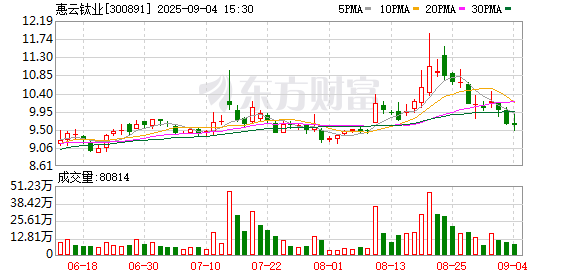
Core Viewpoint - Guangdong Huiyun Titanium Industry Co., Ltd. has disclosed two invention patents granted by the National Intellectual Property Administration, focusing on enhancing the performance of titanium dioxide used in printing inks, which is expected to boost the company's technological innovation and core competitiveness in the long run [2] Group 1: Patent Innovations - The newly granted patent relates to a titanium dioxide suitable for printing inks, aimed at improving its performance in this application [2] - Earlier in June, the company announced two other patents related to modified titanium dioxide technology, indicating a period of high innovation output [2] Group 2: Technological Development - The company views independent intellectual property as a crucial part of its core competitiveness, leveraging provincial technology centers and research platforms to enhance its technological reserves and R&D capabilities [2] - Through technological innovation and a series of independent intellectual properties, the company continuously optimizes production processes and improves product performance, maintaining strong competitiveness in a fierce market [2] Group 3: Green Production Initiatives - In addition to product and process innovations, the company has invested significant resources in green production technologies, achieving important results in various low-carbon technologies that enhance energy efficiency and environmental safety [3] - The company has developed continuous acid leaching technology, MVR titanium liquid concentration technology, low-temperature waste heat recovery technology, and continuous crystallization technology, showcasing its core advantages in safe and green production [3]

定义健康新生活:海信新风空调“云鼎奖”获领军品牌与趋势产品双认证
Cai Fu Zai Xian· 2025-09-04 08:44
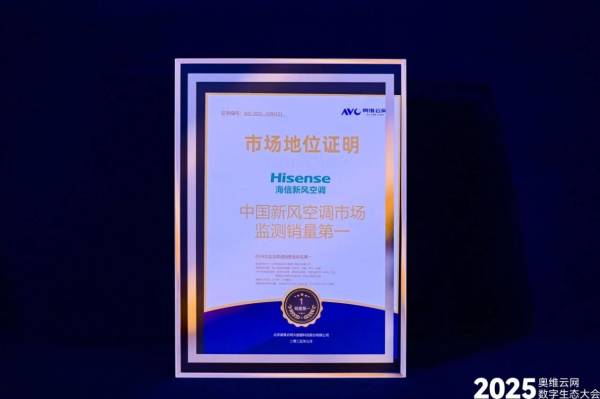
Core Viewpoint - Hisense's new air conditioning products have been recognized for their leadership in the industry and innovation in air quality technology, reflecting the company's commitment to user health and market leadership [1][10]. Group 1: Awards and Recognition - Hisense's new air conditioning products won the "Leading Brand in the Air Conditioning Industry" and "Annual Trend Product for Enjoying Health" at the 2025 Digital Ecology Conference [1]. - The Hisense X3Pro and X7Pro models received accolades as the "Leading Sleep Air Conditioner" and "Leading Maternal and Infant Air Conditioner" at the 2025-2026 China Air Conditioning Industry Summit Forum [8]. Group 2: Market Performance - In 2024 and the first seven months of 2025, Hisense's new air conditioning products achieved the highest sales volume and market share across all channels, demonstrating strong brand power [1]. - The company has successfully navigated the challenges of a slowing home appliance market by focusing on innovative technology and user health needs [3]. Group 3: Product Innovation - Hisense's new air conditioning solutions have shown significant improvements in sleep quality, with deep sleep duration increasing from 74.7 minutes to 85.6 minutes, a 14.6% increase [3]. - The Hisense X7Pro features a dual-flow fresh air system with a ventilation rate of 80m³/h, enhancing indoor air quality and user comfort [5]. - The X7Pro also includes a TVOC sensor that visually indicates indoor air quality and automatically adjusts the fresh air purification system [5]. Group 4: Strategic Direction - Hisense is shifting from selling air conditioning units to providing comprehensive indoor air solutions, focusing on the health of all family members [5]. - The company aims to lead the market by integrating advanced features into affordable products, promoting the adoption of healthy and green home appliances [3][7].

反内卷进行时!亚玛顿外销增长107%,50万吨中东产能启动全球化战略
Chang Jiang Shang Bao· 2025-09-04 08:26
Core Insights - The photovoltaic industry has attracted significant investment in recent years, but has faced challenges such as supply-demand mismatches and price declines, leading to operational pressures for companies [1] - The industry is currently in a critical phase of destocking and capacity reduction, with policies aimed at curbing "disorderly low-price competition" becoming key themes for manufacturers [1][3] - Companies are focusing on optimizing capacity and expanding into overseas markets as critical strategies for self-rescue [1] Group 1: Industry Challenges and Responses - Global photovoltaic installation demand continues to grow, with China adding 212 GW of new capacity in the first half of the year, a 107% year-on-year increase [2] - Despite the growth in demand, the manufacturing sector is experiencing severe overcapacity, leading to price declines across the supply chain [2] - Many photovoltaic glass companies, including Aiyamaton, reported significant net profit declines, with Aiyamaton posting a net loss of 15.82 million yuan [2] Group 2: Policy and Corporate Actions - The government is working with companies to address low-price competition, with a meeting held in July involving 14 photovoltaic manufacturers to discuss compliance and capacity exit strategies [3] - Major photovoltaic glass manufacturers collectively decided to reduce production by approximately 30% to stabilize prices [3] - Aiyamaton emphasized its commitment to industry self-discipline and capacity planning, aligning with actions taken by industry leaders [3] Group 3: Market Dynamics and International Expansion - The photovoltaic glass industry reduced production by 8,350 tons per day in July, with actual capacity dropping to 86,500 tons per day, leading to a price recovery starting in August [4] - Aiyamaton is focusing on overseas markets as a key strategy, with plans to invest in a 500,000-ton photovoltaic glass production line in the UAE, totaling approximately $240 million [5] - The company's overseas sales revenue reached 160 million yuan in the first half of the year, a 107% year-on-year increase, highlighting the importance of international markets [6] Group 4: Cost Management and Innovation - Aiyamaton is implementing cost reduction and efficiency enhancement measures across various production stages, focusing on expense management and material procurement [7] - The company is also prioritizing quality improvement and customer relationship management to ensure stable operations [7] - Aiyamaton believes that technological innovation is essential for overcoming price competition, focusing on developing new products and processes in the ultra-thin photovoltaic glass sector [7] Group 5: Industry Transformation - Aiyamaton's strategic choices reflect a broader transformation in the Chinese photovoltaic industry, moving from price competition to a focus on technology, quality, and global operational capabilities [8] - The industry is undergoing a systemic change driven by policy guidance, corporate innovation, and proactive global capacity planning, aiming for healthier development [8]

告别“内卷”,差异化竞争格局渐成,哪些光伏企业能卡位成功?
Sou Hu Cai Jing· 2025-09-04 05:57
Core Viewpoint - The photovoltaic industry is expected to experience a reasonable price recovery and profit restoration, with improvements in the fundamentals driven by policy support and technological innovation [1][4]. Policy Impact - A series of targeted policies have been introduced since 2025 to address the issue of "disorderly low-price competition" in the photovoltaic industry, establishing clear boundaries for healthy industry development [3]. - The revised Anti-Unfair Competition Law prohibits the sale of products like silicon materials and components below cash cost, setting a price floor and curbing "suicidal price cuts" [3]. - The Central Financial Committee emphasized the need to govern low-price competition and promote the orderly exit of backward production capacity, signaling a strong push for supply-side structural optimization [3]. Market Dynamics - Since the second quarter of 2025, prices across the photovoltaic industry chain have shown an orderly recovery, indicating improvements in supply-demand relationships and competitive order [4]. - Silicon material prices have seen a significant increase, with the average transaction price for multi-crystalline silicon reaching 47,900 RMB per ton, marking a 3.37% rise and an eight-week consecutive increase [4]. - The reduction in low-price sales and the gradual decrease in industry inventory have contributed to this price recovery [4]. Industry Trends - The photovoltaic industry is transitioning from homogeneous competition to differentiated development, with leading companies exploring unique market segments [6]. - Companies like Southeast Network Frame are actively pursuing carbon-neutral strategies and investing in renewable energy projects, such as a 110MW agrivoltaic project [6]. - Innovative application models, including photovoltaic + energy storage and photovoltaic + agriculture, are becoming increasingly mature, contributing to the industry's high-quality development [7]. Performance Metrics - In the first half of 2025, the national photovoltaic installed capacity reached approximately 1.1 billion kilowatts, a year-on-year increase of 54.1%, with cumulative power generation of 559.1 billion kilowatt-hours, up 42.9% [7]. - The photovoltaic equipment sector has seen a significant rise, with the sector index increasing by 37.26% since early April 2025 [7].


金力永磁两天耗资1.4亿回购 半年净利3.05亿拟分红2.47亿
Chang Jiang Shang Bao· 2025-09-04 00:05
Core Viewpoint - Kinglong Permanent Magnet has accelerated its share buyback and dividend distribution to boost investor confidence, reflecting strong financial performance and market positioning [1][2][3]. Share Buyback and Dividend - The company completed a share buyback plan from August 25 to September 2, repurchasing 3.6655 million shares for a total of 142 million yuan [1][2]. - A cash dividend of 247 million yuan is proposed for the 2025 mid-year, representing 81% of the net profit attributable to shareholders [1][3]. Financial Performance - In the first half of 2025, the company achieved a net profit of 305 million yuan, a year-on-year increase of 154.81% [1][5]. - Revenue for the same period reached 3.507 billion yuan, with a year-on-year growth of 4.33% [5][6]. Market Position and Innovation - Kinglong Permanent Magnet is a leading supplier of rare earth permanent magnet materials, serving major clients in the new energy vehicle, air conditioning, and wind power sectors [4][5]. - The company has invested 1.7 billion yuan in R&D in the first half of 2025, with total R&D expenses over the past three and a half years amounting to 1.18 billion yuan [6][5]. Sales Breakdown - In the first half of 2025, sales in the new energy vehicle sector reached 1.675 billion yuan, with a sales volume increase of 28.14% [6]. - The variable frequency air conditioning sector generated 1.050 billion yuan in sales, with a sales volume increase of 19.85% [6].
智研咨询发布:2025年中国重载膜袋(FFS膜袋)行业市场全景调查及发展趋势预测报告
Sou Hu Cai Jing· 2025-09-03 10:22
Core Insights - The heavy-duty film bag (FFS film bag) industry in China is experiencing steady growth, with the market size projected to increase from 0.97 billion yuan in 2019 to 1.23 billion yuan by 2024, representing a compound annual growth rate (CAGR) of 4.9% [5][4] - The growth is driven by increasing industrial production, frequent logistics transportation, and rising demand for heavy-duty film bags with good protective performance, alongside the push for environmental sustainability due to the "dual carbon" goals [5][4] Industry Overview - Heavy-duty film bags are high-performance membrane products used for the automated packaging of solid products, featuring high tear strength, moisture sealing, smooth surfaces, and eco-friendliness [4][5] - The industry has evolved from single-layer films in the 1990s to multi-layer co-extrusion technologies, significantly improving mechanical properties and reducing material consumption [4][5][13] Market Size and Growth - The Chinese heavy-duty film bag market is projected to grow from 0.97 billion yuan in 2019 to 1.23 billion yuan in 2024, with a CAGR of 4.9% [5][4] - The demand for heavy-duty film bags is increasing due to industrial upgrades and logistics needs, as well as environmental policies promoting their use [5][4] Industry Chain - The industry chain consists of raw material supply (polyethylene, polypropylene, nylon), product manufacturing, and application fields such as medical supplies, food processing, and petrochemicals [5][11] - The petrochemical sector is the largest demand driver for FFS film bags, primarily used for packaging various chemical products [5][11] Competitive Landscape - The market concentration in the heavy-duty film bag industry is relatively low, with many small and medium-sized enterprises competing vigorously [6] - Key players include Sichuan Meifeng Chemical Co., Ltd., Fujian Quanning Plastic Co., Ltd., and Nanjing Yangzi Plastic Chemical Co., Ltd. [6] Market Trends - Technological innovation is a key driver for industry development, with increased investment in R&D to enhance production efficiency and product quality [7] - The industry is focusing on sustainability, aiming to develop eco-friendly materials and improve recycling processes [7] - Internationalization and brand development are important directions for the industry, with efforts to enhance brand recognition and participate in global market competition [7]