
中国经济

Search documents
李强分别会见世界银行、国际货币基金组织、联合国贸易和发展会议负责人
Sou Hu Cai Jing· 2025-12-09 13:41
Core Viewpoint - The Chinese economy is demonstrating resilience amidst global trade and investment challenges, with a focus on expanding domestic demand and enhancing the modern industrial system [1][2]. Group 1: Economic Strategy - China aims to promote consumption and investment while ensuring a positive interaction between supply and demand, enhancing the internal circulation's intrinsic motivation and reliability [1]. - The government plans to implement proactive macroeconomic policies to maintain economic growth within a reasonable range, leveraging fiscal and monetary policies effectively [1]. Group 2: International Cooperation - China expresses strong support for a UN-centered international system and multilateralism, aiming to collaborate with international organizations like the World Bank and IMF in various sectors, including knowledge sharing and green development [2]. - The Chinese government is committed to enhancing cooperation in areas such as digital economy, artificial intelligence, and low-carbon transition with the United Nations Conference on Trade and Development [2]. Group 3: Global Economic Impact - The achievements of the Chinese economy are recognized as significant contributors to global economic growth, with the "14th Five-Year Plan" expected to provide valuable certainty and strong momentum for the world economy [2].
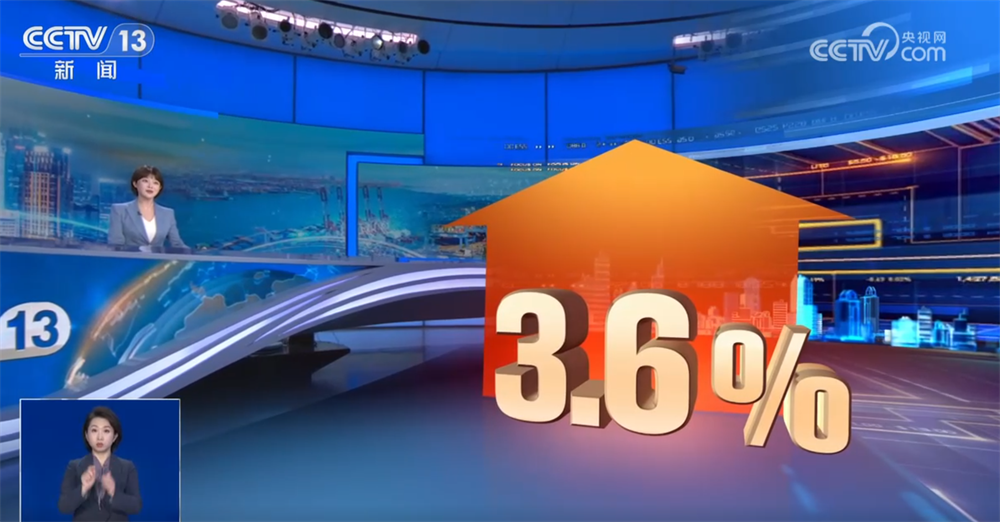
3.6%、7.1%、8.3%,增长!“数”说中国经济总体平稳、稳中有进
Yang Shi Wang· 2025-12-08 11:13
Group 1 - The total value of China's goods trade in the first 11 months increased by 3.6% year-on-year, reaching 41.21 trillion yuan, with continuous growth for 10 months [1][3] - The resilience and vitality of China's foreign trade are highlighted by this sustained growth [3] Group 2 - Private enterprises remain the largest entity in China's foreign trade, with imports and exports totaling 23.52 trillion yuan, a year-on-year increase of 7.1% [4][6] - Exports from private enterprises reached 15.98 trillion yuan, growing by 7.5%, while imports were 7.54 trillion yuan, increasing by 6.2% [6] Group 3 - The sales revenue of the equipment manufacturing industry increased by 8.3% year-on-year in the first 11 months, indicating accelerated high-end development in manufacturing [7][9] - Notably, the sales revenue in the computer and communication equipment manufacturing sector grew by 12.3%, and the instrument and meter manufacturing sector saw a 10.3% increase [9]

2025年中国经济特点是什么?外国经济专家这样说
Yang Shi Wang· 2025-12-08 03:07
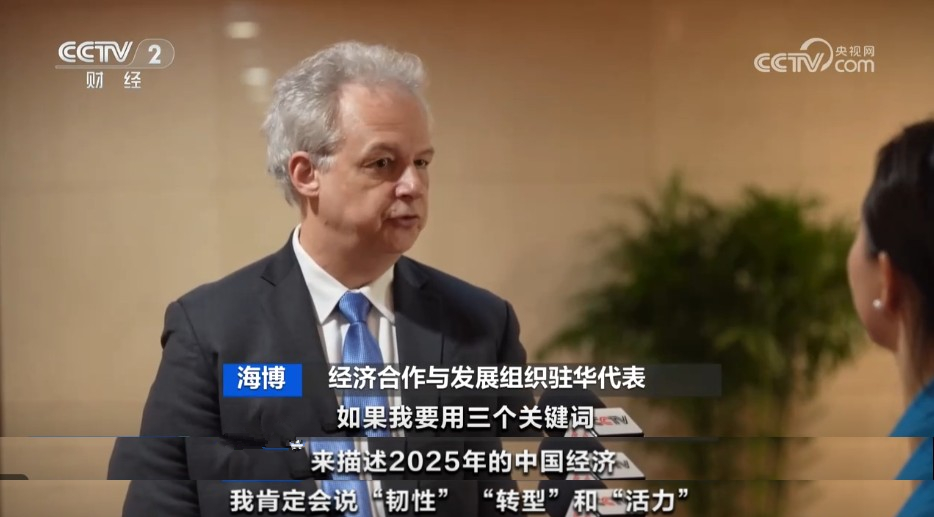
经济合作与发展组织驻华代表 海博:如果我要用三个关键词来描述2025年的中国经济,我肯定会说"韧性""转型"和"活力"。不管 外部环境如何,中国经济表现良好,工业和产业结构加速转型,技术升级快速推进。 央视网消息:日前,经济合作与发展组织发布了最新的经济展望报告。其中,对2025年中国经济增速预测继续上调到5%,这是 经合组织今年内第三次上调对中国的经济预测。对于2025年中国经济呈现出的特点,多位国际机构的驻华负责人都表示,中国经济呈 现出了韧性、转型和活力,中国仍然是全球增长的关键贡献者。 经合组织驻华代表海博表示,今年中国加力扩围实施大规模设备更新和消费品以旧换新政策,这有效拉动了消费增长,出口和支 撑出口的制造业也表现强劲。 他表示,2025年,受技术创新的驱动,不少产业经历了颠覆性的变革,迸发出新的活力,低空经济等新兴领域的最新成果让他印 象深刻。 经济合作与发展组织驻华代表 海博:在武汉的汽车展览会上,我看到了电动飞行器。我觉得这真的很酷,它展示了技术的未 来,但它不仅仅是存在于纸面的技术,它实际上可能很快就会进入商业运营。 今年第三季度,中国出口增长了近7%。亚洲开发银行驻华负责人表示,中国出口 ...
↑5%,韧性、活力!经合组织今年内第三次上调对中国经济预测
Yang Shi Wang· 2025-12-07 06:30
央视网消息:日前,经济合作与发展组织发布了最新的经济展望报告,其中,对2025年中国经济增速预测继续上调到5%,这是 经合组织今年内第三次上调对中国的经济预测。对于2025年中国经济呈现出的特点,多位国际机构的驻华负责人都表示,中国经济呈 现出了韧性、转型和活力,中国仍然是全球增长的关键贡献者。 中国"两新"政策有效拉动消费增长 经合组织驻华代表海博表示,今年中国加力扩围实施大规模设备更新和消费品以旧换新政策,这有效拉动了消费增长,出口和支 撑出口的制造业也表现强劲。 经济合作与发展组织驻华代表 海博:如果我要用三个关键词来描述2025年的中国经济,我肯定会说"韧性"、"转型"和"活力",不 管外部环境如何,中国经济表现良好,工业和产业结构加速转型,技术升级快速推进。 技术创新驱动产业变革迸发新活力 他表示,2025年,受技术创新的驱动,不少产业经历了颠覆性的变革,迸发出新的活力。低空经济等新兴领域的最新成果让他印 象深刻。 经济合作与发展组织驻华代表 海博:在武汉的汽车展览会上,我看到了电动飞行器。我觉得这真的很酷,它展示了技术的未 来,但它不仅仅是存在于纸面的技术,它实际上可能很快就会进入商业运营。 超四 ...

邱晓华:2025经济增速5%无悬念,受房地产拖累投资负增长40年首现丨和讯2025年会
Sou Hu Cai Jing· 2025-12-07 03:11
Core Viewpoint - The overall performance of China's economy in 2025 is expected to be satisfactory, with a target growth rate of around 5% achievable based on current development trends [1]. Economic Support Factors - Three main factors supporting the achievement of economic goals are identified: 1. Proactive macro policies, including active fiscal policy, moderately loose monetary policy, and supportive consumption and investment policies, provide strong support for economic recovery [3]. 2. Export performance has exceeded expectations, with a "dual抢效应" from enterprises and importers maintaining positive growth despite initial pressures from the US "tariff war" [3]. 3. Increased resilience in the domestic market contributes positively to economic stability [3]. Current Economic Challenges - Two prominent issues facing the economy are highlighted: 1. Persistently low price levels, with both production and consumer prices not returning to normal, which constrains investment, consumption, and corporate profitability [3]. 2. Insufficient domestic effective demand, with investment demand experiencing a negative growth for the first time in over 40 years, showing a decline of approximately 2% from January to November, primarily due to a double-digit decrease in real estate investment, which accounts for one-third of total investment [3]. Focus on Real Estate Investment - Addressing the impact of declining real estate investment will be a key issue that needs to be resolved moving forward [4].

多维数据传递信心 中国经济“稳+进”动能不断释放
Yang Shi Wang· 2025-12-04 06:16
Core Viewpoint - China's economy is showing a steady and progressive development trend, with various sectors indicating positive growth and stability in recent months [1]. Group 1: Logistics Industry - In November, China's logistics industry prosperity index was reported at 50.9%, reflecting a month-on-month increase of 0.2 percentage points [4]. - The business volume index across eastern, central, and western regions of China is relatively balanced, indicating stable demand in the logistics sector [4]. - The postal and express delivery industry saw a business volume index of 70.2%, with growth driven by offline entities, social e-commerce platforms, and comprehensive e-commerce platforms [4]. Group 2: Service Trade - From January to October, China's total service trade import and export amounted to 65,844.3 billion yuan, marking a year-on-year growth of 7.5% [6]. - Service exports reached 29,090.3 billion yuan, growing by 14.3%, while the service trade deficit decreased by 2,693.9 billion yuan compared to the previous year [6]. - Knowledge-intensive service trade maintained growth, with imports and exports totaling 25,121.5 billion yuan, an increase of 6.4% [6]. Group 3: Consumer Goods - From January to November, the "old-for-new" consumption policy led to sales exceeding 25,000 billion yuan, benefiting over 360 million people [9]. - The program included over 11.2 million vehicles, 12.8 million home appliances, and 9.015 million digital products being replaced under the initiative [9]. Group 4: Telecommunications Industry - The telecommunications industry in China has shown overall stability in the first ten months of 2025, with significant growth in user numbers for 5G, gigabit broadband, and the Internet of Things [10]. - By the end of October, the number of 5G mobile phone users reached 1.184 billion, accounting for 64.7% of mobile phone users [12]. - Mobile internet traffic has also seen rapid growth, exceeding 3,200 billion GB, with a year-on-year increase of 16.8% [12].
『新华社』巩固稳的基础 激发进的动能——透视中国经济的韧性底气
Sou Hu Cai Jing· 2025-12-03 07:41
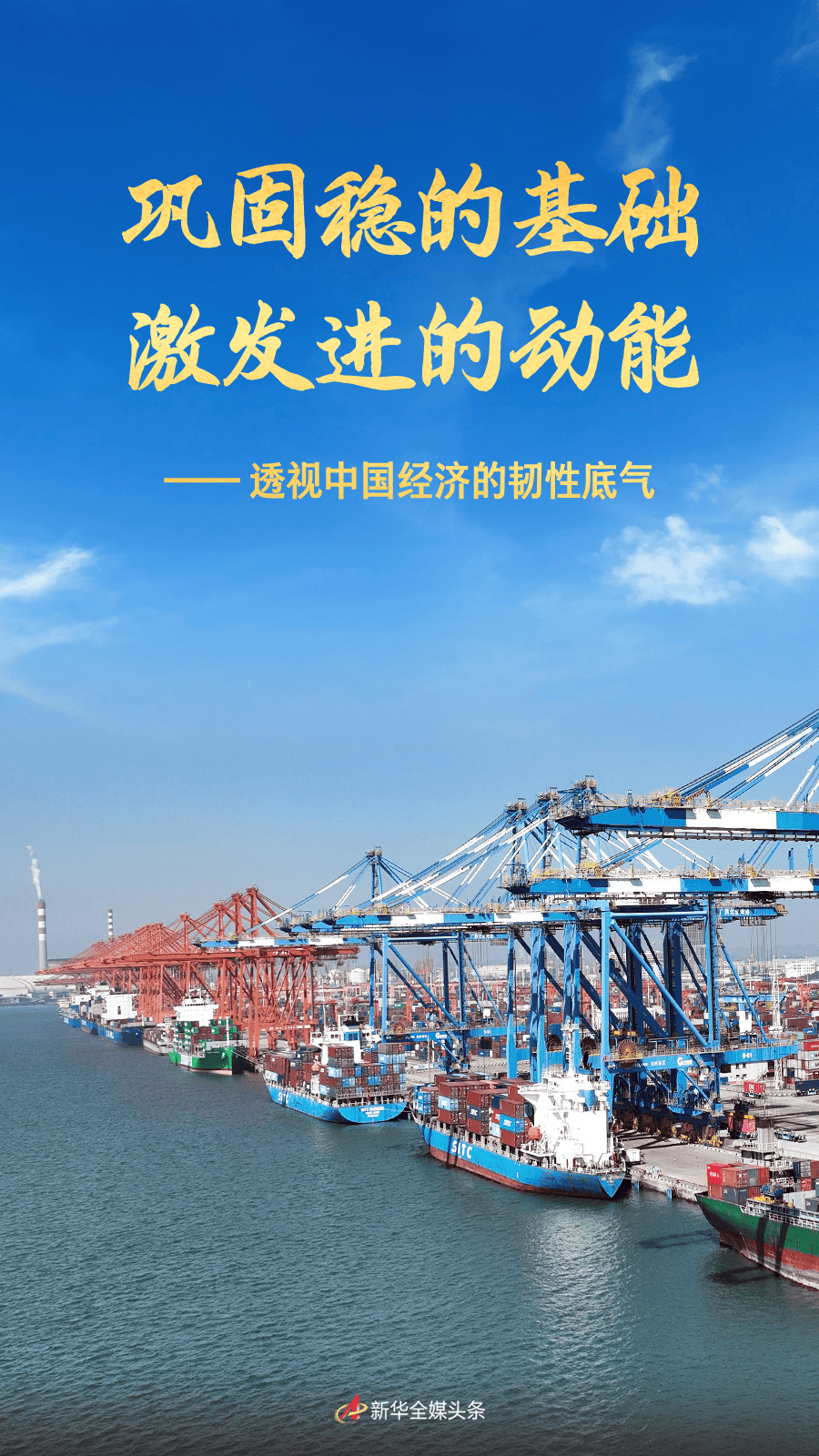
Economic Overview - China's GDP is expected to reach 140 trillion yuan in 2025, solidifying its position as the world's second-largest economy [3] - The economy has shown resilience despite external uncertainties, with a GDP growth of 5.2% year-on-year in the first three quarters, an acceleration of 0.4 percentage points compared to the previous year [6] - The urban unemployment rate in October was 5.1%, a decrease of 0.1 percentage points from the previous month, indicating stability in the job market [6] Consumption and Investment - Consumption has emerged as the main driver of economic growth, with policies aimed at expanding domestic demand and reducing burdens on enterprises [8][16] - Significant investments are being made in clean energy projects, such as the nearly 73 billion yuan investment in the Qinghai Hainan clean energy transmission project [4] International Trade and Foreign Investment - The scale of goods imports and exports reached a historical high in the first three quarters, with foreign exchange reserves increasing to 33,433 billion USD by the end of October [6] - Foreign investments are on the rise, with companies like Danfoss and Medtronic establishing major operations in China, reflecting confidence in the Chinese market [22] Innovation and Technology - The quantum computing sector is advancing, with significant achievements showcased at the 2025 Quantum Technology and Industry Conference, indicating a growing industrial ecosystem [11] - The manufacturing sector remains robust, with the added value of equipment manufacturing accounting for over 35% of industrial output, and the industrial internet core industry exceeding 1.5 trillion yuan [15] Policy and Future Outlook - The Chinese government is focused on stabilizing employment, enterprises, and market expectations, with a commitment to high-quality development as a central theme for the next five years [17][19] - Recent assessments from institutions like Goldman Sachs and Deutsche Bank have raised their growth forecasts for China's economy, highlighting its stability as a cornerstone for global economic growth [8]
首次突破1800亿件!我国快递年业务量再创新高
Xin Hua She· 2025-12-02 13:50
前10个月,我国中部、西部地区快递业务收入占全国比重同比分别上升0.6个和0.3个百分点;快递业务 量占全国比重分别上升1.1个和0.6个百分点。 0:00 国家邮政局监测数据显示,截至今年11月30日,我国快递年业务量首次突破1800亿件。来自广东深圳市 的一名市民网购的智能学习机,成为今年我国第1800亿件快递。 月均超160亿件,单日最高7.77亿件,每秒超6200件……1800亿件"小包裹"量质齐升,为消费市场注入 强劲发展动能,折射出中国经济蓬勃活力。 透过快递这扇窗口,可以看见一个从"大市场"向"强市场"稳步转变的中国——1天之内,有超过1万列铁 路旅客列车在神州大地上穿梭开行,近340亿元实物商品在网上交易买卖;过去4年,最终消费对经济增 长的平均贡献率达到56.2%,比"十三五"期间提高8.6个百分点;稳居全球第二大消费市场、第一大网络 零售市场、第二大进口市场…… 新华社音视频部制作 ...
2026年中国经济怎么看、怎么干?刘世锦、李扬、蔡昉最新发声
券商中国· 2025-12-01 13:01
Core Viewpoints - The article emphasizes the need for structural reforms and innovation to stimulate China's economic growth during the "14th Five-Year Plan" period, despite facing short-term challenges [1][11]. Group 1: Economic Growth and Policy Recommendations - The CMF annual report suggests setting a cross-cycle target for 2026, including a real GDP growth target of 4.5%-5%, a CPI target of 1%-3%, and a nominal GDP growth target of over 5% [2]. - Liu Shijin advocates for increasing the consumption share of GDP by 1 percentage point annually during the "14th Five-Year Plan" period to boost economic growth [6][7]. - The report highlights the importance of enhancing both the height (productivity) and width (effective demand) of economic growth [6]. Group 2: Financial Factors and Market Opportunities - Li Yang identifies four key financial factors influencing economic operations from 2026 onwards: changes in social financing structure, declining interest rates, new opportunities in capital markets, and a new paradigm for monetary policy [3]. - The phenomenon of "disintermediation" is seen as a positive development for capital market growth, as funds are flowing out of the banking system, creating new investment opportunities [3][4]. Group 3: Employment and Income Distribution - Cai Fang emphasizes the need for a coordinated approach to promote employment, increase income, and stabilize expectations, proposing five combinations to achieve these goals [8][9]. - The focus on increasing both per capita income and improving income distribution is crucial, especially in light of the natural slowdown in income growth [9]. Group 4: Long-term Economic Outlook - Yang Ruilong asserts that despite short-term pressures, the long-term positive trend of the Chinese economy remains unchanged, driven by traditional growth dynamics and emerging new growth drivers [11][12]. - The necessity of building a modern industrial system through technological innovation and institutional reform is highlighted as essential for achieving high-quality development [12].

经济运行稳中有进 改革提速固本强基
Zheng Quan Shi Bao· 2025-11-30 17:25
Core Insights - China's economy is demonstrating strong resilience and structural adjustment capabilities despite facing multiple challenges, with a focus on enhancing economic momentum towards new quality growth by 2025 [1][4] Economic Performance - In 2025, China's GDP is expected to achieve a growth target of around 5%, significantly higher than the global average growth rate of approximately 3.9% during the same period [2][4] - The contribution of China's economy to global growth is projected to remain above 30%, acting as a stabilizing force for global trade amidst rising uncertainties [2][3] Sectoral Developments - The manufacturing sector, particularly high-tech and equipment manufacturing, has shown robust growth, with value-added output increasing by 9.7% and 9.6% respectively in the first three quarters of 2025 [4] - Exports have demonstrated strong resilience, with a growth rate of 6.2% from January to October 2025, reflecting improvements in product quality, technology, and brand competitiveness [4] Consumer Trends - Consumer spending is increasingly focused on high-quality products, with smart home appliances accounting for over 50% of sales in certain retail channels [5] - Final consumption expenditure contributed 53.5% to economic growth in the first three quarters, marking a 9 percentage point increase from the previous year [5] Policy and Future Outlook - The Chinese government is expected to implement more proactive macroeconomic policies in 2026, with a focus on enhancing consumption, optimizing the business environment, and stabilizing industrial production [7] - Three new opportunities for economic growth are identified for 2026: the initiation of the "14th Five-Year Plan," more aggressive fiscal and monetary policies, and the recovery of micro-market entities [7][6]