
期货套期保值

Search documents
河南双汇投资发展股份有限公司 2025年第三季度报告
Zheng Quan Ri Bao· 2025-10-29 00:20
Group 1 - The company reported a total external sales volume of meat products of 923,200 tons in Q3 2025, representing a year-on-year increase of 9.97% [6] - The total operating revenue for Q3 2025 was 16.15 billion yuan, a decrease of 1.77% year-on-year [6] - The total profit for Q3 2025 was 2.11 billion yuan, an increase of 7.19% year-on-year, while the net profit attributable to shareholders was 1.64 billion yuan, up 8.45% year-on-year [6] Group 2 - The company’s total external sales volume for the first nine months of 2025 reached 2.49 million tons, a year-on-year increase of 5.92% [6] - The total operating revenue for the first nine months of 2025 was 44.65 billion yuan, reflecting a year-on-year growth of 1.23% [6] - The total profit for the first nine months of 2025 was 5.19 billion yuan, a year-on-year increase of 1.31%, with a net profit attributable to shareholders of 3.96 billion yuan, up 4.05% year-on-year [6] Group 3 - The company’s board of directors and senior management confirmed the accuracy and completeness of the quarterly report, taking legal responsibility for any misrepresentation [2] - The third-quarter financial report was not audited [9] - The company has no non-recurring profit and loss items applicable for the reporting period [4] Group 4 - The company’s wholly-owned subsidiary, Shuanghui Commercial Factoring Co., plans to engage in factoring financing with Harbin Pengda Seed Industry Co. and its subsidiaries [11] - The transaction is classified as a related party transaction due to the company's ownership of 40% of Pengda Seed Industry [11][19] - The board approved the related party transaction with a unanimous vote from non-related directors [12] Group 5 - The company aims to conduct commodity futures hedging to mitigate the impact of price fluctuations on its operations, thereby enhancing profitability [43] - The expected maximum transaction margin and premium for futures hedging will not exceed 200 million yuan, with a maximum contract value of 1.6 billion yuan [43][47] - The company will only engage in hedging for products closely related to its operations, including live pigs, corn, and soybean meal [49] Group 6 - The company plans to conduct foreign exchange hedging to lock in costs and manage risks associated with exchange rates and interest rates [61] - The expected maximum transaction margin and premium for foreign exchange hedging will not exceed 1.8 million USD, with a maximum contract value of 30 million USD [62][64] - The hedging will involve foreign exchange derivatives closely related to the company's business, such as forward contracts and currency swaps [66]

朗威股份:关于全资子公司开展期货套期保值业务的公告
Zheng Quan Ri Bao Zhi Sheng· 2025-10-28 14:25
Core Viewpoint - Longwei Co., Ltd. announced that its wholly-owned subsidiary, Ningbo Feiman Cable Co., Ltd., will engage in copper futures hedging to mitigate commodity price volatility risks, with strict prohibitions on speculative trading [1] Group 1: Company Announcement - The fourth meeting of the fourth board of directors was held on October 27, 2025, where the proposal for the subsidiary to conduct futures hedging was approved [1] - Ningbo Feiman is authorized to use its own funds for hedging activities directly related to its daily production and operation materials [1] - The maximum margin amount for hedging activities is set at RMB 10 million, while the contract amount can reach up to RMB 60 million, with the ability to roll over within the specified limits [1]
金春股份:拟开展不超5000万元期货套期保值业务
Xin Lang Cai Jing· 2025-10-24 11:45
Core Viewpoint - The company plans to initiate futures hedging business to mitigate the impact of raw material price fluctuations on costs, pending shareholder approval [1] Group 1: Business Strategy - The board and supervisory board meeting is scheduled for October 24, 2025, to review the proposal for futures hedging [1] - The hedging will focus on polyester staple fiber, wood pulp, and upstream raw materials [1] - The maximum margin for this operation will not exceed 50 million yuan, valid for 12 months from the date of shareholder approval, and can be reused [1] Group 2: Financial Management - The company will utilize its own funds for this operation, emphasizing that the intention is not speculative [1] - Despite the non-speculative nature, the company acknowledges the inherent risks in the futures market and has established corresponding risk control measures [1]
“双保险”策略助力碳酸锂企业化险为盈
Qi Huo Ri Bao Wang· 2025-10-24 00:41
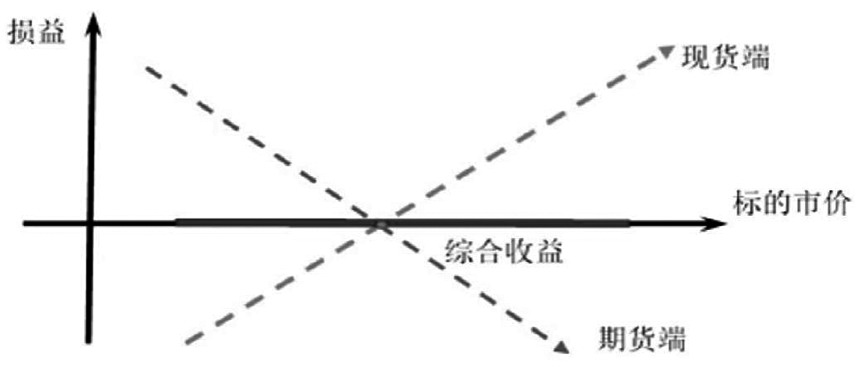
Core Viewpoint - The article discusses the implementation of a dual pricing system combining "futures pricing + spot delivery" to mitigate the risks associated with the volatile lithium carbonate market, particularly for Z Company, a small enterprise in the lithium mining sector [1][2]. Group 1: Company Background - Wukuang Futures, a core platform under China Minmetals, is one of the earliest futures companies in China, providing a comprehensive range of services including futures brokerage, risk management, asset management, and trading consulting [2]. - Z Company focuses on lithium ore mining and trade, having acquired approximately 190,000 tons of lithium carbonate equivalent (LCE) reserves across five lithium mining projects in Africa before its establishment in 2018 [2]. Group 2: Market Conditions - The lithium carbonate market has experienced significant volatility, with prices dropping from an average of 97,000 yuan per ton at the beginning of 2024 to 75,000 yuan per ton by year-end, resulting in an annual average price of approximately 91,000 yuan per ton, a decline of about 65% compared to 2023 [2][3]. Group 3: Risk Management Strategy - Wukuang Futures analyzed Z Company's operational needs and selected the LC2408 futures contract for its liquidity to provide a short hedge strategy, effectively mitigating the risk of price declines [1][6]. - The strategy involves a dual pricing system that allows Z Company to lock in lithium carbonate prices and alleviate inventory pressure while ensuring stable raw material supply for downstream buyers [1][9]. Group 4: Implementation and Training - Wukuang Futures provided risk management consulting and specialized training to Z Company, helping establish a futures business management system and offering ongoing market analysis [6][8]. - Training sessions were tailored to different levels within Z Company, focusing on risk control, operational rules, and the application of futures tools [8][15]. Group 5: Financial Outcomes - By the end of 2024, despite a loss of 720,000 yuan in the spot market, Z Company achieved a profit of 2,780,000 yuan from futures trading, resulting in a total profit of 2,060,000 yuan, significantly enhancing its risk management capabilities [11][13]. - The futures strategy demonstrated effective risk mitigation and profitability enhancement, with the average selling price of futures contracts at 117,500 yuan per ton and a closing price of 89,700 yuan per ton [13][14]. Group 6: Service Model Innovation - The project exemplifies a customized service model that combines futures hedging with tailored training and risk management, setting a precedent for similar small and medium-sized enterprises in the industry [14][15].

成品油需求萎缩 炼化利润承压
Qi Huo Ri Bao Wang· 2025-10-23 01:01
Group 1: Industry Overview - The research conducted by Huishang Futures focused on the current state of the aromatic hydrocarbon industry chain in Shandong, particularly regarding the supply and demand dynamics of benzene and styrene [1] - The overall market for refined oil products is facing significant challenges, with diesel consumption declining due to the acceleration of electric vehicle adoption and cautious sales behavior from gas stations [3][13] - The competition among local refineries is intensifying, especially with the commissioning of the Yulong Petrochemical integrated project, which is expected to further exacerbate market conditions [3][13] Group 2: Company Insights - The local refinery in Dongying primarily produces gasoline, diesel, and various petrochemical products, with gasoline and diesel being the largest output [2] - The refinery's daily production of pure benzene is approximately 100 tons, with a storage capacity of about 3000 tons, indicating a relatively strong risk tolerance in a declining market [4] - The refinery in Linzi has a daily production capacity of pure benzene between 120 to 200 tons, positioning it as a medium-sized player in the Shandong pure benzene market [5][6] Group 3: Market Dynamics - The domestic retail penetration rate of new energy vehicles reached 57.8% in September 2025, contributing to the pressure on traditional fuel demand [3] - The current market environment for refined oil is characterized by a downward price trend, with expectations for further price reductions in November [3][4] - The EPS producer, which consumes 200,000 tons of styrene annually, is experiencing a shift in demand structure, with emerging sectors like aquaculture showing slight growth despite overall EPS consumption growth slowing down [10][12] Group 4: Future Outlook - The overall trend for Shandong's local refineries is moving towards high-end and refined production, although the new capacity from Yulong Petrochemical may increase market competition in the short term [13] - The EPS producer is actively managing its raw material costs through futures market participation, indicating a strategic approach to mitigate price volatility [12]
期货新开户增多了休眠户回来了
Zheng Quan Shi Bao· 2025-10-22 01:59
Core Insights - The Chinese futures market has seen significant growth in 2023, with total funds surpassing 2 trillion yuan, marking a milestone for the industry [1][2] - The increase in new accounts is driven by heightened interest from investors, particularly in the context of volatile commodity and financial markets [1][2] - Both industrial clients and overseas clients are identified as key growth drivers in the current market landscape [3][5] Market Growth - As of October 9, 2023, the total funds in the futures market reached approximately 2.02 trillion yuan, a 24% increase from the end of 2024 [2] - The total client equity of futures companies was about 1.91 trillion yuan, also reflecting a 24% growth from the end of 2024 [2] - The number of effective clients in the market exceeded 2.7 million, a 14% increase year-on-year, with 650,000 new clients added in the first three quarters of 2023 [2] Client Segmentation - Industrial clients and overseas clients are crucial for market expansion, with industrial clients focusing on risk management and strategic planning [3][5] - A record 1,583 A-share listed companies announced hedging plans this year, surpassing the total for 2024, indicating a growing engagement in risk management [3] - The participation rate of A-share listed companies in hedging reached 29.9%, up 1.3 percentage points from the end of 2024 [3] Service Enhancement - Futures companies are enhancing their service capabilities to meet the demands of industrial clients, requiring frontline staff to possess in-depth industry knowledge and strong communication skills [4] - There is a shift from passive risk management to proactive strategies among industrial clients, who now seek tailored solutions that address complex business scenarios [3][4] Performance of Futures Companies - As of August 2023, the total trading volume reached 65.23 trillion yuan, with a net profit of 76.5 billion yuan for the first eight months, marking a new high [7] - However, performance is uneven across the industry, with profit growth concentrated in a few firms, while traditional brokerage business faces intense competition [7] - Notable performance variations were observed among A-share listed futures companies, with some reporting significant profit increases while others faced declines or losses [7][8]
南华期货烧碱产业周报:需求预期走弱,盘面下行-20251019
Nan Hua Qi Huo· 2025-10-19 13:10
1. Report Industry Investment Rating No relevant information provided. 2. Core Views of the Report - The current spot market for non - aluminum products shows no obvious restocking behavior, slightly falling short of expectations. The market still anticipates a phased restocking in the non - aluminum sector, but it remains to be seen whether this expectation will be confirmed or refuted [1]. - The high - profit and high - production pattern restricts the price increase space of caustic soda. The overall contradiction is limited, but the near - term demand and restocking rhythm are below expectations. Currently, it is necessary to wait for the restocking expectation to be realized or disproven [6]. 3. Summary by Directory 3.1 Core Contradictions and Strategy Recommendations 3.1.1 Core Contradictions - **Near - term trading logic**: The overall spot market is weak. Non - aluminum restocking is below expectations, but the market still hopes that a bottoming of the spot price will stimulate downstream purchasing [2]. - **Long - term trading expectation**: High profits limit the price ceiling. There is continuous medium - to - long - term production capacity expansion pressure. Disagreements exist regarding the realization degree and timing of downstream alumina production, which affects the phased restocking rhythm [3]. 3.1.2 Trading - Type Strategy Recommendations - **Market positioning**: The high - profit and high - production situation restricts the price space of caustic soda. It is recommended to conduct range trading within the range of 2300 - 2600 [6]. - **Basis, calendar spread, and hedging arbitrage strategy recommendations**: Current short - selling orders on a single - side basis are advised to be closed, or wait for signs of the spot price bottoming. Observe whether the restocking expectation is realized, and consider building long positions at low prices [7]. 3.1.3 Industrial Customer Operation Recommendations - **Price range prediction**: The predicted monthly price range for caustic soda is 2300 - 2600, with a current 20 - day rolling volatility of 25.19% and a historical percentile of 64.7% over three years [10]. - **Risk management strategy recommendations**: For inventory management, when the finished - product inventory is high and there are concerns about price drops, short caustic soda futures to lock in profits and sell call options to reduce costs. For procurement management, when the regular procurement inventory is low, buy caustic soda futures to lock in procurement costs and sell put options to reduce procurement costs [10]. 3.2 This Week's Important Information and Next Week's Focus Events 3.2.1 This Week's Important Information - **Positive information**: In mid - to - early October, Shandong Jinling and Lutai have maintenance plans. Observe the price - holding strength of alkali plants. Shandong has started to reduce inventory, and the national liquid caustic soda inventory is 403,300 tons, a reduction of 17,900 tons [14]. - **Negative information**: The non - aluminum sector has not shown concentrated restocking [14]. 3.2.2 Next Week's Important Events to Monitor No relevant information provided. 3.3 Disk Interpretation 3.3.1 Price - Volume and Capital Interpretation - **Single - side trend and capital movement**: This week, the main caustic soda 2601 contract showed a weakening trend, with the absolute price dropping to a relatively low level this year, mainly due to market sentiment and weak reality, as downstream phased restocking fell short of expectations [16]. - **Basis and calendar spread structure**: The spot price is stable. The basis of the 01 contract has repaired to near - flat. Observe whether the near - month spot price has support [20]. 3.4 Valuation and Profit Analysis 3.4.1 Upstream and Downstream Profit Tracking in the Industrial Chain - The profit valuation is moderately high. This week, the price of industrial salt remained stable, while the price of liquid chlorine increased by 100 - 150 yuan. The current profit of caustic soda in Shandong is over 400 yuan per ton (including liquid chlorine) [26]. 3.4.2 Import and Export Profit Tracking - In terms of exports, the CFR price in Southeast Asia increased by 5 US dollars to around 460 US dollars. There is an expected substitution in overseas caustic soda demand, and the sustainability of exports needs to be observed [30]. 3.5 Supply, Demand, and Inventory 3.5.1 Spot Data - **Caustic soda - 32% alkali spot price**: The report provides seasonal price data for 32% caustic soda in Shandong, Jiangsu, and Zhejiang [33][34][35]. - **Caustic soda - 50% alkali spot price**: Seasonal price data for 50% caustic soda in Shandong, Jiangsu, Zhejiang, and Shaanxi are presented [36][37][38][40]. - **Flake caustic soda spot price**: Seasonal price data for 99% flake caustic soda in North China, East China, and other regions are provided [41][42][45]. - **Spot regional price difference**: Seasonal data on the price differences between different grades and regions of caustic soda are given [48][49][50]. - **Spot price converted to futures price**: Seasonal data on the conversion of spot prices to futures prices for various caustic soda products are provided [58][59][60]. - **Caustic soda foreign market price**: Data on the FOB price in Northeast Asia, CFR price in Southeast Asia, and other foreign market prices of caustic soda are presented [77][78][79]. 3.5.2 Supply Side - **Caustic soda loss volume**: Seasonal data on the weekly and monthly device loss volumes of caustic soda are provided [82][83]. - **Liquid caustic soda production and operation rate**: Seasonal data on the weekly and monthly total production and operation rates of liquid caustic soda are presented, as well as regional production data [84][85][86]. - **Flake caustic soda production and operation rate**: Seasonal data on the weekly total production and operation rates of flake caustic soda are provided, along with regional production data [88][89][90]. 3.5.3 Demand Side - The report provides data on the spot price, cost, and operation rate of alumina, as well as the operation rates of industries such as propylene oxide, epichlorohydrin, and viscose staple fiber. It also includes data on the monthly import and export volumes of caustic soda and the export destination structure [93][94][96][100][101]. 3.5.4 Inventory - **Liquid caustic soda inventory**: Seasonal data on the weekly factory inventories of liquid caustic soda in various regions are provided [104][105][106]. - **Flake caustic soda inventory**: Seasonal data on the weekly factory inventories and total industry inventories of flake caustic soda are presented, along with regional inventory data [118].
龙净环保拟开展期货套期保值业务,最高投入3000万元应对原材料价格波动
Xin Lang Cai Jing· 2025-10-17 10:52
Core Viewpoint - Longking Environmental Protection plans to conduct futures and derivatives hedging business to mitigate the risks associated with price fluctuations of lithium carbonate and cathode copper, thereby stabilizing production costs and enhancing competitiveness [1][4]. Group 1: Trading Overview - The purpose of the trading is to hedge against price fluctuations of lithium carbonate, which constitutes approximately 72% of the cost of producing lithium iron phosphate [2]. - The company plans to invest a maximum of 30 million yuan in the hedging business for lithium carbonate and cathode copper, with a total contract value not exceeding 300 million yuan [2]. - The funding for this hedging business will come from the company's own funds, and the trading will be conducted on the Shanghai Futures Exchange, Guangzhou Futures Exchange, and Shanghai International Energy Exchange [2]. Group 2: Approval Process - The company held the sixth meeting of the tenth Audit Committee on October 16, 2025, to review and approve the relevant proposal, which was subsequently approved by the Board of Directors [3]. - The matter falls within the Board's authority and does not require submission to the shareholders' meeting for approval [3]. Group 3: Risk Analysis and Control Measures - Although the company will only engage in hedging related to raw materials and not speculative trading, there are still risks such as price volatility, operational risks, technical risks, and policy risks [3]. - The company will implement risk control measures by matching hedging activities with contract projects, controlling the scale of funds, and ensuring compliance with laws and regulations [3]. Group 4: Impact and Accounting Treatment - Engaging in futures and derivatives hedging will help the company avoid risks from raw material price fluctuations and enhance its core competitiveness [4]. - The company will use its own funds for this business, ensuring that normal operations are not affected, and will apply hedge accounting in accordance with relevant accounting standards [4].

卖插座创巨大财富!2年前套现16亿,公牛集团老板又要套现16亿
Mei Ri Jing Ji Xin Wen· 2025-10-14 22:29
Core Viewpoint - The announcement by Bull Group regarding the planned share reduction by its actual controller, Ruan Xueping, highlights the company's ongoing stock price decline and the potential impact on its governance structure and operational continuity [1][2]. Group 1: Share Reduction Plan - Ruan Xueping plans to reduce his holdings by up to 36.17 million shares, representing 2% of the company's total equity, between October 31, 2025, and January 30, 2026 [1]. - The estimated market value of the shares to be sold is approximately 1.626 billion yuan, based on the current share price of 44.95 yuan [1]. - Ruan Xueping's decision to reduce his stake is based on personal financial needs and is not expected to significantly impact the company's governance or ongoing operations [1]. Group 2: Historical Context - Ruan Xueping previously reduced his holdings by over 1.626 billion yuan through a block trade on July 5, 2023, selling 17.79 million shares, which also accounted for 2% of the total equity [3]. - As of the announcement date, Ruan Xueping holds 256 million shares, or 14.13% of the total equity, while he and his concerted parties collectively own 1.533 billion shares, representing 84.76% of the total equity [2]. Group 3: Financial Performance - For the first half of 2025, Bull Group reported a revenue of 8.168 billion yuan, a decrease of 2.6% year-on-year, and a net profit attributable to shareholders of 2.489 billion yuan, down 6.93% year-on-year [4]. - The company's net assets attributable to shareholders decreased by 7.34% year-on-year, totaling 14.701 billion yuan as of June 30, 2025 [4]. - The revenue from the electrical connection business fell by 5.37% to 3.662 billion yuan, while the smart electrical lighting business saw a 2.78% decline to 4.094 billion yuan [4]. Group 4: Cost Management - The company's operating costs for the first half of 2025 were 4.711 billion yuan, a decrease of 1.55% year-on-year, attributed to fluctuations in raw material prices and changes in product structure [4]. - Bull Group employs strategies such as centralized procurement of raw materials and futures hedging to mitigate the risks associated with price volatility in the raw materials market [4]. Group 5: New Business Development - Bull Group is expanding into new business areas, including charging guns/piles, energy storage, and smart home products, but acknowledges potential uncertainties in market trends and competition that could affect future growth [5].

卖插座创出巨大财富!2年前套现16亿元,公牛集团老板又要套现16个亿
Mei Ri Jing Ji Xin Wen· 2025-10-14 15:44
Core Viewpoint - Bull Group, a leading manufacturer in the socket industry, announced a plan for its actual controller, Ruan Xueping, to reduce his shareholding by up to 36.17 million shares, accounting for 2% of the company's total equity, between October 31, 2025, and January 30, 2026. This decision is based on personal financial needs and is not expected to significantly impact the company's governance or ongoing operations [1][2]. Group 1: Shareholding and Reduction Plan - Ruan Xueping currently holds 256 million shares, representing 14.13% of the total equity, while he and his associates collectively own 1.533 billion shares, or 84.76% of the total [2]. - The planned reduction will not affect shares acquired through the company's initial public offering or other non-trading methods [2]. - The reduction plan is subject to adjustments based on corporate actions such as dividends or stock splits during the reduction period [2]. Group 2: Financial Performance - For the first half of 2025, Bull Group reported revenue of 8.168 billion yuan, a decrease of 2.60% year-on-year, and a net profit attributable to shareholders of 2.489 billion yuan, down 6.93% [4]. - The company's net assets attributable to shareholders were 14.701 billion yuan, reflecting a year-on-year decline of 7.34% [4]. - The electrical connection business saw a revenue drop of 5.37%, while the smart electrical lighting business decreased by 2.78%. In contrast, the new energy business grew by 33.52% [4]. Group 3: Cost Management - The operating costs for the first half of the year were 4.711 billion yuan, down 1.55% year-on-year, attributed to fluctuations in raw material prices and changes in product structure [5]. - The company employs strategies such as centralized procurement and futures hedging to mitigate risks associated with raw material price volatility [5]. - There are concerns regarding the potential impact of rising raw material prices on cost control and overall performance [5].
