结构性货币政策工具

Search documents
央行、外汇局,最新表态!事关降准降息、物价、人民币汇率等
中国基金报· 2026-01-15 11:06
Key Points - The article discusses the effectiveness of monetary and financial policies in supporting the high-quality development of the real economy in China [2] Group 1: Monetary Policy Measures - The People's Bank of China (PBOC) will lower the interest rates of various structural monetary policy tools by 0.25 percentage points, with the one-year re-lending rate decreasing from 1.5% to 1.25% [6] - The PBOC will merge the re-lending and re-discount for agriculture and small enterprises, increasing the re-lending quota by 500 billion yuan, with a separate quota of 1 trillion yuan for private enterprises [6] - The quota for re-lending for technological innovation and technological transformation will be increased from 800 billion yuan to 1.2 trillion yuan, expanding the support to high R&D investment private SMEs [6] - A combined risk-sharing tool for bonds of technological innovation and private enterprises will be established, providing a re-lending quota of 200 billion yuan [6] - The PBOC will lower the minimum down payment ratio for commercial property loans to 30% to support the real estate market [7] - Financial institutions will be encouraged to enhance their foreign exchange risk hedging services [7] Group 2: Economic Growth and Price Stability - The PBOC will continue to implement a moderately loose monetary policy to promote stable economic growth and reasonable price recovery [15] - There is still room for further reductions in the reserve requirement ratio (RRR) and interest rates, with the current average RRR at 6.3% [12] Group 3: Exchange Rate Policy - The PBOC has no intention of devaluing the currency to gain an international trade competitive advantage, emphasizing a stable and reasonable exchange rate [18] - The PBOC will continue to enhance the cross-border use of the renminbi and improve foreign exchange risk management tools for enterprises [18] Group 4: Support for Consumption and Private Enterprises - The PBOC will expand the support for service consumption and elderly care loans, including the health industry once recognized standards are established [21] - Measures will be taken to accelerate the implementation of re-lending for private enterprises, improving the financing environment for SMEs [24] Group 5: Financial Market Development - The PBOC aims to optimize the financial market structure, focusing on increasing the efficiency of financial resources directed towards key areas and weak links [26] - The State Administration of Foreign Exchange (SAFE) will enhance the facilitation of foreign exchange reforms and improve the management of cross-border capital flows [28] Group 6: Foreign Exchange Management - SAFE will promote the orderly issuance of Qualified Domestic Institutional Investor (QDII) investment quotas and enhance the openness of the financial market [40] - Efforts will be made to simplify foreign exchange registration procedures for foreign direct investment to facilitate foreign investment in China [41]

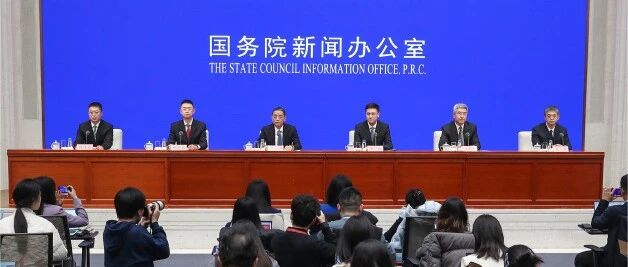
央行透露2026年货币政策风向
2 1 Shi Ji Jing Ji Bao Dao· 2026-01-15 10:48
Group 1: Monetary Policy Focus - The core focus of the monetary policy is to stabilize growth and promote reasonable price recovery, with room for interest rate cuts remaining [1][3] - The People's Bank of China (PBOC) plans to continue implementing a moderately accommodative monetary policy in 2026, enhancing counter-cyclical and cross-cyclical adjustments to support the "14th Five-Year Plan" [1][3] Group 2: Price Level and Inflation - Recent positive changes in China's price levels were highlighted, with the CPI rising by 0.8% year-on-year in December 2025, the highest since March 2023 [3] - The core CPI, excluding food and energy, increased by 1.2% year-on-year, maintaining a growth rate above 1% for four consecutive months [3] Group 3: Structural Policy Measures - The PBOC introduced eight key measures to optimize economic structure, including a 0.25 percentage point reduction in various structural monetary policy tool rates [4][5] - Specific measures include increasing the quota for agricultural and small enterprise loans by 500 billion yuan and establishing a separate quota of 1 trillion yuan for private enterprise loans [4] Group 4: Exchange Rate Stability - The PBOC emphasized a clear and consistent exchange rate policy, maintaining the RMB's stability at a reasonable equilibrium level [6] - Factors supporting the RMB's stability include China's large market size, complete industrial chain, and ongoing domestic demand growth [6] Group 5: Foreign Exchange Market Resilience - In 2025, the foreign exchange market transaction volume reached 42.6 trillion USD, with the corporate foreign exchange hedging ratio rising to 30%, both historical highs [7] - The outlook for 2026 indicates a stable foreign exchange market with orderly cross-border capital flows [7] Group 6: Consumer Support Policies - The PBOC plans to enhance financial support for key service consumption sectors, including hospitality, tourism, and elderly care, through targeted loan policies [8] - Measures will also focus on improving residents' consumption capacity and optimizing consumer finance services [8]
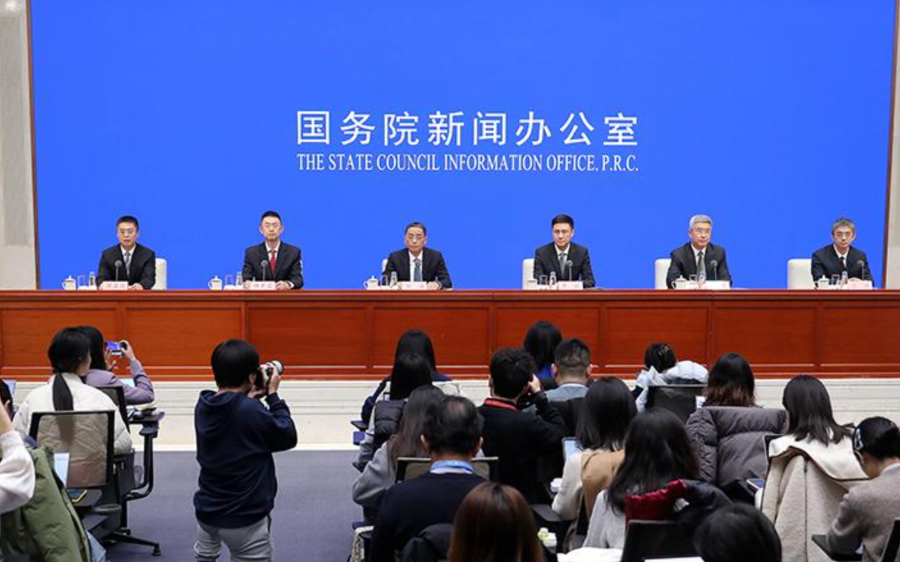
开年大礼包!央行8箭齐发,消费、科技、养老和地产等迎利好
Nan Fang Du Shi Bao· 2026-01-15 10:17
Core Viewpoint - The People's Bank of China (PBOC) announced eight significant policy measures aimed at optimizing economic structure and supporting various sectors, including private enterprises and technological innovation [2][4]. Group 1: Monetary Policy Adjustments - The PBOC has reduced the interest rates of various structural monetary policy tools by 0.25 percentage points, lowering the one-year re-lending rate from 1.5% to 1.25% [4]. - There is still room for further reductions in reserve requirement ratios and interest rates in 2026, as the average reserve requirement ratio is currently at 6.3% [5]. Group 2: Support for Private Enterprises - A new special re-lending quota of 1 trillion yuan has been established for private enterprises, with an additional 500 billion yuan allocated to support small and micro enterprises [6]. - The re-lending for private enterprises will maintain the same interest rates and terms as existing agricultural and small enterprise re-lending programs [6]. Group 3: Technological Innovation Funding - The re-lending quota for technological innovation and technical transformation has been increased by 400 billion yuan to a total of 1.2 trillion yuan, with a focus on supporting small and medium-sized private enterprises [7]. - The PBOC aims to guide banks in supporting green transformation projects, including energy-efficient upgrades and carbon reduction initiatives [7]. Group 4: Service Consumption and Elderly Care - The PBOC plans to expand the support for service consumption and elderly care re-lending to include the health industry, pending the establishment of recognition standards for the health sector [8]. - As of the end of 2025, financial institutions had reported applications for service consumption and elderly care re-lending, with 118.4 billion yuan already disbursed [8]. Group 5: Commercial Real Estate Support - The minimum down payment ratio for commercial property loans has been lowered to 30% to help reduce inventory in the commercial real estate market [9]. - The PBOC encourages financial institutions to enhance foreign exchange risk management services and products for enterprises [9].
中国人民银行:再贷款利率1月19日起下调
Sou Hu Cai Jing· 2026-01-15 10:16
另外,中国人民银行还于当日宣布,增加支农支小再贷款额度5000亿元,将支农支小再贷款额度与再贴 现额度打通使用。在支农支小再贷款项下设立民营企业再贷款,额度1万亿元,引导地方法人金融机构 进一步聚焦重点,加力支持民营中小微企业。民营企业再贷款的期限、利率、发放方式等与现行支农支 小再贷款一致。 进一步做好科技金融大文章,中国人民银行决定增加科技创新和技术改造再贷款额度4000亿元。增加 后,科技创新和技术改造再贷款总额度为1.2万亿元。自2026年起,将研发投入水平较高的民营中小企 业纳入科技创新和技术改造再贷款政策支持领域。 此外,中国人民银行还决定,将节能改造、绿色升级、能源绿色低碳转型等具有直接碳减排效应的项目 纳入碳减排支持工具支持领域。碳减排支持工具按季操作,每次操作提供1年期再贷款资金,全年操作 量不超过8000亿元。(完) 新华社北京1月15日电(记者任军、吴雨)中国人民银行1月15日发布消息称,为更好发挥结构性货币政 策工具的激励作用,引导金融机构加大对重大战略、重点领域和薄弱环节的支持力度,决定自1月19日 起,下调再贷款、再贴现利率0.25个百分点。 下调后,3个月、6个月和1年期支农支小 ...
央行出台一批重磅政策,解读来了
Sou Hu Cai Jing· 2026-01-15 10:04
Core Viewpoint - The People's Bank of China (PBOC) is implementing targeted monetary policy measures to support high-quality development of the real economy, including a 0.25 percentage point reduction in various structural monetary policy tool rates [1][2]. Group 1: Monetary Policy Measures - The PBOC has lowered the one-year re-lending rate from 1.5% to 1.25%, marking the second reduction of this rate since May 2025 [2]. - The reduction in re-lending rates is expected to lower the cost of funds for commercial banks, potentially leading to lower loan rates for enterprises and individuals, particularly in sectors like small and micro enterprises and agriculture [2][3]. - The PBOC aims to enhance the efficiency of financial services to the real economy by using structural monetary policy tools to direct credit resources to weak links and key areas [3]. Group 2: Additional Support Measures - The PBOC plans to increase the quota for re-lending to support agriculture and small enterprises by 500 billion yuan, with a separate quota of 1 trillion yuan specifically for private enterprises [8]. - The quota for re-lending aimed at technological innovation and transformation has been increased from 800 billion yuan to 1.2 trillion yuan, expanding support to high R&D investment private small and medium enterprises [8]. - The PBOC is merging existing bond financing support tools for private enterprises and technological innovation, providing a total re-lending quota of 200 billion yuan [8]. Group 3: Broader Economic Implications - The PBOC has indicated that there is still approximately 1.3 percentage points of room for further reductions in the reserve requirement ratio, suggesting ongoing flexibility in monetary policy [6]. - The central bank emphasizes a cautious approach to monetary policy, avoiding excessive liquidity to prevent future inflation and debt issues, while focusing on targeted support for economic transformation [7]. - The PBOC's measures are designed to work in conjunction with fiscal policies to enhance the effectiveness of monetary policy and stimulate effective domestic demand [9].
利好来了!商业购房贷款首付降至30%,降准降息还有空间!央行发声,还将推出8大措施
2 1 Shi Ji Jing Ji Bao Dao· 2026-01-15 09:20
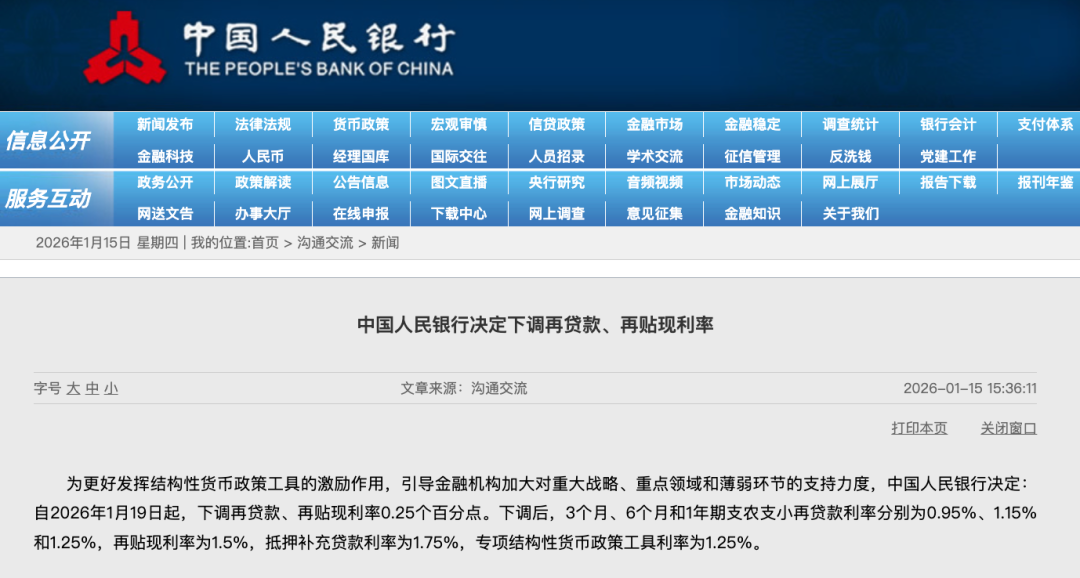
央行表示,为更好发挥结构性货币政策工具的激励作用,引导金融机构加大对重大战略、重点领域和薄弱环节的支持力度,中国人民银行决定:自2026年 1月19日起,下调再贷款、再贴现利率0.25个百分点。下调后,3个月、6个月和1年期支农支小再贷款利率分别为0.95%、1.15%和1.25%,再贴现利率为 1.5%,抵押补充贷款利率为1.75%,专项结构性货币政策工具利率为1.25%。 | | | | 中国人民银行 | | | | | | | | | --- | --- | --- | --- | --- | --- | --- | --- | --- | --- | --- | | | R | | THE PEOPLE'S BANK OF CHINA | | | | | | | | | 信息公开 | 新闻发布 | 法律法规 | 货币政策 | 宏观审慎 | 信贷政策 | 金融市场 | 金融稳定 | 调查统计 | 银行会计 | 支付体系 | | | 金融科技 | 人民币 | 经理国库 | 国际交往 | 人员招录 | 学术交流 | 征信管理 | 反洗钱 | 党建工作 | | | 服务互动 | 政务公开 | 政策解读 | 公 ...
降息!央行:今年降准降息还有一定空间
Xin Lang Cai Jing· 2026-01-15 09:10
Core Viewpoint - The People's Bank of China (PBOC) announced eight new financial policies aimed at supporting high-quality development of the real economy, including interest rate cuts and increased loan quotas for specific sectors [1][3]. Group 1: Interest Rate Adjustments - The PBOC will lower the interest rates of various structural monetary policy tools by 0.25 percentage points, with the one-year re-lending rate decreasing from 1.5% to 1.25% [1][3]. - This adjustment is expected to enhance the willingness of banks to lend in key areas [1][3]. Group 2: Loan Quotas and Support for Specific Sectors - The PBOC will merge the quotas for agricultural and small enterprise re-lending and re-discounting, increasing the re-lending quota for these sectors by 500 billion yuan, with a total quota of 1 trillion yuan specifically for private enterprises [1][3]. - The re-lending quota for technological innovation and technological transformation will be raised from 800 billion yuan to 1.2 trillion yuan, including support for private small and medium-sized enterprises with high R&D investment [1][3]. - The PBOC will also consolidate existing financing support tools for private enterprises and technological innovation, maintaining a total re-lending quota of 200 billion yuan [1][3]. Group 3: Expansion of Support Areas - The PBOC has expanded the support areas for two tools, including energy-saving renovations, green upgrades, and low-carbon energy transition projects under the carbon reduction support tool [1][3]. - The health industry has been included in the support areas for service consumption and elderly care re-lending [1][3]. Group 4: Commercial Property Loan Adjustments - The minimum down payment ratio for commercial property loans has been reduced to 30% to support the destocking of the commercial property market [2][4]. - The PBOC indicated that there is still room for further reductions in reserve requirements and interest rates, given the current average reserve requirement ratio of 6.3% [2][4].
央行“精准滴灌”!帮主郑重:这次“降息”有何不同?
Sou Hu Cai Jing· 2026-01-15 08:41
对于我们A股投资者来说,这一政策的影响是结构性、长期性的,而非全局性、刺激性的。它不会直接 催生全面的牛市,但会为市场注入清晰的结构性主线。帮主的策略思考是: 第一,紧跟政策导向,深挖受益产业链。本次"定向降息"最直接利好的,就是那些符合国家战略转型方 向的产业。例如,高端制造、绿色能源、数字经济、人工智能等领域的优质公司,有望获得更低成本的 研发和生产资金,从而提升竞争力和盈利能力。我们的研究重心,应该向这些产业链的核心环节倾斜。 各位朋友,今天下午央行发布了一项关键货币政策,但如果你只看到了"降息"两个字,可能就理解错了 重点。央行宣布,下调各类结构性货币政策工具利率0.25个百分点。大家好,我是帮主郑重。这和我们 通常理解的"全面降息"有本质区别,它更像是一次精准的"滴灌",而不是大面积的"漫灌"。今天,咱们 就来聊聊,这背后的深意是什么。 首先,我们要弄清楚什么是"结构性货币政策工具"。你可以把它理解为央行为了支持国民经济特定领 域、薄弱环节而设立的"专项再贷款"。比如,支农支小再贷款、支持煤炭清洁高效利用专项再贷款、科 技创新再贷款等等。这次,央行是给这些"专项贷款"的利率普遍降低了0.25个百分点 ...
刚刚,突发大利好!
天天基金网· 2026-01-15 08:37
上天天基金APP搜索777注册即可领500元券包,优选基金10元起投!限量发放!先到先得! 刚刚,央行接连发声! 1月15日盘后, 中国人民银行官网 发布《 中国人民银行决定下调再贷款、再贴现利率 》公告。 央行表示, 为更好发挥结构性货币政策工具的激励作用,引导金融机构加大对重大战略、重点领域和薄 弱环节的支持力度,中国人民银行决定:自2026年1月19日起,下调再贷款、再贴现利率0.25个百分 点。下调后,3个月、6个月和1年期支农支小再贷款利率分别为0.95%、1.15%和1.25%,再贴现利率为 1.5%,抵押补充贷款利率为1.75%,专项结构性货币政策工具利率为1.25%。 | | | | 中国人民银行 | | | | | | | | | --- | --- | --- | --- | --- | --- | --- | --- | --- | --- | --- | | | 200 | | THE PEOPLE'S BANK OF CHINA | | | | | | | | | 信息公开 | 新闻发布 | 法律法规 | 货币政策 | 宏观审慎 | 信贷政策 | 金融市场 | 金融稳定 | 调查统计 ...

央行:商业用房购房最低首付降至30%,支持推动商办、房地产市场去库存 | 快讯
Hua Xia Shi Bao· 2026-01-15 08:33
1月15日,中国人民银行新闻发言人、副行长邹澜在国新办新闻发布会上表示,根据当前经济金融形势 需要,人民银行将先行推出两方面政策措施,一方面是下调各类结构性货币政策工具利率,提高银行重 点领域信贷投放的积极性。另一方面是完善结构性工具,并加大支持力度,进一步助力经济结构转型优 化。 文/李凯旋 《华夏时报》记者了解到,1月14日,财政部、税务总局、住房城乡建设部联合发布《关于延续实施支 持居民换购住房有关个人所得税政策的公告》。《公告》明确自2026年1月1日至2027年12月31日,对出 售自有住房并在现住房出售后1年内在市场重新购买住房的纳税人,对其出售现住房已缴纳的个人所得 税予以退税优惠。 编辑:张蓓 其中,邹澜表示,会同金融监管总局将商业用房购房贷款最低首付比例下调至30%,支持推动商办、房 地产市场去库存。除此之外,邹澜表示,下调各类结构性货币政策工具利率0.25个百分点。各类再贷款 一年期利率从目前的1.5%下调到1.25%,其他期限档次利率同步调整。 ...