虚假宣传

Search documents
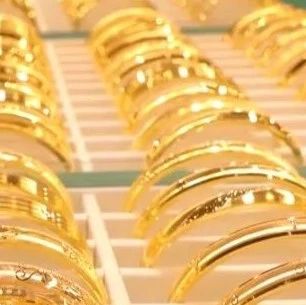
别买、别戴!这种“大金镯子”,重金属严重超标
新浪财经· 2025-08-25 10:28
Core Viewpoint - The article discusses the rise of "sand gold" jewelry, which resembles gold but is much cheaper, and questions the authenticity and safety of these products [2][3][12]. Group 1: Market Overview - "Sand gold" jewelry has gained popularity as a low-cost alternative to gold due to rising gold prices, with prices ranging from a few hundred yuan to over a hundred yuan in online sales [2][3][12]. - Many merchants claim that "sand gold" products are made from materials that do not fade and can withstand fire, leading to consumer interest [3][12]. Group 2: Material Composition - "Sand gold" is described as a mineral containing about 5% gold, formed from weathered gold-bearing rocks mixed with sand [5]. - However, most merchants are vague about the actual materials used in "sand gold" jewelry, often failing to confirm the presence of gold [5][8]. Group 3: Production and Pricing - The base material for these jewelry pieces is primarily brass, which is then electroplated with a thin layer of gold (0.05 microns), giving it a gold-like appearance [10]. - The production cost of these brass-plated items is around 10 yuan, but they are sold for approximately 40 yuan at markets and can reach over a hundred yuan online due to marketing strategies [12][13]. Group 4: Health Concerns - Testing has shown that many "sand gold" pieces are made from copper-nickel alloys, which can release nickel at levels exceeding national safety standards, posing allergy risks to consumers [15][17]. - Nickel is a common allergen, and there have been reports of consumers experiencing allergic reactions after wearing "sand gold" jewelry [17]. Group 5: Legal Implications - There are legal concerns regarding the false advertising practices of some merchants selling "sand gold" jewelry, which could lead to penalties under Chinese law for misrepresenting products [19].

莫让“瘦身”变“伤身”
Ren Min Ri Bao· 2025-08-25 05:43
Core Viewpoint - The weight loss market is experiencing a surge in consumer demand, but it is plagued by false advertising and exaggerated claims, leading to potential consumer traps and health risks [1][2][3] Group 1: Consumer Issues - Many consumers report being misled by exaggerated claims of rapid weight loss, such as promises of losing 10 pounds in a week without diet or exercise [1] - Complaints highlight issues with refund policies and customer service, where consumers are often unable to get refunds despite ineffective products [2][3] - Personal information leaks are common, with some weight loss apps requiring sensitive data that may be misused, leading to harassment or scams [3] Group 2: Regulatory and Legal Concerns - Many weight loss products make claims that violate advertising laws, such as guaranteeing results or safety, which are often misleading [3] - Consumers are advised to carefully review contracts for terms related to service content, effectiveness guarantees, and refund policies to protect their rights [3] Group 3: Expert Recommendations - Experts suggest that weight loss should be approached under the guidance of healthcare professionals, emphasizing the importance of personalized plans and long-term commitment [4] - The National Health Commission has warned against believing exaggerated claims about weight loss products, indicating that many such claims are unfounded [5]
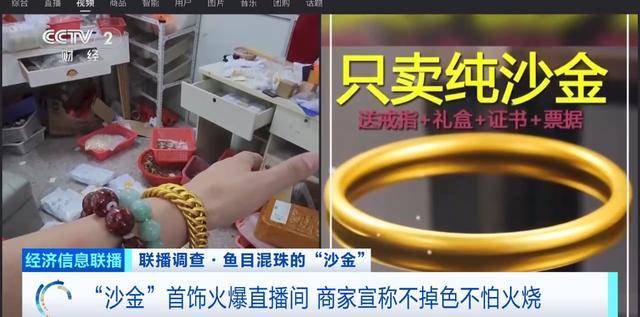
别买、别戴!镍释放量超标上千倍!出厂价仅10元……
Sou Hu Cai Jing· 2025-08-24 09:42
Core Viewpoint - The rise of "sand gold" jewelry, which resembles gold but is significantly cheaper, has gained popularity among consumers as an alternative due to high gold prices. However, the actual composition and quality of these products are questionable [1][2][4]. Group 1: Product Characteristics - "Sand gold" jewelry is claimed to be made from materials sourced from Vietnam and Myanmar, with a similar color to gold and a promise of not fading or burning [2][4]. - The term "sand gold" refers to minerals formed from weathered gold-bearing rocks, typically containing about 5% gold. However, many sellers are vague about the actual material composition of their products [4][10]. - Most "sand gold" products are primarily made from brass with a very thin layer of gold plating (0.05 microns), which can wear off over time [10][14]. Group 2: Market Dynamics - Numerous online platforms showcase "sand gold" jewelry, with some sellers reporting monthly sales exceeding 100,000 pieces. The pricing varies significantly, with street vendors selling them for around 40 yuan and online influencers marketing them for over 100 yuan [6][14]. - The production cost of these brass-plated items is approximately 10 yuan each, indicating a substantial markup in retail pricing [12][14]. Group 3: Health and Safety Concerns - Many "sand gold" products contain little to no gold and are often made from copper-nickel alloys, which can release nickel at levels exceeding national safety standards, posing potential health risks to consumers [20][22]. - There have been reports of consumers experiencing allergic reactions from wearing these "sand gold" items, leading to complaints on consumer protection platforms [22]. Group 4: Legal and Regulatory Issues - Legal experts indicate that the false advertising practices in the "sand gold" jewelry market could lead to severe penalties under Chinese law for producers and sellers who misrepresent their products [24].
京东赠卡陷阱:谁在透支消费者信任?
Sou Hu Cai Jing· 2025-08-21 10:26
近年来,京东商城频频被曝出促销活动中存在"虚假宣传"问题,其中以"购机赠手机卡"为名的营销活动 争议尤为突出。消费者反映,这类活动通过夸大优惠、隐藏关键条款等方式诱导下单,实际履约过程中 却出现套餐资费不符、返费拖延等"暗坑",严重损害消费者权益。 一、宣传与现实的割裂:文字游戏如何设局? 以用户投诉案例为例,京东宣称"购机赠送19元/月手机卡",但实际签约后发现,仅前四个月可享受19 元资费,后续自动恢复至29元/月。更关键的是,这一限制性条款被刻意隐藏在商品详情页的折叠区域 或需下载的附属协议中,消费者稍不留意便会掉入资费陷阱。此类操作已涉嫌违反《中华人民共和国价 格法》第十四条中"利用虚假或使人误解的价格手段诱骗交易"的规定。 京东手机卡"赠品陷阱":文字游戏背后的消费者信任危机 更令人担忧的是,此类问题并非孤例。网页5中雅诗兰黛礼盒赠品缺失事件、网页6中折叠洗衣机赠品 需"晒图激活"等案例显示,京东平台上"赠品承诺缩水"已成为系统性风险,暴露出平台对第三方商家的 监管失职。 三、行业警示:诚信缺失的代价 1. 法律风险升级:根据《消费者权益保护法》第二十条,经营者不得作虚假或引人误解的宣传。京 东此类 ...


网购遭遇虚假宣传 商品下架维权犯难
Qi Lu Wan Bao· 2025-08-20 23:04
Core Points - A consumer in Qingdao reported a discrepancy between the advertised ingredients of an oral spray and the actual contents received, raising concerns about potential consumer deception [1][2] - The consumer filed a complaint with the local market supervision authority, but the complaint was not accepted due to the product being taken off the market [2][3] - The store claimed that the product underwent a packaging upgrade and that the ingredients remained unchanged, but did not provide a clear explanation for the differences in the ingredient list [3] Summary by Sections Consumer Complaint - A consumer named Mr. Chen purchased an oral spray that was advertised to contain effective ingredients but found that the actual product did not match the claims [1][2] - The product received was labeled differently and lacked the advertised ingredients, leading to feelings of fraud [2] Regulatory Response - Mr. Chen's complaint was initially accepted but later dismissed due to the product being unavailable for inspection, as it had been removed from the store [2][3] - The local market supervision authority indicated that they could not take action due to the lack of evidence and the product's change in location [3] Store's Explanation - The store's customer service stated that the product was rebranded and that the ingredients had not changed, but they did not clarify the discrepancies in the ingredient list [3] - The store had moved locations and the product was no longer searchable, complicating the resolution of the complaint [3]
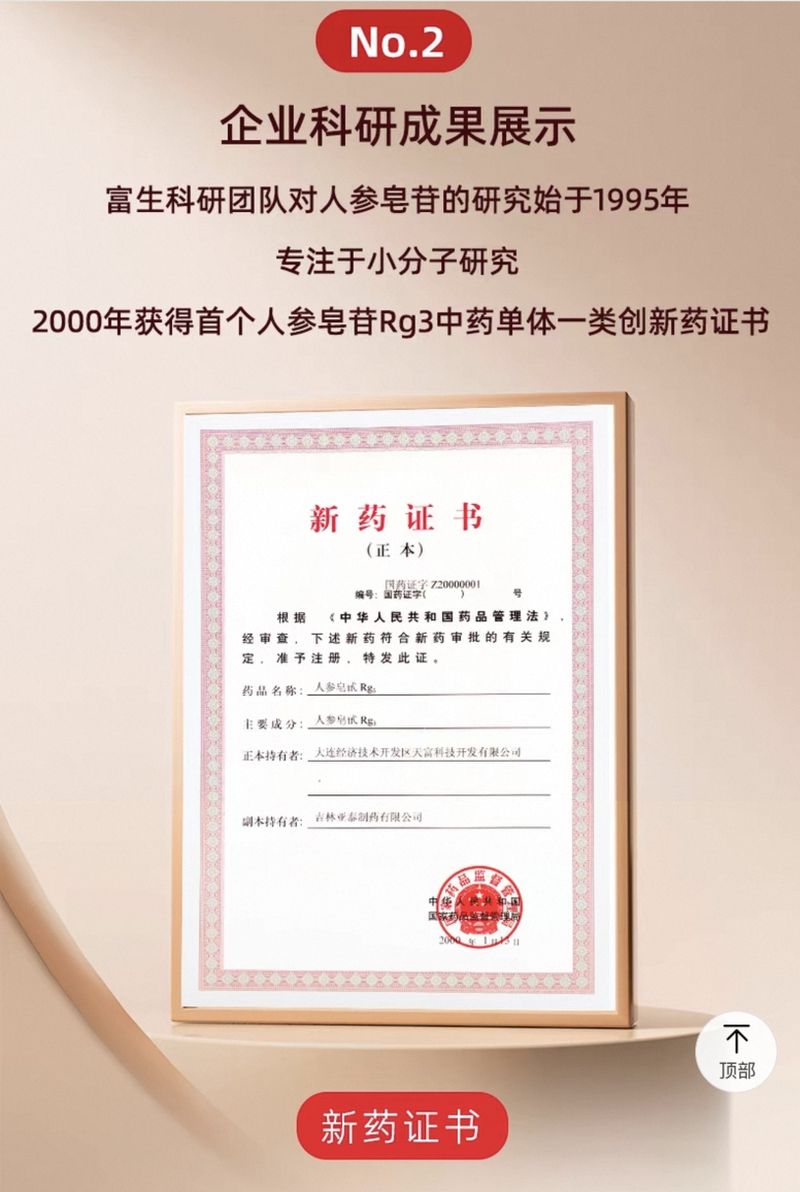
高价人参皂苷食品暗示抗癌功效,富生制药被指虚假宣传
Xin Jing Bao· 2025-08-19 08:21
Core Viewpoint - The company Dalian Fusheng Pharmaceutical is under scrutiny for misleading advertising of its product "Fuli Doctor Ginsenoside Rg3," which is marketed as having anti-tumor effects but is actually a solid beverage and not a drug [1][2][6]. Product Description - The product "Fuli Doctor Ginsenoside Rg3" is sold at a price of 1780 yuan per box and is classified as a solid beverage, containing mainly ginseng roots aged five years or less [1][2]. - The product's composition includes ginsenosides Rg3 and Rg5, with specific amounts stated, but it lacks any unique medicinal ingredients [2][3]. Marketing and Promotion Tactics - The company employs various promotional strategies, including showcasing research achievements and using AI to suggest potential health benefits, which may mislead consumers into believing the product has anti-cancer properties [3][9][14]. - The marketing materials frequently reference the product's association with a drug called "Can Yi Capsule," which has been approved for cancer treatment, creating a misleading connection between the food product and pharmaceutical efficacy [6][26]. Legal and Regulatory Concerns - The promotional practices may violate the Anti-Unfair Competition Law and the Price Law of the People's Republic of China, as they could be seen as misleading consumers regarding the product's capabilities and pricing [6][7][8][26]. - Legal experts indicate that the company's actions could be classified as "confusion behavior," potentially leading to penalties if deemed unlawful [6][26]. Scientific Evidence and Expert Opinions - Experts note that while there is some evidence suggesting ginsenoside Rg3 may have anti-cancer properties, the clinical evidence supporting its efficacy is insufficient, with most studies being small-scale and lacking rigorous design [21][22]. - The product's marketing may lead consumers to mistakenly believe it can replace conventional cancer treatments, which poses significant health risks [25][26].
财经调查丨玉满江河珠宝店直播间演大片,虚假宣传玉石有疗效,公司赚得盆满钵满
Sou Hu Cai Jing· 2025-08-17 13:00
Core Viewpoint - The article highlights the deceptive practices of jewelry companies that utilize scripted performances and false advertising to manipulate consumer behavior and drive sales through live streaming platforms [1] Group 1: Company Practices - The company "Wang'er Jewelry" employs multiple live streaming accounts to create competitive pricing scenarios among hosts, which are pre-scripted to stimulate consumer purchases [1] - In the "Baibaifu Jewelry" live stream, an employee pretends to be a foreign jade merchant, using a local dialect to mislead viewers about the authenticity of the products [1] - The company promotes exaggerated claims about the health benefits of their jade products, specifically targeting consumers over 50 years old, suggesting that wearing the jade can detoxify internal organs [1] Group 2: Consumer Manipulation - The live streaming hosts engage in discussions post-broadcast to plan future deceptive performances aimed at further misleading consumers [1] - The scripted nature of the performances and the false claims made during the live streams contribute significantly to the company's financial success [1]
乌苏市市场监督管理局查处乌苏市某养生馆虚假宣传销售商品案
Zhong Guo Shi Pin Wang· 2025-08-14 08:37
Group 1 - The case involves a wellness center in Urumqi City that misled elderly customers by promoting products with false health claims, including the樟修堂®蓝莓叶黄素护理液 and other health supplements [1] - The products in question were found to be ordinary care liquids and health foods, lacking any proven efficacy in disease prevention or treatment, constituting false advertising [1] - The Urumqi City Market Supervision Administration imposed a fine of 50,000 yuan on the wellness center for violating the Anti-Unfair Competition Law of the People's Republic of China [1] Group 2 - The case highlights the importance of regulating the market for drugs and health products aimed at the elderly, emphasizing that marketing should clearly distinguish between health care and treatment [2] - The enforcement actions taken in this case reflect a commitment to protecting the rights of elderly consumers and maintaining a healthy and trustworthy market environment [2] - The investigation was initiated as part of a special campaign to address issues related to the elderly, showcasing the role of law enforcement in safeguarding vulnerable populations [2]
市场监管总局专项整治保健品市场“坑老”“骗老”行为
Xin Hua Wang· 2025-08-12 05:54
Core Viewpoint - The State Administration for Market Regulation has initiated a nationwide special campaign to combat false advertising in the pharmaceutical and health product sectors targeting the elderly, aiming to protect their rights and improve market competition [1] Regulatory Actions - The campaign will utilize various laws, including the Anti-Unfair Competition Law, Price Law, Advertising Law, Food Safety Law, Product Quality Law, and Consumer Rights Protection Law, to address issues such as false advertising, price fraud, illegal advertising, and illegal additives that harm the elderly [1] - Local market regulation departments will focus on collecting evidence of illegal activities through public participation, encouraging citizens to report suspected violations [1] Enforcement and Public Awareness - The regulatory bodies will analyze and address reported issues promptly, targeting significant cases that disrupt market order and publicizing these cases to create a deterrent effect [1] - The initiative aims to enhance collaboration among departments and promote public awareness to foster a societal consensus against false advertising, thereby safeguarding the health and safety of the elderly [1]
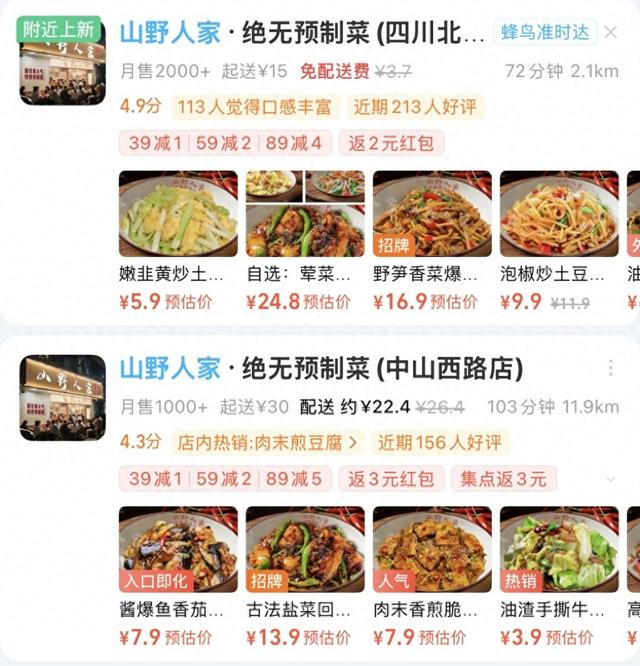
外卖商家也“照骗”:平台上的头像由AI生成,实际可能只有厨房
Xin Lang Cai Jing· 2025-08-08 12:01
Core Viewpoint - The increasing use of AI-generated images for restaurant storefronts on food delivery platforms raises concerns about misleading advertising and consumer rights [1][20]. Group 1: AI-Generated Images in Food Delivery - Many restaurants are using AI-generated images that appear to show bustling dining environments, which may not reflect the actual conditions of the establishments [1][19]. - A random investigation of four restaurants in Shanghai revealed discrepancies between their online images and real-life appearances, with some establishments not even offering dine-in options [1][3][19]. Group 2: Platform Regulations and Responses - Meituan has established a special task force to address the use of misleading AI-generated images, emphasizing that such images can mislead consumers [2][20]. - Ele.me has also formed a task force to tackle the issue, focusing on improving rules and technology to identify and rectify misleading storefront images [2][20]. Group 3: Legal Perspectives on Misleading Advertising - Legal experts suggest that the key issue is whether consumers can reasonably identify AI-generated images as not representing the actual business premises [20][21]. - If storefront images are found to be misleading or fraudulent, the restaurants could face civil and administrative liabilities, and the platforms may also bear responsibility for not adequately vetting their merchants [22][24]. Group 4: Consumer Perception and Acceptance - Consumers generally accept some level of exaggeration in food advertising, but storefront images are expected to accurately represent the business, as they directly influence purchasing decisions [23][24]. - The introduction of regulations regarding AI-generated content will require businesses to disclose the use of such images, effective from September 1 [24].