eSIM技术

Search documents
eSIM成万物互联“新钥匙”产业链上市公司积极布局
Zheng Quan Ri Bao· 2025-08-08 01:50
Core Insights - eSIM technology is becoming a key enabler for the Internet of Things (IoT) and is expected to significantly enhance user experience by eliminating the need for physical SIM cards [1][2] - The market for eSIM is projected to grow substantially, with an estimated 1 billion eSIM-enabled smartphones by the end of 2025 and 6.9 billion by 2030 [2] - The eSIM industry chain includes component manufacturers, operators, and application service providers, with several A-share listed companies actively participating in this space [3][4] Market Potential - eSIM technology allows for lighter and thinner consumer electronics, as it does not require a physical card slot [1] - The demand for eSIM is driven by the increasing need for lightweight consumer electronics, wearable devices, and IoT terminals [1][2] - Jupiter Research forecasts that the number of IoT connections using eSIM technology will grow from 22 million in 2023 to 195 million by 2026 [2] Industry Collaboration - Companies like Unisoc, Quectel, and ThinkRace are making strides in the eSIM market, with Unisoc being the first in China to achieve global commercial use of eSIM [3] - Quectel has developed an end-to-end IoT eSIM solution that supports automatic connections in over 180 countries, enhancing operational efficiency and reducing costs [3][4] - ThinkRace is focusing on providing comprehensive solutions for automotive connectivity, leveraging eSIM and 5G technologies to streamline supply chain management for car manufacturers [4] Ecosystem Development - The eSIM industry in China is forming a complete layout across various segments, with companies exploring and refining business models to accelerate eSIM adoption [5] - The collaboration among industry players is expected to enhance the overall ecosystem, facilitating the widespread use of eSIM technology [5]




中国电信股价微跌0.68% 运营商重启eSIM业务引关注
Jin Rong Jie· 2025-08-07 17:38
Group 1 - The stock price of China Telecom as of August 7, 2025, is 7.30 yuan, down 0.68% from the previous trading day, with a trading volume of 1.3741 million hands and a turnover of 1.004 billion yuan [1] - China Telecom is one of the three major basic telecom operators in China, providing fixed and mobile communication services, internet access services, and comprehensive information services [1] - The recent resumption of eSIM business by telecom operators has attracted market attention, with China Unicom leading the way in 25 provinces, primarily targeting the IoT and smart wearable device sectors [1] Group 2 - China Telecom is cautious in advancing its eSIM business due to the need for physical SIM cards for authentication in its Tiantong satellite communication services [1] - Major smartphone manufacturers like Huawei and Apple are actively developing eSIM technology, with the first batch of eSIM-supported phones expected to be launched by the end of the year [1] - On August 7, 2025, the net outflow of main funds for China Telecom was 99.5185 million yuan, with a total net outflow of 12.504 million yuan over the past five days [1]


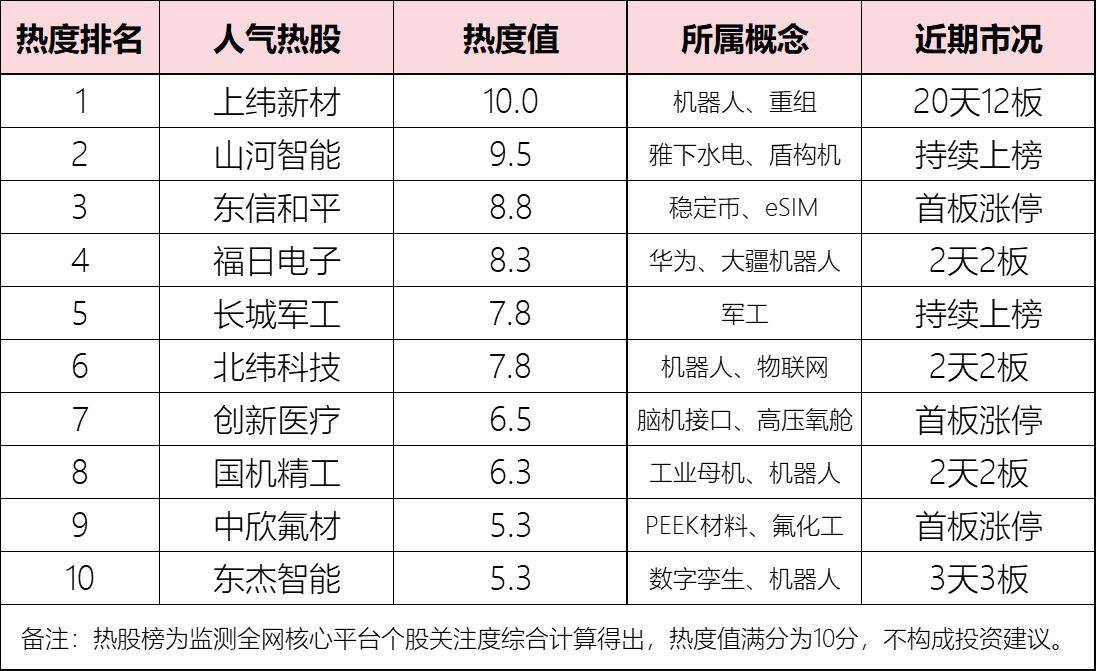
今日十大热股:“妖王”上纬新材17天暴涨15倍,上交所雷霆出击,三大热门标签带飞山河智能,大疆发布机器人福日电子热爆
Sou Hu Cai Jing· 2025-08-06 02:10
Core Viewpoint - The A-share market has seen a significant increase in activity, with the Shanghai Composite Index stabilizing above 3600 points and over 3900 stocks rising, indicating a strong market sentiment approaching the previous high of the "924 market" [1] Group 1: Hot Stocks - The top ten popular stocks in the A-share market include: Shangwei New Materials, Shanhe Intelligent, Dongxin Peace, Furui Electronics, Great Wall Military Industry, Beiwai Technology, Innovation Medical, Guoji Precision, Zhongxin Fluorine Materials, and Dongjie Intelligent [1][2] - Shangwei New Materials has experienced a remarkable surge, with a 15-fold increase in stock price over 17 trading days, driven by speculation around a "backdoor listing" following the acquisition by Zhiyuan Robotics [3] - Shanhe Intelligent's stock price increase is linked to its involvement in the Yarlung Zangbo River hydropower project, which is part of a 1.2 trillion yuan infrastructure initiative, alongside its military and low-altitude economy attributes [3] Group 2: Stock Performance Drivers - Dongxin Peace's rise is attributed to its Web3.0 stablecoin payment project and eSIM technology, benefiting from favorable policies and a strong state-owned enterprise background [4] - Furui Electronics has seen an uptick due to its turnaround in performance and its role as a manufacturer for Huawei and DJI, particularly following the launch of DJI's first sweeping robot [4] - The military sector stocks, such as Great Wall Military Industry and Guoji Precision, are gaining traction due to improved industry sentiment and restructuring expectations, despite some companies facing losses [4]


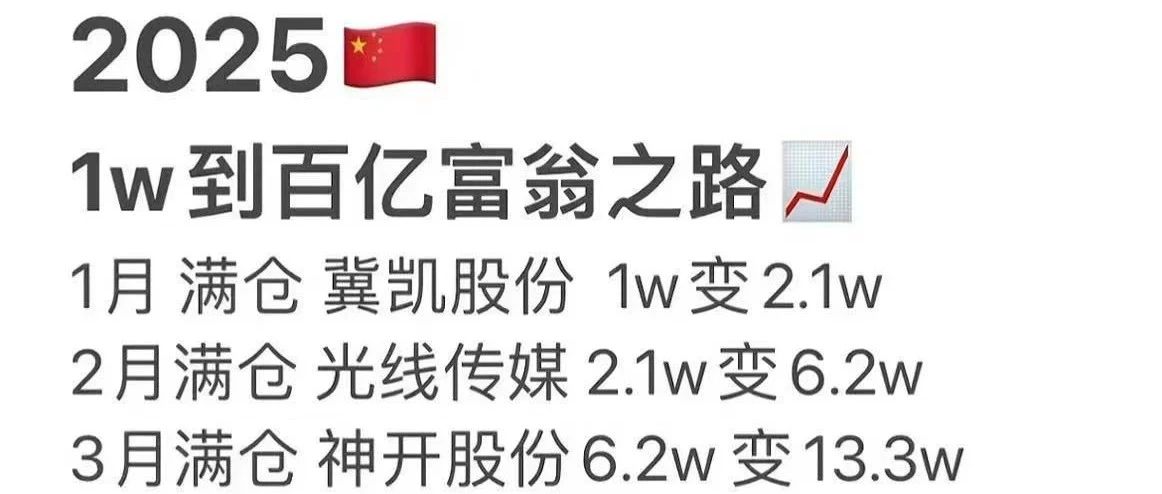
牛两个月了 钱愣是赚不到
Datayes· 2025-08-05 12:58
Market Overview - The A-share market experienced a comprehensive rise, with the Shanghai Composite Index increasing by 0.96%, the Shenzhen Component Index by 0.59%, and the ChiNext Index by 0.39% [7] - The total trading volume in the Shanghai and Shenzhen markets reached 16,160.55 billion, an increase of 976.95 billion compared to the previous trading day [7] Investor Sentiment - A significant portion of retail investors are facing losses, with 99.9% of accounts with less than 10,000 yuan experiencing losses, and 97% of accounts between 10,000 to 100,000 yuan also in the red [1][2] - In contrast, 90% of accounts with over 1 million yuan reported profits, indicating a disparity in performance among different account sizes [2] Sector Performance - The communication sector saw the largest net inflow of funds, followed by automotive, banking, electronics, and machinery sectors [20] - The PEEK materials sector showed strong performance, with several stocks reaching the daily limit, driven by increased interest in lightweight materials for robotics [7] Financing Trends - The financing balance in the market has reached 19,713 billion, surpassing the levels seen during the 2015 market peak, indicating a potential for further growth [3] - The overall market volume remains relatively low at 1.6 trillion, suggesting that while there is upward momentum, the market may lack sufficient strength for sustained growth [5] Key Developments - The upcoming launch of Apple's iPhone 17 series, which is expected to fully transition to eSIM technology, is anticipated to impact related stocks positively [6] - The Chinese government has initiated several policies to support new industrialization, including financial support for key technology sectors such as integrated circuits and advanced materials [13] Institutional Activity - Institutional investors showed a net inflow of 138.16 billion, with notable purchases in the communication and automotive sectors [20] - The top individual stocks attracting institutional interest included Zhangjiang Hi-Tech, Dongxin Peace, and Changcheng Military Industry [20] Valuation Insights - The current price-to-earnings (PE) ratios in various sectors indicate that some, like agriculture and non-bank financials, are at historically low levels, suggesting potential investment opportunities [32]
8月5日主题复盘 | 指数重回3600上方,eSIM发酵,机器人、军工持续表现
Xuan Gu Bao· 2025-08-05 08:34
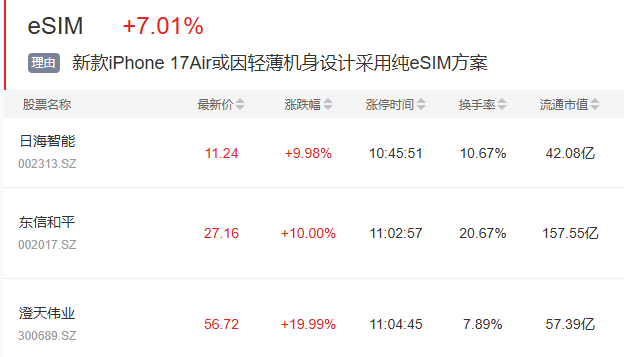
Market Overview - The Shanghai Composite Index showed strong fluctuations throughout the day, while the ChiNext Index rebounded after hitting a low. eSIM concept stocks surged, with companies like Cheng Tian Wei Ye and Ri Hai Zhi Neng hitting the daily limit. The robotics sector continued its strong performance, with Zhong Ma Chuan Dong and Guo Ji Jing Gong also reaching the daily limit. The military industry remained active, with stocks like Chang Cheng Jun Gong and Hunan Tian Yan hitting the daily limit. Overall, more stocks rose than fell, with over 3,900 stocks in the Shanghai and Shenzhen markets showing gains, and today's trading volume reached 1.62 trillion [1]. Hot Topics eSIM - The eSIM sector experienced a significant rise, with stocks such as Ri Hai Zhi Neng, Dong Xin He Ping, and Cheng Tian Wei Ye hitting the daily limit. Other companies like Xin Heng Hui and Hu Chuan Long also saw substantial gains. The catalyst for this surge is the upcoming release of Apple's iPhone 17 series, which is expected to fully adopt eSIM technology by eliminating the physical SIM card slot. Reports indicate that China Unicom has resumed eSIM services in 25 provinces and plans to cover the entire country by the end of the year. The global eSIM smartphone connections are projected to reach 7 billion by 2030, accounting for approximately 76% of total smartphone connections [3][5]. Robotics - The robotics sector remained active, with stocks like Shang Wei Xin Cai and Zhong Ma Chuan Dong hitting the daily limit. The upcoming 2025 World Robot Conference and the first Human-Robot Sports Competition are expected to drive interest in this sector. DJI is set to launch its first floor-cleaning robot, "Romo," on August 6. Additionally, Tesla's CEO Elon Musk announced that the third version of the Optimus robot design is nearly complete, with prototypes expected by the end of the year [6][8]. Military Industry - The military sector continued to show strong activity, with stocks such as Chang Cheng Jun Gong and Hunan Tian Yan hitting the daily limit. The recent disclosure of unmanned combat modes by the army and an upcoming military parade on September 3 are contributing factors to the sector's performance [10][11].



思特奇:在eSIM技术领域 公司曾参与提供eSIM项目的业务运营支撑方案
Xin Lang Cai Jing· 2025-08-05 07:33
Core Viewpoint - The company has been involved in providing operational support solutions for eSIM projects and is actively exploring and researching in the eSIM technology field [1] Group 1: Company Involvement - The company has participated in the operational support of eSIM projects [1] - The company is focusing on the development trends of cutting-edge technologies in the industry [1] Group 2: Industry Trends - The company aims to align its innovations with national policy directions and market demand changes [1] - The company is committed to promoting technological innovation and industry integration [1]
eSIM:运营商时隔两年重启,苹果新机也有望突破,eSIM或从“连接工具”进化为“智能入口”
Xuan Gu Bao· 2025-08-05 05:57
Market Performance - The eSIM sector experienced a significant surge on August 5, with stocks such as Dongxin Peace reaching the daily limit, and other companies like Chengtian Weiye and New Henghui also seeing substantial gains [1] - The eSIM index rose by 7.01%, driven by the anticipation of the new iPhone 17 Air adopting a pure eSIM solution due to its slim design [2] Events - Apple's iPhone 17 series is set to launch in September, with the iPhone 17 Air being the flagship model, featuring a thickness of only 5.5mm, potentially eliminating the physical SIM card slot in favor of eSIM technology [2] - A well-known digital blogger mentioned the integration of low-orbit satellite communication with eSIM, hinting at the testing of eSIM functionality in the Huawei Mate 80 series [3] - Chinese telecom operators have resumed eSIM services after a two-year hiatus, with China Unicom reintroducing eSIM functionality in 25 provinces and planning nationwide coverage by the end of the year [3] Institutional and Media Insights - The resumption of eSIM services by telecom operators signifies a transition from the "slot era" to the "chip era" in China's communication industry [4] - The rapid development of 5G networks and the rise of IoT applications are leading to increased adoption of eSIM technology across various sectors. By 2025/2026, eSIM-only smartphones are expected to become more prevalent globally, with GSMA predicting that by 2030, there will be 7 billion global eSIM smartphone connections, accounting for approximately 76% of total smartphone connections [4] - eSIM is recognized as a significant innovation in communication technology, reshaping the global smart terminal connectivity ecosystem. The demand for eSIM is projected to grow due to the need for "always-on" connectivity, device miniaturization, and the increase in IoT connections. By 2030, it is estimated that half of the 61 key IoT scenarios will adopt eSIM [4] - Industry experts believe that eSIM may evolve into the "digital identity" for robots and autonomous vehicles, transitioning from a "connection tool" to an "intelligent entry point." The market's growth will depend on breakthroughs in technological security, global standardization, and cross-industry ecosystem collaboration [5]

美联储继续维持利率不变;我国卫星互联网低轨06组卫星发射成功 下半年发射节奏有望提速——《投资早参》
Mei Ri Jing Ji Xin Wen· 2025-07-30 23:28
Important Market News - The Federal Reserve announced to maintain the federal funds rate target range at 4.25% to 4.50%, marking the fifth consecutive meeting without a rate change, reflecting a cautious stance amid economic uncertainties [1] - U.S. stock indices showed mixed results, with the Dow down 0.38%, Nasdaq up 0.15%, and S&P 500 down 0.12%. Notable tech stocks had varied performances, with Nvidia rising over 2% and Apple falling over 1% [1] - International precious metal futures generally declined, with COMEX gold futures down 1.58% to $3327.9 per ounce, while oil prices increased, with WTI crude up 1.57% to $70.30 per barrel [2] Industry Insights - China successfully launched the low Earth orbit (LEO) satellite internet 06 group using the Long March 8 rocket, showcasing multiple technological innovations. The competition for satellite deployment is intensifying as operators must complete satellite deployment within a limited timeframe to secure resources [3] - China Unicom has launched eSIM services across 25 provinces, with plans for nationwide coverage by year-end. The introduction of eSIM technology is expected to simplify user operations and enhance device reliability, with a projected increase in global IoT connections using eSIM from 22 million in 2023 to 195 million by 2026 [4] - The Chinese government introduced a childcare subsidy program, allocating approximately 90% of the funding from the central government, with an initial budget of around 90 billion yuan for 2023. This policy aims to stimulate the birth rate and support the mother and baby industry [5][6] Company Updates - Several companies announced plans for share reductions by major shareholders, including Haotou Co., Wansheng Co., and Rongda Technology, with reductions ranging from 0.08% to 3% of total shares [7][8]
美联储继续维持利率不变;我国卫星互联网低轨06组卫星发射成功,下半年发射节奏有望提速——《投资早参》
Mei Ri Jing Ji Xin Wen· 2025-07-30 23:22
Important Market News - The Federal Reserve announced to maintain the federal funds rate target range at 4.25% to 4.50%, marking the fifth consecutive meeting without a rate change, reflecting a cautious stance amid economic uncertainties [1] - U.S. stock indices showed mixed results, with the Dow down 0.38%, Nasdaq up 0.15%, and S&P 500 down 0.12%. Notable tech stocks had varied performances, with Nvidia rising over 2% and Apple falling over 1% [1] - International precious metal futures generally declined, with COMEX gold futures down 1.58% at $3327.9 per ounce, while oil prices increased, with WTI crude up 1.57% at $70.30 per barrel [2] Industry Insights - China successfully launched the low Earth orbit satellite internet group 06 using the Long March 8 rocket, showcasing multiple technological innovations. The competition for satellite deployment is intensifying as operators must complete satellite deployment within a limited timeframe to secure resources [3] - China Unicom has launched eSIM services across 25 provinces, with plans for nationwide coverage by year-end. The introduction of eSIM technology is expected to simplify user operations and enhance device reliability, with a projected increase in global IoT connections using eSIM from 22 million in 2023 to 195 million by 2026 [4] - The Chinese government announced a childcare subsidy program for eligible infants born after January 1, 2022, with an initial budget of approximately 90 billion yuan allocated for this initiative. This policy aims to stimulate the birth rate and support the mother and child industry [5][6] Company Updates - Haotou Co. announced that its shareholder, Dazheng Group, plans to reduce its stake by up to 2.08 million shares, representing 1% of the total share capital [7] - Wansheng Co. disclosed that a shareholder intends to reduce its holdings by up to 500,000 shares, accounting for 0.08% of the total shares [7] - Rongda Photoelectric announced plans for its major shareholders to reduce their holdings by up to 7.33 million shares, representing 2% of the total share capital [7] - Desheng Technology's major shareholder plans to reduce its stake by up to 12.85 million shares, which is 3% of the total shares excluding repurchased shares [7] - Guangwei Composite announced that its major shareholder intends to reduce its holdings by up to 10 million shares, accounting for 1.21% of the total shares excluding repurchased shares [7]
【早报】国家育儿补贴方案发布;市场监管总局:依法依规治理企业劣质低价竞争
财联社· 2025-07-28 22:59
Industry News - The national childcare subsidy policy has been announced, providing 3,600 yuan per child per year for children under three years old starting from January 1, 2025 [1][6] - The Ministry of Industry and Information Technology will consolidate the results of comprehensive rectification of "involution" competition in the new energy vehicle industry and strengthen governance in key industries such as photovoltaics [2][7] - The Shanghai Municipal Economic and Information Commission aims to achieve full-area opening of autonomous driving in Pudong by the end of this year, excluding key areas like Lujiazui [2][6] - The 2025 World Artificial Intelligence Conference highlighted the demonstration operation of intelligent connected vehicles in Shanghai, with plans to expand autonomous driving testing areas [6][8] - The Guangdong Provincial Paper Industry Association issued a letter advocating for high-quality development in the paper industry, resisting low-price competition [8] Company News - WuXi AppTec reported a net profit of 8.561 billion yuan for the first half of the year, a year-on-year increase of 101.92%, and raised its revenue forecast for 2025 to between 42.5 billion and 43.5 billion yuan [3][10] - China National Chemical Corporation announced plans to acquire 100% equity of Nantong Xingchen, with stock resuming trading [10] - Happiness Blue Sea reported that the cumulative box office of the film "Nanjing Photo Studio" has exceeded 412 million yuan, accounting for over 50% of the recent fiscal year's revenue [10] - Shandong Gold announced that its subsidiary, Shanjin International, plans to issue H-shares and apply for listing on the Hong Kong Stock Exchange [10]