
双碳目标

Search documents
“全勤生”期待更多“中国机遇”——霍尼韦尔大中华区总裁余锋谈进博会平台效应
Zhong Guo Hua Gong Bao· 2025-11-19 02:45
Core Insights - Honeywell has participated in the China International Import Expo (CIIE) for eight consecutive years, expanding its exhibition space from over 50 square meters in the first year to ten times that size, showcasing approximately 170 innovative technologies, products, and solutions, most of which have successfully entered the Chinese market [1][2][3] Group 1: Company Commitment and Innovation - Honeywell emphasizes its commitment to the Chinese market, showcasing its technological capabilities and solutions at CIIE, which serves as a platform for deepening partnerships and demonstrating its dedication to "serving the East" [1][3] - The theme for this year's CIIE was "Intelligent Manufacturing Without Boundaries, Carbon-Linked Future," highlighting Honeywell's focus on smart manufacturing, sustainable development, and aviation technologies [2] - In the sustainability sector, Honeywell presented innovative solutions such as UpCycle plastic recycling technology and smart factory concepts, aimed at empowering the circular economy and facilitating the transformation of refining enterprises [2] Group 2: Impact and Achievements - The "spillover effect" of CIIE has extended into Honeywell's supply chain, with numerous projects transitioning from signing to operational status over the past seven years [4] - An example includes the establishment of the Honeywell Process Control (China) Operations Center and Innovation R&D Center, which has become a key innovation engine in automation [4] - The energy management system developed by local teams for the Chinese market has led to a 5% reduction in electricity consumption and a decrease of approximately 86 tons in carbon emissions at Honeywell's Tianjin factory [4] Group 3: Future Outlook - As Honeywell approaches its 90th anniversary in China in 2025, it has established ten engineering R&D centers and five research institutes, holding over 4,500 valid patents and applications in China [5] - The company views the certainty of the Chinese market as a valuable asset amid global economic uncertainties, aligning its core strategies with China's focus on new productivity and green transformation [5][6] - Honeywell anticipates that the next decade will present more opportunities for high-quality development in advanced manufacturing, clean energy, life sciences, and digital industries, reinforcing its commitment to local innovation and global empowerment [6]

COP30:在全球变局中坚定前行的气候行动
Jing Ji Guan Cha Bao· 2025-11-19 02:28
Group 1: Global Climate Governance - The 30th Conference of the Parties (COP30) will be held in Belém, Brazil, from November 10 to 21, 2025, coinciding with the 10th anniversary of the Paris Agreement and the 30th anniversary of the climate conference [1] - The international climate governance landscape is challenged by setbacks in climate policies from developed countries, including the U.S. re-announcing its exit from the Paris Agreement, which undermines political consensus and funding support for global climate action [2] - The International Court has confirmed that countries have obligations to protect the climate system under international law, even if they are not party to relevant treaties, providing a positive signal for global climate governance [2] Group 2: China's Role in Climate Governance - China submitted its 2035 Nationally Determined Contributions (NDC) document, committing to reduce greenhouse gas emissions by 7% to 10% from peak levels by 2035 and to establish a comprehensive greenhouse gas monitoring system [3] - China's renewable energy capacity has been the largest globally for several years, with wind and solar installations accounting for over half of the global total [3] - China is promoting initiatives like the "Tropical Rainforest Sustainable Fund" and "Carbon Market Integrated Open Alliance" to provide sustainable financing channels for developing countries [3] Group 3: Climate Financing and South-South Cooperation - COP30 will focus on mobilizing $1.3 trillion annually for climate financing by 2035, reflecting the needs of developing countries, surpassing the previously set target of $300 billion [4] - China advocates for fair and win-win principles in climate financing and supports the South-South Cooperation Climate Fund to enhance the capacity of Asian, African, and Latin American countries to address climate change [4] Group 4: Adaptation and Just Transition - The conference will review 100 indicators for the Global Goal on Adaptation (GGA) under the Paris Agreement, addressing the significant funding gap for developing countries, which need $310 to $365 billion annually for climate risk adaptation [5] - China has accumulated experience in adaptation practices, such as sponge city construction and climate-smart agriculture, which are considered replicable models [5] Group 5: Climate and Trade Coordination - A new agenda item at COP30 will address the coordination between climate and trade, with concerns from developing countries about unilateral trade measures by developed nations, such as the EU's Carbon Border Adjustment Mechanism [7] - China calls for consensus-based solutions within a multilateral framework to oppose "green protectionism" and supports Brazil's initiative to establish a "Climate and Trade Comprehensive Forum" [7] Group 6: Conclusion on Cooperation and Action - The agenda for COP30 is complex and challenging, but China's ongoing actions and constructive role provide certainty and hope for global climate governance [8] - The emphasis is on cooperation, inclusivity, and shared responsibility to address escalating climate risks and safeguard a common future [8]
绘就零碳乡村新画卷
Jin Rong Shi Bao· 2025-11-19 02:03
Core Viewpoint - The Huangshuitang Village in Xichang City, Liangshan Prefecture, has been selected as one of China's nine zero-carbon village demonstration projects by the UNDP GEF-7, focusing on renewable energy development and ecological construction [1][2]. Group 1: Zero-Carbon Project Development - The village aims to achieve 100% renewable energy supply for households and public buildings, resulting in an annual carbon reduction of 8,132.5 tons and a negative carbon emission of 42.7 tons per year through green electricity export [1]. - Key projects include the construction of a zero-carbon water plant and a biomass processing plant, which are expected to further reduce carbon emissions by 800 tons annually and generate an additional income of 2.865 million yuan, creating over 100 jobs [1]. Group 2: Financial Support and Credit Systems - The People's Bank of China Liangshan Branch has guided local financial institutions to enhance rural credit systems, achieving a credit coverage rate of 84.9% with a total credit limit of 220 million yuan and a usage rate of 85.4% [2]. - A total of 130 loans amounting to 22.93 million yuan have been issued for rural housing and energy-efficient renovations, addressing the financial needs for housing improvement [2]. Group 3: Diverse Funding Mechanisms - The People's Bank of China Liangshan Branch has mobilized a total of 15.53 million yuan from various sources, including a 280,000 USD grant from the Global Environment Facility, to support the zero-carbon project [3].
成本支撑叠加政策利多 铸造铝合金中期维持强势
Qi Huo Ri Bao· 2025-11-19 00:16
Group 1: Market Dynamics - The launch of casting aluminum alloy futures in June 2025 has provided strong support for the development of the recycled metal industry, with prices showing a strong correlation with aluminum prices and gradually increasing [1] - The price of casting aluminum alloy futures has surpassed 21,000 yuan/ton, driven by the overall strength of aluminum prices and specific fundamental factors, including the shutdown of an aluminum plant in Iceland [1] Group 2: Strategic Importance of Recycled Aluminum - Recycled aluminum has transitioned from a "supplementary role" to a "strategic necessity" due to its significant energy-saving and emission-reduction attributes, with production energy consumption at only about 5% of electrolytic aluminum and carbon emissions at 0.23 tons per ton produced compared to 11.2 tons for electrolytic aluminum [2] - The development of the recycled aluminum industry is essential for enhancing supply security and achieving carbon neutrality goals, especially given the rigid challenges in global aluminum supply and increasing carbon emission regulations [2] Group 3: Policy Support and Industry Goals - Recent policies, including the "Nonferrous Metals Industry Stabilization Growth Work Plan (2025-2026)" and the 15th Five-Year Plan, have set clear targets for the recycled aluminum industry, aiming for a production of 11.5 million tons of recycled aluminum as part of a broader goal of exceeding 20 million tons in total recycled metal output [3] - The policies emphasize green low-carbon transformation and the promotion of a circular economy, supporting high-quality development in the recycled aluminum sector [3] Group 4: Supply Chain Challenges - The recycled aluminum industry faces significant challenges, particularly regarding raw material supply, with domestic recycled non-ferrous metal recovery reaching 15.65 million tons in 2024, but the overall supply of scrap aluminum remains tight [4] - The domestic scrap aluminum recycling system is underdeveloped, leading to quality inconsistencies and difficulties in utilization, while international policies limiting scrap metal exports further constrain supply [4] Group 5: Competitive Landscape and Future Outlook - The competition for scrap aluminum resources is intensifying globally, with the U.S. currently accounting for nearly 85% of its aluminum production from recycled sources, and proposed measures to restrict material outflow could significantly impact available scrap aluminum for markets including China [5] - Despite the tightening supply of scrap aluminum, China's recycled aluminum production capacity is expanding, projected to exceed 14 million tons by 2025, leading to a potential oversupply situation [5] - The automotive sector remains a key consumer of recycled aluminum, with about 70% of recycled casting aluminum alloys used in automotive applications, indicating a high dependency on this market [5] Group 6: Regulatory and Economic Pressures - The recycled aluminum industry is experiencing increased operational costs due to stricter environmental and safety regulations, alongside adjustments in tax refund policies that may pressure profit margins, particularly for companies reliant on subsidies [7] - The anticipated impact of these policies is already being felt, with some smaller companies facing production cuts or shutdowns, while larger firms are adjusting raw material procurement prices [7] Group 7: Price Trends and Market Sentiment - The price of casting aluminum alloy futures has been steadily rising, supported by strong demand and seasonal factors, with a focus on the resistance level around 21,500 yuan/ton [8] - The overall market sentiment indicates that while supply constraints and cost pressures exist, the demand from the automotive sector may provide support for prices in the near term [9]
中国,全球气候治理可信赖的力量(权威论坛)
Ren Min Ri Bao· 2025-11-18 23:09
Core Points - The article emphasizes the importance of global cooperation in addressing climate change, particularly in the context of the 10th anniversary of the Paris Agreement and the ongoing COP30 conference in Brazil [1][2] - It highlights China's commitment to multilateralism and its proactive role in climate governance, showcasing its achievements and future goals in reducing carbon emissions and promoting green technology [3][4][5] Group 1: Global Climate Governance - The COP30 conference focuses on finding common solutions to the climate crisis, accelerating emission reductions, and promoting an inclusive transition [1] - The Paris Agreement has successfully lowered the projected global temperature rise from over 4°C to between 2.1°C and 2.8°C by the end of the century [1] - China has consistently advocated for multilateralism and has taken practical actions to support global climate governance, despite setbacks from some countries [2] Group 2: China's Climate Commitments - China has exceeded its 2020 carbon intensity reduction target and has set ambitious goals for 2030, including a transition from carbon intensity control to absolute emission reductions [3][4] - The country aims for non-fossil energy to account for 19.8% of primary energy consumption by 2024, ahead of its 2030 targets [5] - China's carbon trading market covers over 60% of national carbon emissions, showcasing its commitment to effective climate action [5] Group 3: International Cooperation and Support - China has provided over 177 billion RMB in funding for climate change projects in developing countries, supporting capacity building and technology transfer [6][9] - The "African Solar Belt" project exemplifies China's efforts to enhance clean energy access in Africa, providing solar systems to households in need [7] - China plays a crucial role in facilitating negotiations at climate conferences, helping to bridge gaps between developed and developing nations [8][9]
凝聚全球气候治理共识的“稳定器”(国际观澜)
Ren Min Ri Bao· 2025-11-18 23:01
Core Insights - The COP30 conference in Belem, Brazil, serves as a crucial platform for advancing global climate governance, particularly focusing on the Amazon rainforest, which is vital for sustainable development in the Global South [1][2] Group 1: China's Role in Climate Action - China has demonstrated commitment to its "dual carbon" goals, aiming for peak carbon emissions by 2030 and carbon neutrality by 2060, which is driving significant changes in its energy structure and industrial system [1][2] - As the world's largest developing country, China is setting an example for other developing nations by balancing emission reductions with development, viewing climate action as a new driver for national growth [2][3] - China's leadership in international climate cooperation is reshaping the traditional model dominated by developed countries, emphasizing technology sharing and collaborative development [2][3] Group 2: Sino-Latin American Climate Cooperation - Climate cooperation between China and Latin America has expanded in scope, covering areas such as clean energy development, land restoration, low-carbon urban construction, and green finance [3] - China's position as the largest exporter of clean technology is crucial for reducing the costs of green transitions in Latin American countries [3] - The convergence of China's ecological civilization philosophy and Latin America's "good life" philosophy highlights a shared vision for sustainable development, emphasizing the balance between development rights and ecological rights [3] Group 3: Future Directions and Global Cooperation - The COP30 conference provides an opportunity for developing countries to assert their agency in climate governance, showcasing the need for equality, inclusivity, and cooperation in achieving a low-carbon future [3] - The conference aims to inspire a spirit of mutual respect and solidarity among nations, promoting collaborative efforts across policy, diplomacy, and technology to realize the concept of a shared human destiny [3]
聚焦光储融合 第八届中国国际光伏与储能产业大会在成都开幕
Sou Hu Cai Jing· 2025-11-18 18:39
Core Insights - The 8th China International Photovoltaic and Energy Storage Industry Conference opened in Chengdu on November 18, 2025, focusing on the theme "Photovoltaic and Energy Storage Integration Empowering Intelligent Innovation for the Future" [1][2] Industry Overview - The conference attracted approximately 5,000 enterprises and featured an exhibition area of nearly 60,000 square meters, showcasing innovations in photovoltaic, energy storage, and operation and maintenance sectors [2] - The global energy landscape is undergoing profound changes, with China's "dual carbon" goals driving an energy revolution that has entered a critical phase [2] - The photovoltaic and energy storage industries are pivotal in achieving the "dual carbon" targets and are essential for constructing a clean, low-carbon, safe, and efficient new energy system [2] Market Data - According to the National Energy Administration's "China New Energy Storage Development Report (2025)," by the end of 2024, China will have built and put into operation new energy storage systems with a capacity of 73.76 million kilowatts/168 million kilowatt-hours, accounting for over 40% of the global total installed capacity, making China the world's largest new energy storage market [2] - The efficiency of Chinese photovoltaic cells continues to break records, while the costs of long-duration energy storage technologies are gradually decreasing [2] Challenges and Opportunities - Despite rapid industry growth, challenges such as cyclical fluctuations, homogenized competition, and supply chain issues for key materials persist, necessitating a shift from scale expansion to quality and efficiency [2] - Liu Hanyuan, Chairman of Tongwei Group, highlighted that after addressing photovoltaic generation costs, issues related to grid regulation capabilities have emerged due to the surge in installed capacity, emphasizing the need for new energy grid systems and the economic application of the entire energy storage system [3] - The conference serves as a significant platform for understanding China's energy storage industry and promoting collaboration, attracting international buyers from various regions including Europe, Asia, and Africa [3]

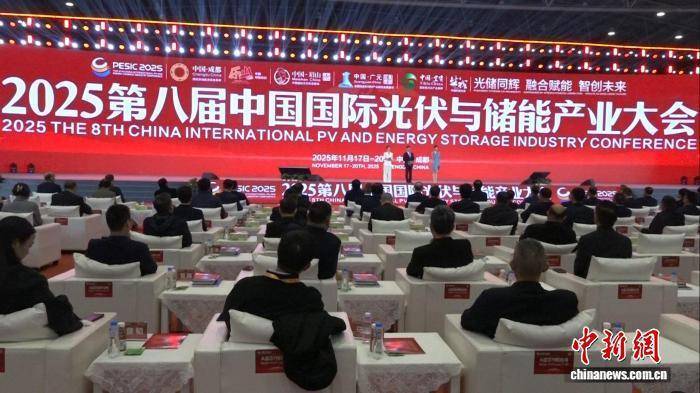
华润电力前10个月光伏售电量同比增长超50%
Zheng Quan Ri Bao· 2025-11-18 16:13
Core Viewpoint - China Resources Power Holdings Company Limited is experiencing rapid growth in its renewable energy business, particularly in solar and wind power generation [2][3]. Group 1: Sales Data - In October, the company's subsidiary power plants sold 16.62 million megawatt-hours, a year-on-year decrease of 0.4%. Wind power sales reached 3.88 million megawatt-hours, a slight increase of 0.1%, while solar power sales surged by 39.4% to 0.9503 million megawatt-hours [2]. - From January to October, cumulative sales reached 185 million megawatt-hours, a 6.5% increase year-on-year. Wind power sales totaled 43.08 million megawatt-hours, up 14.4%, and solar power sales reached 11.01 million megawatt-hours, marking a significant increase of 53.6% [2]. Group 2: Renewable Energy Capacity Expansion - The company aims to add 40 million kilowatts of renewable energy capacity during the 14th Five-Year Plan period. From 2020 to 2024, its renewable energy installed capacity is expected to grow from 14.48 million kilowatts to 34.19 million kilowatts, an increase of 19.71 million kilowatts [3]. - By the end of 2024, renewable energy capacity is projected to account for 47.2% of the company's total installed capacity. By mid-2025, the installed capacity is expected to reach 78.09 million kilowatts, with renewable energy capacity at 38.96 million kilowatts, representing 49.9% of the total [3]. Group 3: Financial Performance - In the first half of 2025, the renewable energy business generated revenue of 14.503 billion Hong Kong dollars, accounting for 28.85% of total revenue. The core profit attributable to shareholders was 5.637 billion Hong Kong dollars, a 1.5% increase year-on-year, making up about 70% of the total core profit [4]. Group 4: Future Outlook - The company plans to add 10 million kilowatts of wind and solar capacity in 2025, with a target of exceeding 50% renewable energy capacity by the end of the 14th Five-Year Plan [5]. - Capital expenditures for 2025 are estimated at approximately 56.8 billion Hong Kong dollars, with over 42 billion Hong Kong dollars allocated for wind and solar projects, representing more than 70% of total capital expenditure [5].

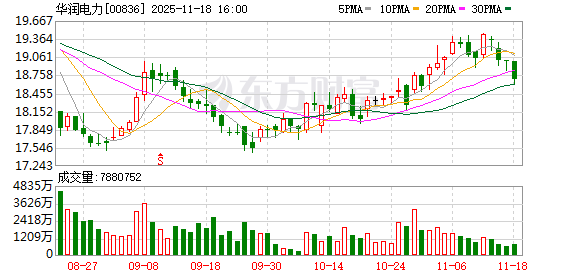
第一轮嘉宾剧透!2025第三届氢储运关键技术论坛(12月16-18日,苏州)
DT新材料· 2025-11-18 16:04
Core Viewpoint - Hydrogen storage and transportation is a critical segment of the hydrogen energy industry chain, impacting safety and economic viability. Recent advancements in this area, such as the approval of the first cross-province green hydrogen pipeline and the launch of large-scale titanium alloy hydrogen storage projects, indicate a significant acceleration in breakthroughs that may alleviate core bottlenecks in hydrogen energy costs and safety, leading to the formation of a new ecosystem for safe and efficient hydrogen delivery [2]. Event Overview - The "2025 (Third) Hydrogen Storage and Transportation Key Technology Development Forum" will be held from December 16-18, 2025, in Suzhou, Jiangsu, focusing on various core topics including high-pressure hydrogen storage technology, low-temperature liquid hydrogen technology, and pipeline transportation technology [2][3]. Forum Highlights - The forum will feature discussions with government planning units, academicians in the hydrogen storage and transportation field, and industry leaders to accelerate the integration of key segments in the hydrogen energy industry [7]. - Key technologies such as high-pressure gaseous hydrogen storage, low-temperature liquid hydrogen storage, organic liquid hydrogen storage, solid-state hydrogen storage, and pipeline hydrogen transportation will be highlighted, showcasing the latest advancements and trends in hydrogen storage and transportation [9]. - The event will include interactive formats such as an innovation exhibition, closed-door seminars, supply-demand matching, and technology achievement displays, facilitating in-depth interactions within the industry [9]. - Leading enterprises, top universities, and capital from industrial parks will gather at the forum, supported by extensive media promotion to reach a wide audience in the industry [9]. Keynote Speakers - Notable speakers include experts from various institutions, such as: - Bai Yong, an academician from the Norwegian Academy of Technological Sciences, discussing key technological advancements in IV-type hydrogen storage bottles [10]. - Cheng Hansong, a professor from China University of Geosciences (Wuhan), focusing on organic liquid hydrogen storage technologies [11]. - Zou Jianxin, a distinguished professor from Shanghai Jiao Tong University, presenting on high-performance solid-state hydrogen storage materials [12]. - Wang Changjian, a professor from Hefei University of Technology, addressing risk analysis and safety control in hydrogen storage and transportation [13]. Additional Activities - The forum will also include a high-level closed-door seminar for in-depth discussions on industry challenges and opportunities, aiming to contribute to the energy structure transformation under carbon neutrality goals [17]. - A technology achievement display will be set up to promote the transfer and transformation of scientific research results in the hydrogen storage and transportation field [18]. - A supply-demand matching initiative will be launched to connect research institutions, enterprises, and service providers in the hydrogen energy sector [19].

金租扎堆新能源业务 年化利率逼近2%
Zhong Guo Jing Ying Bao· 2025-11-18 14:16
对此,多位金租行业人士认为,金租投向新能源领域,有利于推动金租公司创新业务模式。但是,金租 公司也要注意避免同质化竞争,打价格战,金租公司应聚焦本源业务,提升自身的核心竞争力,做好差 异化发展。 扎堆新能源 随着金租公司将业务瞄准新能源领域,相关业务年化利率也出现下行趋势。 《中国经营报》记者注意到,近期,多家金租公司披露与新能源企业签订金融租赁合同显示,业务利率 普遍逼近2%。 另一家头部金租也与黑龙江一家风电新能源公司签订金融租赁合同,合同规模超过15亿元,年化率为 2.3%,租赁期为18年。 值得注意的是,上述金租公司展业合同中,不仅年化利率趋于下行,且租赁时间周期长,普遍在15年以 上。 记者注意到,近期,国家发展改革委和能源局印发《新型储能规模化建设专项行动方案(2025—2027 年)》(以下简称"方案"),方案要求在2024年全国已建成的新型储能7376万千瓦的基础上,到2027年 全国新型储能装机超1.8亿千瓦,为储能发展指明了更加广阔的市场空间。 上述头部金租公司负责人对记者表示,储能电站未来不仅可以通过提供调峰、调频等辅助服务获取稳定 收入,还能作为独立主体参与电力现货市场交易获得多元化的 ...