产业升级

Search documents
深圳市“引进来”“走出去””功能持续增强
Zhong Guo Fa Zhan Wang· 2025-10-24 08:10
中国发展网讯 记者罗勉报道 从深圳市有关方面了解到,"十四五"以来,深圳坚持以全球视野和更加积 极主动的姿态,坚定不移扩大高水平对外开放,积极在服务国内国际双循环中作基地、作平台、作通 道、作枢纽,全面提升"引进来"的吸引力和"走出去"的竞争力,始终走在开放最前沿,参与全球经济合 作与竞争,引领打造共赢新格局。 越开放越能激活发展动能,越发展越有扩大开放底气。"深圳智造"漂洋过海,走俏国际市场,外贸出口 稳居全国大中城市首位。多位外国元首及政府首脑访深,国际机构、企业纷至沓来,多领域务实合作扎 实推进,"科技之城"底色更亮,"大国会客厅"功能持续增强。 同时,深圳持续健全"大招商"格局,坚持以"心诚+行程"面向全球招商引资,加强资源整合"以商招 商",围绕深圳产业发展需求,滚动推进重点国别、重点领域项目招引,积极主动吸引和扩大利用外 全球市场"含深度" 今年1至9月,深圳机场国际及地区货运吞吐量达77.1万吨,同比增幅12.7%,刷新历史同期纪录。数据 背后,是全球"带货"能力不断提升,也折射出深圳外贸的强劲实力。 "十四五"以来,深圳外贸进出口总额达18.9万亿元,占全国比重9.5%;2024年更是以4.5 ...
新材料50ETF(159761)涨超1%,自主可控和产业升级或可关注
Mei Ri Jing Ji Xin Wen· 2025-10-24 07:08
Core Insights - The new materials industry is identified as a crucial component for developing new productive forces, with a focus on self-sufficiency and industrial upgrading amid major power competition [1] Industry Trends - Three key directions are highlighted for the industry: 1. Emerging blue ocean markets with significant growth potential, such as solid-state battery materials and PEEK materials, with accelerated technology iteration and increasing semi-solid loading [1] 2. The AI and electronic materials sector, which is experiencing rapid growth due to surging demand for AI computing power and accelerated domestic substitution, including advanced packaging materials, high-frequency resins, and OLED materials [1] 3. Established sectors with clear market leaders, such as PA6, photovoltaic quartz sand, and carbon fiber, where performance is being realized [1] Market Dynamics - Electronic gases, as core consumables in the semiconductor sector, are seeing rapid domestic substitution, with high storage market conditions [1] - The price of lithium hexafluorophosphate has recently surged significantly, driven by supply-demand dynamics, with expectations of continued upward momentum in Q4 [1] Investment Vehicle - The New Materials 50 ETF (159761) tracks the New Materials Index (H30597), which selects listed companies involved in the research, production, and application of advanced materials, covering various fields such as new metal materials, inorganic non-metal materials, and polymer materials, reflecting the overall performance and development trends of the new materials industry [1]
四中全会的七个信号
CAITONG SECURITIES· 2025-10-24 03:10
Group 1: Overall Economic Outlook - The Fourth Plenary Session aligns with market expectations, emphasizing technology transfer to industry, reform through openness, and improving people's livelihoods while maintaining national security[4] - The economic goal of achieving a per capita GDP at the level of moderately developed countries by 2035 remains consistent with the long-term vision[6] Group 2: Industrial Policy - Industrial policy has shifted from focusing on technological breakthroughs to emphasizing the implementation of industry, now prioritized as the first order of business[4] - The focus is on integrating technological innovation with industrial innovation to form scalable industrial chains, moving beyond merely overcoming technical barriers[7] Group 3: Foreign Trade and Investment - High-level openness has been elevated from the ninth to the fifth priority, reflecting a significant shift in focus amid ongoing trade tensions with the U.S.[4] - The emphasis on sharing opportunities and strengthening cooperation with non-U.S. countries is a response to recent trade disputes[8] Group 4: Social Policies - Social policies have been prioritized, moving from the tenth to the ninth position, highlighting the importance of improving income distribution and facilitating social mobility[4] - Key measures include breaking down barriers to labor mobility and increasing the share of labor factors in income distribution to boost consumer spending[10] Group 5: Reform Focus - The reform agenda emphasizes the establishment of a unified national market and the marketization of factor allocation, addressing issues of fair competition and market pricing[11] - The absence of direct references to "anti-involution" suggests a focus on structural reforms rather than immediate measures[11] Group 6: National Security - National security has become a focal point, with repeated mentions in the session, particularly regarding the stability of the manufacturing sector and the importance of technological self-reliance[12] - The commitment to maintaining a reasonable proportion of manufacturing and enhancing support for original innovation and key technologies is expected to continue[12] Group 7: Fiscal Policy - Unlike previous sessions, there was no mention of fiscal reform, indicating a potentially cautious approach to fiscal policy adjustments moving forward[13] - The need for further clarification on macroeconomic governance systems suggests that fiscal reforms may still be on the agenda but are not prioritized at this time[13] Group 8: Risk Factors - Potential risks include domestic policy effectiveness falling short of expectations, discrepancies in the implementation of the 15th Five-Year Plan, and unexpected geopolitical changes[14]
普洛斯:物流仓储市场出租率进入上行区间
Zheng Quan Shi Bao Wang· 2025-10-24 03:02
Group 1 - The logistics and warehousing market in China is showing signs of upward trends in rental rates and occupancy, indicating a turning point for both metrics [1] - In the first half of 2025, net absorption in logistics and warehousing across over 40 major hubs in China is projected to grow by 20% year-on-year, reaching 6.26 million square meters [1] - Emerging industries such as new energy vehicles, photovoltaics, and robotics are becoming new pillar industries, enhancing the sustainability of economic development and boosting investor confidence [1] Group 2 - Prologis is actively exploring asset upgrades in core locations of first to 1.5-tier cities in collaboration with the government to meet evolving urban development and client needs [2] - The company is focusing on optimizing asset management and operational capabilities while exploring multi-tier REITs markets to diversify investment products [2] - Prologis has achieved significant milestones in 2023, including a $1.5 billion investment from the Abu Dhabi Investment Authority, upgrading its partnership status, and securing a 2.5 billion RMB investment from a strategic shareholder in its computing center [2]
辽宁盘锦稻香蟹肥迎丰收
Zhong Guo Xin Wen Wang· 2025-10-24 01:12
Core Insights - The article highlights the successful harvest season in Panjin, Liaoning, with increased rice yields and high-quality river crabs, showcasing the effectiveness of the integrated rice-crab farming model [1][4][5] Rice Production - Panjin's rice planting area remains stable at over 1.6 million mu, with a significant increase in yield expected this year compared to previous years [3] - The new rice from Panjin is being sold nationwide through e-commerce platforms, with one farm reporting sales of over 8 million jin within a week of launching a new product [3] Crab Farming - The river crab farming in rice paddies has led to a symbiotic relationship where crabs feed on pests and weeds, while their waste serves as organic fertilizer for the rice [3][4] - Farmers like Zhang Shuang report high-quality crab production, with yields of 30 jin per mu from an initial investment of 10 jin of juvenile crabs [4] Economic Impact - The dual harvest of rice and crabs has not only improved the economic benefits for farmers but also boosted confidence in promoting this farming model [5] - The integration of tourism with agriculture, such as the rice art in the Red Beach National Rice Park, has attracted visitors and enhanced brand value while generating additional income from rice sales [5]


21评论丨新型政策性金融工具助力稳经济
2 1 Shi Ji Jing Ji Bao Dao· 2025-10-23 22:11
Core Viewpoint - The establishment of new structural monetary policy tools and innovative policy financial instruments is a significant measure to promote high-quality economic development in China, with a focus on supporting technology innovation, expanding consumption, and stabilizing foreign trade [1][3]. Group 1: Implementation and Impact - As of mid-October, nearly 3000 billion yuan has been allocated through new policy financial instruments, which are crucial for driving economic growth in the fourth quarter and achieving the annual growth target of around 5% [3][4]. - The innovative policy arrangement balances short-term growth stabilization and long-term structural optimization, showcasing the precision and foresight of macroeconomic regulation [3][4]. Group 2: Structural Features - The core innovation of the new policy financial instruments lies in their "quasi-fiscal" positioning, which allows for multi-departmental collaboration and overcomes traditional policy tool constraints [4][5]. - The funding sources are market-based, avoiding direct increases in fiscal deficits, thus providing greater policy space for macroeconomic regulation [4][5]. Group 3: Investment Focus - The new policy financial instruments have shifted investment focus from traditional infrastructure to innovation-driven sectors, significantly increasing support for technology innovation and emerging industries [5][6]. - By mid-October, 37.5% of the nearly 1900 billion yuan allocated by the National Development Bank was directed towards key areas such as digital economy and artificial intelligence [5][6]. Group 4: Regional Alignment - Project reserves reflect a structural characteristic that aligns closely with regional development strategies, demonstrating a tailored policy approach [5][6]. - For instance, in the Yangtze River Delta region, projects are focused on cutting-edge technology fields, promoting deep integration of innovation and industry chains [5][6]. Group 5: Leverage Effect - The injection of 5000 billion yuan in capital is expected to leverage bank loan growth, potentially creating a multiplier effect of 2-3 times, leading to an additional investment of 10 trillion to 17 trillion yuan [6]. - If the multiplier effect is fully realized, it could reach 10-12 times, resulting in a total investment scale of 50 trillion to 60 trillion yuan [6].

【时代风口】 以资本之笔 绘产业新篇
Zheng Quan Shi Bao· 2025-10-23 17:55
Core Viewpoint - Shenzhen has introduced the "Action Plan for Promoting High-Quality Development of Mergers and Acquisitions (2025-2027)" with a quantitative target of 20 trillion yuan in market value and 1 trillion yuan in transaction volume, aiming to deeply integrate industry and capital [1][2] Group 1: Policy Framework - The plan aligns with national reform requirements such as the new "National Nine Articles" and "Six Articles on Mergers and Acquisitions," while also providing targeted strategies based on Shenzhen's "20+8" industrial strategy [1] - It emphasizes a "new-oriented" industrial merger logic, moving away from traditional scale expansion to focus on the "20+8" industrial system [1] Group 2: Support for Strategic Industries - The plan supports leading enterprises in strategic emerging industries to acquire unprofitable quality assets to overcome technological bottlenecks [1] - It encourages future industries to accelerate iteration through mergers and acquisitions [1] Group 3: Capital Supply Innovations - The plan addresses industry pain points by establishing a support system of "patient capital + tool matrix," including pilot non-resident acquisition loans and technology special loans to reduce financing costs [1] - It aims to cultivate a trillion-level industrial fund group to inject long-term capital into the M&A market [1] Group 4: Cross-Border Collaboration - The plan supports enterprises in Hong Kong financing to strengthen capital reserves and innovates tools for cross-border share swaps and two-way mergers, enhancing the interconnection of exchanges between the two regions [2] - This strategy allows Shenzhen enterprises to efficiently utilize "two markets" and seize opportunities in the global industrial chain restructuring [2] Group 5: Challenges and Considerations - The implementation of the plan faces challenges such as avoiding blind mergers that lead to resource waste and balancing scale expansion with core capability enhancement [2] - There are higher demands on financial institutions regarding the professional valuation of tech company mergers and compliance risks associated with cross-border acquisitions [2] Group 6: Global Perspective - Shenzhen's exploration is seen as a "testing ground" for capital market reform, using M&A tools to facilitate industrial upgrades [2] - The policy is expected to provide a replicable model for the national M&A market, potentially leading to the emergence of industry benchmark cases as policy dividends are gradually released [2]
聚焦好房子科技展 捕捉产业升级新增长点
Xin Hua Cai Jing· 2025-10-23 15:55
Core Viewpoint - The "Good House Technology Exhibition" will take place on November 7 in Beijing, focusing on the theme of "Empowering Technology for Good Housing and Upgrading the Industry for New Development" [1][2]. Group 1: Exhibition Overview - The exhibition will feature ten major exhibition areas, including model houses, good standards, good design, good construction, good materials, good services, smart construction, national heavy machinery, future technology, and residential parks [1]. - It aims to present what constitutes a "good house" through various categories, including commercial housing, affordable housing, and the renovation of old residential buildings, showcasing 18 model houses that cater to different demographics [1][2]. Group 2: Construction and Technology - The construction of good houses is described as a systematic project, with five key areas focusing on good standards, good design, good materials, good construction, and good services [1]. - The exhibition will also highlight the role of new technologies in construction, featuring advanced machinery like shield tunneling machines and building machines, as well as applications of smart home technology, digital households, and renewable energy [1]. Group 3: Collaboration and Goals - The Good House Technology Exhibition is a collaborative effort involving over 20 organizations, including state-owned enterprises, research institutions, and outstanding private enterprises, aimed at promoting the concept, technology, products, models, and industry of good housing [2].
上海乐器展奏响中国乐器产业升级“新乐章”
Zheng Quan Ri Bao Wang· 2025-10-23 13:58
Core Insights - The Chinese musical instrument industry is undergoing a significant transformation from OEM production to high-end branding and smart manufacturing, reflecting a shift from quantity to quality in production [1][5] - The 2023 revenue of the Chinese musical instrument market is approximately $2.767 billion, with projections to reach $4.719 billion by 2030, indicating a compound annual growth rate of about 7.9% from 2024 to 2030 [2] - The trend of domestic brands moving towards high-end markets is driven by consumer demand for quality, technological advancements, and increased cultural confidence [3] Industry Transformation - The industry is transitioning from a "low-margin, high-volume" model to a "high-quality, high-price" approach, with profit growth outpacing revenue growth, suggesting improved product value and profitability [2][4] - Companies are focusing on enhancing product quality through increased R&D investment, optimizing supply chains, and innovating brand marketing strategies [1][4] - The rise of domestic brands is supported by a cultural shift where consumers are willing to pay more for high-quality, well-designed instruments that reflect traditional Chinese culture [3] Technological Empowerment - The growth in profits exceeding revenue growth is a sign of effective industry upgrades, with companies achieving better cost control and product differentiation [4] - Continuous R&D investment and brand management are essential for maintaining technological leadership and enhancing global brand recognition [4] - Despite the evident trend towards high-end products, challenges remain in the high-end market, particularly in the professional performance sector, indicating areas for further development [4]
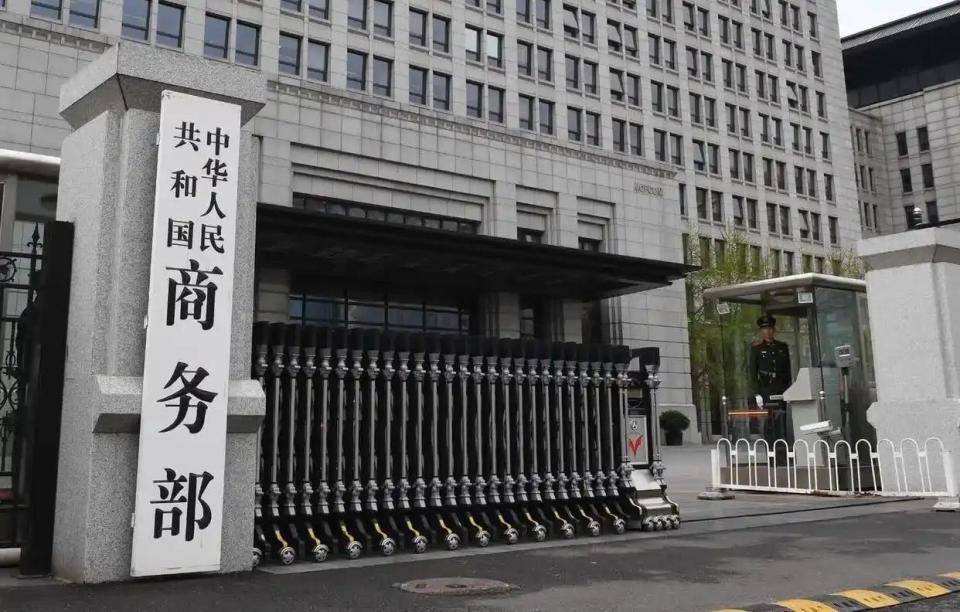
中国商务部通告全球:中美新一轮谈判将于10月24至27日在吉隆坡举行,引发全球高度关注
Sou Hu Cai Jing· 2025-10-23 10:44
Group 1 - The upcoming US-China trade talks from October 24 to 27 in Kuala Lumpur are seen as a significant strategic dialogue between two superpowers, prompting global economic adjustments, including by the International Monetary Fund [1][3] - The negotiations are not merely about tariffs but involve a deeper struggle over "development rights," with the US aiming to prevent China's industrial upgrade and China seeking to transition from a manufacturing powerhouse to an innovation leader [3][5] - The market has reacted to the news, with significant movements in US tech stocks, European automotive stocks, and Southeast Asian semiconductor sectors, indicating the high stakes involved in the negotiations [3][5] Group 2 - The high-level delegation led by Vice Premier He Lifeng signals China's willingness to negotiate seriously while maintaining a firm stance on key issues [5][6] - China's confidence in negotiations stems from advancements in core technology, a strong position in global supply chains, and a vast domestic market that serves as leverage in discussions [6][8] - Key points of focus during the talks include potential tariff reductions, easing restrictions in the high-tech sector, and finding common ground in renewable energy and financial services [8][9][10] Group 3 - The global implications of the talks are significant, with Southeast Asian countries, European companies, and developing nations closely monitoring the outcomes, as they are all affected by the US-China relationship [12][14] - The ongoing US-China competition is characterized as a long-term issue, with both sides needing to navigate their core interests while considering the potential for cooperation amidst rivalry [14][16] - The negotiations are framed as a historical moment, with the potential to reshape global economic dynamics and the future of international relations [16]