
能源转型

Search documents
沙特阿美CEO:全球正向传统能源回摆
Zhong Guo Hua Gong Bao· 2025-10-20 05:33
中化新网讯 近日,沙特阿美首席执行官阿明·纳赛尔在伦敦举行的能源情报论坛上指出,能源转型未能 兑现,当前正向传统能源回摆。 纳赛尔表示,首先,替代能源实际增加而非取代了油气消费;其次,所有主流预测机构都在修正情景预 测,石油和天然气在未来数十年仍将占据主导地位,他期待长期油气投资前景向好转变;再次,随着各 国政要开始承认能源转型理论与现实的巨大落差,政策层面的立场转变正在加速。纳赛尔同时披露数 据:过去十年全球能源需求日均增长达4000万桶油当量,其中66%由石油、天然气和煤炭满足。尽管全 球已在风电、光伏等替代能源领域投入约11万亿美元,但截至目前,全球一次能源总消费量折合3.4亿 桶油当量/日,其中80%仍来自化石燃料。"这根本不是化石燃料的逐步淘汰,甚至连逐步减少都谈不 上。"纳赛尔称。数据显示,即便在多国实施减煤政策背景下,煤炭需求仍在持续攀升。纳赛尔还就AI 驱动的用电需求激增发出预警:"到2030年,全球数据中心耗电量可能达到电动汽车电池组总耗电量的4 倍。" 会上,纳赛尔还表示,沙特阿美可维持一年1200万桶/日的原油产量,且无需额外成本。他预测今年全 球石油需求将增加110万至130万桶/日, ...
风能北京宣言2.0倡议:中国“十五五”期间风电年新增装机容量不低于1.2亿千瓦
Zheng Quan Shi Bao Wang· 2025-10-20 04:43
Core Viewpoint - The "Beijing Wind Energy Declaration 2.0" emphasizes the importance of wind energy in achieving climate goals and energy security, highlighting the potential for significant wind power development in China and globally [1][2]. Summary by Sections Wind Energy Development Potential - China has abundant wind energy resources, with over 75 billion kilowatts of economically viable onshore wind energy in the "Three North" regions and over 27 billion kilowatts of offshore wind energy within 300 kilometers, indicating a strong potential for large-scale commercial development [1][3]. Economic and Market Competitiveness - Wind energy is recognized as the most competitive power source, essential for energy transition and climate goal achievement, with a long industrial chain that can stimulate upstream and downstream industries [2][3]. Policy and Planning Initiatives - The declaration calls for the establishment of industry plans aligned with climate goals, aiming for a cumulative wind power capacity of 1.3 billion kilowatts by 2030 and 2 billion kilowatts by 2035 in China, with annual new installations of at least 12 million kilowatts during the 14th Five-Year Plan [3][4]. Innovation and Technology Development - Emphasis is placed on enhancing the innovation ecosystem through collaboration among government, industry, academia, and research institutions, focusing on key technologies and accelerating the transformation of research outcomes into practical applications [4][5]. Integrated Development and International Cooperation - The declaration advocates for integrated development of wind energy with other sectors, promoting policies for green hydrogen and zero-carbon parks, while also stressing the need for international cooperation to eliminate trade barriers and foster a resilient global supply chain [5].
铜,不够用了
3 6 Ke· 2025-10-20 00:16
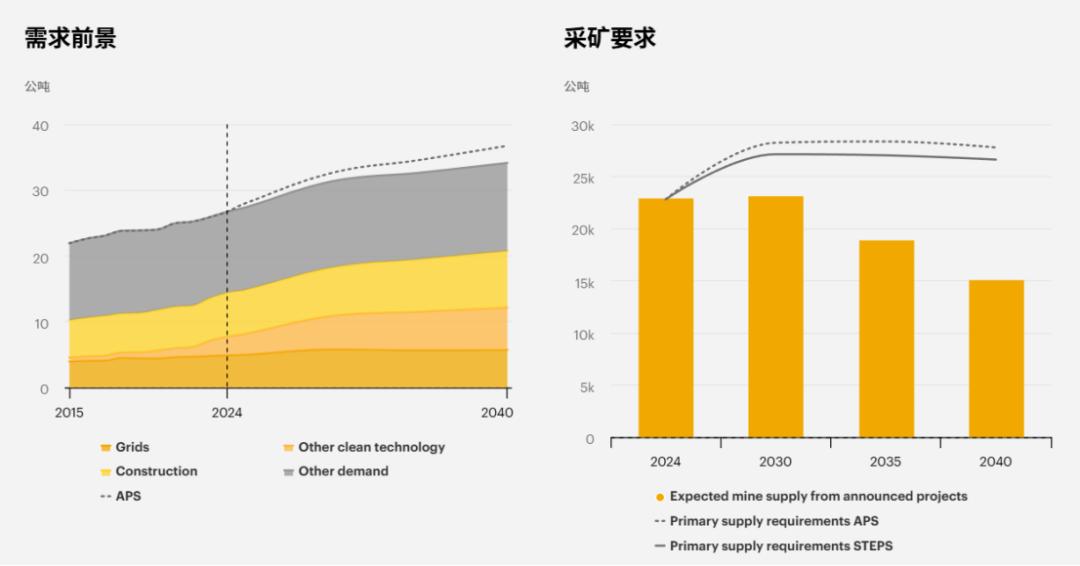
Core Insights - Copper is becoming an essential resource in the modern semiconductor industry, particularly in the context of the global AI computing power race and the energy transition [1][3] - The demand for copper is expected to surge due to its critical role in various applications, including semiconductor manufacturing and green energy technologies [9][10] - The global copper supply chain faces significant challenges, including production difficulties, transportation risks, and climate change impacts, leading to a potential systemic shortage by the 2030s [12][15][16] Group 1: Copper's Role in Semiconductor Industry - Copper is primarily used for manufacturing interconnect lines in semiconductors, acting as the "vascular system" of chips to ensure efficient electronic signal flow [4][8] - The unique physical properties of copper, such as lower resistivity and higher thermal stability compared to aluminum, make it irreplaceable in high-performance chips [5][6] - The adoption of the "Damascene Process" has enabled the large-scale application of copper in semiconductor manufacturing, overcoming previous limitations [6][7] Group 2: Demand Drivers - The demand for copper is being driven by the explosive growth in AI computing and the renewable energy sector, fundamentally changing the demand landscape [9] - For instance, the NVIDIA H100 chip consumes copper at a rate 100 times higher than traditional electronic devices, highlighting the increasing copper requirements in advanced technology [10][11] - Electric vehicles (EVs) are also contributing significantly to copper demand, with varying copper usage across different vehicle types [10][11] Group 3: Supply Challenges - The global copper supply is facing a long-term imbalance due to the slow pace of new mine development, with only 12 large copper mines under construction expected to add 3 million tons by 2030, while demand is projected to increase by 8 million tons [13] - Geographical disparities in copper resources and processing capabilities create vulnerabilities in the supply chain, with South America holding a significant portion of the world's copper reserves [14] - Climate change poses a major risk to copper supply, particularly in water-scarce regions where mining operations are heavily reliant on water resources [15] Group 4: Geopolitical Factors - Recent geopolitical developments, such as the proposed 50% tariff on imported copper by the U.S., are likely to disrupt global copper trade dynamics [16] - Countries are increasingly adopting resource nationalism and export restrictions, further complicating the global copper supply landscape [16]


【环球财经】南非政府拟投资1200多亿美元推进能源转型
Xin Hua She· 2025-10-19 22:25
Core Insights - The South African government plans to invest 2.2 trillion rand (approximately 126.7 billion USD) to advance energy transition and address long-standing electricity supply issues, aiming to stimulate economic growth [1] Investment and Energy Transition - The investment is part of the 2025 Integrated Resource Plan approved by the South African cabinet, which aims to significantly increase the share of renewable energy, natural gas, and nuclear power in the energy mix by 2039 [1] - By 2039, coal's share in electricity generation is expected to decrease from 58% to 27%, while wind energy will rise from 8% to 24%, solar photovoltaic from 10% to 18%, and nuclear energy from approximately 2% to 5% [1] - For the first time, natural gas generation will be introduced, contributing 11% to the energy mix [1] Economic Implications - Stable electricity supply is deemed crucial for South Africa to overcome power outages and revitalize the economy, with the minister emphasizing that without electricity, economic growth is unattainable [1] - The provision of reliable and reasonably priced electricity is essential for attracting businesses to South Africa [1]
多地零碳园区建设提速 中小企业探索破解高成本难题
Zhong Guo Zheng Quan Bao· 2025-10-19 20:13
Core Insights - The construction of zero-carbon parks is gaining momentum across various regions, driven by policy support and market demand, becoming a crucial tool for industrial green transformation [2][3] - The transition of energy structure in zero-carbon parks faces multiple challenges, including resource endowment differences and varying energy management levels among enterprises [1][4] - "Smart" solutions are identified as a key pathway to overcome the challenges in energy structure transformation within zero-carbon parks [1][5] Policy and Market Drivers - The National Development and Reform Commission, Ministry of Industry and Information Technology, and National Energy Administration issued a notice in July to accelerate the transition of energy structures in parks, outlining eight key tasks [3] - Zero-carbon parks can receive funding support of 20% of the approved total investment under the central budget management measures for energy conservation and carbon reduction [3] - Local governments are setting ambitious targets for zero-carbon park construction, such as Sichuan aiming for 20 near-zero carbon parks by 2025 and Shandong targeting around 15 provincial-level zero-carbon parks by 2027 [3] Economic Benefits - The construction of zero-carbon parks is expected to reduce operational costs for enterprises, with solar power prices in certain parks being significantly lower than industrial electricity prices [3][4] - The integration of a traceable green power system in zero-carbon parks helps reduce product carbon footprints, aiding small and medium-sized enterprises in meeting international green trade barriers [3][4] Energy Structure Transformation - The core evaluation metric for zero-carbon parks is "unit energy consumption carbon emissions," with specific targets set for different energy consumption levels [4] - Current national average carbon emissions per unit energy consumption in parks are around 2.1 tons per ton of standard coal, indicating a need for a 90% reduction to achieve zero-carbon status [4] Pathways for Emission Reduction - Three main pathways for reducing carbon emissions in parks include increasing renewable energy supply, enhancing energy efficiency on the consumption side, and establishing resource recycling systems [5][6] - The establishment of zero-carbon parks is seen as a critical step in transitioning coal-dependent regions to industrial decarbonization models [3][6] Smart Management and Digitalization - The management capabilities of energy systems are becoming increasingly important for the construction of zero-carbon parks, with a focus on enhancing energy management levels [7] - The application of AI and digital technologies is emerging as a key support for zero-carbon parks, enabling efficient energy dispatch and management [8] - Digital management platforms are being developed to facilitate precise management of energy consumption and carbon emissions within parks [8]



全球资产定价将改变?比特币暴涨破9.7万,美元暴跌创最大跌幅
Sou Hu Cai Jing· 2025-10-19 17:03
Group 1: Market Overview - In 2025, the global financial market is experiencing a significant asset value divergence, with Bitcoin, gold, crude oil, and the US dollar showing contrasting performances, reflecting different economic paradigms [1] - Bitcoin has surged by 158.9% over the past year, reaching a historical high of $97,050, indicating its transition from a speculative asset to a potential "hard currency" [1] - In contrast, crude oil prices have declined to around $50 per barrel, highlighting a pessimistic market sentiment and the impact of global energy transition on traditional fossil fuels [1] Group 2: Asset Pricing Dynamics - The traditional dollar-centric asset pricing model is being challenged by the rise of digital assets like Bitcoin, which is redefining the concept of value [3][5] - Bitcoin's purchasing power has appreciated by 42% against a basket of goods over the past year, positioning it as a potential competitor to gold as a safe-haven asset [5] - Financial institutions are adapting their asset valuation models to incorporate new dimensions such as the purchasing power and decentralized nature of digital assets [5] Group 3: Economic Factors Influencing Asset Performance - The US government's fiscal deficit reached $5.7 trillion in Q2 2025, accounting for 16% of GDP, contributing to a decline in confidence in the US dollar [7] - The personal savings rate has dropped from 33.7% during the pandemic to 17.8%, exacerbating the "double deficit" situation and further weakening the dollar [7] - In contrast, gold has gained strength as central banks collectively increase their reserves, with gold's share in global foreign exchange reserves rising by 8.4 percentage points over the past decade [7][9] Group 4: Oil Market Dynamics - The decline in crude oil prices is driven by both supply and demand pressures, with OPEC+ increasing production and a shift towards electric vehicles reducing demand for traditional fuels [9][10] - Countries are beginning to reduce their reliance on oil imports, adding further downward pressure on oil prices and highlighting the divergence between oil and other assets [10] Group 5: Changing Asset Relationships - The traditional negative correlation between the dollar and oil prices has broken down, with the dollar index falling 11% while oil prices also declined [12] - Bitcoin has shown a strong negative correlation with the dollar, with a 1% drop in the dollar index correlating to an average 3.2% increase in Bitcoin prices [14] - The interaction between assets is becoming more complex, with discussions among OPEC members about pricing oil in Bitcoin, indicating a shift away from the dollar-based pricing system [14] Group 6: Future Financial Landscape - The global oil market is expected to reach a supply and demand peak by 2030, with a gradual decline in oil prices becoming the new norm [16] - The diversification of the monetary system is evident, with initiatives like the EU's dual currency settlement and the expansion of China's digital yuan [16] - The simultaneous rise of gold and Bitcoin reflects a market shift towards multi-faceted value storage methods, indicating a growing distrust in a single currency system [16][18]

ETF市场扫描与策略跟踪:内地黄金ETF合计规模突破2000亿元
Western Securities· 2025-10-19 12:48
Global and A-share Market Overview - The A-share market experienced an overall decline last week, with the Sci-Tech 50 index dropping the most at 6.16% [1][10] - The Hong Kong stock market also saw a decrease, with the Hang Seng Index falling by 3.97% [1][10] - In the US market, the Dow Jones Industrial Average increased by 1.56%, while the S&P 500 and Nasdaq indices rose by 1.70% and 2.14%, respectively [1][10] ETF New Issuance Statistics - Five new stock ETFs were reported in the A-share market last week, and three new stock ETFs were established [1][15] - In the US market, 11 equity ETFs were newly established, with 9 being actively managed ETFs [1][22] Fund Flow in A-share Market - The top 10 net inflows in A-share ETFs were primarily in the financial sector, with the Bank ETF seeing a net inflow of 52.77 billion yuan [2][24] - The top 10 net outflows were dominated by the CSI A500 ETF, which experienced a net outflow of 30.20 billion yuan [2][25] - Among broad-based ETFs, the CSI 200 index saw a net inflow of 14.44 billion yuan, while the CSI A500 index had a net outflow of 86.02 billion yuan [2][30] Fund Flow in US Market - In the US market, energy transition theme ETFs had the highest net inflow, while financial technology theme ETFs saw the largest net outflow [3][23] - The total net outflow from ETFs investing in A-shares and Hong Kong stocks amounted to 356 million USD [3][23] ETF Strategy Performance - The performance of the diffusion indicator + RRG ETF rotation strategy yielded a return of -5.37%, underperforming the CSI Equal Weight Index and the CSI 300 Index by 2.87% and 3.14%, respectively [4][29] - The 50% base + intraday momentum strategy showed varying returns across different ETFs, with the Shanghai 50 ETF yielding -0.34% [4][29]
英国发布全国清洁能源就业增长计划
Zhong Guo Xin Wen Wang· 2025-10-19 10:30
英国发布全国清洁能源就业增长计划 中新社伦敦10月19日电 (记者 欧阳开宇)英国政府19日发布全国清洁能源就业增长计划,明确到2030年 该国清洁能源领域将新增40万个就业岗位,行业总就业人数预计增至86万。 英国政府称,这份计划聚焦技能培训、岗位质量保障与区域均衡发展,旨在借能源转型之力重塑工业就 业格局。 计划显示,31类职业为当前清洁能源领域急需岗位,其中水管工、电工、焊工需求最为旺盛,相关岗位 数量预计实现翻倍甚至三倍增长。清洁能源岗位薪资优势显著,入门级岗位薪资较其他行业同岗位高 23%,风电、核电等领域平均年薪超5万英镑(约47万元人民币)。 为培育合格劳动力,英国将新建5所清洁能源技术学院。同时,英国还将投入2000万英镑(约1.9亿元人 民币)帮助油气行业工人转型,推广"能源技能护照",方便其进入海上风电、核电等领域。 区域布局上,苏格兰和英格兰东部将成为最大受益地区,到2030年两地清洁能源直接就业人数均有望达 6万;英格兰西北部、东南部等地也将新增数万岗位,相关岗位主要分布在沿海及传统工业社区。英国 能源大臣米利班德表示,这份计划将让年轻人无需离开家乡就能找到高薪稳定工作,助力实现全国经 ...
外媒:电动汽车供应链数据公司Benchmark Mineral 启动裁员
Huan Qiu Wang Zi Xun· 2025-10-19 03:43
来源:环球网 【环球网科技综合报道】10月19日消息,据路透社援引知情人士透露,总部位于英国、专注于能源转型 矿物定价与数据研究的Benchmark Mineral Intelligence公司,近几周已裁撤至少五分之一岗位。 该公司成立已有11年,过去几年随着市场对电动汽车及其他清洁能源所需矿物——如锂、铜等——的关 注升温,业务迅速扩张。 三位消息人士称,本次裁员人数至少40人,该公司目前员工总数为200人。其中两位指出,受影响的部 门涵盖可持续发展、销售及市场营销。 该公司首席执行官安德鲁·米勒在回复路透社的电子邮件中表示,公司"近期已完成一轮重组",但未就 裁员事宜进一步置评。他补充道:"此次调整是我们持续提升Benchmark产品品质与交付能力的一部 分,重点在于加大对技术和人工智能方向的投入。" 一位消息人士指出,矿物价格疲软——特别是电池金属锂的价格下滑——对Benchmark的业务造成拖 累。该公司的客户群涵盖矿业企业、电池制造商及政府机构。 由于电动汽车普及速度不及预期,锂价自2022年见顶以来已大幅回落。 Benchmark在上周发布于官网的研究报告中预测,今年第四季度美国电动汽车销量将出 ...

国际能源变革论坛下周举办 为能源转型贡献“苏州力量”
Su Zhou Ri Bao· 2025-10-19 00:23
Group 1 - The International Energy Transformation Forum will be held in Suzhou from October 23 to 25, marking its tenth anniversary, alongside the 2025 Suzhou International New Energy Expo [1][2] - GCL Group is focusing on core areas such as silicon, lithium, carbon materials, and new photovoltaic technologies to break foreign monopolies and enhance China's new energy industry [2] - GCL Group's LNG plant in Ethiopia has officially commenced production, marking a significant step in its overseas market expansion and contributing to energy structure optimization in Ethiopia [2] Group 2 - Suzhou's energy companies are innovating across the entire energy production, transmission, and consumption chain, leading to the emergence of new energy business models and development opportunities [3] - GoodWe's Smart Energy Building has achieved a comprehensive energy-saving rate of over 52% and utilizes 20% of its electricity from self-generated green energy, showcasing advancements in renewable energy utilization [3] - The International Energy Transformation Forum has produced significant outcomes such as the "Suzhou Declaration" and the establishment of the "International Energy Transformation Alliance" to promote energy transition and green development [3][4] Group 3 - Suzhou's companies like GCL, Canadian Solar, GoodWe, and CITIC are making global contributions to energy transition, enhancing the city's role as a key player in international energy transformation [4]