
绿色经济

Search documents
云南临沧:协同“三大经济” 推动兴边富民
Ren Min Ri Bao· 2025-12-12 05:37
Core Viewpoint - During the "14th Five-Year Plan" period, Lincang City in Yunnan Province is committed to the "3815" strategic development goals, promoting the coordinated development of resource economy, park economy, and port economy, achieving an economic total exceeding 100 billion yuan, and enhancing the quality of life for its diverse population [1] Group 1: Party Leadership and Development - Lincang integrates party leadership into all aspects of economic and social development, advancing the construction of a border party building corridor [2] - The belief among various ethnic groups in the party's guidance has strengthened, promoting a culture of gratitude and unity [2] - Mechanisms for reporting work by leading cadres have been established, enhancing the entrepreneurial spirit among party members [2] Group 2: Innovation and Industrial Upgrade - Lincang is advancing the construction of a national sustainable development agenda innovation demonstration zone, with annual R&D investment growth averaging 17% from 2021 to 2024 [3] - The total output value of the highland characteristic agriculture industry chain has surpassed 200 billion yuan, with the "Lincang Tea" brand projected to exceed 38 billion yuan by 2025 [3] - The nut industry is expected to reach a value of 11.4 billion yuan by 2025, with farmers' annual income increasing by 3,000 yuan [3] - The tourism industry is growing, with an annual increase in total spending exceeding 17% [3] Group 3: Expansion and Infrastructure Development - In 2021, Lincang opened a new international passage through the Qing Shui River port, completing over 49,000 TEUs of container transport [4] - Transportation infrastructure is being upgraded, with the Kunming-Lincang railway achieving full-speed domestic operation and highway mileage reaching 468 kilometers [4] - The Qing Shui River port has undergone smart upgrades, reducing customs clearance time to 3.5 hours [4] Group 4: Ecological Protection and Public Welfare - Lincang is committed to ecological priority and green development, having created a national ecological civilization demonstration zone [5] - The city has designated 8.86 million acres for ecological protection and has achieved a forest coverage rate of 57.8% [5] - Public budget expenditures for livelihood areas exceed 80%, with per capita disposable income projected to reach 25,167 yuan in 2024 [5] Group 5: Governance and Community Building - Lincang has achieved full coverage in creating a national model for ethnic unity and progress [6] - The city has built 44 border happiness villages and established a comprehensive governance system [6] - A robust border defense mechanism has been implemented along nearly 300 kilometers of the border [6]
首提“新的认识”!中央经济工作会议定调,明年经济工作怎么做?
Mei Ri Jing Ji Xin Wen· 2025-12-12 03:46
12月10日至11日,中央经济工作会议在北京举行。 对比近十年来中央经济工作会议相关表述,《每日经济新闻》记者(以下简称"每经记者")发现,与以往强调规律性认识不同,本次会议首次提出:"通 过实践,我们对做好新形势下经济工作又有了新的认识和体会:必须充分挖掘经济潜能,必须坚持政策支持和改革创新并举,必须做到既'放得活'又'管得 好',必须坚持投资于物和投资于人紧密结合,必须以苦练内功来应对外部挑战。" 在具体行文中也有不少变化。例如:货币政策方面,从去年的"发挥好货币政策工具总量和结构双重功能",调整为"把促进经济稳定增长、物价合理回升 作为货币政策的重要考量";在消费能力方面,从去年的"推动中低收入群体增收减负",转变为明确提出要"制定实施城乡居民增收计划";教育领域,新 增强调"增加普通高中学位供给";房地产领域,在控增量、去库存基础上,强调"优供给,鼓励收购存量商品房重点用于保障性住房等";服务业方面,强 调"制定服务业扩能提质行动方案"。 | | 要继续实施更加积极的财 | 要实施更加积极的财政政 | | --- | --- | --- | | 则才 | 政政策。保持必要的财政 | 策。提高财政赤字率 ...


首提“新的认识”!中央经济工作会议定调 明年经济工作怎么走?
Mei Ri Jing Ji Xin Wen· 2025-12-11 17:32
12月10日至11日,中央经济工作会议在北京举行。 | IEV | かすヽ 原力心 M 天 1 × 山 | MAX ATT 次 / / x | | --- | --- | --- | | EX | 总量,加强财政科学管理, | 给力。 | | 策 | 优化财政支出结构,规范 | | | | 税收优惠、财政补贴政策。 | | | | 要继续实施适度宽松的货 | 要实施适度宽松的货币政 | | | 币政策。把促进经济稳定 | 策。发挥好货币政策工具 | | | 增长、物价合理回升作为 | 总量和结构双重功能,适 | | | 货币政策的重要考量,灵 | 时降准降息,保持流动性 | | ਜ | 活高效运用降准降息等多 | 充裕,使社会融资规模、货 | | 政 | 种政策工具,保持流动性 | 币供应量增长同经济增 | | 策 | 充裕,畅通货币政策传导 | 长、价格总水平预期目标 | | | 机制,引导金融机构加力 | 相匹配。 | | | 支持扩大内需、科技创新、 | | | | 中小微企业等重点领域。 | | | | 坚持内需主导,建设强大 | 实施提振消费专项行动, | | 消 | 国内市场。深入实施提振 | 推 ...

中国是绿色经济扩张主要推动力
Zhong Guo Jing Ji Wang· 2025-12-10 22:41
报告指出,中国是全球绿色经济扩张的主要推动力。在绿色经济的几乎所有关键维度上,包括投资、创 新、部署与产业链控制,中国都在世界范围内处于领先地位,中国清洁能源投资从2019年的3720亿美元 增加到2024年的6590亿美元,年复合增长12%,2024年投资规模比第二名欧洲高60%。中国尤其正在引 领"电力经济",绿色电气化程度快速提升。在发电方面,2020年以来,中国太阳能发电装机量增加了4 倍,风能新增装机也实现翻倍增长,全球风能与太阳能新增装机容量中有60%以上由中国贡献。在用电 方面,中国建筑部门终端能源35%为电力,工业部门这一比例为30%,中国还是全球最大的电动汽车市 场,有1200万个充电桩。2025年中国碳排放首次下降,同时经济活动仍然增长。报告认为,中国的领先 不是偶然,而是基于二十年的产业政策积累,战略性新兴产业发展规划、中国制造2025、"双碳"目 标、"十五五"规划等政策,极大推动了公共投资、绿色金融和碳交易体系的发展。中国在绿色经济发展 上的成就和动能,标志着全球绿色能源领导权正从"西方"转移到"东方"。(经济日报驻日内瓦记者 梁 桐) 报告指出,全球绿色经济在2024年已超过5万亿 ...
世界经济论坛报告称——中国是绿色经济扩张主要推动力
Jing Ji Ri Bao· 2025-12-10 22:39
Core Insights - The green economy has reached a market size of over $5 trillion in 2024 and is expected to grow to over $7 trillion by 2030, making it one of the most dynamic growth sectors globally, second only to the technology industry [2] - The report highlights that the green economy is becoming a key driver of global economic growth, with significant opportunities for both businesses and governments [3] Market Segmentation - The emissions reduction sector, which includes renewable energy, energy infrastructure, storage, electric vehicles, and carbon capture technologies, has a market size of $4.6 trillion [2] - The adaptation and resilience sector, which encompasses water management, climate-resilient infrastructure, and agricultural resilience technologies, is valued at $1.1 trillion but is considered severely underestimated [2] - The report emphasizes that the growth in the adaptation and resilience market is driven by increasing extreme weather events and rising investment in disaster resilience [2] Investment and Growth Opportunities - The report indicates that the green economy is characterized by industrialization and scalability, with opportunities for faster growth, higher valuations, and lower capital costs for businesses [3] - It predicts that future growth in the green economy will be driven by expanding demand, decreasing costs, and supportive policies, with mature technologies continuing to expand and emerging technologies becoming the next growth point [3] China's Role in the Green Economy - China is identified as a major driver of global green economy expansion, leading in investment, innovation, and deployment across key dimensions [4] - China's clean energy investment is projected to increase from $372 billion in 2019 to $659 billion in 2024, with a compound annual growth rate of 12% [4] - The report notes that China has significantly increased its solar and wind power capacity, contributing over 60% of the global new installations in these sectors [4] - China's achievements in the green economy are attributed to two decades of strategic industrial policy, which has facilitated public investment, green finance, and carbon trading systems [4]
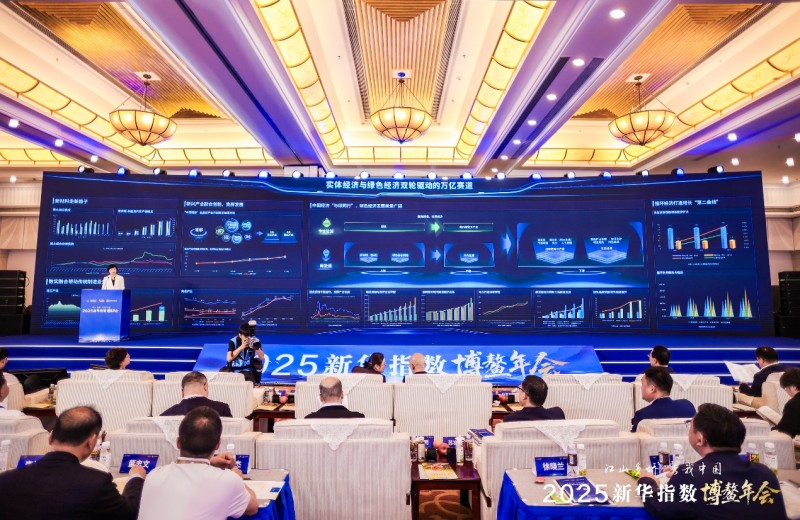
新华指数・博鳌发布|展望“十五五”新机遇
Xin Hua Cai Jing· 2025-12-10 09:33
Core Insights - The article emphasizes the importance of indices as tools for understanding trends and unlocking opportunities in the context of China's economic development and industrial transformation [2][3][10]. Economic Growth and Industrial Development - China's manufacturing investment continues to grow, contributing to the establishment of a modern industrial system, with equipment manufacturing playing a crucial role [2][3]. - The "15th Five-Year Plan" prioritizes building a modern industrial system and strengthening the real economy, marking a significant strategic direction for China's development [3]. - The green economy is increasingly prominent, with one-third of electricity in China now sourced from renewable energy, supporting emerging industries like artificial intelligence [3]. Emerging Industries and Innovation - China has become the largest producer and user of new materials, with rare earth materials expanding their applications across various sectors, indicating a growing market demand [4]. - The city of Jinchang is developing a robust industrial cluster around nickel and cobalt refining, focusing on high-quality development in new materials and digital economy sectors [6]. Consumer Trends and New Opportunities - The article identifies five emerging consumer sectors: cultural consumption, health consumption, silver economy, beauty economy, and pet economy, highlighting a shift towards "people-centered" economic growth [7][8][9]. - The cultural industry is experiencing rapid growth, with digital cultural products significantly contributing to GDP and driving economic expansion [7]. - Health consumption trends are transforming traditional agricultural products and herbal medicines into popular market items, reflecting changing consumer preferences [8]. Market Dynamics and Infrastructure - The establishment of a unified national market is essential for high-quality development, with indices serving as indicators for market operations and price stability [10][11]. - The introduction of industry standards for agricultural price indices marks a shift towards standardized practices, enhancing the quality of agricultural development [11]. Global Engagement and Brand Value - Indices are positioned as digital tools for promoting regional brand value, linking cultural heritage with modern economic opportunities [13]. - The article highlights the role of indices in enhancing the global presence of Chinese cities and industries, facilitating international collaboration and understanding [14].
2026巴博会跨境出海与碳中和高峰论坛在京举办
Huan Qiu Wang· 2025-12-10 03:07
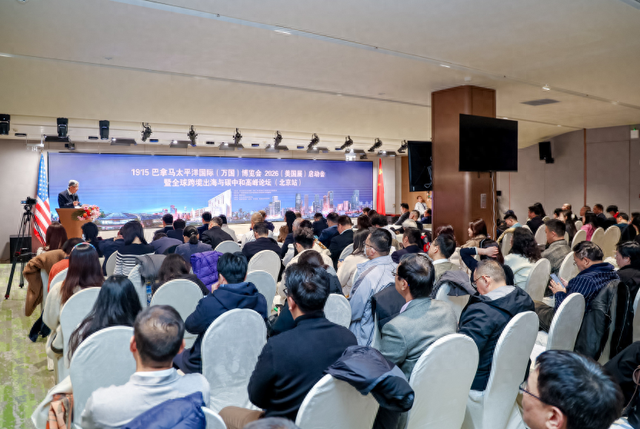
来源:环球网 12月7日,由1915巴拿马太平洋国际(万国)博览会组委会、全球经济合作发展促进会主办的"1915巴拿 马太平洋国际博览会2026(美国展)启动会暨全球跨境出海与碳中和高峰论坛"(北京站)在北京梧桐 会客厅举行。 活动汇聚政界、商界、国际机构、学术界及媒体领域300多位嘉宾参加,持续近五小时。论坛以"中国企 业出海新趋势与绿色经济新路径"为核心,为民营企业国际化与绿色发展出谋划策。 活动现场 大会开场播放1915巴博会历史影像后,活动由巴拿马太平洋万国博览会联席主席兼决策委员会执行主 席、中美投资博览会共同主席、美国黄金湾投资集团代表申威主持。他以"跨越世纪的传承与创新"为主 题,阐述百年巴博会意义并介绍了赴美出海一站式解决方案,多维度服务国内中小企业出海战略。 国务院发展研究中心原副主任、中国企业评价协会会长侯云春,从政策研究视角解读国际产业链重构背 景下,中国企业出海面临的新变量、新挑战与政策机遇,提出"新全球化时代是制度、科技、价值观的 综合竞争"的核心观点。 北京国际商贸促进会会长谢京生,强调商协会在企业全球化中的"桥梁作用",指出中国企业在北美市场 需要坚守合规化与品牌化发展路径。协助 ...
中国—东盟自贸区3.0版是区域经济一体化的重要里程碑(国际论坛)
Ren Min Ri Bao· 2025-12-09 22:32
中国—东盟自贸区3.0版是区域经济一体化的重要里程碑。它不仅巩固了东盟和中国作为全球制造与消 费重要引擎的地位,更以开放、包容、绿色、数字化的制度供给,为全球南方合作注入新动能 在全球产业链加速重构、保护主义抬头的背景下,中国—东盟自由贸易区3.0版升级议定书的正式签 署,被视为近年来最具系统性影响力的区域经贸升级安排。东盟与中国着力在数字经济、绿色转型与供 应链韧性等领域打造更高水平、更高质量的开放型区域经济共同体,为全球南方共同发展提供新范式。 中国—东盟自贸区3.0版展现出中国主动对接国际高标准经贸规则、以制度型开放推动南南合作的积极 姿态,为东盟提供了兼顾多元平衡与战略自主的合作平台,助力其在动荡国际形势下稳住发展主线。更 为重要的是,自贸区3.0版新增数字经济和绿色经济合作等内容,为世界贸易组织、联合国贸易和发展 会议等多边框架下的相关议题讨论提供可借鉴的区域样本。 自中国—东盟自贸区全面建成以来,东盟与中国双边贸易额从2010年的不到3000亿美元增长至2024年的 近1万亿美元,区域合作从"通关便利、要素流动"迈向"制度协同、规则塑形"。自贸区3.0版的指向鲜明 ——推动贸易与投资制度现代化,夯 ...
担当时代使命 共创未来新篇——展望“十五五”新机遇
Zhong Guo Fa Zhan Wang· 2025-12-09 17:50
Group 1 - The core viewpoint emphasizes the importance of indices in understanding trends and unlocking opportunities in China's economy, highlighting the steady growth of manufacturing investment and the construction of a modern industrial system during the "14th Five-Year Plan" period [1] - The "China Innovation Index" continues to improve, reflecting the robust vitality of new economic drivers in China [1] - The report from the Xinhua Index Research Institute discusses the acceleration of the opening process in emerging markets, with China leveraging its large market and industrial capabilities to inject lasting momentum into regional prosperity [1] Group 2 - The green economy is showing a clear trend towards high-quality development, with one-third of the country's electricity now generated from renewable sources, supporting emerging industries like artificial intelligence [2] - Inner Mongolia's modern energy economy development index is projected to grow by 24.21% year-on-year in 2024, indicating strong growth in the renewable energy sector [2] Group 3 - China has become the world's largest producer and user of new materials, with rare earth materials expanding their applications across various industries, including robotics and low-altitude economy [3] - The price index for rare earth materials is expected to show moderate growth by the end of 2025, indicating a positive market outlook [3] Group 4 - The "people-centered" approach is driving industrial evolution, with new consumption trends focusing on cultural, health, and aging economies [4] - The digital cultural industry is projected to account for nearly 5% of GDP by 2024, becoming a significant engine for economic growth [4] Group 5 - The silver economy is rapidly expanding, with an average annual growth rate of 15.27% since 2022, indicating significant opportunities in this sector [5] - The pet economy is also growing, with the global pet food market expected to reach $146.73 billion in 2024, and China's market ranking third globally [5] Group 6 - The "she economy" is projected to reach a consumption scale of approximately 10 trillion yuan in 2024, with over 8.3 million related enterprises, highlighting the economic contributions of women [6] Group 7 - The establishment of a unified national market is crucial for high-quality development, with data indices playing a key role in market operations [7] - The potato price index is helping to establish a pricing benchmark for the national market, enhancing regional market influence [7] Group 8 - The release of the first industry standard for the specialty agricultural product price index marks a significant step towards standardized development in this sector [8] Group 9 - Indices serve as digital business cards that enhance the value of regional brands, linking cultural heritage with modern industry [9] - Cities like Yan'an are leveraging their unique cultural identities to strengthen their economic foundations and enhance their global presence [9] Group 10 - The Xinhua Index is deeply integrated into global initiatives, helping to enhance China's international influence and showcase development opportunities [10] - The index acts as a "translator" for China's stories, aiming to resonate globally and promote high-quality development [10]
云南通威荣登“2025云南企业100强”的多项榜单
Xin Lang Cai Jing· 2025-12-09 13:41
一直以来,云南通威始终秉持"追求卓越,奉献社会"的企业精神,紧密围绕国家及云南省发展战略,持续优化产业布局、提升管理效能与核心竞争力,为 客户提供更优质的产品与服务,为员工创造更广阔的发展平台,为助力云南经济社会高质量发展贡献更大力量。 此次荣誉的取得,不仅是对云南通威这一年在复杂经济环境下坚持高质量发展与持续创新的高度认可,更是对通威未来发展的信心所在。作为光伏行业绿 色经济发展的龙头企业,云南通威将肩负使命,深化产业升级,强化创新驱动,加大研发投入,推动光伏产业向高端化、智能化、绿色化迈进,为行业及 区域经济发展贡献更大力量。 12月6日,云南省企业联合会、云南省企业家协会"2025云南企业100强"发布会在昆明召开,云南通威位列"2025云南企业100强"榜单第51位,"2025云南高 新技术企业100强"榜单第21位,"2025云南制造业企业100强"榜单第33位,进一步彰显了云南通威在领域企业的核心竞争力和发展成果。 12月6日,云南省企业联合会、云南省企业家协会"2025云南企业100强"发布会在昆明召开,云南通威位列"2025云南企业100强"榜单第51位,"2025云南高 新技术企业100强" ...
