
产业升级

Search documents
中美金融巅峰对决,谁将笑到最后?
Sou Hu Cai Jing· 2025-09-13 05:02
Group 1 - The core development is the potential interest rate cut by the Federal Reserve in September, as indicated by Chairman Jerome Powell, which aligns with Trump's long-standing pressure on the Fed to lower rates [1][3]. - Trump's consistent calls for rate cuts since initiating the tariff war have created a scenario where he is likely pleased with the Fed's recent signals [3]. - The U.S. economy has been artificially propped up by high interest rates attracting international capital, but this could lead to a significant downturn if rates are lowered, exposing high-debt companies to potential failures [5][6]. Group 2 - The U.S. appears to be attempting to replicate strategies from the 1990s to extract wealth from other nations, particularly through manipulating interest rates to create asset bubbles in emerging markets before capitalizing on the subsequent crashes [6][12]. - China is strategically avoiding the pitfalls of U.S. monetary policy by not engaging in excessive stimulus and instead focusing on sustainable economic practices and technological advancements [9][11]. - The ongoing economic competition between the U.S. and China is framed as a battle of endurance, with the U.S. facing significant debt obligations while China is making strides in key technologies [11][13].


以新型要素改革激活数字经济新动能
Zheng Quan Ri Bao· 2025-09-12 16:20
Core Viewpoint - The State Council has issued a plan for pilot reforms in the market-oriented allocation of factors in certain regions, focusing on innovative allocation methods for both traditional and new factors, such as data and computing power, to drive the digital economy [1] Group 1: New Factor Allocation - The pilot reform aims to explore new allocation methods for traditional factors like land, labor, and capital, as well as new factors such as data, computing power, airspace, and spectrum [1] - The efficient allocation and value release of these new factors are seen as fundamental to upgrading industries and enhancing the digital economy [1] Group 2: Institutional Innovation - The core of the new factor market allocation is the clarification of ownership and circulation rules for new factors [2] - Pilot regions are encouraged to define property rights, value assessment, and revenue distribution for data and computing power, addressing issues of reluctance and fear in circulation [2] - Establishing high-standard, trustworthy trading markets for new factors is essential to break down entry barriers into the industrial system [2] Group 3: Capital Involvement - The introduction and regulation of diverse capital sources are crucial for developing and converting the value of new factors [2] - Regions should guide various capital types, including venture capital and industry funds, to invest in key areas like data cleaning, computing infrastructure, and low-altitude economy [2] - A regulatory framework must be established to prevent disorderly capital expansion and ensure investments align with national strategies and public interests [2] Group 4: Application Scenarios - The ultimate value of new factors is reflected in their ability to empower the real economy [3] - Pilot regions should open up application scenarios in smart cities, intelligent manufacturing, and low-altitude logistics to facilitate the testing and large-scale application of new technologies and business models [3] - Supporting traditional industries in their transformation through new factors is essential for cultivating competitive digital industry clusters [3]
首届“并购嘉年华”在上海举行 发布《激活上海并购交易市场的倡议书》
Zheng Quan Shi Bao Wang· 2025-09-12 12:58
Group 1 - The "2025 M&A Carnival" held in Shanghai focuses on the theme of "Creating Value through Mergers and Acquisitions" and aims to promote a consensus in the industry for the development of a standardized, innovative, and efficient M&A market [1] - The initiative emphasizes six key directions: creating value through M&A, compliance, focusing on technological innovation, promoting healthy competition, cultivating professional talent, and leveraging AI in M&A [1] - The event was attended by nearly 20 government and corporate representatives who released a proposal to activate the Shanghai M&A transaction market [1] Group 2 - The Shanghai Hongqiao International Central Business District is positioned as a hub for resource convergence and a testing ground for national strategies, with ongoing policy incentives boosting the M&A market [2] - The Longjing District is committed to creating a world-class business environment and has developed multiple trillion-yuan industry clusters, emphasizing the role of M&A in economic vitality and industrial upgrading [2] - The district aims to provide comprehensive support for entrepreneurs seeking innovation and value enhancement through M&A [2] Group 3 - The chairman of the Shanghai International M&A Research Center believes that the development of China's M&A market requires both top-down policy support and grassroots participation [3] - The M&A Carnival has created a platform that integrates exhibition, business negotiation, capital connection, and industry networking [3] - Future M&A Carnival events are planned in more cities to empower industrial upgrades and drive high-quality regional economic development [3]
首批20个“滨州场景机会清单”发布
Sou Hu Cai Jing· 2025-09-12 12:27
Core Insights - The "Binzhou Scene Opportunity List" was released, focusing on leveraging local industrial strengths to attract investment and promote project development [1][3] - The city aims to transform its investment strategy from offering incentives to providing opportunities, enhancing the quality and effectiveness of investment attraction [3] Group 1: Investment and Economic Development - The city government has been actively engaged in three major initiatives: investment attraction, project construction, and industrial economy development [3] - The "5210N" advanced manufacturing industry cluster has been established, showcasing the city's unique industrial characteristics [3] - The release of the scene opportunity list aims to clarify available resources and project needs for businesses, linking technological innovation with market demand [3] Group 2: Industry Focus Areas - The scene opportunity list emphasizes key sectors such as high-end aluminum, food processing, aquaculture, low-altitude economy, new-generation information technology, and local specialty industries [3] - The city is leveraging its large-scale "5210N" industry cluster and rich digital application scenarios to drive scene innovation [3]
华北15强城市GDP洗牌:唐山第3,邯郸反超太原,吕梁增速近20%!
Sou Hu Cai Jing· 2025-09-12 04:33
Core Insights - The economic landscape of the North China region is undergoing significant transformation driven by the dual engines of coordinated development in the Beijing-Tianjin-Hebei area and an energy revolution, with the total GDP of the top 15 cities surpassing 7.8 trillion yuan, reflecting a year-on-year growth of 5.6% [1] Group 1: Economic Performance - Tangshan ranks third in North China with a GDP of 420.8 billion yuan, continuing its strong development as an industrial hub [2] - Handan has surpassed the provincial capital of Taiyuan with a GDP of 312.6 billion yuan, challenging the traditional notion that provincial capitals lead regional development [2] - Lüliang has achieved an impressive growth rate of 19.8%, emerging as a significant winner in the energy revolution [2] Group 2: Economic Structure and Growth Rates - The 15 leading cities exhibit a clear three-tiered structure, with Beijing (1.98 trillion yuan) and Tianjin (1.14 trillion yuan) in the first tier, while Tangshan and Shijiazhuang (368.2 billion yuan) are in the second tier [3] - Seven cities have outpaced the national average growth rate, with Lüliang (19.8%), Ordos (18.2%), and Baotou (15.6%) leading the way [3] - Four cities are experiencing growth rates below 4%, highlighting regional disparities [3] Group 3: Industrial Transformation - Tangshan's economic strength is attributed to the upgrade of traditional industries and the cultivation of emerging sectors, with significant projects like the high-end automotive sheet production line and hydrogen metallurgy project contributing to a 22% profit increase in the steel industry [4][6] - Handan's economic resurgence is driven by deep optimization of its industrial structure, with projects like the Great Wall Motors engine project and the "retreat to the park" strategy enhancing product value and boosting manufacturing tax revenue by 18% [9][12] - Lüliang's growth is fueled by a reevaluation of its energy sector, with projects in hydrogen energy and new materials significantly increasing the value added of strategic emerging industries by 67% [13][15] Group 4: Future Outlook - The GDP rankings of the top 15 cities in North China reflect new trends in regional economic development, with Beijing maintaining its lead but experiencing a slowdown in growth to 4.1% [16] - The "Hebei Iron Triangle" formed by Tangshan, Shijiazhuang, and Handan showcases strong potential for coordinated development [16] - The competition among cities is intensifying, with energy cities like Ordos and Baotou achieving rapid growth, while Taiyuan needs to accelerate its industrial transformation to remain competitive [16][19]

知名经济学家林毅夫教授做客福州大学707期嘉锡讲坛
Sou Hu Cai Jing· 2025-09-12 04:33
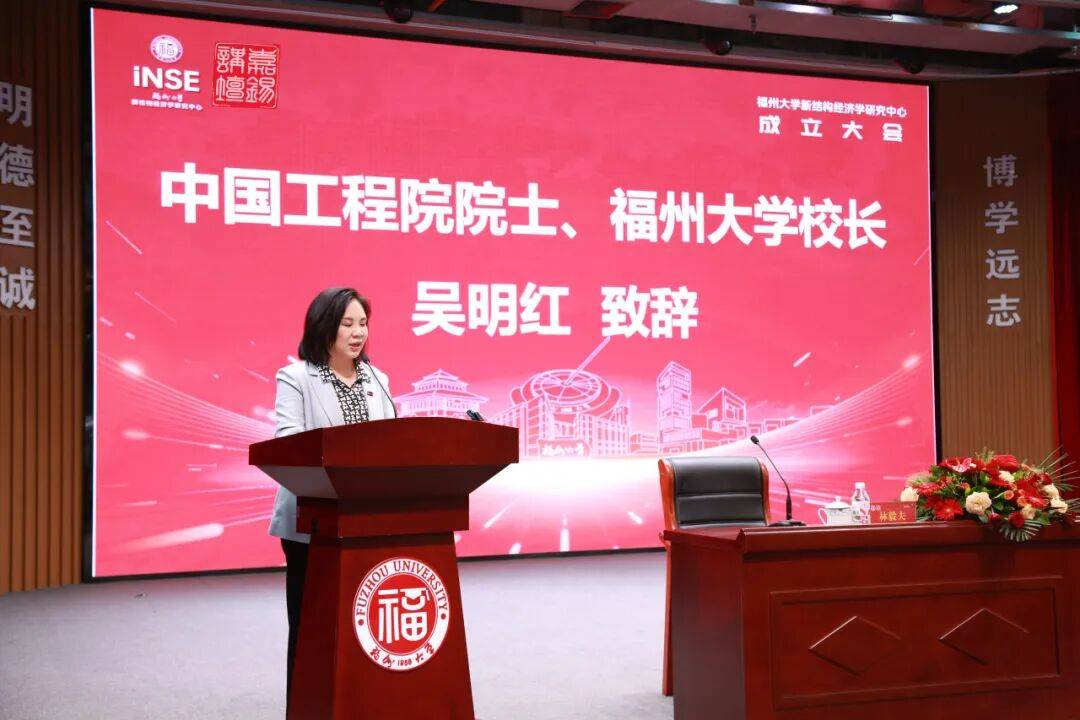
Core Viewpoint - The establishment of the New Structural Economics Research Center at Fuzhou University and the keynote speech by Professor Lin Yifu highlight the need for innovative economic theories that address the profound changes in the global political and economic landscape, particularly for developing countries [1][5]. Group 1: Event Overview - The establishment ceremony of the New Structural Economics Research Center and the 707th Jiaxi Forum took place at Fuzhou University, attended by over 500 participants including government officials, academicians, and students [1]. - The event was co-hosted by Fuzhou University Library, the School of Economics and Management, and the Academic Affairs Office [1]. Group 2: Keynote Insights - Professor Lin Yifu analyzed the deep implications of the "unprecedented changes in a century," emphasizing that traditional Western theories are insufficient for the development practices of developing countries [5]. - He elaborated on the New Structural Economics as a system of independent theoretical innovation, focusing on factor endowment structures and the endogenous nature of economic structures [5]. - Lin stressed the importance of the synergy between "effective markets" and "proactive governments" in promoting high-quality economic development [5]. - He proposed that China should leverage its comparative advantages by combining the latecomer advantages of traditional industries with the innovative opportunities of the digital economy to drive industrial upgrading and high-quality development [5]. Group 3: Academic and Cultural Impact - The Jiaxi Forum provided a valuable opportunity for students and faculty to engage directly with top scholars, enhancing academic perspectives and fostering theoretical confidence and cultural awareness [11]. - The event is seen as significant for promoting campus cultural development and academic discipline growth [11].
鱼米之乡加速转型 湖北农业现代化势头强劲
Xiao Fei Ri Bao Wang· 2025-09-12 03:33
Core Insights - Hubei province is leveraging its agricultural resources to modernize its farming practices, focusing on circulation, branding, and smart farming to enhance productivity and economic growth [1][12]. Group 1: Agricultural Modernization - The "Shouheng City" in Xiaogan has become a major agricultural trading hub, achieving a daily trading volume of 17,000 tons and a transaction value of 150 million yuan [2]. - The establishment of a multi-layered circulation system has attracted over 3,000 leading merchants and more than 1,000 product categories, reducing costs and lowering prices by 10%-20% [2][3]. Group 2: Specialty Products - Suizhou's mushroom industry has transformed from local sales to international exports, with 30% of production going overseas, generating 367 million USD in export revenue [6][7]. - The "Suizhou Mushroom" brand has a public brand value of 20.58 billion yuan, with over 3,000 e-commerce live-streamers contributing to sales exceeding 1 billion yuan [6][7]. Group 3: Dairy Industry Development - The "Yunshang Milk Song" project in Nanzhang County is set to become the largest dairy source in the Yangtze River region, with an expected annual production of 90,000 tons of fresh milk [10][11]. - The project employs smart farming techniques, allowing one worker to manage 70 cows, significantly reducing costs by over 20 million yuan annually [10][11]. Group 4: Economic Impact and Employment - The dairy project is expected to create over 5,000 jobs and generate a total industrial chain output value of 5 billion yuan [11]. - The integration of various agricultural sectors in Hubei is enhancing the overall economic landscape, promoting sustainable development and common prosperity [12].

经济转型期投资指南:A500ETF南方为何成为市场“稳定器”?
Sou Hu Cai Jing· 2025-09-12 03:06
Group 1 - The core viewpoint of the article emphasizes the importance of the CSI A500 Index as a key asset during the economic transformation period, providing investors with a tool to capture new productivity opportunities amidst market volatility [2][3] - The CSI A500 Index is designed to reflect the core assets of the entire market, showcasing a unique compilation logic that selects 500 leading stocks with high market capitalization and liquidity from various industries, ensuring its industry weight structure aligns with the overall market benchmark [3][4] - The index has a high concentration in emerging industries, with approximately 49.35% of its weight in sectors such as electronics, communication, computer, media, machinery, defense, pharmaceuticals, and automotive [3][4] Group 2 - The CSI A500 Index offers better risk diversification due to its balanced industry selection, which helps mitigate the risks associated with single-sector volatility, thus allowing for precise capture of economic transformation benefits [4][5] - Historical performance indicates the long-term viability of the CSI A500 Index, achieving an annualized return of 8.0% over the past 20 years, with a 0.9% annualized excess return compared to the CSI 300 Index [5] - Since 2020, the cumulative excess return of the CSI A500 Index has expanded to 6.8%, with an annualized excess return of 1.3%, demonstrating its characteristic of "falling less in downturns and leading in upturns" [5] Group 3 - The valuation of the A-shares remains attractive, with the CSI A500 Index's current PE at 15 times and PB at 1.5 times, positioning it at the 67th and 23rd percentiles of the past decade, respectively, indicating a relatively low valuation [6] - The improvement in corporate earnings fundamentals supports the index, as the economic and corporate earnings cycles are likely at the bottom and pointing towards recovery [6][7] - Since the launch of the A500 ETF by Southern Fund in October 2024, it has seen a significant inflow of over 200 billion yuan, reflecting market confidence [6][7] Group 4 - Among various products tracking the CSI A500 Index, the A500 ETF by Southern Fund stands out due to its excellent tracking accuracy and refined management [7][8] - The core fund managers of Southern Fund's index team have an average of ten years of experience, covering key research areas such as artificial intelligence, financial analysis, and quantitative technology [7] - The A500 ETF has maintained industry-leading tracking precision and has a low fee structure, with a management fee of only 0.15% and a custody fee of 0.05% [7][8]

芯碁微装“A+H”上市:直写光刻设备“龙头”,整体毛利率高达40%
Zhi Tong Cai Jing· 2025-09-12 02:37
Core Viewpoint - Chip Microelectronics Equipment Co., Ltd. (referred to as "Chip Micro") is set to launch an A+H listing on the Hong Kong Stock Exchange, following its successful listing on the A-share Science and Technology Innovation Board in 2021, with a current market capitalization of nearly 20 billion RMB as of September 11 [1][2]. Group 1: Company Overview - Founded in 2015, Chip Micro is a leading supplier of direct imaging equipment for PCB and semiconductor applications, with a complete R&D technology system covering various aspects of the equipment [1]. - As of June 30, 2025, Chip Micro is the only company globally with business coverage in PCB, IC substrates, advanced packaging, and mask applications [1]. Group 2: Financial Performance - The revenue from PCB direct imaging equipment and automatic line systems accounted for 80.8% to 81.0% of total revenue during the reporting period, indicating that it is the core revenue source for the company [2]. - The company's revenue for 2022, 2023, 2024, and the first half of 2025 was 652 million RMB, 829 million RMB, 954 million RMB, and 654 million RMB, respectively, showing a compound annual growth rate (CAGR) of 20.9% from 2022 to 2024 [2]. - Net profit figures for the same period were 137 million RMB, 179 million RMB, 161 million RMB, and 142 million RMB, with a notable 40.59% year-on-year growth in the first half of 2025 [2]. Group 3: Profitability and Challenges - Chip Micro's gross margin was approximately 41.31% to 40.49% during the reporting period, with semiconductor direct imaging equipment achieving a gross margin of 63.4% in 2022 and 2025 [3]. - However, the company faces high accounts receivable, with net accounts receivable as a percentage of total revenue reaching 171.56% in the first half of 2025, which poses cash flow challenges [3][4]. Group 4: Market Potential - The global direct imaging equipment market is projected to grow from approximately 11.2 billion RMB in 2024 to about 19 billion RMB by 2030, with a CAGR of 9.2% [7]. - The PCB direct imaging equipment market is expected to increase from around 4.6 billion RMB in 2024 to approximately 6.7 billion RMB by 2030, with a CAGR of 6.6% [7]. - Chip Micro holds a 15% market share in the global PCB direct imaging equipment sector, making it the largest supplier in this field [7]. Group 5: Industry Dynamics - The demand for high-end PCBs is driven by the rapid development of AI and emerging technologies, leading to increased demand for direct imaging equipment [6]. - The company is positioned to benefit from domestic substitution and industry upgrades, particularly in the PCB direct imaging equipment market, which is crucial for the manufacturing of printed circuit boards [6][8]. - Despite its leading position, Chip Micro faces competition from both domestic and international players as it expands into the broader semiconductor field [7][8].

新股前瞻|芯碁微装“A+H”上市:直写光刻设备“龙头”,整体毛利率高达40%
智通财经网· 2025-09-12 02:32
Core Viewpoint - Chip Microelectronics Equipment Co., Ltd. (referred to as "Chip Micro") is set to launch an A+H listing on the Hong Kong Stock Exchange, following its successful listing on the A-share Science and Technology Innovation Board in 2021, with a current market value of nearly 20 billion RMB as of September 11 [1][2]. Group 1: Company Overview - Founded in 2015, Chip Micro is a leading supplier of direct imaging equipment for PCBs and semiconductors, with a complete R&D technology system covering various aspects of the production process [1]. - As of June 30, 2025, Chip Micro is the only company globally with business coverage in PCB, IC substrates, advanced packaging, and mask applications [1]. Group 2: Financial Performance - The revenue from PCB direct imaging equipment and automatic line systems accounted for 80.8% to 72.6% of total revenue from 2022 to 2025, indicating that this segment is the core revenue source [2]. - The company's revenue for 2022, 2023, 2024, and the first half of 2025 was 652 million RMB, 829 million RMB, 954 million RMB, and 654 million RMB, respectively, with a compound annual growth rate (CAGR) of 20.9% from 2022 to 2024 [2]. - Net profits for the same period were 137 million RMB, 179 million RMB, 161 million RMB, and 142 million RMB, with a year-on-year growth of 40.59% in the first half of 2025 [2]. Group 3: Profitability and Challenges - Chip Micro's gross margins were approximately 41.31%, 40.88%, 35.51%, and 40.49% during the reporting period, with semiconductor direct imaging equipment margins reaching as high as 63.4% [3]. - However, the company faces high accounts receivable, with net accounts receivable as a percentage of total revenue rising to 171.56% in the first half of 2025, which poses cash flow challenges [3][4]. Group 4: Market Potential - The global direct imaging equipment market is projected to grow from approximately 11.2 billion RMB in 2024 to 19 billion RMB by 2030, with a CAGR of 9.2% [6]. - The PCB direct imaging equipment market is expected to increase from about 4.6 billion RMB in 2024 to 6.7 billion RMB by 2030, with a CAGR of 6.6% [6]. - Chip Micro holds a 15% market share in the global PCB direct imaging equipment sector, making it the largest supplier in this field [6]. Group 5: Industry Dynamics - The demand for high-end PCBs is driven by the rapid development of AI and emerging technologies, leading to increased demand for direct imaging equipment [5]. - The company is well-positioned to benefit from domestic substitution and industry upgrades, particularly in the PCB direct imaging equipment sector [5][7]. - Despite its leading position, Chip Micro faces competition from both domestic and international players as it expands into the broader semiconductor field [6][7].