
人民币国际化

Search documents
邢自强:人民币国际化破局在“道”不在“术”,提升人民币资产收益率是关键
Feng Huang Wang Cai Jing· 2025-09-25 03:55
Core Viewpoint - The forum "Phoenix Bay Area Finance Forum 2025" emphasizes the theme of "New Pattern, New Path" and aims to explore new development opportunities amidst changing circumstances [1] Group 1: Economic Insights - Morgan Stanley's Chief Economist for China, Xing Zhiqiang, highlighted that stablecoins and RWA are merely technical tools, while the real path to RMB internationalization lies in enhancing economic fundamentals and corporate profitability [3] - He noted that the enthusiasm for stablecoins has cooled since mid-year, indicating that technology alone cannot replace economic principles [3] - The core issue for RMB internationalization is addressing what trade partners can do with RMB, contrasting it with the historical dual circulation of the USD [3] Group 2: Challenges and Reforms - Domestic low price cycles have led to low returns on RMB assets, compounded by stock market volatility and real estate adjustments, resulting in international long-term capital showing only nascent interest in Chinese assets [3] - Xing emphasized the need for domestic reforms to break the low price cycle, restore economic stability, and enhance corporate profitability as essential steps for RMB internationalization [3] - The proposed three-step reform plan for 2023, focusing on debt restructuring, consumer support, and confidence stabilization, remains in progress, highlighting the urgency for more substantial reform policies to improve RMB asset returns [3]


邢自强:美联储降息延续美元“祛魅”期,人民币国际化迎外部窗口
Feng Huang Wang Cai Jing· 2025-09-25 03:48
摩根士丹利中国首席经济学家邢自强出席本次论坛并发表主题演讲。邢自强认为,美国政策不确定性与美联储降息周期的开启,为人民币国际化带来了外部 机遇,但能否把握机遇,关键仍在国内经济改革的深化。 邢自强表示,美联储降息以及长期通胀将导致美国实际利率将迅速收窄,其债券的实际收益率也随之缩窄,甚至可能低于其他主要经济体,这将削弱全球资 本对美元和美债的需求,美元贬值在所难免,美债也会相对缺乏吸引力,甚至出现较大的波动。 邢自强还认为,下一任美联储主席可能面临更大的政治压力,影响政策独立性,使得未来通过加息来抑制通胀更为困难。"将来可能有点典型的类似于新兴 市场中央银行面临的困境,加息困难,降息容易。这种情况不利于美元。" 凤凰网财经讯9月23-24日,由凤凰卫视、凤凰网主办的"凤凰湾区财经论坛2025"在广州举行,本届论坛以"新格局·新路径"为主题,汇聚全球政商学界精英, 共同洞察变局脉络、探寻发展新机。 摩根士丹利中国首席经济学家邢自强 邢自强解读称,这标志着美国经济"例外论"与美元资产"一枝独秀论"进入"祛魅"阶段,为人民币国际化创造了难得的外部机遇,但能否把握关键在国内改 革。 在这一背景下,人民币国际化迎来战略 ...
梁凤仪:香港证监会将在扩容增量和提升基建两方面促进人民币国际化
智通财经网· 2025-09-25 03:00
Core Viewpoint - The speech by the CEO of the Hong Kong Securities and Futures Commission emphasizes the unprecedented opportunities for the internationalization of the Renminbi (RMB) due to the diversification of global investor asset allocation, positioning Hong Kong as a leading offshore RMB center [1] Group 1: Expansion of RMB Fixed Income Products - The Hong Kong Securities and Futures Commission aims to expand the issuance scale of RMB fixed income products, with recent increases in the issuance of government bonds and central bank bills in Hong Kong [2] - The issuance of Dim Sum bonds has rapidly grown, enriching the RMB financial product system in Hong Kong and improving the offshore RMB yield curve [2] - Future efforts will include promoting various issuers to launch RMB fixed income products and further developing RMB-denominated stock trading [2] Group 2: Optimization of Connectivity Mechanisms and Infrastructure - Hong Kong has established efficient connectivity mechanisms, such as Bond Connect and Swap Connect, which are crucial for international investors to access the mainland bond market and manage RMB interest rate risks [3] - The Hong Kong Securities and Futures Commission plans to collaborate with the Hong Kong Monetary Authority and relevant mainland departments to optimize market access for domestic and international investors [3] - There are discussions on developing an electronic trading platform that encompasses bonds, repos, and foreign exchange, which will enhance market efficiency, transparency, and resilience [3] Group 3: Strategic Roadmap - The roadmap developed in collaboration with the Hong Kong Monetary Authority focuses on four pillars: strengthening bond issuance, enhancing market liquidity, expanding offshore RMB business, and building new infrastructure [4] - This roadmap is set to be officially released shortly after the speech [4]
美联储降息之后,人民币国际化如何突围?
2 1 Shi Ji Jing Ji Bao Dao· 2025-09-24 22:43
Group 1 - The Federal Reserve's recent decision to lower the federal funds rate target range by 25 basis points marks its first rate cut in 2025, which has been anticipated by global financial markets, resulting in a relatively stable market reaction [1][2] - China's central bank has emphasized a supportive monetary policy stance, focusing on optimizing monetary systems and tools to enhance the effectiveness of monetary policy transmission, thereby promoting funds circulation and value creation [1][2] - The global financial market's response to the Fed's rate cut has been mixed, with significant volatility observed in cryptocurrency markets, while major stock markets remain driven by technical and bond market factors [2][3] Group 2 - The impact of the Fed's rate cut is expected to differ in the short and medium to long term, with potential risks arising from a prolonged period of low rates that could lead to a weaker dollar and affect global capital flows [3][4] - China is advised to manage various relationships, including balancing monetary policy with forward guidance, promoting trade and investment growth while pursuing financial openness, and enhancing domestic and international market integration [4][7] - The internationalization of the renminbi is seen as a strategic opportunity for China to mitigate the impacts of the Fed's rate cut, allowing for more effective monetary policy adjustments and support for the real economy [7][8] Group 3 - The construction of a unified national market and the promotion of a dual circulation strategy are crucial for enhancing domestic consumption and investment, which can help stabilize the renminbi and reduce the impact of fluctuations in the dollar [8][9] - The relationship between credit precision and liquidity injection into capital markets is highlighted, emphasizing the need for a balanced approach to support both the financial system and the real economy [10][11] - The overall focus is on how to leverage the Fed's rate cut to enhance China's economic resilience and improve resource allocation efficiency through targeted monetary policies [11]
债券通“南向通”上线四周年:助推香港离岸人民币债券市场发展
Zhong Guo Jing Ying Bao· 2025-09-24 18:36
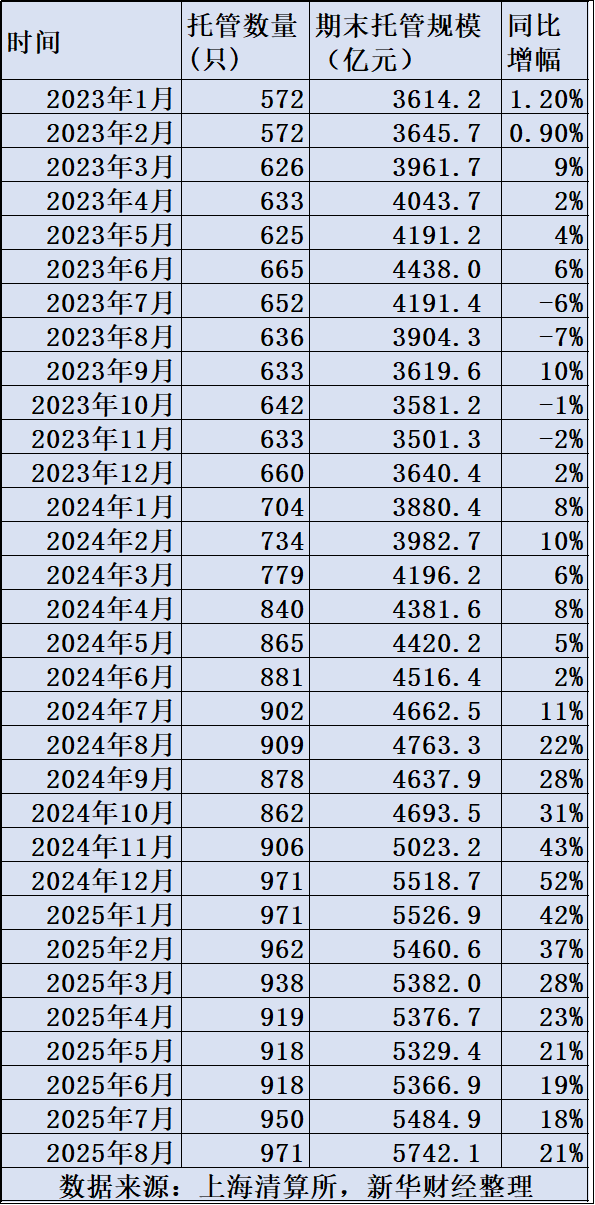
Core Insights - The "Southbound Bond Connect" has successfully completed four years since its launch, enhancing the interconnectivity between the mainland and Hong Kong bond markets, thus accelerating the integration of China's financial market with international markets [1][2]. Group 1: Performance Metrics - As of the end of August 2025, the Shanghai Clearing House has managed 971 types of bonds under the "Southbound Bond Connect," with a total balance of 574.21 billion yuan, representing an increase of over 26 times in the number of bonds and over 102 times in balance compared to four years ago [1]. Group 2: Market Impact - The "Southbound Bond Connect" has diversified asset allocation channels for mainland institutional investors, allowing them to invest in the offshore bond market in Hong Kong, which helps mitigate single market risks and enhance asset return stability [1][2]. - The influx of mainland capital through the "Southbound Bond Connect" has increased the activity and liquidity of the Hong Kong bond market, reinforcing its status as an international financial center and promoting the development of the offshore RMB bond market, thereby contributing to the internationalization of the RMB [1]. Group 3: Future Developments - Recent measures announced by the People's Bank of China and the Hong Kong Monetary Authority aim to expand the range of participating institutions in the "Southbound Bond Connect" to include brokers, funds, insurance, and wealth management firms, which will better meet diverse investment needs and optimize asset allocation [2]. - There is a discussion regarding the potential gradual opening of the bond market to individual investors; however, current conditions are deemed not mature enough due to the complexities and risks associated with the Hong Kong bond market [3].
东盟将黄金交中国保存?敲响美元终极丧钟,人民币国际化关键一步
Sou Hu Cai Jing· 2025-09-24 15:15
Core Viewpoint - The significant increase in international gold prices, from $1,800 to $3,800, indicates a shift in the global financial order, with gold being re-emphasized as a natural currency amid declining reliance on the US dollar [1][15]. Group 1: Historical Context of Dollar Dominance - The Bretton Woods system established the dollar's dominance by tying it to gold, making it the global hard currency [3]. - The US leveraged military power to enforce the "petrodollar" system, compelling oil-producing countries to transact in dollars, thus sustaining dollar hegemony [3]. - The weakening of US influence in the Middle East and the weaponization of finance have prompted countries to seek alternatives to the dollar [3][15]. Group 2: China's Role in Gold Custody - China is positioning itself as a "gold custodian" for other nations, allowing them to store sovereign gold in China, thereby enhancing its influence in the global gold market [5]. - The People's Bank of China has been accumulating gold, with reserves projected to reach 73.61 million ounces by February 2025, as a strategy to bolster the credibility of the renminbi [7]. Group 3: Renminbi's Position and Misinterpretations - Despite a reported 5.13% decrease in renminbi payments, the currency is still used in over 54% of China's trade, with many transactions bypassing SWIFT in favor of the CIPS system [9]. - The renminbi has become the third-largest financing and payment currency globally, following the euro and dollar, reflecting its growing importance [9]. Group 4: Future Financial Landscape - China's gold custody initiative is not aimed at replicating the Bretton Woods system but rather establishing a new framework for a decentralized global currency system [11]. - ASEAN countries are responding positively to China's gold custody offer, seeking to reduce dependence on the dollar and create a financial system independent of US influence [13]. - The rise in gold prices and China's actions signal a transition towards a multi-currency system, where currencies are linked to real economic value rather than centralized control [15][17].

美元要成废纸?人民币成为第一大结算货币,中国银行资产世界第一
Sou Hu Cai Jing· 2025-09-24 10:51
Group 1 - The core argument of the article is that the dominance of the US dollar is being challenged, particularly after the Russia-Ukraine conflict, leading to an acceleration in the internationalization of the Chinese yuan [3][9]. - The US government's high debt levels and changes in the global energy landscape are undermining the foundation of the petrodollar system, while the euro and yen face limitations due to economic issues [3][4]. - The yuan has emerged as a significant player in international trade, becoming the primary currency for cross-border transactions in China, surpassing the dollar in preference among Chinese enterprises [4][5]. Group 2 - As of September 2025, the yuan has become the largest settlement currency for China's cross-border receipts and ranks as the third-largest trade financing and payment currency globally [3][4]. - The yuan's weight in the International Monetary Fund's Special Drawing Rights (SDR) basket remains third, indicating its growing importance in the global financial system [3][4]. - The Chinese banking sector, with total assets reaching 470 trillion yuan, provides a robust foundation for the internationalization of the yuan [4]. Group 3 - The article highlights the diminishing military and economic influence of the US, which has historically supported the dollar's dominance, particularly in the Middle East [6][7]. - The decline of US manufacturing and the shift of global financial centers towards the East are contributing to the erosion of dollar hegemony [7][9]. - The yuan is positioned to play a more significant role in the reconfiguration of the global financial landscape as the dollar's supremacy wanes [9].

债券通“南向通”四周年:铸就机构出海活力动脉 赋能债券市场双向开放
Xin Hua Cai Jing· 2025-09-24 06:21
Core Insights - The "Southbound Bond Connect" has significantly enhanced the accessibility of global asset allocation for domestic investors since its launch four years ago, marking a key milestone in China's bond market opening [1][2][8]. Group 1: Market Growth and Performance - As of August 2025, the Shanghai Clearing House has hosted 35,000 bonds with a total custody balance of 48.6 trillion yuan, reflecting a year-on-year growth of 19% [2]. - The scale of the "Southbound Bond Connect" has expanded dramatically, with the current custody size being over six times that of May 2022 and more than a hundred times that of its first month in September 2021 [2][3]. - The monthly custody data shows fluctuations in the number of bonds and custody scale, with notable growth in the latter half of 2024, peaking at 5,518.7 billion yuan in December 2024 [3][4]. Group 2: Institutional Participation and Strategy Diversification - The participant base for the "Southbound Bond Connect" has diversified, now including state-owned banks, joint-stock banks, insurance asset management, public funds, and private institutions, which has led to more refined investment strategies [5]. - The introduction of products linked to the "Southbound Bond Connect" by public funds has lowered the entry barriers for individual investors, promoting financial inclusivity [5]. Group 3: Policy Support and Infrastructure Development - Continuous policy support and infrastructure improvements have been crucial for the growth of the "Southbound Bond Connect," with measures introduced to enhance transaction convenience and risk management [8][10]. - The expansion of participant categories to include securities firms and insurance companies in July 2023 is a significant policy move aimed at broadening global asset allocation channels [8]. Group 4: Green Finance and Regional Cooperation - The "Southbound Bond Connect" has become a vital channel for domestic institutions to invest in international green bonds, with a 60% year-on-year increase in green bond investments [9]. - The deepening financial cooperation in the Guangdong-Hong Kong-Macao Greater Bay Area has amplified the impact of the "Southbound Bond Connect," facilitating cross-border financial rule alignment [9]. Group 5: Future Outlook - Experts suggest that the "Southbound Bond Connect" will continue to evolve, with potential breakthroughs in asset class expansion and digital currency settlement as the internationalization of the yuan accelerates [10]. - The initiative is seen as a pivotal step towards transforming China from a major bond market to a strong bond market, emphasizing the importance of cross-border regulatory collaboration [10].
“反超”日元,人民币成全球第4大货币?前3名是谁?
Sou Hu Cai Jing· 2025-09-24 05:27
Core Insights - The article highlights the significant transformation of the Renminbi (RMB) on the international stage, marking its rise to become the fourth largest payment currency globally, surpassing the Japanese Yen [1][2]. Group 1: RMB's Internationalization Progress - The RMB's share in global payments has increased from 1.88% in 2015 to 6.93% in July 2025, reflecting a rapid ascent in its international status [2]. - The RMB's rise is attributed to its surpassing the Yen, which has a payment share of 6.71% [1][2]. - The RMB is now positioned behind only the US Dollar (42.68%), Euro (33.15%), and British Pound (7.64%) in the global payment hierarchy [2]. Group 2: Drivers of RMB Internationalization - The cross-border trade settlement in RMB has seen a robust growth, with a reported amount exceeding 23.7 trillion yuan in the first half of 2025, a year-on-year increase of 15.8% [5]. - The attractiveness of RMB financial assets has grown, with overseas holdings of RMB-denominated assets reaching 10.2 trillion yuan, up 18.6% [5]. - China has signed currency swap agreements with 43 countries, totaling over 4 trillion yuan, facilitating RMB's international circulation [5]. - The development and pilot testing of digital RMB have expanded, with transaction amounts surpassing 1.5 trillion yuan and over 420 million personal wallets created [5]. Group 3: Implications of RMB's Rise - The increased internationalization of the RMB is expected to reduce exchange rate risks and transaction costs for Chinese enterprises, potentially saving hundreds of billions of dollars annually [8]. - The RMB's share in global foreign exchange reserves has reached 3.82%, positioning it as the third largest reserve currency, surpassing the Yen and Pound [8]. - The rise of the RMB contributes to a more diversified and stable global financial system, reducing reliance on the US Dollar and mitigating systemic risks [8]. Group 4: Future Outlook - Predictions indicate that the RMB may surpass the British Pound within the next 3-5 years, becoming the third largest payment currency globally [10]. - The expansion of digital RMB applications is anticipated to drive further internationalization of the currency [10]. - The RMB's usage is expected to grow in emerging markets, while its penetration in developed economies will focus on reserves and investment [12].

【环球财经】中国银行在阿根廷举办中阿跨境人民币业务推介会
Xin Hua Cai Jing· 2025-09-24 03:24
Core Viewpoint - The event held by the Bank of China in Buenos Aires focuses on promoting the internationalization of the Renminbi (RMB) and exploring its application in Argentina's economic landscape [1][2] Group 1: RMB Internationalization - The Bank of China launched the ninth stop of its global RMB internationalization roadshow in Buenos Aires, Argentina [1] - The event highlighted the latest developments in RMB internationalization and showcased cross-border RMB products and financial solutions [1] - Discussions included macro policies, financial products, corporate practices, and future trends regarding the implementation of RMB in Argentina [1] Group 2: Economic Relations and Opportunities - Argentina, as the second-largest economy in Latin America, has strong economic ties with China in sectors such as agriculture, energy, minerals, and infrastructure [1] - There is a high demand for cross-border settlement and financing in Argentina, which presents opportunities for RMB utilization [1] - Since establishing a branch in Buenos Aires in 2019, the Bank of China has been enhancing its RMB business system to provide comprehensive financial services for Chinese and local enterprises [1] Group 3: Financial Services Enhancement - The Bank of China aims to continue its role as a primary channel for cross-border RMB services, enriching RMB product offerings and expanding application scenarios [2] - The bank is committed to improving the quality and efficiency of financial services to inject more financial momentum into the healthy development of China-Argentina economic and trade cooperation [2]