绿色转型

Search documents
杨澜送祝福!第三届21世纪“活力·ESG”创新论坛等你来
2 1 Shi Ji Jing Ji Bao Dao· 2025-08-11 10:48
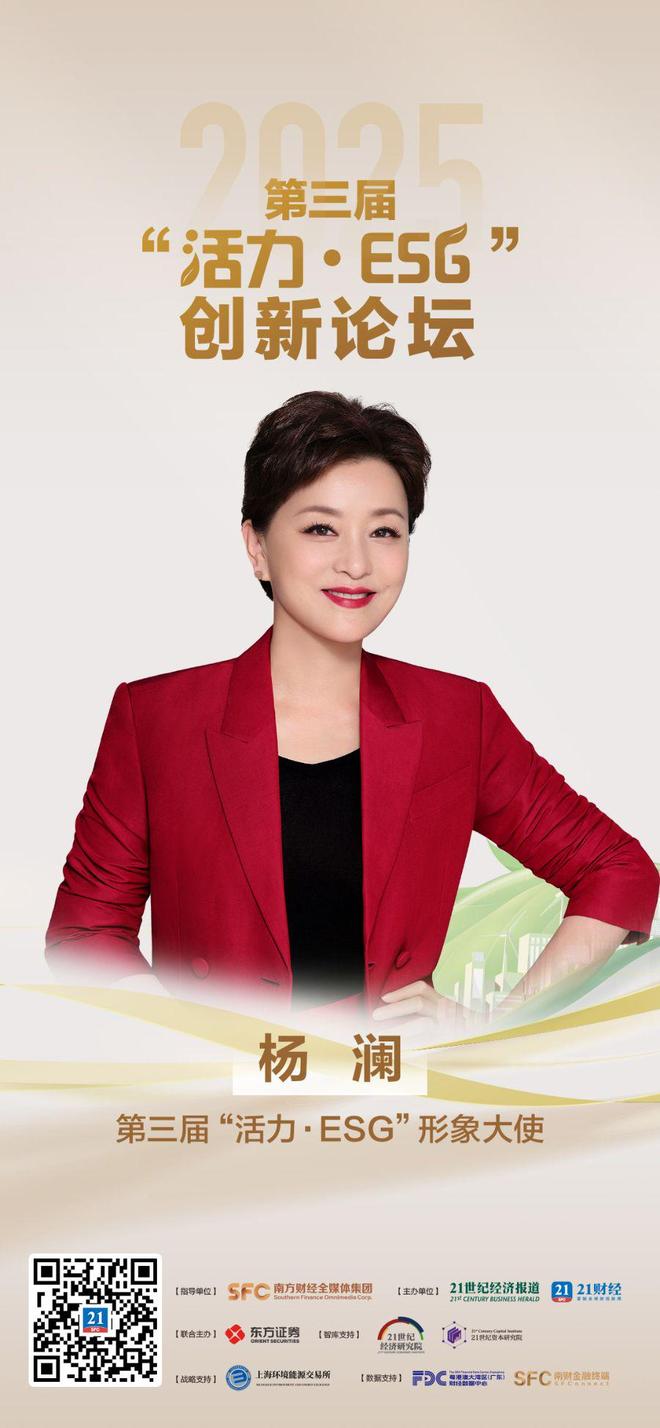
近日,资深媒体人、阳光媒体集团董事长杨澜担任第三届21世纪"活力·ESG"形象大使,并为论坛送上 祝福。杨澜表示,可持续发展的核心是"以人为本",而ESG理念恰恰为这种全面发展提供了清晰的路 径。 ESG早已不是企业锦上添花的加分项,而是决定生存权的必答题。性别平等、多元包容亦是ESG理念中 社会责任的重要内涵,社会公众人物也已意识到环境保护、社会责任的重要性。 0:00 21世纪经济报道记者卢陶然、李德尚玉 北京报道 8月16日,由南方财经全媒体集团指导、21世纪经济报道联合东方证券主办的第三届21世纪"活力 ·ESG"创新论坛即将在上海浦东开幕。站在"十四五"收官与"十五五"谋篇的历史交汇点,本届论坛以"智 启新程,共筑未来"为主题,聚焦绿色转型与高质量发展。 杨澜曾在2023年担任21世纪"活力·ESG"论坛社会责任大使,至今深耕女性赋能领域十余年,在提升女 性精神追求、推动女性领导力、鼓励绽放"她"力量方面作出了突出的社会贡献。 加快全面绿色转型!第三届21世纪"活力·ESG"创新论坛邀你来,共议高质量发展蓝图(点击报名参 会)。 ...

2025年西部能源化工与生态环境学术会议召开
Zhong Guo Hua Gong Bao· 2025-08-11 01:03
Core Viewpoint - The green transformation of the energy and chemical industry in Western China and ecological environment restoration are crucial topics for national strategy under the "dual carbon" goals [1][2]. Group 1: Industry Challenges and Opportunities - Western China is a vital base for national energy security but faces severe challenges such as fragile ecological environment, water resource scarcity, and limited environmental carrying capacity [1]. - The region's unique situation of "rich coal, poor water, and weak ecology" necessitates the development of green energy and chemical industries and ecological restoration as essential paths for high-quality development [1]. - Balancing traditional energy development with ecological protection is a pressing issue, especially under the guidance of the "dual carbon" goals [2]. Group 2: Future Trends in Energy and Chemical Industry - The energy and chemical industry in Western China must transition from high energy consumption and high emissions to a green and sustainable development path [2]. - The trends of greening, low-carbonization, and circular economy are becoming inevitable for the energy and chemical industry [2]. - Innovations in clean production processes and ecological restoration technologies are critical for achieving high-quality regional economic development and sustainable ecological balance [2]. Group 3: Conference Insights - The conference featured nine thematic sub-forums covering clean and efficient use of traditional energy, low-carbon transformation, and core concerns regarding ecological environment governance [3]. - Reports from six academicians and other experts showcased the latest research findings, providing various pathways for the green development of the Western energy and chemical sector [2].
最新GDP公布!全国60强城市洗牌:宁波第11,泉州退至23,芜湖59
Sou Hu Cai Jing· 2025-08-11 00:00
Core Insights - The ranking of China's top 60 cities by GDP for the first half of 2025 reveals a shifting economic landscape driven by technological innovation, industrial collaboration, and green transformation [1] - Competition between leading and mid-tier cities is intensifying, with a focus on balancing scale expansion and quality improvement as key to future urban competitiveness [1] Group 1: Leading Cities - Shanghai and Beijing continue to lead with GDPs exceeding 2.5 trillion, while Shenzhen solidifies its position as the third-largest economic center with a GDP surpassing 1.8 trillion [1][4] - The Yangtze River Delta cities are performing well, with Suzhou achieving a growth rate of 7.82%, and both Hangzhou and Nanjing surpassing the 1 trillion GDP mark [1][5] - Ningbo's GDP reached 8860.97 billion, marking a significant increase of 653 billion, surpassing cities like Tianjin [3][5] Group 2: Ningbo's Development - Ningbo's economic transformation is highlighted by a 23% year-on-year increase in the digital economy's core industry value, now accounting for 8.7% of its GDP [3] - The city's industrial investment growth rate stands at 18.9%, leading the Yangtze River Delta region, and the port economy is evolving significantly [3] Group 3: Challenges for Traditional Industries - Quanzhou has dropped to 23rd place despite maintaining a GDP of 6357 billion, with a growth rate decline of 2.1 percentage points to 7.29% [11] - The city faces challenges due to its high reliance on traditional industries, which constitute over 60% of its industrial output, and a pressing need for digital transformation and brand upgrading [11] Group 4: Emerging Cities - Wuhu has made its debut in the top 60 with a GDP of 2595 billion and a growth rate of 6.56%, driven by strategic emerging industries [15] - The city has seen a 47% year-on-year increase in the new energy and intelligent connected vehicle industry, showcasing its innovation-driven development [15] Group 5: Regional Economic Shifts - Cities like Shijiazhuang and Nanning have seen significant ranking improvements, while traditional industrial bases in Northeast China are showing positive signs of transformation [15] - The contrasting trends between the stabilization of leading cities and the fierce competition among mid-tier cities indicate a more intense future urban competition landscape [15]

第六届中国铝工业高质量发展大会举办
Nei Meng Gu Ri Bao· 2025-08-10 09:07
Core Insights - The sixth China Aluminum Industry High-Quality Development Conference was held in Hohhot, focusing on "strengthening technological innovation leadership and empowering comprehensive green transformation" [1] - The conference resulted in the signing of seven key projects with a total investment of 8.3 billion yuan, including the production of 600,000 tons of new pre-baked anodes and 100,000 tons of high-end aluminum foil [1] Group 1 - Over 200 industry leaders, experts, and entrepreneurs gathered to discuss the future path of the aluminum industry and to create a new blueprint for high-quality development [1] - The signed projects cover critical areas such as deep processing of aluminum and include a comprehensive logistics industrial park and recycling aluminum smelting [1] Group 2 - Hohhot has abundant coal resources and is transitioning from a traditional "coal-electricity-aluminum" model to a "green electricity-aluminum" model, contributing to the establishment of a "trillion-level green low-carbon aluminum-based new materials industry cluster" [1] - The conference is part of the 13th Inner Mongolia "Talent Prosperity" high-level talent cooperation and exchange event, organized by the China Nonferrous Metals Industry Association [1]
气候变化威胁能源安全,如何应对和评估
第一财经· 2025-08-10 04:07
Core Viewpoint - Climate change is a global challenge that impacts not only environmental protection but also energy security, social stability, and risk distribution [2] Group 1: Climate Change and Energy Security - The urgency and complexity of addressing climate change have intensified due to rising resource risks, trade protectionism, and sluggish global economic growth, particularly affecting underdeveloped regions [3] - Human activities have led to a global temperature increase of 1.2°C compared to pre-industrial levels, with a high probability of exceeding the 1.5°C threshold in the next five years [3] - Extreme weather poses systemic threats to energy systems, affecting wind power efficiency due to reduced wind speeds and increasing power supply tensions due to high temperatures and droughts [3] Group 2: Strategies for Energy Resilience - A model indicates that for every unit increase in the extreme climate risk index, total power generation will significantly decline, with wind power being the most affected [4] - Four strategies proposed to address these challenges include: 1. Establishing a climate risk monitoring and early warning system [4] 2. Optimizing diversified energy supply and promoting collaboration among wind, solar, hydro, and thermal power [4] 3. Creating an emergency mechanism for the electricity market under extreme climate conditions [4] 4. Innovating climate financial products, such as carbon asset insurance and green industry funds, to support energy resilience [4] Group 3: Comprehensive Development Goals (CDGs) - The report presented at the seminar critiques existing global development indicators, highlighting limitations in the Human Development Index (HDIs) and Sustainable Development Goals (SDGs) [5] - The new Comprehensive Development Goals (CDGs) framework emphasizes a "bottom-up, practice-driven" approach, focusing on "human development and social progress" across five dimensions: innovation, coordination, green development, openness, and sharing [5] - The CDGs report suggests incorporating natural capital into core indicators, increasing spatial dimension analysis, and utilizing AI technology for future trend predictions [6]
活力中国调研行|陆海生金!浙东沿海绘就“青蓝交织”生态画卷
Xin Hua She· 2025-08-09 01:03
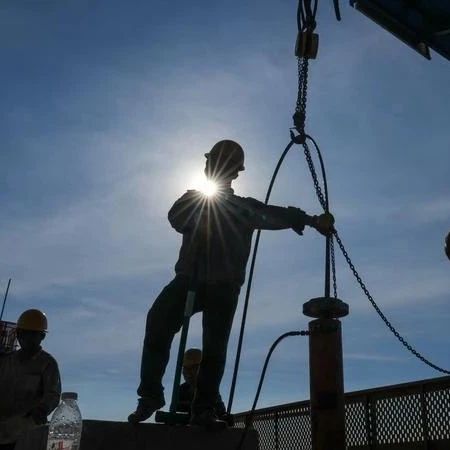
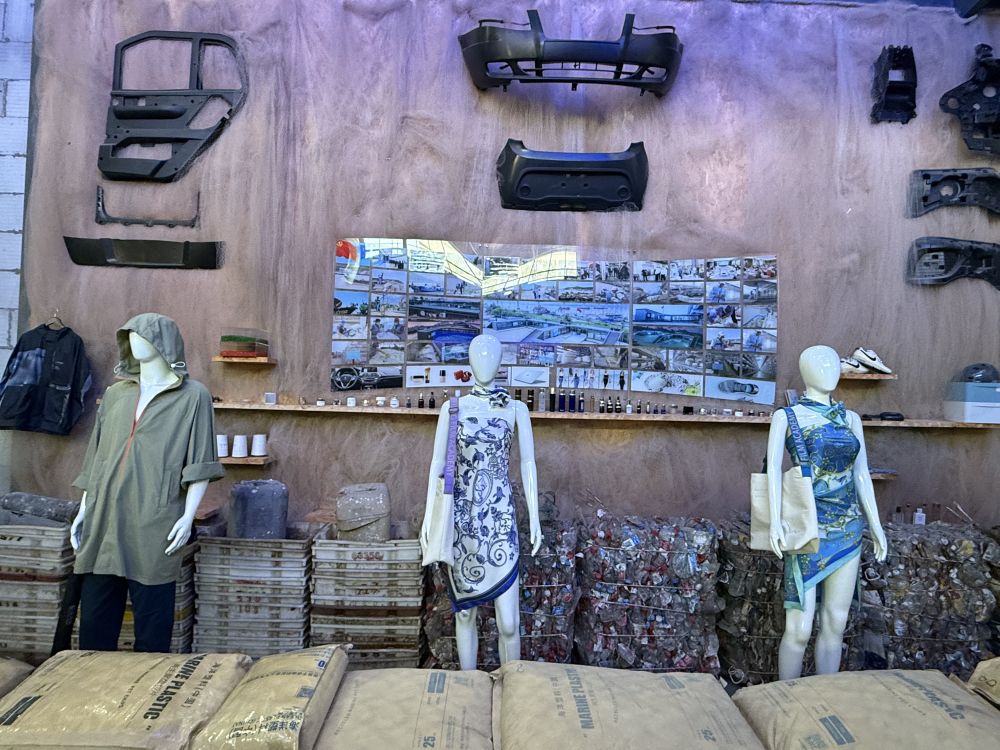
Group 1 - The article highlights a transformative movement in Zhejiang, where marine plastic waste is being processed into valuable products, showcasing a shift towards a "blue circular economy" [1][2] - Companies like Zhejiang Blue Landscape Technology Co., Ltd. are leading the charge in recycling marine plastic waste into consumer goods such as scarves, bags, and shoes, demonstrating the potential for high-value conversion of waste [2][3] - The initiative is part of a broader effort in Zhejiang to harness marine resources for green economic development and low-carbon transformation [2][4] Group 2 - The article discusses the development of clean renewable energy from marine sources, particularly tidal energy, in Zhejiang, which is rich in tidal current resources [4][5] - The Zhejiang LHD tidal energy project has successfully converted tidal energy into electricity, generating over 783 million kilowatt-hours since its inception, significantly contributing to carbon reduction efforts [5][7] - The Ningbo-Zhoushan Port is undergoing a smart transformation, integrating automated operations and green energy solutions, including wind and solar power, to enhance efficiency and sustainability [8][10] Group 3 - The Meishan Port area has implemented a low-carbon terminal demonstration project, achieving over 26 million kilowatt-hours of green electricity generation and a 100% electrification rate for large equipment [10] - The port's automation and electrification efforts have led to a 53% electric rate for container trucks and an 88% clean energy ratio for large handling equipment, marking significant progress in green port operations [10]

近八成上市煤企披露ESG信息,数字化成多家企业减碳帮手
Xin Jing Bao· 2025-08-08 10:33
Group 1 - The coal industry has seen significant improvements in the standardization, proactivity, and coverage of ESG information disclosure among listed companies, with a disclosure rate reaching 79.55% by May 2025, an increase of over 21.41 percentage points compared to 2024 [1] - The distribution of ESG ratings among coal listed companies has improved, with the proportion of AA ratings increasing from 2.9% in 2024 to 4.55% in 2025, A ratings from 2.9% to 6.82%, and BBB ratings from 11.8% to 38.64% [1] - Several listed coal companies have introduced carbon reduction targets in their 2024 ESG reports [1] Group 2 - China Shenhua has set a carbon peak target for 2021-2030, aiming to limit carbon emissions to a 70% increase compared to 2020 by 2030, with current progress at a 47.8% increase [2] - Yancoal Energy aims to reduce carbon emissions by 700,000 tons annually by 2025 and plans to increase the share of clean energy utilization to over 10% by 2030 and achieve 80% non-fossil energy consumption by 2060 [2] Group 3 - Digital tools are aiding companies in their green transformation, with Huayang Co. achieving full automation in its production mines three years ahead of schedule, resulting in an efficiency increase of 249.52 tons per person [3] - Shaanxi Coal Industry has developed an online monitoring platform for energy conservation and environmental protection, utilizing IoT technology for real-time data aggregation and analysis [3] - China Shenhua has introduced AI technology to enhance supply chain management and established a big data platform for in-depth analysis of supply chain data [3] Group 4 - The ESG rating is not only a compliance requirement for coal listed companies but also a strategic tool for linking capital, managing risks, and enhancing competitiveness, with room for improvement in ESG ratings [4] - Companies that complete ESG capability building ahead of others will achieve a win-win situation in social benefits and commercial value amid the dual mission of energy supply and low-carbon transition [4]

2025中国企业社会责任榜:TOP20都有谁?
Sou Hu Wang· 2025-08-08 09:17
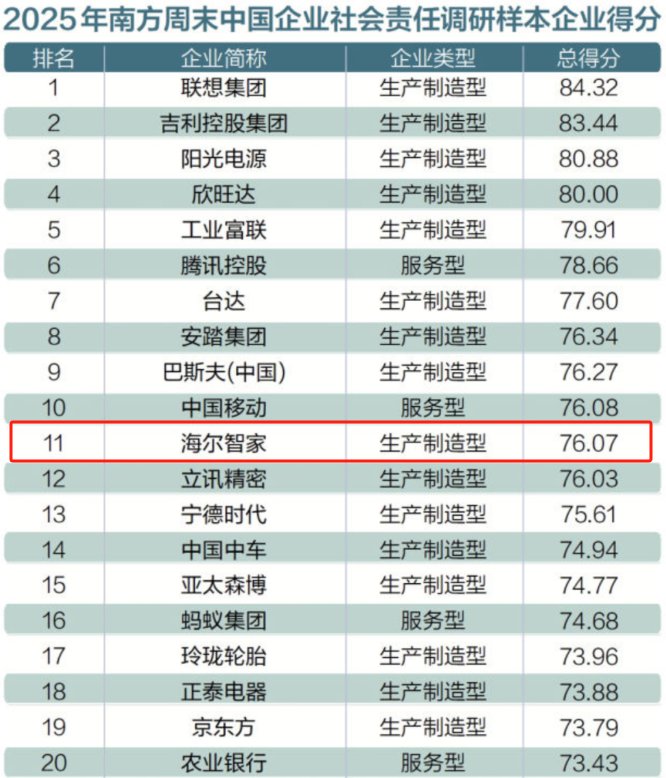
Group 1 - The report titled "2025 China Corporate Social Responsibility Research Report" highlights the top 300 companies in social responsibility, with notable mentions including Geely Holding Group, Tencent Holdings, and Haier Smart Home [1] - Geely Holding Group ranks first in the automotive industry, Tencent Holdings leads in the internet technology sector, and Haier Smart Home is the top performer in the home appliance industry [1] - The report surveyed 620 companies, indicating a growing emphasis on corporate social responsibility among leading firms [1] Group 2 - The home appliance industry is identified as a key area for energy conservation and emission reduction, driven by its long supply chain and high energy consumption [2] - The State Council's "2024-2025 Energy Conservation and Carbon Reduction Action Plan" includes home appliances as a focus area, aiming for 60% of household refrigeration equipment to be high-efficiency energy-saving products by 2025 [2] - Consumer preferences are shifting towards green and low-carbon products, with energy efficiency becoming a critical factor in purchasing decisions [2] Group 3 - Haier Smart Home exemplifies proactive social responsibility, having established a full lifecycle carbon reduction path from product design to recycling [3] - The company has launched several innovative and energy-efficient products, such as the Mai Lang refrigerator, which sold over 700,000 units within three quarters [3] Group 4 - The social responsibility practices of home appliance companies are evolving from compliance to value creation, with leading firms setting benchmarks for the industry [4] - The dual influence of policy guidance and market choices is expected to further integrate social responsibility into core business operations, driving high-quality industry development [4]

农业转型金融的“宜春探索”
Jin Rong Shi Bao· 2025-08-08 07:58
Core Viewpoint - The People's Bank of China (PBOC) has initiated a pilot program for agricultural transformation financial standards to support low-carbon development in agriculture, particularly in Yichun City, Jiangxi Province, which has shown promising early results in this endeavor [1][2]. Group 1: Policy and Framework - The introduction of the "dual carbon" goals has directed the need for a comprehensive green transformation in agriculture, which is a significant source of carbon emissions and a key area for carbon reduction [2]. - The PBOC has quickly developed guidelines and a directory for agricultural transformation financial standards, selecting regions like Zhejiang and Jiangxi for pilot testing [2]. - Yichun City, as a major agricultural hub, has established clear transformation goals and funding strategies to enhance credit support for agricultural transformation projects [2][3]. Group 2: Implementation Actions - Yichun City has created a dynamic project database to identify and promote key agricultural transformation projects, collaborating closely with local agricultural authorities [3]. - The city has adopted a dual approach for carbon reduction assessment, combining self-assessment with third-party evaluations to ensure accurate and credible carbon reduction data [4]. - Financial institutions in Yichun have developed innovative financial products linked to carbon reduction metrics, providing tailored support to agricultural enterprises [5]. Group 3: Collaborative Support Systems - A supportive policy framework has been established to facilitate the implementation of agricultural transformation financial standards, involving coordination between local government and financial institutions [6]. - The city has initiated partnerships with third-party organizations to enhance carbon accounting capabilities and provide comprehensive support for transformation projects [4][9]. - Continuous optimization of the pilot program is emphasized, focusing on sustainable development, financial innovation, and multi-party collaboration as essential components for successful agricultural transformation [7]. Group 4: Recommendations for Future Development - Strengthening policy support and financial incentives is crucial for enhancing the sustainability of agricultural transformation projects [8]. - Improving guidance for transformation planning and fostering the development of qualified third-party institutions are necessary to address challenges in carbon accounting [9]. - Emphasizing talent development in agricultural transformation finance will enhance service levels and support the successful implementation of transformation standards [10].
工业大省经济“成绩单”揭晓,制造业“含新量”持续提升
证券时报· 2025-08-08 03:55
Core Viewpoint - The industrial economy of major provinces in China is showing robust growth, driven by industrial upgrades, innovation, and green transformation, which are essential for sustaining economic stability and high-quality development [2][3]. Group 1: Economic Performance - In the first half of the year, seven provinces including Guangdong, Jiangsu, Shandong, Zhejiang, Sichuan, Henan, and Anhui reported GDP growth rates between 4.2% and 5.8%, with industrial economy as the core support for stable growth [2]. - Anhui province led with an industrial added value growth of 8.4%, driven by manufacturing growth of 10.4%, particularly in equipment manufacturing (16.7%) and high-tech manufacturing (23.6%) [5][6]. Group 2: Industrial Upgrades and Innovations - The growth of strategic emerging industries and traditional industries undergoing deep transformation is significantly outpacing other sectors, becoming a vital force for high-quality economic development [3]. - High-tech products in Guangdong, such as new energy vehicles (14.7%), lithium batteries (42.2%), and civilian drones (58.2%), have become key components of the local manufacturing sector [7]. Group 3: Investment Trends - Industrial investment is crucial for the high-quality development of major provinces, with Henan's industrial investment growing by 25.9% year-on-year, significantly higher than the overall investment growth [9][10]. - Zhejiang province also reported industrial investment growth of 10.3%, indicating a strong commitment to enhancing industrial capabilities [10]. Group 4: Regional Development Paths - Major provinces are exploring unique development paths based on their industrial foundations and resource endowments, contributing to a diversified industrial landscape across China [11]. - The differentiation in regional development helps avoid homogeneous competition and fosters complementary industrial synergies [13].