人民币国际化

Search documents
4100点高位震荡,国泰基金新春策略会研判新年市场机遇
Xin Lang Cai Jing· 2026-02-06 08:34
Market Overview - The A-share market has experienced a strong upward trend in January, frequently reaching new highs, with significant investor participation and enthusiasm [1][14] - As the market approaches the 4100-point threshold, it has entered a phase of high-level fluctuations, with signs of adjustment in certain sectors and intensified competition between bulls and bears [1][14] Economic Outlook for 2026 - The macroeconomic environment is expected to maintain a recovery trend, with gradual improvement in corporate earnings and continued ample liquidity [3][16] - The domestic and international technology sectors are expected to resonate, with emerging industries showing rapid growth and China's manufacturing competitiveness expanding [3][16] - Long-term market support is anticipated from the execution of the "14th Five-Year Plan," the advancement of RMB internationalization, and policies encouraging long-term capital inflows [3][16] Sector Focus - **Technology Manufacturing**: Continued optimism, shifting focus from upstream to downstream AI applications, particularly in smart driving, robotics, AI wearables, and AI healthcare [5][18] - **Lithium Battery Storage**: Short-term performance affected by surging upstream material prices, but long-term prospects remain strong due to China's manufacturing advantages [5][18] - **Automotive Sector**: Significant changes expected in 2026, with a stark divide; companies closely related to AI and smart technologies are likely to perform well, while those lagging in smartization may face challenges [5][18] Consumer Sector Insights - 2026 is projected to be a pivotal year for the consumer sector, driven by anticipated increases in household income, moderate price recoveries, and historically low valuations and market capitalizations [10][23] - "Old consumption" is expected to transition from defense to offense, with improved competitive dynamics and returns for leading companies [10][23] - "New consumption" emphasizes selective investment in companies with strong competitive positions amid a challenging competitive landscape [10][23] Pharmaceutical Sector Analysis - The innovative drug sector is expected to present opportunities, driven by unique market positioning and significant growth potential [11][24] - The emergence of new categories such as brain-computer interfaces and medical AI is noted, indicating a shift towards meeting previously unmet needs in the market [11][24] Investment Themes - The core investment logic for 2026 is centered around "AI + hard capabilities," encompassing sectors such as smart driving, consumer electronics, robotics, industrial processes, communication, energy management, and commercial aviation [8][21] - AI applications are anticipated to enhance efficiency and reduce costs across various industries, including manufacturing and communication [8][22] Hong Kong Market Perspective - Despite some valuation recovery in 2025, the Hong Kong market remains undervalued compared to major global markets, with expectations for rapid earnings recovery based on low baselines [12][25] - The downward trend in ERP is anticipated to continue, influenced by industry structure, investor dynamics, and RMB internationalization [12][25]
30年国债ETF(511090)盘中涨0.23%,机构:债市仍有利于偏稳健配置型策略
Sou Hu Cai Jing· 2026-02-06 06:27
中原证券指出,债市方面,10年期与30年期国债收益率预计区间震荡,需等待降准或降息等实质性宽松 政策落地。在利率走势方面,2026年1月国债期货市场迎来小幅反弹,十年期主力合约上涨0.45%,超 长端的30年期国债期货涨幅略高,达0.48%。货币政策态度仍然比较中性,在呵护银行净息差以及汇率 稳健升值的目标下,对债市保持合理区间的导向较强。总体而言,今年债市或仍有利于偏稳健的配置型 策略。 2026年2月6日午后,截至13:55,30年国债ETF(511090)上涨0.23%。流动性方面,30年国债ETF盘中换 手17%,成交36.77亿元,市场交投活跃。拉长时间看,截至2月5日,30年国债ETF近1年日均成交82.71 亿元。 消息面上,在1月举行的第三十届(2026年度)中国资本市场论坛上,摩根大通银行(中国)有限公司 行长提到,从存量规模来看,中国债市规模位居全球第二,具有重要影响力。她认为,中国债市也是人 民币国际化与金融市场开放的前沿阵地。2025年,随着美元进入降息通道以及国际投资者资产配置多元 化需求上升,中国债券吸引力进一步增强。 国债期货早盘收盘,30年期主力合约涨0.35%,10年期主力合 ...
中金固收:人民币升值环境下的流动性渐进宽松
Xin Lang Cai Jing· 2026-02-06 05:16
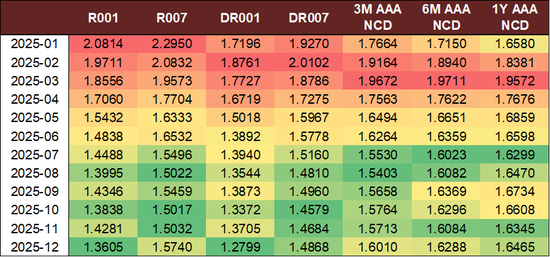
登录新浪财经APP 搜索【信披】查看更多考评等级 【中金固收·利率】人民币升值环境下的流动性渐进宽松——货币市场2025年回顾与2026年展望 中金固定收益研究 摘要 回顾来看,2025年资金面先紧后松,1-2月政府债券供给抬升叠加稳汇率等压力下,银行超储水位下 降,银行间流动性边际趋紧,资金利率中枢回升,直至2月下旬资金紧张压力有所缓解;3月以来,美国 关税等政策不确定性扰动增多,美元信用遭遇挑战,美元趋势回落,同时为托底国内经济修复,我国央 行货币政策宽松加码,资金利率转向下行,5月降准降息落地,进一步明确央行宽松政策立场,此后银 行间流动性持续维持充裕,资金利率中枢逐步向政策利率中枢靠拢,10月底央行宣布重启国债买卖操 作,叠加年末企业结汇需求抬升,银行超储水位继续回暖,也带动了资金利率中枢的进一步下行。 展望2026年,我们预计全年货币市场流动性或继续维持充裕,在稳汇率、稳通胀目标影响下,我国央行 货币政策可能进一步加大放松力度,同时在企业结汇需求集中释放下,银行流动性充裕也可能推动包括 存单等在内的资金利率中枢进一步下行。首先,当前人民币汇率转向升值通道,一定程度上需要央行货 币政策进一步放松来缓解 ...

离岸这篇大文章 上海要落“先手棋”
Shang Hai Zheng Quan Bao· 2026-02-05 17:52
◎记者 宋薇萍 严曦梦 陈贵还建议,上海可试点"数字围网"监管模式:借鉴新加坡"亚洲货币单位"(ACU)账户隔离经验,升 级上海自贸账户(FT账户)功能,探索建立"新离岸账户"(NOA)体系。 打造企业"走出去"重要支点 围绕新一轮高水平对外开放,上海正加快在更高能级上布局离岸金融与离岸经济。上海"十五五"规划建 议提出,"拓展跨境和离岸金融服务功能""打造离岸金融(经济)功能区",释放出上海在全球金融体系 和国际经贸网络中争取先手、塑造枢纽的新信号。 今年上海两会期间,围绕离岸金融、离岸贸易等关键议题,代表委员密集建言献策。 加快建设人民币资产全球配置中心 上海市政协委员,复旦大学国际金融学院金融学教授、执行院长钱军在今年上海市两会期间接受上海证 券报记者采访时表示,提升上海国际金融中心能级,一个重要方向就是提升股市、债市、大宗商品等市 场"传统板块"的国际化水平。其中,债券市场的国际化颇具想象空间。随着经济的发展,境内企业将更 加积极地"走出去",在全球市场布局并融入当地市场,并有望在境内券商"出海"的协助下,发行以人民 币计价的债券。从这个意义上讲,上海有望也应该成为中国企业"出海"综合金融服务的"起锚 ...
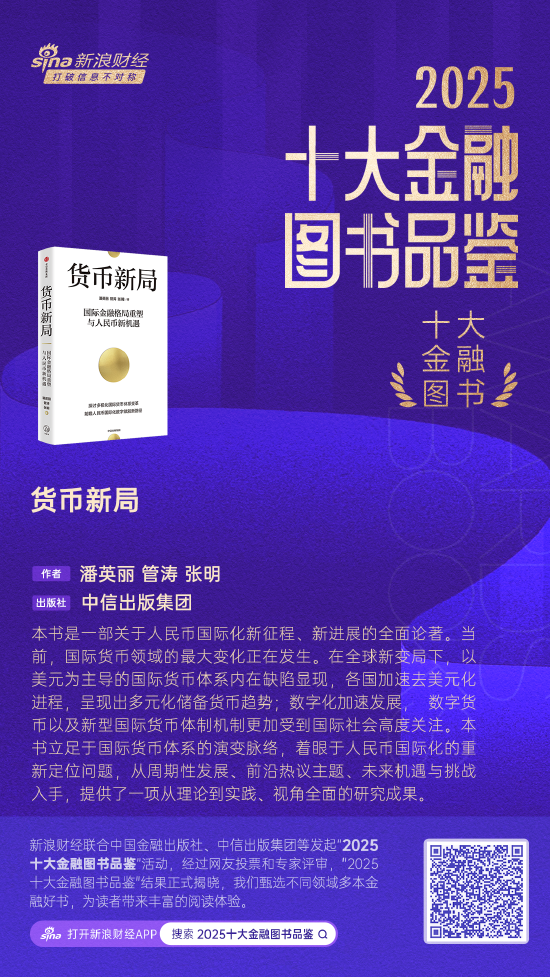
潘英丽、管涛、张明《货币新局》获评2025十大金融图书
Xin Lang Cai Jing· 2026-02-05 11:12
2月5日金融一线消息,经过近两个月的激烈角逐和专家评审,新浪财经联合中国金融出版社、中信出版 集团等发起的"2025十大金融图书品鉴"活动结果正式揭晓。潘英丽、管涛、张明所著《货币新局》获评 2025十大金融图书。 《货币新局》 作者:潘英丽 管涛 张明 出版社:中信出版集团 本书是一部关于人民币国际化新征程、新进展的全面论著。当前,国际货币领域的最大变化正在发生。 在全球新变局下,以美元为主导的国际货币体系内在缺陷显现,各国加速去美元化进程,呈现出多元化 储备货币趋势;数字化加速发展, 数字货币以及新型国际货币体制机制更加受到国际社会高度关注。 本书立足于国际货币体系的演变脉络,着眼于人民币国际化的重新定位问题,从周期性发展、前沿热议 主题、未来机遇与挑战入手,提供了一项从理论到实践、视角全面的研究成果。 相关推荐: 重磅!2025十大金融图书正式揭晓 责任编辑:秦艺 2月5日金融一线消息,经过近两个月的激烈角逐和专家评审,新浪财经联合中国金融出版社、中信出版 集团等发起的"2025十大金融图书品鉴"活动结果正式揭晓。潘英丽、管涛、张明所著《货币新局》获评 2025十大金融图书。 《货币新局》 作者:潘英丽 ...
中国银行董事长葛海蛟在沙特开展工作调研
Xin Lang Cai Jing· 2026-02-05 09:28
当地时间4日,葛海蛟会见沙特公共投资基金(PIF)副总裁兼中东北非投资总监亚齐德·阿尔胡米德 (Yazeed Al-Humied)。他表示,习近平主席2022年成功访问沙特以来,中沙关系取得新的积极进展, 多领域合作迎来广阔发展机遇。中国银行始终将PIF视为重要全球合作伙伴,在存贷款、资本市场等领 域不断拓展合作深度和广度。希望双方依托中国银行在中东地区的广泛金融服务网络,围绕人民币国际 使用、重点项目融资、金融市场等领域加强互动,共同为促进地区国家发展繁荣作出新贡献。阿尔胡米 德表示,中国银行是与PIF业务合作最密切的银行之一,希望中国银行继续支持PIF在全球投资兴业,共 同推动金融合作取得新成果。 期间,葛海蛟与中国驻沙特大使馆参赞高明会谈,围绕主动融入中沙经贸合作大局、提升人民币产品服 务质效等话题沟通交流;调研利雅得分行,就更好服务国家重大战略、切实提升可持续发展能力、扎实 筑牢风险防控根基等方面作出部署。 责任编辑:曹睿潼 来源:中国银行 来源:中国银行 当地时间2月2日至4日,中国银行董事长葛海蛟在沙特利雅得开展工作调研,围绕落实两国领导人重要 共识、拓展多领域互利合作等话题与政商界人士深入交流。 ...

“闽企扬帆 本币为先”人民币国际使用推介会在福州举办
Sou Hu Cai Jing· 2026-02-05 09:25
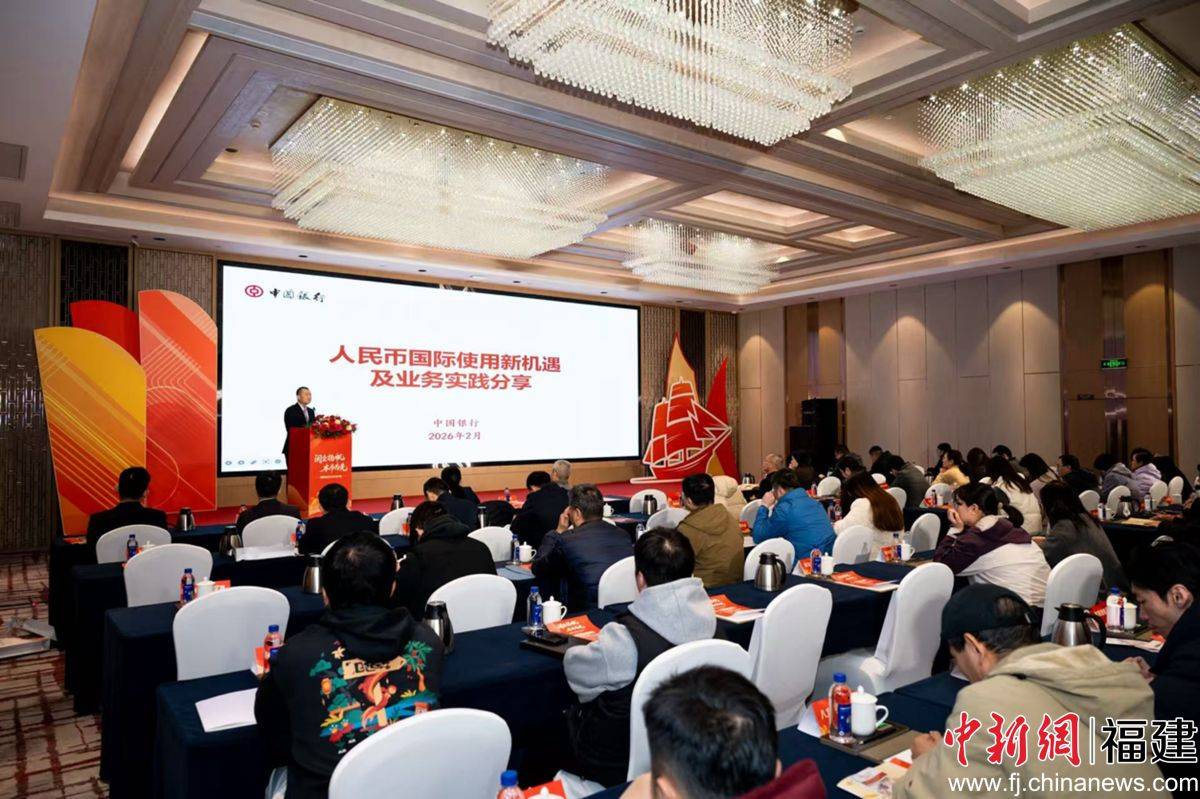
分享环节中,人民银行福建省分行专家系统地讲解了我省人民币跨境使用的鲜活案例与发展机遇;福州外代国际货运代理有限公司财务人员作为国企代表, 分享了以人民币结算降低汇兑成本、稳定经营预期的使用经验。中国银行总行及澳门分行的专家则分别从全球业务视野与境外财资管理中心建设角度,阐述 了人民币国际化的新机遇与现金管理前沿应用。 活动上,中国银行福建省分行正式发布《国企跨境服务方案》。该方案整合跨境结算、融资、避险等一揽子金融服务,支持国有企业在贸易、投融资、跨境 资金管理等全业务流程中落实"本币优先",助力构建"本币优先"的跨境生态圈。 中新网福建新闻2月5日电 2026年2月4日,由中共福建省委金融委员办公室、中国人民银行福建省分行、福建省人民政府国有资产监督管理委员会共同指 导,中国银行福建省分行承办的"闽企扬帆 本币为先"人民币国际使用推介会在福州举办。活动聚焦人民币国际使用与福建国企跨境金融需求,政府代表、 省属国企代表及金融机构负责人参会合计约120名,共话人民币跨境使用新机遇。 推介会以"依闽海而立,择本币而进;向世界而行,乘大势而上"为主题,围绕人民币国际化政策导向、国企应用案例与金融服务展开深入交流,省 ...
金融大家评 | 吴晓求:“十五五”时期中国资本市场改革重点与生态链重塑
清华金融评论· 2026-02-05 09:17
Core Viewpoint - The article emphasizes the need for a restructured capital market in China during the "14th Five-Year Plan" period, focusing on its role in resource allocation, technological innovation, and industrial upgrading, while aligning with the government's strategic goals for high-quality development [3][4][5]. Group 1: Importance of Capital Market - The capital market is recognized as a crucial hub for modern economic and financial systems, playing a significant role in resource allocation and innovation [6]. - The recognition of the capital market's strategic position is essential for China's modernization, particularly in fostering an innovative society [6][7]. - The article highlights the importance of original innovation for sustainable economic growth, stressing the need for a conducive environment for such innovation [7][11]. Group 2: Cultural and Institutional Foundations - A culture of inclusivity and openness is vital for fostering innovation, as diverse ideas and smooth communication can lead to technological advancements [8][10]. - Institutional frameworks must balance constraints and incentives, ensuring that innovators are rewarded adequately to encourage further advancements [10][11]. - The article argues that the progress of China's economy over the past 40 years is largely due to institutional improvements and the ability to absorb advanced technologies from developed countries [11]. Group 3: Restructuring the Capital Market Ecosystem - The capital market's ecosystem needs to be redesigned to meet new responsibilities and support the goal of becoming a "financial powerhouse" [14]. - The restructuring involves three key areas: the asset side, the funding side, and the regulatory framework [15][17][19]. - The asset side must attract global investors by providing risk-adjusted returns that exceed the risk-free rate, which is currently around 1% to 1.5% in China [15][16]. Group 4: Funding and Regulatory Reforms - The funding side must address the overgeneralization of market risks that has deterred large institutional investments, allowing for a more significant influx of capital [17][18]. - Regulatory reforms should focus on enhancing market transparency and ensuring that violations are met with appropriate penalties to foster a healthy market environment [19]. - The article suggests that achieving a market value of 200 trillion yuan by the end of the "14th Five-Year Plan" is feasible if institutional improvements and reforms are effectively implemented [20].

重磅!2025十大金融图书正式揭晓
Xin Lang Cai Jing· 2026-02-05 07:49
Core Insights - The "2025 Top Ten Financial Books" list has been officially announced, highlighting significant works that cover various aspects of finance, including monetary systems, transformative finance, rural finance, and data capital [1][14]. Group 1: Overview of the "2025 Top Ten Financial Books" - The list includes books that provide insights into the current state and future outlook of financial development both domestically and internationally [1][14]. - The selected books aim to enhance readers' understanding of complex financial topics through a macro and micro perspective [1][14]. Group 2: Individual Book Summaries - **"Understanding Rural Revitalization and Rural Finance"** by Bei Duoguang and Zeng Lianyun discusses the essence of rural development and the universal challenges faced globally, proposing methods to enhance rural financial ecosystems [2][15]. - **"Exploration and Understanding of Financial Work in the New Era"** by Chen Siqing compiles articles reflecting on China's financial development practices, covering various fields such as risk control and reform [3][16]. - **"A Nation of Livelihood"** by Chi Fulin emphasizes the importance of prioritizing people's well-being in China's modernization efforts, advocating for equitable public services and urbanization [4][18]. - **"Mother of Currency and Anchor of Risk"** by Liu Shangxi et al. introduces a new paradigm for understanding the relationship between finance and public risk, emphasizing the role of fiscal policy in the monetary system [5][19]. - **"New Landscape of Currency"** by Pan Yingli, Guan Tao, and Zhang Ming examines the internationalization of the Renminbi amidst global monetary shifts and the rise of digital currencies [7][20]. - **"Research on the System and Mechanism of Transformative Finance"** by Wang Xin et al. focuses on establishing effective mechanisms for green finance and its relationship with economic growth [8][21]. - **"Deep Reforms"** by Yin Yanlin analyzes deep-seated economic issues and proposes reform directions to enhance high-quality development [9][22]. - **"Contemporary Chinese Economic Lectures"** by Zhang Jun provides a historical perspective on China's economic evolution, addressing the transition from poverty to prosperity [10][24]. - **"Understanding the 14th Five-Year Plan: New Journey of High-Quality Development"** by Zhang Junkuo et al. discusses key themes in China's economic development during the 14th Five-Year Plan period [11][25]. - **"Data Capital in the Big Era"** by Zhu Min and Pan Liu explores the strategic importance of data capital in driving high-quality economic development [13][26].
2025,港股年度盘点
Sou Hu Cai Jing· 2026-02-05 06:15
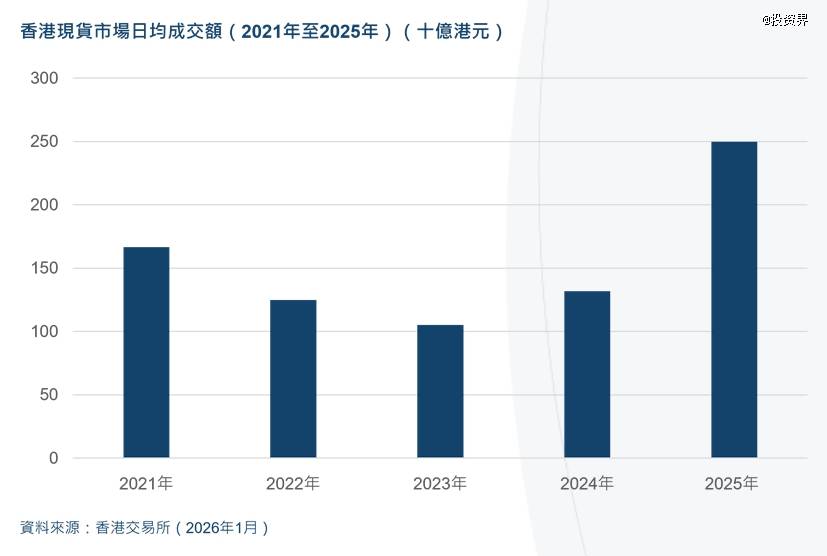
香港金融市场在2025年表现非常活跃,并在新股市场及二级市场创下多项交易纪录新高,彰显香港作为亚洲领先国际 金融中心的地位。 新一代创新企业纷纷来港上市并藉着香港的平台继续扩展;与此同时,来自全球各地的投资者也藉着香港交易所市场 上多元化的产品组合捕捉机遇并进行风险管理。香港交易所的年度市场数据显示,现货证券及期货期权市场的集资活 动和产品生态圈都较前一年更丰富、多元和活跃。以下亮点分别回顾香港市场2025年的表现及介绍2026年的展望。 香港新股市场重回全球第一 2025年香港共迎来119家新上市企业,首次公开招股集资总额达到2,858亿港元,其中三家更跻身2025年全球十大新股 之列。新能源及人工智能等创新领域的发行人引领着强劲的创新科技市场浪潮,2025年香港新上市公司当中,新经济 公司占比超过三分之二。根据Dealogic的数据,在香港交易所上市的公司全年通过后续发行筹集了660亿美元,较2024 年的279亿美元升136%,充分印证了香港资本市场的活力和深度。 衍生产品成交创新高, 巩固亚洲风险管理中心地位 现货市场成交金额创新高 2025 年香港现货市场日均成交额按年增长 89.5%,达到 2,4 ...