劳动力市场

Search documents
Fed delivers third straight rate cut but dot plot projects just one cut in 2026
Fox Business· 2025-12-11 13:51
Core Viewpoint - The Federal Reserve has cut interest rates for the third consecutive meeting, indicating a potential for only one additional cut next year as rates approach a neutral level [1][4]. Interest Rate Cuts - The Fed lowered the benchmark federal funds rate by 25 basis points to a range of 3.5% to 3.75% [1]. - The median projection for the federal funds rate is now in the range of 3.25% to 3.5%, suggesting only one rate cut next year and another in 2027 [2]. Inflation and Economic Projections - Inflation remains elevated at approximately 3%, significantly above the Fed's target of 2%, which has delayed earlier rate cuts [3]. - The Fed's dot plot indicates a gradual decline in inflation, projecting the personal consumption expenditures (PCE) inflation index to decrease from 2.9% at the end of 2025 to 2.1% by 2027 [6]. - The unemployment rate is expected to decline slightly, with projections of 4.4% next year and 4.2% in 2027 [7]. Federal Reserve's Position - Federal Reserve Chair Jerome Powell stated that the current funds rate is within a broad range of its neutral value, allowing the Fed to monitor economic developments [8]. - Powell emphasized the Fed's commitment to achieving a 2% inflation target while navigating challenges in the labor market and tariff impacts on inflation [9][10]. - The Fed's monetary policy is not on a fixed path, and adjustments will be made based on incoming economic data [11].


DLS MARKETS:美联储三连降后释放谨慎信号 2026年降息大门已关?
Sou Hu Cai Jing· 2025-12-11 11:14
Group 1 - The Federal Reserve announced a third consecutive rate cut of 25 basis points, bringing the policy rate to a range of 3.5%-3.75% [1] - There is an internal divergence within the Federal Open Market Committee (FOMC) regarding the policy path, with some members advocating for a 50 basis point cut while others prefer to maintain the current rate [1] - The median projections for the federal funds rate remain unchanged for 2026 and 2027, at 3.25%-3.5% and 3%-3.25% respectively [1] Group 2 - Fed Chair Powell indicated that the current policy rate is within a reasonable neutral range, allowing for a careful assessment of upcoming economic data, with a low likelihood of a rate cut in January [1] - The Fed lowered its PCE inflation forecast for this year from 3% to 2.9% and for 2026 from 2.6% to 2.4%, suggesting a more dovish outlook [1] - Powell noted that high inflation is primarily driven by temporary factors such as tariffs, while service sector inflation is showing signs of cooling [1] Group 3 - The dovish signals from the labor market led to a positive market reaction, with the U.S. Treasury yield curve steepening [2] - The Fed will begin purchasing short-term Treasury securities at a rate of $40 billion per month to maintain adequate reserves in the banking system, reinforcing the steepening of the yield curve [2] - The market anticipates that if upcoming labor market data is weak, discussions about additional preventive rate cuts may resume [2] Group 4 - The Canadian central bank maintained its policy rate at 2.5%, citing a strong second-quarter economic growth of 2.6%, primarily due to a significant drop in imports [5] - The Canadian central bank expects economic weakness in the fourth quarter due to the interplay of recovering imports and domestic demand [5] - The Brazilian central bank kept its policy rate at 15%, maintaining a judgment of "economic cooling and improving inflation," despite current inflation being above the 3% target [5][6]
美国三季度就业成本指数涨幅放缓
Xin Hua She· 2025-12-11 11:00
Core Viewpoint - The employment cost index in the U.S. rose by 0.8% quarter-on-quarter in Q3, indicating a slowdown in labor demand and slow growth in worker income [1] Group 1: Employment Cost Index - The employment cost index increased by 0.8% in Q3, a deceleration compared to Q2 [1] - Year-on-year, the index rose by 3.5%, marking the smallest increase since Q2 2021 [1] Group 2: Labor Market Trends - Companies are generally slowing down their hiring pace, with some initiating layoffs [1] - The resignation rate is decreasing, and labor demand is expected to weaken further in the second half of 2025, leading to anticipated wage growth slowdown in 2026 [1] - Job vacancies in October were reported at 7.67 million, slightly above the 7.615 million from the previous year and 7.658 million in September, indicating a continued cooling trend in the labor market [1]
OEXN:利率中性区间与政策分歧下的市场脉动
Xin Lang Cai Jing· 2025-12-11 09:31
Core Viewpoint - The Federal Reserve's recent 25 basis point rate cut has led to a reassessment of the interest rate path, with a focus on upcoming macroeconomic data, while the market shows little pricing for further rate hikes but has mixed expectations for additional easing [1][4]. Group 1: Interest Rate Decisions - Powell emphasized that the policy rate is now in a neutral range, and future adjustments will depend on data [1][4]. - There is a notable division within the FOMC, with one-quarter of voting members dissenting against the rate cut, highlighting a rare tension between inflation concerns and signs of a cooling labor market [1][4]. - The committee's predictions range from maintaining rates to varying degrees of further cuts, with no consensus on rate hikes as a baseline scenario [2][5]. Group 2: Economic Outlook - The SEP forecasts for growth in 2026 are higher than those for 2025, attributed to fiscal impacts, ongoing AI investment, and sustained consumer momentum [1][4]. - Powell noted that the labor market has shown signs of cooling, with the unemployment rate rising by 0.3 percentage points since summer, and inflation has slightly eased, particularly in services [2][5]. - Structural issues in the housing market, such as long-term supply shortages and high relocation costs due to low mortgage rates locked in during the pandemic, will not be significantly improved by the recent rate cut [2][5]. Group 3: Market Reactions - Gold prices surged during the press conference, rising above $4,238 per ounce, reflecting market sensitivity to the prospect of looser monetary policy and increased demand for safe-haven assets [3][6]. - The meeting underscored the Fed's challenges in balancing growth, inflation, and employment, with future market movements likely to depend heavily on data and subtle policy signals [3][6].

美联储年内“三连降” 2026年利率走向何方?
Zhong Guo Xin Wen Wang· 2025-12-11 07:28
继9月、10月分别降息25基点后,美联储再宣布降息25个基点,将联邦基金利率目标区间下调至 3.50%-3.75%。 对此次降息,美联储内部存在分歧,12名投票委员中,有3人投票反对,这是自2019年9月以来首次出现 该情况。美国消费者新闻与商业频道(CNBC)分析称,9比3的投票结果再次体现了美联储内部鹰派和鸽 派的分歧,芝加哥联储主席奥斯坦·古尔斯比和堪萨斯城联储主席杰弗里·施密德均投票反对降息,而美 联储理事斯蒂芬·米兰则呼吁降息0.5个百分点。在美联储内部,鹰派通常更关注通胀,倾向于维持高利 率,而鸽派则更关注劳动力市场,希望降低利率。 美联储主席鲍威尔在新闻发布会上表示,希望通货膨胀得到控制,回落到2%以下,也希望劳动力市场 强劲;由于关税的影响,通胀仍然"处于较高水平";美联储将逐次会议做出决定,货币政策并不存在预 定的路径;政策在朝着中性利率方向调整,目前已处于中性利率区间的高位。 来源:中新经纬 作者:张澍楠 陈俊明 11日凌晨,美联储公布年内最后一次利率决议。 "三连降" 资本市场对美联储降息反应明显,美股三大指数集体攀升,截至发稿,道指涨超1%,纳指翻红涨 0.48%,标普500指数涨0. ...
鲍威尔:劳动力市场逐步降温但慢于预期 目前利率下能耐心等待 关税影响明年料逐渐消退(附全文)
智通财经网· 2025-12-10 22:33
3、通胀:美国已经在非关税通胀领域取得进展。如果美国不实施新的关税,商品通胀可能会在2026年 一季度见顶。 4、10-11月美国政府停摆:2026年增长预期在一定程度上上修,体现出美国政府10-11月关门事件结束 的影响。 鲍威尔12月10日新闻发布会要点总结: 1、货币政策:并不认为"下次会加息"是任何人的基本假设。目前利率所处位置使美联储能够耐心等 待,观察经济接下来将如何演变。 2、劳动力市场:需要谨慎地评估家庭就业数据。如果对就业数据中的高估部分进行调整,自4月以来就 业增长可能已经略微转负。那些没能收集到的数据可能会造成(数据)扭曲/失真。技术性因素可能会扭曲 CPI和家庭就业数据。失业率可能仅仅会上升十分之一至十分之二。就业增长被夸大,这并没有争议。 人工智能(AI)可能是就业疲软的原因之一,但其影响程度并不大。 5、个人前途:对美联储主席任期届满之后没有任何新的打算。 6、市场反应:标普涨幅从1.2%收窄至0.7%,道指目前涨556点涨幅1.1%,纳指涨0.4%,半导体指数涨 1.4%,银行指数涨2.7%。两年期美债收益率跌穿3.54%刷新日低,日内跌7.5个基点;10年期美债收益率 跌约5个 ...
凌晨突发!美联储宣布:降息25个基点!2026年可能只降一次!
Zhong Guo Ji Jin Bao· 2025-12-10 20:37
(原标题:凌晨突发!美联储宣布:降息25个基点!2026年可能只降一次!) 【导读】美联储降息25基点 中国基金报记者 泰勒 大家好,北京时间12月11日凌晨3点,美联储将基准 利率下调25个基点至3.50%-3.75%,为连续第三次会议降息,符合市场预期,年内已累计降息75个基 点。 美联储表示,自12月12日起,将开始按需购买短期美国国债,以"在持续基础上维持充裕的准备金供 给";此前判断"准备金余额已降至充裕水平"。 理事Stephen Miran反对本次决定,主张一次性降息50个基点;堪萨斯城联储主席Jeff Schmid与芝加哥 联储主席Austan Goolsbee则反对降息,倾向维持利率不变。 联邦公开市场委员会(FOMC)以9票赞成、3票反对的表决结果,将联邦基金基准利率下调至3.5%– 3.75%的区间。委员会在声明中对措辞做出了细微调整,暗示对下一步何时再次降息存在更大不确定 性。 以下是美联储声明的关键信息速览: 联邦公开市场委员会以9:3的投票结果,将基准利率下调25个基点,目标区间调整为3.5%–3.75%。 点阵图显示,官员中值预期为:2026年再降息25个基点,2027年再降25 ...
凌晨突发!美联储宣布:降息25个基点!2026年可能只降一次!
中国基金报· 2025-12-10 19:53
Core Viewpoint - The Federal Reserve has lowered the benchmark interest rate by 25 basis points to a range of 3.50%-3.75%, marking the third consecutive meeting of rate cuts, totaling a 75 basis point reduction for the year [2][3]. Summary by Sections Federal Reserve Decision - The Federal Open Market Committee (FOMC) voted 9 to 3 to reduce the federal funds rate by 25 basis points, adjusting the target range to 3.5%-3.75% [3][6]. - The dot plot indicates that officials expect another 25 basis point cut in 2026 and another in 2027, consistent with previous forecasts [3][17]. Economic Projections - Officials' median projections show an expected inflation rate of 2.4% by the end of 2026, down from a previous estimate of 2.6%, and GDP growth is projected at 2.3%, up from 1.8% [5][13]. Internal Disagreements - The decision reflects a split among policymakers regarding whether a weak labor market or persistent inflation poses a greater threat to the economy [6][8]. - This marks the first time since 2019 that three officials voted against the decision, with two regional Fed presidents preferring to maintain rates and one advocating for a larger cut of 50 basis points [7][10]. Market Reactions and Future Actions - The Fed has approved the repurchase of short-term U.S. Treasury securities to maintain "ample" bank reserves, indicating a shift in monetary policy approach [8][14]. - The statement's wording was slightly adjusted to indicate that future decisions will consider the magnitude and timing of further adjustments [10][15]. Labor Market and Inflation - The unemployment rate increased from 4.1% in June to 4.4% in September, while the preferred inflation measure showed a year-on-year increase of 2.8% in September, still above the 2% target [11][12]. - The Fed noted that economic activity is expanding at a moderate pace, but there are rising risks in the labor market [15][16].
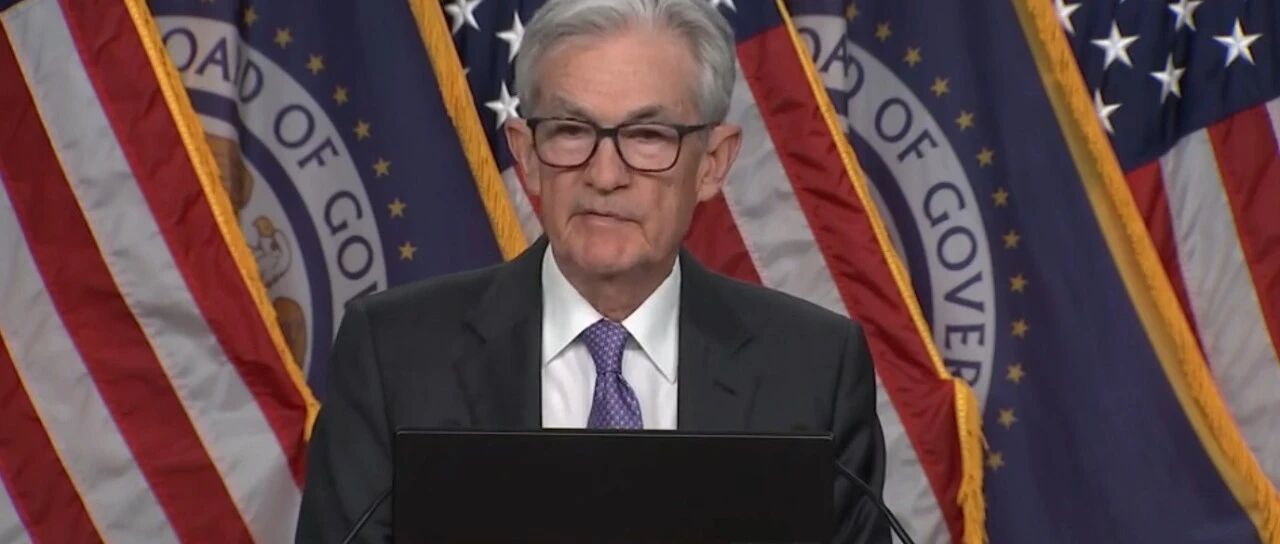
美联储主席鲍威尔:现有数据表明前景未变
Zheng Quan Shi Bao Wang· 2025-12-10 19:40
Core Viewpoint - The Federal Reserve Chairman Jerome Powell indicated that current data suggests no change in the economic outlook, with a gradually cooling labor market, persistently high inflation levels, and robust consumer spending [1] Group 1 - The labor market appears to be gradually cooling [1] - Inflation levels remain elevated [1] - Consumer spending continues to be strong [1]
Fed rate cut is 'insurance' buffer against labor market, says economist Claudia Sahm
Youtube· 2025-12-10 19:13
Our next guest says today's cut is an insurance cut against a weakening labor market. Let's bring in Claudia Som, chief economist at New Century Adviserss, creator of the SOM rule. Claudia, it's great to see you.Let me just set this up a little bit because we had Jason Ferman earlier saying we shouldn't cut because of inflation and because of the deficit. Those pressures are still too high. Um, obviously others are are more doubbish.They think that we can and should. Explain where you come down on this. >> ...