国内大循环

Search documents
万联晨会-20251203
Wanlian Securities· 2025-12-03 00:57
市 场 研 究 [Table_Title] 万联晨会 [Table_MeetReportDate] 2025 年 12 月 03 日 星期三 [Table_Summary] 概览 核心观点 【市场回顾】 周二 A 股三大股指全线收跌,上证指数下跌 0.42%,报 3897.71 点; 深证成指下跌 0.68%,报 13,056.70 点;创业板指下跌 0.69%,报 3071.15 点。A 股两市全天成交额 1.59 万亿元人民币,南向资金净买 入 41.01 亿港元。A 股两市个股超 3400 只个股下跌。申万行业方面, 石油石化、轻工制造及家用电器行业涨幅居前,传媒及有色金属行业 领跌;概念板块方面,福建自贸区及太赫兹概念指数涨幅居前,BC 电 池及 CRO 概念指数跌幅居前。恒生指数上涨 0.24%,恒生科技指数下 跌 0.37%;美国三大股指集体收涨,道指上涨 0.39%,报 47,474.46 点,标普 500 指数上涨 0.25%,报 6829.37 点,纳指上涨 0.59%,报 23,413.67 点。欧洲股市及亚太股市主要股指普遍上涨。 【重要新闻】 【国家发展改革委主任郑栅洁在《党建》杂志发 ...
新华全媒头条·2025中国经济回眸|巩固稳的基础 激发进的动能——透视中国经济的韧性底气
Xin Hua She· 2025-12-02 15:19
Core Viewpoint - China's economy is expected to reach a total economic output of 140 trillion yuan in 2025, solidifying its position as the world's second-largest economy, with consumption playing a crucial role in driving growth [1][2]. Economic Stability - In the first three quarters of 2025, China's GDP grew by 5.2% year-on-year, an acceleration of 0.4 percentage points compared to the previous year [2]. - The urban unemployment rate in October was 5.1%, a decrease of 0.1 percentage points from the previous month, while the Consumer Price Index (CPI) rose by 0.2% year-on-year, indicating overall price stability [2]. - China's foreign exchange reserves reached $33,433 billion by the end of October, reflecting a historical high in import and export volumes [2]. Policy Measures - The Chinese government has implemented a series of policies aimed at stabilizing employment, businesses, markets, and expectations, which have shown positive effects on economic stability [3]. - Major financial institutions, including Goldman Sachs and Deutsche Bank, have raised their growth forecasts for China's economy, highlighting its resilience and contribution to global economic stability [3]. Innovation and Growth - Significant advancements in quantum computing and the establishment of a quantum technology industry ecosystem are emerging as new growth points for the economy [4][5]. - The manufacturing sector remains robust, with the added value of equipment manufacturing accounting for over 35% of industrial output, and the energy transition is accelerating with one-third of electricity coming from green sources [8]. Consumption and Market Dynamics - Recent policies aim to enhance the adaptability of supply and demand in consumer goods, promoting a virtuous cycle of consumption upgrade and industrial upgrade [9]. - The focus on creating a unified national market and reducing logistics costs is expected to further stimulate domestic consumption [9]. Future Outlook - The 20th Central Committee emphasized the importance of achieving economic and social development goals, with a continued focus on high-quality development as the central theme for the next five years [10]. - Foreign investments in China are increasing, with significant projects launched by international companies, reflecting confidence in China's economic prospects [13].
郑栅洁:提高居民收入在国民收入分配中的比重
财联社· 2025-12-02 09:15
Core Viewpoint - The article emphasizes the importance of high-quality development and the implementation of the "15th Five-Year Plan" to achieve socialist modernization in China, focusing on improving people's livelihoods and promoting common prosperity [2][3][4]. Group 1: Achievements of the "14th Five-Year Plan" - The "14th Five-Year Plan" has laid a solid foundation for the "15th Five-Year Plan," with significant achievements in economic strength, technological advancement, and overall national power [4][5]. - The average economic growth rate during the first four years of the "14th Five-Year Plan" reached 5.5%, contributing approximately 30% to global economic growth [5]. - The manufacturing sector's added value exceeded 30 trillion yuan, with high-tech manufacturing growing at an annual rate of 9.2% [5]. Group 2: Development Environment for the "15th Five-Year Plan" - The "15th Five-Year Plan" period is characterized by both strategic opportunities and challenges, necessitating a focus on consolidating advantages and addressing weaknesses [6][7]. - China's economic foundation remains strong, with significant market potential and a complete industrial system, although challenges such as unbalanced development and risks in key areas persist [8]. Group 3: Strategic Tasks for the "15th Five-Year Plan" - The article outlines key strategic tasks, including promoting high-quality development, enhancing domestic and international dual circulation, and ensuring the well-being of all citizens [9][10][11]. - Emphasis is placed on building a modern industrial system, fostering innovation, and achieving green transformation in economic development [10][12]. Group 4: Enhancing People's Livelihoods - The article stresses the need to improve and guarantee people's livelihoods, with a focus on employment, income distribution, and social security systems [12]. - It highlights the importance of rural revitalization and regional coordinated development to address disparities between urban and rural areas [12]. Group 5: National Security and Governance - Strengthening national security capabilities and improving public safety governance are critical components of the development strategy [13]. - The article calls for a comprehensive approach to risk management in key sectors, including real estate and local government debt [13].


金融大家评 | 如何大力提振消费?
清华金融评论· 2025-12-02 08:15
Core Viewpoint - The article emphasizes the necessity of boosting consumer spending as a strategic choice to enhance domestic circulation and internal economic growth dynamics, particularly in the context of China's transition to high-quality development [3][5]. Group 1: Importance of Boosting Consumption - Strengthening consumer spending is crucial for expanding domestic demand and stimulating production scale, which can lead to economic structure optimization [3]. - Consumer spending contributed 53.5% to economic growth in the first three quarters of 2025, reinforcing its role as the primary driver of economic development [4]. Group 2: Reasons for Weak Consumer Spending - The weak consumer spending in China is closely linked to the traditional allocation of public resources, which has historically favored supply-side initiatives over demand-side support [6]. - The low share of household income in the national income distribution is a significant factor contributing to the low consumer spending rate, with households accounting for only 60.6% of national income compared to the global average [7][8]. Group 3: Measures to Enhance Consumer Spending - Improving the income distribution mechanism is essential for establishing a long-term mechanism to boost consumer spending, including increasing labor compensation and optimizing tax structures [9]. - Expanding social security and public service investments can effectively release consumer potential and support spending growth [9]. Group 4: Challenges to Overcome for Increased Consumption - The article identifies three major challenges: the long-term trend of slowing GDP and disposable income growth, the significant income disparity among residents, and the rapid aging of the population [10][11][12][13]. - Addressing these challenges is critical for maintaining a stable consumer spending rate that aligns with economic development stages and avoiding potential economic slowdowns [10][11].

海运大省,发力内河航运
3 6 Ke· 2025-12-02 02:11
Core Insights - The "Shipping Zhejiang" initiative aims to reduce logistics costs and promote high-quality development of inland shipping, with significant projects signed to adjust transportation structure from road to water [1][2] Group 1: Strategic Goals and Plans - The year 2025 marks the beginning of the "Shipping Zhejiang" construction, with a comprehensive plan for the inland waterway network, including 1,400 kilometers of secondary waterways [1] - The initiative includes the release of the 2.0 version of the technical guidelines for high-grade inland waterways, focusing on land-saving innovations [1][3] - Zhejiang has set ambitious targets of "1 billion tons transferred to water" and "fourfold increase" in shipping capacity [3] Group 2: Current Achievements and Statistics - In the first ten months of the year, Zhejiang's water transport investment reached 33.82 billion yuan, a year-on-year increase of 16.1% [3] - The inland ports achieved a cargo throughput of 360 million tons, up 9.3% year-on-year, and container throughput reached 1.93 million TEUs, increasing by 14% [3] - The number of inland container shipping routes has expanded to 84, effectively doubling the hinterland coverage [3] Group 3: Economic and Environmental Benefits - Inland water transport costs are significantly lower, at only 1/7 of road transport and 1/3 of rail transport, providing substantial cost advantages for exports [2] - Water transport has a much lower carbon emission footprint, with emissions being 1/6 of road transport and 2/3 of rail transport, contributing to carbon reduction efforts [2] - A single third-level waterway can accommodate 1,000-ton vessels, equivalent to the capacity of four highways, which can reduce heavy truck traffic by 30%, alleviating road congestion [2]
发挥积极财政政策作用(学习贯彻党的二十届四中全会精神)
Ren Min Ri Bao· 2025-12-01 22:11
Group 1 - The core viewpoint emphasizes the importance of fiscal policy as a foundation for national governance and its role in supporting China's modernization and national rejuvenation efforts [1] - The implementation of proactive fiscal policies since the new era has deepened the understanding of fiscal macro-control, utilizing tools like budgets, taxes, and government bonds to stabilize economic cycles and promote structural optimization [2][3] - The average economic growth rate in China is projected to be 5.5% from 2021 to 2024, with over 12 million new urban jobs created annually [3] Group 2 - The achievements in fiscal policy reflect the innovative theories of the Party, focusing on counter-cyclical management and the integration of supply-side and demand-side strategies [4] - The "14th Five-Year Plan" period will see public budget expenditures exceed 136 trillion yuan, supporting key national strategies such as rural revitalization and regional coordinated development [3][4] - The fiscal policy aims to enhance the effectiveness of macro-control and improve the management of public finances, ensuring that resources are directed towards areas that benefit the public [6][12] Group 3 - The "15th Five-Year Plan" period is critical for achieving socialist modernization, with complex domestic and international challenges that require effective fiscal responses [5] - The focus will be on expanding domestic demand, supporting technological self-reliance, and improving living standards through targeted fiscal measures [9][10][11] - The government aims to prevent and mitigate local government debt risks while promoting sustainable fiscal development [12]
中国“大市场”不一般!内需平均贡献率86.4%
Xin Hua Wang· 2025-12-01 02:37
Group 1 - The core viewpoint emphasizes that a strong domestic market is the strategic foundation for China's modernization, with a focus on expanding domestic demand as a key strategy [1] - The average contribution rate of domestic demand to economic growth from 2021 to 2024 is projected to be 86.4%, indicating a transition from a "large market" to a "strong market" [1] - China remains the second-largest consumer market globally, the largest in online retail, and the second-largest in imports, showcasing its significant position in the world economy [1] Group 2 - The average contribution rate of final consumption to economic growth has reached 56.2%, an increase of 8.6 percentage points compared to the previous five-year period, highlighting the emergence of new consumption trends [2] - In terms of product consumption, the integration of artificial intelligence into daily life has led to a surge in demand for smart devices, while traditional cultural products have also seen significant sales growth [2] - Investment in social welfare has been prioritized, with approximately 7.8 million units of affordable housing constructed over the past four years, addressing housing issues for over 20 million people [2] Group 3 - The interaction between investment and consumption is emphasized, where increased market consumption drives investment in production and infrastructure, leading to job creation and enhanced consumer capacity [3] - The "14th Five-Year Plan" suggests a focus on combining investments in goods and people to stimulate new demand and supply, promoting a positive interaction between consumption and investment [3] - The plan aims to accelerate the construction of a robust domestic market, continuously activating domestic demand and enhancing its internal driving force [3]
新华鲜报·“十四五”发展亮点丨中国“大市场”不一般!内需平均贡献率86.4%
Xin Hua Wang· 2025-12-01 02:19
Group 1 - The core viewpoint emphasizes the importance of a strong domestic market as a strategic foundation for China's modernization, with a focus on expanding domestic demand as a key strategy [1] - The average contribution rate of domestic demand to economic growth from 2021 to 2024 is projected to be 86.4%, indicating a steady transition from a "large market" to a "strong market" [1] - China remains the second-largest consumer market globally, the largest online retail market, and the second-largest import market [1] Group 2 - Over the past four years, final consumption has contributed an average of 56.2% to economic growth, an increase of 8.6 percentage points compared to the "13th Five-Year Plan" period [3] - The integration of artificial intelligence into daily life has led to a surge in demand for smart products, with significant sales growth in items like smart homes and traditional cultural products [3] - The service consumption sector has diversified, with increased demand for cultural, tourism, and wellness services, highlighting trends in urban leisure and traditional tea culture [3] Group 3 - The average contribution of investment accumulation to economic growth is 30.2%, with a focus on improving living standards through the construction of approximately 7.8 million affordable housing units over the past four years [5] - Investment in social welfare has seen rapid growth, enhancing basic public service levels and promoting a virtuous cycle between consumption and investment [5] - The expansion of market consumption has driven significant investment growth in related sectors, such as a 21.9% annual increase in internet and related services investment due to high demand for smartphones [5] Group 4 - The "14th Five-Year Plan" emphasizes the need to combine investments in both material and human resources, aiming to create new demand through new supply and promote a positive interaction between consumption and investment [5] - The strategy of expanding domestic demand is highlighted as a key focus, with plans to accelerate the development of a robust domestic market to invigorate internal demand [5]

增强国内大循环内生动力和可靠性——建设强大国内市场 加快构建新发展格局
Ren Min Ri Bao· 2025-11-30 22:50
Core Viewpoint - The strong domestic market is a strategic support for Chinese-style modernization, emphasizing the importance of domestic circulation to counter international uncertainties [1][5]. Group 1: New Development Pattern - The concept of constructing a new development pattern was first proposed by Xi Jinping in April 2020, highlighting its strategic significance for China's overall development [2]. - Since the 14th Five-Year Plan, China's domestic circulation has been increasingly consolidated, with domestic demand contributing an average of 86.4% to economic growth from 2021 to 2024 [3]. - The external environment is complex and challenging, necessitating a faster construction of the new development pattern to maintain development initiative [4]. Group 2: Domestic Market and Economic Resilience - As the world's second-largest economy, China must rely on a strong domestic market to enhance economic resilience and ensure stability in extreme situations [6]. - The 8th China International Import Expo showcased the vitality of China's large-scale market, with participation from 155 countries and over 4,100 foreign enterprises [7]. Group 3: Supply and Demand Coordination - The new development pattern requires simultaneous efforts on both supply and demand sides to improve the quality and efficiency of economic circulation [8]. - The "Non-Heritage Goodies" shopping month series aims to integrate traditional craftsmanship into modern life, promoting a dynamic balance between demand and supply [9]. Group 4: Advantages of the New Development Pattern - Recent cultural events, such as the Nanjing International Art Season, have attracted significant attendance and sales, indicating a growing consumer interest and economic activity [10]. - The average contribution of final consumption to economic growth is projected to be 56.2% from 2021 to 2024, while investment's contribution is expected to be 30.2% [11]. Group 5: Technological Innovation - China's technological self-reliance has significantly improved, with substantial investments in R&D expected to reach 3.61 trillion yuan by 2024, maintaining the second position globally [12]. - High-tech manufacturing and information technology services have shown remarkable growth, with increases of 9.6% and 11.2% respectively in the first three quarters of the year [12]. Group 6: High-Level Opening Up - There is a noticeable trend of foreign companies increasing R&D investments in China, with 631 foreign R&D centers established in Shanghai by September this year [13]. - The scale of goods trade is projected to grow from 32.2 trillion yuan in 2020 to approximately 43.9 trillion yuan by 2024, reflecting the benefits of high-level opening up [14]. Group 7: Strategic Deployment - The construction of a new development pattern is a systematic project that requires strategic planning and detailed implementation [15]. - Key tasks include expanding domestic demand, enhancing investment efficiency, and ensuring smooth economic circulation [15][16][17][18].
张占斌:挖掘内需潜力 增强国内大循环内生动力和可靠性
Ren Min Wang· 2025-11-30 09:21
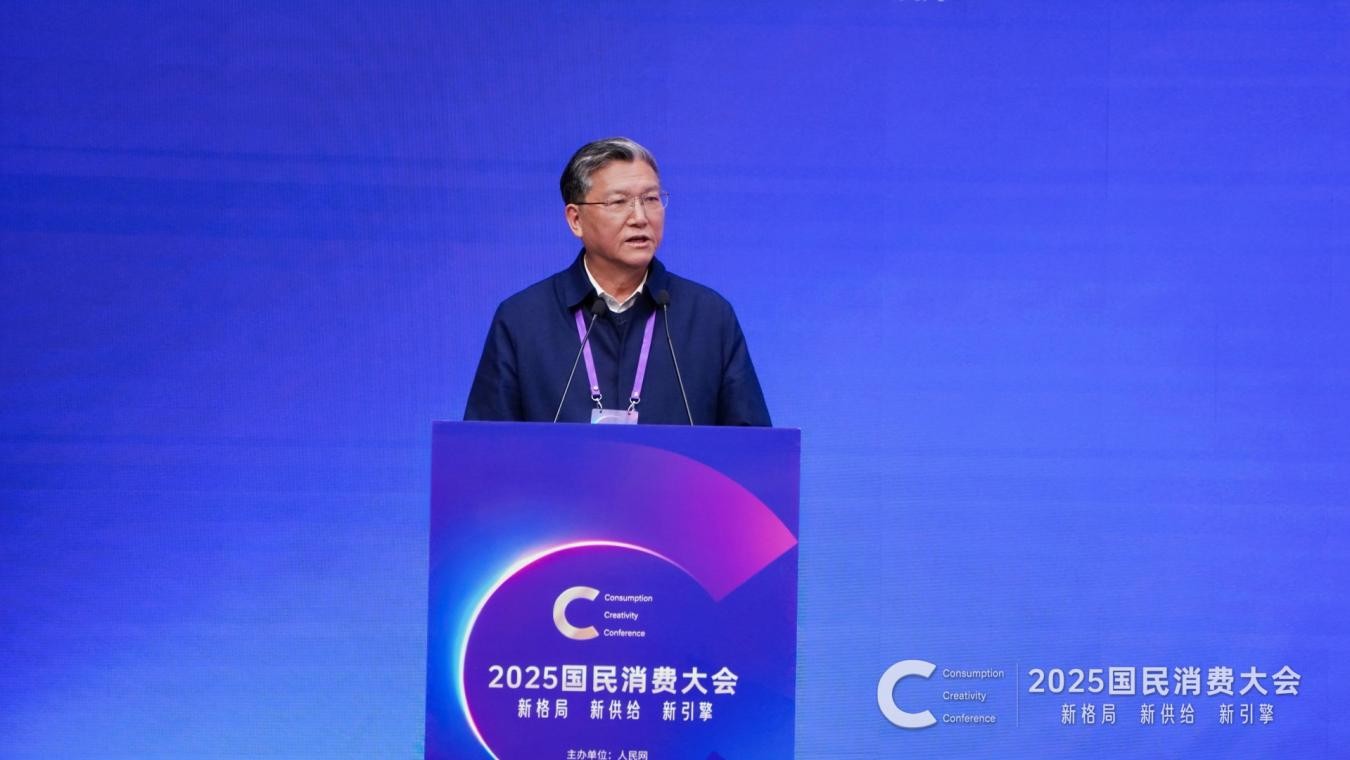
四是要以"补短板、强创新"优化供给体系,破解"产业链薄弱、投资低效"等问题。实施产业链"补链、强链、延链"工程,培育"链主"企业。优化投资结 构向民生与科技创新倾斜,落实减税降费,释放经营主体创新活力。 五是要以"扩开放、守底线"强化安全保障,破解"循环终端、风险冲击"等问题。对接国际规则,有序扩大开放。筑牢产业链安全屏障,加强金融、粮 食、能源保障。 11月29日,由人民网主办的2025国民消费大会在北京举行。与会专家学者共同聚焦消费领域前沿趋势和创新举措,围绕新型消费、健康消费、服务消费 等话题展开探讨,为提振消费、优化环境出谋划策。会上,中央党校(国家行政学院)中国式现代化研究中心主任、国家一级教授、博士生导师张占斌作 《着眼全局 做强国内大循环》主题分享。他认为,做强国内大循环是推动经济行稳致远的战略之举,要多措并举推动解决目前国内大循环存在的堵点、卡 点,增强国内大循环内生动力和可靠性。 二是要以"稳就业、增收入"筑牢消费根基。通过支持制造业、服务业技术改造吸纳就业、培育数字等新就业形态、鼓励平台企业开发灵活岗位等扩岗 位、稳就业。通过优化分配方式、加强社会保障体系建设等为消费增长注入动力。 "大国 ...