
多元资产配置

Search documents
爆款单品亮点纷呈 公募积极寻找规模抓手
Zhong Guo Zheng Quan Bao· 2025-09-07 22:29
Core Insights - The public fund management industry is experiencing a fee reduction trend, yet over half of the fund managers achieved year-on-year growth in management fee income in the first half of 2025, indicating a robust performance amidst challenges [1][2][8] - Leading institutions like GF Fund and Fortune Fund have diversified their product offerings and optimized their product structures, resulting in significant scale highlights across various business types [1][3][4] - The success of certain flagship products, such as ETFs and actively managed funds, has contributed to substantial increases in management fees for these institutions [3][6][7] Group 1: Performance and Growth - In the first half of 2025, GF Fund's management fee income from various products, including ETFs and fixed income, increased by over 10 million yuan year-on-year [2][3] - GF Fund's ETFs, such as the GF Nasdaq 100 ETF and GF Hong Kong Innovation Drug ETF, saw significant scale increases, with the latter achieving a return rate close to 90% and a scale increase of over 8.4 billion yuan [3][4] - Fortune Fund's products also performed well, with its Hong Kong Stock Connect Internet ETF becoming the largest in the market, and its management fee income also increasing by over 10 million yuan [4][5] Group 2: Market Trends and Strategies - The trend of multi-point development is evident, with major public fund managers leveraging their diverse product structures to withstand the pressures of fee reductions [2][3] - The rise of passive investment strategies, particularly through ETFs, has allowed fund managers to enhance their competitive edge while maintaining fee income despite overall fee reductions [8][9] - Institutions are advised to enhance their research capabilities, optimize product structures, and improve customer service to strengthen their core competitiveness and achieve sustainable development [1][8][9] Group 3: Product Highlights - Notable products like the Huaan Gold ETF and Tianhong Yu'ebao have attracted significant investor interest, with the former seeing a holder increase of over 210,000 and a scale nearing 60 billion yuan [6][7] - The actively managed funds, such as Yongying Advanced Manufacturing and Penghua Carbon Neutrality, have also seen rapid growth, with both funds surpassing the 10 billion yuan mark in scale [7][8] - The diversification of product offerings and the ability to capitalize on market trends have been crucial for fund managers in maintaining and growing their market positions [5][6][7]
爆款单品亮点纷呈公募积极寻找规模抓手
Zhong Guo Zheng Quan Bao· 2025-09-07 20:52
Core Insights - The public fund industry is experiencing a fee reduction trend, yet over half of the fund managers achieved year-on-year growth in management fee income in the first half of 2025, indicating resilience and adaptation to market pressures [1][2][7] - Leading institutions like GF Fund and Fortune Fund have diversified their product offerings and optimized their product structures, resulting in significant scale highlights across various business types [2][3][4] - The success of specific products, such as ETFs and actively managed funds, has been pivotal in driving growth, with notable increases in assets under management and management fees [3][5][6] Group 1: Fund Performance and Growth - More than half of public fund managers reported a year-on-year increase in management fee income, particularly GF Fund and Fortune Fund, which leveraged their diverse product structures to withstand fee reduction pressures [2][3] - GF Fund's ETFs, including the GF Nasdaq 100 ETF and GF Hong Kong Innovation Drug ETF, saw substantial growth, with the latter achieving a nearly 90% return rate and increasing its scale by over 84 billion [3][4] - Fortune Fund's products, such as the Fortune China Securities Hong Kong Internet ETF, also experienced significant growth, with management fee income increasing by over 10 million [4][5] Group 2: Market Trends and Strategies - The trend of multi-asset allocation is gaining traction, with gold ETFs like Huaan Gold ETF seeing a surge in popularity, contributing significantly to management fee income [5][6] - Active equity funds are also finding success, with products like Yongying Advanced Manufacturing and Penghua Carbon Neutrality achieving remarkable performance and attracting a large number of new investors [6][7] - Industry experts suggest that public fund managers need to enhance their research capabilities, optimize product structures, and improve customer service to maintain competitiveness in a changing market [7][8]
险资LP“跑步”进入股权投资市场 挑选GP有三大考量
Zheng Quan Shi Bao· 2025-09-04 18:52
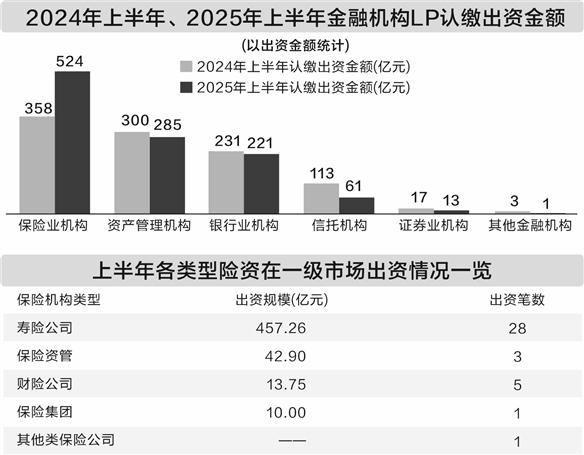
Core Insights - The establishment of Tianjin Jiayu Equity Investment Fund and Suzhou Kuanyu Equity Investment Fund has attracted market attention, with significant participation from insurance capital [2][3] - Insurance capital's investment in the primary market has accelerated, with a 46% year-on-year increase in subscribed capital in the first half of 2025, reaching 52.4 billion yuan [3][4] - The surge in insurance capital investment is driven by policy relaxation and the need for diversified asset allocation due to declining interest rates [5][6] Investment Scale and Trends - Tianjin Jiayu Equity Investment Fund has a total investment of 4.5 billion yuan, with insurance companies contributing approximately 4.497 billion yuan, highlighting their dominant role [3] - Suzhou Kuanyu Equity Investment Fund has a larger scale of about 22.429 billion yuan, with significant contributions from insurance companies [3] - In the first half of 2025, insurance capital's subscribed investment in equity reached 52.4 billion yuan, with life insurance companies accounting for nearly 90% of the total [4] Active Insurance Capital Players - Notable active insurance institutions include Ping An Life, Pacific Life, AIA, Sunshine Life, and others, with Ping An Life leading with an investment of 15 billion yuan across six funds [4] - Insurance capital is expanding its equity asset allocation through various methods, including equity investment plans and long-term equity investments [4] Policy and Market Drivers - The dual drivers of policy relaxation and market demand are facilitating the growth of insurance capital in equity investments [5] - Recent regulatory changes have increased the upper limit for equity asset allocation and simplified standards, allowing for greater flexibility in investments [5] Selection Criteria for General Partners (GPs) - Insurance capital prefers GPs with strong backgrounds, focusing on those with substantial registered capital and asset management [7] - The selection criteria emphasize matching investment stages, management capabilities, and performance metrics [7][8] - GPs with robust resources and proven performance in specific sectors are more likely to receive funding from insurance capital [8][9]

当多元配置成为FOF“未来式”:ETF-FOF产品阵营再迎扩容
2 1 Shi Ji Jing Ji Bao Dao· 2025-09-04 00:04
Group 1 - The core viewpoint of the articles highlights the increasing recognition and growth of FOF (Fund of Funds) in the A-share market, driven by a rise in various indices and a significant increase in the number and scale of public FOF funds [1][6] - As of the end of Q2 2025, the number of public FOF funds reached 513, with a total scale exceeding 165.6 billion yuan, marking a substantial increase from 151.045 billion yuan in the previous quarter [1][6] - The trend of integrating ETFs (Exchange-Traded Funds) into FOF strategies is gaining momentum, with a notable increase in the proportion of ETFs held within FOFs, reflecting a shift towards more flexible asset allocation [3][7] Group 2 - The ETF market in China has surpassed 5 trillion yuan as of August 25, 2025, representing a growth of over 35% compared to the end of 2024, with nearly 1,300 ETFs available [2] - The proportion of passive index funds in equity mixed FOFs was approximately 16.3% in the first half of 2025, while the share of ETFs in FOFs reached about 9.2% by the end of Q2 2025 [3][4] - The launch of new ETF-FOF products, such as the Xingzheng Global Yingfeng Multi-Asset Allocation Fund, indicates a growing trend towards combining asset allocation with index investment tools [4][6] Group 3 - The investment strategy of the Xingzheng Global Yingfeng Multi-Asset Allocation Fund focuses on enhancing returns through a diversified approach, including active management of equity and fixed-income assets [5][6] - The fund aims to leverage market opportunities, such as pricing discrepancies in extreme market conditions and participation in IPOs and block trades [5][7] - The transition of FOF from merely selecting funds to providing comprehensive asset allocation solutions reflects a broader evolution in investment strategies within the industry [6][7]
7张图,看懂多元配置的优势!
天天基金网· 2025-09-02 11:30
Core Viewpoint - The article emphasizes the importance of global asset allocation and diversification in investment strategies, highlighting the benefits of a multi-asset approach to mitigate risks and enhance returns [2][4][12]. Group 1: Globalization of Investment - Global asset allocation has become a standard practice in developed countries, helping to reduce the impact of market volatility on overall portfolios [4][7]. - Examples from the U.S., Japan, and Norway illustrate that significant portions of their pension funds are allocated to global markets, with Norway's sovereign fund exceeding 90% in global allocation [7]. Group 2: Economic Growth Perspective - Analyzing global per capita GDP trends shows that while individual countries may experience significant economic fluctuations, the global economy demonstrates a relatively stable growth trajectory [9][11]. - The annual volatility of global GDP is approximately 1.6%, compared to over 2% for individual countries, indicating that diversification can effectively buffer against economic volatility [11]. Group 3: Multi-Asset Allocation Trends - There is a growing consensus among public funds in China to embrace multi-asset strategies, as evidenced by the increasing proportion of commodity funds, QDII funds, and REITs in their portfolios [13]. - This shift reflects ongoing advancements in asset class expansion and investment strategy optimization within public funds [13]. Group 4: Advantages of FOF - FOF (Fund of Funds) emphasizes risk control and volatility management, aligning with the principles of diversified investment [16]. Group 5: Role of ETFs in Asset Allocation - ETFs are highlighted as ideal tools for achieving diversified asset allocation, with the total scale of domestic ETFs in China surpassing 5 trillion yuan, offering a wide range of investment options [21]. - The variety of ETF types, including equity, bond, currency, and commodity ETFs, provides investors with numerous choices for building diversified portfolios [23]. - FOF's enthusiasm for ETFs is growing, with the scale of ETF holdings in FOF's top ten funds increasing from 13.4 billion yuan to 14.3 billion yuan [25].

如何打造能穿越周期的投资组合?兴证全球基金多元资产配置的实践与探索
Zhong Guo Zheng Quan Bao· 2025-09-01 12:59
Core Viewpoint - The article emphasizes the increasing demand for diversified asset allocation among investors in a volatile market, highlighting the innovative strategies employed by Xingzheng Global Fund to create resilient investment portfolios that can withstand market fluctuations [1]. Group 1: Multi-Asset Investment Strategy - Xingzheng Global Fund is a pioneer in the "multi-asset + multi-strategy" investment model, having established its FOF investment and financial engineering department in 2016 with a team of 22 members [2] - The team utilizes a modular management approach, with dedicated researchers focusing on various asset classes, including equity funds, fixed income funds, overseas markets, and alternative assets, to identify diverse income opportunities [2] - The fund offers a range of FOF products, including public FOFs, separate account FOFs, and advisory services, providing clients with tailored multi-asset and multi-strategy solutions [2] Group 2: Global Asset Allocation - In 2024, the fund launched the "Xingzheng Global Multi-Asset Income" advisory strategy, which employs dynamic asset allocation across regions and asset classes to create an investment framework with all-weather risk hedging capabilities [3] - This strategy is recognized as one of the first domestic cases to implement global asset allocation concepts in buy-side advisory practices, winning the Golden Bull Award for innovative advisory cases in June 2023 [3] Group 3: Evolving Asset Allocation Services - In July 2023, the FOF Investment and Financial Engineering Department was renamed the Multi-Asset Allocation Department, aiming to build a flexible and rich multi-asset research system to meet the evolving asset allocation needs of investors [4] - The investment practice focuses on three core objectives: high-quality beta, stable alpha, and reduced gamma, establishing a disciplined framework to manage risk and return characteristics of each product [4] - As of June 30, 2025, all ten public FOF products established for over six months have generated significant excess returns compared to their performance benchmarks [4] Group 4: Wealth Management Redefined - The transition from FOF investment to multi-asset allocation and advisory services is redefining the essence of wealth management at Xingzheng Global Fund [5] - The advisory team emphasizes the importance of professional support to help investors navigate market volatility and build trust through long-term engagement [5] - The multi-asset allocation team is committed to optimizing cross-asset and cross-cycle combinations, smoothing portfolio volatility, and effectively managing risks through a dynamic rebalancing mechanism [5]
兴证全球基金领衔,49家FOF管理人旗下FOF主份额全线飘红
Xin Lang Ji Jin· 2025-09-01 03:56
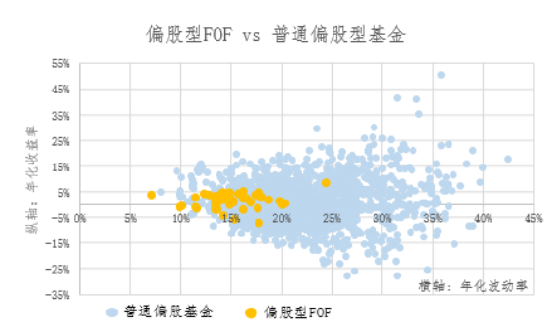
Group 1 - The core viewpoint of the articles highlights the positive performance and growing acceptance of public FOF (Fund of Funds) in China, with nearly 90% of FOF products achieving positive returns since inception as of August 25, 2025 [1] - The public FOF market in China began in 2017, with 514 existing products, of which 318 were established between 2021 and 2023, indicating a significant growth in this investment category [1] - The recovery of the equity market has contributed to the improved performance of FOF products that were launched during the previous market peak [1] Group 2 - FOF funds have demonstrated lower annualized volatility compared to traditional funds, with a three-year average annualized return of 1.56% and volatility of 15.06% for equity-oriented FOFs, outperforming the corresponding mixed equity funds [2][4] - For bond-oriented FOFs, the average annualized return was 1.63% with a volatility of 4.26%, which is lower than the average volatility of bond mixed funds [4] Group 3 - As of June 30, 2025, the total market size of FOFs reached 165.67 billion yuan, reflecting a 24.43% growth since the beginning of the year, reversing a two-year trend of decline [5] - By August 2025, 39 new FOFs were launched, surpassing the total of 36 for the entire year of 2024 [5] Group 4 - The trend towards multi-asset allocation in public FOFs is evident, with a shift from traditional stock-bond combinations to more diversified asset types, including gold ETFs and various commodity funds [6] - As of August 2025, 103 public FOF products included Hong Kong market indices in their performance benchmarks, and 21 products incorporated gold [6] Group 5 - The significant excess returns of FOFs managed by Xingzheng Global are attributed to their choice of performance benchmarks, which are more challenging to outperform, such as the CSI Mixed Equity Fund Index [8][10] - All 11 FOF funds managed by Xingzheng Global have recorded maximum drawdowns lower than their respective benchmarks, with 10 funds achieving excess returns [14]
浦银理财李桦:坚守稳健定位以多元配置服务实体与百姓财富
2 1 Shi Ji Jing Ji Bao Dao· 2025-08-28 23:15
Group 1 - The "2025 Asset Management Conference" was held in Shanghai, focusing on the development of asset management and the role of banks in the industry [1] - As of mid-August, the asset management scale of Pu Yin Wealth Management reached 1.45 trillion yuan, serving 13 million clients, with all products achieving positive returns this year [1] - The current market volatility is seen as a norm, and multi-asset allocation capabilities are becoming a core competitive advantage for asset management institutions [1] Group 2 - The positioning of bank wealth management is to provide low-volatility, stable products that pursue absolute returns, catering to the demand for low-risk asset allocation [2] - The asset management industry's mission is to serve the real economy and preserve and increase the value of people's wealth, especially in the context of green transformation and industrial upgrading [2] - Multi-asset allocation is essential for guiding capital towards new productive forces and supporting high-quality development [2]
资管机构拥抱被动投资浪潮 共同破局低利率时代“资产荒”
2 1 Shi Ji Jing Ji Bao Dao· 2025-08-28 03:47
Core Insights - The rise of passive investment, particularly index-based investment, is becoming a significant focus for asset management institutions as they adapt to changing market dynamics [1][2][3] - The total scale of ETFs listed in China has officially surpassed 5 trillion yuan, marking a historical high and indicating the growing importance of passive investment in capital markets [1][2] Group 1: Factors Driving ETF Growth - Regulatory support and guidance from authorities have been crucial in the rapid development of the ETF market [2] - Significant capital inflows from large institutional investors have provided a solid funding base for ETFs [2] - The supply side has seen public funds increasingly view ETFs as a key growth area, allocating substantial resources to this segment [2] - The ecosystem surrounding ETFs is maturing, with innovations in sales, research, and advisory services further promoting market development [2] Group 2: Characteristics and Trends in Passive Investment - Passive investment is characterized by its transparency, tradability, large capacity, and convenience, making ETFs one of the best tools for asset management companies to engage in equity market investments [2][3] - The structure of stock market investors is rapidly changing, with institutional investors now holding over 50% of the market, which influences the index curves that passive investments track [3] Group 3: Challenges in the Passive Investment Market - The passive investment market faces issues of significant homogeneity and concentrated supply, leading to potential resource wastage within the industry [3][4] - Many asset management firms are grappling with the decision to enter the passive investment space, as competition is fierce and often results in many participants exiting the market [3] Group 4: Strategies for Asset Management Institutions - Asset management institutions are exploring various strategies to provide stable and sustainable returns to investors, particularly in a low-risk environment [5][6] - Institutions are focusing on multi-asset allocation opportunities and enhancing their research capabilities to improve investor returns and client experiences [9][10] - The need for diversified asset allocation is emphasized, as single asset classes may not effectively navigate market cycles [9][10] Group 5: Innovations and Future Directions - Institutions are increasingly adopting quantitative strategies within passive index investment, with trends such as "passive active" and "active passive" emerging [7] - Wealth management institutions are enhancing their strategy for index products and focusing on investor education to promote the value of ETFs [8]
中信证券发文:不要被市场抽走灵魂
Ge Long Hui· 2025-08-27 01:54
Group 1 - The market has been experiencing a smooth bull trend since April, with recent acceleration and increasing confidence among investors [1] - Investment should enhance life choices rather than define them, emphasizing the importance of a rational investment plan and framework to cope with market fluctuations [1] - Key points to remember about bull markets include: 1) Bull markets change the probability of making money but do not enhance individual investment abilities [1] 2) Ordinary investors benefit from beta returns rather than alpha, making index investing more practical than stock picking [1] 3) Bull markets validate correct investment philosophies rather than disrupt them, highlighting the importance of maintaining diversified asset allocation [1] 4) It is unnecessary to dwell on missed opportunities; focus on future changes instead [1]
