消费者信心

Search documents
7月零售强劲难改信心下滑 美国消费者前景仍存不确定性
智通财经网· 2025-08-15 16:01
Group 1 - In July, U.S. retail sales showed broad growth, with a month-over-month increase of 0.5%, surpassing market expectations, and June's data revised up to a 0.9% increase [1] - Nine out of thirteen major retail categories experienced growth, with auto sales recording the largest increase since March [1] - Online retail and general merchandise stores performed well, benefiting from promotional events by Amazon, Walmart, and Target [1] Group 2 - Despite the positive retail sales report, consumer confidence unexpectedly declined in early August, raising concerns about the sustainability of retail sales momentum [2] - Economists suggest a higher likelihood of softening consumer spending in the second half of the year due to tariff uncertainties and recent employment data [2] - The July retail sales report indicated a 0.5% increase in the "control group" sales, which is used to calculate GDP, with significant growth in categories like furniture and sports goods, although some of this increase may reflect inflation [2] Group 3 - Economists noted that while July retail sales benefited from strong online shopping and auto sales, consumers reduced spending on dining and beverages, indicating a shift towards essential goods amid slowing disposable income growth [3] - Inflation data showed that businesses passed on tariff costs to consumers less than expected, but wholesale profit margins increased significantly, suggesting future direct impacts of tariffs on consumers [3] - Additionally, U.S. industrial production declined in July, indicating weakness in manufacturing output [3]
四分之三的消费潜力未释放,问题在哪?
和讯· 2025-08-15 10:45
Core Viewpoint - The article highlights the sluggish recovery of consumer spending in China, indicating that while there is potential for growth, consumer confidence and willingness to spend remain low due to various underlying issues [2][4]. Group 1: Consumer Data Analysis - In July, the total retail sales of consumer goods reached 38,780 billion yuan, showing a year-on-year growth of 3.7% but a month-on-month decline of 0.14% [3]. - The retail sales of consumer goods excluding automobiles amounted to 34,931 billion yuan, with a growth rate of 4.3% [3]. - From January to July, the total retail sales of consumer goods were 284,238 billion yuan, reflecting a growth of 4.8% [4]. Group 2: Consumer Confidence and Willingness - The consumer confidence index was reported at 88.03 in June 2025, indicating a weak state compared to the historical average of 124.6 in 2019 [5]. - The increase in household savings, with a balance of over 160 trillion yuan, suggests that while consumers have the capacity to spend, they prefer saving due to uncertainties about the future [4][5]. - Factors such as inadequate social security, high living costs, and barriers to consumption (e.g., housing and vehicle purchase restrictions) contribute to the lack of consumer willingness [5][6]. Group 3: Unlocking Consumption Potential - China has a significant consumption potential, with 75% of it yet to be realized, necessitating reforms to enhance the ability, willingness, and ease of consumption [6][7]. - To improve the "ability to consume," reforms in income distribution and labor compensation are essential, alongside addressing wage arrears for migrant workers [7][8]. - Enhancing consumer confidence requires stable social security measures and government policies to reduce precautionary savings and encourage spending [8]. Group 4: Addressing Consumption Barriers - The article emphasizes the need to eliminate restrictive policies on purchasing homes and vehicles to unlock potential consumer demand [8]. - Improving product quality and service standards is crucial for meeting the unmet needs of middle and high-income consumers [8]. - Strengthening consumer rights protection and enhancing the legal framework to address issues like price transparency and counterfeit goods are necessary for fostering a secure consumption environment [8].


全球瞭望丨英媒:“特朗普衰退”担忧令美英货币政策承压
Xin Hua Wang· 2025-08-12 05:58
在美国,消费者支出与股市下跌的关联更为紧密。美联储报告指出,过去十年美国零售额增长主要由富 裕家庭推动,其支出增幅是低收入群体的两倍多,而这一趋势高度依赖股市收益。 查尔斯·斯坦利证券公司股票分析师加里·怀特说:"由于(美国)总统的激进贸易政策,人们担心出 现'特朗普衰退',这意味着尽管通胀率高企,现在市场仍期待美联储会继续降息。" 【纠错】 【责任编辑:刘子丫】 新华社伦敦3月22日电(记者赵小娜)英国《卫报》日前刊文指出,美国关税政策引发的贸易争端可能 在美国和英国经济亟需降低借贷成本时推高通胀,对"特朗普衰退"的担忧令美联储和英国央行承受更大 降息压力。文章摘要如下: 美英两国货币政策制定者在判断利率走势时,要将如何认真应对"特朗普发起全面贸易战"的威胁纳入考 量。 美联储将审视由关税引发的"特朗普衰退"风险——飙升的进口成本可能令本已因生活成本危机而备受打 击的消费者停止支出。世界大型企业联合会数据显示,美国消费者信心水平大幅下降,2月份消费者信 心指数创下近四年来的最大单月跌幅。 英国央行决策者面临同样的困境,关税是当前最大担忧之一。与美联储情况相似:通胀率不断上升并保 持在2%的目标水平以上,而劳 ...
美消费电子支出现“脆弱曙光”?大摩警告:信心恶化+返校季疲软恐压制行业复苏
智通财经网· 2025-08-05 06:56
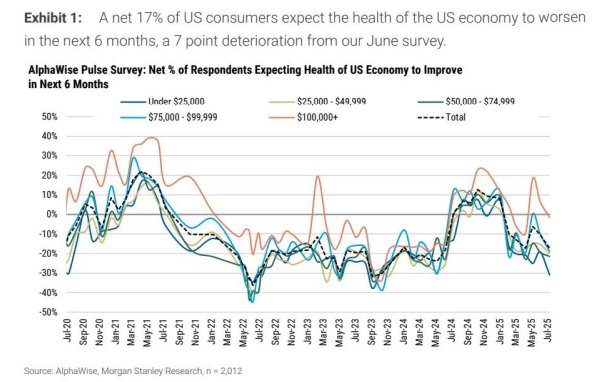
智通财经APP获悉,摩根士丹利发表研报表示,在整体市场情绪偏向负面的背景下,7月美国消费者电子产品支出意向环比略有上升,但仍处于负值区间。 这一信号为消费电子行业前景蒙上阴影,分析师警告称,返校季需求疲软和持续恶化的宏观情绪可能压制行业复苏。 摩根士丹利7月24日至28日开展的AlphaWise美国消费者调查显示,美国消费者对经济前景的态度愈发谨慎。消费者净情绪环比下降7个百分点至-17%,这是 继上月下降4个百分点后的又一次下滑。对家庭财务状况的信心也在7月减弱,环比下降6个百分点至+10%。 这种情绪恶化在几乎所有收入群体中都有体现。高收入家庭(年收入超过10万美元)对家庭财务状况最为谨慎,而低收入家庭(年收入低于2.5万美元)则对美国 经济最为担忧。不过,这一结果与密歇根大学消费者信心指数形成对比,该指数7月微升1个百分点。 尽管消费者对经济的信心下降,但未来6个月的电子产品支出意向在7月环比略有上升(仍为负值),而1个月支出意向则略有下降。 调查显示,未来一个月消费者电子产品净支出意向(即下月与本月相比的支出变化)环比下降3个百分点至-6%,未来一个月个人电脑净支出意向环比下降1个 百分点至-8%。更 ...
穆迪:印尼经济第二季度可能失去动力
news flash· 2025-08-04 00:25
Core Viewpoint - Moody's analysis indicates that Indonesia's GDP growth is expected to slow from 4.9% in the first quarter to 4.6% year-on-year in the second quarter, marking the weakest result since September 2021 [1] Economic Outlook - The anticipated GDP growth of 4.6% will be the lowest since the economic contraction caused by COVID-19 lockdowns in September 2021 [1] - Moody's forecasts a GDP growth of 4.7% for 2025, which is below the government's target of 5% [1] Contributing Factors - Global trade tensions are likely to exert pressure on exports [1] - Declining consumer confidence, slowing industrial activity, and high unemployment rates are expected to weigh on domestic economic performance [1] Upcoming Data - GDP data is scheduled to be released on Tuesday [1]
美股深夜跳水!金价飙升,油价大跌
Sou Hu Cai Jing· 2025-08-02 01:15
Market Overview - US stock markets experienced a significant decline, with the Dow Jones falling by 542.40 points (1.23%) to close at 43,588.58, the Nasdaq dropping by 2.24% to 20,650.13, and the S&P 500 decreasing by 1.60% to 6,238.01 [1] - For the week, the Dow Jones fell by 2.9%, the S&P 500 decreased by 2.4%, and the Nasdaq dropped by 2.2% [2] Employment Data - The US non-farm payrolls increased by 73,000 in the last month, falling short of the expected increase of 104,000, while the unemployment rate rose by 0.1 percentage points to 4.2% [3] - Employment growth revisions for May and June were significantly downward, surprising many analysts [3] - Job creation was primarily concentrated in previously understaffed sectors such as healthcare and social assistance, indicating a steady decline in the breadth of job creation [3] Consumer Confidence - The University of Michigan's survey indicated that US consumer confidence rose for the second consecutive month in July, with inflation expectations for the next year dropping to the lowest level since February [3] - Despite the positive trend in consumer sentiment, overall market sentiment remains negative, with consumers still cautious about the economic trajectory [3] Federal Reserve Actions - Federal Reserve officials expressed dissent regarding the decision to maintain interest rates, advocating for a loosening of monetary policy to prevent potential deterioration in the labor market [3] Treasury Yields - US Treasury yields fell sharply, with the two-year yield dropping by 26.5 basis points to 3.7% and the ten-year yield decreasing by 15.1 basis points to 4.22% [4] - The probability of a rate cut in September surged to over 80% according to the FedWatch tool [4] Corporate Performance - Amazon's stock fell by 8.3% following a third-quarter revenue guidance that was below market expectations [5] - Major tech stocks also performed poorly, with Apple down 2.5%, Nvidia down 2.3%, Tesla and Microsoft down 1.8%, and Meta down 0.7% [6] Chinese Stocks - The Nasdaq Golden Dragon China Index declined by 1.8%, with Alibaba down 2.9%, NetEase down 2.2%, Baidu down 2.0%, and JD down 1.8% [7] Oil and Gold Prices - Economic uncertainty and OPEC+ production increase expectations pressured oil prices, with WTI crude oil falling by 2.79% to $67.33 per barrel and Brent crude oil down by 2.83% to $69.67 per barrel [7] - Safe-haven sentiment drove gold prices higher, with October contracts on the New York Mercantile Exchange surpassing $3,400, marking a 2.02% increase [8]
深夜,美股崩了!金价飙升,油价大跌
第一财经· 2025-08-02 00:28
Core Viewpoint - The article discusses the negative impact of new tariffs imposed by the U.S. on various trade partners and disappointing employment data, leading to a decline in U.S. stock markets [3][4]. Market Performance - On Friday, the Dow Jones Industrial Average fell by 542.40 points, a decrease of 1.23%, closing at 43,588.58 points. The Nasdaq dropped by 2.24% to 20,650.13 points, and the S&P 500 index fell by 1.60% to 6,238.01 points [3]. - For the week, the Dow Jones decreased by 2.9%, the S&P 500 fell by 2.4%, and the Nasdaq declined by 2.2% [4]. Employment Data - The U.S. non-farm payrolls increased by 73,000 in the last month, falling short of the expected increase of 104,000. The unemployment rate rose by 0.1 percentage points to 4.2% [4]. - Adjustments to previous months' employment growth were significant, surprising many analysts [4]. Consumer Confidence - The University of Michigan's survey indicated that U.S. consumer confidence rose for the second consecutive month in July, with inflation expectations for the next year dropping to the lowest level since February [5]. Federal Reserve Actions - Federal Reserve officials expressed dissent regarding the decision to maintain interest rates, advocating for a loosening of monetary policy to prevent potential deterioration in the labor market [5]. - U.S. Treasury yields fell, with the two-year rate dropping by 26.5 basis points to 3.7% and the ten-year rate decreasing by 15.1 basis points to 4.22% [5]. Corporate Performance - Amazon's stock fell by 8.3% due to third-quarter revenue guidance that was below market expectations [6]. - Major tech stocks also experienced declines, with Apple down 2.5%, Nvidia down 2.3%, Tesla and Microsoft down 1.8%, and Meta down 0.7% [7]. Chinese Stocks - The Nasdaq Golden Dragon China Index fell by 1.8%, with Alibaba down 2.9%, NetEase down 2.2%, Baidu down 2.0%, and JD.com down 1.8% [8]. Commodity Prices - Oil prices were pressured by economic uncertainty and OPEC+ production increase expectations, with WTI crude oil falling by 2.79% to $67.33 per barrel and Brent crude oil down by 2.83% to $69.67 per barrel [8]. - Gold prices rose due to increased risk aversion, with October contracts surpassing $3,400, marking a 2.02% increase [9].

中美经贸会谈在瑞典斯德哥尔摩举行;华为重回世界500强前100;印乐法师任少林寺住持
Di Yi Cai Jing Zi Xun· 2025-07-30 01:21
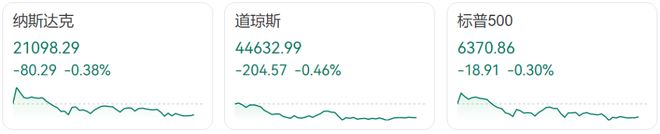
编辑 | 七三 美股齐跌 美国股市周二收低,标普500指数和纳指从历史高位回落。 截至收盘,道指下跌204.57点,报44632.99点,跌幅0.46%;标普500指数下跌18.91点,报6370.86点, 跌幅0.30%;纳指下跌80.29点,报21098.29点,跌幅0.38%。 大型成分股财报整体表现不一。联合健康公布第二季度调整后每股收益为4.08美元,低于市场预期的 4.59美元,且同比下滑40%。股价大跌7.5%,成为道指下行的主要拖累之一。 其他个股方面,波音股价下跌4.4%,默沙东股价收跌1.7%,联合包裹股价暴跌10.6%,消费品巨头宝洁 股价下跌0.3%。 诺和诺德重挫约22%,报53.94美元,创三年新低。公司下调2025财年销售和利润预期,预计全年销售 增长为8%-14%,此前为13%-21%,主因减肥药Wegovy销售表现不佳。 大型科技股涨跌不一。Meta Platforms 收跌 2.46%,特斯拉跌 1.35%,苹果跌 1.3%,亚马逊跌 0.76%, 英伟达下挫 0.70%,微软微涨 0.01%,谷歌A逆势上涨 1.65%。 热门中概股普遍走低,纳斯达克中国金龙指数下跌1.3 ...
减肥药巨头暴跌约22%
第一财经· 2025-07-30 00:07
Market Overview - The US stock market closed lower, with the S&P 500 and Nasdaq retreating from historical highs as investors awaited the Federal Reserve's interest rate policy statement and reacted to disappointing corporate earnings [1][2] - The Dow Jones Industrial Average fell by 204.57 points to 44,632.99, a decrease of 0.46%; the S&P 500 dropped 18.91 points to 6,370.86, down 0.30%; and the Nasdaq Composite declined by 80.29 points to 21,098.29, a drop of 0.38% [1] US-China Economic Relations - Chinese Vice Premier He Lifeng and US Treasury Secretary Janet Yellen held constructive talks in Stockholm, focusing on US-China economic relations and macroeconomic policies [2] - Both sides emphasized the importance of a stable and healthy economic relationship, which is beneficial for their development goals and global economic stability [2] Corporate Earnings Performance - UnitedHealth reported Q2 adjusted EPS of $4.08, below the expected $4.59, and lowered its full-year EPS forecast to at least $16, causing its stock to drop by 7.5% [2] - Boeing's Q2 revenue was $22.75 billion, exceeding expectations, but reported a core EPS loss of $1.24, leading to a 4.4% decline in its stock [3] - Merck's Q2 sales were $15.81 billion, slightly above expectations, but its adjusted EPS of $2.13 was down year-over-year, resulting in a 1.7% stock decline [3] - UPS's stock plummeted by 10.6% after reporting Q2 adjusted EPS of $1.55, slightly below expectations, and failing to provide full-year guidance [3] - Procter & Gamble's Q4 sales were $20.89 billion, with core EPS of $1.48, both slightly above expectations, but its growth forecast for FY2026 was below market expectations [3] - Novo Nordisk's stock fell approximately 22% after lowering its sales and profit outlook for FY2025 due to poor performance of its weight-loss drug Wegovy [4] Economic Data - The US trade deficit narrowed to $86 billion in June, a decrease of 10.8%, with imports down by 4.2% [4] - Job openings in the US fell to 7.44 million, below the expected 7.5 million, indicating stable labor demand [5] - Consumer confidence in the US rose in July, with the index increasing to 97.2, slightly above expectations [6] Upcoming Events - Investors are focused on the upcoming non-farm payroll report, with expectations that the Federal Reserve will maintain interest rates [7] - Major tech companies, including Meta, Microsoft, Apple, and Amazon, are set to release earnings this week, which are anticipated to significantly impact overall market trends [4]