
美元信用

Search documents
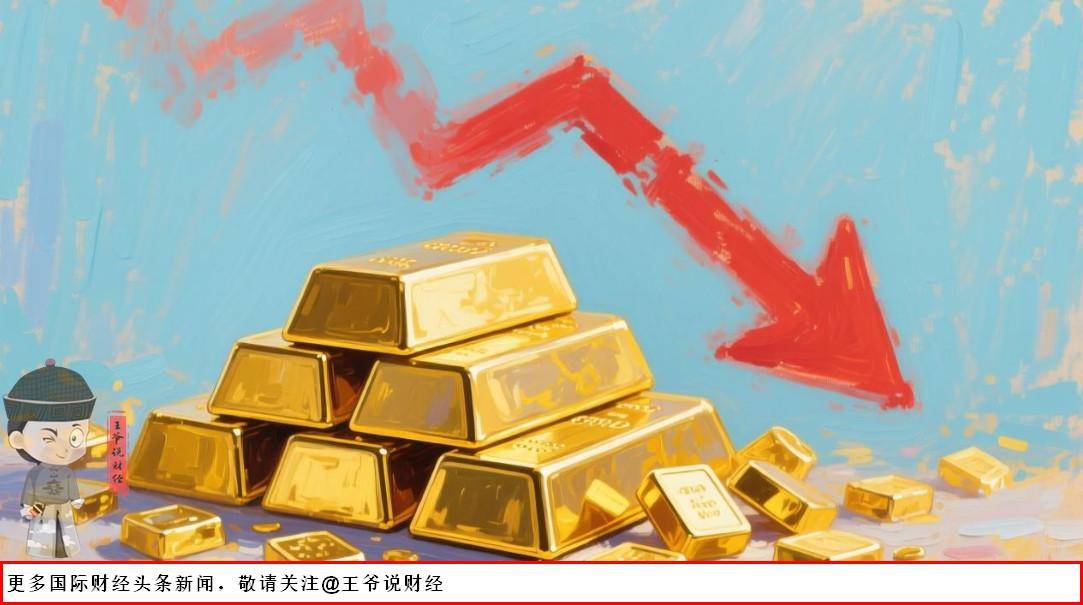
大跳水:金价跌破3900美元!这到底是牛市终结,还是倒车接人?
Sou Hu Cai Jing· 2025-10-29 02:15
Core Viewpoint - The recent sharp decline in gold prices is attributed to a combination of reduced risk appetite, a strong dollar, and technical selling triggered by algorithmic trading [3][4][6]. Group 1: Reasons for Gold Price Drop - Decreased risk appetite due to improved geopolitical signals from the US-China interactions and potential ceasefire talks in Ukraine, leading to reduced demand for gold as a safe-haven asset [3]. - A strong rebound in the dollar index, driven by expectations of adjustments in Japan's yield curve control, which increased the cost of holding gold priced in dollars [4]. - Technical selling pressure as gold prices surged from $2,624 to $4,381 in 2025, prompting algorithmic trading to trigger sell-offs once the price fell below the critical support level of $1,900 [4]. Group 2: Impact on Different Stakeholders - For consumers looking to buy gold jewelry, the price drop presents an opportunity, with prices at around 1,198 RMB per gram, down from 1,245 RMB, allowing for potential savings [6]. - Investors holding gold ETFs or paper gold should remain calm and not panic sell, as the market may stabilize [6]. - For those considering buying physical gold bars, a phased approach is recommended, with suggested entry points at $1,880 and $1,850 per ounce to mitigate risks [6]. Group 3: Market Outlook - Short-term outlook suggests continued pressure on gold prices due to geopolitical factors and a strong dollar, with potential dips to $1,850 [8]. - Long-term prospects remain positive, with central banks continuing to accumulate gold, and expectations of interest rate cuts in the future could enhance gold's attractiveness as an investment [9]. Group 4: Institutional Price Targets - Goldman Sachs projects gold prices could reach $4,900 by the end of 2026, while JPMorgan suggests extreme scenarios could push prices to $5,055 [10]. - Citigroup indicates that as long as global central bank purchases exceed 1,000 tons annually, gold prices will steadily rise above $2,200 [10]. Group 5: Investment Strategies - For consumers needing gold jewelry, it is advisable to observe the market for two weeks and consider buying if prices fall below 1,180 RMB per gram [11]. - Investors in gold bars should adopt a dollar-cost averaging strategy, buying in increments as prices decline [11]. - For paper gold or ETFs, setting a stop-loss at $1,880 is recommended, but panic selling is discouraged [11].

中国的黄金为什么要存放在美国?不是被扣押,这4个真相更实在
Sou Hu Cai Jing· 2025-10-28 00:46
Core Viewpoint - The presence of Chinese gold in the United States is a standard practice within the global financial system, not a forced action or a sign of insecurity [1][12]. Group 1: Historical Context - The New York Federal Reserve's underground vault serves as a "public warehouse" for gold, housing nearly 7,000 tons from over 60 countries and international organizations, including China [4]. - The practice of storing gold in the U.S. began post-World War II as European nations sought to protect their gold from wartime destruction, establishing the U.S. as a "gold haven" [4][3]. Group 2: Transactional Efficiency - Storing gold in New York facilitates easier transactions; for instance, transferring gold between countries can be done without physical transport, significantly reducing costs [5][8]. - New York remains the primary hub for global gold trading, with 80% of transactions linked to the city, making it a vital location for efficient trading and settlement [8][7]. Group 3: Cost Advantages - The Federal Reserve does not charge storage fees for gold, only transaction fees, making it more economical than building and maintaining a private vault [9]. - The cost of constructing a vault capable of storing 100 tons of gold can reach hundreds of millions, while using New York's facilities offers substantial savings [9]. Group 4: Ownership and Security - The gold stored in New York is considered "custodial" rather than "collateral," meaning ownership remains with the depositing country, and the U.S. has no rights to use it [10]. - Countries like Germany have successfully repatriated gold from New York, demonstrating that retrieval is not an issue but rather a matter of convenience [10]. Group 5: Current Trends and Adjustments - Recent shifts in global finance, including rising U.S. debt and declining dollar confidence, have prompted countries, including China, to diversify their gold reserves [12]. - China's gold imports have surged, indicating a strategy to optimize reserve structures while maintaining a portion in New York for transactional efficiency [12][13]. Group 6: Broader Implications - The strategy of diversifying gold storage reflects a broader adjustment to reduce reliance on a single currency and enhance financial sovereignty [13]. - China's actions are aimed at increasing the international standing of the Renminbi, thereby gaining more control over gold storage and transactions in the future [13].

平安期货杨宏:金银比价仍处高位,白银相对低估具备投资价值
Nan Fang Du Shi Bao· 2025-10-27 22:46
Core Viewpoint - The recent adjustments in gold and silver prices do not alter the long-term bullish outlook, with silver showing significant investment potential due to its dual financial and industrial attributes [1][3]. Gold Market Analysis - The recent price adjustments in gold and silver are attributed to a temporary easing of risk aversion and profit-taking by traders [3]. - The core logic supporting gold's value remains unchanged, with a shift towards a more accommodative monetary policy by the Federal Reserve being a clear mid-term benefit [3]. - The weakening of the dollar's credibility is driving gold prices higher, reflecting a long-term trend where the monetary attributes of gold gain prominence as confidence in dollar assets diminishes [3]. Silver Market Analysis - Silver prices are primarily driven by its financial attributes, with continuous supply gaps and strong industrial demand providing greater upward elasticity [4]. - Silver has experienced a supply gap for five consecutive years, and with steady growth in industrial demand, particularly from the photovoltaic sector, silver is expected to continue facing supply shortages, enhancing its price potential [4]. Investment Strategy - The company suggests a long-term bullish stance on gold, with a focus on buying opportunities during price dips [5]. - For silver, the expectation is for continued price increases in the medium to long term, with an emphasis on monitoring the gold-silver ratio to optimize trading strategies [5].

金价暴跌1400元,击鼓传花终于停了?华尔街做空黄金,再涨就完了?
Sou Hu Cai Jing· 2025-10-26 01:20
Core Viewpoint - The recent significant drop in gold prices, nearly $200, is attributed to the U.S. taking measures to defend the dollar's position against the rising value of gold, which has surged by 61% over the past six months due to a lack of confidence in the dollar [1][3][5]. Group 1: Gold and Dollar Dynamics - Since the Bretton Woods system, gold and the dollar have been inversely related, where an increase in gold value typically leads to a decrease in dollar value [1][3]. - The recent surge in gold prices was driven by fears regarding the devaluation of the dollar, as U.S. national debt reached $37.3 trillion, prompting investors to flock to gold as a safe haven [3][5]. - The Federal Reserve's recent statements, particularly from Governor Waller, indicated a cautious approach to interest rate cuts, which has reduced the attractiveness of holding gold [5][7]. Group 2: Market Reactions and Speculation - Following Waller's comments, speculative funds in the market reacted by selling off gold, leading to a sharp price decline, as many had been leveraging their positions in gold trading [9][11]. - The narrative around gold's price increase being driven by speculation has gained traction, with some analysts suggesting that the current price levels are unsustainable and indicative of a bubble [11][15]. - The market is currently experiencing a "preemptive adjustment," with speculative investors exiting, which may lead to further price corrections in the short term [15][17]. Group 3: Future Outlook - The long-term fundamentals supporting gold, such as rising U.S. debt and ongoing purchases by central banks, remain intact, suggesting that gold may not experience a drastic decline [15][19]. - The upcoming Federal Reserve meeting will be crucial; a modest rate cut could lead to further adjustments in gold prices, while a more aggressive easing could provide new upward momentum for gold [19][21]. - The ongoing interplay between gold and the dollar is expected to continue, with both assets remaining in a competitive dynamic as market conditions evolve [19].

36万亿到37万亿花了8个多月,37万亿到38万亿只用2个多月,美媒:美国累积债务速度创纪录
Sou Hu Cai Jing· 2025-10-23 15:49
Core Insights - The U.S. national debt has surged from $36 trillion to $38 trillion in just over two months, marking an unprecedented rate of debt growth [3][5] - The primary expenditures driving this debt increase are Social Security, Medicare, and defense spending, with defense budget for fiscal year 2024 exceeding $880 billion [5] - Interest payments on the debt have surpassed $1 trillion annually, exceeding military spending, indicating a significant financial burden [5][8] Debt Dynamics - The Federal Reserve's interest rate hikes since 2022 have increased borrowing costs, leading to a cycle of escalating debt [6][10] - Despite a reduction in holdings by major foreign creditors like Japan and China, domestic institutions such as Social Security Trust Funds and pension funds are actively purchasing U.S. debt [8] - Interest payments are projected to account for nearly 16% of federal spending, the highest in 20 years, suggesting a growing financial strain [8] Economic Implications - The U.S. debt-to-GDP ratio is approaching 123%, raising concerns about long-term sustainability, especially as the global appetite for U.S. debt may wane [10][12] - The reliance on debt to maintain economic confidence creates a precarious situation where any shift in sentiment could destabilize the financial system [12][14] - The perception of the U.S. dollar's reliability is crucial, as a loss of confidence could lead to significant economic repercussions [14][15]
中国期货每日简报-20251023
Zhong Xin Qi Huo· 2025-10-23 00:34
Report Industry Investment Rating No relevant content provided. Core Viewpoints - On October 22, equity indices fell while most CGB futures rose. More commodities rose, with energy & chemicals performing strongly [2][10][13]. - The price of crude oil increased by 2.5% on October 22, but the rebound space is expected to be limited due to persistent downward pressure on fundamentals and uncertain macroeconomics and geopolitics [16][18]. - Gold and silver decreased by 3.9% on October 22. After the concentrated realization of bullish factors, the market may enter a phased correction period. However, in the long run, the bull market trend of precious metals has not yet reversed [23][27][28]. Summary by Directory 1. China Futures 1.1 Overview - On October 22, equity indices fell (IC decreased by 0.8%), most CGB futures rose (TL increased by 0.1%), more commodities rose, and energy & chemicals performed strongly. Among commodities, the top three gainers were bitumen (up 2.9% with open interest up 2.7% month - on - month), rapeseed (up 2.5% with open interest up 6.5% month - on - month), and crude oil (up 2.5% with open interest up 5.1% month - on - month). The top three decliners were gold (down 3.9% with open interest down 6.0% month - on - month), silver (down 3.9% with open interest down 9.0% month - on - month), and RBD palm olein (down 1.7% with open interest up 3.8% month - on - month) [10][11][13]. 1.2 Daily Raise - Crude Oil - On October 22, crude oil increased by 2.5% to 447.2 yuan/barrel. The downward pressure on fundamentals persists, and the outlook for macroeconomics and geopolitics remains uncertain. The room for rebound is expected to be limited. API data shows a slight draw in U.S. crude oil, gasoline, and diesel inventories last week, but the sustainability of this trend is limited. The supply side is in a phase of production increase, and there is pressure for accelerated crude oil inventory accumulation [16][17][18]. 1.3 Daily Drop - Gold & Silver - On October 22, gold decreased by 3.9% to 952.56 yuan/gram, and silver decreased by 3.9% to 11404 yuan/kg. After nearly two months of upward trend since late August, the market may enter a phased correction period as some bullish factors are gradually digested. In the long run, the bull market trend of precious metals has not reversed, and the contraction of US dollar credit remains the core cornerstone [23][27][28]. 2. China News 2.1 Macro News - Trump said he expected to reach a trade agreement with Chinese leader at the APEC summit, but the meeting might be canceled. The Chinese Foreign Ministry spokesperson stated that heads - of - state diplomacy plays an irreplaceable role in Sino - US relations, and there is no information to share on the specific issue [3][38]. - The EU trade chief said that EU and Chinese officials have agreed to meet in Brussels for urgent talks on China's export controls on rare earth. The Chinese Foreign Ministry emphasized that China - EU economic and trade relations are win - win, and hopes the EU will uphold free trade principles [38][39]. 2.2 Industry News - Shenzhen has released the "Shenzhen Action Plan for Promoting High - Quality Development of Mergers and Acquisitions (2025 - 2027)", aiming to have the total market value of domestic and overseas listed companies exceed RMB 20 trillion by the end of 2027, cultivate 20 enterprises with a market value of over RMB 100 billion, and build a complete industrial chain M&A ecosystem [39].
黄金暴跌,是“倒车接人”还是“顶部崩塌”
Jing Ji Guan Cha Bao· 2025-10-22 11:26
Core Viewpoint - The recent sharp decline in gold prices, with a drop of over 6% on October 21, has raised concerns among investors, marking the largest single-day drop since April 2013 [1][3][4] Group 1: Market Reaction - On October 22, gold ETFs opened significantly lower, with declines exceeding 4%, and the Shanghai Gold Exchange reported a drop of 54 yuan per gram [1][3] - Domestic gold jewelry prices were also adjusted downward, with reductions of up to 83 yuan per gram in some stores [1] Group 2: Causes of the Decline - The decline in gold prices is attributed to multiple negative factors, including a decrease in risk aversion, a strong US dollar, and profit-taking by investors [3][4] - The market's perception of reduced geopolitical tensions, such as potential US-China trade discussions and responses to the Russia-Ukraine conflict, has contributed to the drop [4] - Technical indicators showed that gold was severely overbought, prompting large-scale profit-taking, with the US gold ETF reducing holdings by 125 tons [4] Group 3: Future Outlook - Analysts suggest that while short-term adjustments are expected, the long-term outlook for gold remains positive due to ongoing central bank purchases and increasing investment demand [6][7] - The potential for further declines in gold prices exists if upcoming US economic data exceeds expectations, which could increase market volatility [6] - The overall sentiment indicates that gold may still be in a long-term upward trend, despite short-term fluctuations [7]
中欧基金基金经理叶培培:黄金短期交易拥挤,中长期驱动力未发生根本转变
Zheng Quan Shi Bao Wang· 2025-10-22 07:01
Core Viewpoint - The current gold market is experiencing a crowded trading sentiment, with a potential correction of 10% to 15% expected, similar to the market behavior observed from April to August this year. However, the long-term drivers for gold prices have not fundamentally changed, indicating a high ceiling for gold prices [1] Summary by Relevant Categories Short-term Market Dynamics - The gold market is currently characterized by an overheated trading sentiment, suggesting a potential correction of 10% to 15% [1] - This situation mirrors the market trends seen from April to August of this year [1] Long-term Price Drivers - The fundamental drivers for gold prices remain unchanged, with a high ceiling anticipated for gold prices [1] - The proportion of investable gold market capitalization relative to stock and bond portfolios is significantly lower than it was before the 1980s, indicating room for rebalancing towards dollar assets [1] Key Influencing Factors - The reversal of gold price drivers is closely tied to the weakening of the US dollar's credit [1] - Historical analysis over the past 60 years shows an inverse relationship between gold and US dollar credit [1] - If the US economy achieves a long-term strong recovery and fiscal balance, such as reducing the deficit rate below 4%, it could signal the end of a bull market for gold. Until then, the expectation is for gold to remain in a fluctuating upward trend [1]

中欧基金的基金经理叶培培:黄金短期交易拥挤,中长期驱动力未发生根本转变
Zheng Quan Shi Bao Wang· 2025-10-22 06:35
Core Viewpoint - The current gold market is experiencing a consolidation phase, with a potential 10-15% correction expected due to overheated trading sentiment, similar to the market behavior observed from April to August this year [1] Group 1: Market Analysis - The long-term drivers of gold prices have not fundamentally changed, indicating a high ceiling for gold prices [1] - The proportion of investable gold market capitalization relative to stock and bond portfolios is significantly lower than it was before the 1980s, suggesting room for rebalancing towards dollar assets [1] Group 2: Economic Indicators - The reversal of gold price driving factors is closely tied to the weakening of the US dollar's credit [1] - Historical analysis over the past 60 years shows an inverse relationship between gold and US dollar credit [1] - If the US economy achieves a long-term robust recovery and brings fiscal balance, such as reducing the deficit rate below 4%, the bull market for gold may come to an end [1] Group 3: Price Trend Outlook - Until a significant economic shift occurs, the outlook for gold prices remains within a fluctuating upward channel [1]
金油比逼近历史高位,机构认为强金价弱油价长期或难扭转
Sou Hu Cai Jing· 2025-10-21 23:32
Core Viewpoint - The international gold and oil markets are experiencing a stark divergence, with gold prices surging to historical highs while oil prices are under pressure, indicating a significant shift in market dynamics [1] Group 1: Gold Market - Gold prices have recently soared, with COMEX gold futures reaching over $4,300 per ounce, marking a new historical high [1] - The increase in gold prices is attributed to heightened expectations of interest rate cuts by the Federal Reserve, rising market risk aversion, and a weakening of the dollar's credibility [1] - The rapid increase in gold prices may face short-term profit-taking pressure, which could lead to a potential correction in the gold-to-oil ratio [1] Group 2: Oil Market - In contrast, WTI crude oil futures have fallen below $56 per barrel, reaching the lowest level since early May, indicating ongoing pressure in the oil market [1] - The decline in oil prices is primarily driven by fundamental industry factors, including oversupply and weakening demand, which highlight the issue of excess production capacity [1] - The long-term outlook suggests that the current strong gold prices and weak oil prices may not fundamentally reverse in the near future [1]