零碳园区

Search documents
中财办定调零碳园区仍是明年重点,专家建议绿电绿证抵消比例控制在10%以内
Xin Lang Cai Jing· 2025-12-21 07:20
本报(chinatimes.net.cn)记者刘诗萌 北京报道 作为中国深入推进绿色转型的重要抓手,零碳园区是2025年绿色低碳领域中最重要的政策之一。2024年 年底,"零碳园区"首次被写入中央经济工作会议,过去一年间,政策推进力度空前,各地的建设也如火 如荼。站在"十五五"的新起点上,零碳园区如何在经济效益的基础上实现规模化落地,成为各方关注的 重点。 近日,中财办有关负责人在解读2025年中央经济工作会议精神中,就明年推动"双碳"引领、推动全面绿 色转型提到,要加快建设新型能源体系,积极拓展清洁能源应用场景,扩大绿电应用,建设一批零碳园 区、零碳工厂。尽管2025年年底中央经济工作会议的内容中没有像去年一样明确提到"零碳园区",但在 这一领域中长期政策已经应出尽出的背景下,中财办的发声同样给出了明确的定调。 厦门大学中国能源政策研究院院长林伯强向《华夏时报》记者指出,目前市场上虽然有很多园区号 称"零碳",但实际上很难真正地做到零碳。因为真正的零碳园区需要让园区用电与风电光伏挂钩,如果 说还是直接和公共电网相连,再去买绿电、绿证来进行可再生能源消费替代,这不能算是真正地建设零 碳园区。因此他建议将园区用 ...


多措并举建好零碳园区
Xin Lang Cai Jing· 2025-12-19 22:31
Core Viewpoint - The establishment of zero-carbon parks is essential for building a zero-carbon society and is a key strategy for promoting green economic transformation, especially in the context of limitations on centralized renewable energy development [1] Group 1: Policy and Government Initiatives - The Central Economic Work Conference in December 2024 proposed the establishment of a number of zero-carbon parks, which was further emphasized in this year's Government Work Report [1] - The National Development and Reform Commission, the Ministry of Industry and Information Technology, and the National Energy Administration jointly issued a notice on the construction of zero-carbon parks, outlining key tasks, basic conditions, and support measures [1] - The National Development and Reform Commission plans to identify the first batch of national-level zero-carbon parks [1] Group 2: Role and Function of Zero-Carbon Parks - Zero-carbon parks serve as practical carriers and innovation windows for zero-carbon transformation, focusing on energy consumption and carbon emissions in industrial parks, which are major hubs for manufacturing and productive services in China [1] - These parks are transitioning from "energy consumers" to "green innovators" by implementing distributed solar and wind energy, energy storage, smart microgrids, and energy management platforms [2] Group 3: Strategies for Construction - Internal potential should be tapped by enhancing the development and utilization of distributed renewable energy within parks, achieving self-circulation and self-sufficiency in energy production, consumption, and storage [3] - External support can be leveraged through direct connections to nearby renewable energy facilities, enabling efficient collaboration between internal energy consumption and external renewable supply [3] - Green certificates can be used to offset any shortfall in renewable energy supply or carbon reduction targets, ensuring a closed-loop for carbon neutrality [3] Group 4: Challenges and Solutions - Despite rapid progress in zero-carbon park construction, challenges such as an incomplete standard system, fragmented technology paths, significant funding pressures, and inadequate governance mechanisms remain [3] - A comprehensive approach is needed to strengthen collaborative innovation, making zero-carbon parks a breakthrough point for green transformation [3] - Establishing a national and local standard system for zero-carbon parks, improving carbon emission accounting, and creating performance-based incentive mechanisms are crucial for attracting social capital [4] - Accelerating the integration of technologies and establishing a digital platform for energy management and carbon emissions are essential for effective monitoring and control [4] - A multi-party governance system involving government leadership, enterprise initiative, and social participation should be developed to enhance policy coordination and resource sharing [4]
城记 | “零碳园区”规模化元年 走进朗新看“AI+能源”前沿
Xin Hua Cai Jing· 2025-12-19 08:53
Core Viewpoint - The integration of digital economy and "dual carbon" strategy is reshaping the global energy system, with technological innovation in energy companies being a key measure of industry competitiveness [1] Group 1: Technological Innovation - Longxin Technology Group has made continuous breakthroughs in integrating AI and energy scenarios, becoming a significant force in driving energy transition [1] - The company has developed the "Longxin Jiugong AI Energy Model," which combines "time series prediction" and "AI agents" to address core industry challenges such as power load forecasting and risk management [2][3] - The model has achieved over 75% accuracy in price difference prediction and over 97% accuracy in load forecasting in actual applications within power spot markets [3] Group 2: Industry Implementation - Longxin Technology has created a scalable business model by coupling AI model technology with actual industry needs, exemplified by the Wuxi Zero Carbon Industrial Park [4] - The park has been recognized as a benchmark for zero-carbon technology parks in Jiangsu Province and has achieved carbon neutrality certification for two consecutive years [4] - The transition to zero-carbon parks is expected to generate over one trillion yuan in investment demand as the country moves towards low-carbon transformation [4] Group 3: Electricity Market Development - The electricity market is rapidly developing, with 28 provinces now participating in the spot market, a significant increase from 8 provinces last year [5] - Longxin Technology has obtained electricity sales qualifications in all 28 provinces, with a projected 300% growth in trading volume by the end of the year [5] - The company has also established a service platform targeting small and medium-sized enterprises, which have not yet entered the electricity market, indicating a vast market potential [5] Group 4: Public Services and Digitalization - Longxin Technology has pioneered internet payment services for public utilities, connecting over 7,000 utility institutions and serving hundreds of millions of households [6] - The "Xindian Tu" platform has created a smart charging network covering 440 cities and over 2.7 million registered users, becoming a leading charging service platform [6][7] - The company emphasizes collaboration with major players in the energy sector to enhance the digitalization of energy assets and expand its service offerings [7][8] Group 5: Global Reach and Future Outlook - Longxin Technology's influence extends to 15 countries and regions, serving over 80 million users globally, promoting Chinese energy digitalization technology along the Belt and Road [8] - The company aims to drive the energy system towards a cleaner, smarter, more efficient, and inclusive direction through technological innovation and alignment with industry and societal needs [8]

气候灯塔企业3060伙伴计划丨成长营:第1期《零碳园区与数据资产》 | 系列培训
中国能源报· 2025-12-18 04:38
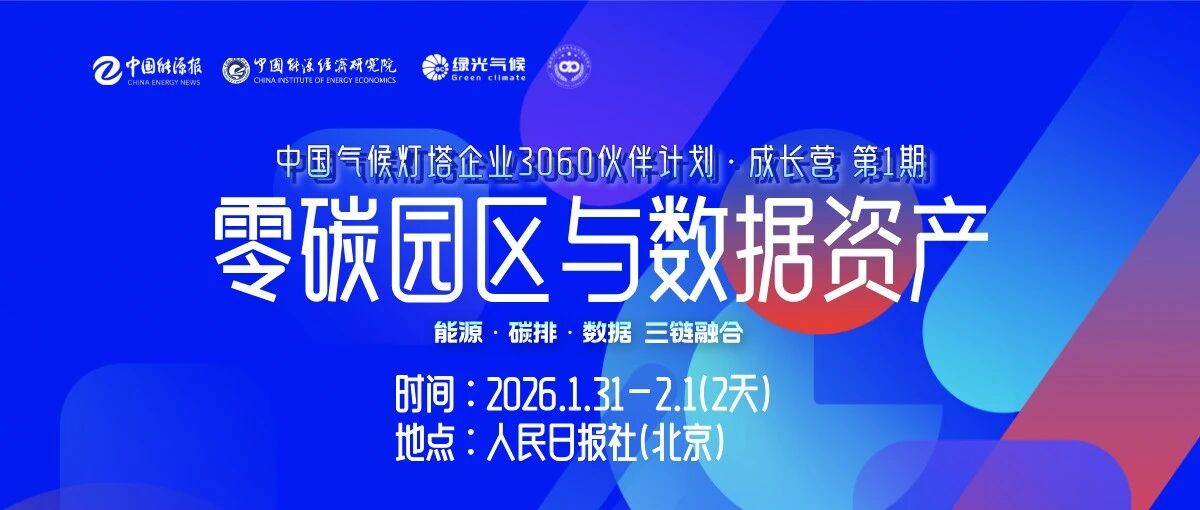
Core Insights - The article emphasizes the transition towards a "carbon + data" dual-factor driven era in China's industry, highlighting the importance of carbon as a tradable and financeable asset rather than just a compliance cost [2][4] - It discusses the implementation of significant policies aimed at promoting the construction of zero-carbon parks and the integration of clean energy, traditional industry carbon reduction, and intelligent carbon management [2] - The "China Climate Lighthouse Enterprise 3060 Partner Program" is introduced, focusing on the integration of energy, carbon, and data, aiming to assist high-potential enterprises in overcoming carbon barriers and seizing historical opportunities for green transformation [2] Policy and Strategic Framework - The article outlines several key policies, including the "Notice on the Construction of Zero-Carbon Parks" and the "Opinions of the Central Committee of the Communist Party of China and the State Council on Building a More Perfect Market-Oriented Allocation System for Factors" [2] - It mentions the shift in focus from energy consumption control to carbon emission control, with the establishment of a national carbon market involving 6,000 key emission enterprises [2] - The article highlights the need for a collaborative development of clean energy, traditional industry carbon reduction, and intelligent carbon management to decouple economic growth from carbon emissions [2] Educational Initiatives - The article introduces a training program titled "Zero-Carbon Park and Data Assets," aimed at enhancing understanding of zero-carbon park policies, standards, and technological pathways [5][6] - The program includes modules on zero-carbon park policy, technical paths, and case studies, designed to provide participants with a comprehensive knowledge framework [5][6] - It targets various sectors, including platform enterprises, energy companies, financial institutions, and technology sectors, emphasizing the importance of green digital economy and carbon asset management [7] Course Details - The course is scheduled for January 31 to February 1, 2026, at the People's Daily in Beijing, with fees set at 8,900 RMB for in-person attendance and 6,900 RMB for online participation [6][7] - Special discounts are available for early registration and group sign-ups, with additional benefits for companies recognized in the ESG100 [7] - The course aims to build a community of high-quality industry participants and enhance leadership in green transformation [5][7]
国家零碳园区呼之欲出,首批试点花落谁家?
2 1 Shi Ji Jing Ji Bao Dao· 2025-12-17 11:27
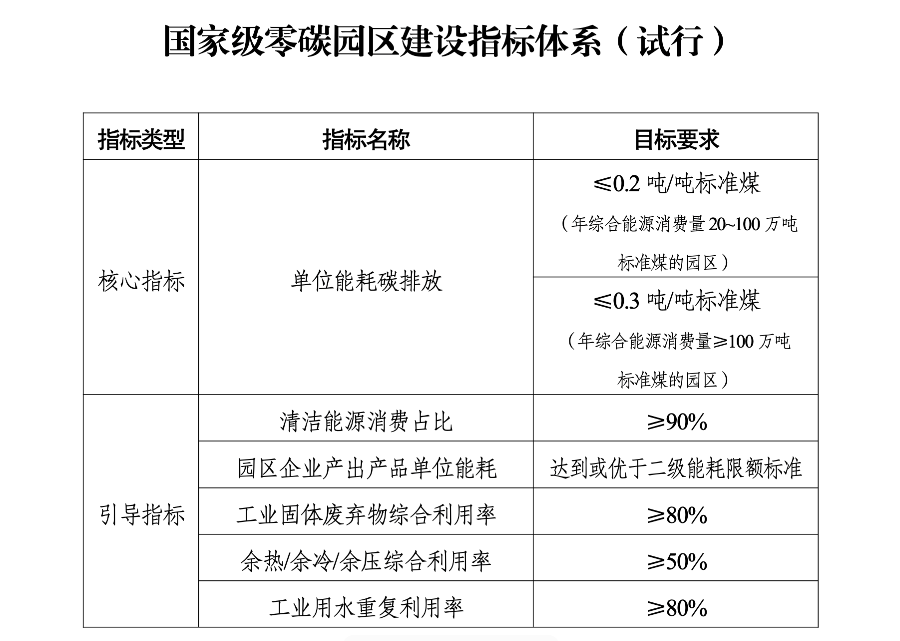
Core Insights - The first batch of national-level zero-carbon parks has completed the review process, with the final list expected to be announced soon [1] - The establishment of zero-carbon parks is a key strategic measure to achieve China's dual carbon goals, with a target of building around 100 national-level zero-carbon parks during the 14th Five-Year Plan period [2][3] - The construction of zero-carbon parks faces challenges such as high costs and the need for technological integration, despite the push for investment and construction [1][3] Policy and Regulatory Framework - The National Development and Reform Commission (NDRC) and other departments have issued guidelines on the basic conditions, indicators, and carbon emission accounting methods for zero-carbon park construction [2] - The core indicator for evaluating zero-carbon parks is "unit energy consumption carbon emissions," which aims to guide parks to achieve near-zero carbon emissions while ensuring enterprise development [3][4] Technical and Operational Standards - The "National Level Zero-Carbon Park Construction Indicator System (Trial)" specifies that parks with an annual comprehensive energy consumption of 20-100 million tons of standard coal must have unit energy consumption carbon emissions of ≤0.2 tons/ton of standard coal, while those with consumption ≥100 million tons must meet ≤0.3 tons/ton [4][5] - Additional guiding indicators include a clean energy consumption ratio of ≥90%, industrial solid waste utilization rate of ≥80%, and industrial water reuse rate of ≥80% [5][7] Regional and Industry Challenges - The construction of zero-carbon parks varies significantly across regions, with eastern regions facing high industrial demand for green electricity and western regions having abundant renewable resources but weaker industrial foundations [3] - The current average unit energy consumption carbon emissions across parks is approximately 2.1 tons/ton of standard coal, indicating a need for a 90% reduction to meet zero-carbon standards [6] Investment and Market Dynamics - Companies are motivated to engage in zero-carbon park construction due to policy incentives and market access requirements, particularly in export-oriented industries [10] - The construction of zero-carbon parks requires a stable and high proportion of green electricity supply, which poses challenges in balancing renewable energy variability with continuous industrial production needs [10][11] Collaborative Efforts and Innovations - Successful zero-carbon park projects involve collaboration among various stakeholders, including park management committees, energy investment companies, and production enterprises [12] - Innovative solutions, such as AI-powered energy management systems, are being developed to enhance energy efficiency and stability in zero-carbon parks [11][12]
王忠民:AI算力的尽头是电力,电力尽头是绿电
Zhong Guo Xin Wen Wang· 2025-12-16 08:59
Core Insights - The forum emphasized the importance of green electricity as a fundamental requirement for AI capabilities, highlighting that the future of AI is closely tied to environmental sustainability [1][5] - The discussion pointed out that the end goal of AI is aligned with ESG (Environmental, Social, and Governance) principles, indicating a shift towards zero-carbon initiatives in various sectors [3][7] Group 1: AI and Energy - AI's computational power is fundamentally dependent on electricity, which in turn must transition to green energy sources to meet ESG goals [3][7] - The evolution of data centers from water cooling to liquid cooling is a significant advancement in reducing energy consumption and resource use [3][7] Group 2: Open Source and CVC - The concept of CVC (Corporate Venture Capital) is introduced as a means to invest in startups using open-source platforms, allowing for minimal initial costs for entrepreneurs [4][8] - The marginal cost of development approaches zero when utilizing open-source resources, enabling widespread access and innovation [4][8] - The potential for innovation costs to be nearly zero is highlighted, suggesting a transformative impact on the entrepreneurial landscape in the AI era [4][8]
“智能制造赋能首台(套)”大会在京举办
Zhong Guo Jing Ji Wang· 2025-12-16 06:37
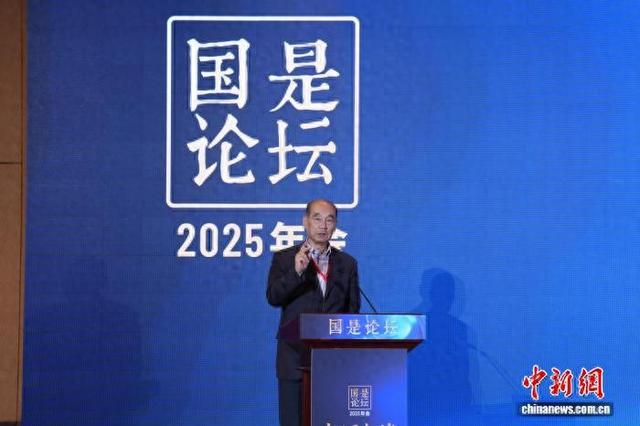
Group 1 - The 18th China Industrial Forum's parallel sub-forum on "Intelligent Manufacturing Empowering First Sets" was held in Beijing, featuring 12 industry experts and representatives sharing insights and experiences [1] - Wang Wan, Chief Economist of the Mechanical Industry Planning Research Institute, emphasized the need for a coordinated policy system to promote national recognition of first sets and optimize government procurement and bidding processes [1] - Gao Yucheng, Director of the National Intelligent Manufacturing Expert Committee, highlighted six key characteristics of intelligent equipment innovation, including functional intelligence and modular reconstruction [1] Group 2 - Ouyang Jinsong, Director of the Comprehensive Technical Economic Research Institute of Mechanical Instruments, noted that China's intelligent manufacturing has transitioned from pilot exploration to widespread adoption over the past decade [2] - Gu Shunqing, Deputy Secretary-General of the Zero Carbon Park Committee, discussed the integration of zero-carbon solutions with intelligent equipment, identifying photovoltaic robots and digital energy efficiency systems as core pillars [2] - The roundtable forum focused on breaking through the last mile of innovation, application, and iteration for first sets of technological equipment, providing diverse ideas and practical references for industrialization [3]
【电新环保】中央经济工作会议强调绿电应用,持续推荐氢氨醇、储能——行业周报20251214(殷中枢/郝骞/陈无忌/和霖/邓怡亮)
光大证券研究· 2025-12-15 23:07
Overall Viewpoint - The central economic work conference emphasizes the need to adhere to "dual carbon" goals by 2026, promoting a comprehensive green transition and advancing energy-saving and carbon-reduction transformations in key industries [4] - The conference also highlights the importance of developing a national carbon emissions trading market and fostering new growth points such as hydrogen energy and green fuels, along with the establishment of zero-carbon parks and factories [4] - The investment opportunities in the green energy sector, including hydrogen, ammonia, methanol, green electricity, and energy storage, are expected to remain strong in 2026 [4] Group 1: Domestic Energy Storage - In November, domestic energy storage installations saw significant growth, with a total new installed capacity of 4.51 GW/13.03 GWh, representing a month-on-month increase of 57.14% (power) and 74.66% (capacity), and a year-on-year increase of 45.95% (power) and 49.6% (capacity) [5] - The independent energy storage bidding in 2026 is anticipated to maintain a favorable level, supported by the development of the industry and the establishment of a complete revenue model through energy markets [5] - The rapid increase in compressed air energy storage is noted in the recent bidding results [5] Group 2: Hydrogen, Ammonia, and Wind Power - The central economic meeting indicates a focus on cultivating hydrogen energy and green fuels as new growth points, with plans to build zero-carbon parks and factories [6] - The "14th Five-Year Plan" period is expected to benefit from both China's future industries and the EU carbon tariff, making hydrogen and ammonia promising directions for investment [6] Group 3: Lithium Batteries - The retail sales of new energy vehicles in the first week of December reached 185,000 units, a year-on-year decrease of 17% and a month-on-month decrease of 10%, indicating high policy sensitivity among consumers [7] - The central economic work conference's deployment to optimize "two new" policy implementations suggests the continuation of national subsidy policies to stimulate automotive consumption [7] - The lithium battery supply chain is expected to see a trend of improvement, with companies launching large capacity storage battery solutions aimed at cost reduction [7]
联姻茶饮大佬的高海纯能否带天合光能突围光伏“寒冬”?
Xin Lang Cai Jing· 2025-12-15 09:21
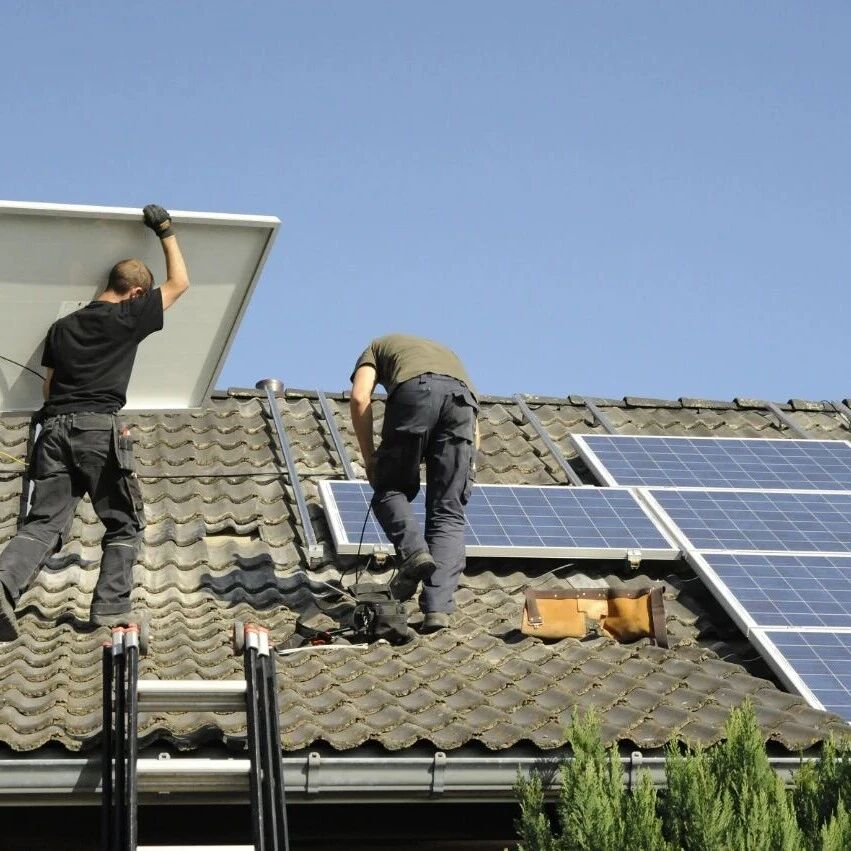
Core Viewpoint - The wedding of Gao Haichun, daughter of Trina Solar's founder, and Zhang Junjie, founder of Bawang Tea, has attracted significant attention due to their prominent family backgrounds and the companies they represent. Both companies are publicly listed, but there are currently no business collaborations between them [1][3]. Company Overview - Trina Solar, founded in 1997, is a leading player in the global photovoltaic (PV) industry, having once been the largest PV module supplier globally. However, its ranking has declined in recent years [9][11]. - The company went public on the New York Stock Exchange in 2006 but was privatized in 2017 and later re-listed on the STAR Market in China [10]. Leadership and Management - Gao Haichun, born in 1993 and a graduate of Brown University, has been involved in Trina Solar since 2017, holding various positions including Vice General Manager of Strategic Investment and Chairman of Trina Solar's subsidiary [4][5]. - In January 2023, she was appointed Co-Chairman of Trina Solar, indicating a significant step in her succession plan within the family business [4]. Financial Performance - Trina Solar's net profits during the peak years of 2021-2023 were 1.804 billion, 3.681 billion, and 5.527 billion yuan respectively [13]. - However, starting in 2024, the company is projected to incur losses of 3.443 billion yuan, with a loss of 4.201 billion yuan reported in the first three quarters of the year [15]. Market Position and Challenges - Trina Solar's stock price has dropped by 80%, leading to a market capitalization loss of over 140 billion yuan [16]. - The company has faced challenges in the distributed PV market, where its subsidiary Trina Bifacial was once ranked among the top two globally, holding nearly 20% market share in the domestic household market [18]. Strategic Shifts - In response to market conditions, Trina Solar is seeking to transform its business model from a PV product manufacturer to a provider of energy storage and smart energy solutions [22]. - The company has set ambitious targets for its energy storage segment, aiming for a shipment goal of 15-16 GWh in 2024, with recent orders significantly exceeding previous years' performance [27][28]. Industry Context - The PV industry is currently facing price competition and supply-demand imbalances, which pose significant challenges for leading companies like Trina Solar [29]. - The introduction of policies such as the "Document 136" has added uncertainty to the profitability of distributed PV projects, complicating the business landscape further [20].

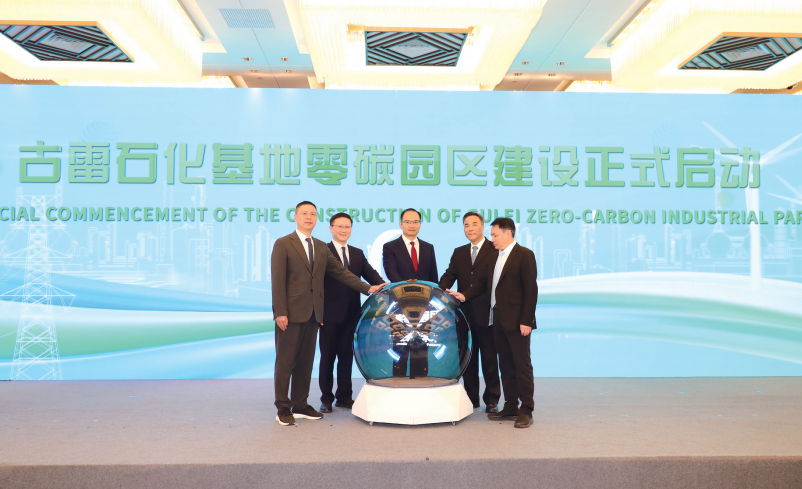
古雷零碳园区建设启动
Zhong Guo Hua Gong Bao· 2025-12-15 02:29
Core Viewpoint - The launch of the zero-carbon park construction at the Gulei Petrochemical Base aims to create a leading national and internationally recognized model for low-carbon development in the petrochemical industry, integrating green energy, low-carbon processes, circular economy, and digital governance [2]. Group 1: Project Overview - The Gulei Petrochemical Base will follow a "two-step" strategy for low-carbon and zero-carbon transformation, with the first phase aiming to establish a fine chemical zero-carbon park by 2029, targeting a carbon emission reduction to 0.25 tons per ton of standard coal [5]. - The second phase, set to be completed by 2035, will expand the successful model to the entire base, achieving a national standard zero-carbon park goal of 0.3 tons per ton of standard coal [5]. Group 2: Implementation Strategies - Key tasks for the Gulei development zone include increasing the proportion of green clean electricity, replacing thermal energy with clean alternatives, enhancing energy efficiency in the petrochemical sector, improving zero-carbon transportation infrastructure, and boosting carbon management capabilities [5]. - The Gulei development zone has already made significant progress during the 14th Five-Year Plan period, reducing energy consumption per unit of industrial added value from 4.3 tons of standard coal per 10,000 yuan in 2020 to 2.02 tons by 2024, a decrease of over 50% [5]. Group 3: Collaborations and Initiatives - New projects signed at the conference include green aromatic production from carbon dioxide hydrogenation, sustainable aviation fuel from green electricity and carbon dioxide, and ethylene production from green electricity and carbon dioxide [6]. - The Gulei development zone has partnered with Jilin University and Tianjin University to enhance talent development and research cooperation, promoting the transition to zero-carbon through technological innovation [6].