产业融合

Search documents
农业投资,正迎来“牛市”
21世纪经济报道· 2025-11-14 12:10
Core Viewpoint - Agricultural investment is entering a "bull market," driven by policy support and technological advancements, with a critical layout period in the next two to three years [1][9]. Group 1: Industry Trends - Historically, agriculture has been viewed as a "forbidden zone" for capital due to its long cycles and high risks, but this perception is changing as hard technology penetrates the sector [3][4]. - The integration of industrial technology into agriculture is expected to accelerate the industry's evolution from 1.0 to at least 3.0, with significant growth in agricultural drone usage, projected to exceed 200,000 units and 2.6 billion acres of operational area by 2024 [3][4]. - The shift in agricultural investment is characterized by a move from traditional subsidies to equity investments, emphasizing sustainable returns and a self-sustaining funding cycle [6][9]. Group 2: Capital Participation - Capital confidence in agriculture is growing, with the potential for significant value creation in underdeveloped segments like fruits and vegetables, where few companies have reached a market value of over 10 billion [8]. - The establishment of the "Agricultural Investment Conference" aims to transform new perceptions into actionable strategies, fostering collaboration between capital and agriculture [5][6]. Group 3: Regional and Sectoral Integration - Different regions are adopting unique strategies for agricultural modernization, with Shanghai focusing on "boutique agriculture" that prioritizes value over scale [12]. - Private enterprises are exploring certainty in niche markets, while the integration of resources and standardization is seen as crucial for scaling operations [14]. - The establishment of regional public brands and the use of e-commerce platforms are emerging as effective strategies for local enterprises to enhance their market presence [14].


第二十七届高交会在深圳开幕,汇聚全球前沿科技
Zhong Guo Fa Zhan Wang· 2025-11-14 07:43
Core Viewpoint - The 27th China International High-Tech Achievements Fair (CIHTAF) opened in Shenzhen, showcasing over 5,000 innovative products and technologies from more than 5,000 renowned companies and international organizations across over 100 countries and regions, serving as a key platform for high-level international cooperation and technology exchange in China's high-tech sector [1][2]. Group 1: Event Overview - The CIHTAF covers an area of 400,000 square meters and features 22 major exhibition areas focusing on cutting-edge technologies and innovations, including artificial intelligence, semiconductors, and low-altitude economy [3]. - The event aims to support China's strategic goals for technological self-reliance and innovation, aligning with the objectives set forth in the 20th Central Committee's Fourth Plenary Session [2][4]. Group 2: Regional and International Collaboration - The fair promotes regional collaboration and resource optimization, attracting participation from over 30 provinces and cities, highlighting its role in fostering a unified national market [4][5]. - It features an international cooperation section, showcasing innovations from countries such as Germany, Canada, and Brazil, thereby enhancing global technological exchange [9][10]. Group 3: Innovation and Technology Showcase - The event includes a dedicated area for regional economic and technological innovation achievements, allowing cities like Zhangjiagang and Hangzhou to present their advancements in various high-tech sectors [5]. - Over 200 supporting activities will be held, including product launches and industry forums, with more than 5,000 new products and technologies on display, emphasizing the fair's role in driving technological innovation [11]. Group 4: Investment and Market Opportunities - The fair is expected to attract over 30,000 professional buyers and more than 3,000 investment institutions, facilitating a comprehensive ecosystem for project display, capital connection, and incubation services [10]. - The event aims to match demand with technology efficiently, particularly in the renewable energy sector, by engaging international procurement teams from various countries [10]. Group 5: Historical Significance and Future Impact - The CIHTAF has evolved into a significant platform for innovation, witnessing the emergence of numerous successful tech companies and contributing to China's transition from a follower to a leader in technology [11]. - The fair continues to serve as an accelerator for integrating innovation and industry, propelling cutting-edge technologies from exhibition to application [11].
陕西志丹县:农民运动会庆丰收
Zhong Guo Jin Rong Xin Xi Wang· 2025-11-14 02:16
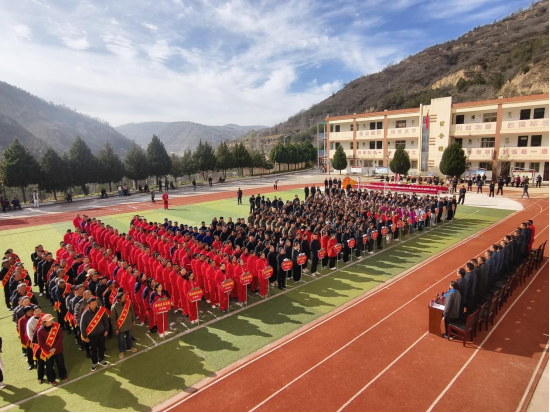
Core Viewpoint - The fourth Farmers' Sports Meeting in Yizheng Town successfully took place, focusing on rural production and lifestyle, featuring various competitive events that blend agricultural themes with entertainment [1][3]. Group 1: Event Highlights - The sports meeting included activities such as tug-of-war, corn carrying, apple carrying, teamwork events, and strongman competitions, showcasing both agricultural flavor and fun [1]. - A special exhibition area for agricultural products was set up, displaying high-quality products cultivated by farmers, including local specialties like "Zhengyi Old Tofu," "Zhengyi Sunflower Seeds," and "Yizheng Sweet" apples, which received positive feedback [5]. Group 2: Community and Economic Impact - The event provided an opportunity for farmers to relieve stress and enrich their lives during busy farming periods, fostering collaboration to promote industrial development and encouraging villagers to become high-quality new farmers [3]. - The initiative strengthened the cooperative atmosphere between enterprises and the community, laying a solid foundation for corporate development [3]. - The local government plans to deepen the "enterprise-community co-construction" mechanism and enhance the "good person effect" to strengthen the "industry integration" brand, aiming to use the spirit of the sports meeting as a driving force for comprehensive rural revitalization [5].
低空物流、AI医疗与无人驾驶驱动科技与消费深度融合
Yang Zi Wan Bao Wang· 2025-11-13 05:36
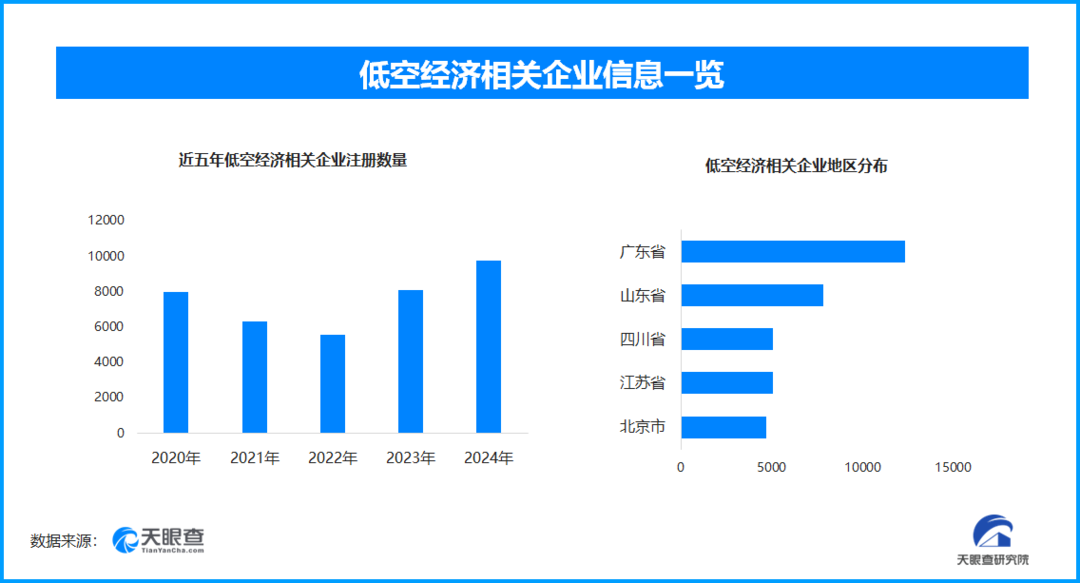
Group 1: Low Altitude Economy and Smart Transportation - The low altitude economy is expected to reach a scale of 1.5 trillion yuan by 2025, with applications expanding from logistics to urban commuting and emergency rescue [1][2] - The number of registered low altitude economy-related enterprises in China has exceeded 95,000, with approximately 22,000 new registrations in 2025 alone [2] - The long-term outlook for the low altitude economy is promising, with Morgan Stanley predicting a global flying car market size of $300 billion by 2030, positioning China as a potential leader in urban low altitude transportation [4] Group 2: Medical Devices and Healthcare Products - The medical device and healthcare product sectors are experiencing a dual drive of precision and intelligence, with a market size expected to exceed 1.5 trillion yuan by 2025 [1][5] - There are over 6.195 million registered medical device-related enterprises in China, with approximately 1.138 million new registrations in 2025 [5] - The integration of artificial intelligence and big data is transforming diagnostic and treatment models in the medical device industry, enhancing the precision and safety of procedures [5][7] Group 3: Electronics and Home Appliances - The electronics and home appliance industry is facing saturation and homogenization, prompting companies to seek growth through cross-industry expansion into smart driving and robotics [8][9] - There are over 21.987 million registered home appliance-related enterprises in China, with a trend of increasing registrations expected to peak in 2024 [11] - The integration of smart home technology with autonomous driving is creating new solutions, positioning home appliances as entry points into smart ecosystems [11] Group 4: Overall Industry Trends - The exhibitions from the Canton Fair to the Import Expo highlight the upgrade and iteration of Chinese industries, revealing deep trends in global technology integration [12] - Future advancements in low altitude routes, AI in healthcare, and the fusion of smart homes with vehicle networks are expected to embed technology innovation into daily life, driving economic growth and social progress [12]
种好“创新试验田”
Zhong Guo Zi Ran Zi Yuan Bao· 2025-11-12 01:49
Core Insights - The National Ocean Comprehensive Test Field (referred to as the sea test field) is positioned as an "innovation testing ground" to accelerate the development and commercialization of marine technology equipment, addressing the testing capability gap in the transition from prototype to product [1][3] Group 1: Development and Layout of Sea Test Fields - The Ministry of Natural Resources is responsible for the overall planning of the national sea test field system, advancing the construction of four test areas: Weihai, Zhoushan, Zhuhai, and Deep Sea, under the "North, East, South, Shallow Sea + Deep Sea" layout [3] - Weihai Test Field has become a key hub for the transformation of marine technology achievements, successfully conducting nearly 100 tests to overcome the testing bottleneck from prototype to product [3][4] - Zhoushan Test Field operates under a "one field, two areas" model, focusing on complementary functions and collaborative innovation in marine tidal energy and new materials [3][4] Group 2: International Experience and Benchmarking - The successful experiences of foreign sea test fields, such as those in the United States and the United Kingdom, provide valuable lessons for China's development [6][7] - The Monterey Bay Marine Observatory in California exemplifies a military-civilian shared testing system that enhances marine technology equipment testing and ocean observation methods [6] - The European Marine Energy Centre in Scotland has provided testing services for wave and tidal energy devices, aligning closely with national marine strategies [7] Group 3: Future Prospects and Strategic Directions - The sea test fields are expected to become testing grounds for cutting-edge technologies, integrating AI, big data, and IoT to enhance smart monitoring and automated testing systems [9][10] - International cooperation will be a significant direction for the development of sea test fields, with potential partnerships in marine research projects and technology sharing with countries along the Belt and Road [9][10] - The integration of sea test fields with marine industries will foster a collaborative development model, creating a comprehensive industrial chain from R&D to production [10]
特色网点“出圈”记 邮储银行河南省分行的“金融+”探索
Jin Rong Shi Bao· 2025-11-12 01:31
Core Viewpoint - The transformation of Postal Savings Bank's Henan branch demonstrates that bank branches are evolving into community hubs that integrate cultural, health, and service elements, rather than disappearing in the face of digital finance [1][4]. Group 1: Cultural Empowerment - The bank's branches are designed to reflect local culture, such as the jade culture exhibition in Shifosi Town, which enhances customer experience and builds trust through personalized services [2][3]. - A unique gift, like a jade pendant, can foster customer relationships and lead to financial solutions, exemplifying the warmth of financial services [2]. Group 2: Service Enhancement - The bank is shifting from merely conducting transactions to enhancing customers' lifestyles, offering health services alongside financial products, which has positively impacted over 600 residents [4]. - The transformation of branches into community service centers reflects a strategic response to industry changes and customer needs [4][5]. Group 3: Industry Integration - Postal Savings Bank aims to position its branches as key nodes in the local economy, providing tailored financial products that address specific industry needs, such as traditional Chinese medicine [6]. - The bank's initiatives, like themed credit cards, link local craftsmanship with financial services, promoting regional economic development [6]. Group 4: Technological Integration - The bank is implementing a hybrid model of service that combines technology and human interaction, enhancing operational efficiency while maintaining a personal touch [7]. - The integration of smart technologies aims to create a seamless customer experience, ensuring that financial services remain accessible and responsive to community needs [7].

微短剧市场规模破500亿元,首超电影票房!老人付费最多,占比超四成
Mei Ri Jing Ji Xin Wen· 2025-11-11 15:45
Core Insights - The "China Internet Development Report 2025" indicates that the user base for micro-short dramas in China has reached 662 million, with a market size exceeding 50 billion yuan, surpassing box office revenues for films, marking it as a new emerging sector in content consumption [1] - The micro-short drama industry is undergoing a transformation, moving away from the previous "high-reversal and thrill" narrative style towards more diverse and high-quality content that addresses deeper themes such as women's growth, workplace issues, and family healing [3][6] - The industry is experiencing a shift from a focus on quick entertainment to a demand for quality storytelling and visual presentation, with a consensus emerging to move away from content homogenization and the over-reliance on "thrill points" [3][6] Market Dynamics - The audience structure for micro-short dramas shows that the "silver-haired" demographic has become a significant paying user group, accounting for over 40%, while female users dominate the consumption market with higher engagement levels compared to male users [3] - The industry is seeing an influx of long-form content creators and professional production teams, pushing the market towards quality production and diverse themes, as noted by industry experts [3][6] Technological Integration - The micro-short drama market is exploring new growth curves through improved production quality and the integration of emerging technologies such as AI and VR, with traditional film companies entering the space to enhance production standards [7][9] - The application of AI in the production process is estimated to improve planning efficiency by over 50% and reduce post-production costs by 30% [9] Cross-Industry Collaboration - The micro-short drama sector is increasingly collaborating with various fields such as intangible cultural heritage, tourism, and education, promoting industry integration and development [9] - Notable projects include "Follow the Micro-Short Drama to Travel," which combines culinary exploration with storytelling, and "A Dream on the Pillow of Stars," which incorporates traditional cultural elements into the narrative [9] Global Expansion - By 2024, the global micro-short drama market is projected to exceed 15 billion USD, with China accounting for over 80% of this market [10] - The internationalization of micro-short dramas has entered a new phase, with a focus on localized content for overseas markets, leading to a significant increase in downloads and user engagement [10][13] - Leading companies in the overseas micro-short drama market include Point Crowd Technology, Maple Leaf Interactive, and Jiuzhou Culture, with platforms like Reelshort covering over 100 countries and achieving over 250 million downloads [10][11][13] Industry Evolution - The micro-short drama industry is at a critical juncture, transitioning from quantity to quality, necessitating regulatory clarity and a focus on key development areas to foster a shift from "quick hits" to "sustained quality" [10] - Establishing a scientific evaluation system and optimizing recommendation algorithms are essential for guiding the industry towards a focus on quality content over mere traffic [10]
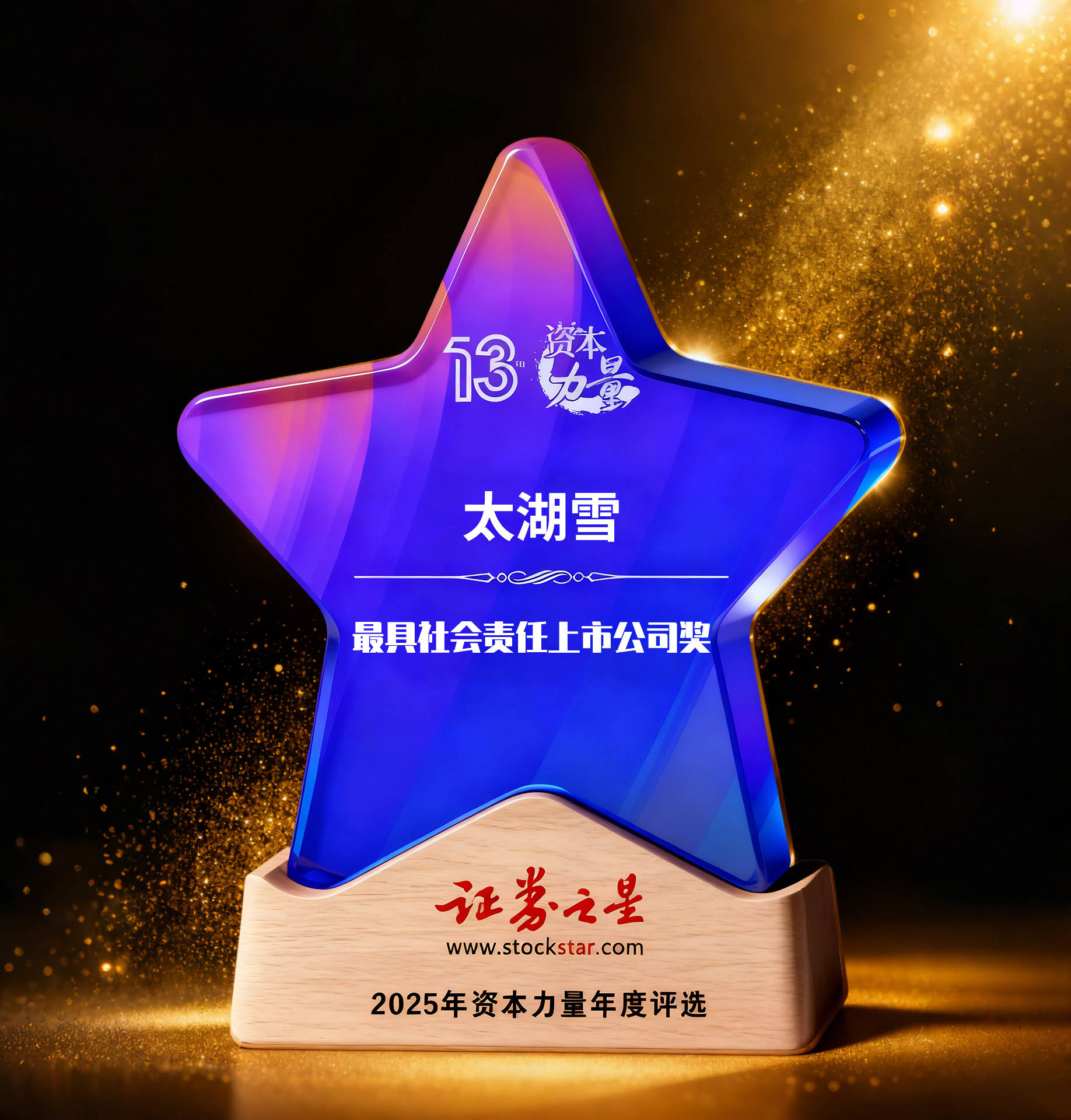
太湖雪荣获证券之星资本力量最具社会责任上市公司奖
Sou Hu Cai Jing· 2025-11-09 03:09
Core Viewpoint - Taihu Xue Company has been awarded the "Most Socially Responsible Listed Company" for its commitment to community development, environmental sustainability, and cultural heritage through innovative practices and industry integration [4][7]. Group 1: Social Responsibility Initiatives - The company has established an ESG committee at the board level to oversee sustainable development strategies and respond to stakeholder expectations [5]. - In response to a natural disaster, Taihu Xue donated over 100,000 yuan worth of bedding supplies to a school in Guizhou province, ensuring children had warm bedding for the winter [5]. Group 2: Industry Integration and Cultural Heritage - Taihu Xue has developed the Taihu Xue Silkworm Culture Park, which combines modern agriculture, silk processing, and cultural tourism, significantly improving the efficiency of silk production [6]. - The company invested 17.91% more in R&D in the first three quarters of 2025, totaling 17.67 million yuan, to enhance silk product offerings and promote Suzhou's cultural heritage through collaborations with local museums [6]. Group 3: Governance and Risk Management - The company has implemented comprehensive risk management procedures to enhance its ability to predict and control risks related to quality, environment, and occupational health [5]. - The governance structure is seen as a foundation for fulfilling social responsibilities, with ongoing improvements to internal control systems [5].
潮玩文旅都火爆!场馆外的消费竞技场|十五运会经济学
Sou Hu Cai Jing· 2025-11-08 02:55
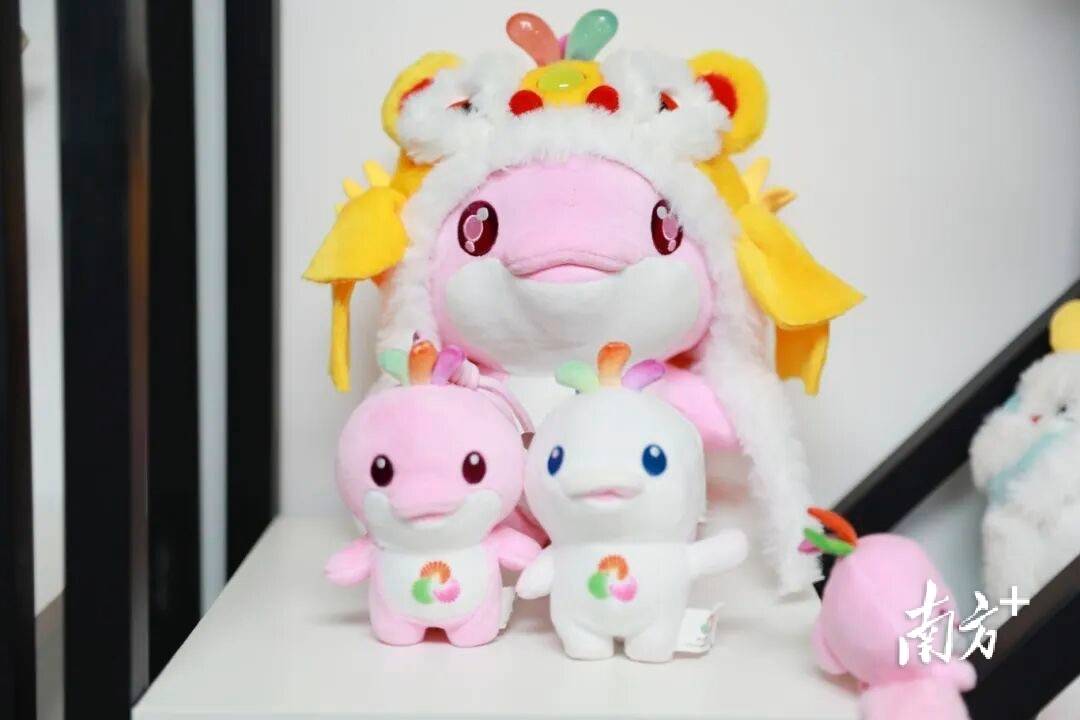
Group 1 - Major sports events are becoming a new growth engine for urban consumption, with the upcoming 15th National Games generating significant consumer interest and engagement through social media and merchandise sales [1][25] - The "Yue Enjoy Warm Winter, Happy Travel Guangdong" consumption season will continue until March next year, aiming to create an immersive experience for consumers during key events like the National Games and APEC summit [1][25] - The integration of sports events with urban culture and tourism showcases the potential for event-driven economic growth, emphasizing the need for host cities to convert visitor traffic into tangible consumption and industrial momentum [1][25] Group 2 - The mascots "Xiyangyang" and "Lerongrong," inspired by the Chinese white dolphin, have resonated with consumers due to their cute designs, leading to high demand for related merchandise [2][4] - The development of licensed products for the National Games includes a wide range of categories, such as toys and crafts, indicating a robust cultural and creative industry behind the event [4][6] - Companies involved in the production of event-related merchandise are leveraging their experience from previous events to meet the high demand, with significant sales figures reported for plush toys and themed products [6][16] Group 3 - The Guangdong-Hong Kong-Macao Greater Bay Area is a major production base for trendy toys, with the National Games serving as a platform for companies to showcase their manufacturing capabilities [14][19] - The event has attracted international buyers, highlighting the appeal of Guangdong-made products and the potential for export growth in the toy industry [14][19] - The sports goods manufacturing sector in Guangdong has seen steady growth, with a reported 7.7% increase in sales revenue year-on-year, outpacing the average growth rate of the province's manufacturing sector [19] Group 4 - The "event+" economic model is driving significant consumer spending in host cities, with the National Games creating new consumption scenarios for visitors [20][28] - Data indicates that major sporting events can lead to substantial increases in local economic activity, with the recent "Su Super" football league generating over 26.2 billion yuan in transactions during its finals [25][28] - The growing enthusiasm for sports among younger consumers is contributing to a surge in sports-related spending, with a 50% year-on-year increase in sports consumption users in Guangdong [29]
变沙为“金” “科技+产业”赋能塔克拉玛干沙漠治沙模式升级
Xin Hua She· 2025-11-06 02:49
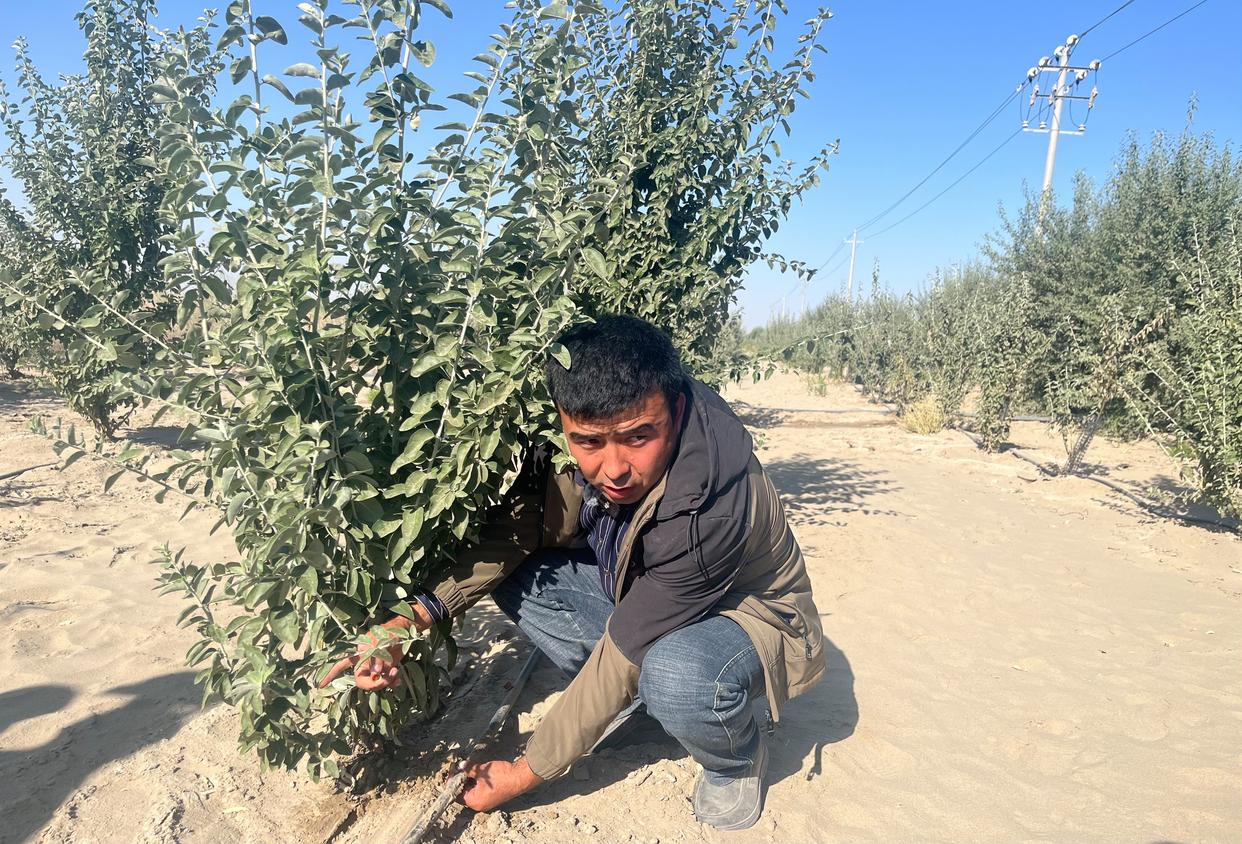
Core Viewpoint - The article highlights the successful implementation of ecological restoration and sand control measures in the Taklamakan Desert, focusing on the development of a green ecological belt and the promotion of sustainable agricultural practices in the region [2][3]. Group 1: Ecological Restoration Efforts - The Yutian County has established 198 mutual aid teams to manage sand control areas, involving 964 households, with a focus on biological sand control [2]. - The Daweikun area has developed a 284-meter wide and 104-kilometer long ecological green belt, integrating 58,000 acres of biological sand control forest and 1,000 acres of engineering sand fixation [2]. - The overall goal is to complete a total of 8.44 million acres of sand control measures by the end of the year, transitioning from "locking the edge" to "expanding the edge" of the desert [2]. Group 2: Economic Development and Crop Diversification - Local farmers, such as Abdusalam Talip, are engaging in mutual aid teams to cultivate previously barren land, with expectations of significant income from crops like big yucca, projected to yield 200 kilograms per acre and generate over 30,000 yuan in profit [2]. - The Yutian County government has invested over 20 million yuan in establishing experimental fields for cultivating medicinal herbs and economic crops, including licorice and rose [6]. - The introduction of a contract farming model for seven types of medicinal herbs is planned for next year, aiming for large-scale production suited to the sandy environment [6].