绿色建筑

Search documents
豪美新材(002988):收入稳步增长,毛利率同比下滑拖累业绩
Tianfeng Securities· 2025-08-26 09:13
Investment Rating - The investment rating for the company is "Accumulate" with a downward adjustment [6] Core Views - The company achieved a revenue of 3.585 billion, a year-on-year increase of 14.86%, but the net profit attributable to the parent company was 92 million, down 25.7% year-on-year [1] - The revenue growth is primarily driven by increased business volume in automotive lightweight aluminum profiles, system windows, and industrial aluminum profiles [1] - The company expects net profits for 2025-2027 to be 218 million, 245 million, and 281 million respectively, with corresponding P/E ratios of 53, 47, and 41 [1] Revenue and Profitability - In the first half of 2025, the company's aluminum profile sales reached 140,800 tons, a year-on-year increase of 12.37% [2] - Revenue from automotive lightweight aluminum profiles, building aluminum profiles, industrial aluminum profiles, and system windows was 960 million, 940 million, 1.36 billion, and 300 million respectively, with year-on-year growth rates of 24.3%, 1.3%, 18.0%, and 28% [2] - The overall gross margin for the first half of 2025 was 10.7%, a decrease of 1.44 percentage points year-on-year [3] Cost and Cash Flow - The company's expense ratio slightly increased to 7.96%, with a net profit margin of 2.56%, down 1.38 percentage points year-on-year [4] - The net cash flow from operating activities for the first half of 2025 was 6.7 million, an increase of 8.2 million year-on-year [4] Financial Forecast - The company forecasts revenue growth rates of 10.60%, 11.46%, 14.27%, 11.33%, and 10.61% for the years 2023 to 2027 [5] - The projected net profit for 2025 is 217.75 million, with an expected P/E ratio of 52.54 [5] Market Position and Strategy - The company is exploring overseas market opportunities, including establishing a production base for automotive parts in Morocco [2] - The company is also focusing on enhancing the penetration rate of system windows in response to policies promoting quality housing and green building [2]
今天起,上海楼市将发生哪些变化?
Yang Guang Wang· 2025-08-26 07:59
Core Viewpoint - Shanghai has implemented a series of optimized real estate policies aimed at reducing the purchasing threshold for eligible residents, alleviating inventory pressure, and boosting market confidence, following Beijing's lead [1][2][9] Policy Adjustments - The new policies include the relaxation of housing purchase restrictions, optimization of housing provident fund, and adjustments to personal housing loans and property tax [1][2][5] - Eligible families in Shanghai can now purchase an unlimited number of new and second-hand homes outside the outer ring, which is expected to stimulate demand in suburban areas [2][3] Impact on Market Segments - The policy changes are particularly beneficial for two demographics: urban middle-class families looking to upgrade their housing and individuals previously limited by the two-home restriction [3][4] - The removal of purchase limits for single adults is expected to increase the activity of this demographic in the housing market [4] Financial Support Measures - The housing provident fund has been adjusted to allow for higher loan limits for green buildings, with first-time buyers now eligible for loans up to 1.84 million yuan, an increase from 1.6 million yuan [5][6] - The interest rates for commercial housing loans will no longer differentiate between first and second homes, which is anticipated to lower the financial burden on homebuyers [6][7] Tax Policy Enhancements - The property tax policy has been refined to exempt first-time homebuyers from property tax and provide a tax exemption for the first 60 square meters of the second home for eligible non-local families [8] - These tax adjustments are expected to enhance the synergy between housing purchase policies and tax regulations, promoting a healthier real estate market [8][9] Market Outlook - The new policies are projected to boost market activity, particularly in the outer ring areas, and are expected to align with the traditional peak sales season in September and October [8][9] - The overall approach taken by Shanghai is seen as more comprehensive than that of Beijing, potentially influencing other cities like Shenzhen to follow suit [9]
金晶科技上半年实现营收23.94亿元 加码技术创新与产线技改
Zheng Quan Ri Bao Wang· 2025-08-26 02:45
Core Viewpoint - The company reported a decline in revenue and profit margins due to changes in supply and demand dynamics in the industry, while continuing to focus on product differentiation and cost reduction strategies [1][2]. Group 1: Financial Performance - In the first half of 2025, the company achieved operating revenue of 2.394 billion yuan, with a decrease in sales prices for glass and soda ash leading to a reduction in gross profit margin [1]. - The company has repurchased 20.35 million shares, accounting for 1.42% of the total share capital, with a total repurchase amount of 98.26 million yuan [2]. Group 2: Strategic Initiatives - The company is actively advancing the construction of the Linyi mining project, which is expected to be completed by the end of 2025, providing upstream raw materials for its float glass production line [1]. - The company is focusing on green energy and green building sectors, optimizing product structure, and enhancing production capacity to capture market opportunities [1][2]. Group 3: Research and Development - The company is increasing the proportion of high value-added products and has made breakthroughs in TCO conductive film glass technology, with the first batch of production achieved at the Tengzhou second line [2]. Group 4: Market Positioning - As a leading enterprise in the glass and soda ash industries, the company is enhancing its core competitiveness by transitioning from traditional industries to green sectors and building an efficient industrial chain [2].

杭萧钢构: 杭萧钢构股份有限公司2025年半年度报告
Zheng Quan Zhi Xing· 2025-08-25 17:05
Core Viewpoint - Hangxiao Steel Structure Co., Ltd. reported a decline in key financial metrics for the first half of 2025, with a focus on maintaining its strategic vision of becoming a world-class green building integrated service provider while navigating a challenging market environment [2][3]. Financial Performance - The company recorded an operating income of 475,953.67 million yuan, a decrease of 2% compared to the same period last year [2][3]. - Total profit was 15,607.54 million yuan, down 6.92% year-on-year [2][3]. - Net profit attributable to shareholders was 12,762.64 million yuan, reflecting a 20.16% decline compared to the previous year [2][3]. - The net cash flow from operating activities was -66,118.55 million yuan, a 52.25% increase in outflow compared to the previous year [2][3]. Industry Overview - The construction industry is experiencing a bifurcated growth pattern, with domestic demand under pressure while overseas markets show potential for growth, particularly in infrastructure projects driven by the Belt and Road Initiative [3][4]. - The overall construction output value decreased by 3.76% year-on-year, while the foreign contracting business saw a 9.3% increase in revenue [3][4]. Business Strategy - The company aims to leverage its strengths in steel structure contracting and EPC (Engineering, Procurement, and Construction) models, focusing on expanding its total contracting business and overseas markets [3][4]. - The strategic vision includes a five-in-one model combining design, manufacturing, project contracting, green materials, and an internet platform for the construction industry [5][6]. Technological Innovation - The company is committed to advancing smart construction through the integration of new information technologies and industrialized construction techniques, enhancing the digitalization and intelligence of the construction process [4][5]. - The development of a digital platform for construction transactions aims to create a transparent and efficient trading environment, facilitating better supply chain management [20]. Project Development - The company has secured new contracts worth 52.42 billion yuan during the reporting period, with a focus on high-quality projects across various sectors [9][10]. - Notable projects include contracts for wind turbine equipment manufacturing, marine engineering, and logistics centers, showcasing the company's diverse capabilities [9][10]. Competitive Advantages - As the first publicly listed company in China's steel structure industry, the company has established a strong reputation and extensive project experience, contributing to its competitive edge [14][15]. - The company has received numerous industry awards and recognitions, reinforcing its position as a leader in the steel structure sector [14][15].

金晶科技: 金晶科技2025年半年度报告全文
Zheng Quan Zhi Xing· 2025-08-25 16:30
Core Viewpoint - The report highlights significant declines in revenue and profit for Shandong Jinjing Science & Technology Co., Ltd. in the first half of 2025, primarily due to a downturn in the glass and soda ash industries, alongside challenges in the photovoltaic glass sector [1][2]. Financial Performance - The company's operating income for the first half of 2025 was approximately CNY 2.39 billion, a decrease of 32.56% compared to CNY 3.55 billion in the same period last year [2]. - Total profit for the period was a loss of approximately CNY 131.37 million, a decline of 141.28% from a profit of CNY 318.29 million in the previous year [2]. - The net profit attributable to shareholders was a loss of about CNY 96.27 million, down 135.04% from a profit of CNY 274.77 million [2]. - The net cash flow from operating activities was CNY 224.43 million, a decrease of 57.86% from CNY 532.61 million [2]. Industry Overview - The glass industry faced a demand downturn in the first half of 2025, with a 20% decline in new construction and sales in the real estate sector, leading to a significant drop in sales prices [3][9]. - The soda ash industry is experiencing rapid capacity expansion, with total domestic capacity expected to reach 44.5 million tons by the end of 2025, resulting in increased inventory and declining sales prices [3][9]. - The photovoltaic glass sector is also under pressure, with a 20% year-on-year decline in mainstream product prices, although the long-term outlook remains positive due to ongoing technological innovations [3][9]. Business Operations - The company has a diversified product portfolio, including construction and energy-saving glass, soda ash, and photovoltaic glass, with a focus on green energy and sustainable building materials [3][9]. - The company completed a significant cold repair project for its production line, enhancing its capacity and efficiency, and has initiated several projects aimed at reducing costs and improving product quality [9][10]. - The company emphasizes the importance of investor returns, planning to distribute cash dividends totaling approximately CNY 20.96 million [10]. Strategic Focus - The company is committed to enhancing its core competitiveness through innovation and technology upgrades, aiming to transition towards a model centered on new productive forces [10][11]. - The company actively engages with investors to communicate its value and operational strategies, enhancing transparency and trust [11].
公积金可“又提又贷”,房贷首套二套不再区分!上海楼市新政为购房者全面“减负”
Di Yi Cai Jing Zi Xun· 2025-08-25 15:24
Core Viewpoint - Shanghai's new real estate policy aims to optimize housing purchase conditions, particularly focusing on adjustments to housing loans, public housing funds, and tax measures, effective from August 26, 2023. The policy is expected to stimulate housing demand and alleviate financial pressure on buyers, especially for those seeking to upgrade their living conditions [1]. Group 1: Public Housing Fund Policy Adjustments - The new policy significantly increases the public housing fund loan limits, with first-time homebuyers' loan limits rising from 1.6 million to 1.84 million yuan, and for families with multiple children, from 1.92 million to 2.16 million yuan [2]. - Buyers can now withdraw public housing funds to pay for down payments on newly built properties, providing more flexible financing options and potentially shortening the time needed to gather funds [2]. - The policy allows simultaneous withdrawal of public housing funds for down payments while applying for loans, which can significantly reduce cash pressure on buyers [3]. Group 2: Commercial Loan Policy Changes - The new policy eliminates the distinction between first and second home loan interest rates, allowing banks to set rates based on market conditions and borrower risk profiles [4]. - This change is expected to benefit those looking to upgrade their homes, as the interest rate for second homes may decrease, aligning more closely with first home rates. For example, a 1 million yuan loan over 30 years could see total repayments drop from 1.61 million to 1.53 million yuan, with monthly payments reduced by approximately 200 yuan [4]. - The new unified interest rate structure is projected to lower the financial burden on homebuyers and stimulate demand for second homes [4]. Group 3: Market Reactions and Future Outlook - Following the policy announcement, there has been a noticeable increase in inquiries from potential buyers, particularly those looking to upgrade from their first homes [7]. - Real estate agents report a surge in interest for both new and second-hand properties, indicating a potential moderate recovery in transaction volumes in the latter half of the year [7]. - Analysts predict that the new policy will lead to a "volume increase and price stability" effect in the market, with a favorable environment for homebuyers expected in the upcoming months [7].
唐山市发布钢结构“好房子”新政 杭萧钢构迎绿色建筑发展新机遇
Zheng Quan Ri Bao Zhi Sheng· 2025-08-25 11:45
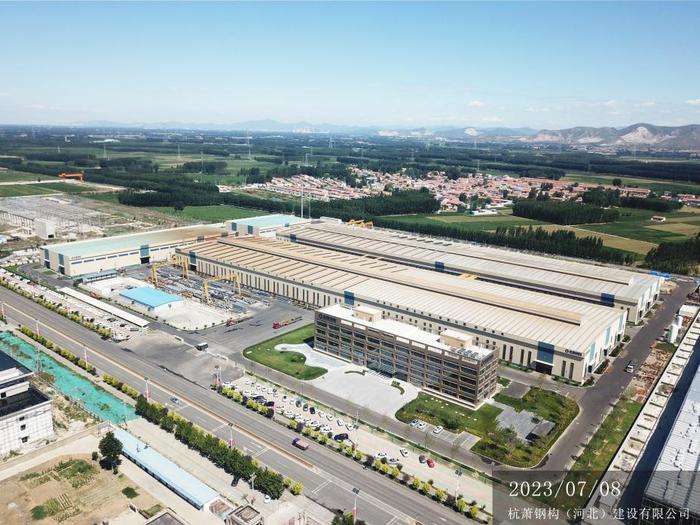
Core Viewpoint - The Tangshan Municipal Government has issued measures to support the development of steel structure "good houses," aiming to enhance housing quality and promote the transformation of the steel industry, aligning with national development plans and green manufacturing initiatives [1][2]. Group 1: Policy Measures - The measures include nine specific initiatives targeting industry pain points and providing systematic support for the large-scale promotion of steel structure "good houses" [2]. - Government investment projects will serve as demonstration models, encouraging other investment types to follow suit in constructing advanced, quality, and economically viable steel structure buildings [2]. - Financial institutions are encouraged to increase green credit funding for steel structure projects, offering differentiated services based on project green ratings and energy consumption levels to lower overall financing costs [2][3]. Group 2: Industry Context - Tangshan, as a leading industrial city in steel production, has a robust competitive edge in the national market, with a significant steel structure industry cluster that can absorb local steel capacity while promoting high-end and green transformation [3]. - The local government is pushing for deep integration across steel, construction, design, and engineering sectors to establish a supportive technical framework for steel structure development [3]. Group 3: Company Insights - Hangxiao Steel Structure Co., Ltd. is positioned to benefit from these policy incentives, leveraging over 40 years of experience and a strong local presence in Tangshan [1][4]. - The company has a comprehensive range of qualifications and capabilities in steel structure design, manufacturing, and installation, making it a key player in the industry [4][8]. - Hangxiao's proprietary "steel tube concrete bundle structure residential system" offers superior performance, including excellent seismic resistance and energy efficiency, aligning well with policy directions and enhancing local production efficiency [8][11].

金螳螂2025中报业绩稳健增长,城市更新与海外业务成新引擎
Quan Jing Wang· 2025-08-25 09:37
Core Viewpoint - The company, Jin Tanglang, has demonstrated strong operational resilience and strategic execution by achieving double growth in revenue and net profit despite a complex macroeconomic environment [1] Group 1: Financial Performance - In the reporting period, the company achieved a revenue of 9.528 billion yuan, representing a year-on-year increase of 2.49% [2] - The net profit attributable to shareholders reached 358 million yuan, with a year-on-year growth of 3.95% [2] - The net profit after deducting non-recurring gains and losses was 331 million yuan, showing a significant year-on-year increase of 14.19%, indicating enhanced profitability in core business operations [2] Group 2: Strategic Initiatives - The company is deepening its "regional cultivation" strategy by integrating local marketing, design, and construction resources, resulting in strong order growth in key regions such as Guangdong (up 79%) and Sichuan (up 65%) [2] - Jin Tanglang is focusing on urban renewal as a long-term development strategy, covering various areas such as old community renovation, public venue refurbishment, historical district preservation, and high-end hotel upgrades [2] - The establishment of headquarters in Shenzhen and Shanghai further consolidates the company's market position in economically developed coastal regions [2] Group 3: International Expansion - Since acquiring the top global hotel design company HBA in 2013, the company has been promoting its international strategy, with overseas business revenue growing nearly 29% year-on-year in the first half of 2025 [3] - The company is focusing on Southeast Asia while expanding into Central Asia, the Middle East, and Africa, gradually building a global service network [3] - The company emphasizes technology research and digital transformation, having developed a digital construction management system centered on BIM technology, which has been applied in several major national projects [3] Group 4: Sustainable Development - The company plans to continue its "customer-centric" approach, deepen digital transformation, and promote the application of green building and intelligent construction technologies to enhance competitiveness in the high-end decoration market [4] - Jin Tanglang is advancing a dual-driven strategy focusing on urban renewal and overseas markets to cultivate new business growth points for long-term sustainable development [4] - Analysts note that through continuous business innovation and strategic focus, the company is steadily transitioning from a traditional decoration enterprise to a comprehensive service provider in green, intelligent, and globalized construction decoration [4]

北新建材涨2.03%,成交额4.97亿元,主力资金净流入1969.33万元
Xin Lang Cai Jing· 2025-08-25 05:52
Core Viewpoint - North New Building Materials Co., Ltd. has experienced fluctuations in stock performance and financial metrics, indicating potential investment opportunities and challenges in the building materials sector [1][2]. Financial Performance - As of January to June 2025, North New Building Materials reported revenue of 13.558 billion yuan, a year-on-year decrease of 0.29%, and a net profit attributable to shareholders of 1.930 billion yuan, down 12.85% year-on-year [2]. - Cumulative cash dividends since the company's A-share listing amount to 9.562 billion yuan, with 3.979 billion yuan distributed over the past three years [3]. Stock Performance - On August 25, the stock price increased by 2.03% to 27.14 yuan per share, with a trading volume of 4.97 billion yuan and a turnover rate of 1.14%, resulting in a total market capitalization of 45.853 billion yuan [1]. - Year-to-date, the stock has decreased by 7.83%, with a 1.23% increase over the last five trading days and a 2.07% increase over the last 20 days [1]. Shareholder Structure - As of August 20, the number of shareholders stood at 67,000, with an average of 24,130 circulating shares per person, showing no change from the previous period [2]. - The top ten circulating shareholders include significant institutional investors, with Hong Kong Central Clearing Limited holding 177 million shares, a decrease of 17.259 million shares from the previous period [3].

绿色新材料、AI智慧助手……前沿技术助力城市创新
Huan Qiu Wang Zi Xun· 2025-08-24 10:26
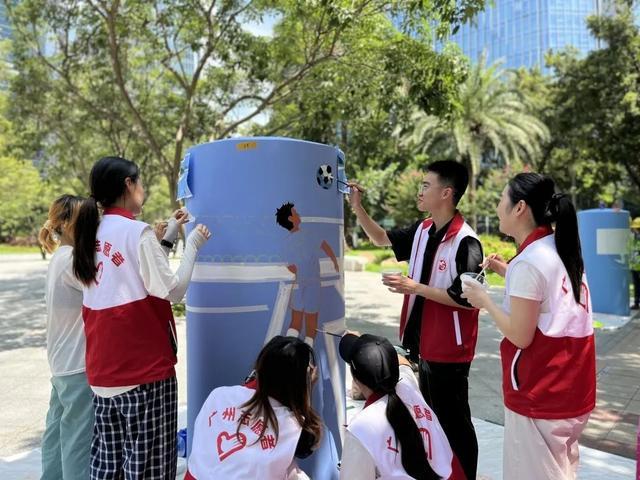
Group 1 - The article highlights the collaboration between local companies and the city of Guangzhou to enhance urban aesthetics and promote sustainability during the 15th National Games [4][6][8] - Nippon Paint, as a "city partner," is involved in the renovation of the Tianhe Sports Center, aiming to make it the first large-scale sports venue in China to achieve near-zero carbon emissions [6][8] - The project utilizes green building standards and eco-friendly materials, showcasing Guangzhou's commitment to a vibrant and livable urban environment [6][8] Group 2 - The integration of AI and gaming technology is emphasized, with the introduction of a virtual assistant named "Congmei" to provide information about the National Games and local attractions [10][12] - The gaming company 37 Interactive Entertainment plans to release a special version of a game that allows global players to experience Guangzhou's culture and tourism virtually [12][14] - The company aims to leverage its digital capabilities to support future city events, enhancing the digital economy and cultural development in Guangzhou [14]