药食同源

Search documents
本来生活再度联名“风味人间”IP 上线中秋“鲤月”礼盒
Zheng Quan Ri Bao Wang· 2025-08-28 10:45
Group 1 - The core viewpoint of the article highlights the collaboration between Beijing Benlai Workshop Technology Co., Ltd. (referred to as "Benlai Life") and the renowned food IP "Flavor World" to launch a co-branded Mid-Autumn Festival mooncake gift box named "Li Yue" [1] - This partnership marks the second deep collaboration between Benlai Life and "Flavor World," following the launch of a co-branded zongzi gift box for the Dragon Boat Festival in 2025, emphasizing the promotion of traditional food culture and innovative seasonal delicacies [1] - Benlai Life's product manager, Bian Ning, stated that the ongoing collaboration aims to integrate health concepts, cultural aesthetics, and the ceremonial significance of seasonal foods, creating benchmark products that meet current consumer demands for festive food [1] Group 2 - The brand "Gao Shang You Dian," under Benlai Life, has adhered to the philosophy of "There must be cake during festivals, a little gesture of heart" since its market debut in 2015, focusing on creating culturally rich and innovative Chinese pastries [2] - During the 2025 Mid-Autumn Festival, "Gao Shang You Dian" introduced eight mooncake gift boxes, all designed with the product concept of "light sugar, light nourishment, light luxury," incorporating the health wisdom of "food as medicine" to upgrade mooncakes from "high sugar, high oil, high burden" to a healthier direction of "low sugar, high fiber, low oil" [2]
多元化业务结构显韧性 伊利2025年中报营收净利双增“断层式”领先
Quan Jing Wang· 2025-08-28 09:29
Core Viewpoint - Yili Group has achieved significant growth in both revenue and profit in the first half of 2025, solidifying its position as the leading dairy company in Asia with a total revenue of 61.933 billion yuan, a year-on-year increase of 3.37%, and a net profit of 7.016 billion yuan, up 31.78% [2] Group 1: Business Performance - The infant formula segment has reached a historic milestone, capturing the number one market share in China with a retail market share of 18.1% [3] - Yili's overall revenue from milk powder and dairy products has grown to 16.578 billion yuan, reflecting a year-on-year increase of 14.26% [4] - The liquid milk business remains the industry leader, with significant growth in various subcategories, including a 20% increase in low-temperature white milk revenue [6] Group 2: Strategic Initiatives - Yili has successfully launched a series of innovative products in the health water segment, contributing to double-digit growth in this category [7] - The company has expanded its international presence, with significant growth in overseas markets, including a 14.4% increase in cold drink revenue and a 65.7% increase in infant goat milk powder revenue [7] - Yili has established a strategic partnership with Tongrentang to develop health-oriented dairy products, enhancing its product offerings in the "food and medicine homology" category [9][10] Group 3: Market Position and Innovation - Yili's cheese business has seen robust growth, with a focus on product innovation to meet diverse consumer needs [4] - The company is pioneering the "solid-state revolution" in dairy, aiming to elevate cheese from a side dish to a staple food, thereby enhancing its market position [11] - Yili is committed to establishing authoritative industry standards for the "food and medicine homology" sector, further solidifying its leadership in the dairy industry [10]

东阿阿胶急需「老登」?
3 6 Ke· 2025-08-27 06:13
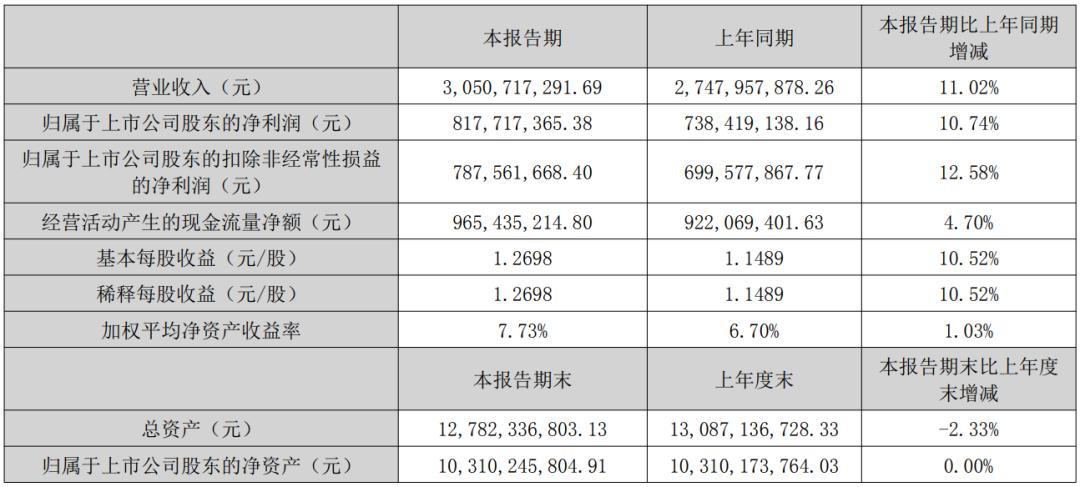
Core Viewpoint - Dong'e Ejiao, a leading brand in the health supplement industry, reported a disappointing second quarter with only 2.9% revenue growth, indicating stagnation. However, the stock price rose by 2% post-announcement, buoyed by a strong bull market effect. The company distributed nearly all of its net profit of 800 million yuan as dividends, which pleased small investors. The management seems to struggle in finding suitable growth opportunities, increasing the risk of external investment failures [1][3]. Financial Performance - Revenue for the reporting period reached 3.05 billion yuan, an increase of 11.02% compared to the previous year [2] - Net profit attributable to shareholders was 817.72 million yuan, up 10.74% year-on-year [2] - Net profit after deducting non-recurring gains was 787.56 million yuan, reflecting a 12.58% increase [2] - Operating cash flow was 965.44 million yuan, a 4.70% rise from the previous year [2] - Basic and diluted earnings per share were both 1.2698 yuan, a 10.52% increase [2] - Total assets decreased by 2.33% to 12.78 billion yuan compared to the end of the previous year [2] - Net assets attributable to shareholders remained stable at 10.31 billion yuan [2] Strategic Direction - Dong'e Ejiao is focusing on the male health supplement market, acquiring 70% of Ma Ji Pharmaceutical for 30 million yuan and 80% of Congrong Group for 60 million yuan, indicating a shift in strategy [3] - The company aims to expand its market presence among middle-aged men, moving away from its traditional focus on female consumers [3][11] - The management's past success in targeting female consumers is being challenged as they attempt to appeal to a new demographic [3][19] Market Challenges - The growth of the male health supplement segment is currently limited, with a reported growth rate of only 7% for "other medicines and health products," which is lower than the 11.5% growth of traditional products [12] - The company faces competition from cheaper alternatives and must navigate the perception of traditional Chinese medicine in a modern context [17][19] - Dong'e Ejiao's R&D expenditure is only 2.6%, significantly lower than other leading pharmaceutical companies, which may hinder innovation [15] Cultural and Consumer Trends - The company is experiencing a cultural shift as younger consumers prioritize emotional value in their purchases, which may affect Dong'e Ejiao's traditional market positioning [19][22] - The brand's historical association with cultural symbols is being tested as it seeks to redefine its value proposition in a health-conscious market [19][20]

专访佩蒂股份董事长陈振标:新西兰产线明年将迎增长期 聚焦配方研发与全球供应链构建护城河
Zheng Quan Shi Bao Wang· 2025-08-26 11:27
Core Viewpoint - Petty Co., Ltd. is transitioning from a pet snack OEM to a global pet food brand, focusing on quality and long-term strategies, with significant attention on its New Zealand production line and the "Jueyan" brand [1][8]. New Zealand Production Line - The New Zealand production line is set to begin large-scale production in March 2024, with an annual capacity of 40,000 tons, focusing on high-quality pet food [2][3]. - The production line utilizes advanced technology and aims to produce 90% meat-based puffed pet food, targeting the high-end digestible pet food market [2][3]. Strategic Planning - Petty has a five-year strategic plan for the New Zealand project, which includes developing high-end OBM brands and providing comprehensive solutions for distributors [3][4]. - The company is focusing on unique formula development based on New Zealand ingredients to enhance pet health, with a commitment to quality over mere high-end branding [5][6]. Competitive Advantage - Petty's competitive edge lies in its focus on high-quality, pure ingredients and a robust global supply chain, ensuring food safety and product quality [4][6]. - The company emphasizes the importance of formula research, which can take 2-3 years, to create balanced nutrition for pets [4][5]. Market Positioning - Petty is avoiding price wars in the competitive pet food market, focusing instead on quality and consumer education regarding ingredient sourcing and product benefits [7]. - The company recognizes a shift in consumer behavior towards more informed purchasing decisions, which is expected to drive the high-end pet food market towards quality-driven choices [7]. Future Outlook - Petty plans to expand its product range to cover all pet food categories, with a focus on improving pet health through quality ingredients rather than additives [8]. - The company aims for gradual brand development, prioritizing long-term value for pet health over short-term market gains [8].
Cell子刊:浙江大学周民团队开发药食同源策略,增强抗肿瘤免疫的同时降低毒副作用
生物世界· 2025-08-25 08:10
Core Viewpoint - The research highlights the importance of gut microbiota in enhancing the efficacy and safety of immune checkpoint blockade (ICB) therapy for cancer treatment, proposing a novel food-medicine homologous formula to improve outcomes and reduce adverse effects [2][6][10]. Group 1: Research Development - A new oral formulation, CV/APS-MS, was developed using microcapsules to co-load Chlorella vulgaris and Astragalus polysaccharides, which are recognized for their therapeutic and nutritional benefits [3][6]. - This formulation aims to prolong retention time in the gut, nourish beneficial gut microbiota, and alleviate inflammation [6][8]. Group 2: Experimental Findings - In mouse models of melanoma lung metastasis treated with ICB therapy, CV/APS-MS improved T cell-mediated anti-tumor immunity and mitigated ICB-induced colitis and pneumonia by restoring gut microbiota balance and reducing pro-inflammatory cytokines [8][10]. - The study suggests that combining food-grade bioreagents with modern medicine could be a powerful method to enhance cancer treatment efficacy and tolerance [10].

福瑞达上半年实现营收17.9亿元 颐莲品牌收入同比增长23.78%
Zheng Quan Ri Bao· 2025-08-21 14:09
Group 1 - The company achieved a revenue of 1.79 billion yuan in the raw materials and additives business during the first half of the year, with hyaluronic acid raw material sales reaching 1.16 billion yuan, a year-on-year increase of 23.4% [3] - The pharmaceutical business generated a revenue of 207 million yuan, with over 200 new county-level and OTC customer developments, focusing on core product upgrades [2] - The cosmetics segment reported a revenue of 1.094 billion yuan, with the Yilian brand achieving a revenue of 554 million yuan, reflecting a year-on-year growth of 23.78% [2] Group 2 - The company launched over 80 new products in the cosmetics sector, including the "Yier Doctor 287 mask" and "Yilian Purple Light Dual Extract Essence Water" [3] - The company has made significant advancements in technology, such as the innovative permeable collagen technology, which increased collagen subcutaneous penetration by 27.5 times [3] - The company is actively developing the "food and medicine homologous" business and has established cooperation with major clients to enhance raw material supply [2]

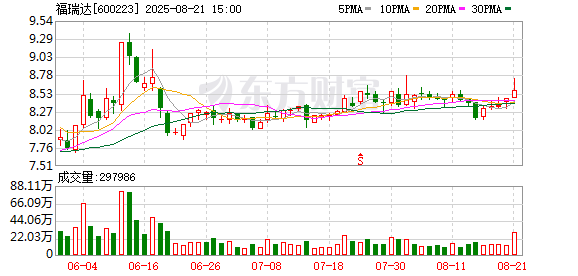
福瑞达:2025年上半年颐莲品牌收入5.54亿元,同比增长23.78%
Zheng Quan Shi Bao Wang· 2025-08-21 13:57
Core Insights - The company reported a revenue of 1.79 billion yuan in the first half of 2025, with a net profit of 108 million yuan, and total assets of 6.037 billion yuan as of June 30, 2025 [1][2] Group 1: Cosmetics Business - The cosmetics segment generated a revenue of 1.094 billion yuan in the first half of 2025, with the Yilian brand achieving 554 million yuan, reflecting a year-on-year growth of 23.78% [2] - The Yilian brand launched a global spokesperson, Zhang Linghe, and held a summer spray festival, with spray product line sales reaching 482 million yuan, an increase of 43% [2] - The Aier Doctor brand reported a revenue of 451 million yuan, with new products like the 287 mask and 287 lotion, generating nearly 10 million yuan in sales within two months of launch [2] Group 2: Pharmaceutical Business - The pharmaceutical segment achieved a revenue of 207 million yuan, expanding its client base by over 200 hospitals and OTC customers [2] - Key products include children's flu medication and a popular pain relief product recognized at the Wuzhen Health Conference [2] - The company is actively developing food-medicine integration standards and collaborating with major clients to enhance raw material supply [2] Group 3: Raw Materials and Additives - The raw materials and additives segment reported a revenue of 179 million yuan, with hyaluronic acid sales reaching 116 million yuan, a year-on-year increase of 23.4% [3] - Medical-grade hyaluronic acid sales surged by 287.3%, totaling 16.08 million yuan [3] - The overall gross margin for the hyaluronic acid business improved to 47.1%, up by 8.5 percentage points [3] Group 4: Innovation and R&D - The company launched over 80 new products in the cosmetics sector, including the Aier Doctor 287 mask and Yilian purple essence water [3] - The company introduced a pioneering transdermal collagen technology, enhancing skin penetration by 27.5 times [3] - The company has made significant progress in medical device registrations and drug development, including obtaining production licenses for various products [3]
福瑞达: 鲁商福瑞达医药股份有限公司2025年半年度报告
Zheng Quan Zhi Xing· 2025-08-21 13:14
Core Viewpoint - The company, Lushang Freda Pharmaceutical Co., Ltd., reported a decline in revenue and profit for the first half of 2025, primarily due to challenges in the cosmetics and pharmaceutical sectors, including product iteration and pricing pressures from expanded procurement policies [1][2][3]. Company Overview and Financial Indicators - The company reported a total revenue of approximately 1.79 billion yuan for the first half of 2025, a decrease of 7.05% compared to the same period last year [2]. - The total profit for the period was approximately 153 million yuan, down 17.31% year-on-year [2]. - The net profit attributable to shareholders, after deducting non-recurring gains and losses, was approximately 107.96 million yuan, reflecting a decrease of 15.16% [2]. - The total assets of the company at the end of the reporting period were approximately 6.04 billion yuan, showing a slight increase of 0.61% from the previous year [2]. Industry and Main Business Situation - The company operates in the cosmetics, pharmaceuticals, and raw materials sectors, with a focus on product innovation and market expansion [3][5]. - The domestic cosmetics market has shown signs of slowing growth, with retail sales growth of cosmetics lagging behind overall retail sales growth [3]. - The pharmaceutical sector is facing challenges due to expanded procurement policies and price reductions for winning products, impacting revenue generation [3][5]. Business Performance - The cosmetics segment reported a revenue of approximately 5.54 billion yuan, a year-on-year increase of 23.78%, while the brand "Aier Doctor" saw a significant revenue decline of 29.97% [10][11]. - The company has launched over 80 new products in the cosmetics sector during the reporting period, including key products from various brands [12][13]. - The pharmaceutical segment has been actively developing new products and enhancing brand visibility through participation in industry conferences and events [11][14]. Sales and Marketing Strategies - The company has established a comprehensive online and offline sales network, with online sales accounting for 84.20% of total revenue in the cosmetics segment [11]. - The marketing strategy includes leveraging social media and e-commerce platforms for brand promotion and customer engagement [10][11]. - The company is focusing on enhancing its product offerings and optimizing pricing strategies to improve market competitiveness [10][11]. Research and Development - The company has made significant advancements in research and development, particularly in the field of hyaluronic acid, which is widely used across various industries [3][8]. - The R&D efforts are supported by collaborations with academic institutions and the establishment of technology innovation systems [12][14]. - The company has received multiple certifications for its production facilities, emphasizing its commitment to quality and sustainability [15].
守正创新 擦亮“中华老字号”金字招牌 粤万年青积极打造大健康集团
Zhong Guo Zheng Quan Bao· 2025-08-20 22:13
Core Viewpoint - Guangdong Wannianqing Pharmaceutical Co., Ltd. is transforming from a traditional Chinese medicine enterprise into a comprehensive health group by integrating medicine, health food, and medical services, leveraging its long history and technological innovation [1][7]. Group 1: Company Overview - Guangdong Wannianqing has over 130 years of history and has recently acquired upstream enterprises to enter the health food sector, creating a one-stop health management platform [1]. - The company has been recognized as a "Chinese Time-honored Brand" by the Ministry of Commerce in 2024, highlighting its craftsmanship and quality in the traditional Chinese medicine market [2]. - Currently, the company holds 101 drug approvals, including 32 original products and 38 products listed in the national medical insurance directory [2]. Group 2: Innovation and Technology - The company is focusing on modernizing traditional Chinese medicine through technological innovation, employing techniques such as vacuum low-temperature technology and ultra-fine pulverization to enhance production efficiency and product quality [4][5]. - A dual-driven model of "independent research and cooperative research" is being implemented to foster innovation in drug development, particularly in areas like gallbladder, diabetes, and cardiovascular diseases [5][6]. Group 3: Market Expansion and Ecosystem - Guangdong Wannianqing is building a comprehensive health ecosystem that integrates pharmaceutical manufacturing, healthcare, and health consumer products, aiming for a closed-loop system from cultivation to sales [7][8]. - The company has plans to develop health food products based on the "medicinal food homology" concept and is focusing on expanding its overseas market presence, particularly in Southeast Asia [8].

仲景食品上市后首现半年营收下滑
Bei Jing Shang Bao· 2025-08-19 16:16
Core Viewpoint - Zhongjing Foods reported a "revenue growth without profit growth" for the first half of the year, marking the first decline in half-year revenue since its listing in 2020 [1] Financial Performance - Revenue for the first half of the year was 524 million yuan, a year-on-year decrease of 2.5% [1] - Net profit attributable to shareholders was 101 million yuan, a slight increase of 0.29% year-on-year [1] - The seasoning food and seasoning ingredient segments both experienced revenue declines, with the seasoning food segment generating 310 million yuan (down 2.31%) and the seasoning ingredient segment generating 212 million yuan (down 1.31%) [1] Product Performance and Market Challenges - The Shanghai scallion oil, launched in 2021 as a "second growth engine," saw sales reach 89.39 million yuan in the first nine months of 2023, a year-on-year increase of 113.24% [2] - Despite its initial success, the product faced challenges from counterfeit products and increased competition, leading to a decline in revenue [2] - The brand's positioning is seen as too regional, limiting its appeal beyond local markets, and it struggles to capture the younger demographic and health-conscious consumers [2] Innovation and Market Expansion - Zhongjing Foods has been focusing on product innovation, launching new products such as garlic sauce and ginger-garlic sauce, which have performed well in sales rankings [3] - The company is also targeting the B2B market with new restaurant-specific seasonings and has established partnerships with several chain restaurants [3] - Despite these efforts, new product launches have not yet significantly boosted overall revenue [3] Future Prospects - The company is exploring the health food sector, with plans for a new instant health product, "Zhongjing Vitality Ginseng," currently in the research and development phase [3] - There are challenges in consumer perception and regulatory compliance for health food products, which may delay their contribution to revenue [3]