产业竞争力

Search documents
X @外汇交易员
外汇交易员· 2025-11-10 03:07
高盛首席中国经济学家闪辉降中国2026与2027年GDP预期分别从4.3%和4.0%上调至4.8%与4.7%(2019年以来最大幅度的预期上调),理由是出口韧性强、中美贸易紧张局势缓和以及“十五五”规划带来的政策动力增强。闪辉表示,此次习特会表明,中国现在在贸易谈判中拥有了重要的筹码,尤其是在控制稀土出口方面,美国可能更难进一步加征关税。高盛还援引了中国近期召开的四中全会和“十五五”规划的成果,这些成果强调技术自主和产业竞争力。政策制定者旨在加大对高科技制造业和创新的投入,以此作为经济增长的驱动力,取代对房地产和基础设施的依赖。尽管这一战略可能迅速提振出口和企业利润,但闪辉警告称,提振家庭消费可能需要更长时间。高盛还指出,AI崛起有望在未来十年内将中国的长期增长潜力提升高达8%,从而有助于抵消人口结构和结构性不利因素。 ...
哥伦比亚咖啡产量预计减少90万袋
Shang Wu Bu Wang Zhan· 2025-08-28 15:33
Core Insights - Colombia's coffee production is expected to decrease from 8 million bags to 7.1 million bags in the second half of the year, representing a year-on-year reduction of approximately 900,000 bags [1] Industry Summary - The Colombian Coffee Growers Federation anticipates a significant drop in coffee output, highlighting potential challenges for the industry [1] - The Executive Director of the International Coffee Organization, Noguera, has called for enhancing industry competitiveness and expressed optimism regarding the outlook for U.S. tariffs, emphasizing that the U.S. remains Colombia's largest coffee market [1]
特朗普也没想到,莫迪手握3张“王牌”,决定在关税战中硬刚美国,印度胜算有多大?
Sou Hu Cai Jing· 2025-07-18 06:59
Group 1 - The core issue revolves around India's announcement to impose retaliatory tariffs on certain U.S. goods, escalating trade tensions between the two nations [1][4] - In 2024, the bilateral trade volume between the U.S. and India reached $195 billion, with a trade deficit of $38 billion for the U.S., indicating India's export advantage [3][5] - India's exports of electronic products to the U.S. accounted for 35.8% of its total electronic exports, valued at $14.4 billion in 2024, showcasing India's reliance on specific product categories [3] Group 2 - India has been actively signing free trade agreements (FTAs) with various countries, enhancing its market access and competitiveness in international trade [4][5] - The retaliatory tariffs are aimed at U.S. agricultural and industrial products, which could significantly impact U.S. exports and domestic political dynamics [5][7] - India's domestic market, with a population of 1.4 billion, presents a significant consumption potential that U.S. companies are keen to tap into, making it a crucial bargaining chip in negotiations [8] Group 3 - Despite India's assertive stance, there are internal challenges, including opposition from domestic parties and concerns from farmers about the impact of U.S. agricultural imports [7][9] - India's economic structure shows weaknesses, such as reliance on imports for high-end technology and a significant income disparity among its population, which could hinder its ability to withstand trade pressures [9][11] - The outcome of the trade conflict could lead to a potential decline in India's economic growth by 1.2-1.5 percentage points and a significant drop in foreign investment if negotiations fail [11]

为抗衡中国领先地位,韩美“一拍即合”:将为美国重振造船业献力
Sou Hu Cai Jing· 2025-07-16 00:59
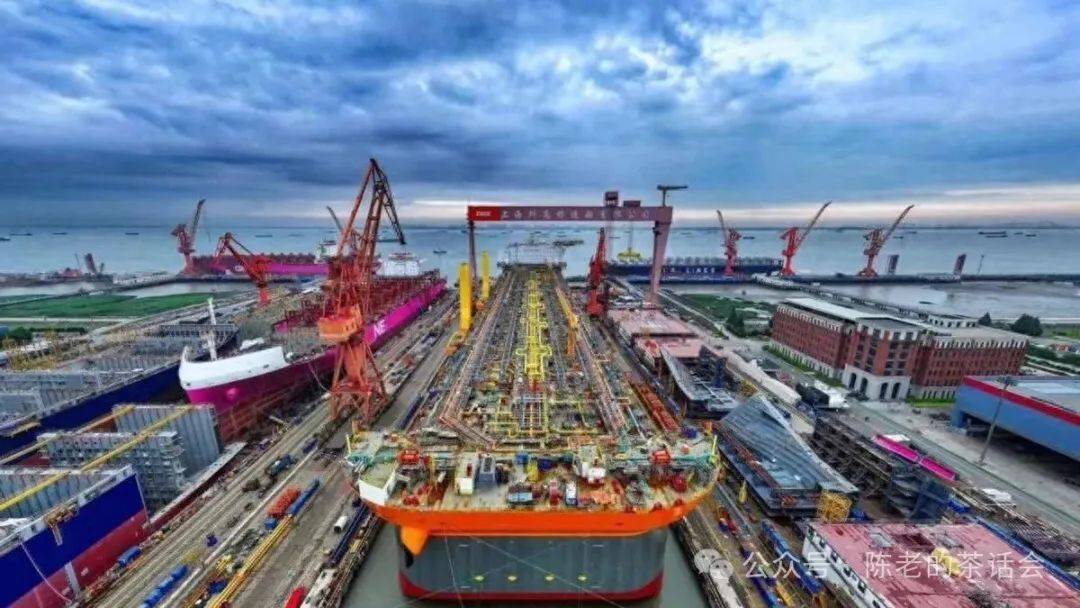
Core Viewpoint - The collaboration between South Korea and the United States in the shipbuilding industry aims to counter China's dominance, as China currently holds 70% of global new ship orders, while South Korea has only 17% and the U.S. is largely sidelined [3]. Group 1: Industry Dynamics - Shipbuilding is not just a business for shipyards; it reflects a country's industrial level, technological capability, and international standing [3]. - China has a significant cost advantage in shipbuilding, with prices for LNG carriers being 10%-20% lower than those from South Korea due to a complete industrial chain that allows for self-sufficiency in materials [3][7]. - The U.S. lacks sufficient steel production capacity, which hampers its competitiveness in shipbuilding, even in collaboration with South Korea [7]. Group 2: Strategic Partnerships - South Korea's largest shipbuilding company, Hyundai Heavy Industries, has partnered with U.S. company Edison Chouest to build LNG dual-fuel container ships in the U.S., with the first batch expected by 2028 [5]. - The partnership model allows both countries to leverage their strengths, with the U.S. providing facilities and South Korea supplying technology [5]. Group 3: Competitive Challenges - South Korea acknowledges its cost competitiveness is inferior to China's, which affects its market position [7]. - The collaboration between South Korea and the U.S. faces challenges in steel supply, technology transfer, and cost control, which could hinder their efforts to compete with China [12]. - The long-term competitiveness in the shipbuilding industry requires sustained innovation and investment, as China's leading position is a result of decades of technological accumulation and industrial chain development [10][12].
美国半导体,太强了
半导体行业观察· 2025-05-31 02:21
Core Viewpoint - The article emphasizes the strength and growth potential of the U.S. semiconductor industry, highlighting the need for policymakers to implement robust measures to promote industry growth and technological innovation [1]. Group 1: Industry Overview - The global semiconductor sales have increased from $139 billion in 2001 to an estimated $630.5 billion in 2024, with a compound annual growth rate (CAGR) of 6.8% [11]. - The U.S. semiconductor industry regained its global market leadership in 1997, maintaining a market share of 50.4% as of now, after experiencing a significant loss in the 1980s [13]. - U.S. semiconductor companies' sales rose from $71.1 billion in 2001 to $318.2 billion in 2024, reflecting a CAGR of 6.7% [16]. - In 2024, U.S. semiconductor exports reached $57 billion, ranking sixth among all U.S. exports [21]. Group 2: Global Market Dynamics - The demand for semiconductors is primarily driven by consumer products such as laptops, smartphones, and automobiles, with increasing demand from emerging markets in Asia, Latin America, Eastern Europe, and Africa [24]. - The Asia-Pacific region is the largest semiconductor market, with China being the largest single-country market, accounting for nearly 46% of the Asia-Pacific market and 24% of the global market [28]. Group 3: Capital Expenditure and R&D Investment - In 2024, U.S. semiconductor companies invested a total of $119.5 billion in R&D and capital expenditures, with a CAGR of approximately 6.4% from 2001 to 2024 [31]. - The average annual capital expenditure as a percentage of sales has remained between 10% and 15% over the past 20 years, indicating the capital-intensive nature of the industry [39]. - R&D spending in the U.S. semiconductor industry has a CAGR of approximately 7.5% from 2001 to 2024, with total R&D investment reaching $70 billion in 2024 [40]. Group 4: Employment Impact - The U.S. semiconductor industry directly provides 345,000 jobs and supports over 1 million indirect jobs, resulting in nearly 2 million additional jobs created [49]. Group 5: Productivity - Since 2001, labor productivity in the U.S. semiconductor industry has more than doubled, with per capita sales revenue exceeding $744,000 in 2024 [51].

法德领导人说将加强合作共同应对欧洲面临的挑战
news flash· 2025-05-07 20:09
Core Viewpoint - The leaders of France and Germany have committed to strengthening bilateral relations to address the challenges facing Europe, marking a new chapter in Franco-German cooperation [1] Group 1: Bilateral Cooperation - French President Macron and German Chancellor Merz emphasized the need for enhanced collaboration across various fields to tackle European challenges [1] - The leaders highlighted the importance of Franco-German friendship in the context of European construction [1] Group 2: Specific Challenges - The discussion included addressing defense security and industrial competitiveness as key challenges for Europe [1] - Macron mentioned that France and Germany will work together to respond to U.S. tariffs, indicating a focus on economic cooperation [1]
宏观|关税分担博弈会如何在行业层面演绎?
中信证券研究· 2025-05-07 00:43
Core Viewpoint - The article analyzes the potential impact of tariffs on various industries in China and the U.S., emphasizing the importance of the tariff burden distribution between Chinese and American companies on profitability. It evaluates industry competitiveness and bilateral trade dependence to assess how tariffs may be shared across different sectors [1][20]. Industry Competitiveness - China's telecommunications equipment, consumer electronics, and textile products exhibit strong competitiveness, with a revealed comparative advantage (RCA) greater than 2 as of 2023. In contrast, primary products and chemicals show lower RCAs below 0.8 [2][3]. - The international market share for China's telecommunications equipment, consumer electronics, and textile products is also high, exceeding 30%, while primary and pharmaceutical products have market shares below 10% [3]. - The comprehensive competitiveness index for textiles, telecommunications equipment, electronic data processing, and apparel ranks high at 14, 14, 13, and 13 respectively, while chemicals, agriculture, food, pharmaceuticals, and mineral fuels rank lower at 4-6 [11][13]. Trade Dependence - The U.S. has a high import dependence on miscellaneous products, machinery, and intermediate raw materials from China, with import dependence rates of 26.1%, 16.0%, and 16.0% respectively for 2024, which are significantly higher than the overall dependence [14]. - China's export exposure to the U.S. in sectors like automobiles, chemicals, and non-ferrous metal products is relatively low, providing stronger bargaining power in tariff negotiations. Conversely, labor-intensive sectors have higher exposure, affecting their negotiation leverage [14][20]. Tariff Impact - Due to strong competitiveness and high U.S. import dependence, China's telecommunications equipment and consumer electronics are expected to bear less of the tariff burden, while pharmaceuticals may face a heavier burden due to weaker competitiveness and higher export exposure [20]. - Current tariff rates for industries such as leather, transportation equipment, and food are among the highest, indicating potential impacts on these sectors [20]. Political Factors - Political considerations, particularly related to national security and labor rights, are likely to influence U.S. imports from China, with expectations of reduced imports of telecommunications equipment, smart and connected vehicles, and textiles [27].