
产业链转移

Search documents
海外黑天鹅带来的“新机遇”
老徐抓AI趋势· 2025-10-15 06:08
Core Viewpoint - The article discusses the recent downturn in the US stock market and its impact on various markets, particularly highlighting the potential investment opportunities in Southeast Asia's technology sector amidst global uncertainties [1][3]. Market Reaction - The US stock market experienced a significant drop, leading to a total liquidation amount of $19.133 billion in the cryptocurrency market within 24 hours, indicating a severe market reaction [1][2]. Southeast Asia Investment Thesis - Southeast Asia is projected to be a focal point for global capital over the next 3-5 years, driven by the ongoing US-China tariff conflicts and the region's economic resilience [3][4]. Macroeconomic Foundations - The average real GDP growth rate for ASEAN-6 countries is expected to remain around 4.5% from 2024 to 2029, significantly higher than the global average of 3.0% and developed economies' 2.2% [8]. - The region benefits from a demographic dividend, with a labor force participation rate of 65%-70% and an average age of 28-31 years by 2025, indicating a young and growing workforce [11]. Digital Economy Potential - Southeast Asia is one of the fastest-growing digital markets globally, with a digital economy projected to exceed $260 billion by 2024, yet with an e-commerce penetration rate of only about 15%, indicating substantial growth potential [12][14]. Industry Dynamics - The region is experiencing a shift in the global supply chain, attracting significant international investment in technology sectors, particularly in semiconductors and AI, with Southeast Asia contributing approximately 20% of global semiconductor exports [17][19]. - The monetary policy environment is becoming more favorable, allowing for lower financing costs for technology companies, with expected EPS growth rates of 7% and 9% for 2025 and 2026, respectively [19][23]. Key Companies Performance - Leading technology companies in Southeast Asia are transitioning from scale expansion to profitability improvement, with notable performances from Sea Group, Grab, and GoTo, indicating a shift towards high-quality development [20][21]. Foreign Investment Trends - Investment flows into Southeast Asia are showing a stable upward trend, with EPS growth rates for Vietnamese and Thai companies expected to reach 19% and 15% in 2025, respectively [22][23]. Valuation Opportunities - The Southeast Asia technology index presents a favorable valuation compared to high-flying US tech stocks, with a projected P/E ratio of 18.5, providing a safety margin for investors [24][27].


中美长达六小时会谈,特朗普感慨:美国不行了!决定延迟一项禁令
Sou Hu Cai Jing· 2025-09-16 14:57
Group 1 - The core of the negotiations between the US and China is a strategic contest, with both sides aware that reaching a consensus is unlikely, yet reluctant to acknowledge this reality [3][5] - The US is attempting to exert pressure on China regarding data security issues related to TikTok, while China views this as an infringement on its technological sovereignty [3][5] - The US is facing challenges due to its declining manufacturing capabilities and increasing political instability, which complicates its position in negotiations with China [5][7] Group 2 - The choice of Madrid as the negotiation venue reflects a nuanced recognition of China's position in global diplomacy and a subtle counterbalance to US influence [5] - The ongoing military exercises by China signal its vigilance against potential threats and showcase its defensive capabilities on the international stage [5] - The upcoming elections create a sense of urgency for the US to achieve a diplomatic victory, while China remains firm on its core interests, indicating a complex and unpredictable negotiation landscape [7]

韩国通胀意外降温至年内新低 为央行重启宽松周期铺路
Xin Hua Cai Jing· 2025-09-02 04:10
Group 1 - The Consumer Price Index (CPI) in South Korea rose by 1.7% year-on-year in August, a significant slowdown from 2.1% in July and below the economists' expectation of 1.9% [1] - The primary driver for this unexpected cooling was a substantial reduction in communication costs, particularly due to SK Telecom's policy to halve mobile bills for 20 million users, resulting in a monthly decline of over 13% in communication service prices [1] - Excluding this one-time factor, the actual price dynamics in South Korea remain resilient, with food and non-alcoholic beverage prices increasing by 4.9%, education costs rising by 2.4%, and essential living expenses such as water, electricity, and fuel growing by 1.3% [1] Group 2 - Despite strong external demand, with semiconductor exports up 27.1% year-on-year and automotive and ship exports increasing by 8.6% and 11.8% respectively, the South Korean economy faces significant internal and external challenges [2] - The retail sales figures show a five-year growth trend, but underlying issues such as high household debt and a bubble in the real estate market raise concerns about consumer confidence, which reached a seven-year high [2] - The Bank of Korea is in a policy dilemma, maintaining the benchmark interest rate at 2.5% due to high housing prices and mortgage levels, while emphasizing the need to consider housing costs in defining price stability [2] Group 3 - A recent phase trade agreement between the South Korean government and the United States has locked in goods tariffs at 15%, which, while lower than the previously threatened 25%, still represents a significant increase compared to previous years [3] - Analysts believe this added cost pressure may accelerate the shift of more companies in South Korea to relocate their supply chains, intensifying the structural adjustment pressures on the economy [3]
印度制造杀疯了!iPhone 17全系产能敲定,中国产业链危险了?
Xin Lang Cai Jing· 2025-08-21 01:29
Core Viewpoint - Apple is shifting the production of the iPhone 17 series to India, marking a significant change in the global supply chain dynamics and raising questions about the future of manufacturing in China and India [1][5]. Group 1: Apple's Strategic Move - By 2025, India is projected to account for 44% of smartphone imports to the U.S., surpassing China as the largest supplier [5]. - Apple plans for the iPhone 18 series to be "almost entirely dependent on Indian manufacturing" by the end of 2026, indicating a major shift in production strategy [5]. - This move is seen as a gamble by Apple CEO Tim Cook to enhance supply chain security amid increasing U.S.-China tensions [6][12]. Group 2: Cost and Quality Considerations - Labor costs in India are significantly lower, with Indian workers earning between 2000-3000 yuan per month compared to 6000-8000 yuan in China, which could lead to cost savings for Apple [7]. - However, quality control issues persist in Indian manufacturing, with reports of lower quality standards compared to Chinese factories [6][9]. - Apple is reportedly increasing quality checks by involving Chinese engineers to oversee production in India, which may raise costs [9]. Group 3: Implications for Chinese Manufacturing - The shift of production to India may force Chinese manufacturers to innovate and move towards higher value-added industries, as they can no longer rely solely on assembly for profits [10][14]. - China's manufacturing strength lies in its complete industrial system and the ability to produce high-tech components, which India currently lacks [11]. - The transition may also lead to a more competitive landscape for Chinese manufacturers, pushing them to focus on innovation and technology development [10][14]. Group 4: Consumer Impact - U.S. consumers may face variability in product quality, with potential issues arising from the Indian manufacturing process, leading to a "lottery" effect when purchasing iPhones [12][13]. - The long-term implications for consumers include the need for vigilance regarding product quality and the potential for increased prices despite cost savings in production [7][12]. - The overall consumer experience may be affected by the shift in production, with the risk of receiving subpar products from Indian factories [9][12].


突发!印度工厂停摆?苹果″去中国化″栽在一粒稀土上
Xin Lang Cai Jing· 2025-07-30 14:24
Core Viewpoint - Apple is facing significant challenges in relocating its AirPods production to India due to a critical shortage of the rare earth element dysprosium, which is essential for manufacturing the magnetic components of the earbuds [1][4][6]. Group 1: Dysprosium's Importance - Dysprosium is a key component in the magnets used in AirPods, and its scarcity poses a risk to production [4][6]. - China produces over 90% of the world's dysprosium, making it a crucial player in the supply chain [5][8]. - The global demand for dysprosium exceeds its annual production, leading to a reliance on existing stockpiles [8][12]. Group 2: Apple's Shift to India - Apple's move to India is driven by a desire for supply chain diversification amid geopolitical pressures [6][10]. - The initial setup of the production line in India faced immediate challenges due to the lack of local dysprosium suppliers [6][7]. - The Indian workforce is less efficient compared to their Chinese counterparts, impacting production rates [9][10]. Group 3: Supply Chain Realities - The logistics of sourcing materials from China to India adds significant costs and delays, undermining the benefits of relocating production [9][10]. - Apple's previous attempts to shift production to India for iPhones revealed similar supply chain limitations, leading to a return to China [10][12]. - The perception of India as a viable alternative to China for manufacturing is questioned due to its current capabilities [9][12]. Group 4: Geopolitical Context - China's export controls on rare earth elements are framed as a response to historical trade practices by Western countries [12][13]. - The narrative of "decoupling" from China is challenged by the reality of supply chain dependencies that Apple and other companies face [10][14]. - The situation highlights the complexities of global supply chains and the challenges of resource management in a competitive landscape [12][14].
交运重要点评:产业转移贸易碎片化或催生亚洲集运机遇,解析海JS丰、德翔、锦江差异化布局图谱
2025-07-16 06:13
Summary of Conference Call Notes Industry Overview - The focus of the conference call is on the Asian shipping industry, particularly the container shipping market, which is experiencing increased attention from the market participants [1] - The Asian shipping market is characterized as having a balanced supply and demand, with trends of industrial chain transfer and trade fragmentation potentially increasing trade demand [1] Key Insights on Demand - The Asian shipping lane is the second-largest segment in the international container shipping industry, accounting for approximately 31% of global trade volume in 2024 [2] - The growth rate of container shipping volume from 2001 to 2024 is projected at 6.85%, significantly higher than other routes [2] - Key factors driving the rapid growth of the Asian container market include: - High population base and consumption potential in the region - Ongoing industrialization in emerging economies, particularly ASEAN countries - RCEP's zero-tariff policies and other facilitative conditions enhancing regional trade [2] Supply Side Analysis - The new capacity in the Asian market is primarily composed of container ships under 3000 TEU, with an order backlog of only 3.6%, significantly lower than the industry average of 28.55% [3] - The proportion of ships over 20 years old is 24%, exceeding the industry average of 11% [3] - Clarkson's forecast indicates a capacity growth rate of 0.59% and -2.97% for ships under 3000 TEU over the next two years [3] Impact of Tariffs and Trade Dynamics - The imposition of tariffs has led to significant adjustments in the import-export structure between China and the U.S., with a decline in China's share and an increase in ASEAN's share [4] - Recent developments in U.S.-China trade negotiations have resulted in a substantial reduction of tariffs for a 90-day period, potentially leading to a surge in shipments from Asia to the U.S. [4] - The 301 tariff law may encourage shipowners to use smaller vessels, promoting trade fragmentation and sustaining high regional market demand [5] Company Comparisons - **HMM (Hyundai Merchant Marine)** has the largest total capacity among competitors, ranking 15th globally, with a capacity 60% higher than that of Yang Ming and over double that of ZIM [6] - **Yang Ming** has the highest cumulative growth rate in self-owned capacity at 223%, while HMM's total capacity growth has been achieved mainly through leasing [6] - As of the end of 2024, HMM has the highest proportion of available capacity at 91%, followed by Yang Ming at 79% and ZIM at 52% [7] Financial Performance and Metrics - HMM's revenue structure shows a high proportion of income from Southeast Asia, while ZIM has a higher share from Northeast Asia [9] - HMM's gross and net profit margins are more stable compared to Yang Ming, with margins reaching 47-48% [11] - HMM has maintained a dividend payout ratio above 70% over the past five years, with a maximum of 94% [12] Investment Recommendations - The Asian shipping market is viewed as a high-quality segment within the container shipping industry, with balanced supply and demand dynamics [13] - Companies such as ZIM, HMM, and Yang Ming are expected to benefit from the sustained high market conditions [13] - Potential risks include macroeconomic fluctuations, changes in tariffs, and increased competition [13]
周专题:服饰制造公司6月营收公布,环比5月改善
GOLDEN SUN SECURITIES· 2025-07-13 15:08
Investment Rating - The report maintains a "Buy" rating for key companies in the textile and apparel sector, including Shenzhou International, Anta Sports, and Bosideng, among others [8][30]. Core Views - The apparel manufacturing sector shows signs of recovery with June 2025 revenue reports indicating a mixed performance among companies, but overall steady growth year-to-date [1][11]. - Vietnam's apparel exports have seen rapid growth in 2025, while China's related product exports have remained stable [1][17]. - The report emphasizes the importance of focusing on companies with strong fundamentals and brand strength, particularly in the outdoor and running segments, which are expected to expand [2][30]. Summary by Sections Recent Revenue Reports - In June 2025, revenue changes for key companies were as follows: Feng Tai Enterprises -3.1%, Yu Yuan Group +9.4%, and Ru Hong -3.3%. For the first half of 2025, cumulative revenues were -4.1%, +6.2%, and +10.8% respectively [1][11]. - The report suggests that the apparel manufacturing sector's output has normalized in Q2 2025, with a recommendation to monitor future order trends [1][30]. Industry Trends - The report highlights that the apparel manufacturing sector is benefiting from tariff policy changes, which may enhance company valuations in the short term [3][30]. - The report notes that the international trade environment and tariff changes could impact the competitive landscape of the industry [11][25]. Key Company Recommendations - Shenzhou International is recommended for its high valuation attractiveness, with a projected PE of 12 times for 2025 [30]. - Huayi Group is noted for its expanding overseas capacity and is expected to see revenue growth of 10% to 15% in Q2 2025, despite potential pressure on profit margins [30]. - Weixing Co. is expected to face challenges with a projected revenue decline of 10% to 15% in Q2 2025 due to cautious order placements from brand clients [30][31]. Market Performance - The textile and apparel sector has outperformed the broader market, with a notable increase in exports from Vietnam and stable performance from Chinese exports [1][4]. - The report indicates that the demand for functional apparel and jewelry brands remains strong, with a focus on companies that can leverage product differentiation and brand strength [2][3].



越南取代中国制造业?越南中国总商会副会长缪仁赖:可笑!
凤凰网财经· 2025-06-29 14:16
Core Viewpoint - The "2025 China Enterprises Going Global Summit" aims to provide a high-end platform for Chinese companies to address challenges in global expansion and explore collaborative transformation paths in the context of global industrial chain restructuring [1]. Group 1: China-Vietnam Economic Relations - Since 2004, Vietnam has been a significant trade partner for China, with bilateral trade expected to reach $260 billion by 2024, ranking among the top ten globally [3]. - The notion that Vietnam will replace China as a manufacturing hub is deemed unfounded, as Vietnam's GDP is comparable to Shenzhen's, and its supply chain is still developing [3]. - China's 40 years of supply chain and industrial integration, combined with its vast market size, create an unparalleled industrial advantage that is difficult to replicate [3]. - The example of Samsung's relocation to Vietnam illustrates that while assembly has moved, 65% of its supply chain remains dependent on China, highlighting the complexity of industrial chain transfers [3]. - The current U.S.-China trade tensions have positioned Vietnam as a significant beneficiary, but the transition of industrial chains is not straightforward due to high costs without a substantial market [3].

印度能否成为苹果下一个制造中心?
HTSC· 2025-04-30 04:00
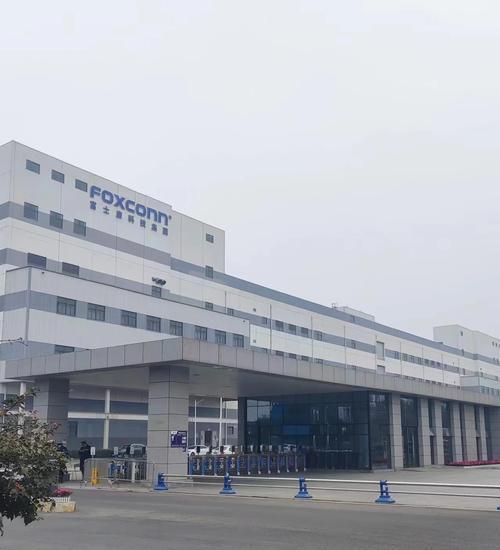
Investment Rating - The report maintains an "Overweight" rating for the technology sector, indicating an expectation that the sector will outperform the benchmark index [6]. Core Insights - The report discusses the potential of India becoming Apple's next manufacturing hub, highlighting the advantages in tariff costs for exports to the U.S. compared to China [1]. - It emphasizes that while Apple has the theoretical capacity to produce 66 million units in India, initial production will still rely on China due to challenges in launching high-end models [3][4]. - The report notes that the localization of key components in India is still in its early stages, with a projected localization rate of only 35% by 2024, aiming for 60% by 2027 [4]. Summary by Sections Section 1: Manufacturing Capacity - Foxconn and Tata Electronics are rapidly expanding their production capabilities in India, with Foxconn planning to produce 25 to 30 million iPhones by 2025 [2]. - The combined area of Apple-related manufacturing facilities in India has exceeded 4 million square meters, surpassing Foxconn's Shenzhen facility [2]. Section 2: Production Challenges - Initial production of high-end iPhone models in India faces significant challenges, including engineering collaboration and supply chain responsiveness, which are not yet at the level of Chinese facilities [3]. Section 3: Component Localization - Despite progress in assembling iPhones in India, critical components such as camera modules and OLED panels are still heavily reliant on imports from China and other Asian countries [4]. - The Indian government has introduced initiatives to boost local manufacturing of electronic components, but substantial progress is still required [4]. Section 4: Investment Recommendations - The report suggests focusing on undervalued quality stocks and companies benefiting from local expansion in India, such as Foxconn and Tata Electronics [5]. - It advises caution regarding companies that may experience stock price declines due to industry news but have limited short-term production transition capabilities [5].

华泰证券今日早参-20250430
HTSC· 2025-04-30 01:41
Group 1: Fixed Income Market - The recent volatility in the US Treasury market is largely attributed to the upcoming June maturity, which may be overestimated in terms of its impact on financial markets [2] - In the short term, the supply pressure from maturing US Treasuries is expected to be limited, with a more significant focus on the debt ceiling adjustments anticipated in Q3 [2] - Long-term demand for US Treasuries may face a downward trend, with potential alternatives including European and Japanese bonds, as well as gold [2] Group 2: Technology Sector - The report discusses India's potential as the next manufacturing hub for Apple, highlighting the competitive tariff advantages for Indian exports compared to China [4] - Apple theoretically has the capacity to produce the required number of iPhones in India, but initial production will still rely on Chinese exports due to current limitations [4] - The localization of components in India is still in its early stages, with significant reliance on supply chains from other Asian countries for critical parts [4] Group 3: Energy and New Energy - The lithium battery production forecast for May shows a slight decline in overall production, primarily due to the cancellation of mandatory storage policies and the impact of US tariffs on exports [5] - Despite short-term fluctuations, the long-term outlook for the lithium battery industry remains positive, driven by new vehicle models and technologies [5] - Recent power outages in Spain, Portugal, and southern France have underscored the need for investment in grid upgrades and DC grid technology, presenting opportunities for Chinese power equipment companies [6] Group 4: Media and Publishing - Phoenix Media reported a Q1 2025 revenue of 3.226 billion yuan, reflecting a year-over-year decline, but a significant increase in net profit due to continued tax incentives [7] - The company maintains a stable core business and is rated as a "buy" based on its solid performance and favorable tax policies [7] Group 5: Financial Sector - The report indicates that the China Construction Bank's Q1 2025 net profit and revenue showed slight year-over-year changes, with a focus on asset quality and credit expansion [9] - The bank's diversified income sources and stable operations support a "buy" rating [9] Group 6: Consumer Goods - The report highlights the strong performance of China National Offshore Oil Corporation, with Q1 revenues showing a significant year-over-year increase, driven by stable oil and gas production [20] - The company is expected to maintain a "buy" rating due to its robust operational performance and project advancements [20] Group 7: Real Estate - The report notes that China Petroleum's Q1 2025 revenue and net profit exceeded expectations, attributed to increased natural gas production and sales [34] - The company is rated as "increase" based on its strong performance and potential for further growth in the natural gas sector [34]



