产品碳足迹

Search documents
电力大数据+碳足迹管理:中国创新解锁绿色转型新路径
Yang Zi Wan Bao Wang· 2025-10-20 01:58
Core Insights - The State Grid Corporation of China has introduced an innovative "Electricity Big Data + Carbon Footprint Management" service system, which has already saved over 1 million yuan in energy costs and reduced carbon emissions by over 1,000 tons for a local electronics manufacturer, Xin'an Electric, in Suzhou. If this model is implemented nationwide, it is expected to achieve an annual carbon reduction benefit of nearly 40 million tons [1][2] Group 1 - The "Electricity Big Data + Carbon Footprint Management" service system utilizes real-time and precise electricity big data to automatically acquire energy usage data, constructing a carbon footprint accounting model that covers the entire product lifecycle [2] - The system allows for dynamic quantification of greenhouse gas emissions from both production and non-production processes, enabling scientific assessment of carbon reduction pathways and enhancing corporate carbon asset management efficiency [2] - The implementation of this system has significantly reduced the time required for carbon footprint accounting from 15 days to just 1 day, improving efficiency by an average of 85% [2] Group 2 - The initiative is part of the State Grid's ongoing commitment to support green and low-carbon economic development, with the Jiangsu branch exploring the establishment of this system starting in October 2023 [2] - The platform connects with authoritative carbon certification agencies, facilitating rapid certification of carbon footprints, which is crucial for companies aiming to enhance their market competitiveness [2] - The representative of the UN Global Compact in China highlighted that this innovative model not only provides an efficient and low-cost solution for corporate carbon management but also contributes to global carbon reduction efforts [2]
“十五五”时期,碳排放双控制度体系建设如何推进?
Zhong Guo Huan Jing Bao· 2025-10-08 23:14
Core Viewpoint - The transition to a dual control system for carbon emissions is essential for achieving high-quality development and is a key task in the new round of ecological civilization reform in China [1] Challenges in Carbon Emission Dual Control System - The carbon emission accounting system is not yet fully developed, facing issues such as unclear statistical bases, inadequate methods, and a lack of timely data [2] - The evaluation and assessment mechanisms for carbon emissions are still underdeveloped, with insufficient accountability at local and industry levels [3] Strategies and Countermeasures for Carbon Emission Dual Control System - At the regional level, a dual control system for total carbon emissions and intensity should be implemented, focusing on accurate statistical accounting and dynamic updates of greenhouse gas emission factors [4] - At the industry level, there should be a focus on controlling fossil energy consumption and enhancing carbon emission monitoring in key sectors such as electricity, steel, and cement [5] - At the enterprise level, improving the quality of carbon emission data management and integrating it into a multi-tiered regulatory framework is crucial [6] - At the project level, establishing performance standards for carbon emissions and ensuring new projects meet advanced value levels is necessary [7] - At the product level, developing a carbon footprint labeling system and promoting low-carbon products through policy incentives and consumer education is essential [7]
【行业政策】一周要闻回顾(2025年9月22日-9月28日)
乘联分会· 2025-09-29 08:46
Core Viewpoint - The article discusses the recent announcements from the Ministry of Transport and the Ministry of Industry and Information Technology regarding standards and regulations for various automotive components and technologies, emphasizing the importance of safety, environmental impact, and technological advancement in the automotive industry [3][11][17]. Group 1: Announcement of Standards - On September 22, the Ministry of Transport published the 79th batch of compliant road transport vehicle models, which includes a total of 1,712 models: 114 passenger vehicles, 38 passenger cars, 1,031 cargo vehicles, 257 tractors, and 272 trailers [5]. - The announcement also includes the withdrawal of 5 non-compliant vehicle models [5]. Group 2: Automotive Chip Standards - On September 23, the National Automotive Standardization Technical Committee released a draft for public consultation regarding the technical requirements and testing methods for automotive SerDes (Serializer/Deserializer) chips, with a deadline for feedback set for November 3, 2025 [8][9]. - The SerDes chips are crucial for high-speed serial data communication between in-vehicle sensors and controllers, and the standard aims to enhance the technology's reliability and performance [9][10]. Group 3: Safety Standards for Vehicle Components - On September 24, the Ministry of Industry and Information Technology announced a public consultation for the mandatory national standard on automotive door handle safety, with feedback due by November 22, 2025 [11][12]. - The standard aims to improve the safety performance of vehicle door handles, particularly in response to new technologies and safety requirements [12]. Group 4: Environmental Standards - On September 26, the National Automotive Standardization Technical Committee published a draft for the quantification methods and requirements for the carbon footprint of automotive air conditioning systems, with a consultation deadline of November 6, 2025 [17][18]. - This standard is intended to provide a unified approach to carbon footprint assessment in the automotive industry, promoting low-carbon and sustainable development practices [18].

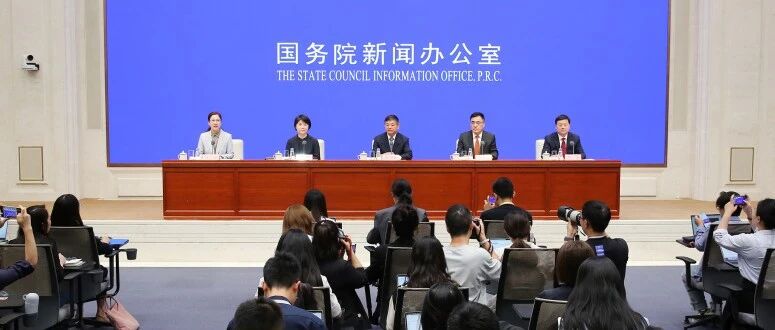
“十四五”期间淘汰高排放车辆近2000万辆
Mei Ri Jing Ji Xin Wen· 2025-09-22 14:09
Core Viewpoint - The press conference highlighted the significant progress made in ecological civilization construction and environmental protection during the "14th Five-Year Plan" period, marking a transformative shift towards comprehensive promotion of a beautiful China [1] Group 1: Pollution Prevention Achievements - The Ministry of Ecology and Environment has achieved new results in pollution prevention, including the completion of clean heating transformations for 41 million households and the elimination of nearly 20 million high-emission vehicles during the "14th Five-Year Plan" [2] - Specific targets for PM2.5 concentration reductions by 2024 include an 18% decrease in the Beijing-Tianjin-Hebei region, a 10% decrease in the Yangtze River Delta, and a 20% decrease in the Fenwei Plain compared to 2020 levels [2] - Over 360,000 river and 63,000 sea pollution outlets have been identified, with completion rates for major river basins and key bays reaching 90% and 93.3% respectively [2] Group 2: Soil and Waste Management - The Ministry has implemented soil pollution source control actions, completing pollution tracing for heavy metals in agricultural land across 132 key counties and achieving over 90% elimination of black and odorous water bodies in county-level cities [2] - The construction of "waste-free cities" has been advanced, with a complete ban on the import of "foreign garbage" and initiatives to address illegal waste disposal and heavy metal environmental hazards [3] Group 3: Carbon Market and Emission Control - The establishment of the world's largest carbon trading market has been achieved, covering over 60% of national carbon emissions, with a cumulative trading volume of 714 million tons and a total transaction value of 48.961 billion yuan as of September 2025 [5] - The Ministry has initiated a voluntary greenhouse gas reduction trading market and developed over 30 regulatory documents to create a comprehensive carbon market regulatory framework [5] - The Ministry is actively promoting the reduction of non-CO2 greenhouse gas emissions, including stricter controls on methane and nitrous oxide emissions [4] Group 4: Climate Change Adaptation - The Ministry has implemented the "National Climate Change Adaptation Strategy 2035," focusing on long-term goals for climate change adaptation and enhancing climate resilience in key vulnerable areas [6] - Pilot projects for climate-adaptive cities have been deepened, and early warning systems for climate risks have been established to promote adaptive actions [6]
生态环境部:风电、太阳能发电装机总量已提前完成2030年国家自主贡献目标
中国有色金属工业协会硅业分会· 2025-09-22 02:07
Core Viewpoint - The article emphasizes the importance of high-quality development through ecological and environmental protection, highlighting China's proactive measures in addressing climate change and achieving carbon neutrality goals. Group 1: Climate Change and Policy Framework - Climate change is identified as a significant global challenge, with increasing extreme weather events leading to severe losses and ecological damage, necessitating urgent action [3] - The Ministry of Ecology and Environment is advancing a policy framework for carbon peak and carbon neutrality, focusing on energy and industrial transformation, and has achieved early completion of renewable energy installation targets [3] - During the 14th Five-Year Plan period, China's carbon dioxide emission intensity is expected to continue decreasing, alongside efforts to control non-CO2 greenhouse gas emissions [3] Group 2: Carbon Market Development - China has established the world's largest carbon trading market, which now covers over 60% of national carbon emissions, with new sectors like steel and cement included this year [4] - As of September 18, 2025, the cumulative trading volume in the carbon market reached 714 million tons, with a total transaction value of 48.961 billion yuan [4] - The carbon market's regulatory framework is being enhanced, with over 30 institutional regulations developed to support its operation [4] Group 3: Product Carbon Footprint Management - The Ministry has released over 100 product carbon footprint accounting standards and established a national greenhouse gas emission factor database to aid companies in meeting international carbon trade standards [4][5] - Regular updates on national electricity carbon footprint data are provided to assist enterprises in navigating carbon-related trade barriers [4][5] Group 4: Climate Adaptation Initiatives - The Ministry is implementing the "National Climate Change Adaptation Strategy 2035," focusing on long-term adaptation goals and enhancing climate resilience in vulnerable regions [5] - Pilot projects for climate-adaptive cities are being deepened, and early warning systems are being developed to promote adaptive actions [5] - Future efforts will include strengthening the carbon market and improving product carbon footprint standards to facilitate green and low-carbon transitions [5]
美的主导的空调碳足迹国家标准正式发布
Xin Lang Cai Jing· 2025-08-12 11:38
Core Viewpoint - The release of the national standard for product carbon footprint in the home appliance industry marks a significant step in establishing a carbon footprint management system for home appliance products in China [1] Group 1 - The national standard titled "Quantification Methods and Requirements for Greenhouse Gas Product Carbon Footprint of Room Air Conditioners" (GB/T 46027-2025) has been officially published [1] - The standard was jointly developed by Midea Air Conditioning and the China Household Electrical Appliances Research Institute [1] - This initiative reflects the growing emphasis on sustainability and environmental responsibility within the home appliance sector in China [1]
武汉企业首次发布产品碳足迹报告
Chang Jiang Ri Bao· 2025-07-23 00:53
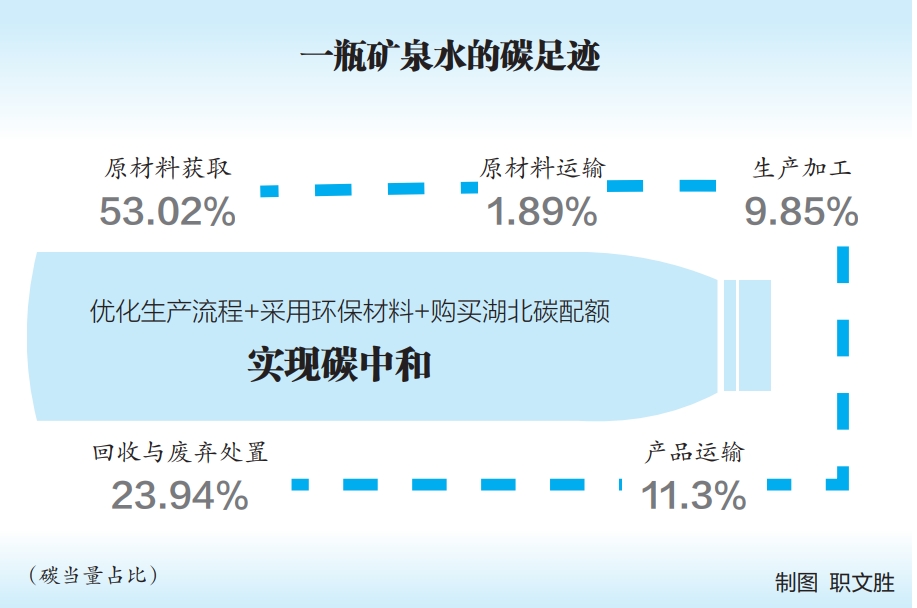
Core Insights - Hubei Shennong (Hubei) Beverage Co., Ltd. has launched a carbon footprint report for its Shennongxi mineral water, marking the first such initiative in Hubei province [1][3] - The carbon footprint for producing a 550ml bottle of mineral water is 232.4 grams of CO2 equivalent, with raw material acquisition accounting for approximately 50% of the total emissions [3] - The Hubei Provincial Product Carbon Footprint Public Service Platform serves as a centralized data hub for carbon footprint management, allowing companies to generate reports and obtain carbon labels easily [3] Company Initiatives - Hubei Shennong is collaborating with the Badong County Ecological Environment Bureau to optimize production processes and use eco-friendly materials to reduce carbon footprints [3] - The company has achieved carbon neutrality for the first batch of 10,000 bottles of Shennongxi mineral water by purchasing Hubei carbon credits [3] Industry Trends - Several companies in Hubei are actively engaging in "carbon exploration," with Xiangyang Tea Co., Ltd. calculating a carbon footprint of 19.39 kg per kilogram of tea [4] - The carbon footprint assessments and carbon neutrality practices by Hubei enterprises provide reference models for low-carbon development in related industries and offer consumers clear choices for low-carbon products [4]
光伏领域,全球首个立项!
Zhong Guo Dian Li Bao· 2025-07-22 22:29
Industry News - Three departments jointly announced the addition of two new electricity professions, including 17 new occupations and 42 new job types in the energy and electricity sector [3] - The world's first international standard proposal for product carbon footprint in the photovoltaic field has been officially established, focusing on the carbon footprint accounting methodology for photovoltaic modules [3] - A new oil field with a production capacity of one billion tons has been successfully put into operation in the Bohai Sea, marking a significant step for China's offshore oil production and energy security [3] Corporate News - China Southern Power Grid has restored 97.1% of users affected by Typhoon "Wipha," completing repair tasks across all affected areas [5] - China National Nuclear Power has established a new company, China Nuclear Shandong Energy Development Co., Ltd., to develop energy projects in Shandong Province [7] - Huadian New Energy plans to use raised funds of 15.592 billion yuan to replace self-raised funds previously invested in fundraising projects [7] - NIO Energy has officially settled its headquarters in Wuhan, aiming to enhance its manufacturing capabilities and technological development [7] Local News - Guangdong will establish a zero-carbon smart industrial park, expected to be operational by June 2027, providing at least 40% of the power battery recycling materials for the Greater Bay Area [8] - 24 sets of 2000-meter deepwater marine equipment have been delivered, enhancing China's deepwater marine equipment manufacturing capabilities [8] International News - The next round of US-China negotiations may discuss China's purchase of Russian and Iranian oil, with China emphasizing the importance of dialogue and cooperation [10] - The largest biomass power station under construction in West Africa has successfully completed its electrical commissioning, expected to provide sustainable clean energy and reduce carbon emissions [10]


重庆首笔“产品碳足迹”挂钩贷款落地
Ren Min Wang· 2025-07-05 10:09
Group 1 - Chongqing Rural Commercial Bank successfully launched the first "product carbon footprint" linked loan of 30 million yuan in Chongqing, which innovatively uses the carbon footprint interest rate linkage model to support enterprise financing while encouraging energy conservation and emission reduction [1][3] - The concept of "carbon footprint" is increasingly applied in industrial production and circulation, measuring the total greenhouse gas emissions of a product throughout its lifecycle, from raw material extraction to disposal and recycling [1] - The loan product is designed to meet the financing needs of industrial enterprises while incentivizing them to reduce carbon emissions, with interest rates fluctuating based on the company's carbon footprint [3][4] Group 2 - The Ministry of Ecology and Environment and 15 other departments released an implementation plan to establish a carbon footprint management system, encouraging financial institutions to enrich financial products and services based on carbon footprint information [2] - Chongqing Rural Commercial Bank has introduced various carbon financial products, including carbon emission rights pledge loans and carbon sink + green loans, to actively respond to policies aimed at reducing carbon emissions and promoting green growth [4] - The bank aims to contribute to achieving carbon peak and carbon neutrality goals while supporting the construction of a beautiful China and a national-level green finance reform and innovation pilot zone [4]

生态环境部:研究重点产品碳足迹因子,打通管理“全链条”
Di Yi Cai Jing· 2025-06-26 02:55
Core Viewpoint - The Ministry of Ecology and Environment of China is advancing the establishment of a product carbon footprint management system, focusing on key sectors such as coal, electricity, oil, gas, steel, cement, petrochemicals, and transportation, aiming to enhance the carbon footprint accounting standards and factor research [1][6]. Group 1: Carbon Footprint Management System - The carbon footprint of a product encompasses the total carbon emissions generated throughout its entire lifecycle, from raw material acquisition to disposal, serving as a crucial indicator of a company's and product's green and low-carbon level [2][5]. - As of 2024, over 70 national standards for carbon footprint accounting are in development, alongside more than 100 group standards for specific sectors, addressing the urgent need for carbon footprint accounting in various industries [1][2]. Group 2: Government and Industry Initiatives - The government is integrating carbon footprint requirements into procurement standards, promoting green procurement practices that emphasize environmental protection and resource conservation [2][3]. - Major e-commerce platforms are encouraged to display product carbon footprint information, with initiatives like Alibaba's "88 Carbon Account" and JD's "Green Plan" aimed at promoting low-carbon consumption [3][5]. Group 3: Financial Innovations - Financial institutions are innovating in carbon footprint management, with products like "Carbon Number Loan" aimed at supporting small and micro enterprises in green transformation by linking loan rates to carbon footprint levels [5][6]. - In 2024, significant loans were issued based on carbon footprint metrics, including a 20 million yuan loan for a car rental company and a 29 million yuan loan for a cable manufacturing enterprise, demonstrating the financial sector's role in incentivizing low-carbon practices [5][6]. Group 4: Future Directions - The Ministry of Ecology and Environment plans to enhance the carbon footprint accounting standards and factor research, focusing on key sectors and aiming for international recognition of domestic standards [6][7]. - There is an emphasis on local and industry enterprises to innovate in carbon footprint management and certification, with a goal to establish a comprehensive carbon footprint management system [6][7].