估值提升

Search documents
深度折价50%!引爆在即?
Ge Long Hui· 2026-02-09 12:32
Group 1 - The article discusses the recent rebound of the Hong Kong stock market, particularly in the technology sector, following a strong performance in the US stock market [3][4]. - The rebound is attributed to technical factors and reflects the resilience of the Hang Seng Technology Index, which is currently trading at a significant discount compared to the Nasdaq [5][9]. - The article highlights the potential for a substantial rebound in the Hong Kong tech sector, drawing parallels to last year's surge in Chinese tech stocks driven by valuation increases [6][12]. Group 2 - The current price-to-earnings (PE) ratio for the Nasdaq is 40 times, while the Hang Seng Technology Index stands at only 21 times, indicating a deep discount [9][12]. - The article suggests that narrowing the valuation gap between the Hang Seng Technology Index and the Nasdaq could lead to a 30% increase in stock prices, which would be significant for investors [13]. - Factors supporting this potential valuation increase include the rapid advancement of Chinese AI technology and the strong financial positions of major tech companies [14][15]. Group 3 - The article identifies key catalysts for potential valuation increases, including the resolution of macroeconomic uncertainties and improved foreign investment sentiment towards Chinese assets [23][24]. - It also mentions the easing of competitive pressures in certain industries, which could enhance profitability expectations for companies [26][28]. - The overall sentiment is that the Hang Seng Technology Index is in a position for upward movement, given the accumulation of positive factors and the current state of the market [28][31].

深度折价50%!引爆在即?
格隆汇APP· 2026-02-09 11:52
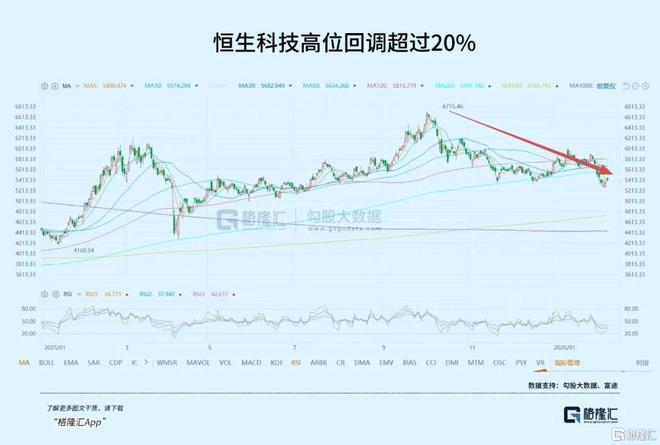
Core Viewpoint - The article discusses the potential for a rebound in the Hong Kong technology sector, particularly in the context of valuation discrepancies between the Hang Seng Tech Index and the Nasdaq, suggesting that narrowing this gap could lead to significant investment opportunities [8][14][20]. Group 1: Market Performance - The Hang Seng Tech Index has seen a decline of over 20% since October of last year, indicating a bearish trend [3]. - Recent market movements show a strong rebound in U.S. stocks, which has positively influenced the Hong Kong market, with all three major indices closing higher [6][7]. - Key sectors such as internet, commercial aerospace, smart driving, and semiconductors have shown collective upward movement, reflecting resilience in the Hang Seng Tech Index [8]. Group 2: Valuation Analysis - The current price-to-earnings (PE) ratio for the Nasdaq is 40 times, while the Hang Seng Tech Index stands at only 21 times, indicating a significant valuation discount [14]. - Historical comparisons show that the Nasdaq's valuation is at the 51.91 percentile over the past five years, while the Hang Seng Tech Index is at 30.64 percentile, further emphasizing the valuation gap [15]. - Major companies in the Hang Seng Tech Index, such as Alibaba and Tencent, have a PE ratio of 21, which is lower than their U.S. counterparts like Meta and Amazon [19]. Group 3: Investment Opportunities - The article posits that a narrowing of the valuation gap between the Hang Seng Tech Index and the Nasdaq could lead to a 30% increase in stock prices, which would be a substantial opportunity for investors [20]. - The potential catalysts for this valuation increase include the rapid advancement of AI technology in China and the strong financial positions of leading tech companies [23][30]. - The anticipated growth in AI applications is expected to drive significant profit increases for major tech firms, which could lead to higher valuations [24][28]. Group 4: External Factors - Positive developments such as high expectations for a "big deal" between the U.S. and China, stabilization of U.S. dollar policies, and reduced competitive pressures in certain industries could enhance investor sentiment towards Hong Kong tech stocks [32][34][36]. - Recent regulatory challenges and market shocks are viewed as temporary setbacks rather than long-term threats, suggesting that the market may quickly recover [39]. Group 5: Future Outlook - The article suggests that 2025 could be a pivotal year for the Hong Kong tech sector, with expectations for the release of AI value and potential valuation increases [41]. - Even if the anticipated valuation increases do not materialize as expected, the current deep discount relative to the Nasdaq provides a safety margin for investors [41][42].
红利指数盈利靠什么?三大收益来源全解析 | 螺丝钉带你读书
银行螺丝钉· 2026-02-07 13:34
Core Viewpoint - The article emphasizes the rapid development of dividend indices in China, driven by a low interest rate environment, and highlights the investment strategy of buying undervalued stocks and holding them for dividends [4][5]. Group 1: Dividend Index Performance - The historical performance of dividend indices, such as the CSI Dividend and the Hong Kong-Shenzhen Dividend Low Volatility Index, shows a "slow bull" market trend with annualized returns exceeding the average returns of the A-share market [6][8]. - From early 2020 to the present, the CSI Dividend Index has an annualized return of 9.1%, while the Hong Kong-Shenzhen Dividend Low Volatility Index has an annualized return of 11.31% [9][11]. - Dividend indices exhibit clear phases of performance, with underperformance during growth-style bull markets and relative stability during bear markets [12][14]. Group 2: Sources of Dividend Index Returns - The returns from dividend indices can be broken down into three main sources: earnings growth, valuation improvement, and dividend income [15][34]. - Earnings growth is a crucial long-term return source, as companies in dividend indices are typically established leaders in their industries with stable earnings [18][20]. - Valuation improvement occurs when stocks are bought at low price-to-earnings (P/E) and price-to-book (P/B) ratios, leading to potential gains as valuations normalize [22][24]. - Dividend income significantly contributes to overall returns, with dividends accounting for about one-third of the long-term returns of the Hong Kong-Shenzhen Dividend Low Volatility Index [30]. Group 3: Investment Strategy - The recommended investment strategy for dividend indices is to buy undervalued stocks and hold them to benefit from both capital appreciation and dividend income [39]. - The article also notes that the optimization of index rules over the past decade has improved long-term returns by excluding high-leverage or unstable dividend stocks [41].
东珠生态:2025年3月,公司已制定《估值提升计划》
Zheng Quan Ri Bao Wang· 2026-02-03 12:42
证券日报网讯2月3日,东珠生态(603359)在互动平台回答投资者提问时表示,2025年3月,公司已制 定《估值提升计划》,将在公司治理、经营提升、股权激励等领域提升公司投资价值。公司将会继续努 力做好自身的经营管理,不断提升公司内部价值,推动公司高质量可持续发展。 ...

牛市里没到高估的品种,会有收益吗?|投资小知识
银行螺丝钉· 2026-02-01 13:40
Group 1 - The main sources of returns for index funds are profit growth, valuation improvement, and dividend income [2] - Profit growth from listed companies is the core source of long-term returns, while valuation impacts returns significantly during market cycles [2] - Dividend contributions are substantial for dividend and value indices, and patience in holding these investments is advised as long as they are not overvalued [2]

好想你:公司高度重视市值管理工作并已制定《2025年度估值提升计划》
Zheng Quan Ri Bao Zhi Sheng· 2026-01-30 11:12
证券日报网讯 1月30日,好想你在互动平台回答投资者提问时表示,公司高度重视市值管理工作,并已 制定《2025年度估值提升计划》,通过聚焦主业、强化投资者回报等方式致力于提升内在价值。股价波 动受宏观经济、市场情绪等综合因素影响。公司对鸣鸣很忙持有的股权作为以公允价值计量且其变动计 入当期损益的金融资产,其价值的实现将为公司长期发展提供支持。公司经营合法合规,一切正常,不 存在应披露而未披露的重大风险,并将持续专注主业,以扎实业绩回报投资者信任。 (编辑 袁冠琳) ...

城投控股:公司制定并披露了《估值提升计划暨提质增效重回报行动方案》
Zheng Quan Ri Bao Wang· 2026-01-23 11:12
Core Viewpoint - The company has announced a detailed plan for valuation enhancement and shareholder returns, outlining specific measures for cash dividends and share buybacks from 2024 to 2027 [1] Group 1: Valuation Enhancement Plan - The company has developed and disclosed the "Valuation Enhancement Plan and Quality Improvement Action Plan" [1] - The plan includes cash dividend arrangements for the years 2024 to 2026 [1] - The company will implement share buybacks from 2025 to 2027 as part of the plan [1] Group 2: Execution and Commitment - The company is committed to steadily advancing the execution of the plan [1] - The aim is to effectively maintain the company's investment value and protect shareholder rights [1]

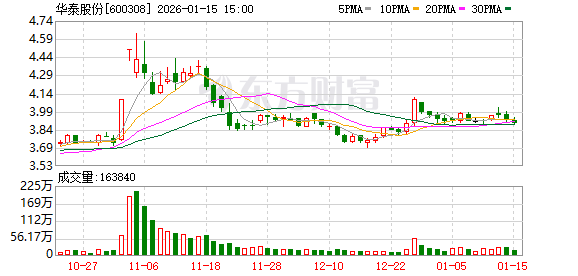
华泰股份:公司目前生产经营稳定
Zheng Quan Ri Bao· 2026-01-15 13:40
Core Viewpoint - Huatai Co. has stated that its production and operations are stable, and it has implemented measures such as share buybacks, major shareholder increases, and cash dividends to enhance valuation and protect investor interests [2] Group 1: Company Operations - The company emphasizes that its stock price fluctuations are influenced by multiple factors, including product structure, industry supply and demand, and market funding preferences [2] - The company is committed to focusing on its core business operations to deliver stable financial performance and returns to investors [2] Group 2: Financial Compliance - The company adheres strictly to accounting standards in its financial accounting and operates in a compliant and regulated manner [2] - All related party transactions with the controlling shareholder are conducted based on market principles, ensuring that there is no harm to the company or minority shareholders' interests [2]

天原股份:公司已制定并披露《宜宾天原股份有限公司估值提升计划》
Zheng Quan Ri Bao Wang· 2026-01-09 11:44
证券日报网讯1月9日,天原股份(002386)在互动平台回答投资者提问时表示,公司已制定并披露《宜 宾天原股份有限公司估值提升计划》,旨在持续提升公司竞争力并积极回报股东。宜宾市国资委作为实 际控制人,在对公司的年度考核中包含市值管理内容,总体要求是实现国有资产保值增值。公司将会持 续做好经营业绩提升,优化信息披露和加大投资者交流,给予投资者更多回报。 ...

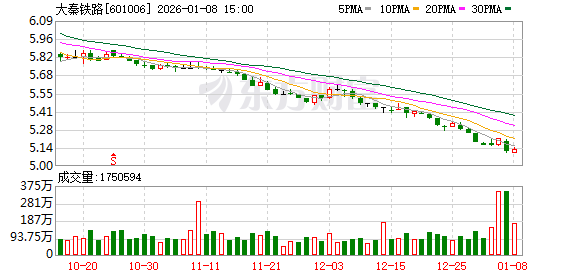
大秦铁路:估值提升计划推动投资价值合理反映公司质量
Zheng Quan Ri Bao· 2026-01-08 14:11
Core Viewpoint - Daqin Railway has announced a valuation enhancement plan aimed at improving operational stability and efficiency, focusing on strengthening its core railway passenger and freight transport business [2] Group 1: Valuation Enhancement Plan - The plan includes measures such as implementing continuous, stable, and high cash dividends [2] - The company aims to strengthen investor relations management and continuously improve the quality of information disclosure [2] - Daqin Railway will consider share buybacks and encourage shareholder increases to reflect the company's investment value appropriately [2] Group 2: Future Disclosure - Detailed information regarding the valuation enhancement plan will be disclosed on April 30, 2025 [2]