低估值

Search documents
缩量调整
第一财经· 2026-02-05 11:08
Market Overview - The three major A-share indices collectively retreated, with the Shanghai Composite Index showing resilience due to the banking and brokerage sectors, while the Shenzhen Component Index experienced fluctuations without clear rebound momentum. The ChiNext Index was notably affected by adjustments in technology growth stocks [4]. Market Performance - A total of 1,616 stocks rose, while 375 stocks fell, indicating a market with more declines than gains and significant structural differentiation [5]. - Consumer-related sectors such as film and television, retail, and tourism hotels saw a surge in stock prices, while low-valuation, high-dividend stocks like banks, liquor, and pharmaceuticals demonstrated defensive performance, with some even reaching new highs. In contrast, previously popular sectors like precious metals, photovoltaics, and semiconductors underwent significant adjustments [6]. Trading Volume - The total trading volume of the two markets was 1.8 trillion yuan, down 12.29%, reflecting a contraction in trading activity as pre-holiday risk aversion and cautious sentiment increased. Funds shifted from growth to value sectors, with defensive sectors becoming a "safe haven" for capital, leading to lower trading activity in these areas [7]. Fund Flows - There was a net outflow of 36.672 billion yuan from institutional funds, while retail investors saw a net inflow [8]. - Institutions adjusted their portfolios defensively, favoring sectors such as cultural media, food and beverage, banking, beauty care, and commercial retail, while reducing holdings in power equipment, non-ferrous metals, electronics, computing hardware, and new energy vehicles. Retail investors aligned with institutional preferences, showing a preference for defensive sectors like consumer goods and pharmaceuticals, while avoiding high-volatility sectors like new energy and semiconductors [9]. Investor Sentiment - The sentiment among retail investors was reported at 75.85%, indicating a relatively optimistic outlook [10]. - The average position of investors showed that 54.94% were fully invested, with 30.57% increasing their positions and 14.49% reducing them [14][21].


印尼突发暂停煤炭出口!独家产品·煤炭ETF(515220)标的指数大涨近7%
Ge Long Hui· 2026-02-04 03:21
消息面上: ①供给端收缩预期强化:印尼矿业官员周二表示,由于印尼政府提出大幅减产计划,该国矿商已暂 停现货煤炭出口,其产量配额较2025年降低40%-70%,直接减少全球现货供应,推动国际煤价中枢上 移。 今日A股AI板块全线回调,煤炭板块强势领涨,煤炭ETF(515220)标的指数大涨近7%,年初以来 累计上涨10.96%。该ETF已经连续4日获资金净申购,近10日合计流入8.79亿。 煤炭ETF(515220)是全市场唯一专注于煤炭行业的ETF,基金规模高达88.5亿元,紧密跟踪中证 煤炭指数,覆盖动力煤、焦煤等全产业链,前十大重仓股聚焦行业龙头,可实现行业一键布局,是煤炭 行业标准化配置的核心工具,大幅降低投资门槛与研究成本。 中泰证券指出,一方面,煤炭板块机构持仓徘徊在低位,筹码结构健康;另一方面,预核增产能退 出预期有望落地,叠加迎峰度冬旺季需求释放,后市煤价震荡偏强运行。 (责任编辑:刘畅 ) 【免责声明】本文仅代表作者本人观点,与和讯网无关。和讯网站对文中陈述、观点判断保持中立,不对所包含内容 的准确性、可靠性或完整性提供任何明示或暗示的保证。请读者仅作参考,并请自行承担全部责任。邮箱: new ...
研报掘金丨东吴证券:维持中国平安“买入”评级,高股息+低估值凸显配置价值
Ge Long Hui· 2026-02-02 08:00
Core Viewpoint - China Ping An's bancassurance business is leading performance growth, with high dividends and low valuations highlighting its investment value [1] Group 1: Business Performance - The company has a stable and reliable dividend, with both A and H shares yielding around 4%, which is relatively high in the industry [1] - The bancassurance business is experiencing rapid growth, supported by deep collaboration with Ping An Bank and a high-quality team [1] - The market share of the "old seven" bancassurance companies is continuously increasing, indicating a positive outlook for Ping An's bancassurance business [1] Group 2: Investment Strategy - The company is expanding its partnerships with state-owned banks, leading joint-stock banks, and quality city commercial banks to enhance its network [1] - The asset allocation strategy is conservative, with controllable risks in real estate investments [1] - The company's stock price corresponds to 0.74x 2026E PEV, which is at the 43% and 72% percentile levels of the past ten and five years, respectively [1] Group 3: Future Outlook - The expected reforms in public fund management are likely to further highlight the company's high-weight characteristics, enhancing its investment value [1] - The rapid growth of the bancassurance business is anticipated to drive overall performance upward, with potential for valuation recovery [1] - The company maintains a "buy" rating based on these positive indicators [1]

红利风向标 | 煤炭、农业股逆市走高,关注高股息性价比
Xin Lang Cai Jing· 2026-02-02 01:17
Core Viewpoint - The report highlights the performance of various dividend-focused ETFs, showcasing their returns and volatility compared to the Shanghai Composite Index, indicating a favorable investment environment for dividend strategies in the current market [1][2][6]. Group 1: Dividend ETF Performance - The latest dividend yield for the Hwabao S&P A-Share Dividend ETF is 4.76% [1]. - The S&P A-Share Dividend Opportunity Index has shown a one-year return of 24.95% and a year-to-date return of 1.14% [1]. - The Hwabao Hong Kong Stock Connect Low Volatility Dividend ETF has a one-year return of 29.94% and a year-to-date return of -1.57% [2][6]. Group 2: Comparison with Shanghai Composite Index - The Shanghai Composite Index has recorded a one-year return of 26.68% and a year-to-date return of 3.85% [1][2]. - The annualized volatility for the Hwabao S&P A-Share Dividend ETF is 10.96%, while the Shanghai Composite Index has an annualized volatility of 10.55% [1]. - The Hwabao A500 Low Volatility Dividend ETF has a one-year return of 4.37% and a year-to-date return of -0.68%, compared to the Shanghai Composite Index's year-to-date return of 3.85% [2][6]. Group 3: Investment Strategy Insights - The report emphasizes a focus on high dividend yields and low volatility as a strategic approach for investors seeking stable returns [6]. - The Hwabao 800 Low Volatility Dividend ETF targets large and mid-cap stocks with a quarterly assessable dividend mechanism [2][6]. - The performance metrics suggest that dividend-focused ETFs may provide a defensive investment strategy in volatile market conditions [1][2].

近年“最惨”的白酒板块,终于暴涨!金价再创新高,还能涨多少?
Sou Hu Cai Jing· 2026-01-29 07:46
每经记者|赵云 每经编辑|叶峰 1月29日,三大指数涨跌不一,沪指窄幅震荡,上证50指数涨超1%,创业板指冲高回落,科创50指数跌 超3%。 板块来看,白酒板块爆发,有色金属板块反复活跃,油气股延续强势,房地产板块震荡反弹。下跌方 面,芯片产业链、CPO等跌幅居前。 全市场超3500只个股下跌。沪深两市成交额3.23万亿元,较上一个交易日放量2646亿。 本周已走过4个交易日,A股市场上演着"变与不变"。 不变的,有两件事: (1)大资金压盘仍在,只是每天的力度与频次有区别; (2)随着商品持续涨价,贵金属板块总在领涨。 变化的,虽然纷繁复杂,但也可以总结为两件事: (1)贵金属之外的板块轮动很快,前一天领涨,次日大概率回调; (2)市场的避险意识在增强。四天下来,核心资产逐渐受到更多重视,而小微盘股出现滞涨和回调。 比如今天早盘一度看似回暖的AI应用、商业航天,午后纷纷回落。 "最惨"的白酒,终于大涨 在"飞天茅台涨价"消息影响下,今天白酒板块迎来久违的爆量大涨,收盘涨幅达到9.68%,"一阳穿多 线"。 | 名称 | 涨跌幅 ▼ | 成交额 | 年初至今 | | --- | --- | --- | --- ...

银行ETF鹏华(512730)涨超1.3%,高股息+低估值+红利属性持续吸引长线资金
Xin Lang Cai Jing· 2026-01-29 06:25
Group 1 - Qingdao Bank reported a net profit attributable to shareholders of 5.188 billion yuan for the year 2025, representing a year-on-year growth of 21.66% [1] - Eight listed banks, including China Merchants Bank, Industrial Bank, and Ningbo Bank, have also reported positive net profit growth for the year 2025 [1] - The China Galaxy Securities noted that the overall market style in the fourth quarter continues from the previous quarter, with relatively low investor preference for the banking sector [1] Group 2 - The China Banking Index (399986) rose by 1.68%, with Qingdao Bank increasing by 9.94%, Chongqing Rural Commercial Bank by 3.86%, and Ningbo Bank by 3.70% [1] - The Penghua Bank ETF closely tracks the China Banking Index and serves as an analytical tool for investors [2] - As of December 31, 2025, the top ten weighted stocks in the China Banking Index accounted for 65.61% of the index, including major banks like China Merchants Bank and Industrial and Commercial Bank of China [2]





聚丙烯:完全竞争叠加低估值 盈利韧性决定价格底线
Xin Lang Cai Jing· 2026-01-29 02:45
Core Viewpoint - The current PP market has entered a stage of complete competition and undervaluation, with costs becoming the core anchor for market pricing. The cost support for PP has weakened due to declining raw material prices, with coal-based PP emerging as the key determinant of the price floor for PP [3][10]. Cost Structure and Profitability - The three main production pathways for PP—oil-based, coal-based, and PDH—exhibit distinct cost structures. Oil-based PP is highly dependent on international oil prices, leading to a loss of cost competitiveness when oil prices remain high. The average cost of oil-based PP is projected to be 7380.53 yuan/ton in 2025, down 11.82% year-on-year [4][12]. - PDH-based PP also faces high costs due to its reliance on imported propane, making it vulnerable to geopolitical, tariff, and logistics issues. Its average cost is expected to be 7945.51 yuan/ton in 2025, a decrease of 2.44% year-on-year [4][12]. - In contrast, coal-based PP benefits from low domestic coal prices and stable supply, maintaining a cost advantage with an expected average cost of 6346.04 yuan/ton in 2025, down 13.22% year-on-year [4][12]. Profit Margins and Operational Levels - Despite the decline in costs across different pathways, coal-based PP remains the lowest-cost option. Its average gross profit is projected to be 336.89 yuan/ton in 2025, while oil-based and PDH-based PP are expected to have negative gross profits of -354.93 yuan/ton and -899.15 yuan/ton, respectively [6][14]. - Coal-based PP producers are expected to maintain high operational levels around 90%, while PDH-based producers may face operational challenges with levels around 70%-80% due to significant losses [6][14]. Price Dynamics and Market Competition - In a fully competitive market, PP prices are expected to fluctuate around the marginal cost of coal-based production, with 6000 yuan/ton serving as an invisible price floor. If prices fall below this level, higher-cost oil-based and PDH capacities will be forced to exit the market [8][16]. - The supply structure indicates that coal-based PP currently accounts for 19.16% of total capacity, with potential for further expansion. Future competition in the PP market will center around the "coal-based cost line," necessitating close monitoring of leading coal-based PP producers with resource advantages and scale effects, while being cautious of the long-term loss risks faced by PDH producers [8][16].

油气板块冲高走强,中国海油领涨超7%创新高,红利低波ETF泰康(560150)盘中涨近1%
Xin Lang Cai Jing· 2026-01-28 05:47
Group 1 - The core viewpoint of the news highlights the performance of the Tianhong Dividend Low Volatility ETF (560150), which rose by 0.72% with a trading volume of 8.2712 million yuan, while the underlying index, the CSI Dividend Low Volatility Index (H30269), increased by 0.47% [1][2] - Major stocks contributing to the index's performance include China National Offshore Oil Corporation (CNOOC) up by 7.40%, PetroChina up by 4.89%, Tunnel Holdings up by 2.28%, Meihua Biological Technology up by 1.48%, and Zhangjiagang Bank up by 1.35% [1] - Ping An Securities notes the scarcity of oil and gas resources in China, with leading extraction companies increasing production domestically and investing in overseas oil and gas projects, enhancing the value of quality resource endowments [1] - CITIC Construction Investment Securities emphasizes the stability of the railway and highway sectors as high dividend assets, which deserve a valuation premium due to their stable business models [1] - Factors driving dividend assets in 2026 include market return expectations potentially falling below 20%, the pace and scope of Federal Reserve interest rate cuts, and fundamental changes in dividend assets such as pricing adjustments in highways and high-speed rail [1] Group 2 - The banking sector continues to attract attention despite a relatively low preference from funds, with state-owned and joint-stock banks being particularly noted [2] - Passive fund outflows have caused disturbances in the banking sector's funding environment, but the high dividend and low valuation characteristics of banks remain appealing to long-term funds like insurance capital [2] - The Tianhong Dividend Low Volatility ETF (560150) closely tracks the CSI Dividend Low Volatility Index, which selects 50 securities with good liquidity, continuous dividends, moderate dividend payout ratios, positive growth in earnings per share, and high dividend yields with low volatility [2]


中信证券:当下到三月,或是消费链的增配时点
Mei Ri Jing Ji Xin Wen· 2026-01-26 01:30
Core Viewpoint - The current timing for increasing allocation in the consumer chain is now, particularly around the important meetings in March, with a focus on "expected trading" [1] - The real estate chain may also see significant recovery during this period, indicating that the building materials sector has already started to respond to domestic new construction [1] Group 1: Consumer Sector Insights - The food and beverage industry has undergone continuous adjustments for five years, aligning with characteristics of "low expectations, low holdings, and low valuations," suggesting that pessimistic expectations are already reflected in stock performance [1] - Historical data shows that sectors experiencing declines for 3-4 years often see reversals, with leading gains this year observed in sectors such as non-ferrous metals, chemicals, power equipment, and pharmaceuticals, all of which had previously adjusted for over three years [1] Group 2: Investment Strategies - It is challenging for individual investors to accurately identify "bottom-fishing" signals in the food and beverage sector; therefore, utilizing industry-themed ETFs, such as the food and beverage ETF, can help capture the potential reversal opportunities [1] - The food and beverage ETF tracks the largest sub-index of the food sector, including leading companies in various segments such as liquor, dairy, soft drinks, condiments, and snacks, featuring stocks like Kweichow Moutai, Luzhou Laojiao, Haitian Flavoring, Yili, Dongpeng Beverage, and Angel Yeast, making it a suitable tool for low-threshold investment in leading companies [1]

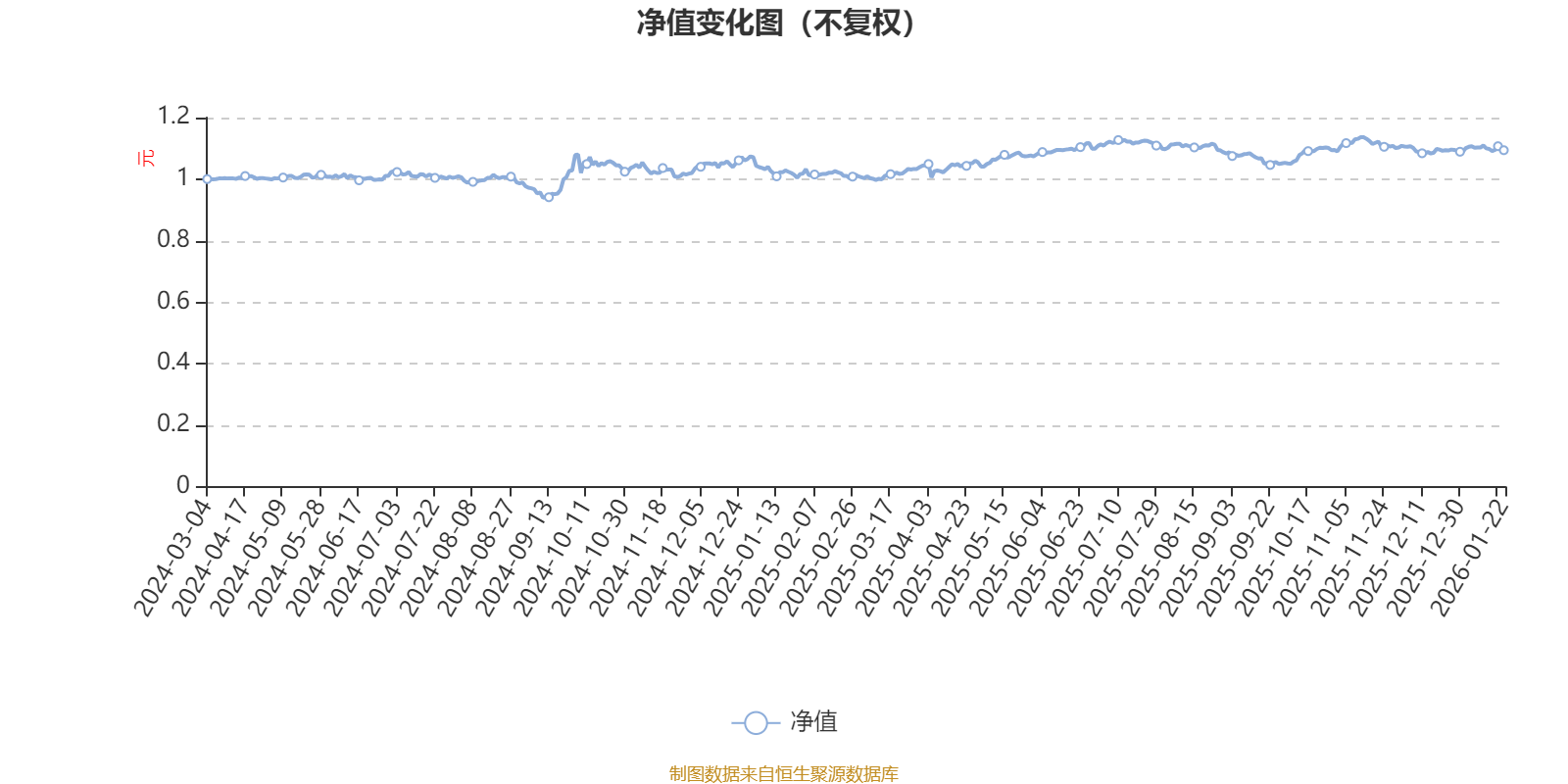
上银国企红利混合发起式A:2025年第四季度利润53.63万元 净值增长率3.6%
Sou Hu Cai Jing· 2026-01-23 10:37
Core Viewpoint - The AI Fund, Shangyin State-Owned Enterprise Dividend Mixed Initiation A (020186), reported a profit of 536,300 yuan for Q4 2025, with a net asset value growth rate of 3.6% during the reporting period [3]. Fund Performance - The fund's scale reached 14.42 million yuan by the end of Q4 2025 [3][13]. - As of January 22, the unit net value was 1.094 yuan, with a one-year cumulative net value growth rate of 8.97%, ranking 643 out of 673 comparable funds [3]. - The fund's performance over the last three months showed a net value growth rate of -0.31%, ranking 631 out of 689 comparable funds, and a six-month growth rate of -2.56%, ranking 672 out of 689 [3]. Investment Strategy - The fund focuses on high dividend and low valuation strategies, primarily investing in state-owned enterprises with solid operational foundations and significant dividend capabilities [3]. - Key sectors of interest include banking, transportation, non-bank financials, environmental protection, and public utilities, which are characterized by stable cash flows and sustainable profitability [3]. Risk Metrics - The fund's Sharpe ratio since inception is 0.5616, indicating a moderate risk-adjusted return [7]. - The maximum drawdown since inception is 8.58%, with the largest quarterly drawdown occurring in Q3 2025 at 7.26% [9]. Portfolio Composition - The average stock position since inception is 86.73%, compared to the industry average of 84.04%. The fund reached a peak stock position of 93.31% at the end of Q3 2025 and a low of 70.76% at the end of H1 2024 [12]. - The top ten holdings as of Q4 2025 include China Pacific Insurance, China Shenhua Energy, Shandong High-Speed, Jiangsu Ninghu Highway, Poly Property, Jiantou Energy, Industrial Bank, Yangtze Power, China Construction Bank, and Hanlan Environment [16].