
低碳化

Search documents
650万辆、万亿营收,吉利未来五年剑指全球前五
Zhong Guo Jing Ji Wang· 2026-01-27 07:02
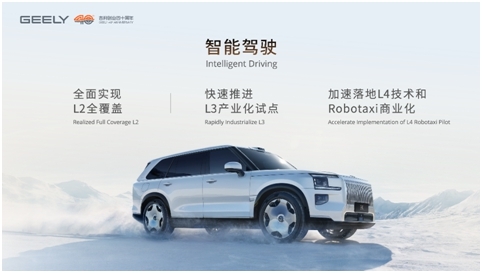
Core Insights - Geely has achieved remarkable results over the past year under the guidance of the "Taizhou Declaration," aiming to become a leader in high-quality global development for Chinese enterprises as it celebrates its 40th anniversary [1] - The company has launched the "One Geely, Comprehensive Leadership" strategy for 2030, focusing on global coordination and a unified strategic framework to enhance competitiveness [1][2] - Key targets for 2030 include global sales exceeding 6.5 million units, revenue surpassing 1 trillion yuan, and a significant increase in the share of new energy vehicle sales to approximately 75% [1][2] Strategic Focus - The "Taizhou Declaration" emphasizes five core strategies: focus, integration, collaboration, stability, and talent, marking a new phase in Geely's strategic transformation [1] - Geely aims to strengthen its brand matrix and enhance its international influence while leveraging its various brands to create a collaborative and mutually beneficial brand cooperation model [5][6] Technological Advancements - Geely has made significant strides in electric and intelligent vehicle technologies, establishing a strong technological moat with innovations such as the "Shen Dun Jin Zhuan" battery and the new generation of AI hybrid engines [2][3] - The company has completed a comprehensive AI layout, including the "Qianli Haohan" driver assistance system, which boasts the highest computing power in the industry [3] Sales Performance - In 2025, Geely's sales are projected to reach 4.116 million units, a 26% year-on-year increase, with new energy vehicle sales expected to hit 2.293 million units, reflecting a 58% growth [3] Future Ecosystems - Geely plans to develop three major ecological business areas: user service ecology, future mobility ecology, and methanol-hydrogen electric ecology, enhancing its competitive edge in these sectors [8][9] - The company aims to establish a nationwide service capability and launch 100,000 customized Robotaxi vehicles for commercial operations globally by 2030 [9] Talent and Sustainability - Geely is committed to building a talent pipeline and enhancing organizational culture, with plans to invest 500 million yuan in youth innovation and entrepreneurship initiatives [9][11] - The company will integrate green and low-carbon principles throughout its product lifecycle, promoting the use of new environmentally friendly materials and aiming for carbon neutrality in its factories [11]


三一海工举行2026全球客户峰会暨电智新品发布会
Zheng Quan Ri Bao· 2026-01-26 06:39
Group 1 - The core event was the SANY Marine Heavy Industry's 2026 Global Customer Summit and Electric Intelligence Product Launch held in Zhuhai, Guangdong, focusing on the green and intelligent development of container and bulk cargo handling [1] - SANY showcased the world's first remote-controlled front lift and unmanned flatbed joint operation demonstration, highlighting its innovative capabilities in the industry [1][2] - The company emphasized its ongoing commitment to the "globalization, digitalization, and low-carbon" strategy to drive industry transformation and create greater value for customers [1][2] Group 2 - SANY Marine Heavy Industry introduced comprehensive solutions for container and bulk cargo handling, including five categories of container handling products and six categories of bulk cargo handling products, aimed at enhancing operational efficiency through electrification and intelligence [2] - The company celebrated the delivery of its 10,000th front lift to Anhui Port and the 1,118th large port machine to APMT, underscoring its market leadership and customer trust [2] - Looking ahead, SANY plans to continue its focus on globalization, digitalization, and low-carbon strategies, leveraging technological innovation and reliable product services to collaborate with partners for mutual success [2]

镇海股份:技术研发的最新进展主要体现在聚焦“特色化、高端化、智能化、低碳化”转型方向
Zheng Quan Ri Bao Wang· 2026-01-23 12:44
证券日报网1月23日讯,镇海股份(603637)在接受调研者提问时表示,公司在技术研发的最新进展主 要体现在聚焦"特色化、高端化、智能化、低碳化"转型方向,在精细化工与新材料领域取得系列突破。 2025年,公司成功开发了硫磺回收开停工废水废气回收工艺、高纯异壬酸合成工艺、双氧水法水合肼生 产工艺、超大型低温全容储罐系统技术等多项创新工艺,并持续推进协同设计数据中台、采购管理软件 等数字化平台建设,其SPPID正向设计解决方案荣获行业数字化设计经典案例奖。这些成果不仅巩固了 传统炼油技术优势,更在含氧、含硫化学品等高端化、精细化领域建立了新的技术竞争优势,为公司拓 展高附加值市场提供了直接支撑。在研发机制与未来规划上,公司构建了以市场需求为导向、产学研深 度融合的全链条创新体系。依托与中科院宁波材料所、中海油天津化工研究院等顶尖科研院所的紧密合 作,形成了"需求牵引-技术攻关-成果转化-生态协同"的高效转化机制。展望未来,公司将继续坚定不移 地以创新为核心驱动力,研发投入将重点聚焦于减油增化工艺优化、炼化一体化能效提升、高端新材料 工艺开发及数字孪生技术应用等方向,旨在形成差异化技术优势,积极向新能源材料等绿色 ...

亚马逊打响“抢铜大战”:锁定美国十多年来首批新产铜!
Jin Shi Shu Ju· 2026-01-16 07:38
AI播客:换个方式听新闻 下载mp3 音频由扣子空间生成 亚马逊公司正将目光投向亚利桑那州的一座铜矿——该矿去年成为十多年来美国首个新增铜矿资源,以 此满足旗下数据中心对铜这一工业金属的巨大需求。 这座铜矿的重启,是力拓集团(Rio Tinto,股票代码:RIO)验证其低品位铜矿开采新技术的试验场。 力拓与亚马逊云计算服务(Amazon Web Services)签署了一份为期两年的供应协议,这也是对其旗下 Nuton项目的信心背书。该项目借助细菌与酸液,能从以往因开采成本过高而被弃置的矿石中提取铜金 属。 亚马逊的这一举措,是科技企业争相保障人工智能数据中心建设与运营所需电力及关键原材料的最新例 证。 不过,Nuton项目产出的铜,仅能满足亚马逊极小一部分的需求。 一座大型数据中心的电线、汇流排、电路板、变压器及其他电气元件,总计需要数万吨铜金属。 力拓预计,亚利桑那州Nuton项目四年内可产出1.4万吨阴极铜,但这个量甚至不足以支撑一座大型数据 中心的建设需求。 近期,力拓在图森市东部的这座重启铜矿中应用了生物浸出工艺,同时还达成多项合作,计划将该技术 推广至美洲地区的其他数座铜矿。当下,新铜矿的勘探与投 ...

创维新能源业务增长提速
Jing Ji Ri Bao· 2026-01-05 22:07
Group 1 - The core viewpoint of the article highlights Skyworth Group's breakthroughs in smart home appliances and new energy sectors, emphasizing the importance of technological innovation as a core competitive advantage [2] - Skyworth Group has introduced the "Chameleon Display Technology Platform," which encompasses a complete picture quality solution covering hardware, algorithms, and calibration [2] - The "Chameleon Micro-Optical Array" technology improves luminous efficiency by 8% compared to peers, while the overall thickness of the product is reduced by over 10% [2] Group 2 - In the first half of 2025, Skyworth Group's new energy business revenue reached 13.801 billion yuan, a year-on-year increase of nearly 54%, accounting for 38% of the total revenue [3] - The company is developing a complete integrated green energy ecosystem through innovations in photovoltaic technology and product development, including core equipment for photovoltaic power stations [3] - Skyworth Group plans to enhance its high-end strategy in smart home appliances and accelerate its "going global" strategy in the new energy sector to expand its share in the global green energy market [3]
巩固提升海洋装备制造业优势
Jing Ji Ri Bao· 2026-01-01 22:13
Core Viewpoint - The development of China's marine equipment manufacturing industry is crucial for enhancing the country's maritime capabilities, with a focus on upgrading towards green and low-carbon technologies [1][2]. Group 1: Industry Development - The marine equipment manufacturing industry is a significant part of China's marine economy and a key growth point for foreign trade, with shipbuilding completion and order volumes increasing by 6.7% and 25.7% year-on-year, respectively, in the first three quarters of 2025 [1]. - China's global market shares for new orders, shipbuilding completions, and hand-held orders are 63.5%, 47.3%, and 58.6%, respectively, maintaining a leading position worldwide [1]. Group 2: International Context - The 21st century is recognized as the century of the ocean, with marine equipment being a focal point for national strategic development among marine nations [2]. - Countries like South Korea and France are advancing their marine equipment sectors, focusing on nuclear-powered ships and seawater desalination, respectively [2]. Group 3: Strategic Advantages - China possesses unique advantages for developing its marine equipment manufacturing industry, including a complete industrial system and vast maritime territory, which provides a stable market demand [2]. - The new type of national system allows for resource integration and concentrated efforts in tackling key core technologies, supporting the industry's upgrade [2]. Group 4: Future Directions - To enhance the marine equipment manufacturing industry's advantages, there is a need for systematic and forward-looking development, focusing on innovation and collaboration between academia and industry [3]. - Emphasis should be placed on addressing areas with significant gaps compared to global standards and high import dependency, particularly in chips, industrial software, and advanced materials [3]. Group 5: Integration and Globalization - Promoting land-sea integration and connecting marine equipment manufacturing with other manufacturing sectors is essential for industry upgrade [4]. - Utilizing artificial intelligence to improve collaboration efficiency across the supply chain and enabling real-time data sharing among upstream and downstream enterprises will enhance industry resilience [4]. - Encouraging advanced manufacturing enterprises to engage in global layouts and integrate into the global division of labor will create greater growth opportunities for the marine equipment manufacturing industry [4].
第13版《新能源汽车蓝皮书》发布
Zhong Guo Qi Che Bao Wang· 2025-12-29 06:15
Core Viewpoint - The 2025 New Energy Vehicle Blue Book highlights the rapid development and significant technological innovations in China's new energy vehicle industry, emphasizing the need for innovation-driven breakthroughs, collaborative industry transformation, and sustainable development as the industry enters a new phase of high-quality growth [2][4]. Group 1: Structure of the Blue Book - The 2025 New Energy Vehicle Blue Book consists of eight sections: General Report, Industry Chapter, Policy Chapter, International Chapter, Demonstration Case Chapter, Hot Topics Chapter, Expert Insights Chapter, and Appendix [3]. - A new "Demonstration Case Chapter" has been added to showcase typical cases from local governments and enterprises in the new energy vehicle sector, highlighting advancements in electrification, intelligence, and vehicle-energy integration [3]. - The "General Report" objectively records the operational status of the new energy vehicle industry since 2024 and provides forecasts for the development during the 14th Five-Year Plan [3]. Group 2: Industry Analysis and Future Outlook - The "Industry Chapter" and "Policy Chapter" provide an objective record and rational analysis of the current state, issues, and trends in the new energy vehicle industry [3]. - The "International Chapter" analyzes the latest policy dynamics in developed countries and their implications for China, as well as the impact of external shocks under the backdrop of de-globalization [3]. - The Blue Book aims to promote high-quality development of the new energy vehicle industry by emphasizing the transition from scale expansion to a balance of scale and quality, focusing on opportunities in electrification, intelligence, low-carbon, and internationalization [4]. Group 3: Role and Impact of the Blue Book - The Blue Book has been published for 13 consecutive years, serving as an important medium for gathering industry intelligence and providing references for government decision-making, industry research, and enterprise development [4]. - It is positioned as a record and thinker of the historical development of China's new energy vehicle industry, as well as a promoter and leader of future industry development [4]. - The Blue Book will continue to fulfill its role as an industry think tank, tracking industry dynamics, exploring development patterns, and consolidating industry wisdom to inject stronger ideological momentum into high-quality development [4].

研判2025!中国医用水处理行业市场政策、产业链图谱、市场规模、竞争格局及发展趋势分析:需求端已从“设备新增”主导转向“更新维护+智能化升级”双轮驱动[图]
Chan Ye Xin Xi Wang· 2025-12-25 01:40
Core Viewpoint - The medical water treatment industry in China is experiencing a transition from rapid expansion to high-quality structural adjustment, with a shift in demand from "new equipment" to "upgrading and maintenance" driven by intelligent upgrades [1][4][8]. Market Overview - The medical water treatment industry is a sub-sector of the environmental protection industry, focusing on treating wastewater generated by medical institutions, which contains pathogenic microorganisms and hazardous pollutants [2][4]. - The market size of China's medical water treatment industry reached 11.698 billion yuan in 2023, with a year-on-year growth of 15.2%. However, it is projected to decline to 9.997 billion yuan in 2024 due to various factors [1][8]. Market Policies - The Chinese government emphasizes the development of the medical water treatment industry, incorporating medical water safety into public health strategies and issuing various policies to enhance industry standards and quality control [4][5]. Industry Structure - The industry consists of upstream sectors (wastewater treatment equipment and chemicals), midstream (project construction and facility operation), and downstream (various medical institutions) [6][8]. - The demand market is primarily composed of hospitals at different levels, with tertiary and secondary hospitals having higher standards for water treatment [6][8]. Competitive Landscape - The medical water treatment industry in China is highly competitive, with numerous participants including specialized water treatment companies, environmental engineering firms, and medical equipment manufacturers [9][10]. - Key players include Anhui Huaki Environmental Protection Technology Co., Ltd., Beijing Qingshuiyuan Technology Co., Ltd., and others, with a focus on advanced technologies and customized solutions for medical wastewater treatment [10][12]. Development Trends - Future technological advancements in the medical water treatment industry will focus on handling special pollutants and enhancing purification efficiency, with innovations in membrane materials and advanced oxidation processes [13][14]. - The industry is expected to move towards low-carbon development, with increased application of energy-saving technologies and a focus on energy consumption control and carbon emission management [14].



云南多地探访:数智技术如何绘就边疆发展新图景
Guan Cha Zhe Wang· 2025-12-19 07:37
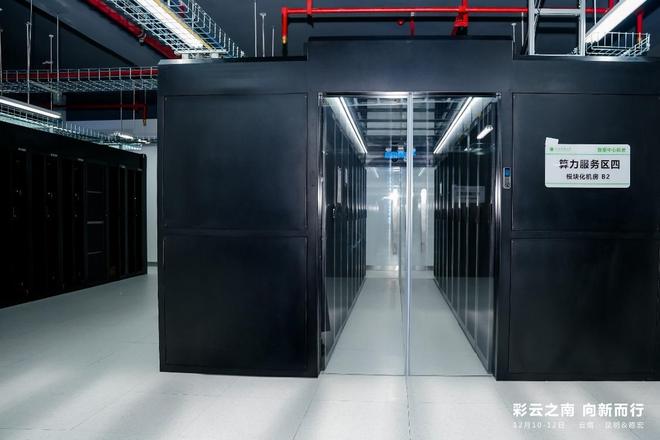
Group 1 - Yunnan is focusing on high-quality development and driving various industries towards digital and low-carbon transformation as part of the "14th Five-Year Plan" [1] - The "Seeing Digital Yunnan" event highlighted the province's advancements in digital infrastructure and its applications in rural revitalization, ecological protection, and education [1] - The event attracted nearly 20 media outlets to explore key national strategies and industry policies in Yunnan [1] Group 2 - Southwest Forestry University, in collaboration with Yunnan Telecom and Huawei, has established the region's first "All-Optical + WiFi7" smart campus, featuring a 100G dual-core redundant backbone and extensive coverage [2][4] - The campus network aims to meet the growing demands for teaching and office needs, providing high-speed internet services across over 80 buildings and 9000 rooms [2] Group 3 - The Kunming service area has implemented Huawei's ultra-fast charging solutions for electric heavy trucks, addressing the bottleneck of low charging efficiency [5][7] - By 2025, the national sales of electric heavy trucks are projected to reach 79,000 units, indicating a significant shift towards electrification in the heavy-duty vehicle sector [5] Group 4 - Yunnan Mobile and Yuntianhua Group are developing a high-efficiency, intelligent all-optical park network to support smart manufacturing and real-time data transmission [9] - This network aims to enhance supply chain responsiveness and reduce inventory issues through AI-driven solutions [9] Group 5 - The "61520" platform by China Mobile is providing digital support for left-behind children in schools, enhancing communication between children and their parents [10][12] - The platform has been implemented in over 1000 schools, benefiting nearly 50,000 left-behind children across the province [12] Group 6 - The establishment of a smart monitoring system in the Yunnan Copper Wall Provincial Nature Reserve aims to enhance wildlife protection through real-time data collection and monitoring [13][15] - This system includes multiple observation stations and advanced monitoring equipment to track endangered species effectively [13] Group 7 - The "One Village, Two Countries" scenic area in Yunnan is leveraging 5G technology to enhance tourism experiences, allowing visitors to share their experiences in real-time [28][30] - The integration of digital technology is revitalizing the local economy and promoting cultural exchange between China and Myanmar [28] Group 8 - The jewelry and jade industry in Ruili is undergoing a digital transformation through the deployment of 5G networks and live streaming capabilities, enhancing sales and customer engagement [31][33] - This initiative addresses challenges faced by traditional sales methods and aims to boost competitiveness in the market [31] Group 9 - Yunnan is actively pursuing opportunities in the digital era, focusing on low-carbon transformation and the integration of digital technologies across various sectors [1][33] - The province's unique geographical advantages and clean energy resources are being leveraged to support this transition [33]

“十五五”汽车供应链进入深度转型期
Zhong Guo Qi Che Bao Wang· 2025-12-15 02:03
Core Viewpoint - The Chinese automotive industry is undergoing a significant transformation during the "14th Five-Year Plan" period, focusing on electric, intelligent, connected, and low-carbon vehicles, establishing a resilient supply chain system that is globally competitive [3][4][5]. Group 1: Achievements and Challenges - The automotive industry has faced numerous challenges, including the global pandemic, chip shortages, and rising battery material costs, yet has managed to achieve a recovery in the domestic market and expand internationally [5]. - Key achievements in the automotive parts industry during the "14th Five-Year Plan" include strengthening the foundation, enhancing innovation capabilities, improving the industrial ecosystem, and making significant progress towards green and low-carbon transitions [5][6]. Group 2: Future Goals and Strategies - The "15th Five-Year Plan" period is critical for transitioning from a major automotive nation to a strong automotive nation, with a focus on consolidating and expanding the leading advantages in smart and connected new energy vehicles [4][7]. - The automotive supply chain will enter a deep transformation phase, emphasizing the need for innovation, collaboration among leading enterprises, and the establishment of a mutually beneficial industrial chain [7][8]. Group 3: Globalization and International Cooperation - China's automotive industry is shifting from product export to technology, standards, and brand output, necessitating deeper international cooperation and participation in global rule-making [8][9]. - The "5C" global strategy framework has been introduced to guide automotive parts companies in their internationalization efforts, focusing on compliance, supply chain resilience, capital utilization, brand building, and talent development [10][11].
