债务违约

Search documents
“宝能系”被追债!法院最新判决:总计超73亿元,10天内还清
Mei Ri Jing Ji Xin Wen· 2025-12-29 22:52
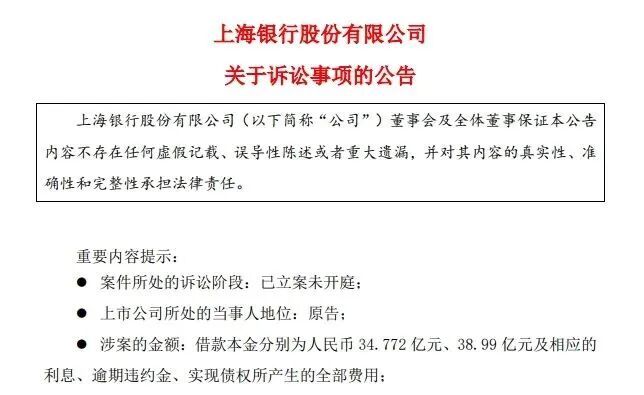
Core Viewpoint - Shanghai Bank's Shenzhen branch has received a court ruling requiring Shenzhen Shenye Logistics Group Co., Ltd. to repay significant loans totaling approximately 73.76 billion yuan, along with interest and penalties, marking a critical development in a long-standing debt recovery case [1][3][4]. Group 1: Loan Details - The Shenzhen branch provided loans of 15 billion yuan and 23 billion yuan to Shenye Logistics in September and October 2018, respectively, with due dates in September and October 2021 [3]. - An additional loan of 40 billion yuan was issued in December 2018, due by June 2022, bringing the total outstanding amount to 73.76 billion yuan as of the lawsuit date [3][4]. - The loans were secured by real estate collateral from both Shenye Logistics and Baoneng Real Estate, along with other guarantees [3]. Group 2: Legal Proceedings - The court ruling mandates Shenye Logistics to repay the principal amounts of 34.772 billion yuan and 38.99 billion yuan, along with accrued interest and overdue penalties, within ten days of the ruling's legal effect [1][4]. - The case has been ongoing for over a year since the lawsuit was filed in September 2021, with the loans classified as non-performing by Shanghai Bank at the end of 2021 [4]. Group 3: Company Background - Shanghai Bank was established on January 30, 1996, and was listed on the Shanghai Stock Exchange on November 16, 2016 [4]. - As of September 2025, the bank's total assets were approximately 3.31 trillion yuan, with customer loans around 1.44 trillion yuan and a non-performing loan ratio of 1.18% [4]. - The Baoneng Group, involved in the case, is facing liquidity issues and has been involved in multiple debt and litigation cases, with some assets undergoing disposal [7].


“宝能系”被追债,法院最新判决:总计超73亿元,10天内还清
Mei Ri Jing Ji Xin Wen· 2025-12-29 16:27
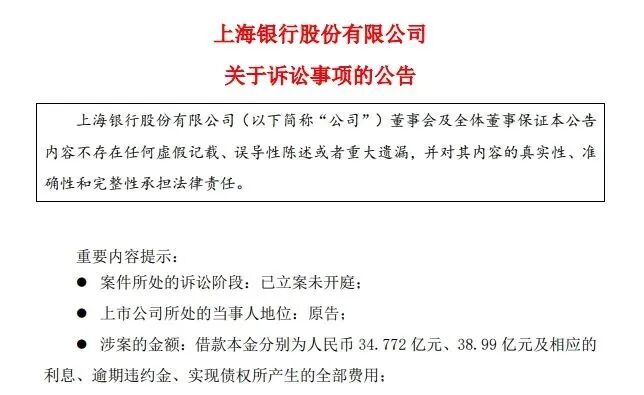
Core Viewpoint - Shanghai Bank's Shenzhen branch has received a court ruling requiring Shenzhen Shenye Logistics Group Co., Ltd. to repay significant overdue loans totaling approximately 73.76 billion yuan, along with interest and legal fees, marking a significant development in a long-standing debt recovery case [1][4]. Group 1: Loan Details - The Shenzhen branch provided loans to Shenye Logistics in September and October 2018, amounting to 15 billion yuan and 23 billion yuan, respectively, with due dates in September and October 2021 [4]. - A subsequent loan of 40 billion yuan was issued in December 2018, due by June 2022, with Shenye Logistics and Baoneng Real Estate providing collateral [4]. - As of the lawsuit date, Shenye Logistics owed 34.772 billion yuan and 38.99 billion yuan in principal, along with interest and penalties [4][5]. Group 2: Legal Proceedings - The court ruling requires Shenye Logistics to repay the loans within ten days of the judgment becoming effective, including a total of 400,000 yuan in legal fees [1][3]. - The case has been ongoing for over a year since the lawsuit was filed in September 2024, highlighting the prolonged nature of the debt recovery process [5]. Group 3: Financial Health of Shanghai Bank - As of September 2025, Shanghai Bank reported total assets of approximately 3.31 trillion yuan and customer loans of about 1.44 trillion yuan, with a non-performing loan ratio of 1.18% [5]. - The bank has classified the loans to Shenye Logistics as non-performing since the end of 2021 due to the borrower's failure to meet repayment obligations [4]. Group 4: Context of Baoneng Group - Baoneng Group, the guarantor for the loans, has been facing liquidity issues and is involved in multiple debt disputes, with some assets undergoing disposal [8].
每周债市看点 | 华南城整体债务重组主要条款讨论预计持续至明年1月,富力地产新增14起被执行案件
Xin Lang Cai Jing· 2025-12-21 09:03
Group 1: Debt Restructuring and Financial Status - China South City Holdings Limited is in discussions with major creditors for a comprehensive debt restructuring, with key terms expected to be negotiated until January 2026 [1] - The company must meet the Hong Kong Stock Exchange's resumption guidelines by February 10, 2027, to avoid delisting risks [1] - Kaisa Group has extended the consent solicitation deadline for six outstanding US dollar notes to December 28, 2025, amid financial difficulties, with total assets reported at 202.641 billion and total liabilities at 244.449 billion as of October 1, 2025 [2] Group 2: Legal Issues and Financial Challenges - Guangzhou R&F Properties has reported 14 new enforcement cases, primarily due to violations of property reporting regulations, with amounts involved including 0.9224 million, 0.29151 million, and 1.31603 million [2] - Anhui Construction Group has disclosed 14 litigation cases totaling 859 million, mainly related to construction contract disputes, with ongoing first-instance trials [3] - Fujian Sunshine Group has faced 9 new major lawsuits and has had 50 million yuan in educational equity frozen, while Sunshine City Group is subject to enforcement of 746.2 million yuan [4]
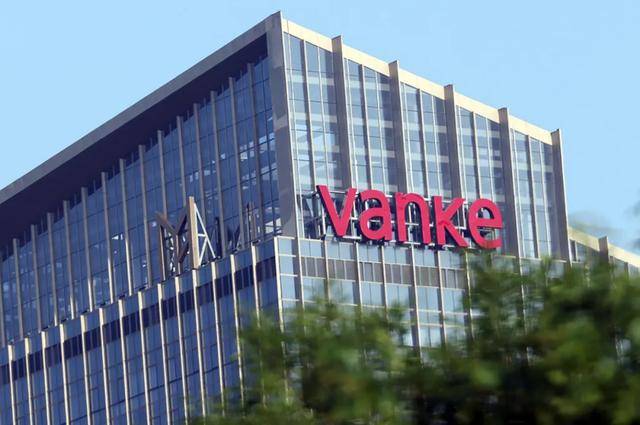
万科努力自救
3 6 Ke· 2025-12-19 02:45
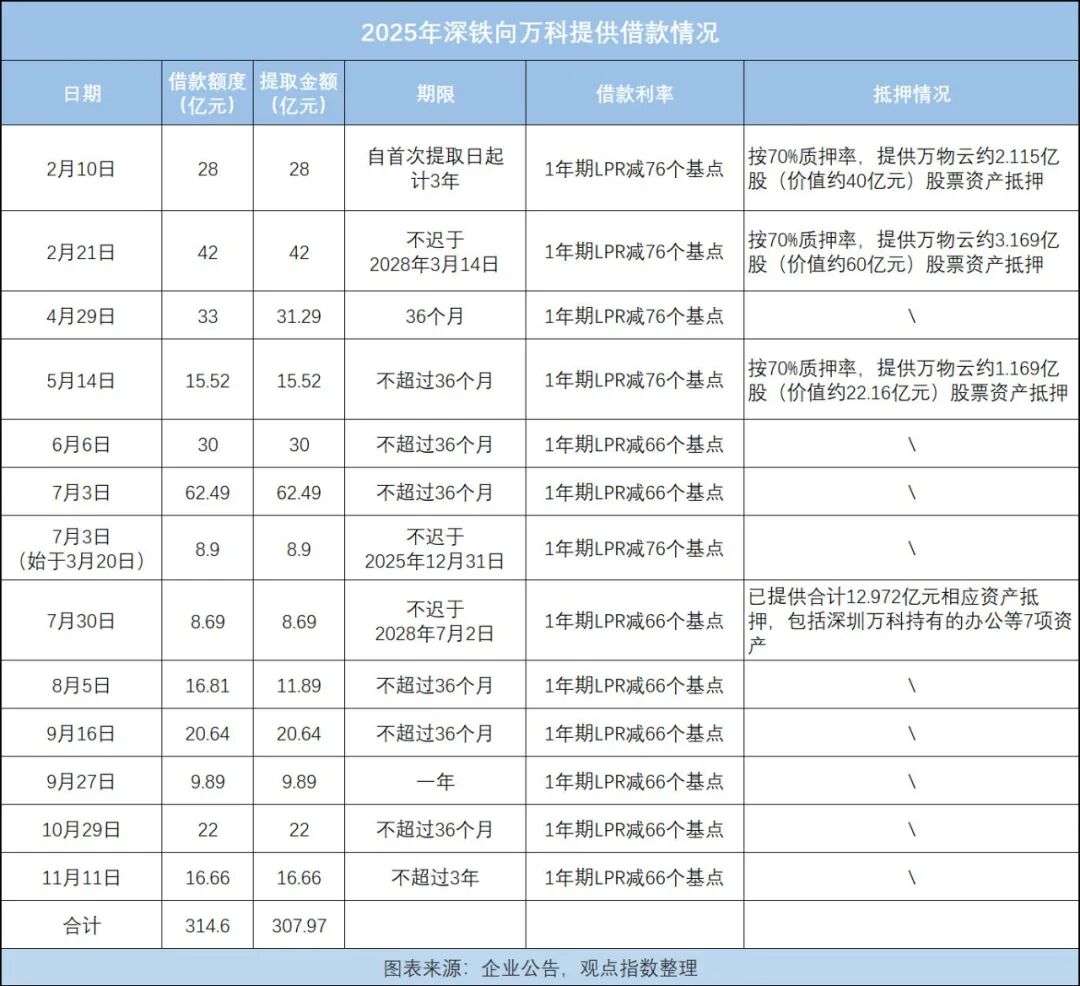
Core Viewpoint - Vanke is actively seeking to extend its 20 billion medium-term notes (MTN) to avoid potential debt default, making concessions in its proposals to creditors [1][2][4]. Group 1: Debt Extension Proposals - On December 18, Vanke proposed a new plan for the extension of the "22 Vanke MTN004," which includes timely interest payments and additional credit enhancement measures [1]. - The first creditor meeting on December 10 saw a positive market reaction, with Vanke's A-shares hitting a trading limit, but the initial proposals were not approved [3][4]. - The second creditor meeting will review a single proposal to extend the principal repayment date by 12 months to December 15, 2026, while ensuring the payment of 60 million in interest [4][6]. Group 2: Creditor Meeting Dynamics - The first meeting had three proposals, with the second proposal receiving 83.4% support, but Vanke chose a less favorable option with only 18.95% support for the second meeting [5]. - The second meeting's proposal includes extending the grace period for the notes from 5 working days to 30 trading days, providing Vanke with additional time to remedy the situation if needed [7][8]. Group 3: Financial Support and Borrowing - Vanke has received over 30 billion in loans from its major shareholder, Shenzhen Metro Group, to help manage its debt obligations [16][18]. - As of June 30, 2025, Vanke's interest-bearing liabilities totaled 364.26 billion, with 42.7% maturing within one year [19]. - Vanke has pledged significant assets, including shares in its subsidiaries, to secure loans and meet its financial obligations [18][20]. Group 4: Upcoming Meetings and Proposals - A separate meeting for another 37 billion medium-term note ("22 Vanke MTN005") is scheduled for December 22, with six proposals aimed at addressing repayment and credit enhancement [9][10]. - The proposals for "22 Vanke MTN005" include options for extending principal repayment and interest payments, with some requiring guarantees from state-owned enterprises [12][13].

账面650多亿资金,万科为何凑不出20亿还债?
Xin Lang Cai Jing· 2025-12-15 14:34
Core Viewpoint - Vanke is facing a potential default on its 2 billion mid-term notes due on October 15, with the possibility of a grace period extension of 5 days, but failure to pay within this timeframe would constitute a formal default [1][11]. Group 1: Debt Situation - The first bondholder meeting for the mid-term notes was held on December 10, with three proposals for extension, none of which were approved, indicating high creditor demands for repayment guarantees [3][13]. - The original repayment date for the mid-term notes is December 15, 2025, with a grace period of 5 working days for Vanke to make full payments without triggering a default [3][13]. - Vanke's bonds have seen significant declines, with "21 Vanke 02" dropping over 26% and "21 Vanke 04" down over 11% as of December 15 [1][11]. Group 2: Financial Analysis - Vanke reported a cash balance of 65.677 billion as of September 2025, but this figure is misleading as it is spread across numerous subsidiaries, leaving the parent company with only 0.858 billion available for operations [8][18]. - The company's cash flow has been severely depleted, with a significant drop from 92.435 billion in 2020 to just 0.854 billion by the end of 2022 [18]. - The cash reported includes a large amount of pre-sale regulatory funds, which are restricted for specific project costs, making it nearly impossible to use for debt repayment [20]. Group 3: Future Obligations - Vanke faces an additional 3.7 billion in mid-term notes due on December 28, leading to a total of 5.7 billion in domestic debt obligations within a short timeframe [20]. - The company's declining contract sales, down 44.6% year-on-year, have extended the cash recovery cycle, further complicating its ability to meet upcoming debt obligations [20].
万科面临关键时刻
财联社· 2025-12-15 05:25
Core Viewpoint - Vanke, once a top performer in the industry, is at a critical juncture regarding its liquidity crisis, highlighted by the upcoming bond repayment deadline on December 15, 2025 [3][4]. Group 1: Bondholder Meeting and Proposals - Vanke announced a second bondholder meeting on December 18, 2025, to discuss repayment arrangements for the "22 Vanke MTN004" bond, which is currently in a 5-day grace period [4]. - The first bondholder meeting's proposals for extending the bond repayment were all rejected, with the original proposal receiving zero votes in favor, and the closest alternative proposal falling short by 6.6 percentage points of the required 90% approval [6]. - The second meeting is crucial as it will determine whether Vanke can successfully negotiate an extension of the bond repayment, which is essential for avoiding a potential default [4][6]. Group 2: Market Reaction and Financial Pressure - Following the news, Vanke's bonds experienced significant declines, with "21 Vanke 02" dropping over 24% and "23 Vanke 01" and "22 Vanke 04" also seeing notable decreases [5]. - As of November 2025, Vanke has a total of 18.2 billion yuan in domestic debt principal and interest due within a year, with 5.7 billion yuan due in December alone, indicating a substantial liquidity pressure [7]. - The company faces a funding gap exceeding 60% for the current period, as the available loan amount from Shenzhen Metro Group is only 2.29 billion yuan [7].
每周债市看点 | 宝龙地产附属清盘申请获撤销,泛海控股未能按期偿还有息债务达340.82亿元
Xin Lang Cai Jing· 2025-12-14 12:44
Group 1 - Baolong Real Estate announced that the liquidation application for its wholly-owned subsidiary Baolong Real Estate (Viking) has been withdrawn through a consent order, aiming to facilitate the successful implementation of the restructuring support agreement [1] - In November 2025, Baolong Real Estate reported a contract sales amount of approximately RMB 521 million, a year-on-year decrease of 47.2%, and a contract sales area of 57,800 square meters [1] - For the eleven months ending November 30, 2025, the total contract sales amount was approximately RMB 6.666 billion, a year-on-year decrease of 43.2%, with a total sales area of 595,800 square meters [1] Group 2 - CIFI Group announced that as of December 1, 2025, some subsidiaries have overdue debts totaling RMB 1.8982 billion, involving 13 entities [2] - The overdue debts are primarily bank project loans, and the company is negotiating debt extensions and installment repayments [2] - CIFI Group's existing credit bonds have passed restructuring plans through bondholder meetings, and cross-default clauses have been waived [2] Group 3 - Beijing Sander Environmental Engineering announced that the Beijing First Intermediate People's Court has ruled for the substantive consolidation and reorganization of seven companies, including Sander Group and various water service subsidiaries [2] - As of October 31, 2025, Beijing Sander Environmental reported total assets of RMB 10.67 billion, total liabilities of RMB 15.155 billion, and a net asset value of -RMB 4.486 billion [2] Group 4 - Oceanwide Holdings announced that it has failed to repay interest-bearing debts totaling RMB 34.082 billion as of November 30, 2025, including RMB 4.737 billion in domestic bonds and RMB 29.345 billion in other interest-bearing debts [2] - The company attributes its liquidity difficulties to macroeconomic conditions, industry policy adjustments, and operational issues [2] - Oceanwide Holdings is actively communicating with creditors to seek solutions and plans to introduce investors and strategic resources to mitigate debt risks [2] Group 5 - Fujian Fusheng Group was publicly reprimanded by the Shanghai Stock Exchange for failing to disclose its mid-term report by the deadline of August 31, 2024, and for previous similar violations [3] - The then Chairman and General Manager Jin Dingsheng was held primarily responsible for the negligence [3] - The company is facing additional financial disputes and has reported significant execution cases involving amounts totaling RMB 38.50213 million [3] Group 6 - Xi'an High-Tech Group announced that its subsidiary Tiandi Source is involved in three lawsuits, with the first judgment requiring payment of RMB 37.4877 million in total for engineering fees and other compensations [4] - The second and third cases involve payments of RMB 5.6763 million and RMB 82.2349 million, respectively, for unpaid engineering fees [4] - The company has arranged a legal team to analyze the cases and will fulfill its information disclosure obligations based on developments [4]
万科20亿元境内债的三份展期议案皆未通过
Sou Hu Cai Jing· 2025-12-14 08:08
Core Viewpoint - Vanke is facing a potential default on its bond "22 Vanke MTN004" if it fails to reach an agreement with creditors within a five-day grace period after the original payment date of December 15 [2][3] Group 1: Bond Details - The bond "22 Vanke MTN004" was issued in December 2022 with a principal amount of 2 billion yuan and a coupon rate of 3% [2] - The bond's first holder meeting resulted in the rejection of all three proposed extension plans, which required over 90% approval from bondholders [3] - The bond has a grace period of five working days, during which Vanke must pay interest at an increased rate of 3.05% if it cannot make the principal payment [2] Group 2: Extension Proposals - Vanke proposed three extension plans, all seeking a one-year extension without interest payments during the extension period [3] - The first proposal, which was the most favorable to Vanke, received no votes in favor, while the second proposal garnered 83.40% of the votes but still fell short of the required 90% [3] - Analysts noted that the lack of compensation in the first proposal and the insufficient reassurance in the second proposal contributed to the rejection [3][4] Group 3: Financial Pressure - Vanke has significant debt obligations, with over 36 billion yuan due or callable by 2025, and a total of 217.98 billion yuan in outstanding domestic debt [7] - The company is also facing a cash flow deficit, with net cash outflows reported in the first three quarters of 2025 [11] - As of November 2025, Vanke had drawn 21.376 billion yuan in unsecured loans from its major shareholder, Shenzhen Metro, and must provide collateral for future borrowings [9][10] Group 4: Future Outlook - Analysts suggest that the current situation may lead to a debt restructuring process, potentially involving principal reductions or interest cuts [8] - Vanke's reliance on its major shareholder for liquidity support indicates a challenging financial landscape, with limited room for error due to its size and market visibility [4][10]
美国债务陷入危机,前高官建议减少支出,许多公民要遭罪
Sou Hu Cai Jing· 2025-12-09 00:06
Core Viewpoint - The U.S. debt crisis has reached a critical point, with public debt nearing 100% of GDP and interest payments consuming a significant portion of federal spending, leading to potential cuts in essential services for citizens [2][4][6]. Group 1: Current Debt Situation - The U.S. public debt now accounts for 99% of GDP, projected to exceed 107% by 2029, marking the highest level since World War II [2]. - Weekly interest payments on the debt exceed $11 billion, representing 15% of the federal budget for the current fiscal year, restricting funds from being allocated to economic recovery and social welfare [2]. Group 2: Historical Context and Structural Issues - Historically, debt expansion in any economy has limits, and exceeding these can lead to market confidence collapse and credit system crises [4]. - The U.S. has maintained its debt expansion due to the dollar's dominance and the perception of U.S. Treasury bonds as safe assets, but this advantage is diminishing [4][6]. Group 3: Economic Growth and Political Challenges - The root of the debt crisis lies in a structurally imbalanced economic growth model reliant on consumer spending and government borrowing, which is unsustainable during economic downturns [6]. - Political short-sightedness prevents necessary structural reforms, leading to an accumulation of debt and an increasingly severe crisis [6][20]. Group 4: Potential Solutions and Their Limitations - Six potential solutions to the debt crisis have been identified, but most are either unrealistic or carry significant costs, leaving only stringent fiscal tightening as a viable option [7]. - Accelerating economic growth is ideal but not feasible under current conditions, while low interest rates are no longer an option due to global inflation pressures [9]. Group 5: Implications of Default and Inflation - Debt default would destroy U.S. creditworthiness and could trigger a global financial crisis, which is unacceptable for the government [11]. - Allowing inflation to reduce the real debt burden would harm ordinary citizens' wealth and exacerbate social inequality, leading to potential unrest [11]. Group 6: Political Stalemate and Future Outlook - The political deadlock between parties hinders the implementation of fiscal tightening, with both sides prioritizing short-term political gains over long-term solutions [15][17]. - A significant fiscal crisis may be necessary to prompt reforms, but this would have severe repercussions for the global economy [19][22].

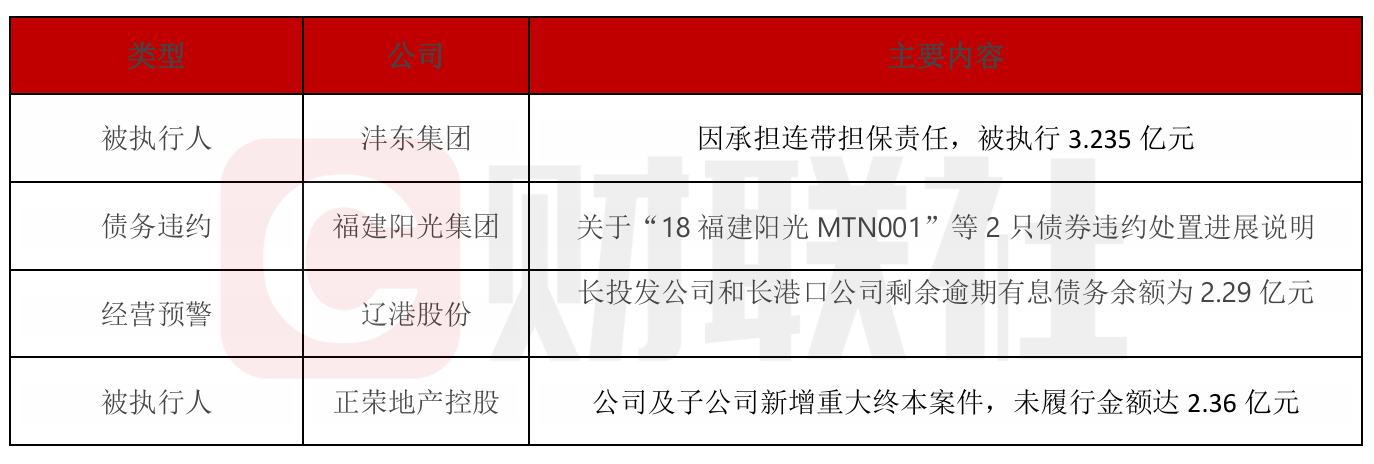
辽港股份托管并表公司剩余逾期有息债务余额2.29亿
Xin Lang Cai Jing· 2025-11-28 03:01
Group 1 - Xi'an Fengdong Development Group Co., Ltd. is facing execution for a total amount of 323.5 million yuan due to joint guarantee responsibilities, with an additional execution record of 6.78 million yuan [1] - Fujian Sunshine Group Co., Ltd. has defaulted on two bonds, "18 Fujian Sunshine MTN001" and "19 Fujian Sunshine MTN001," with unpaid principal and interest totaling 407 million yuan and 107 million yuan respectively, and is currently facing multiple lawsuits [1] - As of the latest update, Fujian Sunshine Group has a total of 10 defaulted bonds with a cumulative default amount of 3.58 billion yuan [2] Group 2 - Liaoning Port Co., Ltd. reported that the remaining overdue interest-bearing debt from its managed companies is 22.9 million yuan, all of which are shareholder loan interests, and the company is working on solutions to address the overdue issues [2] - For the third quarter, Liaoning Port Co., Ltd. reported a revenue of 2.73 billion yuan, a year-on-year increase of 6.1%, while the net profit attributable to shareholders decreased by 30% to 344 million yuan [3] - Zhengrong Real Estate Holdings Co., Ltd. has newly added significant enforcement cases totaling 236 million yuan, which may adversely affect the company's debt repayment capability [4] Group 3 - Zhengrong Real Estate Holdings Co., Ltd. has a total of 9 outstanding bonds with a remaining balance of 4.714 billion yuan, and 3 of these bonds are in default with a total default amount of 45 million yuan [4]