
储备资产多元化

Search documents
10月净买入49吨,央行购金依然强劲
Hua Er Jie Jian Wen· 2025-12-14 14:28
Core Insights - Despite significant market volatility in October, global central banks continue to show strong demand for gold, providing solid support for gold prices, while emerging "tokenized gold" has not yet become a major market driver [1][4] Group 1: Central Bank Gold Purchases - In October, global central banks net purchased 49 tons of gold, significantly higher than the pre-2022 monthly average of 17 tons, indicating robust and sustained demand from official sectors [1][4] - Qatar purchased 20 tons and China bought 15 tons in October, reflecting strategic decisions by central banks that are less sensitive to short-term price fluctuations, aimed at hedging geopolitical and financial risks [1][4] - Goldman Sachs maintains an optimistic forecast for gold prices, projecting they will rise to $4,900 per ounce by the end of 2026, supported by strong official demand and expectations of a shift in U.S. Federal Reserve policy towards easing [1][6] Group 2: Private Investor Demand - Private investors are viewed as a key variable that could significantly influence future gold prices, with potential for a "magnifying effect" if their interest in gold increases [5] - Goldman Sachs' model indicates that a 1 basis point (0.01%) increase in the share of gold in U.S. private financial portfolios could lead to a 1.4% rise in gold prices, highlighting the current low allocation of gold in these portfolios [5] - Currently, gold ETFs, the most common vehicle for U.S. investors, account for only 0.17% of their portfolios, suggesting substantial room for growth in private investment in gold [5] Group 3: Tokenized Gold - Goldman Sachs notes that the impact of "tokenized gold," such as Tether Gold, on recent gold price movements appears limited, with its demand significantly smaller compared to traditional channels [7] - In Q3 2025, Tether Gold holdings increased by approximately 26 tons, while Western gold ETFs saw inflows of about 197 tons, and central bank purchases reached around 134 tons, indicating a disparity in demand [7] - Tokenized gold is considered similar to gold ETFs, both backed by physical gold, but with ownership recorded on the blockchain; this feature may lower entry barriers for some investors but does not necessarily enhance intrinsic value [7]

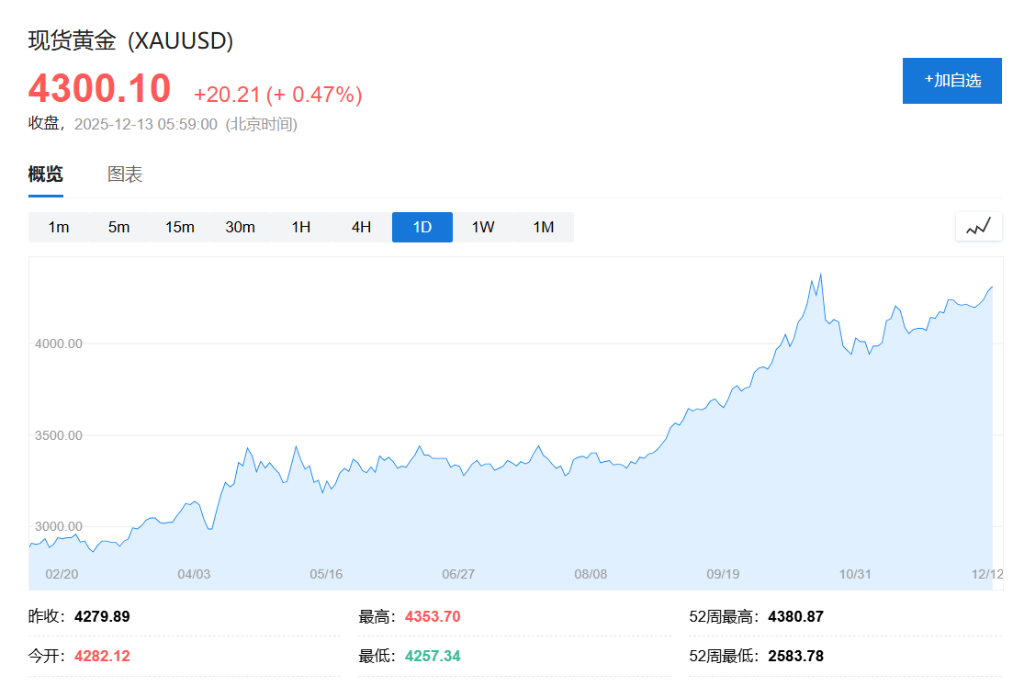
10月净买入49吨!央行购金依然强劲,高盛:“代币化黄金”目前还非金价主力
美股IPO· 2025-12-14 11:57
Core Viewpoint - Global central banks continue to show strong demand for gold, with net purchases of 49 tons in October, significantly above the pre-2022 monthly average of 17 tons, indicating a long-term strategy to hedge against geopolitical and financial risks [1][3][5] Central Bank Gold Purchases - Goldman Sachs emphasizes that the substantial increase in gold purchases by central banks is a long-term trend, driven by the need for reserve asset diversification to mitigate rising geopolitical and financial risks [5][6] - The report indicates that the average monthly purchase by central banks is expected to remain at 70 tons through 2026, providing solid fundamental support for the gold market [6] Private Investor Impact - Private investors are viewed as a key variable that could amplify gold prices, with a potential significant effect if their interest in gold increases [7] - Goldman Sachs' model suggests that a 1 basis point (0.01%) increase in gold holdings within U.S. private financial portfolios could lead to a price increase of approximately 1.4% [7] - Currently, gold ETFs represent only 0.17% of U.S. investors' portfolios, indicating substantial room for growth in private investment in gold [7][8] Tokenized Gold - The impact of "tokenized gold," such as Tether Gold, on the recent rise in gold prices is considered limited, with its demand significantly smaller compared to traditional channels like gold ETFs and central bank purchases [9] - Tokenized gold is viewed as a potential substitute for gold ETFs rather than a major new source of demand, although it remains a trend worth monitoring [9]

10月净买入49吨!央行购金依然强劲 高盛:“代币化黄金”目前还非金价主力
智通财经网· 2025-12-14 11:07
Core Insights - Despite significant market volatility in October, global central banks continue to show strong demand for gold, providing solid support for gold prices, while emerging "tokenized gold" has not yet become a major market driver [1] Group 1: Central Bank Gold Purchases - Goldman Sachs' latest report indicates that global central banks net bought 49 tons of gold in October, significantly higher than the pre-2022 monthly average of 17 tons, reflecting robust and sustained demand from official sectors [1][2] - Notably, Qatar purchased 20 tons and China bought 15 tons in October, suggesting that central banks' purchasing behavior is driven by long-term strategic considerations to hedge geopolitical and financial risks rather than short-term price sensitivity [1][3] - Goldman Sachs maintains an optimistic forecast for gold prices, projecting they will rise to $4,900 per ounce by the end of 2026, supported by strong official demand and expectations of a shift to looser monetary policy by the Federal Reserve [1][5] Group 2: Private Investor Demand - The report highlights that the behavior of private investors will be a key variable influencing future gold prices, with potential significant "amplifying effects" if their interest in gold increases [4] - Goldman Sachs' model suggests that a 1 basis point (0.01%) increase in the share of gold in U.S. private financial portfolios could lead to a price increase of approximately 1.4%, indicating substantial growth potential as current holdings in gold ETFs are only 0.17% of these portfolios [4][5] Group 3: Tokenized Gold - Regarding the role of "tokenized gold" such as Tether Gold, Goldman Sachs notes that its impact on recent gold price increases appears limited, with a reported increase of about 26 tons in Tether Gold holdings compared to 197 tons in Western gold ETF inflows and 134 tons in central bank purchases during Q3 2025 [6] - The firm views tokenized gold as similar to gold ETFs, both backed by physical gold, but believes it is more likely to serve as a partial substitute for gold ETFs rather than a significant new source of demand, warranting ongoing market monitoring [6]
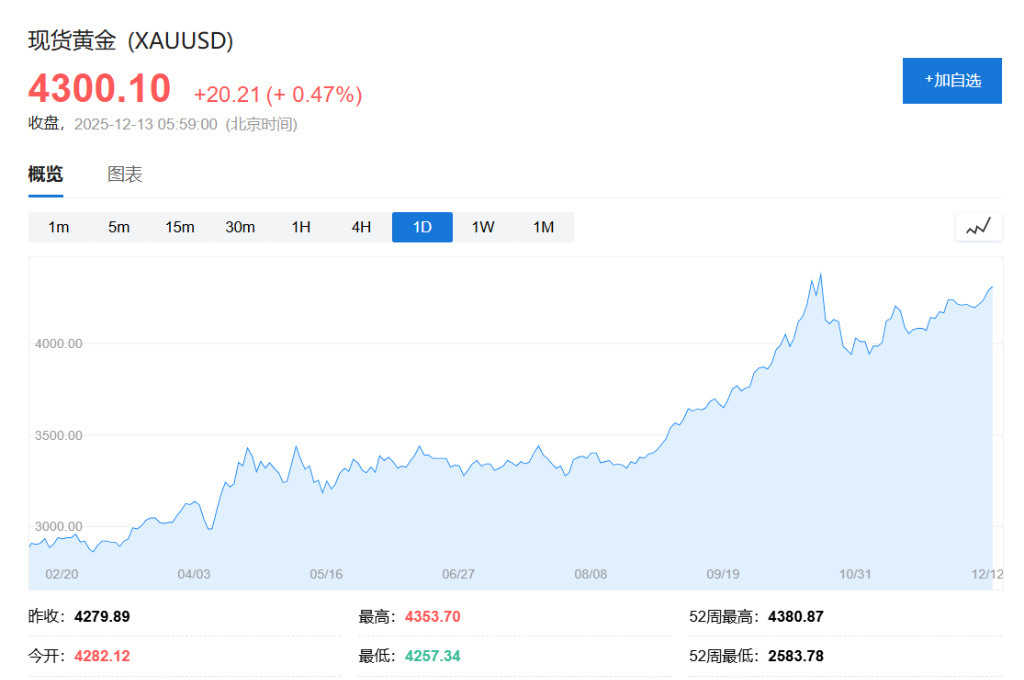
10月净买入49吨!央行购金依然强劲,高盛:“代币化黄金”目前还非金价主力
Hua Er Jie Jian Wen· 2025-12-14 09:44
Core Insights - Despite significant market volatility in October, global central banks continue to show strong demand for gold, providing solid support for gold prices, while emerging "tokenized gold" has not yet become a major market driver [1][4]. Central Bank Gold Purchases - Goldman Sachs reported that global central banks net purchased 49 tons of gold in October, significantly higher than the pre-2022 monthly average of 17 tons, indicating robust and sustained demand from official sectors [1][4]. - Notably, Qatar purchased 20 tons and China bought 15 tons in October, reflecting a strategic move by central banks to diversify reserve assets and hedge against geopolitical and financial risks [1][4]. Future Gold Price Predictions - Based on strong official demand and expectations of a shift towards looser monetary policy by the Federal Reserve, Goldman Sachs maintains an optimistic forecast for gold prices, predicting they will rise to $4,900 per ounce by the end of 2026 [1][5]. Private Investor Demand - Private investor behavior is seen as a key variable influencing future gold prices. An increase in the allocation of gold in U.S. private financial portfolios could significantly amplify gold prices [1][6]. - Currently, gold ETFs, the most common tool for U.S. investors, represent only 0.17% of their portfolios, indicating substantial room for growth as interest in gold is expected to rebound alongside potential Federal Reserve policy changes [1][6]. Tokenized Gold - Goldman Sachs notes that the impact of "tokenized gold," such as Tether Gold, on recent gold price increases appears limited. In Q3 2025, Tether Gold holdings increased by approximately 26 tons, while Western gold ETFs saw inflows of about 197 tons, and central bank purchases reached around 134 tons [1][7]. - Tokenized gold is fundamentally similar to gold ETFs, both backed by physical gold, but its ownership is recorded on a blockchain. While this may lower entry barriers for some investors, it does not necessarily add significant intrinsic value [1][8].
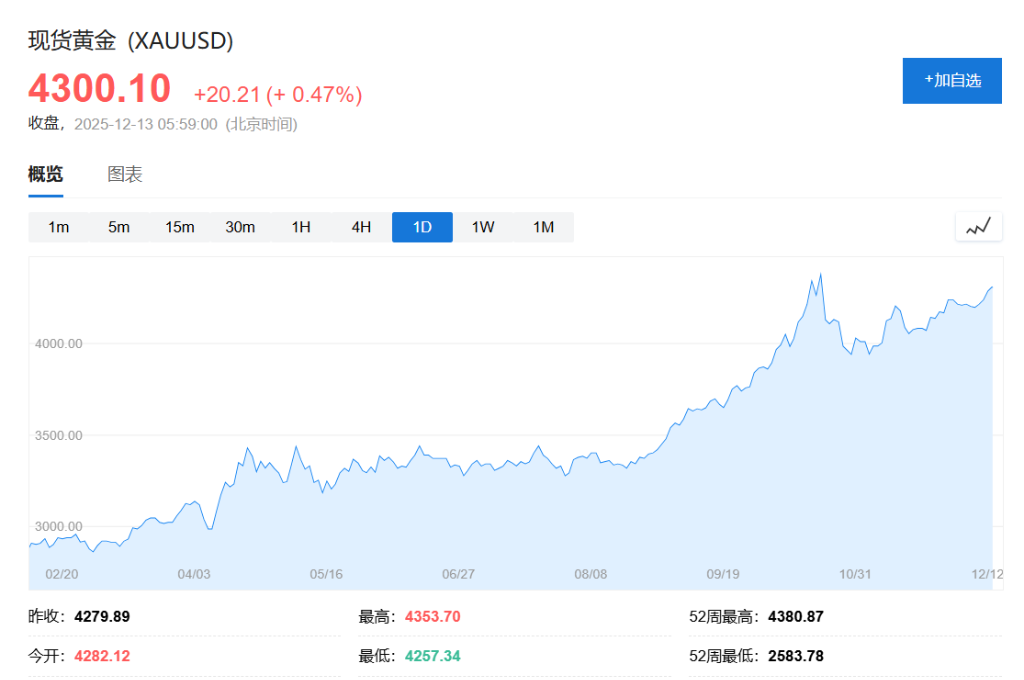
黄金储备连增13个月 重要数据释放新信号
Sou Hu Cai Jing· 2025-12-08 08:17
Core Insights - China's foreign exchange reserves reached $33,464 billion by the end of November 2025, marking a slight increase of $3 billion from the end of October, with a growth rate of 0.09% [1][3] - The People's Bank of China has increased its gold reserves to 7,412 million ounces, adding 30,000 ounces in November, continuing a trend of 13 consecutive months of gold accumulation [1][5] Foreign Exchange Reserves - China's foreign exchange reserves have remained above $3.3 trillion for four consecutive months, supported by stable economic performance and macroeconomic factors [3][4] - The increase in reserves is attributed to fluctuations in asset prices and cross-border capital flows, reflecting the resilience of China's international balance of payments [3][4] - Analysts suggest that the stable foreign exchange reserves provide crucial support for maintaining the RMB exchange rate and act as a buffer against external shocks [4] Gold Reserves - The continuous increase in gold reserves highlights a strategic shift towards diversifying reserve assets and reducing reliance on single sovereign credit currencies, particularly the US dollar [5][6] - The accumulation of gold is seen as a response to global geopolitical uncertainties and a strategy to enhance the long-term credibility of RMB assets [5][6] - The global trend of central banks purchasing gold continues, with a significant increase in demand noted in October, which may support rising international gold prices [7] Future Outlook - Analysts predict that the People's Bank of China will continue to increase its gold reserves as part of a broader strategy to optimize international reserves and support RMB internationalization [8] - Forecasts for gold prices suggest a target range of $4,500 to $5,000 per ounce by 2026, driven by expectations of monetary easing and shifts in global credit dynamics [8]
培育和发展人民币计价功能是人民币国际化的重中之重
Sou Hu Cai Jing· 2025-12-07 00:40
Core Viewpoint - The book "New Currency Landscape" discusses the evolution of the international monetary system, the inherent contradictions of the existing system, and the progress and lessons of RMB internationalization, proposing strategies to advance it [1][2]. Group 1: Historical Context and Lessons - The authors highlight the historical experiences of the dollar's rise, yen internationalization, and euro's emergence, emphasizing the importance of maintaining domestic economic stability and independent monetary policy for RMB internationalization [2][3]. - The book provides a detailed account of how the Marshall Plan and Dodge Plan saved the Bretton Woods system and the dollar's international status, which is a unique perspective in domestic discourse [1][4]. Group 2: RMB Internationalization Strategies - The book suggests that cultivating and developing RMB pricing functions is crucial for its internationalization, with practical paths including promoting RMB pricing through economic aid to African countries, addressing trade deficits with neighboring countries, and facilitating commodity transactions [3][5]. - It argues that financial openness combined with a rigid exchange rate is a dangerous combination, indicating the need for careful consideration of the relationship between RMB internationalization and capital account liberalization [6]. Group 3: Current Challenges and Future Directions - The authors express that the failure of yen internationalization was largely due to the inability to maintain exchange rate stability, a challenge that has also affected RMB internationalization since 2015 due to depreciation and depreciation expectations [3][4]. - The book discusses the systemic risks associated with the diversification of reserve assets among countries, particularly in light of geopolitical tensions, suggesting that merely diversifying within traditional reserve currencies may not be sufficient [6][7].
国际金融格局重塑与人民币新机遇
Sou Hu Cai Jing· 2025-11-30 19:54
Core Viewpoint - The book "New Monetary Landscape" discusses the evolution of the international monetary system, the inherent contradictions of the current system, and the progress and lessons of RMB internationalization, proposing strategies to advance it [3][4]. Group 1: Historical Context and Lessons - The authors provide a detailed analysis of the rise of the US dollar and the decline of the British pound, emphasizing the historical significance of the Marshall and Dodge Plans in saving the Bretton Woods system and reinforcing the dollar's international status [3]. - The book highlights two critical steps in the dollar's internationalization: the entry of major US banks into foreign markets and the Federal Reserve's support for dollar-denominated commercial paper, leading to over 50% of US trade being settled in dollars by the 1920s [4]. Group 2: RMB Internationalization Strategies - The book argues that RMB internationalization must be grounded in China's domestic economy, maintaining monetary policy independence and macroeconomic stability [5]. - It suggests that cultivating and developing the RMB's pricing function is crucial, with practical paths including promoting RMB pricing through economic aid to African countries, addressing trade deficits with neighboring countries, and facilitating RMB transactions in commodity trading [5][6]. Group 3: Comparative Analysis and Challenges - The authors analyze Japan's failed yen internationalization efforts, attributing the failure to the inability to maintain a stable yen exchange rate, which diminished its international value [5]. - The book posits that the current international monetary system's sustainability hinges on whether peripheral countries will continue to purchase US debt, which is influenced by the US's growing external debt and trade deficits [6][8]. Group 4: Financial Cooperation and Regional Currency - The book advocates for regional monetary cooperation to promote domestic financial reform and open up, aiming to establish the RMB as a regional international currency in Asia [6]. - It emphasizes the dangers of financial liberalization combined with rigid exchange rates, suggesting that the interaction between RMB internationalization and capital account liberalization requires more detailed discussion [7]. Group 5: Global Reserve Asset Diversification - The authors note that diversification of reserve assets among US allies cannot effectively mitigate systemic risks, as demonstrated by the sanctions against Russia following the Ukraine conflict [8]. - They argue for a strategic shift towards a new development pattern that prioritizes domestic circulation while reducing asymmetries in dollar assets and liabilities [8].
全球央行大调查:超六成没把AI用在核心业务,超九成不碰数字资产
Sou Hu Cai Jing· 2025-11-26 15:33
Core Insights - The report by OMFIF indicates that artificial intelligence (AI) has not yet become a core component of operations for most central banks globally, and digital assets are largely excluded from their investment portfolios [1][3] AI Utilization in Central Banks - A working group consisting of 10 central banks from Europe, Africa, Latin America, and Asia, managing approximately $6.5 trillion in assets, conducted the survey [3] - Over 60% of the surveyed central banks have not utilized AI tools to support their core operations, despite significant layoffs in tech companies and retail investment banks due to AI [3] - The majority of early AI applications are focused on routine analytical tasks rather than critical functions like risk management or portfolio construction [3] - Central banks are primarily using AI for basic tasks such as data summarization and market scanning [3] Digital Assets and Cryptocurrency - A significant 93% of central banks reported no investments in digital assets, maintaining a cautious stance towards cryptocurrencies like Bitcoin, despite some interest in asset tokenization [3] Global Reserve Currency Dynamics - The survey reveals a global trend towards a multipolar reserve currency system, prompting central banks to diversify their reserve assets and focus on resilience and liquidity [4] - Nearly 60% of the surveyed central banks expressed a desire to reduce their reliance on the US dollar, although the unmatched liquidity of US Treasury securities continues to support the dollar's dominant position [4] - The report notes that while the euro and Chinese yuan may benefit from the current geopolitical climate, the dollar is expected to maintain its leading role in foreign exchange reserves for the foreseeable future [4]

金价,爆了!华尔街大佬:黄金开始取代美债,成为无风险资产
Mei Ri Jing Ji Xin Wen· 2025-11-11 04:12
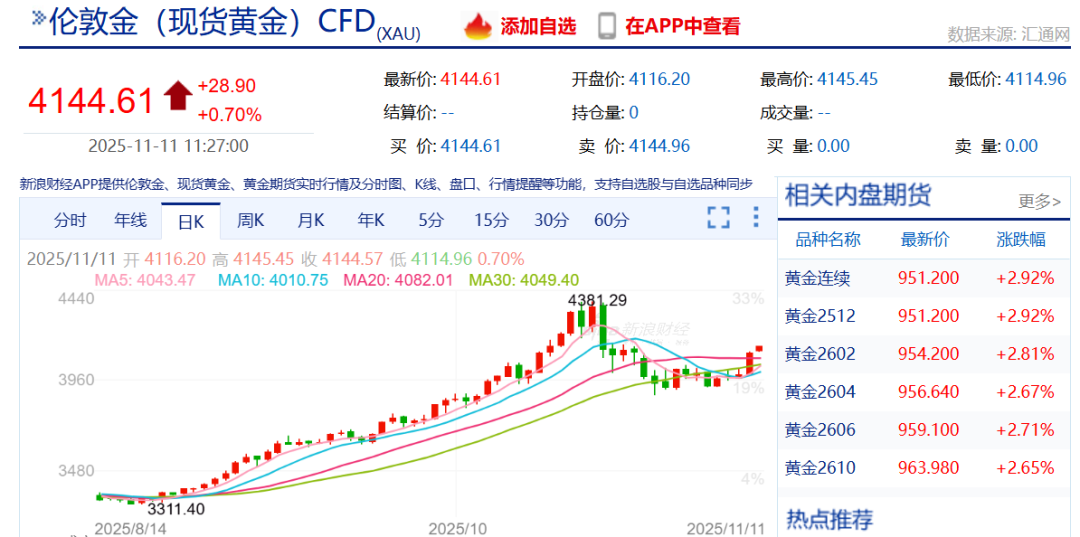
Core Viewpoint - International gold prices continue to rise, with spot gold surpassing $4,140, reflecting a weekly increase of over 3% [1] Group 1: Gold Price Movements - On November 11, spot gold surged by 2.85%, closing around $4,115, marking the highest closing price since October 23 [3] - COMEX gold futures rose by 2.76%, reaching $4,120.60 per ounce [3] - Domestic gold jewelry prices have increased, with Chow Sang Sang's price rising to ¥1,308 per gram from ¥1,276, an increase of ¥32 per gram [3] - Lao Feng Xiang's gold jewelry price increased to ¥1,310 per gram from ¥1,273, a rise of ¥37 per gram [3] Group 2: Central Bank Gold Reserves - As of the end of October, China's gold reserves reached 74.09 million ounces, an increase of 30,000 ounces from the end of September, marking the 12th consecutive month of gold accumulation [10] - The World Gold Council reported that global central banks accelerated gold purchases in Q3, with a net purchase of 220 tons, a 28% increase from Q2 and a 10% year-on-year increase [10] - In the first three quarters, global central banks' net gold purchases totaled 634 tons, significantly above the average levels prior to 2022 [10] Group 3: Market Sentiment and Future Outlook - Amid deteriorating U.S. fiscal conditions and rising global tensions, central banks are increasingly accumulating gold, enhancing its perception as a safe-haven asset [11] - Analysts suggest that gold prices may maintain high volatility in the short term, but the underlying support for mid-term price increases remains intact due to rising uncertainties and global "de-dollarization" trends [11] - Predictions indicate that gold may continue its upward trend next year, with structural and cyclical opportunities likely to resonate [11]
有的欲“补仓” 有的想“止盈” 全球央行购金态度分化
Shang Hai Zheng Quan Bao· 2025-11-07 19:07
Core Viewpoint - The recent divergence in central banks' attitudes towards gold purchases is a significant factor influencing international gold prices, which are currently fluctuating around $4,000 per ounce. This reflects a broader trend of diversifying reserve assets globally [1][2]. Group 1: Central Bank Actions - The Bank of Korea has signaled plans to increase its gold reserves for the first time in 12 years, indicating a shift in its long-term strategy towards gold accumulation [2][3]. - In contrast, the Bangko Sentral ng Pilipinas (Philippine central bank) is considering selling excess gold reserves, as the demand for gold as a safe haven has decreased. Currently, gold constitutes 13% of its international reserves, which is higher than most Asian countries [2][3]. Group 2: Market Dynamics - The Philippines initially purchased gold at approximately $2,000 per ounce, and with current prices nearing double that, the central bank sees an opportunity to realize profits [3]. - Different central banks are making varied decisions based on their assessments of gold price trends and their own reserve situations, reflecting a broader market behavior where both buying and selling occur simultaneously [3]. Group 3: Reserve Asset Diversification - The trend of diversifying reserve assets is accelerating, particularly as the dominance of the US dollar as a reserve currency is waning. Central banks are increasingly looking to gold as a stable reserve asset [4]. - Data from the International Monetary Fund (IMF) shows a decline in the dollar's share of global foreign exchange reserves from 57.79% to 56.32%, indicating a shift towards a more multipolar reserve currency system [4]. - Despite a slowdown in the pace of gold purchases this year, central banks continue to acquire gold, with a net purchase of 220 tons in the third quarter, up 28% from the previous quarter [4].