免税

Search documents
海口海关保障免税、完税商品同车运输模式实施
Xin Lang Cai Jing· 2025-11-16 01:17
Core Viewpoint - The article highlights the successful implementation of a new transportation model for duty-free and taxable goods, which significantly reduces logistics costs for duty-free enterprises in Haikou, China [1] Group 1: Transportation Model - A vehicle carrying 587 duty-free items and 4,768 taxable goods successfully transported these products from Haikou Comprehensive Bonded Zone to the customs supervision warehouse at Wanning Wangfujing International Duty-Free Port [1] - This marks the first use of a same-vehicle transportation model, allowing the same vehicle to carry both duty-free and taxable goods [1] - The new model addresses the challenge of transporting small quantities of duty-free items, which previously increased logistics costs and extended delivery times for enterprises [1]
数据复盘丨免税、磷化工等概念走强 88股获主力资金净流入超1亿元
Zheng Quan Shi Bao Wang· 2025-11-10 09:57
Market Overview - The Shanghai Composite Index closed at 4018.60 points, up 0.53%, with a trading volume of 960.6 billion yuan [1] - The Shenzhen Component Index closed at 13427.61 points, up 0.18%, with a trading volume of 1213.865 billion yuan [1] - The ChiNext Index closed at 3178.83 points, down 0.92%, with a trading volume of 523.234 billion yuan [1] - The total trading volume of both markets reached 2174.465 billion yuan, an increase of 175.398 billion yuan compared to the previous trading day [1] Sector Performance - Strong sectors included beauty care, food and beverage, retail, agriculture, precious metals, oil and petrochemicals, insurance, and textiles [2] - Active concepts included duty-free, phosphorus chemicals, diamond cultivation, dairy, community group buying, liquor, nano-silver, organic silicon, and prepared dishes [2] - Weak sectors included electric equipment, machinery, electronics, communications, automotive, and steel [2] Stock Performance - A total of 3249 stocks rose, while 1812 stocks fell, with 98 stocks remaining flat and 8 stocks suspended [2] - 92 stocks hit the daily limit up, while 15 stocks hit the daily limit down [2] Fund Flow - The net outflow of main funds in the Shanghai and Shenzhen markets was 25.429 billion yuan, with the ChiNext experiencing a net outflow of 14.756 billion yuan [5] - The food and beverage sector saw the highest net inflow of main funds, amounting to 1.563 billion yuan [5] - The electric equipment sector had the largest net outflow, totaling 6.88 billion yuan [5] Individual Stock Highlights - 2106 stocks experienced net inflows, with 88 stocks receiving over 1 billion yuan in net inflows [8] - Cambridge Technology had the highest net inflow of 758 million yuan, followed by Wuliangye and BYD [9] - 3052 stocks faced net outflows, with 128 stocks seeing over 1 billion yuan in net outflows [11] - The stock with the highest net outflow was Xinyi Sheng, with an outflow of 1.816 billion yuan [12] Institutional Activity - Institutions had a net buy of 10 stocks, with Wanrun Technology leading at approximately 131.24 million yuan [14] - The total net sell by institutions was about 697 million yuan, with Xinquan shares experiencing the highest net sell of approximately 333.3 million yuan [14]






华尔街见闻早餐FM-Radio | 2025年10月31日
Sou Hu Cai Jing· 2025-10-30 23:14
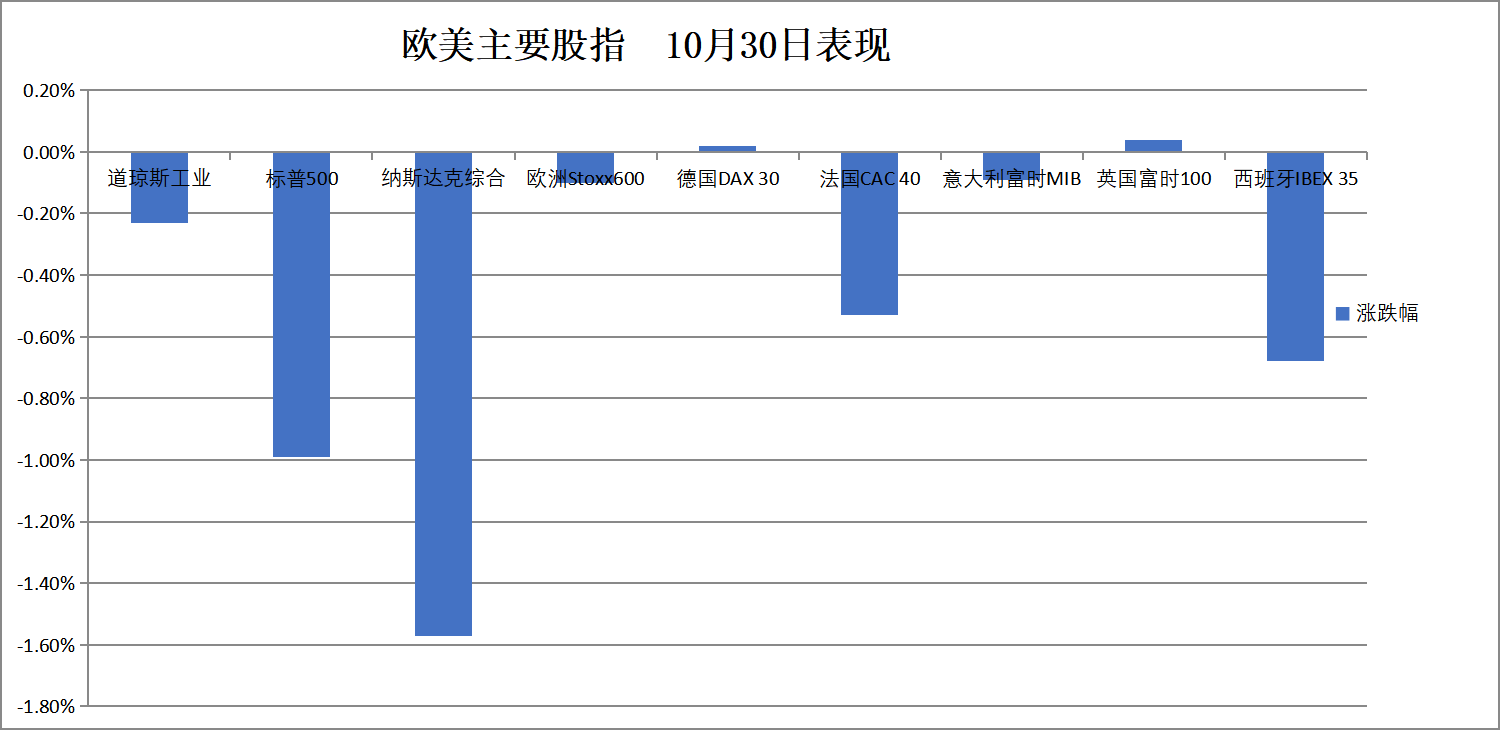
Market Overview - Investors express doubts about the Federal Reserve's interest rate cut prospects, leading to a sell-off in the market, with major U.S. indices declining, particularly tech stocks, with the Nasdaq down nearly 1.6% [1] - Meta's stock plummeted by 11%, while Alphabet rose by 2.5%, and eBay saw a significant drop of 15.88%. Chinese concept stocks index fell nearly 1.9% [1] - After earnings, Amazon surged by 13% and Apple rose by 3%, boosting Nasdaq futures by 1.2% in early trading [1] - U.S. Treasury yields continued to rise, with the 10-year yield increasing by 2.32 basis points [1] - Gold prices rebounded, rising by 2.38% to above $4000, while digital currencies like Bitcoin and Ethereum experienced significant declines [1] Company Performance - Apple's service revenue reached a record high for the same period, despite a surprising decline in revenue from China and weaker iPhone sales during the off-season, but expects a double-digit increase in the upcoming quarter [6] - Amazon's AWS achieved its fastest growth in three years, with capital expenditures exceeding expectations, leading to a 14% increase in stock price after hours [7] - Eli Lilly reported Q3 earnings that exceeded expectations, raising its full-year guidance due to strong sales of weight loss drugs [11] - BYD's Q3 revenue was 195 billion yuan, with a net profit of 7.82 billion yuan, reflecting a year-on-year decline [12] - Zepbound's price reduction led to a threefold increase in sales, contributing to Eli Lilly's strong Q3 performance [11] Economic Indicators - The European Central Bank maintained its deposit rate at 2%, citing economic resilience against trade headwinds, while the Eurozone's Q3 GDP grew by 0.2%, exceeding expectations [4][23] - Japan's central bank kept interest rates unchanged, with two members voting against the decision [5] - The U.S. Treasury yields rose, with the 10-year yield at 4.0892% and the two-year yield at 3.6082% [16] Industry Trends - The semiconductor market is experiencing a significant shift, with companies like Nvidia and Oracle focusing on AI infrastructure and capital expenditures [35][36] - The high bandwidth memory market is entering a new "super cycle" driven by AI demand, with expectations of sustained supply tightness [36] - The gene editing technology is advancing, with new strategies for breeding livestock that could significantly shorten traditional breeding cycles [40][41] - The tax-free shopping policy in China is being optimized to support domestic products and enhance the shopping experience for travelers [38][39]


【9日资金路线图】两市主力资金净流出超250亿元 有色金属等行业实现净流入
Zheng Quan Shi Bao· 2025-10-09 14:42
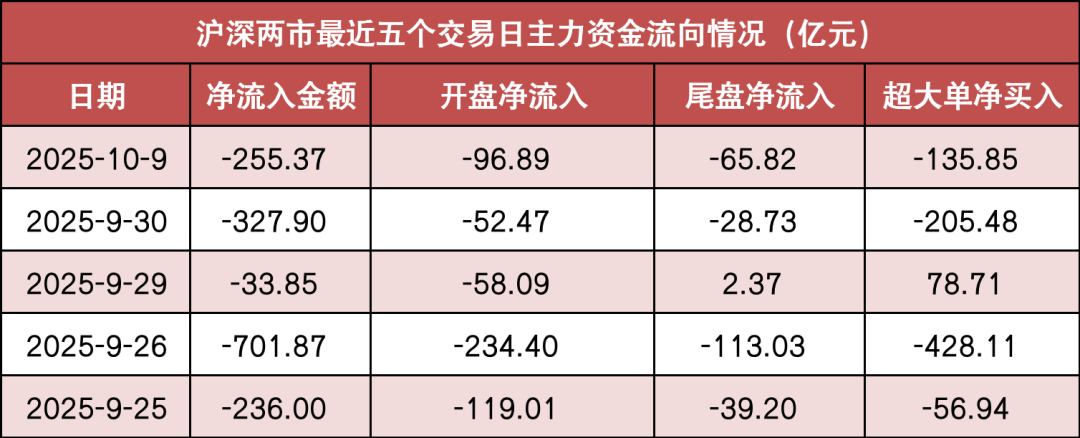
Market Overview - The A-share market indices performed strongly today, with the Shanghai Composite Index rising by 1.32%, the Shenzhen Component Index increasing by 1.47%, and the ChiNext Index up by 0.73%. The total trading volume reached 2.67 trillion yuan, compared to 2.2 trillion yuan in the previous trading day [1]. Capital Flow - The net outflow of main funds in the Shanghai and Shenzhen markets exceeded 250 billion yuan, with a net outflow of 255.37 billion yuan for the day. The opening saw a net outflow of 96.89 billion yuan, while the closing recorded a net outflow of 65.82 billion yuan [2][3]. Sector Performance - The CSI 300 index experienced a net outflow of 137.82 billion yuan, while the ChiNext saw a net outflow of 121.83 billion yuan [4][5]. - The automotive sector had a slight decline of 0.26% with a net outflow of 45.52 billion yuan, followed by the pharmaceutical and biotechnology sector with a negligible decline of 0.01% and a net outflow of 34.69 billion yuan. The media sector fell by 1.06% with a net outflow of 32.29 billion yuan [6]. Institutional Activity - Notable institutional buying included Ganfeng Lithium, which saw a net purchase of 52.11 million yuan, and Tianji Co., with a net purchase of 44.19 million yuan. Conversely, Jianhua Technology experienced a significant net sale of 24.48 million yuan [8][9].
【9日资金路线图】两市主力资金净流出超250亿元 有色金属等行业实现净流入
证券时报· 2025-10-09 14:34
Market Overview - The A-share market indices performed strongly today, with the Shanghai Composite Index rising by 1.32%, the Shenzhen Component increasing by 1.47%, and the ChiNext Index up by 0.73%. The total trading volume reached 2.67 trillion yuan, compared to 2.2 trillion yuan in the previous trading day [1]. Capital Flow - The net outflow of main funds from the Shanghai and Shenzhen markets exceeded 255.37 billion yuan today, with an opening net outflow of 96.89 billion yuan and a closing net outflow of 65.82 billion yuan [2][3]. - The CSI 300 index saw a net outflow of 137.82 billion yuan, while the ChiNext index experienced a net outflow of 121.83 billion yuan [2][4]. Sector Performance - The non-ferrous metals sector led the market with a net inflow of 143.63 billion yuan and a price increase of 5.23%. Other sectors with significant inflows included computers (70.68 billion yuan) and public utilities (68.68 billion yuan) [5]. - Conversely, the automotive sector faced a net outflow of 45.52 billion yuan, with a slight decline of 0.26%. The pharmaceutical and media sectors also saw outflows of 34.69 billion yuan and 32.29 billion yuan, respectively [5]. Institutional Activity - Notable institutional buying included Ganfeng Lithium, which saw a net purchase of 52.11 million yuan, and Tianji Co., with a net purchase of 44.19 million yuan. Other significant purchases were made in companies like Canxin Technology and Meili Technology [7][8].

A股收评:放量上涨!沪指、深成指涨超1.3%,科创50指数涨近3%,黄金、可控核聚变及稀土板块走高
Ge Long Hui· 2025-10-09 07:07
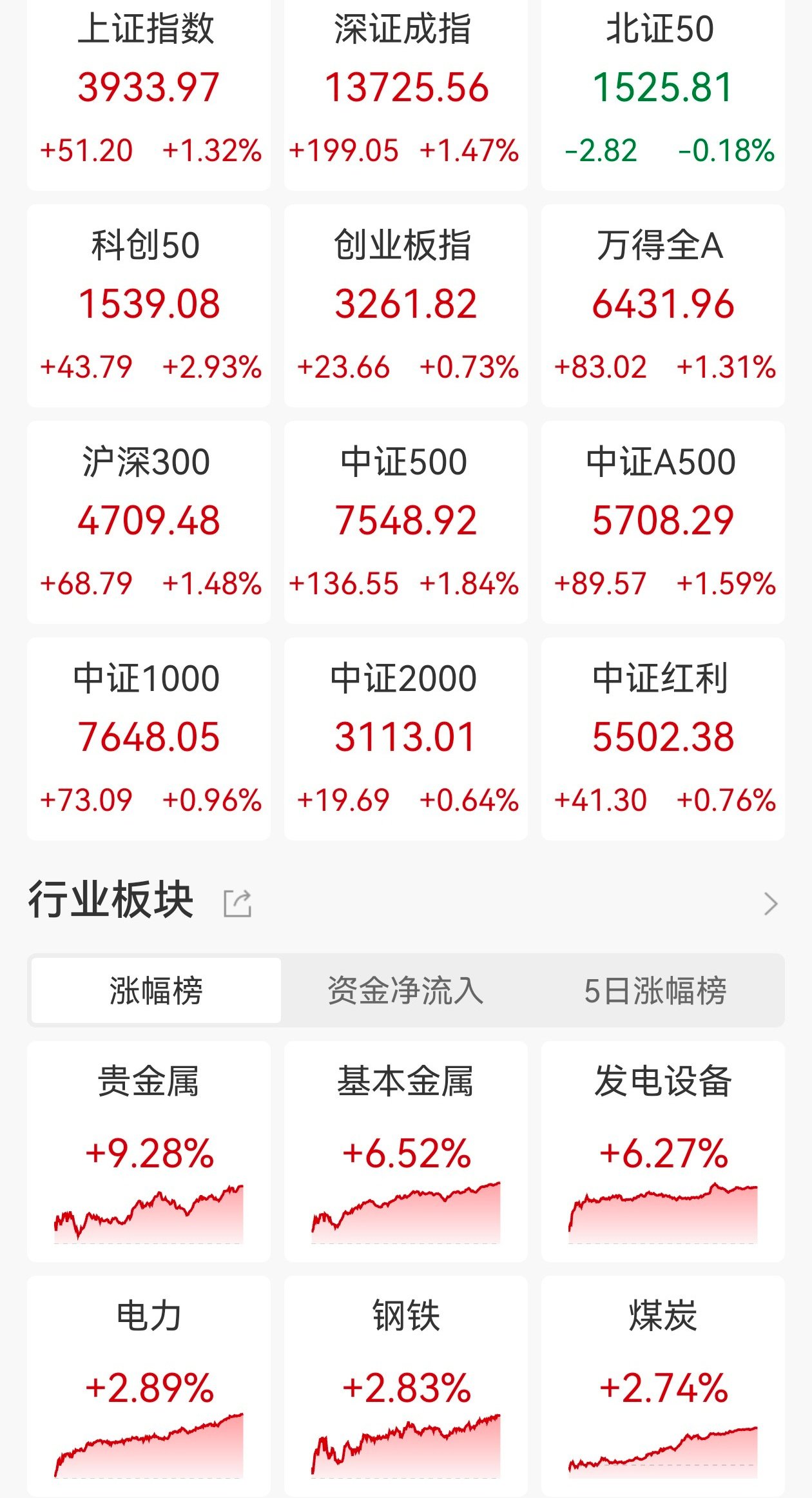
Market Performance - On the first trading day of October, A-shares opened higher, with the Shanghai Composite Index surpassing 3900 points for the first time in ten years, closing at 3933.97 points, up 1.32% [1] - The Shenzhen Component Index rose by 1.47%, while the ChiNext Index increased by 0.73%, and the STAR Market 50 Index surged by 2.93% [1] - The total market turnover reached 2.67 trillion yuan, an increase of 474.6 billion yuan compared to the previous trading day, with over 3100 stocks rising and nearly 100 stocks hitting the daily limit [1] Sector Performance - Precious metals and gold sectors saw a surge, with multiple stocks like Zhaojin Mining and Zhongjin Gold hitting the daily limit due to rising international gold prices during the National Day holiday [1] - The controlled nuclear fusion sector experienced significant growth following recent milestone advancements, with Guoguang Electric hitting a 20% limit up [1] - The rare earth sector also rose due to export controls on related items, with stocks like Northern Rare Earth and Antai Rare Earth reaching their daily limits [1] - Other sectors such as small metals, non-ferrous metals, lithium mining concepts, and superconducting concepts showed strong performance [1] Declining Sectors - The tourism and hotel sector declined, with daily per capita consumption during the holiday dropping by 13% year-on-year, leading to a more than 8% drop in stocks like Caesar Travel [1] - The real estate service sector also faced losses, with Huangting International hitting the daily limit down [1] - The film and television sector weakened due to lower box office revenues compared to the previous year, with stocks like China Film and Hengdian Film hitting their daily limits down [1] - Other sectors such as duty-free, short drama concepts, and millet economy also experienced significant declines [1] Top Gainers and Fund Inflows - Precious metals topped the gainers list with a 9.28% increase, followed by basic metals at 6.52% and power generation equipment at 6.279% [2] - The electricity sector rose by 2.89%, while steel and coal sectors increased by 2.83% and 2.749% respectively [2]
“寒王”一度连跌!科技股波动加剧,后市哪些方向值得关注?
Sou Hu Cai Jing· 2025-09-05 07:20
Group 1 - The core viewpoint of the articles highlights a significant shift in the technology sector, which has been a major driver of stock market gains in the US, Hong Kong, and A-shares, but has recently experienced a sharp decline [2][4] - The A-share market's Sci-Tech 50 Index fell over 6% on September 4, with a cumulative drop of nearly 10% over three trading days, while the Hang Seng Tech Index also declined by nearly 2% [2] - Notable individual stocks such as Tianfu Communication and Cambrian have seen declines exceeding 15%, indicating a broader sell-off in the tech sector [2][4] Group 2 - In contrast, sectors such as photovoltaic, energy storage, tourism, and banking in the A-share market have shown significant strength, with Agricultural Bank of China rising over 5% to reach a new high [4] - Despite a slight recovery in tech indices on September 5, the volatility in tech stocks suggests a divergence in market sentiment and potential selling pressure [4][5] - Institutions are optimistic about the future market, with expectations of interest rate cuts by the Federal Reserve, which could benefit fixed asset investment and manufacturing activities in the US [5][6] Group 3 - Recommendations from institutions include focusing on physical assets like industrial metals and capital goods, as well as sectors benefiting from domestic demand recovery [6][7] - The market is expected to see a rotation between growth and balanced styles, with TMT and cyclical sectors being highlighted for investment opportunities [6][7] - Overall, there is a consensus among institutions that the market's rally is not over, although there are differing opinions on which sectors to focus on moving forward [7]



数据复盘丨商贸零售、银行等行业走强 龙虎榜机构抢筹12股
Zheng Quan Shi Bao Wang· 2025-09-04 10:24
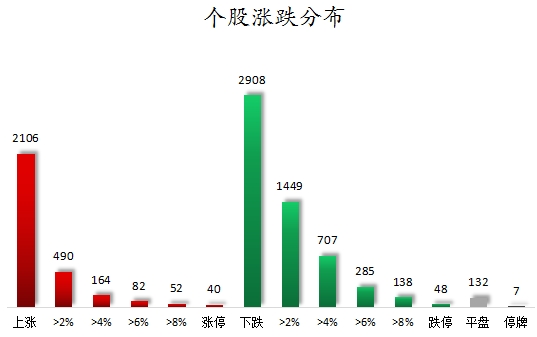
Market Overview - The Shanghai Composite Index closed at 3765.88 points, down 1.25%, with a trading volume of 1,107.9 billion yuan [1] - The Shenzhen Component Index closed at 12118.70 points, down 2.83%, with a trading volume of 1,436.4 billion yuan [1] - The ChiNext Index closed at 2776.25 points, down 4.25%, with a trading volume of 716.3 billion yuan [1] - The total trading volume of both markets was 2,544.3 billion yuan, an increase of 180.2 billion yuan compared to the previous trading day [1] Sector Performance - Strong sectors included retail, banking, beauty care, textile and apparel, and light industry manufacturing [3] - Active concepts included community group buying, dairy, prepared dishes, duty-free, pet economy, and ice and snow economy [3] - Weak sectors included telecommunications, electronics, non-ferrous metals, defense and military, computers, machinery, pharmaceuticals, and automobiles [3] Capital Flow - The net outflow of main funds from the Shanghai and Shenzhen markets was 67.68 billion yuan, with the ChiNext seeing a net outflow of 31.95 billion yuan [7][8] - Six sectors experienced net inflows, with the retail sector seeing the highest net inflow of 1.27 billion yuan [8] - The computer sector had the largest net outflow of 13.03 billion yuan [8] Individual Stock Performance - A total of 1783 stocks saw net inflows, with 57 stocks receiving over 1 billion yuan in net inflows [12] - The stock with the highest net inflow was Shengli Precision, with a net inflow of 787 million yuan [12][13] - A total of 3360 stocks experienced net outflows, with 200 stocks seeing over 1 billion yuan in net outflows [15] - The stock with the highest net outflow was Yanshan Technology, with a net outflow of 3.026 billion yuan [15][16] Institutional Activity - Institutional investors had a net buying of approximately 216 million yuan, with the highest net buying in Tianfu Communication at about 623 million yuan [19][20] - The stocks with the highest net selling included Data Port, with a net selling amount of approximately 176 million yuan [19][20]
滚动更新丨A股三大指数集体高开,AI产业链全线走强
Di Yi Cai Jing Zi Xun· 2025-08-27 01:45
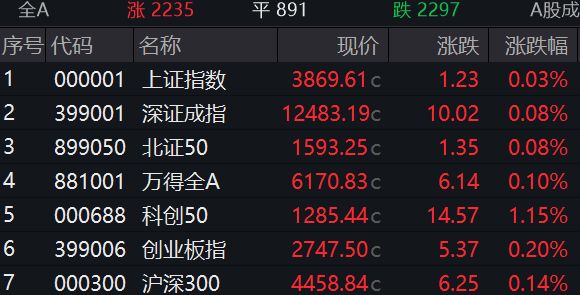
Market Overview - A-shares opened with all three major indices rising, with the Shanghai Composite Index up 0.03%, Shenzhen Component Index up 0.08%, and ChiNext Index up 0.2% [1] - The AI industry chain showed strong performance, particularly in computing power, intelligent agents, and GPU concepts, with Cambrian rising nearly 4% [1] - Consumer sectors experienced a general pullback, with agriculture, duty-free, and automotive stocks leading the declines, while photovoltaic and stablecoin concepts saw slight decreases [1] A-share Performance - The Shanghai Composite Index is at 3869.61, up 1.23 points (0.03%) [2] - The Shenzhen Component Index is at 12483.19, up 10.02 points (0.08%) [2] - The ChiNext Index is at 2747.50, up 5.37 points (0.20%) [2] Hong Kong Market - The Hang Seng Index opened up 0.4%, with the Hang Seng Tech Index rising 0.55% [3] - NIO saw a significant increase of 8%, while other stocks like Kangfang Bio and Jingtai Holdings rose over 4% [3] Central Bank Operations - The central bank conducted a 7-day reverse repurchase operation of 379.9 billion yuan at an interest rate of 1.40% [5] - A total of 616 billion yuan in reverse repos matured on the same day, resulting in a net withdrawal of 236.1 billion yuan [5] Currency Exchange - The central parity rate of the RMB against the USD was raised by 80 basis points to 7.1108, marking the highest level since November 6, 2024 [6] - The previous day's central parity rate was 7.1188, with the onshore RMB closing at 7.1621 and the night session closing at 7.1518 [6]

“免税”到底免了啥?一次说明白海南免税店爆火的原因!
Sou Hu Cai Jing· 2025-08-11 03:49
Core Insights - The article explains the concept of duty-free shopping and the three main types of taxes that are exempted, which are import tariffs, value-added tax (VAT), and consumption tax [1][4][6] Tax Exemptions - Duty-free products benefit from the exemption of three main taxes: 1. **Import Tariff**: This is the fee for goods entering the country, which is waived in duty-free shops as they are considered outside the customs territory [1] 2. **Value-Added Tax (VAT)**: The standard VAT rate is 13%, and it is exempted because travelers do not utilize domestic public services when purchasing these goods [4][6] 3. **Consumption Tax**: This tax applies to luxury and non-essential goods, with rates ranging from 15% to over 30% for cosmetics and up to 20% for alcohol [6][8] Price Impact - The cumulative effect of these tax exemptions can lead to significant savings, with duty-free prices being approximately 25% to 50% lower than domestic retail prices for high-end products [8][10] Special Scenarios and Policies - **Hainan Duty-Free Model**: Consumers can purchase duty-free goods in Hainan, with a limit of 100,000 yuan per person per year, provided they leave the island [9][10] - **Domestic Products**: Some high-end domestic products can also be sold duty-free by refunding the VAT and consumption tax already paid during production [11] - **Duty-Free vs. Tax Refund**: Duty-free shopping allows for immediate purchase without tax, while tax refunds require prior payment and a claim process upon departure [12] Consumer Considerations - Not all duty-free items are the cheapest; some products may have low tariffs, and operational costs of duty-free shops can lead to higher prices for certain goods [14][16] - There are restrictions on the types of products available, focusing mainly on high-tax items like alcohol and cosmetics, while everyday items may not be as prevalent [16][18] - Customs regulations limit the total value of goods brought back into the country to 5,000 yuan, with strict rules on quantities for items like tobacco and alcohol [18] Online Duty-Free Shopping - Online duty-free shopping is generally reliable if conducted through official channels, ensuring product authenticity and compliance with customs regulations [19][21] - Consumers should be cautious of counterfeit platforms and should verify the legitimacy of online stores before making purchases [22][24]