
制造业复苏

Search documents
见证A股历史!两大万亿巨头飙涨!
天天基金网· 2026-01-26 05:15
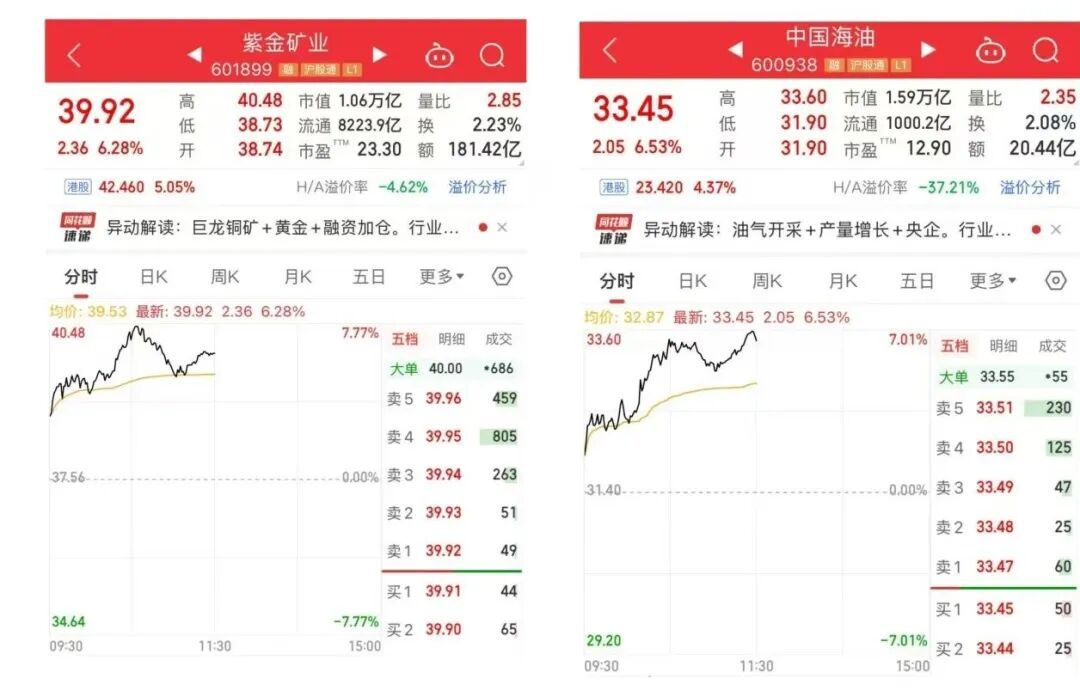
Core Viewpoint - The article discusses the recent performance of various stock indices in China, highlighting the shift in market dynamics between large-cap and micro-cap stocks, as well as the strong performance of the precious metals sector driven by rising gold and silver prices [2][4][9]. Market Performance - Last week, the micro-cap stock index reached a historical high, while large-cap indices like the CSI 300 and SSE 50 experienced adjustments. However, there was a reversal today with large-cap stocks gaining strength, as the SSE 50 index rose over 1.8% at its peak [2]. - As of the morning close, the SSE Composite Index increased by 0.12%, while the Shenzhen Component Index and the ChiNext Index fell by 0.74% and 0.86%, respectively. The total market turnover exceeded 2.26 trillion yuan [4]. Precious Metals Sector - The precious metals sector showed strong performance, with significant gains in gold and silver prices. Notable stocks such as Hunan Gold and Zhaojin Mining reached their daily limit up, while leading companies like Zijin Mining and China Uranium also saw substantial increases [6][9]. - Gold prices surged past $5,000 per ounce, marking a new historical high, which is attributed to geopolitical factors and fluctuations in confidence towards U.S. assets, leading to increased demand for gold as a safe-haven asset [8][10]. Earnings Forecasts - Several precious metals companies have announced optimistic earnings forecasts for 2025. Zijin Mining expects a net profit of 51 to 52 billion yuan, a year-on-year increase of 59% to 62%. Chifeng Jilong Gold anticipates a net profit of 3 to 3.2 billion yuan, reflecting a growth of 70% to 81% [9]. - The overall outlook for the non-ferrous metals sector is driven by three main catalysts: recovery in manufacturing and inventory replenishment, long-term demand reshaping due to green and technological trends, and favorable liquidity expectations enhancing the financial attributes of precious metals [10]. Financial Sector Activity - The financial sector was active, with the insurance sector leading gains. Major insurance companies collectively saw increases, with New China Life Insurance rising over 4% [12]. - The insurance industry is expected to face short-term challenges but may benefit from a rebound in the equity market in early 2026, driven by improved asset performance and a potential stabilization of long-term interest rates [14].





两大万亿巨头飙涨,历史新高
Zhong Guo Zheng Quan Bao· 2026-01-26 04:41
Market Performance - The micro-cap stock index reached a historical high last week, while large-cap indices like the CSI 300 and SSE 50 experienced adjustments [1] - This morning, large-cap stocks strengthened, with the SSE 50 index rising over 1.8% at its peak, while the micro-cap index and the CSI 2000 index both declined, with the latter down 1.39% [1] - By the close of the morning session, the SSE index rose by 0.12%, while the Shenzhen Component Index and the ChiNext Index fell by 0.74% and 0.86%, respectively, with total market turnover exceeding 2.26 trillion yuan [3] Sector Highlights - The non-ferrous metals sector showed strong performance, particularly in precious metals, with companies like Hunan Gold and Zhaojin Gold hitting the daily limit, and leading stocks such as Zijin Mining and China Uranium rising significantly [5] - Spot gold prices surged past $5,000 per ounce, with silver prices also reaching historical highs, driven by geopolitical factors and fluctuations in confidence towards U.S. assets [8] - Major precious metal companies forecast significant profit increases for 2025, with Zijin Mining expecting a net profit of 51 to 52 billion yuan, a year-on-year increase of 59% to 62% [8] Investment Catalysts - Three main catalysts are identified for the non-ferrous metals sector: 1. Recovery in manufacturing and inventory replenishment cycles, with PMI indicators returning to expansion in the U.S. and some emerging economies [9] 2. Long-term demand reshaping due to green and technological trends, particularly in sectors like electric vehicles and renewable energy [9] 3. Liquidity expectations and financial attributes, with rising expectations for interest rate cuts by the Federal Reserve benefiting precious metals [9] Financial Sector Activity - The financial sector was active, with the insurance sector leading gains, as major insurers collectively rose, including New China Life Insurance which increased over 4% [10][12] - The insurance industry is expected to see performance improvements in 2026, driven by a stable long-term interest rate environment and rising equity markets [13]
两大万亿巨头,飙涨!历史新高
Zhong Guo Zheng Quan Bao· 2026-01-26 04:27
Market Performance - The micro-cap stock index reached a historical high last week, while large-cap indices like the CSI 300 and SSE 50 experienced adjustments [1] - This morning, large-cap stocks strengthened, with the SSE 50 index rising over 1.8% at its peak, while the micro-cap index and the CSI 2000 index both declined, with the latter down 1.39% [1] - By the close of the morning session, the SSE index rose by 0.12%, while the Shenzhen Component Index and the ChiNext Index fell by 0.74% and 0.86%, respectively, with total market turnover exceeding 2.26 trillion yuan [3] Sector Performance - The non-ferrous metals sector showed strong performance, particularly in precious metals, with leading stocks like Zijin Mining and China Uranium Industry experiencing significant gains [4] - Several precious metal companies announced profit forecasts for 2025, with Zijin Mining expecting a net profit of 51 to 52 billion yuan, a year-on-year increase of 59% to 62% [7] - The insurance sector was active, with major companies like New China Life Insurance and China Pacific Insurance seeing collective gains, and New China Life Insurance rising over 4% [9][11] Catalysts for Growth - The rise in gold and silver prices is attributed to geopolitical factors and fluctuations in confidence towards U.S. assets, leading to increased demand for safe-haven assets like gold [7] - Three main catalysts for the non-ferrous metals sector include: 1. Recovery in manufacturing and inventory replenishment cycles, with PMI indicators returning to expansion [8] 2. Long-term demand reshaping due to green and technological trends, particularly in sectors like electric vehicles and renewable energy [8] 3. Liquidity expectations and financial attributes, with a favorable environment for precious metals due to anticipated interest rate cuts by the Federal Reserve [8]
帮主郑重:大宗商品“三把火”,烧出三种投资逻辑
Sou Hu Cai Jing· 2026-01-12 23:40
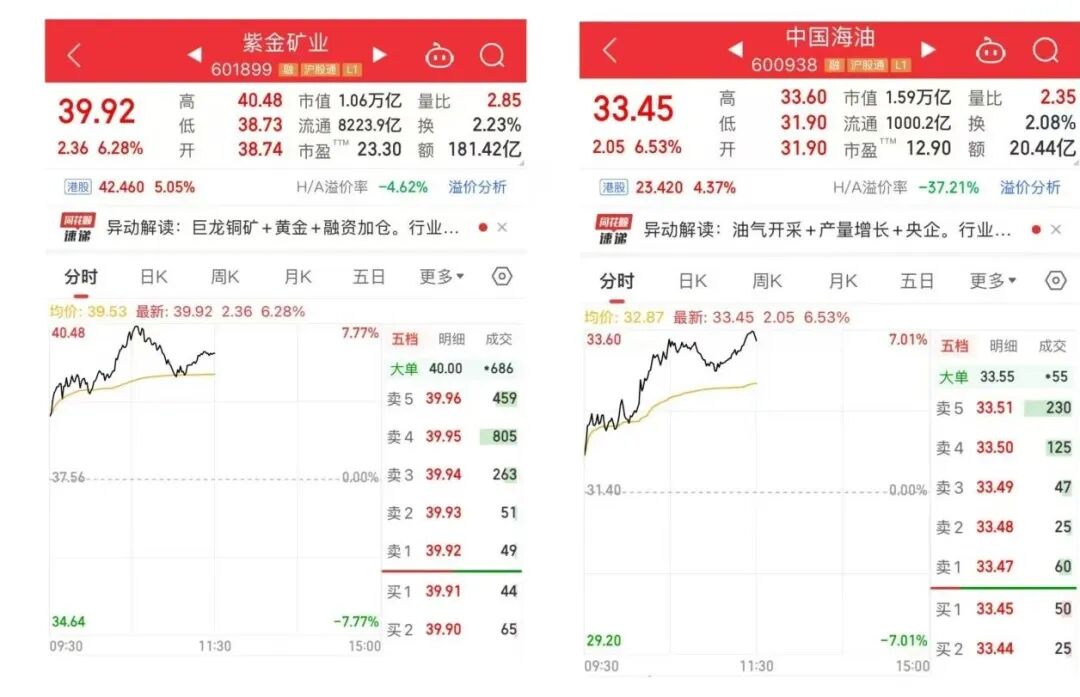
Group 1: Geopolitical Impact on Oil Prices - Oil prices have reached a one-month high, primarily driven by concerns over the situation in Iran, which produces approximately 3.3 million barrels per day [4] - The potential for military action by the U.S. has added a "risk premium" to oil prices, highlighting the sensitivity of prices to geopolitical events in a delicate supply-demand balance [4] - The short-term price movements are influenced by events, while the long-term outlook is determined by supply and demand dynamics [4] Group 2: Financial System Concerns and Precious Metals - The investigation into the Federal Reserve by the U.S. Department of Justice has raised concerns about the independence of the central bank, leading to increased demand for non-credit assets like gold and silver [5] - Gold prices have historically surged to over $4,600, while silver has also seen significant increases, driven by both financial attributes and industrial demand, particularly in photovoltaics [5] - The core logic for gold and silver is centered around hedging against and reshaping monetary credit [5] Group 3: Copper Market Dynamics - Copper prices experienced a spike before retreating, influenced by technical selling pressure from large commodity index rebalancing [6] - Analysts believe that the fundamental outlook for copper remains strong due to tight supply and robust demand expectations [6] - The long-term narrative for copper is closely tied to global energy transition and manufacturing recovery, with short-term movements driven by market sentiment and funding [6] Group 4: Investment Strategies - For oil, it is advisable to monitor event developments while recognizing the volatility driven by geopolitical risks, making it more suitable for trend observation rather than long-term holding [6] - Gold should be viewed from an asset allocation perspective, serving as a "ballast" in investment portfolios to counter extreme uncertainties, with a recommendation to maintain a basic allocation without chasing short-term spikes [6] - For industrial metals like copper, a focus on the industrial perspective is essential, with potential opportunities arising from market corrections, but investors should wait for clearer fundamental signals and favorable price points before entering [6]

英国制造业呈现持续复苏态势
Zhong Guo Xin Wen Wang· 2026-01-02 22:12
Core Viewpoint - The UK manufacturing sector shows signs of recovery, with the PMI rising to 50.6 in December 2025, marking the highest level in 15 months and indicating sustained expansion above the neutral level of 50 for two consecutive months [1] Group 1: Manufacturing Performance - The UK manufacturing output has increased for the third consecutive month in December 2025, with a slight rebound in new orders, and indicators for exports and hiring have stabilized after previous weakness [1] - The positive changes in the manufacturing sector are attributed to short-term factors, including the UK Chancellor's budget announcement in late November 2025, which delayed most tax increases and reduced market uncertainty [1] Group 2: Challenges and Future Outlook - Despite the recovery, the foundation of the UK's manufacturing growth remains fragile, as the increase in December was partly driven by inventory accumulation and backlog order clearance rather than sustained improvement in end-demand [1] - The Director of S&P Global Market Intelligence noted that the Bank of England's interest rate cuts in December 2025 could further boost demand, but the early 2026 period will be critical to observe whether manufacturing growth can shift to a demand-driven sustainable model after the short-term stimulus factors fade [1]
制造业复苏动能放缓 美国12月制造业PMI降至51.8
Zhi Tong Cai Jing· 2026-01-02 15:57
Core Insights - The final value of the US manufacturing Purchasing Managers' Index (PMI) for December is 51.8, consistent with previous estimates and market expectations, but down from 52.2 in November, indicating a slowdown in manufacturing activity expansion [1] - The December PMI reading remains above the neutral level of 50, suggesting continued expansion in manufacturing, although at the lowest rate in five months, reflecting a deceleration in recovery momentum [1] Summary by Categories Manufacturing Activity - December manufacturing production continues to grow, but the growth rate has significantly slowed compared to the previous month [1] - New orders have contracted for the first time in a year, indicating emerging weakness in demand [1] Cost Pressures - Input and output price increases have both dropped to their lowest levels in 11 months, suggesting a moderation in cost transmission pressures [1] Economic Outlook - The gap between production growth and declining orders has widened to the largest level since the peak of the 2008 global financial crisis, highlighting potential risks facing the manufacturing sector [1] - Concerns are raised that if demand does not improve soon, current production levels may not be sustainable, potentially leading to capacity cuts and adverse effects on employment and wage data [1] - The December PMI data, while indicating resilience in the manufacturing sector amid multiple economic pressures, also signals that the recovery foundation is not solid, prompting cautious market sentiment regarding future manufacturing and labor market prospects [2]
盐和铝-电解铝行业2026年度投资策略
2025-12-31 16:02
Summary of Key Points from the Conference Call Industry Overview - The conference call focuses on the aluminum industry, particularly the electrolytic aluminum sector, and its investment strategy for 2026, highlighting the impact of various macroeconomic and geopolitical factors on aluminum supply and demand [1][2]. Core Insights and Arguments - **Supply Constraints**: China's electrolytic aluminum production capacity is limited by dual carbon policies, power shortages, and technological constraints, leading to a long-term tight supply situation that supports high aluminum prices [1][2]. - **Global Manufacturing Recovery**: The global manufacturing PMI has remained above 50 for four consecutive months, indicating a recovery in manufacturing activity, particularly in Europe and emerging industrialized countries, which is expected to drive aluminum demand [4]. - **Geopolitical Risks**: Increased geopolitical risks and environmental uncertainties are raising the demand for strategic resource reserves, leading to more conservative mineral investments and stricter export controls, which further exacerbate supply uncertainties [1][5]. - **Interest Rate Impact**: A declining interest rate cycle typically boosts industrial metal prices. With low global inventory levels, a sustained decline in interest rates is expected to stimulate restocking, positively impacting aluminum prices [6]. - **North American Supply Issues**: Energy supply constraints in North America, exacerbated by AI development, may lead to further production cuts in the U.S. and Canada, affecting global supply-demand balance [12]. - **Recycling Challenges**: Progress in aluminum recycling is slow, with reduced subsidies for scrap aluminum and a lack of significant increases in scrap supply, maintaining a tight balance in domestic and international supply [15]. Additional Important Insights - **Historical Price Comparisons**: The aluminum market shows similarities to historical salt price trends, where both commodities have abundant reserves but face price pressures due to technological and regulatory constraints [3]. - **Future Demand Trends**: The demand for industrial metals, including aluminum, is expected to steadily increase in the coming years, driven by developments in AI, renewable energy, and infrastructure upgrades [4][8]. - **Valuation and Investment Outlook**: The aluminum sector has undergone debt repair, with an average dividend yield of 5%, making it attractive for long-term investments. The sector's valuation is currently around 8-9 times earnings, with potential to rise to 13-15 times [16][18]. - **Company Recommendations**: For companies with strong resilience, recommendations include Tianshan, Hongchuang, and Nanshan Aluminum, which are noted for their cost advantages and integrated operations [20]. For companies with flexibility, Yun Aluminum and Zhongfu are highlighted due to their benefits from marginal changes [19]. Conclusion - The aluminum industry is poised for growth due to a combination of supply constraints, recovering demand, and favorable macroeconomic conditions. Investment opportunities exist in companies with strong fundamentals and strategic positioning within the sector [21][22].
芝加哥PMI反弹但仍处收缩区间 制造业复苏信号尚不明确
Xin Hua Cai Jing· 2025-12-31 05:26
Core Viewpoint - The Chicago Purchasing Managers' Index (PMI) rose to 43.5 in December from 36.3 in November, exceeding market expectations of 39.8, indicating a significant rebound but still reflecting contraction in the manufacturing sector [1] Group 1: Chicago PMI Insights - The Chicago PMI's increase is seen as a technical recovery following a prior deep decline, although it remains below the neutral threshold of 50, indicating ongoing contraction in the Midwest manufacturing activity [1] - Improvements were noted in new orders and production components, but the overall demand remains weak, with businesses cautious about future order prospects [1] Group 2: Future Outlook - The current rebound does not yet indicate a trend reversal, and further data is needed to confirm whether the manufacturing sector has truly bottomed out [1] - Historically, the Chicago PMI's fluctuations often lead the national ISM manufacturing index, making its trends significant for policymakers and investors [1] - If the Chicago PMI continues to rise towards 50 in the coming months, it may alleviate concerns about a deep slowdown in U.S. manufacturing; however, a full recovery is expected to be slow and uncertain due to persistent high interest rates and low corporate capital expenditure willingness [1]
12月17日大盘简评
Mei Ri Jing Ji Xin Wen· 2025-12-17 10:40
Market Performance - The A-share market showed strength in the afternoon, with the Shanghai Composite Index rising by 1.19% to 3870.28 points, the Shenzhen Component Index increasing by 2.40%, and the ChiNext Index up by 3.39% [1] - The total market turnover reached 1.83 trillion yuan, an increase of 86.3 billion yuan compared to the previous trading day [1] - High-volatility sectors such as telecommunications, AI in the ChiNext, and non-ferrous metals performed well, while sectors like aquaculture, coal, and dividend stocks lagged behind [1] Investment Trends - Incremental capital is flowing into the market, with the CSI A500 ETF leading in turnover, totaling 45.291 billion yuan among the top five ETFs, and the overall A500 ETF turnover reaching 52.575 billion yuan, more than three times that of the CSI 300 ETF [1] - There is a noticeable increase in net subscriptions for several core broad-based products, indicating a concentrated allocation of funds towards core A-share assets after a market correction [1] Economic Outlook - The current market sentiment is moderately positive, with a marginal recovery in risk appetite [1] - The former Deputy Governor of the Bank of Japan, Makoto Nakada, warned against premature interest rate hikes, advocating for fiscal and growth policies to elevate neutral interest rates, which is interpreted as a constraint on the pace of central bank rate hikes and positively impacts market sentiment [1] Sector Analysis - The prevailing market themes include technology (AI industry chain), anti-involution, and external demand-driven manufacturing recovery [2] - The uncertainty surrounding AI commercialization, as evidenced by Oracle's revenue and cloud business falling short of expectations, contributes to market volatility [2] - Despite the promising trends in AI, concerns about stock price divergence from fundamentals exist, suggesting a focus on tangible asset expansion opportunities, particularly in the power-related non-ferrous sector [2] Real Estate and Inflation - The real estate market continues to experience a downward trend, with housing prices declining [2] - The Consumer Price Index (CPI) has turned positive for two consecutive months, influenced by gold prices and seasonal fluctuations in vegetable prices [2] Debt Market - The bond market saw a slight rebound, although the weak performance in the fourth quarter was more pronounced than expected [2] - Long-term bonds, particularly 30-year government bonds, are approaching post-tax mortgage rates, indicating a gradual recovery in their investment value [2] - The 10-year government bond remains a stabilizing force in the bond market during this adjustment phase, highlighting its robust characteristics [2]
华锐精密(688059):华锐“智加”助力制造业智能化升级 经营业绩有望持续快速提升
Xin Lang Cai Jing· 2025-11-08 06:34
Core Insights - The company has introduced innovative practices and applications in industrial intelligence, showcasing the latest explorations of AI industrial software empowering manufacturing sites [1] - The company has achieved rapid revenue and profit growth, benefiting from recovering downstream demand and an increasingly complete product range [2] - The company is expected to continue its revenue and profit growth from 2025 to 2027, driven by ongoing product development and market opportunities [3] Group 1: Innovation and Technology - The company has developed the Huari Zhijia industrial software system, enabling intelligent monitoring, precise control, and data closed-loop optimization in the cutting process [1] - The system integrates multi-modal sensor fusion, AI algorithm modeling, and cloud analysis, enhancing machine tools' real-time perception, intelligent decision-making, and adaptive regulation capabilities [1] - The company has established a cutting test laboratory equipped with advanced processing and testing equipment to improve R&D efficiency [2] Group 2: Financial Performance - For the first three quarters of 2025, the company reported revenue of 771 million yuan, a year-on-year increase of 31.85%, and a net profit attributable to shareholders of 137 million yuan, up 78.37% [2] - In Q3 2025, the company achieved revenue of 252 million yuan, a year-on-year increase of 44.49%, with a net profit attributable to shareholders of 52 million yuan, reflecting a significant increase of 915.62% [2] - The rapid revenue growth is attributed to recovering downstream demand, improved product performance, and steady channel expansion [2] Group 3: Future Outlook - The company is projected to achieve revenues of 1.031 billion yuan, 1.284 billion yuan, and 1.509 billion yuan from 2025 to 2027, with corresponding net profits of 182 million yuan, 249 million yuan, and 341 million yuan [3] - The expected price-to-earnings ratios for the same period are 39.11, 28.51, and 20.83 times, indicating a positive outlook for the company's financial performance [3] - The company is well-positioned to capitalize on the recovery of the manufacturing industry and the restructuring of the supply chain [3]
