
外资流入

Search documents
法巴资管蔡德锋:外资正加速回归 料2026年内地及香港股市反复向上
Zhi Tong Cai Jing· 2026-02-02 13:35
Group 1 - The Hong Kong stock market rose by 1,757 points or 6.9% in January 2026, primarily due to the decline of the US dollar index from the end of last year at 98, indicating a potential outflow of funds from the US into mainland China and Hong Kong markets [1] - The Chief Investment Officer for Greater China equities at Paris-based asset management firm believes that foreign capital inflow is occurring, and expects greater volatility in the stock market compared to last year, with a tendency for upward movement [1] - The anticipated rise in the mainland and Hong Kong stock markets in 2024 is attributed to low valuations, while a bull market is expected to begin in 2025, primarily driven by domestic capital, with limited foreign investment [1] Group 2 - Geopolitical factors are leading to a more pronounced diversification of investments, with expectations of accelerated foreign capital inflow this year, contributing to a slow bull market [1] - The company notes that while foreign capital has historically been substantial, it has been underweighted for years, resulting in a low base; even a 10% outflow of funds from the US into the Chinese market would have a significant impact [1] - The differentiation among companies is expected to widen this year, particularly in the new consumption and artificial intelligence sectors, as market familiarity with industries increases, leading to a greater focus on profitability and favorable themes such as biotechnology and robotics [1] Group 3 - Investors are advised to monitor sectors that will directly benefit from policies, as well as to pay attention to orders, profits, and business models; companies with poor new order situations are likely to face profit pressures [1] - The expectation is that the differentiation among companies will become increasingly pronounced [1]
当前市场过热了吗?十大指标来测温!
雪球· 2026-01-26 13:00
2026年开年以来的行情可谓是十分火热 , 即便近期主流宽基ETF大幅流出 , 指数还是 " 稳稳当当 " , 成交量持续维持高位 , 当前市场到底 处于什么状态 ? 正好近期同事分享了一篇市场指标的观测报告 , 借此分享给大家 , 以便各位从数据层面 , 更客观地理解和判断市场的位置 。 ↑点击上面图片 加雪球核心交流群 ↑ 风险提示:本文所提到的观点仅代表个人的意见,所涉及标的不作推荐,据此买卖,风险自负。 作者:投顾主理人张济民 来源:雪球 自2025年12月17日以来 , A股连续录得17连阳 , 并在随后开始冲击4200点大关 , 市场成交额逐步提升 , 历史性直逼4万亿 , 叠加增量资 金预期充足 , 投资者风险偏好显著提升 。 然而 , 宽基指数ETF在进入1月以来加速流出 , 过去一周沪深300ETF净流出规模更是超过900亿元 。 与此同时 , 2026年1月14日 , 经中国 证监会批准 , 沪 、 深 、 北交易所发布通知调整融资保证金比例 , 将投资者融资买入证券时的融资保证金最低比例从80%提高至100% , 引 发市场热议 。 大规模的宽基型ETF的快速流出 、 以及监管层的 " ...


港股龙头公司回购节奏和力度不减,北向资金减慢流入
Huan Qiu Wang· 2026-01-24 01:23
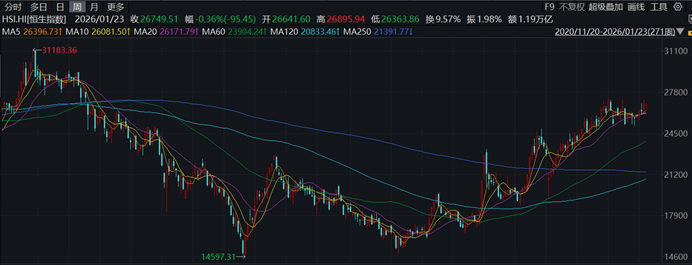
Group 1 - The Hong Kong stock market has shown a generally strong upward trend since 2026, with total buyback amounts exceeding 11 billion HKD [1] - Leading companies, such as Tencent Holdings, have maintained significant buyback activities, with Tencent's buyback amount surpassing 6 billion HKD this year [1] - A total of 108 Hong Kong-listed companies have engaged in buybacks this year, a decrease from 121 companies in the same period last year, indicating a notable reduction in buyback amounts [1] Group 2 - Cinda International notes that the Hong Kong stock market is more sensitive to changes in global liquidity, which may slow down foreign capital inflows due to geopolitical instability [3] - Since the fourth quarter of last year, northbound capital inflows have slowed, leading to insufficient upward momentum for the Hong Kong stock market [3] - The Hang Seng Index is expected to face resistance at the high level of 27,188 points reached in November 2025 [3]

股指关注市场情绪,债市或震荡运行
Changjiang Securities· 2026-01-12 06:51
Report Investment Rating - Not provided in the given content Core Viewpoints - The positive factors in the stock index market are continuously emerging. Policies in the consumption and real estate sectors are working together to support economic recovery. The significant rebound of the construction industry PMI and the stabilization of building material prices indicate the potential for investment to stabilize. The expectation of a reserve - requirement ratio cut in January, along with the strengthening of the exchange rate and the new round of public - fund allocation, will improve market liquidity. However, potential risks and sentiment changes need to be monitored, and the stock index may fluctuate [6]. - The decline momentum of the bond market has weakened, but it still faces supply pressure and rising inflation expectations in the medium - term. The bond market may fluctuate [11]. - In terms of economic data, in November, the CPI and PPI showed signs of recovery, exports were mixed, industrial production and fixed - asset investment were weak, social retail sales declined, and the growth rate of social financing remained stable [18][21][23] Summary by Directory Financial Futures Strategy Suggestions Stock Index Strategy - Strategy outlook: Range - bound fluctuations [9]. - Stock index performance review: Last week, all major A - share broad - based indexes closed higher, with the Shanghai Composite Index rising 3.82% [10]. - Core view: Positive factors are emerging, but potential risks and sentiment changes need attention, and the stock index may fluctuate. IC, IM and other related indexes are relatively strong [10]. - Technical analysis: The MACD indicator shows that the broader market index may fluctuate with a slight upward trend [10]. Treasury Bond Strategy - Treasury bond performance review: The 30 - year, 10 - year, 5 - year, and 2 - year main contracts declined by 0.10%, 0.01%, 0.03%, and 0.02% respectively [11]. - Core view: The decline momentum of the bond market has weakened, but it still faces supply pressure and rising inflation expectations in the medium - term, and the bond market may fluctuate [11]. - Technical analysis: The MACD indicator shows that the T main contract may fluctuate [11]. Key Data Tracking PMI - In December, the manufacturing PMI rebounded to 50.1%, returning to the expansion range for the first time in 8 months. The high - tech manufacturing PMI increased significantly, and large and medium - sized enterprises led the improvement [18]. CPI - In November, the year - on - year increase of CPI and the month - on - month increase of PPI were the result of seasonal factors, low - base effects, and "anti - involution". The CPI and PPI are expected to continue to rebound [21]. Exports and Imports - In November, China's exports were 330.35 billion US dollars, imports were 218.67 billion US dollars, and the trade surplus was 111.68 billion US dollars. The exports of labor - intensive products, mechanical and electrical products, and high - tech products showed different trends. The overall exports in November were not weak, but there may be pressure in December [23][24]. Industrial Added Value - In November, the year - on - year growth rate of industrial added value decreased to 4.8%. The reasons may be the suppression of "anti - involution" on key industries and the high base established by strong production after policy implementation last year [25][28]. Fixed - Asset Investment - From January to November, the year - on - year growth rate of fixed - asset investment decreased by 2.6%. In November, the fixed - asset investment decreased by 11.1% year - on - year, with a slight rebound compared to October. Different types and directions of investment showed different trends [31]. Social Retail - In November, the year - on - year growth rate of social retail sales decreased to 1.3%, the weakest since 2023. The reasons include the weakening of durable - goods consumption, the weak "Double Eleven" sales, and the weak performance of post - real - estate cycle consumption [34]. Social Financing - In November, the new social financing was 2.5 trillion yuan, a year - on - year increase of 0.2 trillion yuan. Corporate bonds and non - standard financing were the main supports, while government bonds and credit were the main drags. The year - on - year growth rate of social financing remained stable at 8.5% [37].
全球货币风云突变,美元欧元轮番动荡,人民币汇率是反攻还是波动
Sou Hu Cai Jing· 2026-01-03 08:17
Core Viewpoint - The article discusses the fluctuations of the RMB exchange rate in 2026, highlighting the complex dynamics influenced by global economic conditions and domestic factors. Group 1: RMB Performance - The RMB has shown strength against the USD, appreciating nearly 4% throughout the year, reaching close to 6.99 by year-end, driven by China's economic fundamentals [3][8]. - Conversely, the RMB depreciated approximately 10% against the Euro, leading to increased costs for those exchanging RMB for Euros [5]. Group 2: Economic Factors Supporting RMB - China's impressive trade surplus in 2025 has contributed significantly to the stability of the RMB, with substantial foreign exchange inflows bolstering its position [8]. - Continuous foreign investment in the Chinese market and a resilient performance of the Shanghai Composite Index have attracted international investors, further supporting the RMB [8]. Group 3: Future Outlook - The outlook for 2026 remains uncertain, with potential for both continued depreciation of the USD and possible rebounds, influenced by the Federal Reserve's decisions [10]. - The sustainability of China's trade surplus and the global demand environment will be critical in determining the stability of the RMB exchange rate [10][12]. - Predictions suggest that while the RMB may maintain an advantage against the USD, fluctuations are expected to become the norm rather than a steady trend [12]. Group 4: Currency Exchange Decisions - Families and small businesses face challenges in currency exchange decisions amid global financial volatility, with some opting to wait for favorable rates while others are forced to pay more for Euros [15]. - For those with currency needs, a gradual exchange strategy is recommended rather than attempting to time the market, emphasizing the importance of long-term planning [15].

美国降息对中国股市的影响:从逻辑到操作,这篇文章帮你理清楚
Sou Hu Cai Jing· 2025-12-31 05:32
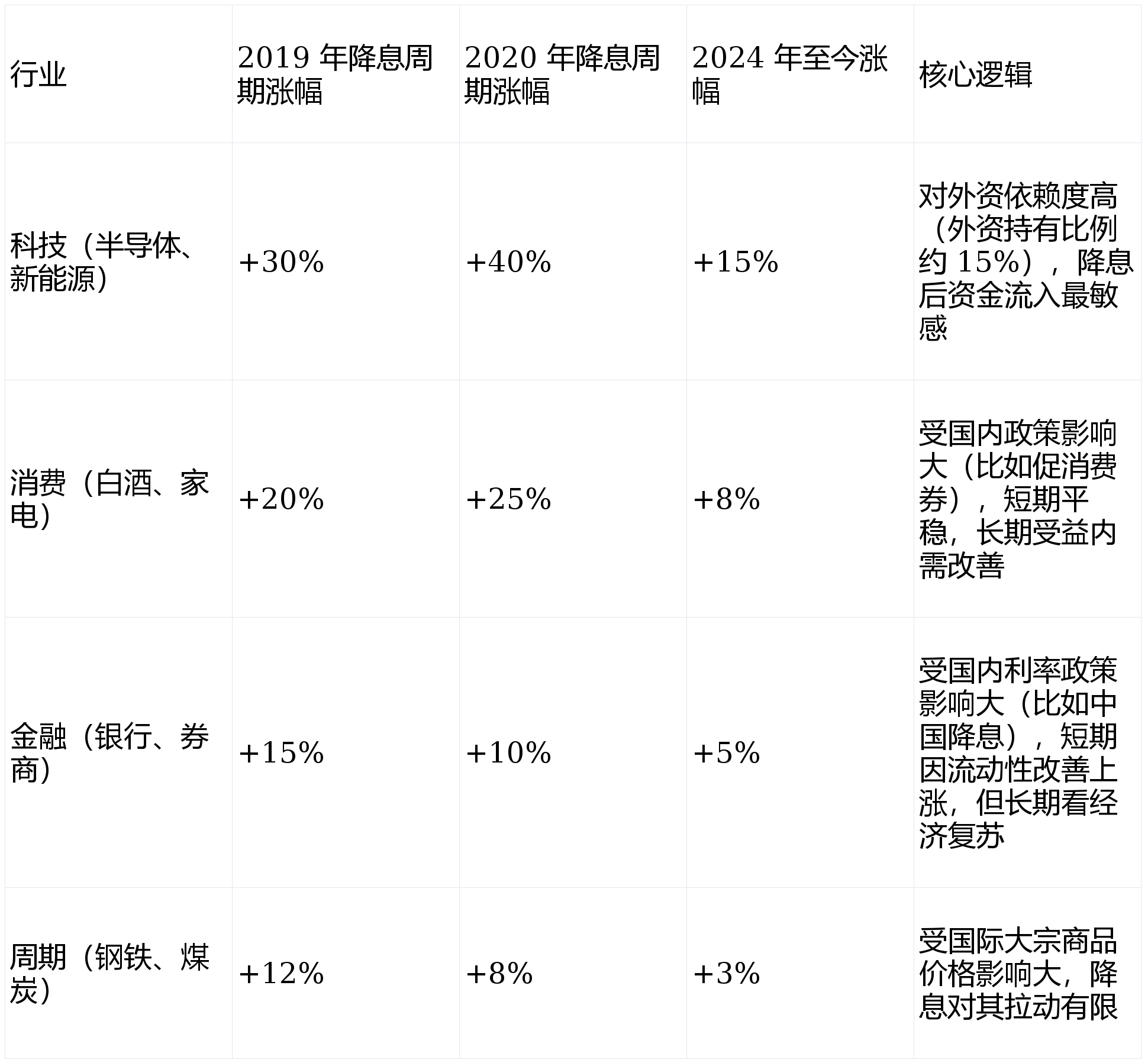
Group 1 - The core argument is that understanding the implications of the US interest rate cut is crucial for making informed investment decisions in the Chinese stock market [1] - The Federal Reserve's decision to cut rates by 25 basis points is primarily driven by a significant downturn in US employment data, necessitating a shift in monetary policy to support job growth [1][2] - The reduction in US interest rates is expected to alleviate policy pressures in China, as the narrowing interest rate differential may encourage foreign capital to remain in China [2] Group 2 - The long-term impact of the Fed's rate cut is anticipated to inject liquidity into the Chinese stock market, with foreign investment likely to increase due to improved conditions [2] - Historical data from previous rate cut cycles indicates that the technology sector tends to benefit the most, while consumer and financial sectors also see positive effects but are more influenced by domestic policies [5] - A comparison of industry performance during past Fed rate cuts shows that foreign capital flows significantly favor the technology sector, which is highly reliant on foreign investment [5][6] Group 3 - Investors should be cautious of three common pitfalls associated with rate cuts: chasing short-term highs, misjudging industry impacts, and overlooking domestic policy influences [7] - Strategies to avoid these pitfalls include waiting for 1-2 weeks post-rate cut to assess foreign capital flows before making investment decisions, prioritizing technology and consumer sectors, and monitoring domestic economic indicators [7] - Different investor profiles should adopt tailored strategies: aggressive investors should focus on technology and renewable sectors, while conservative investors should consider consumer and financial sectors for stable growth [7]
在岸人民币对美元升破7.0,创2023年5月以来新高
21世纪经济报道· 2025-12-30 05:31
Core Viewpoint - The article discusses the recent appreciation of the Renminbi (RMB) against the US dollar, highlighting its potential for continued strengthening in the coming years due to various economic factors. Exchange Rate Trends - On December 30, 2023, the onshore RMB against the US dollar broke the 7.0 mark, reaching 6.9961, the highest since May 17, 2023 [1] - The offshore RMB also surpassed the 7.0 threshold, reported at 6.99126 [1] Future Projections for RMB - By 2025, the RMB is expected to experience a two-phase trend: initially depreciating from 7.30 to 7.35 (a 0.7% decline) before appreciating to 7.01 (a 4.6% increase) by the end of the year [3] - Factors contributing to this appreciation include strong export resilience, a potential agreement on tariff reductions between China and the US, and a shift in international investor confidence away from US dollar assets [3] 2026 Outlook - The dollar index is projected to experience slight depreciation, while the RMB is expected to continue its steady appreciation against the dollar [4] - Key reasons for this anticipated trend include strong performance in China's export sector, continued implementation of proactive fiscal and stable monetary policies, and a favorable investment climate in the Chinese stock market [5] - The expectation of RMB appreciation may accelerate the conversion of export earnings into RMB, further supporting its value against the dollar [5]

离岸人民币“破7”的背后
Sou Hu Cai Jing· 2025-12-30 01:43
Core Viewpoint - The offshore RMB has recently surpassed the 7.0 mark against the USD, reaching a 15-month high, driven by a weaker USD and strong domestic equity market performance attracting foreign capital inflows [1][2]. Group 1: Reasons for RMB Appreciation - The current appreciation of the RMB is largely seen as passive, influenced by a nearly 10% decline in the USD index and strong performance in the domestic equity market [2]. - Since May 2023, the offshore RMB has depreciated by 4.5% against the USD, while the onshore RMB has seen a 3.83% decline [2]. - Increased corporate demand for currency settlement towards the year-end has contributed to the RMB's seasonal strength, with historical data indicating that the settlement surplus often peaks before the Spring Festival [2][3]. Group 2: Impact on Capital Markets - The appreciation of the offshore RMB against the USD is expected to positively impact the capital markets, enhancing the overall risk appetite for Chinese equities [4]. - Foreign capital is likely to increase its allocation to RMB-denominated assets, which may lead to sustained inflows into the A-share market [4]. - The performance of futures markets may vary, with import-dependent commodities potentially benefiting from lower procurement costs, while export-oriented commodities may face pressure due to reduced competitiveness [5]. Group 3: Economic and Policy Context - The resilience of the domestic economy is providing support for the RMB, with recent economic data indicating stable growth [3]. - International financial institutions have raised their growth forecasts for China, reflecting increased foreign interest in the Chinese market [3]. - The People's Bank of China is focusing on maintaining liquidity and ensuring that monetary policy aligns with economic growth and price stability, which is crucial for stabilizing the RMB exchange rate [6].
【申万宏源策略】讨论人民币升值、PPI回升和外资流入展望
申万宏源证券上海北京西路营业部· 2025-12-26 02:28
Core Viewpoint - The article discusses the outlook for RMB appreciation, PPI recovery, and foreign capital inflow, highlighting the potential positive impacts on the economy and investment landscape [2] Group 1: RMB Appreciation - The article indicates that the RMB is expected to appreciate due to various economic factors, which could enhance the purchasing power of consumers and businesses [2] - It notes that a stronger RMB may lead to increased imports and reduced export competitiveness, impacting trade balances [2] Group 2: PPI Recovery - The Producer Price Index (PPI) is projected to recover, suggesting a potential increase in manufacturing profitability and overall economic growth [2] - The recovery in PPI is seen as a positive signal for industrial sectors, indicating improved demand and pricing power [2] Group 3: Foreign Capital Inflow - The article highlights an anticipated increase in foreign capital inflow, driven by favorable economic conditions and investment opportunities in China [2] - It suggests that this inflow could support domestic markets and enhance liquidity, benefiting various sectors [2]

和讯投顾王宝钗:周末总结,五大事件
Sou Hu Cai Jing· 2025-12-22 01:37
Group 1 - The potential announcement of the new Federal Reserve chair could lead to a more accommodative monetary policy, increasing the likelihood of interest rate cuts next year, which may attract more foreign capital into the A-share market and enhance overall market valuations [1] - The robotics industry gained significant attention over the weekend, highlighted by a performance at a concert where a robot executed a difficult flip, and a Chinese robot winning a global combat robotics competition, indicating China's leading position in the robotics sector [1] - The commercialization of Level 3 autonomous driving is accelerating, with the first official license plate for Level 3 autonomous driving being issued, marking a significant step beyond testing to actual commercial application [1] Group 2 - SpaceX's IPO process is being led by Morgan Stanley, representing a major development; however, a rare incident involving Starlink satellites has created volatility in market expectations for SpaceX [1] - Regulatory scrutiny in the brokerage sector is increasing, with 326 penalties issued against 73 brokerage firms in 2025, which may be seen as a positive development for retail investors as it suggests a healthier market environment [1]