存储大周期

Search documents
未知机构:DW电子精智达空间测算CC和H的进展超预期存储大周期的最大弹性设备股空-20260204
未知机构· 2026-02-04 02:10
Company and Industry Summary Company: DW Electronics Key Points - **Market Expansion and Revenue Projections** DW Electronics anticipates significant growth in the storage testing machine market, projecting an increase from 60 billion to 80 billion due to the expected supply-demand gap in NAND technology. The company estimates that each of the two storage segments will expand by 60,000 units annually, leading to projected revenues of 40 billion from storage testing machines with a net profit margin of 25%, resulting in a profit of 10 billion [1][2] - **H Storage Testing Machine Market** The H storage testing machine market is projected to be 18 billion, with DW Electronics expected to capture a 50% market share, translating to 9 billion in revenue and a net profit margin of 20%, yielding a profit of 1.8 billion [1] - **Probe Card Supply Dynamics** A supply disruption in September from a U.S. supplier has allowed DW Electronics to transition from a secondary supplier to a primary supplier. The market for the two storage segments is estimated at 15 billion, with DW Electronics expected to hold a 70% market share, resulting in 10 billion in revenue and a net profit margin of 10%, contributing an incremental profit of 1 billion [1] - **Core Business Performance** The main business segment, focused on panel testing, generates stable annual revenues of 6-7 billion with a profit of 1.5 billion [2] - **GPU and SOC Testing Machine Market** The domestic market for GPU and SOC testing machines is valued at 80 billion, with DW Electronics capturing a 30% market share, leading to 24 billion in revenue and a net profit margin of 25%, resulting in a profit of 6 billion [2] - **Total Revenue and Profit Overview** The total projected revenue for DW Electronics is 89.5 billion, with a total profit of 20.3 billion. The company is valued at a market capitalization of 609 billion, with a price-to-earnings ratio of 30 [2] - **Breakdown of Revenue Sources** - Storage business: 59 billion revenue, 12.8 billion profit, 384 billion market cap - GPU and SOC testing machines: 24 billion revenue, 6 billion profit, 180 billion market cap - Core business: 1.5 billion profit, 45 billion market cap [2]

AI时代存储大周期机遇
2026-01-08 16:02
Summary of Key Points from Conference Call Industry Overview - **Storage Market Trends**: The storage industry is experiencing strong performance, with companies like Micron exceeding market expectations by 60% and Samsung projecting Q4 2026 operating profits to reach 20 trillion KRW, marking a historical high. Nanya Technology reported a 445% year-on-year revenue increase in December, primarily driven by ASP (Average Selling Price) improvements rather than increased shipment volumes [2][10]. Core Insights - **Price Adjustments**: Expectations for price increases in enterprise-level products have risen from approximately 50% to over 70%. There may be 2-3 price adjustments in Q1, each starting at a 70% increase [3][13]. - **NAND Demand Projections**: NVIDIA's new solutions are expected to significantly impact NAND demand, with projections for total NAND demand reaching 127EB by 2026, up from an earlier estimate of 74EB, reflecting a 71% increase [5]. - **KV Cache Technology**: NVIDIA's KV Cache technology is anticipated to enhance SSD utilization and performance, with a demo expected in 2026 and a full launch in 2027. This technology is expected to shift investor perceptions regarding storage industry valuations, leading to a target PE increase to over 10 times for storage manufacturers [3][6]. Company-Specific Developments - **Xianglong Xinchuan's Competitive Edge**: Xianglong Xinchuan has secured reliable production capacity from Hynix, with 90% of DDR4 and 70% of DDR5 production fully supporting enterprise SSD supply. The company has confirmed orders exceeding 20 billion CNY from major clients for 2026, bolstered by additional CSP manufacturers and price increases [4][7]. - **Partnerships and Business Expansion**: Xianglong Xinchuan is collaborating with AMD to distribute high-end training cards and server solutions, securing 700 million USD for domestic sales, which corresponds to 600,000 training cards. The company is transitioning from a single product distributor to a comprehensive solution provider [8][4]. Supply Chain and Demand Analysis - **Supply Constraints**: The supply side remains rigid in the short term due to limited capacity releases from major manufacturers like Micron and Samsung, with new facilities not expected to produce wafers until 2027 or later [12]. - **Demand Growth Factors**: Demand is expected to grow significantly due to multi-layer caching, NVIDIA's new solutions, and a projected 50% growth in CSP general server demand by 2026, with overall memory growth exceeding 100% [12]. Price Trends and Market Outlook - **Current Pricing Trends**: The spot price for DDR4 16GB is nearing 70 USD, while contract prices are below 20 USD. Historical trends suggest that contract prices will follow spot prices upward, indicating substantial potential for price increases [13]. - **Positive Outlook for Storage Sector**: The overall storage sector is expected to benefit from the ongoing price increases and demand growth, with recommendations for companies like Xianglong Xinchuan [13].

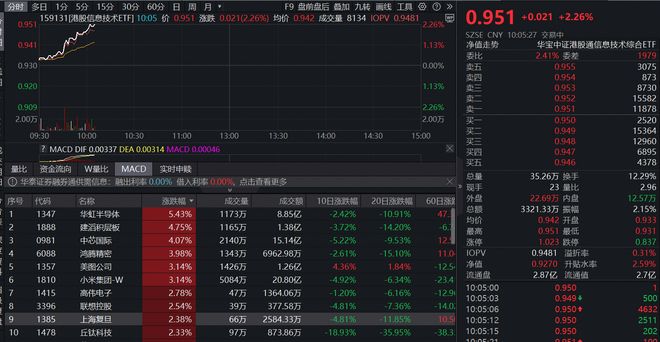
涨得比黄金还猛!“一盒堪比上海一套房”,业内人士:几乎一天一个价,还会涨
Sou Hu Cai Jing· 2026-01-08 11:05
Group 1 - The price of memory modules has surged significantly, with some DDR5 server memory modules exceeding 40,000 yuan each, and prices have increased by 2-3 times within the year for both DDR4 and DDR5 [1][7] - TrendForce reported a dramatic increase in the spot prices of memory chips since September 2025, with DDR5 memory prices rising by 307% and DDR4 by 158% [7] - The demand for DRAM from AI servers is 8-10 times higher than that of regular servers, consuming 53% of global monthly production capacity, leading to a shift in production focus towards server storage [10][11] Group 2 - Major memory manufacturers like Samsung, SK Hynix, and Micron are adjusting their production strategies, focusing on high-margin products like HBM and DDR5, while reducing investments in DDR4 [11] - The price increases are expected to continue throughout 2026, with significant profit growth projected for companies like Samsung and SK Hynix, with expected operating profits increasing by 253% and 224% respectively [11] - The rising memory prices are impacting various sectors, including smartphones and the automotive industry, with companies like NIO highlighting memory price increases as a major cost pressure [12]


半导体设备ETF(561980)昨日大涨2.23%,连续两日“吸金”累超3000万元,机构:明年将迎来存储与先进逻辑扩产共振
2 1 Shi Ji Jing Ji Bao Dao· 2025-12-09 01:47
Group 1 - The market turnover returned to 2 trillion, with technology sectors leading the gains, particularly in AI computing and semiconductor equipment [1] - The semiconductor equipment ETF (561980) saw a significant increase of 2.23% recently, indicating strong investor interest [1] - The ETF has experienced a net inflow of over 30 million in the last two days, bringing its total size to 2.795 billion [2] Group 2 - The price of NAND Flash is expected to continue rising, with an anticipated increase of 20%-25% across various products in Q4 [2] - The semiconductor industry is entering a new cycle driven by AI demand, with storage being the second-largest segment after logic [2] - The global semiconductor sales reached 72.71 billion in October, marking a year-on-year growth of 27.2% and a month-on-month increase of 4.7% [3] Group 3 - The semiconductor equipment ETF tracks the semiconductor industry index, focusing on upstream and midstream companies, with a high concentration of top stocks [3] - The top five stocks account for approximately 57% of the ETF, while the top ten exceed 78% [3] - The industry is expected to enter a phase of strategic growth and performance realization by 2026, driven by advancements in manufacturing capabilities and domestic supply chains [3]

科创100ETF基金(588220)日均成交2.55亿,低费率布局科技板块
Xin Lang Cai Jing· 2025-12-01 06:46
Group 1 - The core viewpoint of the news highlights the performance of the Sci-Tech Innovation Board 100 Index and the related ETF, with significant movements in semiconductor stocks driven by supply shortages and anticipated price increases in memory chips [1][2] - The Sci-Tech Innovation Board 100 Index has shown mixed performance, with notable gains from companies like Lexin Technology and Zhongke Lanyun, while Dongxin Co. led the declines [1] - The Sci-Tech 100 ETF has a recent trading volume of 1.69 billion yuan, with a turnover rate of 2.71%, indicating active trading interest [1] Group 2 - The semiconductor sector is experiencing a strengthening trend, influenced by Dell's announcement regarding storage chip shortages and potential price hikes for equipment [1] - Research institutions predict that memory chip prices could rise by approximately 50% by the second quarter of 2026 due to ongoing shortages [1] - Guojin Securities emphasizes that new technology drives product upgrades and innovation, suggesting that the current demand from AI is at the beginning of a new memory cycle, warranting close attention to inventory and pricing data [1] Group 3 - The Sci-Tech 100 ETF closely tracks the Sci-Tech Innovation Board 100 Index, which consists of 100 medium-sized, liquid securities selected from the Sci-Tech Innovation Board [2] - As of November 28, 2025, the top ten weighted stocks in the Sci-Tech Innovation Board 100 Index account for 26.72% of the index, with companies like Huahong Semiconductor and Dongxin Co. among the leaders [2]
四点半观市 | 机构:AI驱动存储新周期
Sou Hu Cai Jing· 2025-11-27 08:41
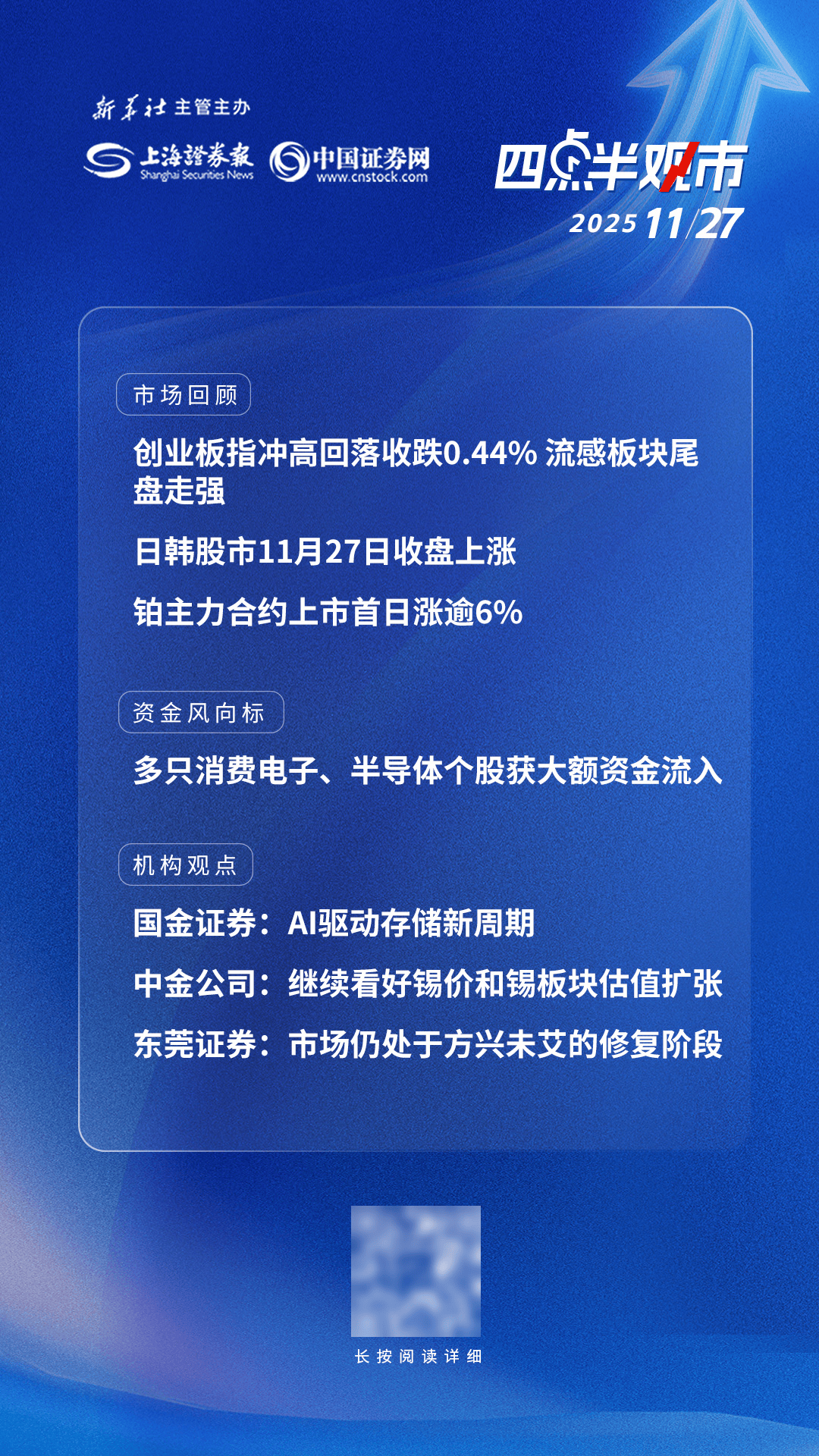
Market Overview - The ChiNext Index experienced a decline of 0.44%, while the flu sector showed strength towards the end of trading [4][6] - On November 27, major stock indices in Japan and South Korea closed higher, with the Nikkei 225 rising by 1.23% to 50,167.10 points, surpassing the 50,000 mark [6] - The domestic commodity futures market saw most main contracts increase, with platinum rising over 6% on its debut [6] Fund Flow - Significant capital inflow was observed in several consumer electronics and semiconductor stocks, with net inflows exceeding 300 million yuan for companies like ZTE Corporation and Chipone Technology [8] Institutional Insights - Guojin Securities highlighted that the memory market, driven by AI, is entering a new cycle, with historical performance closely tied to the semiconductor cycle [9] - CICC forecasts a tight balance in global tin supply and demand from 2025 to 2030, with potential upward pressure on tin prices due to concentrated global supply [9] - Dongguan Securities noted that the A-share market is gradually recovering amidst fluctuations, with improving market confidence and a positive outlook driven by policy guidance and capital market dynamics [10]
AI驱动存储新周期 | 投研报告
Zhong Guo Neng Yuan Wang· 2025-11-27 03:04
Industry Overview - The semiconductor industry is experiencing a new storage cycle driven by emerging technologies and AI demand, with historical cycles characterized by demand, capacity, and inventory phases [1][2] - The memory segment, being the second largest in semiconductors, shows greater volatility than the overall industry, with significant market growth expected due to AI [1] Capital Expenditure Projections - DRAM capital expenditure is projected to reach $53.7 billion in 2025, increasing to $61.3 billion in 2026, representing a year-on-year growth of approximately 14% [3] - NAND Flash capital expenditure is expected to be $21.1 billion in 2025, with a slight increase to $22.2 billion in 2026, reflecting a year-on-year growth of about 5% [3] AI Impact on Storage Demand - The introduction of reasoning chains in large language models (LLMs) is significantly increasing data storage needs, with a shift from KB to TB and even EB in storage units [2] - The cost of reasoning in large models has decreased exponentially since the release of ChatGPT-3, which is expected to drive application growth and storage demand [2] - KV Cache is identified as a key mechanism for optimizing reasoning efficiency in large models, further increasing storage requirements [2] Current Industry Focus - Memory manufacturers are shifting focus from pure capacity expansion to upgrading process technologies and developing high-value products like HBM [3] - Current cleanroom space is nearing capacity limits, with only a few manufacturers like Samsung and SK Hynix having limited expansion capabilities [3] Investment Recommendations - Continuous monitoring of memory inventory, pricing data, and the impact of AI computing power on storage chip demand is advised [4]
触底反弹三连涨!港股芯片半导体集体爆发,港股信息技术ETF(159131)早盘大涨超2.2%
Mei Ri Jing Ji Xin Wen· 2025-11-27 02:42
Group 1 - The Hong Kong stock market's semiconductor industry chain is experiencing an upward trend, with the Hang Seng Technology Index rising nearly 1%, and notable increases in stocks such as Hua Hong Semiconductor and SMIC [1] - The first Hong Kong ETF focusing on the semiconductor industry chain (159131) has seen a price increase of 2.26%, indicating strong buying interest and confirming a rebound pattern [1] - According to Guojin Securities, the current market is at the beginning of a new storage cycle driven by AI demand, suggesting a focus on storage inventory, price data, and the impact of AI on storage chip demand [1] Group 2 - The Hong Kong ETF (159131) is composed of 70% hardware and 30% software, heavily investing in semiconductor, electronics, and computer software sectors, with significant weights in companies like SMIC and Xiaomi [2] - The ETF excludes major internet companies like Alibaba and Tencent, allowing for a sharper focus on the AI hard technology market in Hong Kong [2]
港股芯片半导体爆发!中芯国际、华虹半导体联袂大涨
Xin Lang Cai Jing· 2025-11-27 02:35
Core Viewpoint - The Hong Kong semiconductor industry chain is experiencing a significant upward trend, with various stocks showing notable gains, indicating a potential recovery in the market [1]. Group 1: Market Performance - The Hang Seng Technology Index rose nearly 1%, with notable increases in stocks such as Hua Hong Semiconductor (over 5% increase), SMIC and Jiantao Laminated Board (over 4% increase), and others like Hong Teng Precision, Meitu, and Xiaomi Group (over 3% increase) [1]. - The first Hong Kong ETF focusing on the semiconductor industry (159131) saw a price increase of 2.26%, confirming a rebound pattern, with real-time transaction volume exceeding 330 million yuan [1]. Group 2: Industry Insights - The semiconductor market is entering a new cycle driven by AI demand, with a recommendation to monitor inventory and pricing data closely [2]. - The China Semiconductor Industry Association predicts that the total sales of the chip design industry will reach 835.73 billion yuan by 2025, reflecting a 29.4% growth compared to 2024 [3]. - The domestic chip development is seen as a long-term trend, with current conditions viewed as the best time for growth in advanced process manufacturing and chip architecture upgrades [5]. Group 3: Valuation and Investment Opportunities - Many Chinese tech companies are valued at only one-third to half of their U.S. counterparts, despite offering competitive AI products, making the Hong Kong tech sector particularly attractive for investment [6]. - The Hong Kong Information Technology ETF (159131) is structured with a focus on hardware (70%) and software (30%), covering 42 hard-tech companies, with significant weights in SMIC (20.27%), Xiaomi Group (9.11%), and Hua Hong Semiconductor (5.64%) [8].

ETF盘中资讯 港股芯片半导体爆发!中芯国际、华虹半导体联袂大涨,港股信息技术ETF(159131)涨超2%冲击三连涨
Jin Rong Jie· 2025-11-27 02:29
Group 1: Market Performance - The Hong Kong stock market's semiconductor industry chain is experiencing an upward trend, with the Hang Seng Technology Index rising nearly 1% [1] - Notable stock performances include Huahong Semiconductor up over 5%, SMIC and Jiantao Laminated Board up over 4%, and several other stocks like Hongteng Precision, Meitu, and Xiaomi Group rising over 3% [1] - The first Hong Kong ETF focusing on the semiconductor industry chain (159131) has seen a price increase of 2.26%, indicating a potential recovery trend, with a trading volume exceeding 33 million yuan [1] Group 2: Industry Insights - The semiconductor industry is expected to enter a new storage cycle driven by emerging technologies, with AI demand expected to boost the market [2] - The China Semiconductor Industry Association predicts that the total sales of the chip design industry will reach 835.73 billion yuan by 2025, a 29.4% increase from 2024 [3] - The domestic chip development is seen as a long-term trend, with current conditions viewed as the best time for growth in the sector [5] Group 3: ETF and Index Information - The newly launched Hong Kong Information Technology ETF (159131) tracks an index composed of 70% hardware and 30% software, focusing on semiconductor, electronics, and computer software sectors [7] - The ETF includes 42 Hong Kong hard-tech companies, with significant weights assigned to SMIC (20.27%), Xiaomi Group (9.11%), and Huahong Semiconductor (5.64%) [7] - The index aims to capture the performance of the AI hard-tech sector, excluding major internet companies like Alibaba and Tencent, thus providing a sharper focus on the semiconductor industry [7]