工业智能体

Search documents
河南两会观察:代表委员为制造强省勾画“路线图”
Zhong Guo Xin Wen Wang· 2026-01-29 05:30
Core Viewpoint - The manufacturing industry is viewed as the "ballast" of the economy, with discussions at the Henan Two Sessions focusing on the trends of innovation, intelligence, and sustainability in manufacturing [1]. Group 1: Manufacturing Industry Overview - Henan, as a major manufacturing province, has seven advanced industrial clusters and 28 key industrial chains, with a strong foundation in equipment manufacturing and food processing [3]. - The province has 450 "little giant" companies, 59 manufacturing champions, 12,800 national high-tech enterprises, and 30,000 technology-based SMEs [3]. - The government emphasizes technology innovation and digital transformation to elevate the manufacturing sector towards high-end, intelligent, and green development [3]. Group 2: Strategic Initiatives and Recommendations - The government report indicates that by 2026, Henan aims to strengthen its advanced manufacturing system and align with national high-quality development actions, supporting industries like new energy vehicles and modern food [5]. - Suggestions include creating a "platform for empowering private enterprise transformation" to connect academic technology with enterprises and stimulate innovation [3][4]. - The focus is shifting from scale expansion to quality enhancement, with an emphasis on intelligent upgrades in manufacturing [5]. Group 3: Technological Integration and Green Development - The integration of technology and industry is seen as a way to convert comparative advantages into competitive advantages [4]. - Proposals include launching an "AI + Henan Manufacturing" initiative to enhance sectors like equipment manufacturing and new materials, promoting smart factories and solutions [6]. - There is a growing emphasis on green development, with companies increasingly calculating their carbon footprints and promoting green energy usage [6].

工业智能体“进车间”:中国制造业把AI用在“刀刃”上
第一财经· 2026-01-15 12:41
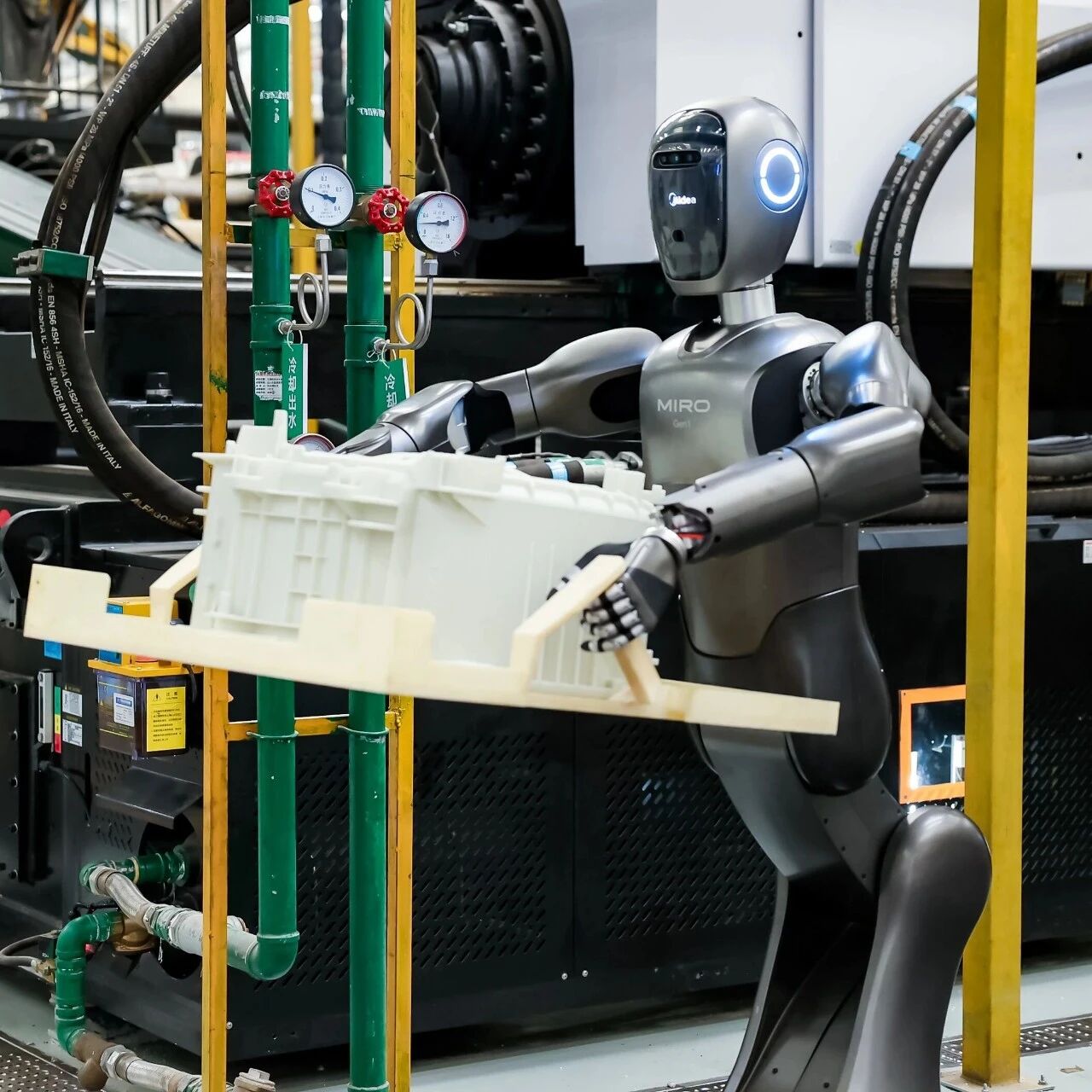
2026.01. 15 本文字数:1597,阅读时长大约3分钟 金江对第一财经记者表示,此次对外发布的40多个工业智能体,是从美的内部上万个智能体中筛选 而来,目前美的已经在158个核心业务场景中实现规模化应用,覆盖研发、制造、供应链、品质、物 流、财务、人力资源和海外服务等环节。 过去两年,AI在企业内部最先落地的是翻译、文档、人力资源等通用场景,但对成本结构和生产效 率影响更大的应用,正在转向对制造流程的深度嵌入。 "现在的重点已经不是做多少个智能体,而是哪些场景真的能带来效率和成本改善。"金江说。 智能体走进生产系统 在制造环节,美的已经将智能体用于多类具体生产管理场景。 例如,在产线管理中,美的部署了用于损失分析的TPM、DMS、LOSS等智能体。过去,产线因停 机、质量问题等造成的损失通常需要人工每隔数小时盘点一次,很难迅速定位原因;现在通过智能 体,可以将每天的损失拆解到具体工序和岗位,并给出针对性的改善建议。 作者 | 第一财经 王珍 封图 | 由受访者提供 在经历了两年对大模型的试验性部署后,中国制造业正把人工智能的应用重点,从通用办公场景推向 生产一线。 1月15日,美的集团(000333. ...

ETF盘中资讯|“AI算力,有望成为最强主线!”科创人工智能ETF华宝(589520)近3日狂揽1.2亿元!ETF创新高后,首度回调
Sou Hu Cai Jing· 2026-01-15 03:34
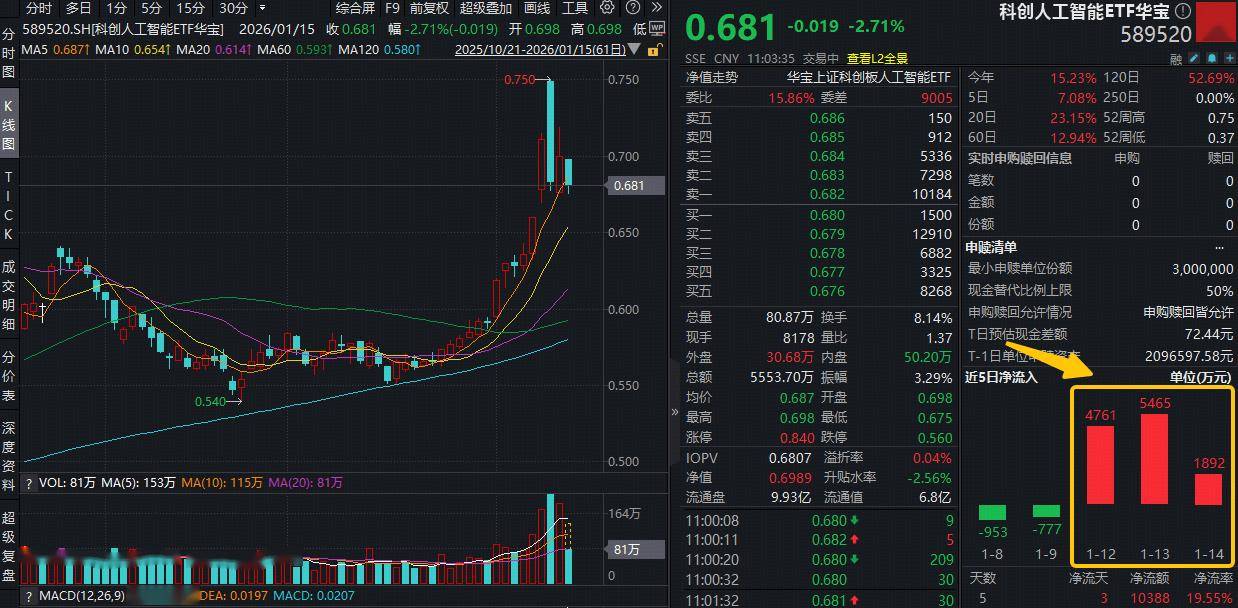
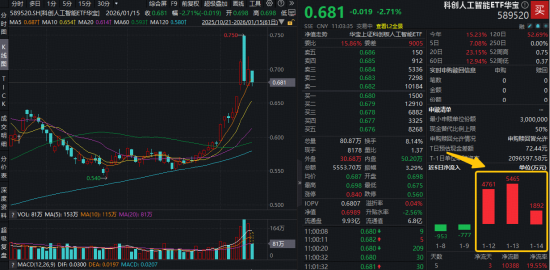
Core Viewpoint - The recent pullback of the Huabao Sci-Tech AI ETF (589520) after reaching a historical high is seen as a buying opportunity by investors, reflecting strong confidence in the domestic AI industry chain [1][3]. Group 1: ETF Performance - The Huabao Sci-Tech AI ETF (589520) experienced a decline of 2.71% after hitting a record high, with a trading volume exceeding 55 million yuan within half a day [1]. - Over the past three days, the ETF attracted a total of 121 million yuan in investments, indicating positive market sentiment towards the domestic AI industry chain [1]. Group 2: Component Stocks - Among the component stocks, Yaxin Security led with a gain of over 4%, while Hehe Information rose by more than 3%. Other notable gainers included Chipone Technology, Lattice Semiconductor, and Qi Anxin, each increasing by over 1% [3]. - Conversely, XH Technology saw a decline of nearly 20%, approaching its daily limit down, while Zhongke Shuguang and Haitan Ruisheng fell by over 18% and 11%, respectively, negatively impacting the index performance [3]. Group 3: Industry Developments - The Ministry of Industry and Information Technology recently issued a plan for the high-quality development of industrial internet platforms from 2026 to 2028, marking a new phase in China's industrial internet development [3]. - The plan introduces the concept of "industrial intelligence," emphasizing the deep integration of AI into the entire industrial chain, which is expected to revolutionize traditional manufacturing practices [3]. Group 4: AI Industry Outlook - The AI industry is transitioning from a focus on AIGC (Artificial Intelligence Generated Content) to applications in manufacturing, with the potential for AI to become a true productivity tool [3]. - According to CITIC Securities, the synergy between self-control and AI is expected to drive strong performance in related sectors by 2025, with this trend likely to strengthen further in 2026 [3]. Group 5: ETF Composition and Strategy - The Huabao Sci-Tech AI ETF (589520) is strategically diversified across four key segments: application software, terminal applications, terminal chips, and cloud chips, reflecting the current state of the AI industry chain [4]. - The ETF emphasizes domestic alternatives, with over 70% of its top ten holdings in the semiconductor sector, indicating a high concentration and aggressive positioning [5].


“AI算力,有望成为最强主线!”科创人工智能ETF华宝(589520)近3日狂揽1.2亿元!ETF创新高后,首度回调
Xin Lang Cai Jing· 2026-01-15 03:28
Core Viewpoint - The recent pullback of the Huabao Science and Technology Innovation AI ETF (589520) after reaching a historical high is seen as a buying opportunity by investors, reflecting strong confidence in the domestic AI industry chain [1][7]. Group 1: ETF Performance - The Huabao Science and Technology Innovation AI ETF (589520) experienced a decline of 2.71% after hitting a record high, with a trading volume exceeding 55 million yuan within half a trading day [1][7]. - Over the previous three days, the ETF attracted a total of 121 million yuan in investments, indicating positive market sentiment towards the domestic AI industry [1][7]. Group 2: Component Stocks - Among the component stocks, Yaxin Security led with a gain of over 4%, while Hehe Information rose by more than 3%. Other notable gainers included Chipone Technology, Lianqi Technology, and Qi Anxin, each increasing by over 1% [3][9]. - Conversely, XH Technology saw a decline of nearly 20%, approaching its limit down, while Zhongke Shuguang and Haitan Ruisheng fell by over 18% and 11%, respectively, negatively impacting the index performance [3][9]. Group 3: Industry Developments - The Ministry of Industry and Information Technology recently issued the "Action Plan for Promoting High-Quality Development of Industrial Internet Platforms (2026-2028)," marking a new phase in China's industrial internet development. This plan introduces the concept of "industrial intelligence," emphasizing the deep integration of AI across the entire industrial chain [3][9]. - Industry experts suggest that the primary application of AI is currently in AIGC (Artificial Intelligence Generated Content), with efforts now extending into manufacturing. The transformation of manufacturing through AI is seen as essential for AI to be recognized as a true productivity tool [3][9]. Group 4: ETF Strategy and Focus - The Huabao Science and Technology Innovation AI ETF (589520) is strategically focused on the domestic AI industry chain, with a significant emphasis on semiconductor stocks, which account for over half of its top holdings [5][12]. - The ETF is designed to facilitate efficient investment in domestic computing power and is a financing and margin trading target, reflecting its aggressive investment strategy [5][12].
5位投资家喊话2026创业者:最优赛道和死亡谷
Sou Hu Cai Jing· 2026-01-10 02:14
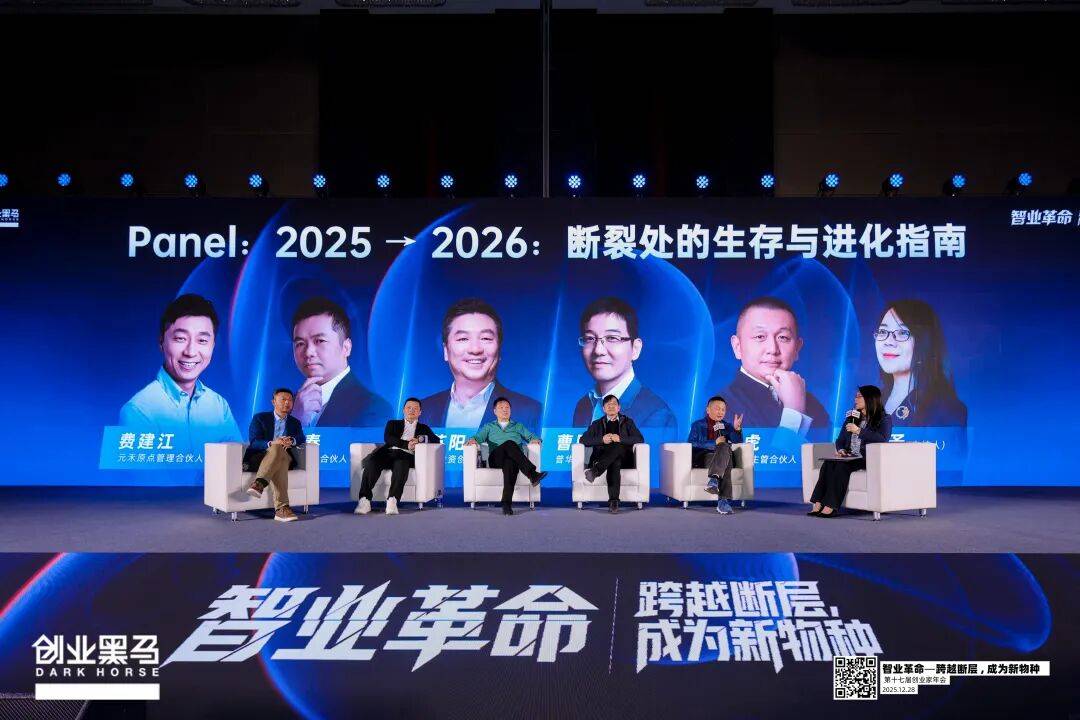
Core Insights - The 17th Entrepreneur Annual Conference emphasized the theme "Intelligent Revolution - Crossing the Fault, Becoming a New Species" and featured discussions on the future of entrepreneurship and investment opportunities in 2026 [2] Group 1: Key Themes and Predictions for 2026 - The most practical AI application in 2026 will be providing emotional value and companionship to customers, with opportunities in niche markets for entrepreneurs [2][9] - Commercial aerospace is expected to create significant excitement in the coming year, with a focus on real orders and financial health over media hype [3][15] - The survival rule for entrepreneurs in 2026 is to possess the ability to identify and solve real problems in appropriate scenarios [3][16] Group 2: Investment Opportunities and Focus Areas - Key investment areas identified include Physical AI, Industrial Intelligence, Commercial Aerospace, AI in Healthcare, and AI for Emotional Companionship [10][22] - Industrial intelligence is highlighted as a critical area due to its potential to address complex issues in the industrial sector [9] - AI in healthcare is gaining traction, with successful product launches and significant revenue generation reported [9][10] Group 3: Entrepreneurial Strategies and Advice - Entrepreneurs are advised to focus on efficiency in fundraising, prioritizing product development and real customer needs over high valuations [14][15] - It is recommended to engage in "red ocean" entrepreneurship, where government policies support the business, rather than pursuing "blue ocean" strategies [3][15] - Avoiding grand narratives at the outset is crucial; instead, entrepreneurs should concentrate on tangible outcomes and user experiences [14][22]

沪指突破4100点,“行情旗手2.0”金融科技走强,东信和平涨停,金融科技ETF汇添富(159103)收涨2.38%
Xin Lang Cai Jing· 2026-01-09 09:13
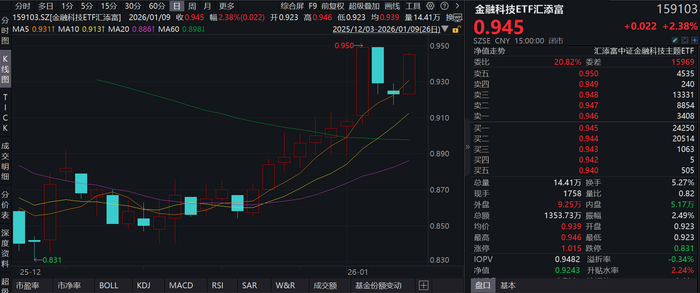
Group 1 - The core viewpoint of the news highlights the strong performance of the financial technology sector, with the China Securities Financial Technology Theme Index rising by 2.39% and key stocks like Xinghuan Technology and Dongxin Peace showing significant gains [1] - The Financial Technology ETF Huatai Fuhua has also seen a rise of 2.38%, indicating positive market sentiment towards financial technology investments [1] - The trading volume for the Financial Technology ETF Huatai Fuhua reached 13.54 million yuan, with a turnover rate of 5.31%, reflecting active investor interest [1] Group 2 - The Ministry of Industry and Information Technology and other departments have issued a notice on the implementation of the "Artificial Intelligence + Manufacturing" initiative, which is expected to accelerate the development of industrial software in China [3] - Analysts predict that 2026 will be a "golden year" for AI applications, driven by technological maturity, supportive policies, and increasing market demand [3] - The digital transformation plan for the automotive industry emphasizes key areas such as intelligent robotics and AI applications, indicating a strong focus on innovation and technology integration [3] Group 3 - The financial technology sector is highlighted for its resilience in a high liquidity environment, benefiting from its technological attributes and the presence of internet brokerage firms [4] - The Financial Technology ETF Huatai Fuhua is positioned as a key player in the market, covering various high-growth sectors including internet brokerage, financial IT, and AI applications [4] - The dual drivers of policy support and technological advancement are expected to enhance the growth potential of the financial technology sector [4]

部分出口链公司发布年报预增公告
Zhong Guo Neng Yuan Wang· 2026-01-08 01:15
Group 1: Data Center Cooling Demand - Data centers are high energy-consuming units, with a significant portion of energy consumption attributed to their cooling systems. Improving energy efficiency and reducing PUE (Power Usage Effectiveness) have become core rigid demands, creating market space for high-end cooling solutions [1][5] - The technological pathways in this sector are characterized by diverse parallel developments and rapid iterations. Large chillers still play an important role in certain data centers, while components like magnetic levitation compressors benefit from technological upgrades [5] - The industry's layout towards liquid cooling solutions is gradually increasing due to the challenges posed by rising computing density. Some domestic companies have rich reserves in data center cooling solutions, with a focus on companies like Invec [1][5] - Upstream components such as compressors are expected to benefit from the cooling demand in data centers, with attention on companies like Hanzhong Precision Machinery [1][5] Group 2: Company Performance and Outlook - Juxing Technology (002444) expects a net profit attributable to shareholders of 2.419 billion to 2.764 billion yuan for 2025, representing a year-on-year growth of 5.00% to 20.00%. The company anticipates that changes in U.S. tariff policies will create some disturbances, raising average industry prices [2] - Taotao Automotive (301345) forecasts a net profit of 800 million to 850 million yuan for 2025, an increase of 85.50% to 97.10% year-on-year. The growth is attributed to focusing on market demand, improving operational efficiency, and accelerating overseas capacity construction [3] - Siemens, a leader in industrial automation, has experienced a strategic transformation, achieving a net profit of 10.4 billion euros for the 2025 fiscal year, a 16% year-on-year increase. The company has raised its mid-term revenue growth target to 6%-9% and plans to use digital business as a growth engine [4]
Geega工业智能体,如何助力领克交付提速15%?【AI落地洞察】
虎嗅APP· 2025-12-09 13:38
Core Viewpoint - The article discusses the transformation of traditional manufacturing through the implementation of industrial AI, specifically focusing on Geega's industrial AI platform developed by Geely Group, which aims to enhance efficiency and address challenges in the automotive industry [4][6]. Group 1: Industrial AI Implementation - Industrial AI is seen as a key solution to the structural challenges faced by traditional manufacturing, particularly in the context of real-time decision-making and dynamic optimization [6][10]. - Geega's industrial AI platform has been successfully implemented in Geely, Lynk & Co, and Zeekr factories, resulting in significant improvements such as a 15% reduction in order delivery cycles and a 13% decrease in quality loss costs [4][16]. Group 2: Platform Development Stages - The development of the Geega platform involves four key stages: 1. Standardization of industrial software to enable reuse and promotion [12]. 2. Construction of the GOS (Geely Operating System) to unify the computing environment and application portal [14]. 3. Launch of the AI application platform and business agents to facilitate human-machine collaboration [15]. 4. Establishment of a factory brain for continuous improvement through a PDCA mechanism [15][18]. Group 3: Practical Applications and Outcomes - In the Chengdu factory of Lynk & Co, the implementation of an integrated digital base led to a 13% reduction in quality loss costs, a 10% increase in logistics efficiency, and a 15% decrease in order delivery cycles [16]. - The Ningbo factory of Zeekr saw a 10% reduction in equipment failure rates and an 11% increase in equipment utilization through the establishment of a fully connected factory base [17]. Group 4: Intelligent Agent Architecture - The architecture of the Geega platform's intelligent agent system consists of three layers: perception, decision-making, and execution, enabling comprehensive monitoring and intelligent decision-making [18]. - The platform offers standardized industrial components and modules that can be easily integrated using a low-code approach, allowing users to customize applications without extensive technical knowledge [21]. Group 5: Methodology and Experience Summary - The article emphasizes three key points for constructing intelligent agents: 1. Starting from specific business problems to ensure AI is embedded in practical workflows [30]. 2. Defining data and system modifications based on identified issues to enhance decision-making capabilities [33]. 3. Fostering continuous evolution by accumulating knowledge and experience from each intelligent agent's deployment [34].


全球智能机械与电子产品博览会高端装备数字化论坛举办
Zheng Quan Ri Bao Wang· 2025-12-07 10:12
Group 1 - The global manufacturing industry is undergoing profound changes, with digitalization, networking, and intelligence becoming essential for survival and long-term development [1] - High-end intelligent equipment is the fundamental cornerstone for upgrading the manufacturing industry, with industrial software acting as its "brain" and "soul" [1] - Artificial intelligence is a new means applied in industrial and manufacturing sectors, driving the formation of a new ecosystem of "AI and advanced manufacturing" [1] Group 2 - Digital transformation in the manufacturing sector is a deep cognitive and thinking revolution, requiring managers to integrate digital capabilities into core business operations [2] - AI is driving the industry towards a new phase of autonomous intelligent entities and physical intelligence, enhancing efficiency and reducing costs [2] - The practice of digital transformation in oil detection technology is being pioneered domestically, providing condition monitoring and operational guidance for large equipment [2] Group 3 - Equipment manufacturing companies are facing new challenges and opportunities in the new development cycle, with strategic focuses on refined management, globalization, and service-oriented transformation [3] - The essence of digitalization in high-end equipment manufacturing lies in the deep integration of information technology and manufacturing technology, enhancing precision, efficiency, and reliability [3] - The approach of cluster-based entrepreneurship in small and micro-special robots aims to address industry challenges and promote efficient collaboration across the supply chain [3]



制造业迈入智能化!29%、38% 技术变革转化为企业实打实效益与优势
Yang Shi Wang· 2025-11-28 06:37
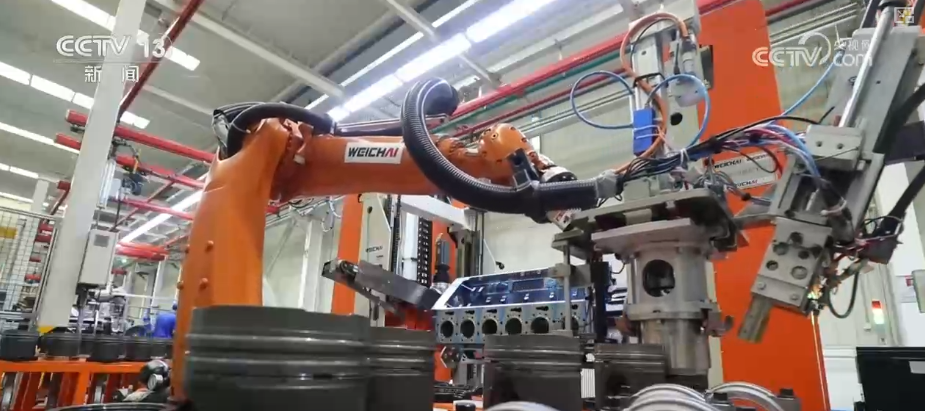
Core Insights - The first batch of leading intelligent factories in China has been officially announced, marking a significant leap from digitization and networking to intelligence in manufacturing [1][3] - The 15 leading intelligent factories span various industries, including equipment manufacturing, raw materials, electronic information, and consumer goods, indicating a comprehensive transformation in production methods and supply chains [3][5] - The penetration rate of artificial intelligence technology in these leading factories exceeds 70%, significantly higher than the 45% rate in previously cultivated excellent-level intelligent factories [4][10] Industry Transformation - The leading intelligent factories are expected to drive a comprehensive transformation in innovation paradigms, production methods, and supply chain structures, accelerating the establishment of new manufacturing systems based on data and models [3][15] - The average research and development cycle for products in excellent-level and leading factories has been reduced by 29% and 38% respectively, showcasing the substantial value of intelligent manufacturing [5][10] Technological Advancements - The implementation of AI and data-driven technologies has led to significant improvements in production efficiency, with product development cycles reduced from 420 days to 240 days and product introduction cycles cut from 40 days to 15 days [10][12] - The integration of AI with lean management systems in engine manufacturing has achieved near-zero defects in high-end engine production, demonstrating the effectiveness of smart technologies [12][14] Future Development - The Ministry of Industry and Information Technology plans to continue promoting the digital transformation of the manufacturing sector and develop intelligent manufacturing further [16][18] - There will be a focus on creating a high-end brand of "leading factories" that represent China's capabilities and possess global competitiveness, along with encouraging these factories to share advanced experiences and solutions [17][18]