
投机

Search documents
段永平:没有理由不看好茅台 你要不喝酒很难理解这个问题
Ge Long Hui· 2025-12-09 02:50
Core Viewpoint - The discussion highlights the challenges of speculation compared to value investing, emphasizing that a significant majority of retail investors lose money in both bull and bear markets [1] Group 1: Investment Perspective - Segment Yongping argues that many people find value investing difficult, but speculation is even harder, with 80-90% of retail investors losing money [1] - He suggests that holding onto a stock like Moutai for a long time is less challenging than understanding the broader market dynamics [1] Group 2: Moutai's Market Position - When asked about the outlook on Moutai, Segment Yongping expresses confidence in the brand, stating there is no reason not to be optimistic about it [1] - He notes that understanding the business of Moutai is easier for those who appreciate its product, as many of his friends enjoy drinking Moutai [1] - Segment Yongping believes that investing in Moutai is a better option than keeping money in the bank, although he acknowledges that there may be other investments with higher growth potential [1]

投机最重要的事
猛兽派选股· 2025-12-04 09:35
Group 1 - The core viewpoint emphasizes the importance of three key strategies: understanding market trends, anchoring investment decisions, and analyzing volume and price movements [1] Group 2 - The first strategy, "明势" (Understanding Market Trends), is noted as being well-executed by the company [1] - The second strategy, "锚定" (Anchoring), requires further improvement, with a target to reduce the number of trading targets to 10 per year, aiming for a hit rate of over 50% with significant price increases [1] - The third strategy, "量价" (Volume and Price Analysis), is considered the easiest but has a short effectiveness period, making it challenging to solely rely on volume and price structures to identify high-potential stocks [1]


自称“投机”的400多亿私募创始人,做了一场让价值投资者无比共鸣的分享……
聪明投资者· 2025-12-01 07:04
Core Viewpoint - The discussion emphasizes the importance of understanding the distinction between investment and speculation, highlighting that successful speculation requires a solid foundation in investment principles [5][11][97]. Group 1: Investment Philosophy - Honesty is crucial in investment, and one must respect facts and changing realities rather than relying solely on past research [6][7]. - Continuous research on each company is essential, with quarterly reports serving as opportunities to validate or refute investment judgments [7][62]. - The investment approach should be specific to each industry rather than making broad assumptions about the economy [8][75]. Group 2: Speculation Insights - Speculation is defined as earning returns based on price differences of the same stock at different times, while investment is about increasing a company's intrinsic value [26][28]. - Successful speculation requires understanding market emotions and the underlying value of companies, as market sentiment can significantly influence stock prices in the short term [34][36]. - The company adopts a strict stop-loss discipline, with a focus on controlling losses rather than proving investment judgments correct [46][91]. Group 3: Market Dynamics - The company believes that market emotions can often overshadow fundamental values, especially in the short term, making it essential to analyze historical price movements to gauge current sentiment [63][64]. - The approach to speculation involves being skeptical of both the market and oneself, maintaining a balance between confidence and doubt [41][44]. - The company emphasizes the need to adapt to changing market conditions and avoid rigid long-term commitments without ongoing evaluation [60][62]. Group 4: Risk Management - The company employs a diversified strategy across multiple markets and industries to mitigate risks, with strict loss limits in place [12][46]. - Understanding the cyclical nature of industries is vital, and the company focuses on short to medium-term changes rather than long-term predictions [87][88]. - The company’s stop-loss strategy is based on the ability to bear losses rather than subjective judgments about market conditions [91][92].

末日蓝线飙升46基点:华尔街狂欢、狼狗已噬喉,你的钱包可能血本无归!
美股研究社· 2025-11-28 11:06
Core Viewpoint - The article discusses historical market crashes and the strategies employed by various investors during these crises, highlighting the importance of timing, market sentiment, and the psychological aspects of trading. Group 1: Historical Market Crashes - The article references the 1929 market crash, where Joseph P. Kennedy sold all his stocks and only held a long position in a Cuban sugar company, indicating a strategic exit from the market when sentiment was overly bullish [6][8]. - Jesse Livermore, known as the "King of Speculation," made significant profits by shorting the market before the 1929 crash, earning $1 billion (equivalent to $20 billion today) [11][12]. - The 1987 crash is highlighted with the story of Mark Cook, who turned a $30,000 investment into $11 million by holding deep out-of-the-money puts on the S&P 500 [15][17]. Group 2: Investor Strategies and Lessons - Bill Lawton, CEO of Westgate Global Group, profited from the 1987 crash by betting on volatility, emphasizing that calmness is crucial during crises [33][34]. - John Paulson made a significant profit during the 2008 financial crisis by purchasing credit default swaps (CDS) against subprime mortgages, earning $10 billion from a $22 million investment [50][52]. - The article mentions the importance of being contrarian, as seen in the actions of various investors who thrived during market downturns by maintaining a clear strategy and not succumbing to panic [12][34][50]. Group 3: Current Market Indicators - The article notes that the cost of options to protect against a significant market downturn has risen to 46 basis points, the highest level since the sell-off in April [66]. - It suggests that investors are increasingly willing to pay for insurance against a potential 55% drop in the S&P 500 over the next five years, indicating heightened market anxiety [66][69].

不要恐慌!牛市还没结束!
Sou Hu Cai Jing· 2025-11-27 00:28
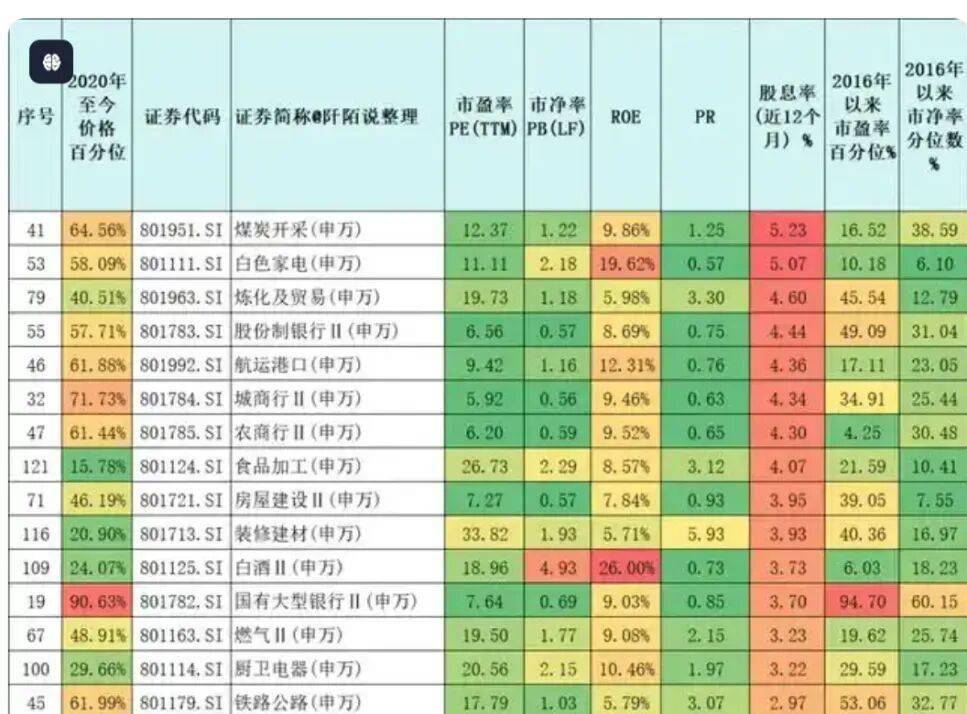
Core Viewpoint - The A-share market experienced significant adjustments, with major indices like the Shanghai Composite Index and Shenzhen Component Index seeing declines of nearly 4% and over 5% respectively, marking the largest weekly drop since April 7 [1][2] Market Performance - The adjustment period from November 17 to 21 saw the ChiNext Index drop by 6.15%, indicating a broad market downturn [1] - On November 24, Industrial Fulian, a major player, faced a sharp decline, hitting the daily limit down, while the lithium battery sector also continued to fall [1] Market Sentiment - There is a notable increase in market anxiety, with various factors being cited for the downturn, including Japanese market influences and U.S. interest rate discussions [2][3] - The article emphasizes that while these factors are relevant, they do not fully explain the market's behavior [4] Investment vs. Speculation - The distinction between investment and speculation is highlighted, with investment being characterized by earning from company profits and dividends, while speculation is described as a zero-sum game driven by market emotions [11][18] - The article suggests that many investors lack patience, leading to confusion between investment and speculation [12][16] Market Valuation - Current market valuations are deemed reasonable, with specific sectors like white goods and livestock showing strong earnings growth that supports their price levels [26] - For instance, the white goods sector has a price-to-earnings (P/E) ratio of 11.11 and a dividend yield of 5.07%, indicating solid fundamentals [26] Fund Flows - Recent data shows a net inflow of 701.21 billion yuan into stock ETFs, with broad index ETFs being the primary beneficiaries, suggesting a strategic repositioning by investors rather than panic selling [29] - The article notes that many sectors are experiencing price recoveries, indicating a lack of panic among investors [32]
热门股突然回调!投机为啥让人欲罢不能?到底藏着什么秘密?
Xin Lang Cai Jing· 2025-10-25 23:39
Group 1 - The article discusses the psychological factors behind the irresistible allure of speculation in the stock market, highlighting how investors often become trapped in cycles of hope and loss [2][5] - It references historical examples, such as a speculator during the 1929 crash who lost significant wealth despite initial success, illustrating the dangers of not recognizing when to exit [2][4] - The narrative includes a comparison to the book "The Money Game," which captures the timeless nature of speculative behavior and the human tendency to chase quick profits [3][6] Group 2 - The text emphasizes the importance of understanding the risks associated with speculation, contrasting it with value investing, which focuses on long-term growth and stability [6][7] - It notes that while short-term speculation can yield high returns, it often leads to significant losses, reinforcing the idea that true wealth accumulation comes from disciplined investing [7] - The article concludes that value investors, who view securities as ownership stakes in companies, are less likely to be swayed by speculative trends and are more focused on sustainable growth [7]
热门股突然回调!投机为啥让人欲罢不能?到底藏着什么秘密?
券商中国· 2025-10-25 23:34
Core Viewpoint - The article discusses the psychological aspects of speculation in the stock market, highlighting the risks and temptations that lead investors to engage in high-risk trading despite potential losses [1][2][3]. Group 1: Speculation and Investor Psychology - Many investors are drawn to the excitement of speculative trading, often leading to significant financial losses when market conditions change [2][3]. - Historical examples illustrate how even successful investors can fall victim to the allure of speculation, as seen in the story of a trader who lost a substantial fortune despite initially being successful [3][4]. - The article emphasizes that understanding one's own psychological tendencies is crucial in avoiding the pitfalls of speculation [3][5]. Group 2: Investment vs. Speculation - The distinction between investment and speculation is highlighted, with investment being a more stable approach focused on long-term gains, while speculation is characterized by high risk and potential for quick profits [6][7]. - Value investors are portrayed as those who remain disciplined and avoid the temptations of speculative trading, understanding that true wealth accumulation comes from consistent, long-term strategies [7][8]. - The article notes that while short-term gains from speculation may be enticing, they often lead to greater losses, reinforcing the idea that sustainable wealth is built through value investing [7][8].

X @憨巴龙王
憨巴龙王· 2025-10-21 11:03
2025年.10.21 全文都是讨论山寨,因为大多数人来币圈是为了暴富。首先,这个圈子是一个绝对的负和市场,绝大多数山寨不产生任何价值,所以财富都是靠圈外资金进来产生的。BTC不断的在新高,而山寨的上限越来越低,以散户盘为例,people,ordi,币安人生,都是非常典型的散户盘,没有绝对主力。people在21年牛市,只是一个现象级meme,都不是什么新的龙头叙事,都能炒刀12亿刀市值,而ordi作为BTC的MEME新叙事,最高也就20亿刀。币安人生作为新的中文叙事,现在4亿刀都开始疯狂浇给。为什么?因为这个圈子相信山寨的傻子已经被割完了,留下的都是聪明人,都认识到,山寨的价值是0.以前的山寨财富是怎么产生的,是BTC,ETH等主流币带来的圈外资金。早期散户囤BTC,随着华尔街机构的进入,散户被山寨的涨幅所吸引,卖出BTC去抄山寨。即便一开始山寨赚了钱,后续也会因为熊市的来临亏回去,随着一轮一轮的牛熊,散户因为BTC所获得的红利,一步步转移到更高阶的玩家。一个更形象的例子,散户A是18年以前买BTC的傻瓜,B是21年进场的普通人。C是23年进场的聪明人。A后面卖了BTC,去炒山寨,因为A比较菜,所以21-2 ...
从5美元到1亿美金,再到自杀:华尔街为何痴迷于“投机之王”利弗莫尔?
Sou Hu Cai Jing· 2025-10-08 09:19
Core Insights - Jesse Livermore, a legendary trader, experienced both immense wealth and devastating losses throughout his life, ultimately leading to his tragic end in 1940 [3][62][64] Group 1: Early Life and Career - Born in 1877 to a farming family, Livermore showed early signs of intelligence, learning to read and write by age 3.5 and reading financial news by age 5 [5][7] - At 14, he left home to work as a board assistant at Paine Webber, where he began trading stocks and quickly earned profits [7][9] - By 16, he was trading in Boston's bucket shops, where he gained a reputation for winning consistently [9][11] Group 2: Rise to Prominence - Livermore moved to New York in 1899, where he faced initial failures but later returned to profitable trading in St. Louis [11][13] - He gained significant wealth during the 1901 bull market, earning $50,000 but also faced losses due to cotton trading [17][19] - By 1907, he had established himself as a prominent trader, earning $1 million in a single day during a market crisis [26][28] Group 3: Wealth and Personal Life - Livermore's wealth peaked at $3 million, allowing him to indulge in a lavish lifestyle, but he faced betrayals and losses that led to bankruptcy [30][28] - His personal life was tumultuous, marked by multiple marriages and affairs, contributing to his emotional struggles [33][47] - By the late 1920s, he had regained wealth through short selling during the stock market crash, earning $100 million [43][45] Group 4: Decline and Final Years - Despite his earlier successes, Livermore faced a decline in fortune and mental health, leading to his third bankruptcy in 1934 [49][51] - His final years were marked by depression and a sense of loss, culminating in his suicide in 1940 [62][64] - Livermore's legacy remains influential, with his trading strategies and experiences serving as lessons for future traders [68][70]

为什么投资赚钱的永远是少数人?
Sou Hu Cai Jing· 2025-10-06 10:47
Core Viewpoint - The article emphasizes the importance of sound investment principles amidst market volatility, highlighting that successful investors maintain their convictions and do not succumb to external pressures [1][2]. Group 1: Investment Principles - Peter Lynch clarifies that liking a product or store is not a sufficient reason to invest in its stock without thorough research on the company's earnings prospects, financial health, competitive position, and growth plans [2][3]. - Benjamin Graham's principles stress that investment should be treated like a business, requiring a deep understanding of the company and its operations [6][9]. - The concept of "margin of safety" is crucial, indicating that investments should be made when the price is significantly below intrinsic value to cushion against potential losses [31][32]. Group 2: Market Behavior and Psychology - The article discusses the psychological aspects of investing, noting that market fluctuations can lead to irrational behavior among investors, often resulting in poor decision-making [28][29]. - The "Mr. Market" analogy illustrates how investors should not let market sentiment dictate their investment decisions, but rather focus on the underlying value of their holdings [22][25]. - It is highlighted that many investors fail to recognize the difference between price and value, leading to misguided investment strategies [21][28]. Group 3: Long-term Investment Strategy - Long-term investment success is linked to understanding the business behind the stock, rather than merely speculating based on market trends [9][31]. - The article warns against the allure of "easy money" through speculation, emphasizing that true investment requires diligence and a solid grasp of the fundamentals [4][6]. - Investors are encouraged to reassess their portfolios regularly and make informed decisions based on the current value and performance of their investments [30][31].